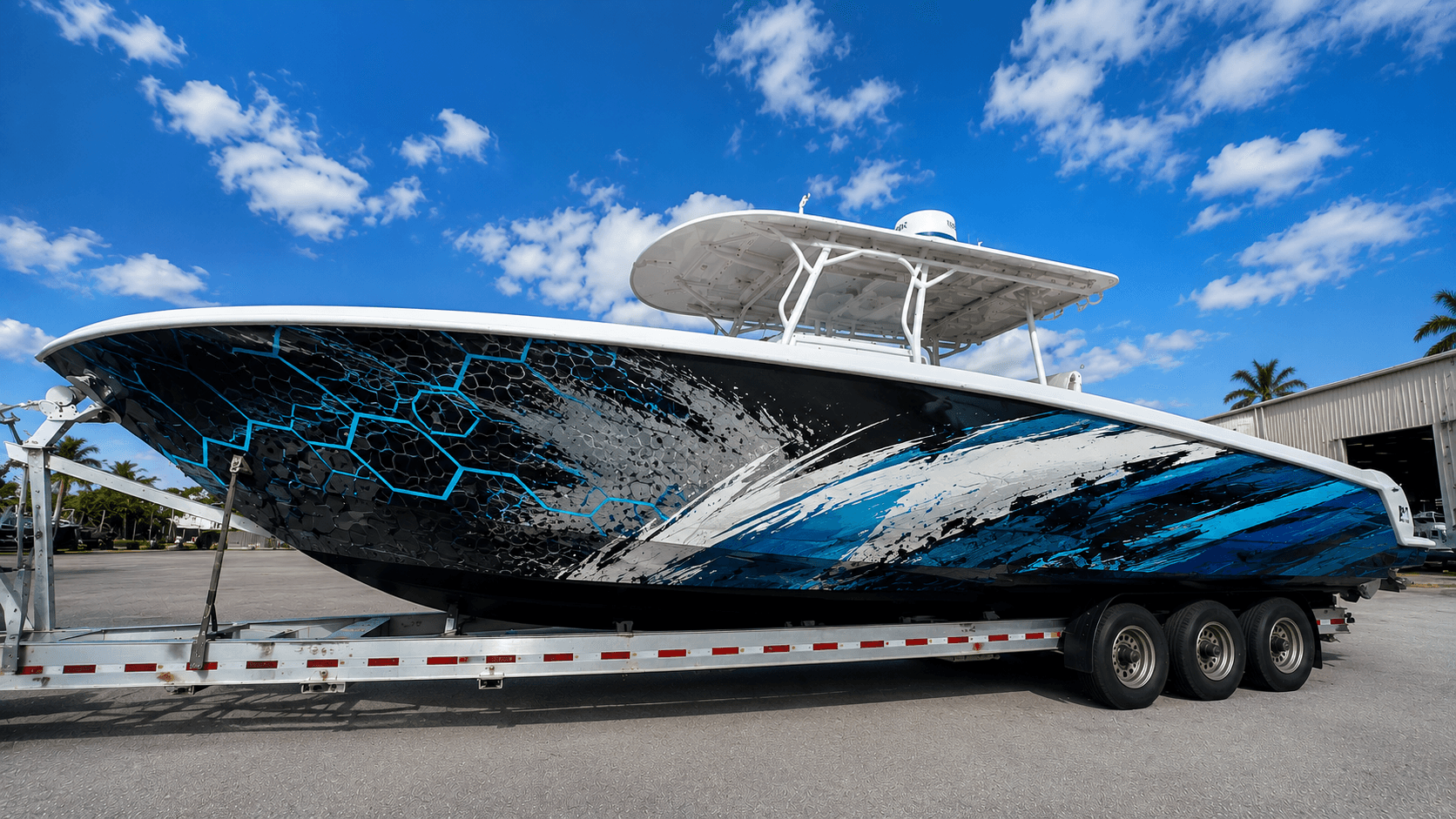
Boat Wraps for the Great Lakes: Material Selection for Seasonal Extremes
Expert guide to selecting durable boat wrap materials for the Great Lakes' harsh seasonal temperature swings. Learn why professional installation is critical.
Last updated March 14, 2026
For Great Lakes boaters, protecting and personalizing your vessel requires a solution engineered for one of the most demanding freshwater environments. Professional boat wraps offer a superior alternative to traditional paint, but their long-term success hinges on a critical factor: material selection and installation techniques specifically calibrated for the region's dramatic seasonal temperature extremes. From the deep freeze of a Lake Superior winter to the intense summer sun on Lake Erie, your boat wrap must remain stable, vibrant, and securely bonded.
Navigating the material selection for a Great Lakes boat wrap is complex. These core principles, upheld by industry leaders like OceanWraps, define a successful, long-lasting installation.
Cast vinyl films are non-negotiable for hull and topside applications due to their superior conformability and resistance to thermal expansion and contraction.
A professional-grade laminate is essential for UV defense and abrasion resistance, acting as a sacrificial shield against intense summer sun and marina wear.
Surface preparation is 80% of the battle. Gelcoat must be flawless, dewaxed, and perfectly contoured to prevent adhesive failure during thermal cycling.
Expert installation techniques, including precise edge sealing and post-heating, are critical to prevent moisture ingress and lifting during freeze-thaw cycles.
Partnering with a certified installer who sources premium, marine-rated materials ensures your investment is protected by manufacturer warranties and proven performance.
Not all vinyl is created equal, especially for marine use. The primary division is between calendered and cast vinyl films. Calendered vinyl, often found in DIY or low-cost solutions, is more rigid and prone to shrinking and cracking under thermal stress. For the Great Lakes, this is a recipe for failure.
Cast vinyl is manufactured differently, resulting in a thinner, more dimensionally stable film. This stability is paramount as it expands and contracts minimally with temperature swings from below freezing to over 100°F on deck. Its inherent memory allows it to conform tightly to complex hull curves and rivet lines without tenting or lifting over time, a common failure point with inferior materials.
The vinyl film itself is only half of the material system. A liquid or cast laminate is applied over the printed graphics. This laminate is your first line of defense against UV radiation, which is intense on the water and accelerates fading and adhesive degradation. It also provides a hard, scratch-resistant surface that protects against dock abrasion, trailering, and aggressive washing.
The durability of your boat wrap is determined long before the vinyl is unrolled. A meticulous, multi-stage process separates a professional result from a problematic one.
Every square inch of the gelcoat must be mechanically abraded, chemically dewaxed, and cleaned to a surgically clean standard. Any contaminant becomes a failure point. A professional installer will map the vessel's complex curves to plan panel seams in low-stress, low-visibility areas, ensuring graphics align perfectly across the hull.
Installation uses specialized tools and controlled heat to gently stretch the cast vinyl into place without over-stressing it. The most critical step is edge sealing. All cut lines, especially around hardware and along the waterline, are sealed with a marine-grade adhesive promoter or edge sealant. This creates a waterproof barrier that prevents the capillary action of moisture, which can freeze, expand, and delaminate the wrap during winter storage.
Understanding the professional material lexicon ensures you can vet potential installers and solutions.
Marine-Grade Cast Vinyl: The substrate. Premium brands offer films with aggressive, long-term adhesives formulated for varied surfaces, including fiberglass and aluminum.
Print Media: Specific cast vinyl films are engineered as print-receptive layers for high-fidelity digital graphics, ensuring ink adhesion and color stability.
Liquid or Cast Laminate: The protective topcoat. Liquid laminates offer a thicker, more textured finish, while cast laminates provide exceptional clarity and gloss retention. The choice depends on the desired aesthetic and performance profile.
Beyond material selection, these operational factors impact wrap longevity. A professional consultant, such as those at OceanWraps, will integrate these into the planning phase.
Some marinas have rules about reflective or dark-colored hulls. Discuss your design plans in advance. For winter storage, while a quality wrap is durable, shrink-wrapping over it requires careful buffer layers to prevent abrasion.
Use only mild, non-abrasive marine soaps and soft brushes or mitts. Avoid high-pressure nozzles directed at wrap edges, and never use harsh solvents, waxes, or rubbing compounds designed for gelcoat.
How long should a boat wrap last on the Great Lakes?#
With premium materials and professional installation, you can expect 5 to 7 years of service life. This assumes proper maintenance and seasonal cycling. Inferior materials or installation may fail in 1-2 seasons.
Can a wrap be applied over existing boat graphics or minor gelcoat damage?#
A wrap is not a repair solution. The surface must be smooth, solid, and clean. Existing graphics must be removed, and any gelcoat cracks or chips must be professionally repaired and faired before wrapping. A certified installer will insist on this for a warrantable result.
A professionally installed wrap using high-quality cast vinyl and proper techniques will remove cleanly with heat and gentle stretching, leaving the original gelcoat intact. This is a key advantage over permanent paint.
Why choose a professional service over a DIY kit?#
The Great Lakes environment is unforgiving to compromises. A professional service provides material science expertise, contour-specific design, certified installation techniques, and warranty coverage. DIY kits typically use calendered vinyl without laminate, lack critical edge-sealing steps, and offer no protection against the thermal and UV stresses that define this region. The risk of premature failure and gelcoat damage is significantly higher.
Investing in a boat wrap for the Great Lakes is an investment in material engineering and skilled craftsmanship. By prioritizing marine-specific cast vinyl films, protective laminates, and the rigorous standards of a certified professional installer, you secure a dynamic, durable finish built to thrive from season to season.
New Boat Prices Are Skyrocketing — Here's the Smarter Move Boat Owners Are Making
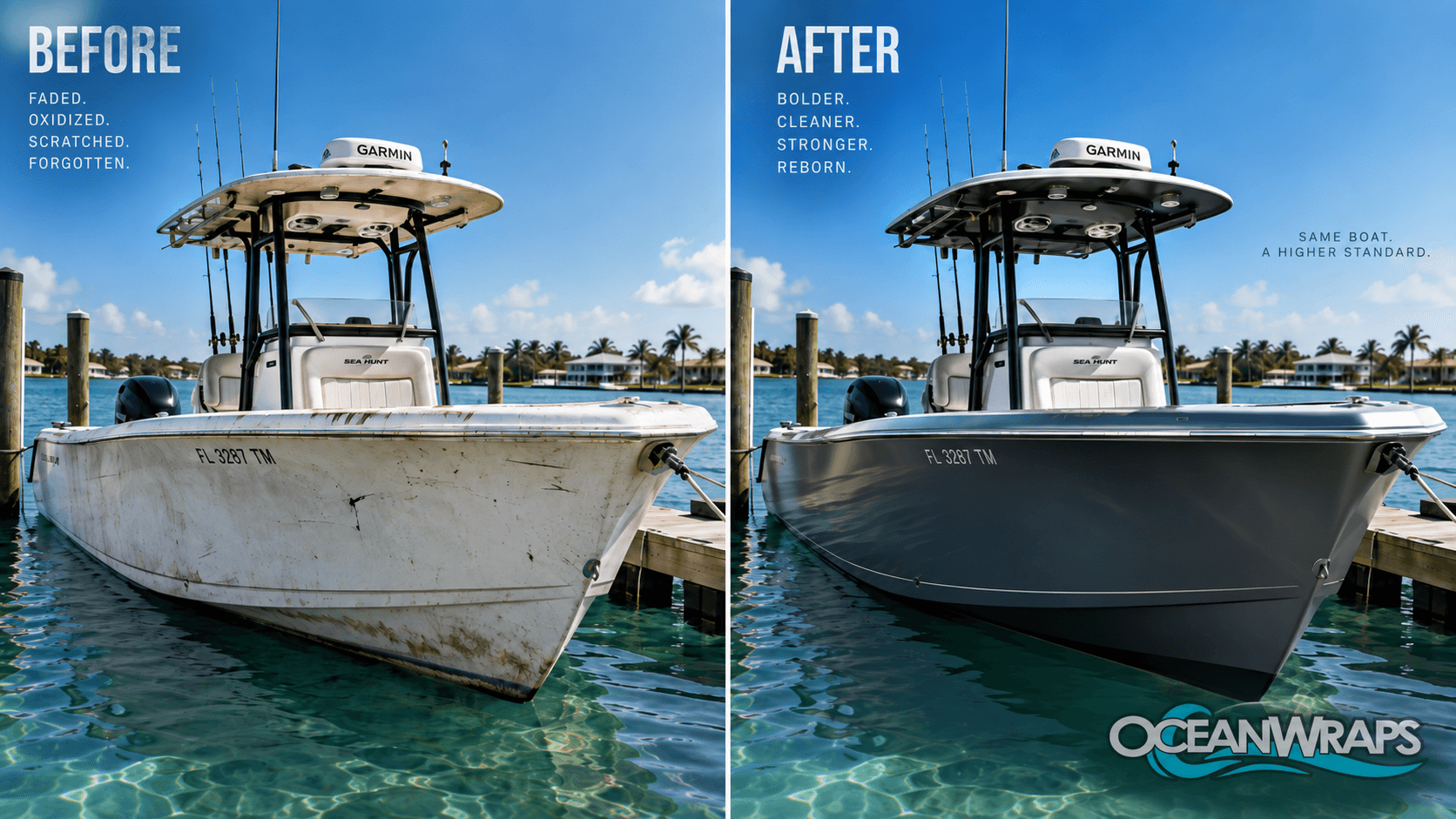
New boat prices are at record highs. Here's why more owners are choosing marine vinyl wraps to refresh their boat's look and protect the hull, without the cost of buying new
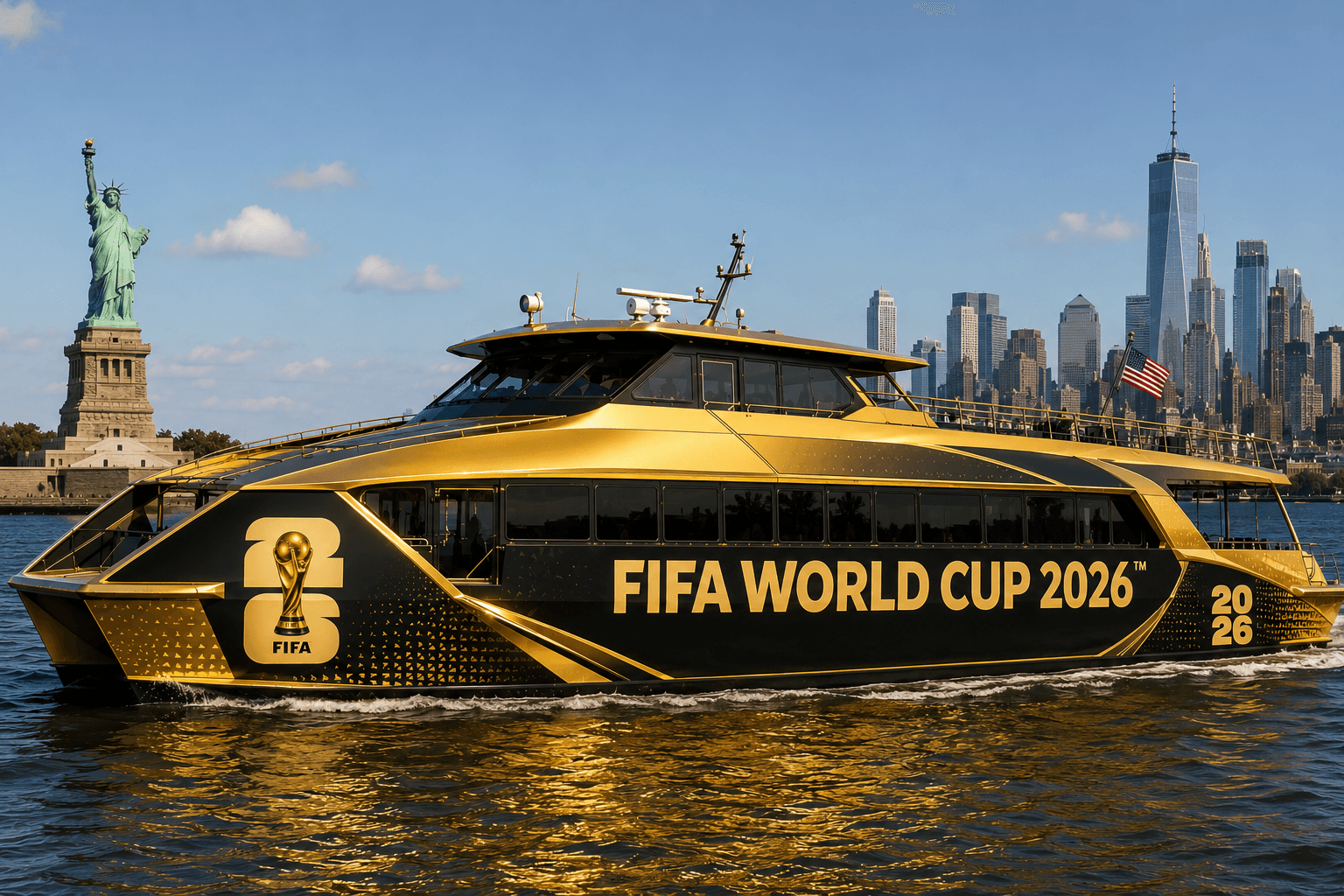
Get your boat ready for FIFA World Cup 2026 with a luxury custom wrap. Stand out on the water with premium marine graphics, gold finishes, and championship-inspired designs.
New Boat Prices Are Skyrocketing — Here's the Smarter Move Boat Owners Are Making
New boat prices are at record highs. Here's why more owners are choosing marine vinyl wraps to refresh their boat's look and protect the hull, without the cost of buying new
Boat Wraps Services
Boat Wrap Designs by Boat Type: What Actually Works on Your Vessel
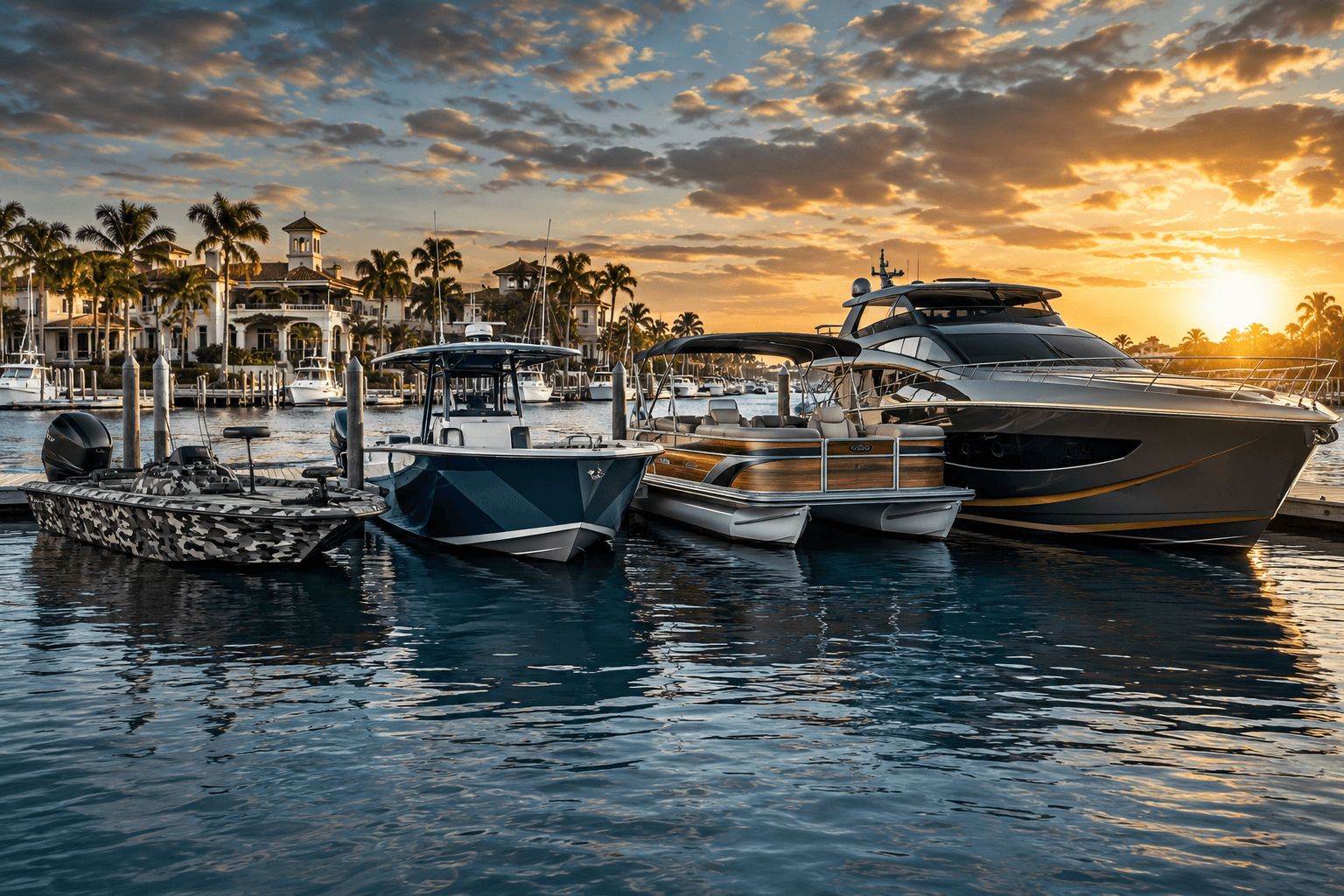
A wrap that's perfect for a sportfishing boat chasing marlin offshore would look completely out of place on a family pontoon.
Boat Wraps Services
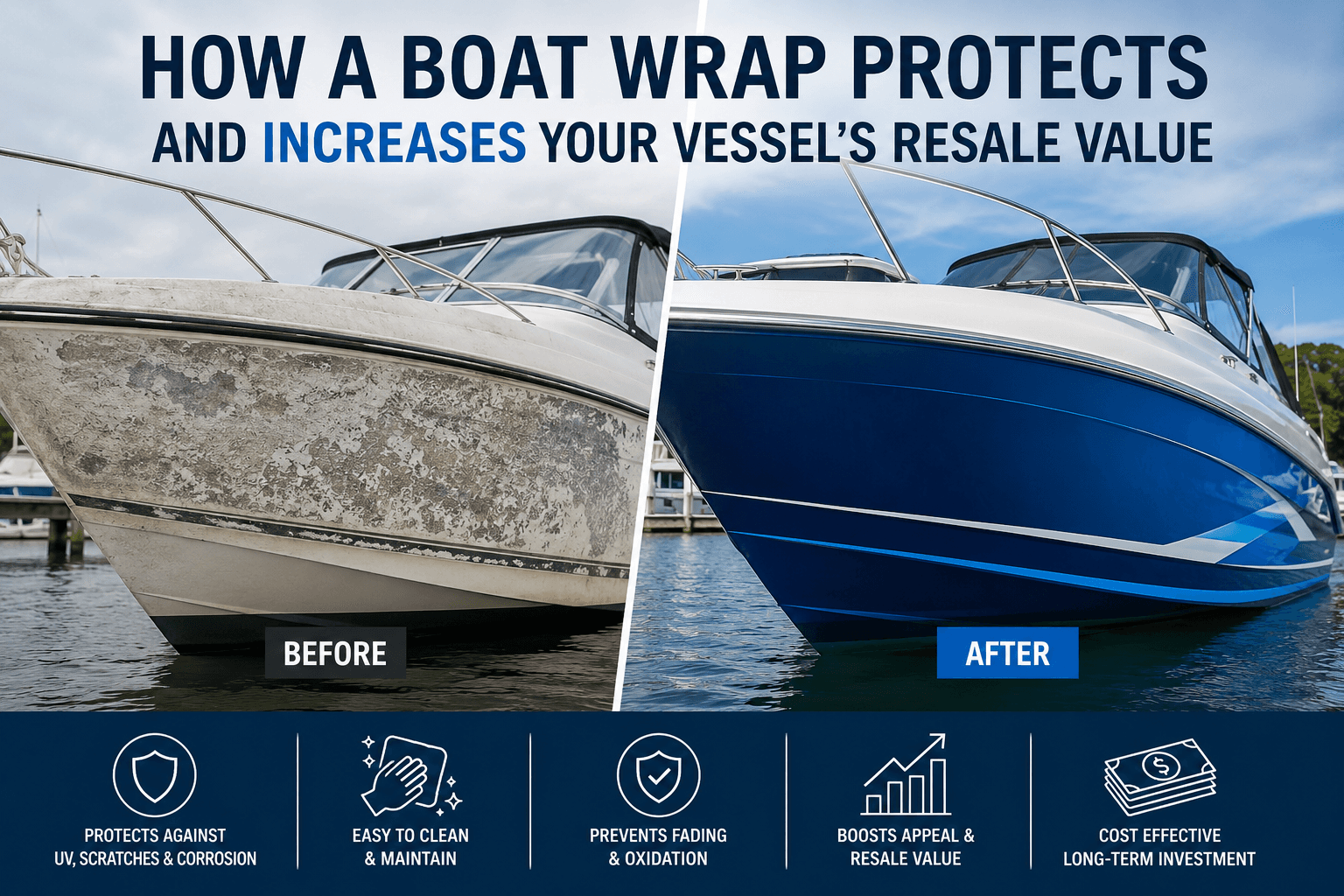
How a Boat Wrap Protects and Increases Your Vessel's Resale Value
How a Boat Wrap Can Protect and Increase Your Vessel's Resale Value
Boat Wraps Services
Top 10 FIFA World Cup Boat Wrap Ideas to Try This Season
If you already know you want your boat wrapped for World Cup season, the next question is which design actually fits your vessel.
Boat Wraps Services
Custom Boat Wraps for FIFA World Cup 2026
Get your boat ready for FIFA World Cup 2026 with a luxury custom wrap. Stand out on the water with premium marine graphics, gold finishes, and championship-inspired designs.
Boat Wraps Services
Luxury Yacht Wraps: The Complete Guide to Finishes, Styles, and Custom Marine Vinyl
Ocean Wraps works with luxury yacht and cruiser owners who want professional results, durable materials, and a finish that holds up on the water.
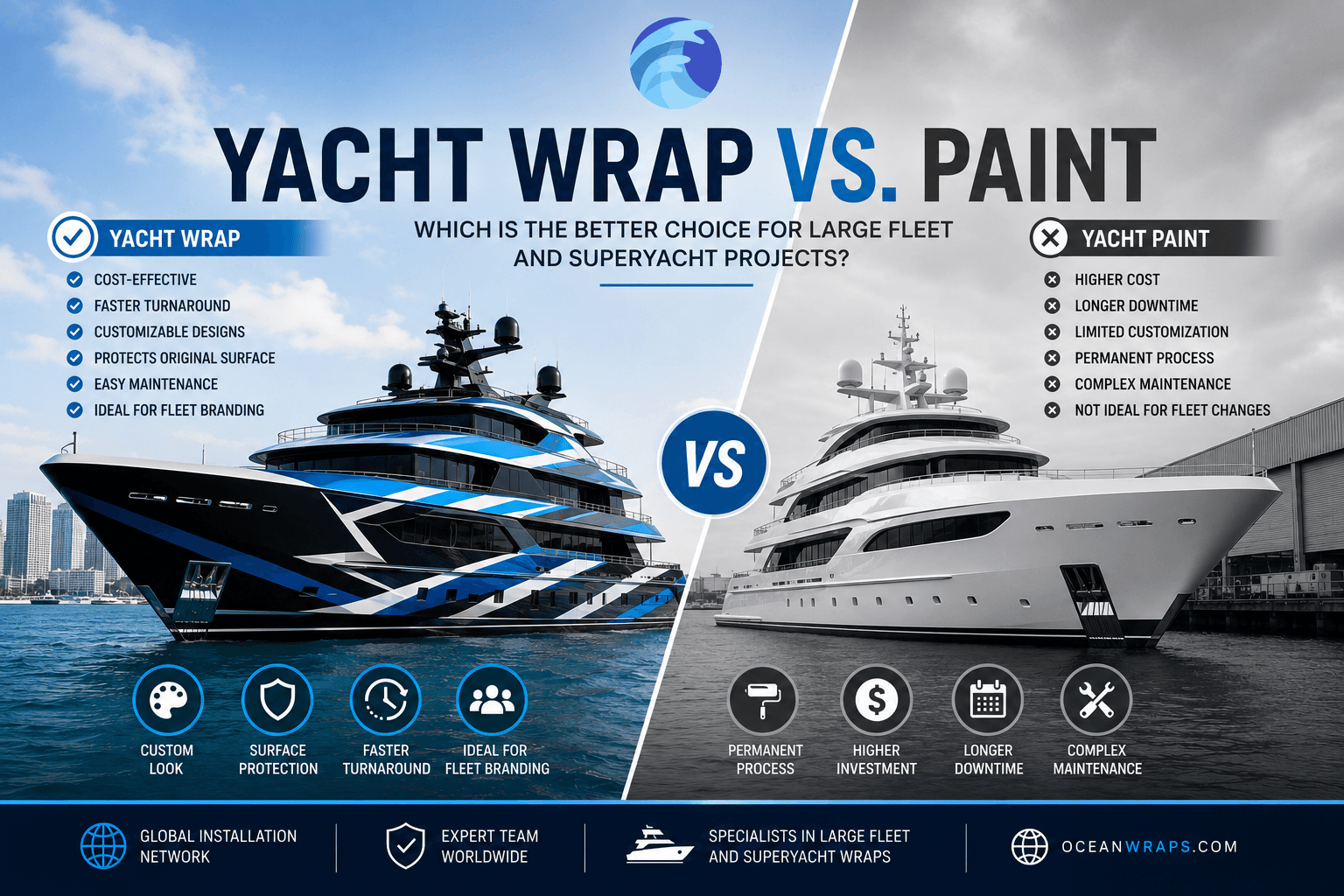
Yacht Wrap vs. Paint for Large Fleet & Superyacht Projects
Deciding between yacht wrap and paint for your fleet or superyacht? We break down real costs, downtime, durability, and which option actually makes sense at scale
How Much Does a Boat Wrap Cost? Complete Pricing Guide for 2026
Boat wrap prices vary widely depending on size, materials, and installer quality. Here's what a professional wrap actually costs in 2026 — and what to watch out for.
Luxury Yacht Wraps: The Complete Guide to Finishes, Styles, and Custom Marine Vinyl
Ocean Wraps works with luxury yacht and cruiser owners who want professional results, durable materials, and a finish that holds up on the water.
Boat Wraps Services
Why Florida Boat Owners Are Choosing Vinyl Boat Wraps in 2026
Discover why Florida boat owners are switching from paint to vinyl boat wraps. Learn the benefits, costs, protection, and customization options.
Guides
Boat Wraps vs Paint: 5 Reasons Why Wraps Win
Boat wraps cost less, install faster, and protect your gel coat better than traditional paint. Here's why so many boat owners are making the switch.
Guides
Yacht Wrap vs. Paint for Large Fleet & Superyacht Projects
Deciding between yacht wrap and paint for your fleet or superyacht? We break down real costs, downtime, durability, and which option actually makes sense at scale
Guides
How Much Does a Boat Wrap Cost? Complete Pricing Guide for 2026
Boat wrap prices vary widely depending on size, materials, and installer quality. Here's what a professional wrap actually costs in 2026 — and what to watch out for.