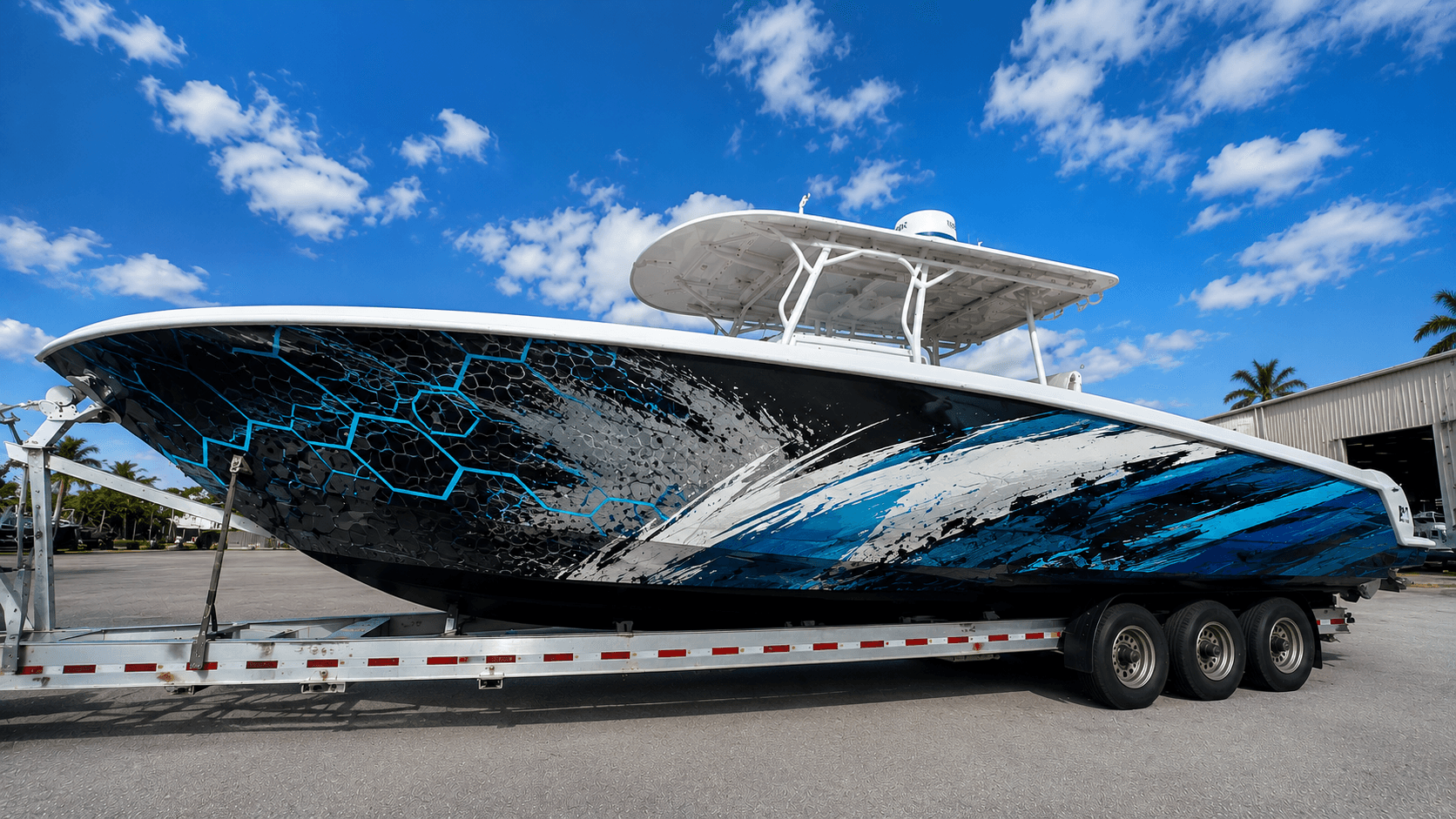
Boat Wraps for the Great Lakes: A Guide to Regional UV and Temperature Best Practices
Expert guide to durable boat wraps for the Great Lakes. Learn regional best practices for UV resistance, temperature swings, and professional installation from
Last updated March 11, 2026
For Great Lakes boaters, a custom boat wrap is more than just a cosmetic upgrade; it's a protective investment that must withstand a uniquely demanding regional climate. The intense, reflective UV exposure on open water, coupled with significant seasonal temperature swings, requires a specialized approach to materials, design, and installation. This guide outlines the critical best practices for boat wraps engineered to thrive in the Great Lakes environment, ensuring your vessel's appearance and protection are maintained season after season.
Boat Wraps Overview: Boat Wraps for the Great Lakes: Regional UV and Temperature#
Successfully wrapping a boat for the Great Lakes hinges on a few non-negotiable principles that separate a lasting investment from a short-lived application.
Material selection is paramount: Only premium, marine-grade cast vinyl with proven UV inhibitors and a protective laminate can withstand the intense, reflective sunlight on the lakes.
Professional installation is not optional: Certified installers possess the skill to manage complex hull curvature, ensure perfect edge sealing, and execute flawless surface prep on gelcoat.
Design for durability: Graphics and color choices should account for UV fading, and digital prints require specific overlaminate protection to prevent degradation.
Understand the thermal cycle: High-quality materials and expert application allow the vinyl to expand and contract with temperature changes without lifting or cracking.
Commit to proper maintenance: Using non-abrasive, marine-specific cleaners and avoiding high-pressure washes at wrap edges preserves the finish and longevity.
Partner with a certified specialist: Trusted providers like OceanWraps adhere to manufacturer specifications and quality standards, ensuring your wrap is a certified, durable solution.
The Great Lakes basin acts as a massive solar reflector, intensifying UV radiation exposure on your boat's hull and topside surfaces. This relentless UV attack is the primary enemy of colorfastness and material integrity. Simultaneously, seasonal temperatures can range from freezing winters to 90-degree summer days, causing materials to constantly expand and contract. A generic or DIY boat wrap will quickly reveal its weaknesses here, often through fading, cracking adhesive, or edge failure.
Why Professional Solutions Outperform Generic Alternatives#
Off-the-shelf vinyl or uncertified installations lack the engineered properties for this environment. Professional-grade marine vinyl wrap is a multi-layer system. The film itself contains advanced UV stabilizers, the adhesive is formulated for long-term bonding to gelcoat, and the exterior laminate provides a sacrificial protective layer. This system is designed as a cohesive unit to manage thermal stress and UV bombardment, a complexity far beyond the capability of consumer-grade materials.
Specifying the correct materials is the foundation of a durable Great Lakes boat wrap. The terminology matters, as each component serves a distinct purpose.
This is the essential substrate. Cast vinyl is manufactured with a high plasticizer content, giving it superior conformability to complex boat curves and contours. Its memory allows it to withstand thermal cycling without shrinking or becoming brittle. For the Great Lakes, a minimum 3-mil thickness with a 10+ year outdoor durability rating is the professional standard.
A clear gloss or matte laminate is non-negotiable for printed graphics and is highly recommended for solid colors on the Great Lakes. This layer shields the ink and vinyl from UV rays, abrasion from docks and debris, and chemical exposure from fuel, oil, and cleaners. It is the primary defense against fading and physical wear.
The gelcoat must be surgically clean, decontaminated, and polished. Professionals perform a thorough dewaxing, degreasing, and clay bar treatment to remove embedded pollutants. Any existing oxidation is corrected. This creates a perfectly bonded surface, preventing contamination from causing premature failure.
Graphics are engineered for the specific hull, accounting for curves, hardware, and seams. Files are printed with high-fidelity, solvent-based inks known for their UV stability. The print is then immediately laminated, sealing the inks before exposure to any elements.
This is where expertise is irreplaceable. Certified installers use specialized tools and techniques to apply the vinyl without stretching or distorting graphics. They expertly handle complex curvature, perform precise trimming, and most importantly, ensure all edges are fully sealed and post-heated to activate the adhesive for a permanent bond that resists lifting from wave action and temperature cycles.
The entire wrap is carefully inspected under bright light. A final heat treatment ensures optimal adhesive cross-linking. The client is then briefed on proper care and maintenance protocols specific to the wrap finish.
Marina Rules: Some marinas have specific rules about work being performed on-site. A professional installer like OceanWraps coordinates this seamlessly.
Edge Sealing: Every penetration (cleats, vents, drains) and the wrap's perimeter must be perfectly sealed. This is a critical step to prevent water intrusion, which can freeze and expand in winter.
Winter Storage: While a quality wrap is designed for temperature swings, consistent exposure to freeze-thaw cycles under a cover can create micro-abrasions. A clean, dry storage environment is ideal.
Wash Practices: Use only soft cloths and marine-specific, non-abrasive cleaners. Avoid directing high-pressure washer streams directly at wrap edges.
Hull vs. Topsides: The hull typically experiences more abrasive contact and less direct UV than topsides. Your installer may discuss slight variations in material or finish strategy for these different zones.
How long should a boat wrap last on the Great Lakes?#
With premium materials and professional installation, you can expect 5-7 years of excellent durability, and often longer with proper care. The intense UV is the primary limiting factor, which is why the quality of the vinyl and laminate is so critical. OceanWraps uses materials with certified longevity for this very reason.
Can a wrap be applied over old graphics or damaged gelcoat?#
A wrap requires a smooth, sound surface. Old graphics must be completely removed. Minor gelcoat scratches are typically acceptable, but significant cracks or repairs must be addressed first. A professional assessment is essential to ensure a proper bond.
No, a high-quality marine vinyl wrap will protect your gelcoat from UV fading and minor abrasion. Upon professional removal, the underlying gelcoat is revealed in its pre-wrap condition, often preserving it better than if it had been left exposed.
Is a DIY boat wrap a viable option for this region?#
For the demanding Great Lakes climate, DIY wraps are not recommended. The challenges of material selection, complex surface prep, managing large panels on curved surfaces, and achieving permanent edge sealing are significant. The risk of premature failure, which compromises both appearance and protection, is high. The investment in a certified professional installation ensures durability and preserves your boat's value.
New Boat Prices Are Skyrocketing — Here's the Smarter Move Boat Owners Are Making
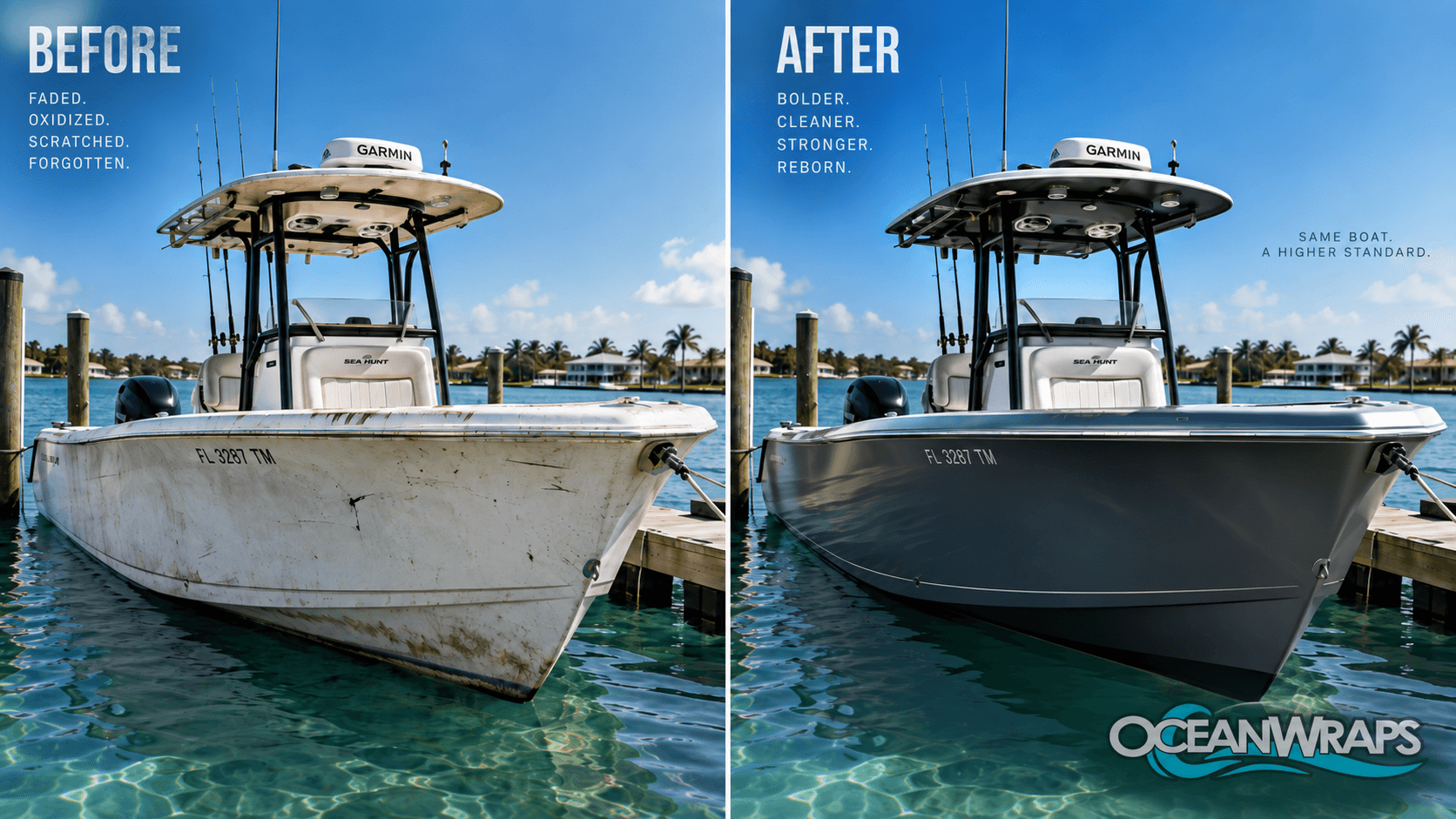
New boat prices are at record highs. Here's why more owners are choosing marine vinyl wraps to refresh their boat's look and protect the hull, without the cost of buying new
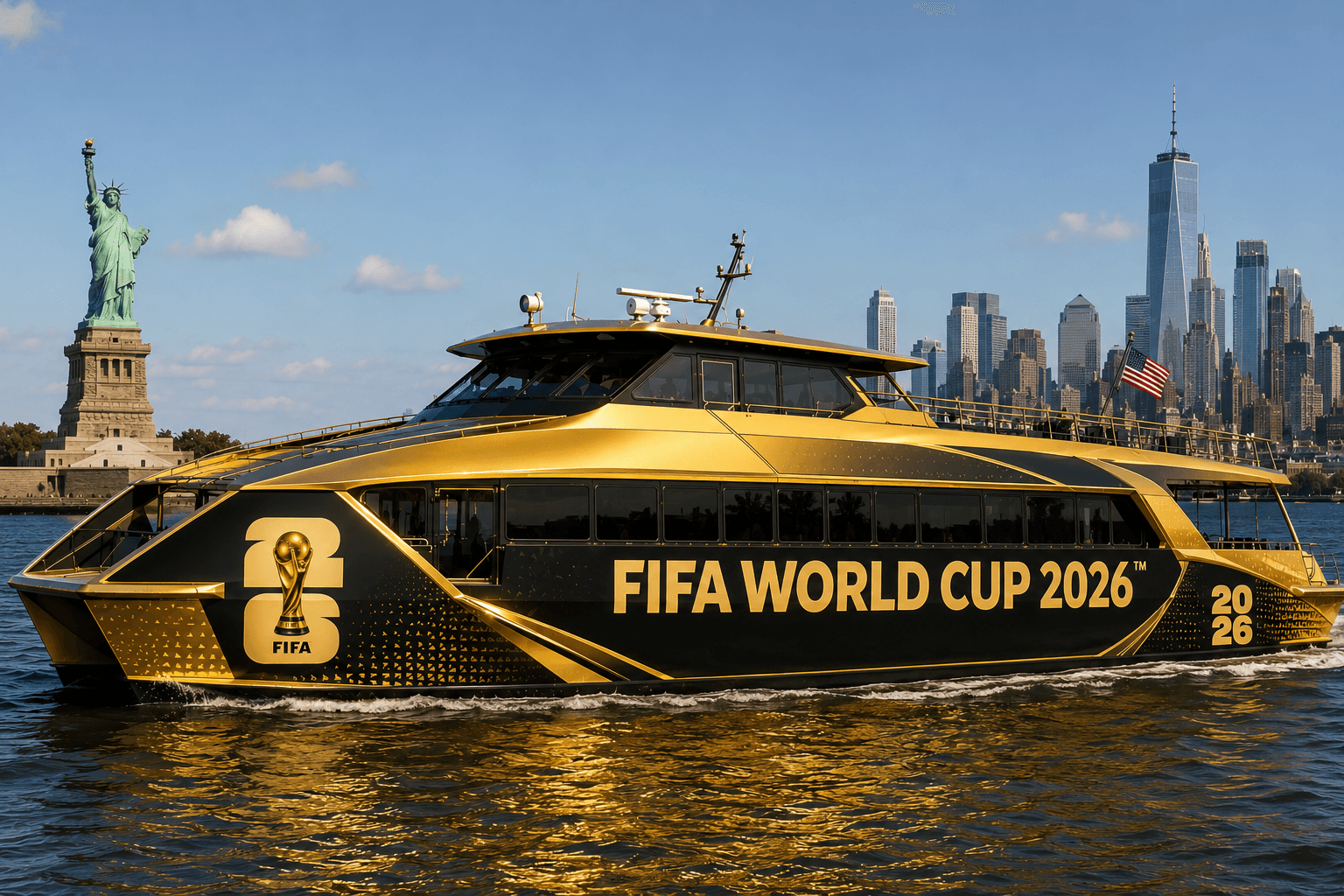
Get your boat ready for FIFA World Cup 2026 with a luxury custom wrap. Stand out on the water with premium marine graphics, gold finishes, and championship-inspired designs.
New Boat Prices Are Skyrocketing — Here's the Smarter Move Boat Owners Are Making
New boat prices are at record highs. Here's why more owners are choosing marine vinyl wraps to refresh their boat's look and protect the hull, without the cost of buying new
Boat Wraps Services
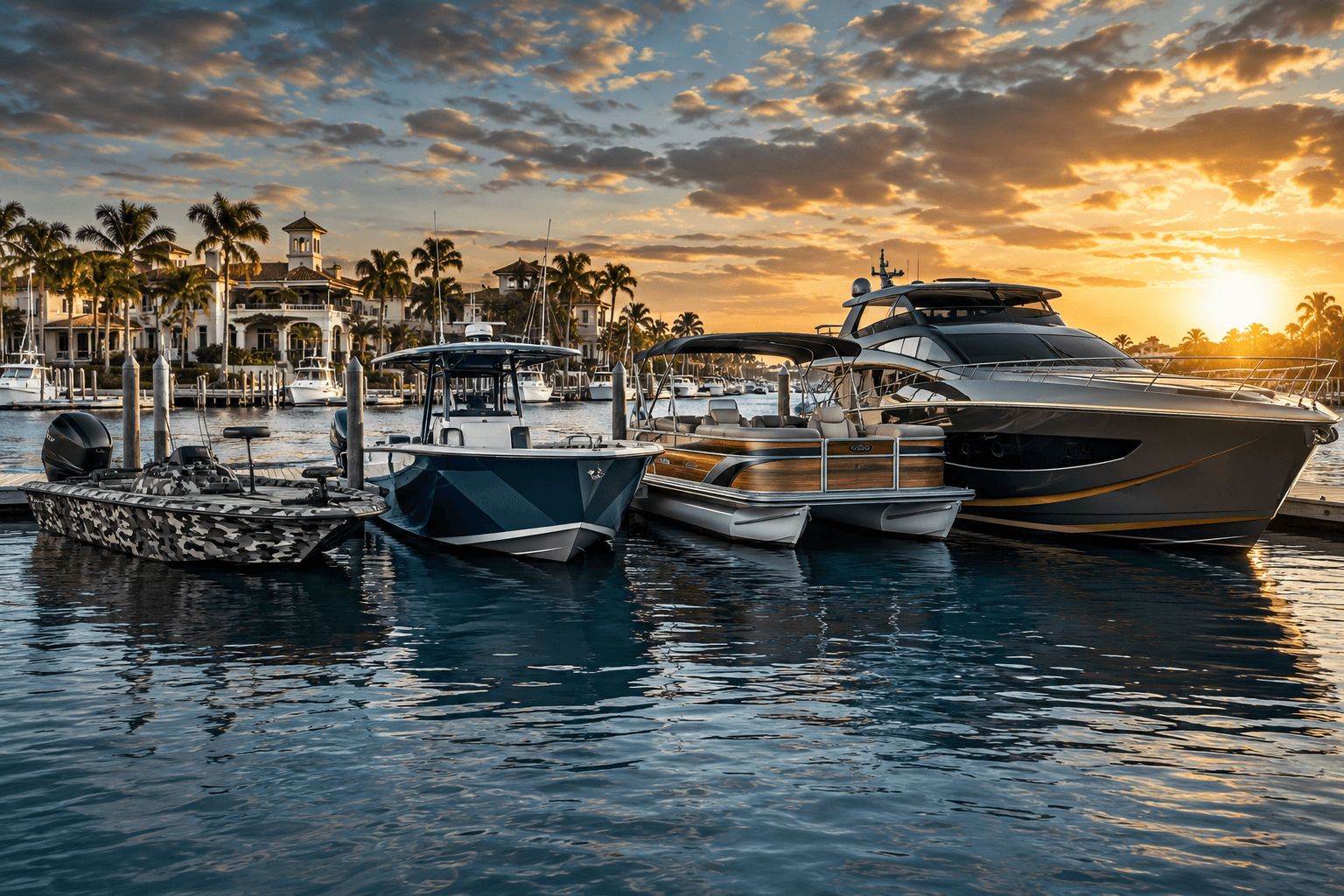
Boat Wrap Designs by Boat Type: What Actually Works on Your Vessel
A wrap that's perfect for a sportfishing boat chasing marlin offshore would look completely out of place on a family pontoon.
Boat Wraps Services
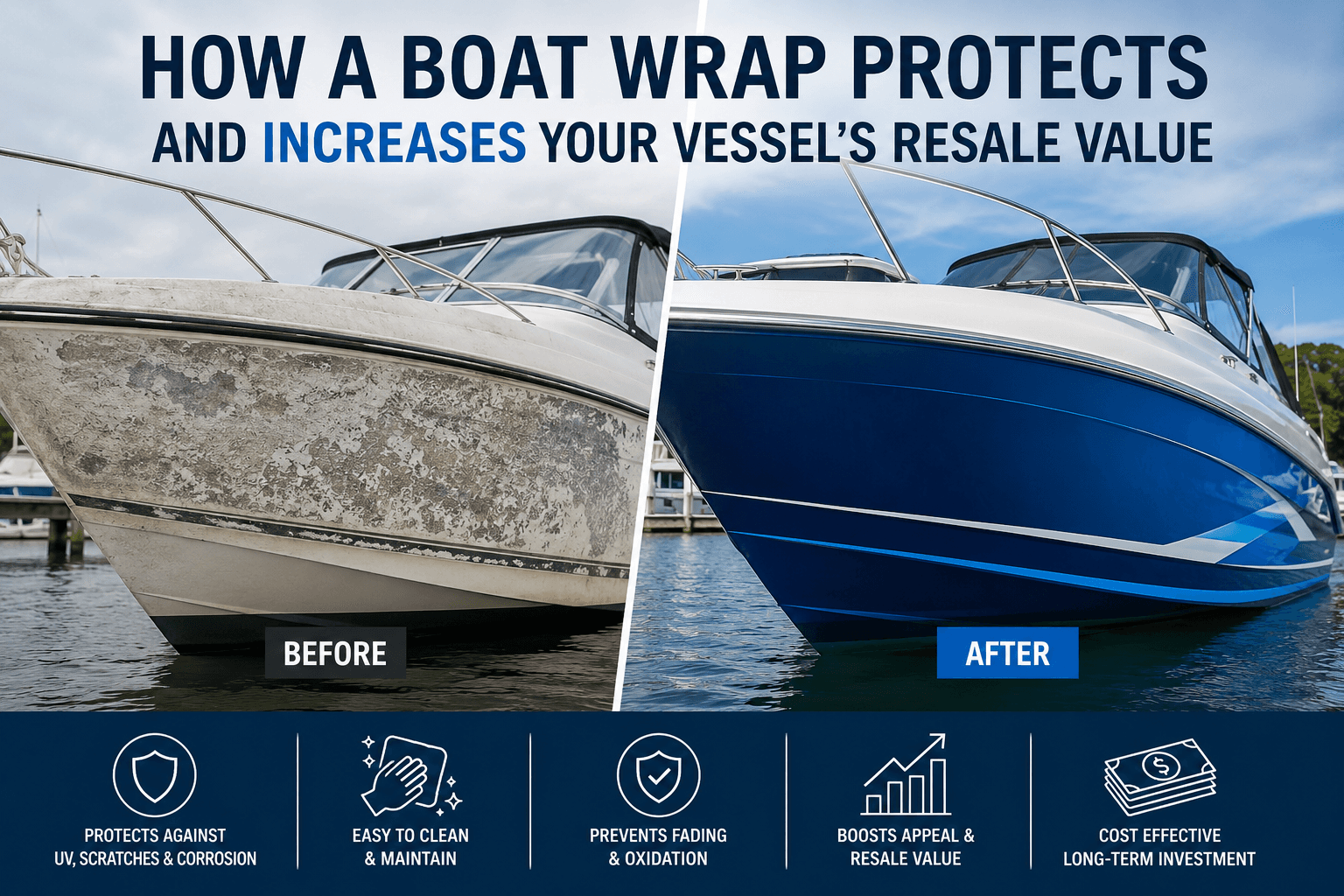
How a Boat Wrap Protects and Increases Your Vessel's Resale Value
How a Boat Wrap Can Protect and Increase Your Vessel's Resale Value
Boat Wraps Services
Top 10 FIFA World Cup Boat Wrap Ideas to Try This Season
If you already know you want your boat wrapped for World Cup season, the next question is which design actually fits your vessel.
Boat Wraps Services
Custom Boat Wraps for FIFA World Cup 2026
Get your boat ready for FIFA World Cup 2026 with a luxury custom wrap. Stand out on the water with premium marine graphics, gold finishes, and championship-inspired designs.
Boat Wraps Services
Luxury Yacht Wraps: The Complete Guide to Finishes, Styles, and Custom Marine Vinyl
Ocean Wraps works with luxury yacht and cruiser owners who want professional results, durable materials, and a finish that holds up on the water.
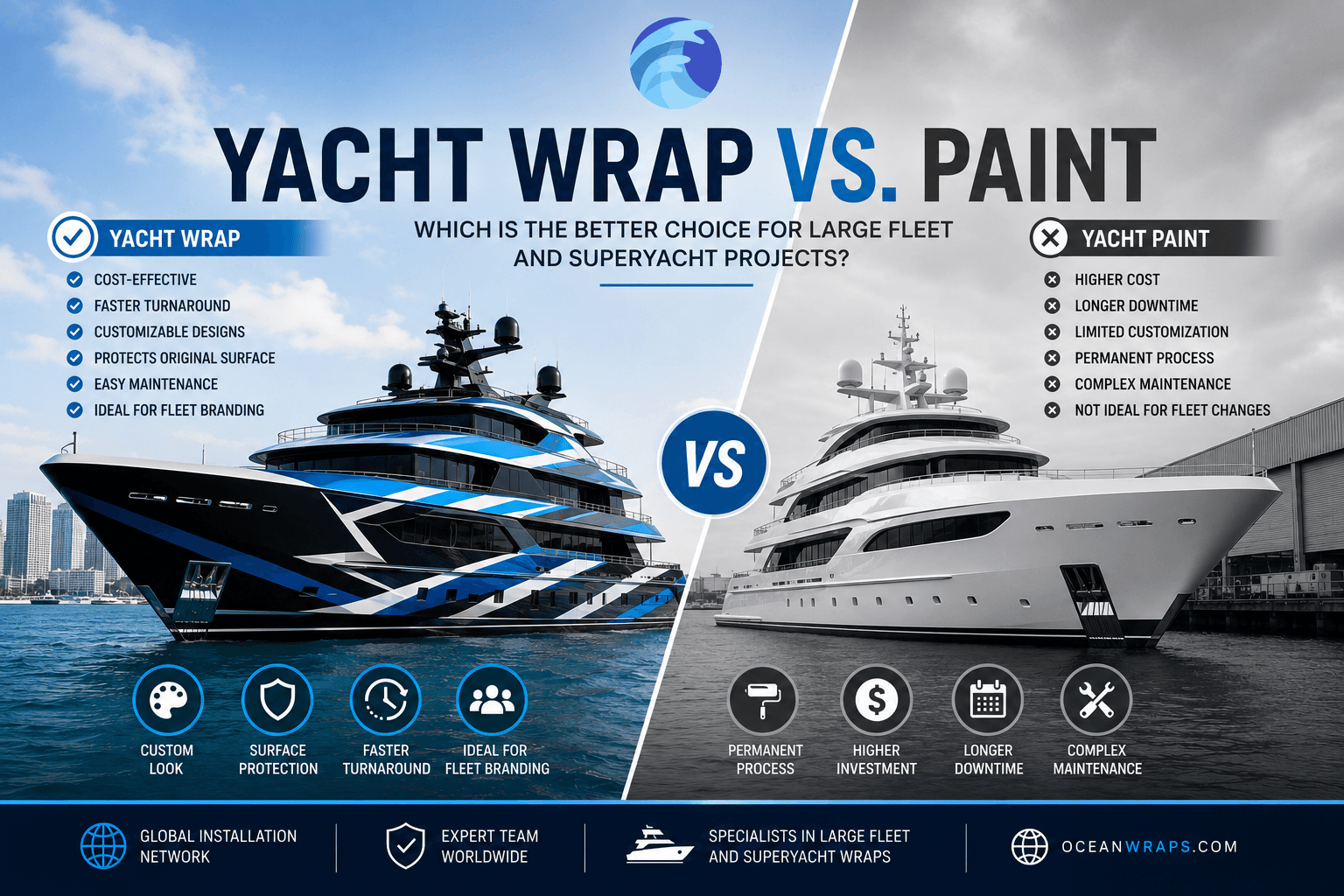
Yacht Wrap vs. Paint for Large Fleet & Superyacht Projects
Deciding between yacht wrap and paint for your fleet or superyacht? We break down real costs, downtime, durability, and which option actually makes sense at scale
How Much Does a Boat Wrap Cost? Complete Pricing Guide for 2026
Boat wrap prices vary widely depending on size, materials, and installer quality. Here's what a professional wrap actually costs in 2026 — and what to watch out for.
Luxury Yacht Wraps: The Complete Guide to Finishes, Styles, and Custom Marine Vinyl
Ocean Wraps works with luxury yacht and cruiser owners who want professional results, durable materials, and a finish that holds up on the water.
Boat Wraps Services
Why Florida Boat Owners Are Choosing Vinyl Boat Wraps in 2026
Discover why Florida boat owners are switching from paint to vinyl boat wraps. Learn the benefits, costs, protection, and customization options.
Guides
Boat Wraps vs Paint: 5 Reasons Why Wraps Win
Boat wraps cost less, install faster, and protect your gel coat better than traditional paint. Here's why so many boat owners are making the switch.
Guides
Yacht Wrap vs. Paint for Large Fleet & Superyacht Projects
Deciding between yacht wrap and paint for your fleet or superyacht? We break down real costs, downtime, durability, and which option actually makes sense at scale
Guides
How Much Does a Boat Wrap Cost? Complete Pricing Guide for 2026
Boat wrap prices vary widely depending on size, materials, and installer quality. Here's what a professional wrap actually costs in 2026 — and what to watch out for.