Boat Wraps for New York Charter Fleets: A Proven ROI Analysis
Explore how professional boat wraps in New York deliver ROI for charter fleets. Analysis of NY climate, regulations, and three customer success stories.
Last updated March 16, 2026
For charter fleet operators in New York, maximizing vessel appeal and minimizing downtime are critical to profitability. A professional boat wrap is not merely a cosmetic upgrade; it is a strategic capital investment with a measurable return. This analysis moves beyond theory, examining real-world ROI from three distinct New York charter operations that utilized premium boat wraps to address specific business challenges. The unique demands of New York waters—from the intense UV exposure of Long Island Sound to the abrasive salt spray of the Atlantic and the strict visual codes of marinas from Montauk to the Hudson—make the choice of materials and installer paramount. We will detail how a superior boat wrap solution directly impacts booking rates, brand recognition, and long-term maintenance costs in this competitive regional market.
Professional boat wraps for New York fleets typically show ROI within 12-18 months through increased bookings and reduced paint maintenance.
Marine-grade cast vinyl with laminate is non-negotiable for durability against New York's high UV index, winter freeze-thaw cycles, and brackish harbor waters.
Expert installation includes critical New York-specific steps: meticulous hull surface prep for weathered gelcoat, precision edge sealing against moisture intrusion, and compliance with local marina branding rules.
Get Started
Ready to bring your vision to life?
Get a fast free quote today. Let's create something amazing together.
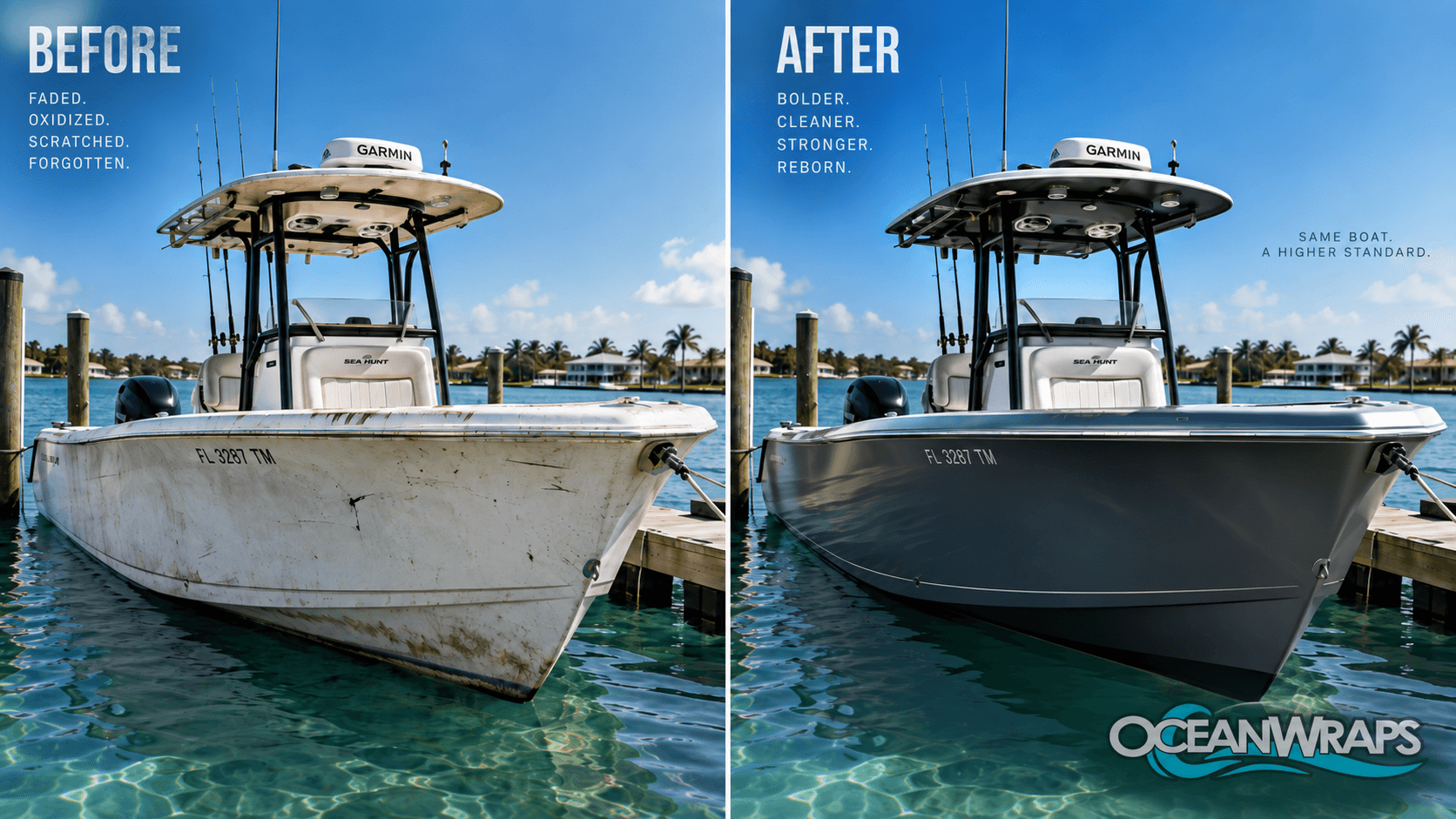
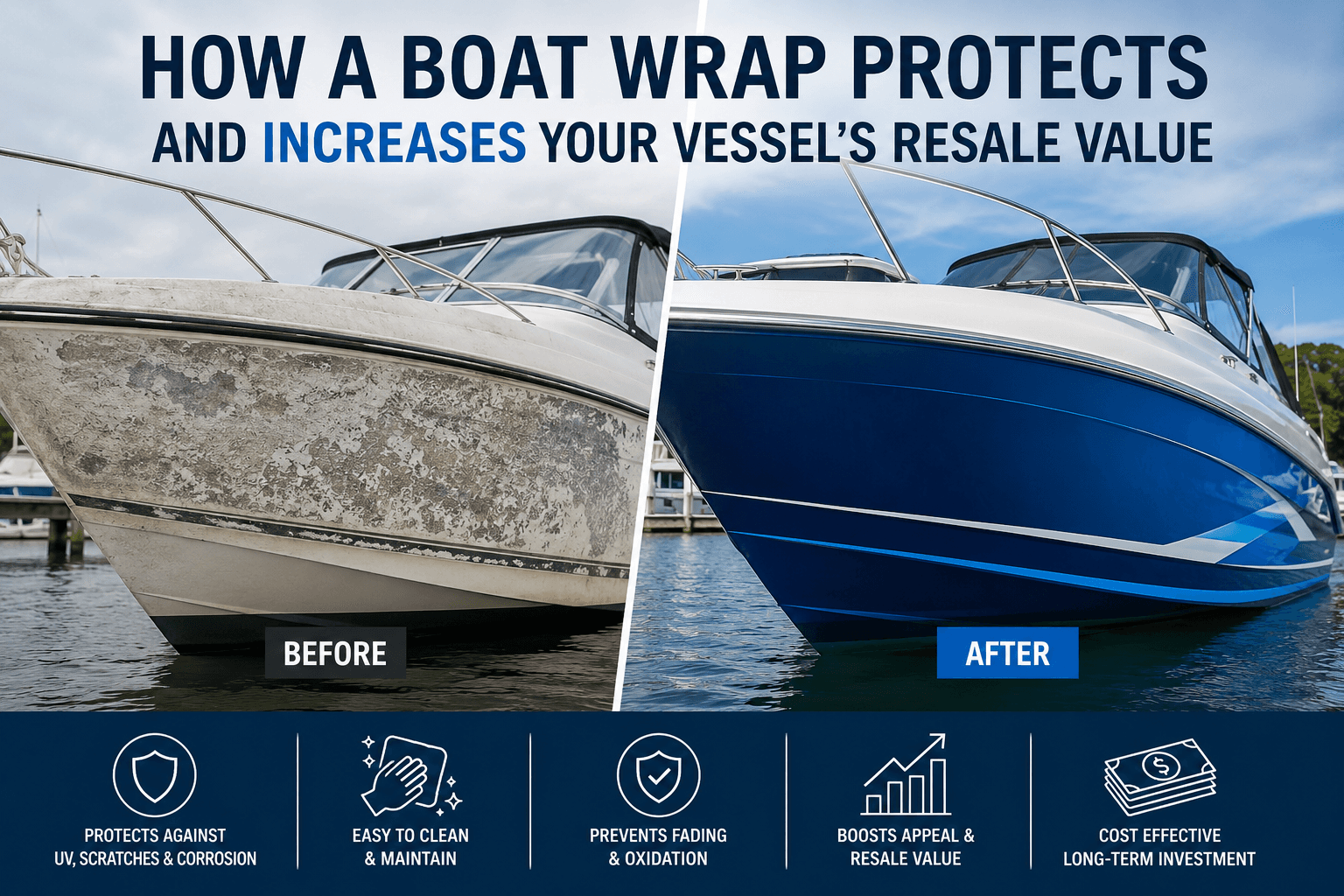
A wrap acts as a protective shield, preserving the factory gelcoat from Hudson River pollutants and jet bridge abrasion, significantly boosting resale value.
Custom graphics designed for visibility in crowded New York waterways, like the East River or Great South Bay, enhance marketing and safety.
Partnering with a certified installer like OceanWraps ensures material warranties are valid and the installation withstands regional stress points.
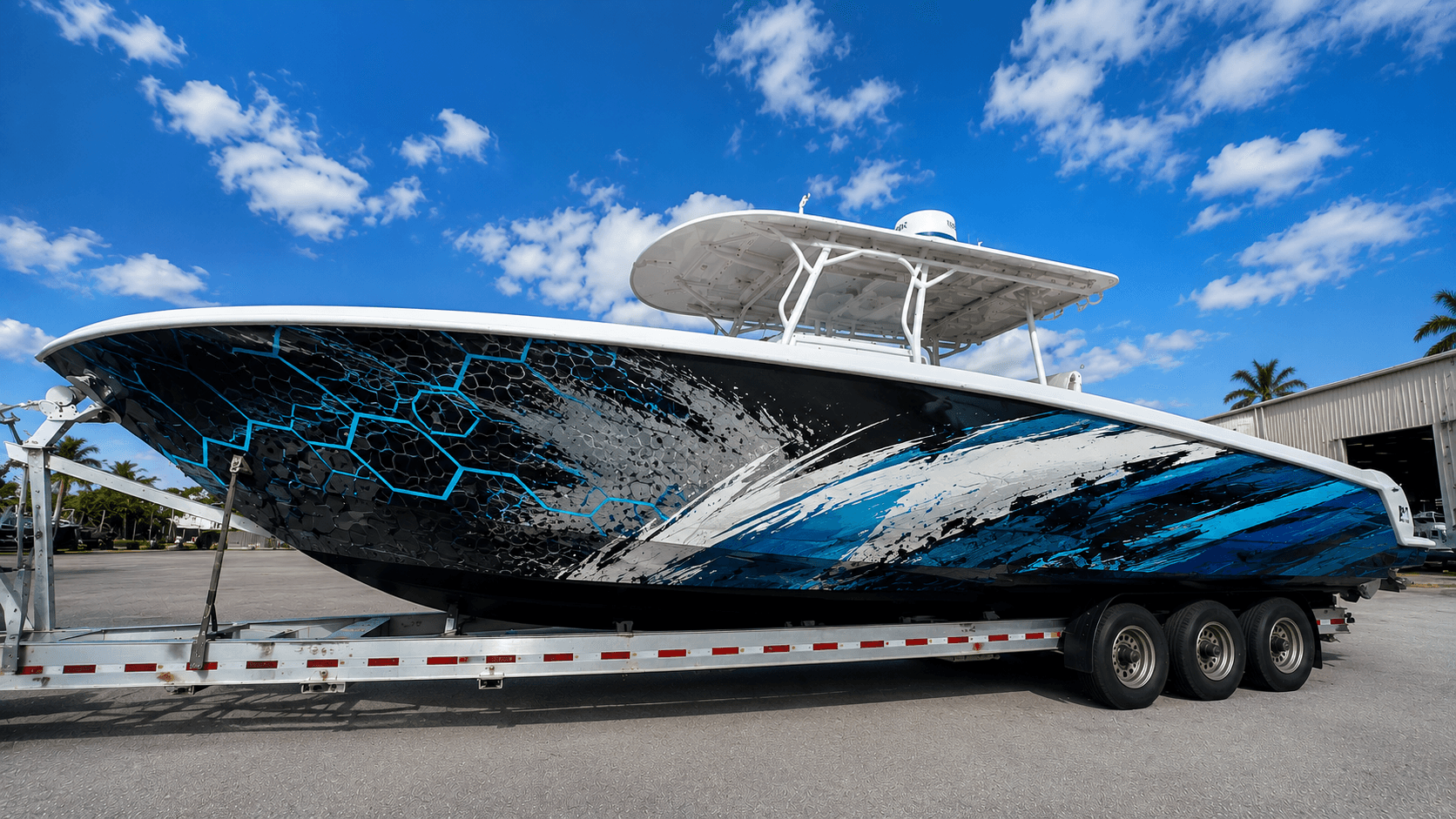
A six-boat charter fleet in Montauk faced fading paint and inconsistent branding on their offshore sportfishing vessels. The constant Atlantic exposure led to annual buffing and touch-up costs averaging $4,500 per boat. Investing in a full hull and topside wrap with bold, predatory fish graphics created a unified, aggressive brand identity. Post-installation, the fleet reported a 22% increase in website-driven bookings, attributing it directly to the photogenic new graphics shared on social media. The wrap's protective layer eliminated annual paint maintenance. The calculated ROI, factoring in increased revenue and eliminated costs, was achieved in 14 months.
Case Study 2: The Manhattan Corporate Charter Yacht#
A 65-foot motor yacht used for corporate events in New York Harbor needed to adapt its appearance for different client sectors without a costly repaint. A sophisticated two-tone wrap with a removable accent stripe allowed for visual customization. The primary wrap featured a metallic finish that resisted staining from airborne pollutants common in the urban waterfront environment. The owner secured three exclusive long-term corporate contracts, with clients citing the vessel's impeccable, modern appearance as a key factor. The flexibility of the wrap system provided a marketing edge that a static paint job could not, yielding an ROI within the first charter season.
Case Study 3: The Long Island Sound Sailing Charter#
A classic sailing schooner offering day sails on the Sound suffered from chalked and oxidized gelcoat, making it look older and less appealing than competitors. A full vinyl wrap was chosen over paint to preserve the original hull and to complete the project during a short off-season window. The new vibrant graphics made the vessel highly visible against the water. Customer surveys indicated a 30% higher perceived value for the same ticket price. The wrap also sealed the compromised gelcoat, preventing further degradation. The investment was recouped in under 12 months through higher occupancy rates and the prevention of inevitable gelcoat repair work.
Why New York Conditions Demand Professional Boat Wraps#
The New York marine environment presents a specific set of challenges that generic signage solutions or DIY kits cannot withstand. The intense summer sun accelerates UV degradation, requiring films with proven UV-resistant laminates. Saltwater immersion in the Atlantic and brackish conditions in bays attack adhesive integrity. Temperature swings from winter freezes to summer heat test material flexibility. Furthermore, the high-traffic nature of New York marinas and frequent docking increase the risk of scratches and abrasions. A professional-grade installation accounts for these factors through material science and technique, ensuring the graphics remain vibrant and protective for years, not just months.
The ROI of a boat wrap is directly tied to the quality of its installation. A professional process is systematic and non-negotiable.
Surface Preparation: The hull and topsides are meticulously de-waxed, decontaminated, and polished. Any existing damage to the gelcoat is assessed and repaired to create a perfectly smooth substrate, crucial for long-term adhesion in wet environments.
Digital Design & Templating: Graphics are engineered for the vessel's specific curves and sightlines. Professional installers use digital templates to ensure precision, avoiding awkward seams or misaligned patterns that compromise aesthetics and protection.
Precision Installation: This is where expertise is paramount. Certified installers use specialized tools and techniques to handle complex compound curves, wrap around hardware without cutting into the gelcoat, and apply consistent pressure to eliminate bubbles and wrinkles.
Post-Installation Finishing: All edges are meticulously sealed and trimmed. The wrap is heat-activated to conform permanently to the surface. A final inspection ensures no lifting points or potential moisture traps exist, which is critical for longevity in New York's climate.
Not all vinyl is created equal for marine use. Professional boat wraps utilize materials engineered for the marine environment.
Marine-grade cast vinyl is the industry standard for hulls and complex curves due to its exceptional conformability and long-term durability. It resists stretching and shrinking under thermal stress. A protective laminate is then applied over the printed graphics. This laminate is the workhorse, providing the scratch resistance, chemical resistance (against fuel, oil, and cleaners), and most importantly, UV resistance to prevent fading. Finishes range from high-gloss and metallic to matte and textured, allowing for both aesthetic customization and functional considerations, like reducing glare on decks.
Beyond the broad process, several nuanced factors specific to New York operations impact success. First, marina and port authorities may have regulations on graphic content or reflectivity. Second, winter storage practices—whether shrink-wrapped or stored indoors—affect wrap longevity and should be discussed with your installer. Third, wash-down practices using New York city water or harsh cleaners require using approved, non-abrasive cleaning solutions to preserve the laminate. Finally, understanding the warranty's fine print regarding saltwater immersion and extreme weather is essential; professional installers like OceanWraps stand behind their work with comprehensive warranties because they use the correct materials and methods.
How long do boat wraps last in New York's climate?#
A professionally installed, marine-grade boat wrap from a certified installer can last 5 to 7 years, even in New York's demanding conditions. The key factors are the quality of the cast vinyl and laminate used, the precision of the installation, and proper maintenance. Inferior materials or installation may fail in 2-3 years.
Can a wrap be applied over old paint or damaged gelcoat?#
A wrap can be applied over stable, solid paint and lightly oxidized gelcoat after proper professional preparation. However, it is not a solution for failing substrate. The wrap requires a smooth, clean, and sound surface to adhere to properly. A reputable installer will assess your hull's condition and recommend necessary repairs first, as OceanWraps does for every project.
No, a professionally applied and removed vinyl wrap protects the original gelcoat from UV rays, oxidation, and minor abrasions. Upon removal by a professional using correct techniques, the underlying gelcoat is revealed in its pre-wrap condition, often in better shape than if it had been exposed to the elements.
What is the main advantage over traditional paint for a charter business?#
The primary advantages are time, cost flexibility, and marketing agility. A wrap can be installed in days, not weeks, minimizing off-hire time. It costs less than a premium paint job for complex graphics. It also allows for complete brand overhauls or seasonal promotions without the permanence and cost of paint, enabling fleets to test marketing messages and adapt quickly in a competitive market like New York.
New Boat Prices Are Skyrocketing — Here's the Smarter Move Boat Owners Are Making
New boat prices are at record highs. Here's why more owners are choosing marine vinyl wraps to refresh their boat's look and protect the hull, without the cost of buying new
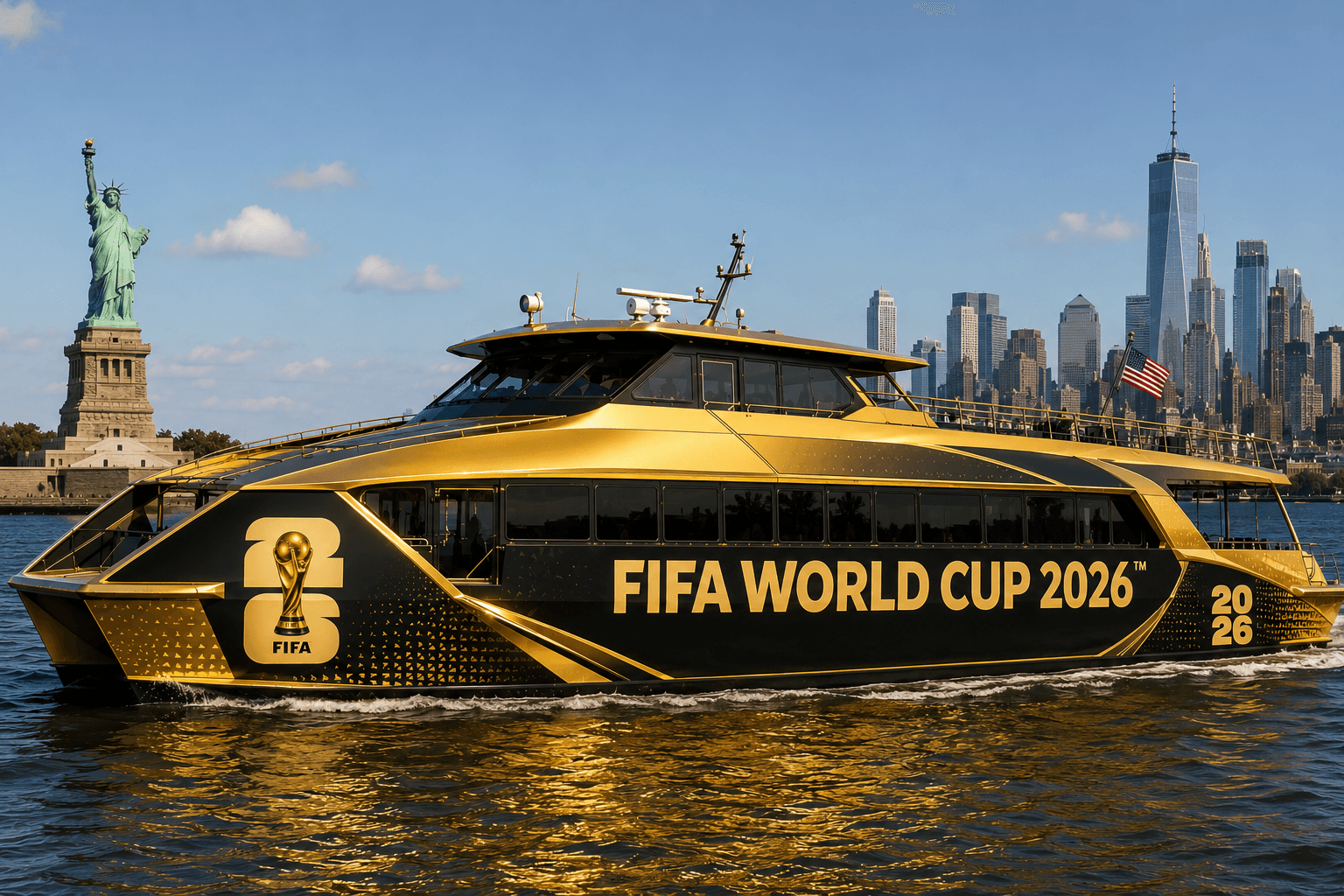
Get your boat ready for FIFA World Cup 2026 with a luxury custom wrap. Stand out on the water with premium marine graphics, gold finishes, and championship-inspired designs.
New Boat Prices Are Skyrocketing — Here's the Smarter Move Boat Owners Are Making
New boat prices are at record highs. Here's why more owners are choosing marine vinyl wraps to refresh their boat's look and protect the hull, without the cost of buying new
Boat Wraps Services
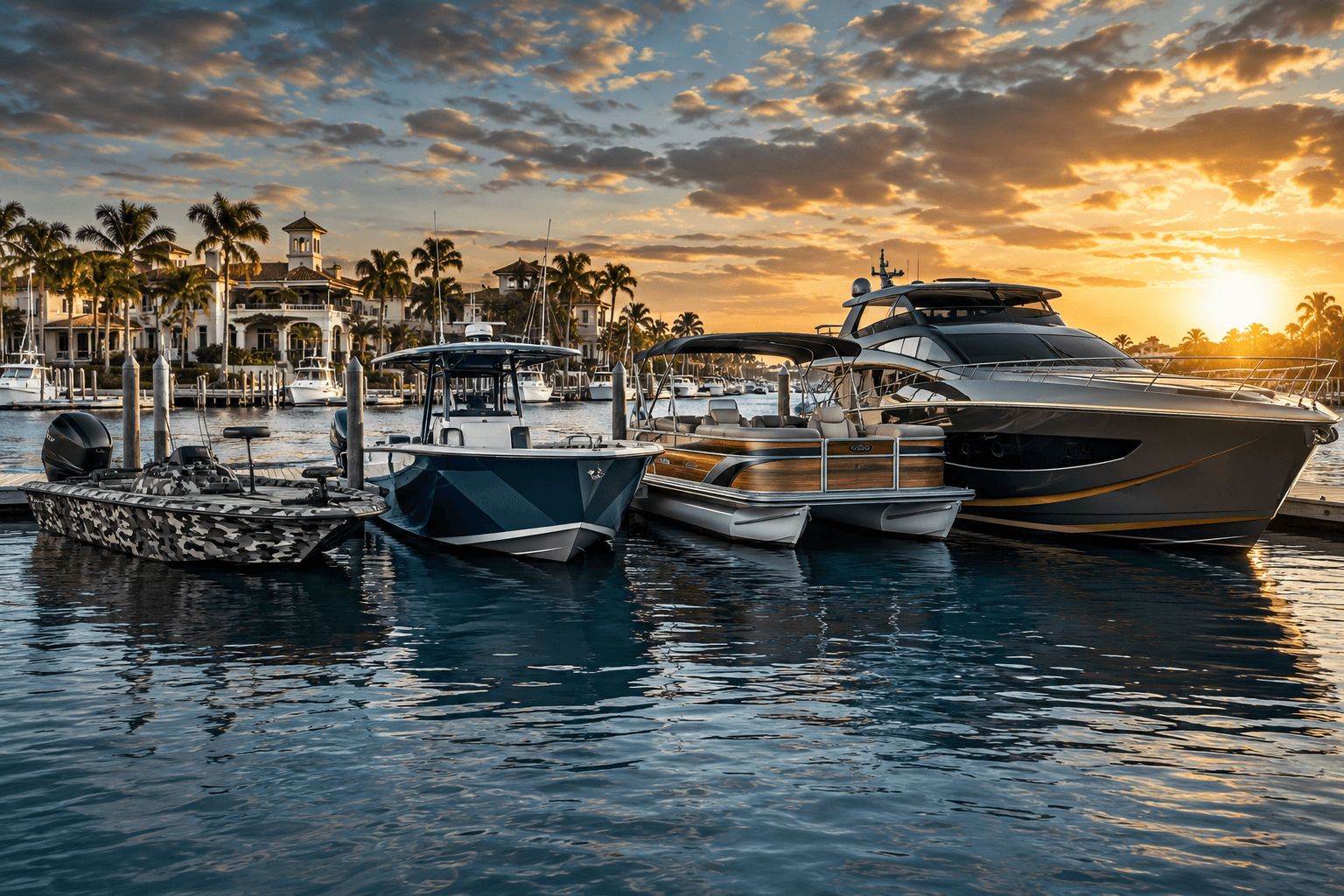
Boat Wrap Designs by Boat Type: What Actually Works on Your Vessel
A wrap that's perfect for a sportfishing boat chasing marlin offshore would look completely out of place on a family pontoon.
Boat Wraps Services
How a Boat Wrap Protects and Increases Your Vessel's Resale Value
How a Boat Wrap Can Protect and Increase Your Vessel's Resale Value
Boat Wraps Services
Top 10 FIFA World Cup Boat Wrap Ideas to Try This Season
If you already know you want your boat wrapped for World Cup season, the next question is which design actually fits your vessel.
Boat Wraps Services
Custom Boat Wraps for FIFA World Cup 2026
Get your boat ready for FIFA World Cup 2026 with a luxury custom wrap. Stand out on the water with premium marine graphics, gold finishes, and championship-inspired designs.
Boat Wraps Services
Luxury Yacht Wraps: The Complete Guide to Finishes, Styles, and Custom Marine Vinyl
Ocean Wraps works with luxury yacht and cruiser owners who want professional results, durable materials, and a finish that holds up on the water.
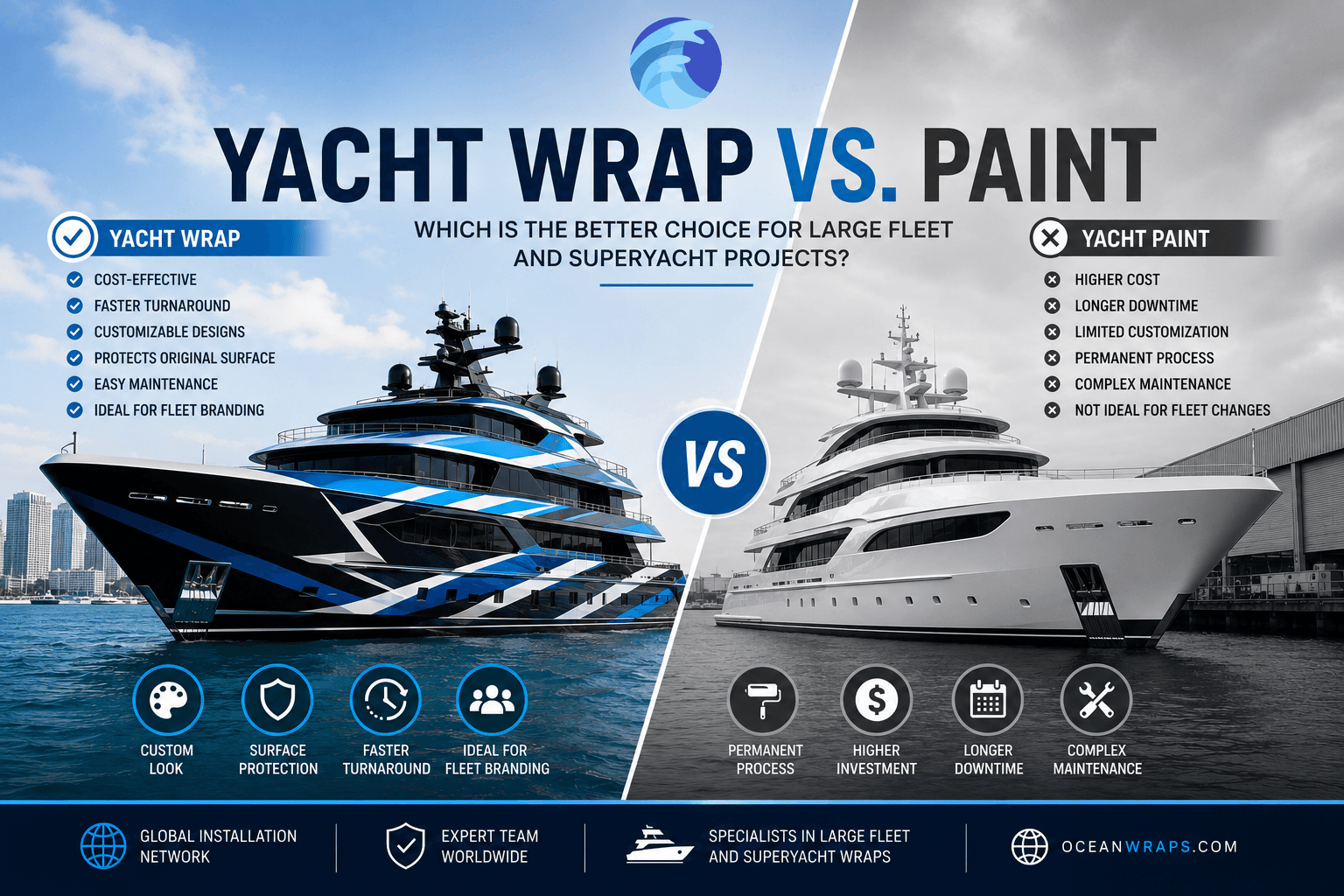
Yacht Wrap vs. Paint for Large Fleet & Superyacht Projects
Deciding between yacht wrap and paint for your fleet or superyacht? We break down real costs, downtime, durability, and which option actually makes sense at scale
How Much Does a Boat Wrap Cost? Complete Pricing Guide for 2026
Boat wrap prices vary widely depending on size, materials, and installer quality. Here's what a professional wrap actually costs in 2026 — and what to watch out for.
Luxury Yacht Wraps: The Complete Guide to Finishes, Styles, and Custom Marine Vinyl
Ocean Wraps works with luxury yacht and cruiser owners who want professional results, durable materials, and a finish that holds up on the water.
Boat Wraps Services
Why Florida Boat Owners Are Choosing Vinyl Boat Wraps in 2026
Discover why Florida boat owners are switching from paint to vinyl boat wraps. Learn the benefits, costs, protection, and customization options.
Guides
Boat Wraps vs Paint: 5 Reasons Why Wraps Win
Boat wraps cost less, install faster, and protect your gel coat better than traditional paint. Here's why so many boat owners are making the switch.
Guides
Yacht Wrap vs. Paint for Large Fleet & Superyacht Projects
Deciding between yacht wrap and paint for your fleet or superyacht? We break down real costs, downtime, durability, and which option actually makes sense at scale
Guides
How Much Does a Boat Wrap Cost? Complete Pricing Guide for 2026
Boat wrap prices vary widely depending on size, materials, and installer quality. Here's what a professional wrap actually costs in 2026 — and what to watch out for.