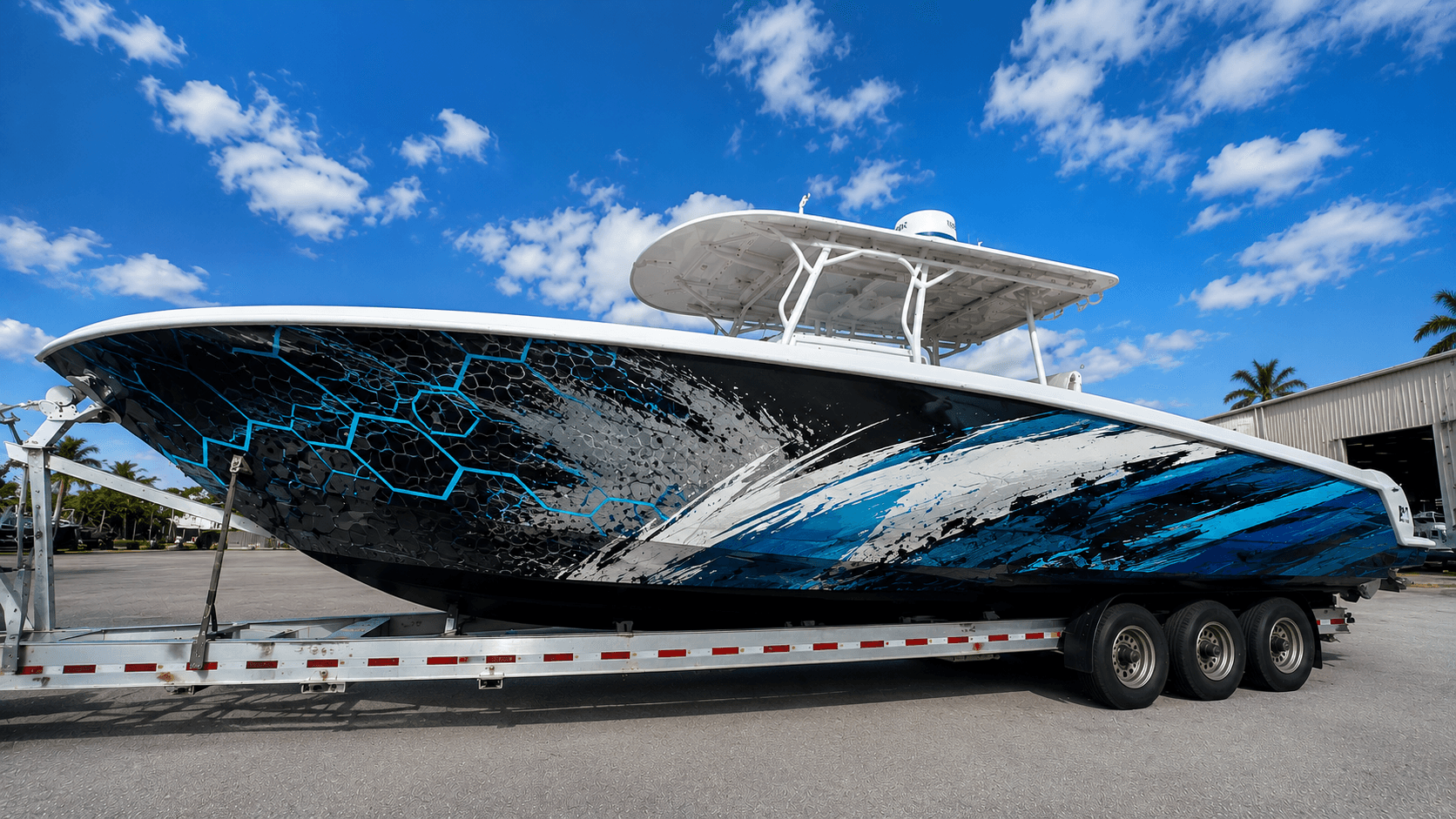
Professional boat wraps for commercial fishing fleets. Durable marine vinyl graphics for hull identification, regulatory markings, and branding. Built for harsh
Last updated February 22, 2026
Boat wraps for commercial fishing operations, a vessel's exterior is a critical asset for identification, safety, and compliance, not just aesthetics. Standard paint and decals often fail under constant UV exposure, saltwater immersion, and physical abrasion. A professionally installed boat wrap, using engineered marine-grade materials, provides a superior solution for durable hull graphics, mandatory regulatory markings, and fleet branding. This page details the technical specifications and processes specific to commercial fishing vessels.
Marine-grade cast vinyl with protective laminate offers 5-8 years of durability, far outperforming standard decals or painted graphics in harsh environments.
Proper surface preparation of the gelcoat is the single most critical factor for long-term adhesion and preventing premature failure.
Wraps integrate mandatory markings like vessel numbers, port of hail, and safety labels with custom branding into a single, cohesive, and durable system.
Professional installation accounts for complex hull curvature and includes rigorous edge sealing techniques to prevent saltwater intrusion.
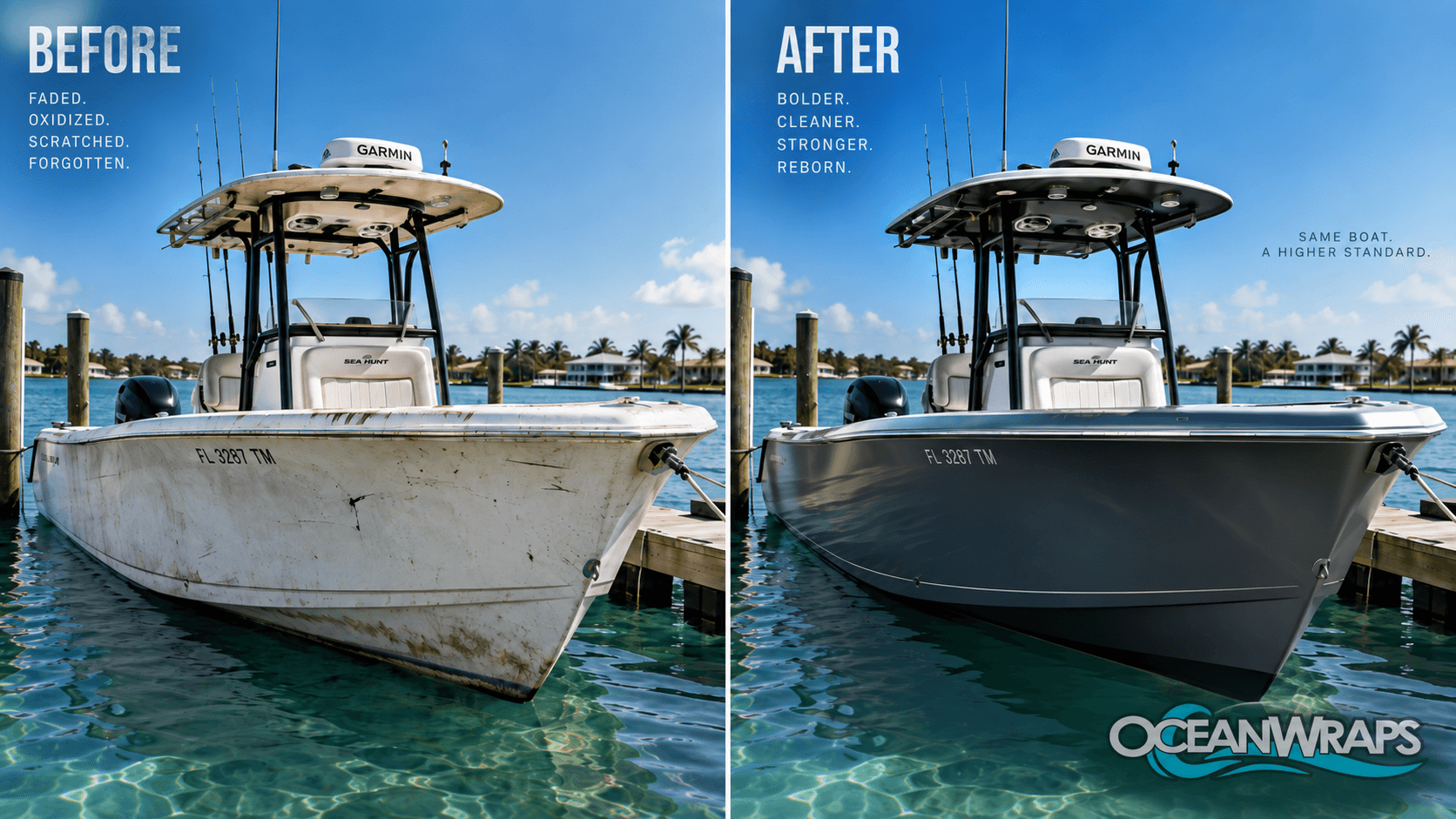
A well-maintained wrap simplifies hull cleaning and can protect the underlying gelcoat from UV degradation and minor surface damage.
Every project begins with a thorough assessment of the hull and topside surfaces. Old graphics, oxidation, and contaminants must be removed. The gelcoat is then cleaned with specialized marine solvents and lightly abraded to create the ideal surface profile for vinyl adhesion. This step cannot be rushed, as adhesion failure typically stems from poor prep.
Graphics are designed to incorporate legally required elements—such as official vessel numbers, port markings, and safety labels—seamlessly with company logos and color schemes. Proofs are reviewed for regulatory accuracy and visual impact on the vessel's specific contours.
Installation is a multi-day process requiring controlled conditions. Large panels are meticulously applied using specialized slip solutions and heat to conform to compound curves and hull strakes. The focus is on eliminating wrinkles, air pockets, and ensuring all edges are firmly sealed.
Once installed, all panel seams and perimeter edges are heat-activated and pressed to create a permanent bond. A final inspection under different light angles ensures a flawless finish and confirms all regulatory graphics meet size and contrast specifications.
This is the color layer. Cast vinyl is manufactured for extreme conformability and long-term dimensional stability. It resists shrinking and stretching, which is crucial for large hull applications exposed to temperature swings. It features inherent UV inhibitors to prevent fading.
A clear, glossy, or matte polyurethane laminate is applied over the printed vinyl. This layer provides abrasion resistance, protects the ink from UV degradation and saltwater, adds chemical resistance, and simplifies surface cleaning. The laminate is the primary shield against physical wear.
Durability: High-performance films are rated for 5-8 years of marine exposure.
UV Resistance: Pigments and laminates are stabilized to resist fading.
Conformability: Essential for adhering to the complex curves of a fishing vessel hull and topside.
Adhesive: Aggressive, pressure-activated marine adhesive designed for long-term bonding to gelcoat.
With professional installation on a properly prepared surface, a marine-grade wrap typically lasts 5 to 8 years. Longevity depends on environmental exposure, maintenance practices, and the specific materials used.
It is not recommended. For a permanent, reliable bond, all existing vinyl, decals, and failing paint must be completely removed. The wrap must adhere directly to a sound, clean, and prepared gelcoat or painted substrate.
Are the regulatory markings compliant with USCG rules?#
Yes. The graphics are produced to the exact specifications for size, color contrast, and placement as required by regulations. During design, all elements are verified against current standards for your vessel's documentation and home port requirements.
What is the maintenance compared to traditional paint?#
Maintenance is generally simpler. The laminated surface is smooth and non-porous, making it easier to clean and more resistant to staining from fuel, oil, and fish residues. It does not require waxing or compounding like painted gelcoat.
New Boat Prices Are Skyrocketing — Here's the Smarter Move Boat Owners Are Making
New boat prices are at record highs. Here's why more owners are choosing marine vinyl wraps to refresh their boat's look and protect the hull, without the cost of buying new
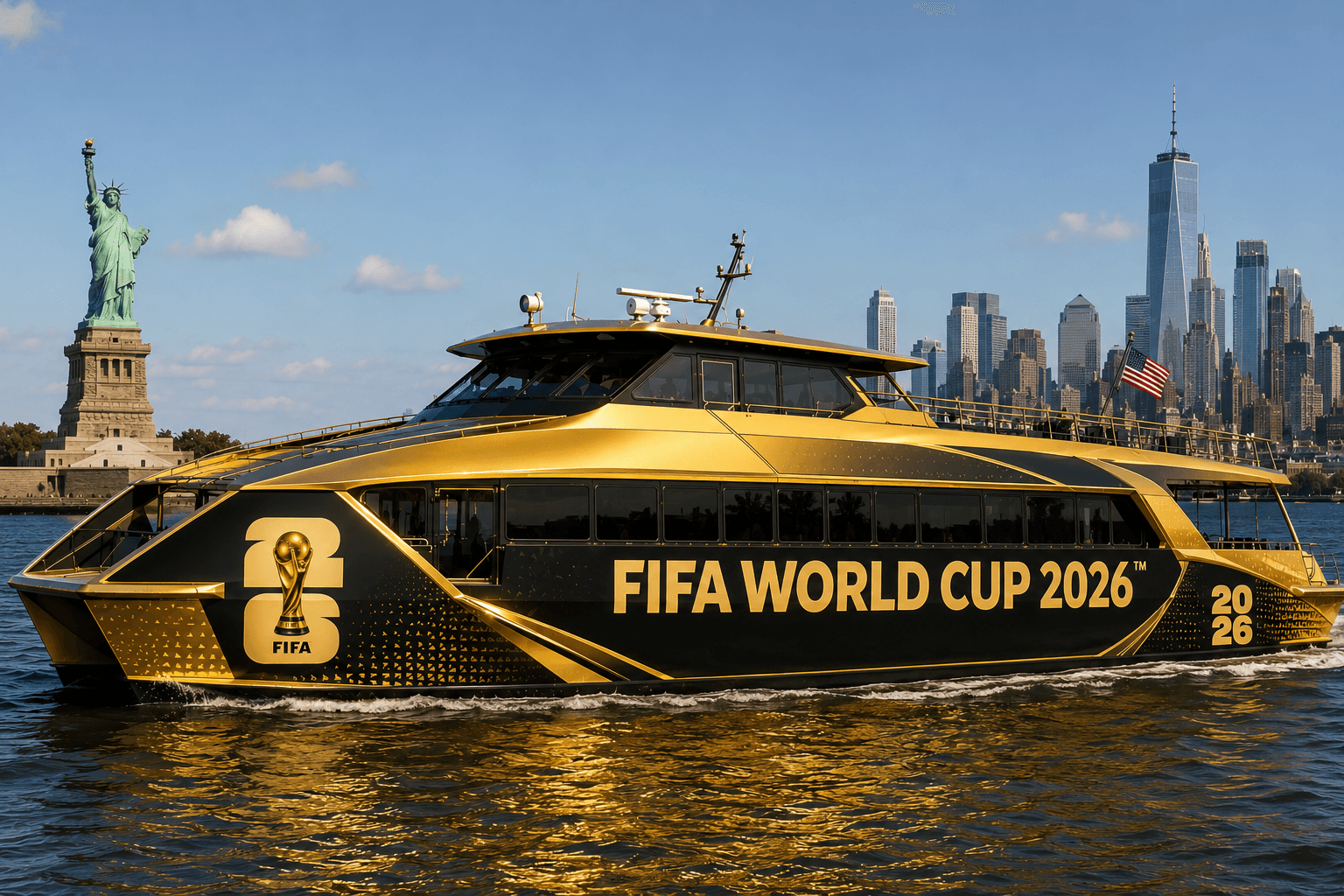
Get your boat ready for FIFA World Cup 2026 with a luxury custom wrap. Stand out on the water with premium marine graphics, gold finishes, and championship-inspired designs.
New Boat Prices Are Skyrocketing — Here's the Smarter Move Boat Owners Are Making
New boat prices are at record highs. Here's why more owners are choosing marine vinyl wraps to refresh their boat's look and protect the hull, without the cost of buying new
Boat Wraps Services
Boat Wrap Designs by Boat Type: What Actually Works on Your Vessel
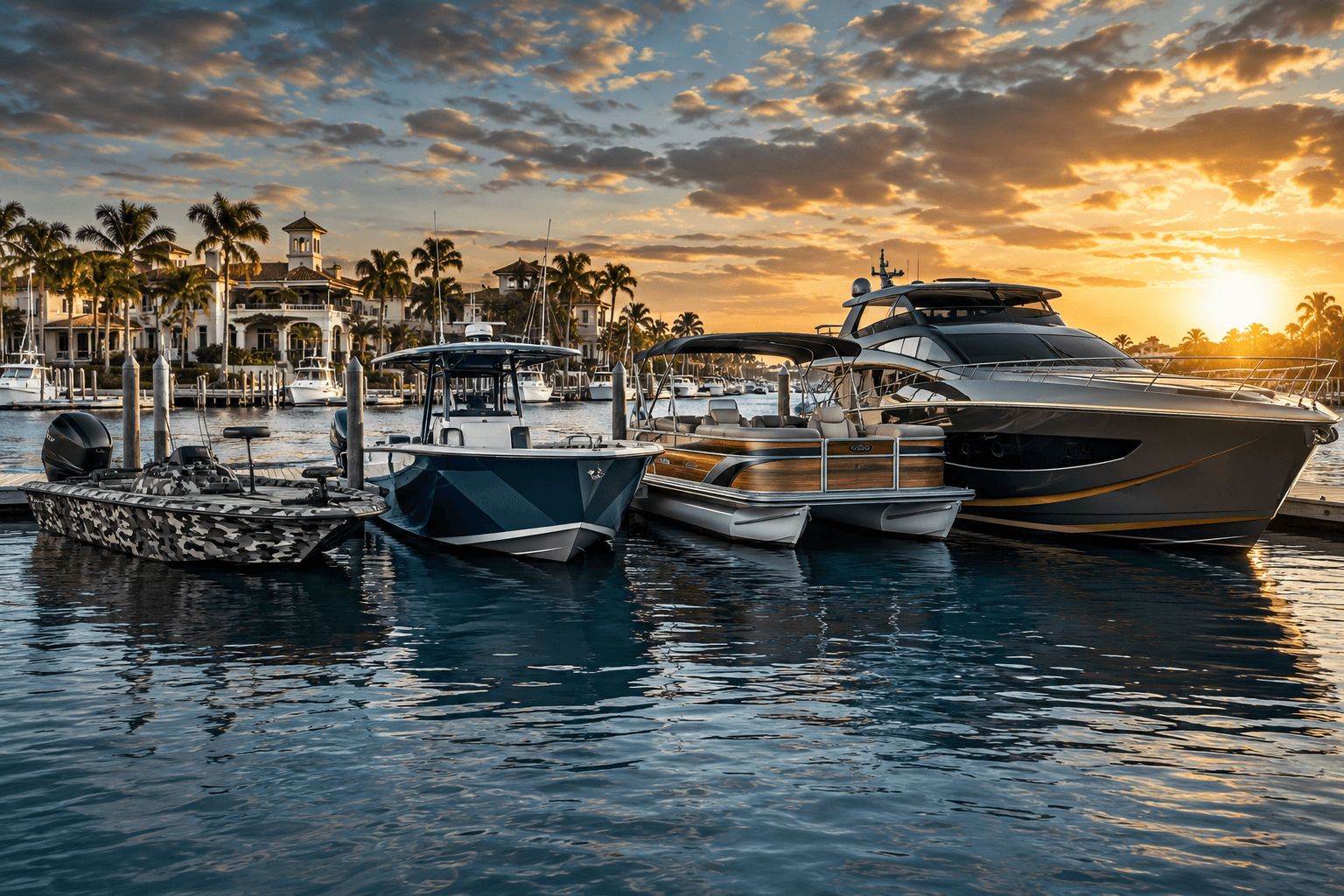
A wrap that's perfect for a sportfishing boat chasing marlin offshore would look completely out of place on a family pontoon.
Boat Wraps Services
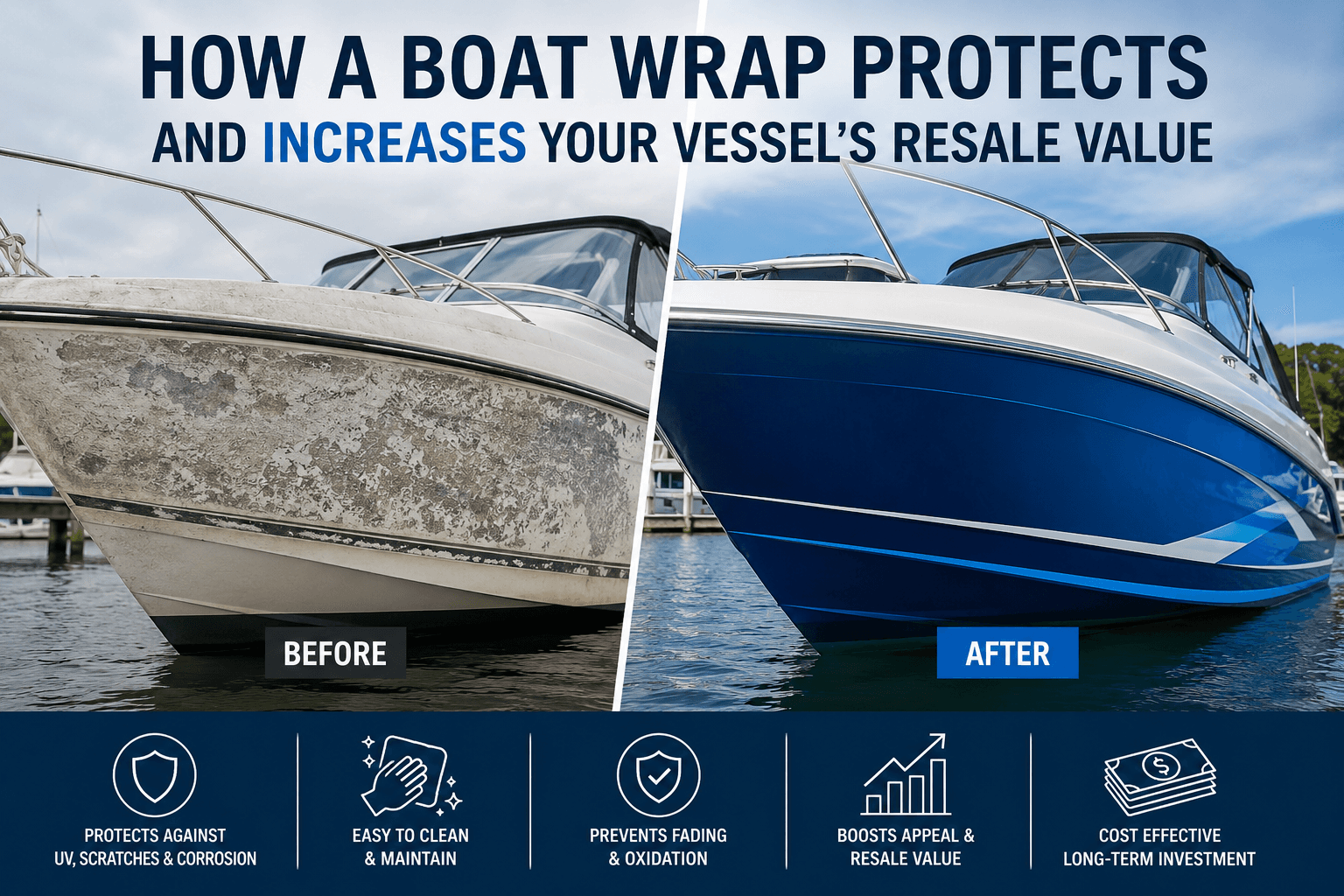
How a Boat Wrap Protects and Increases Your Vessel's Resale Value
How a Boat Wrap Can Protect and Increase Your Vessel's Resale Value
Boat Wraps Services
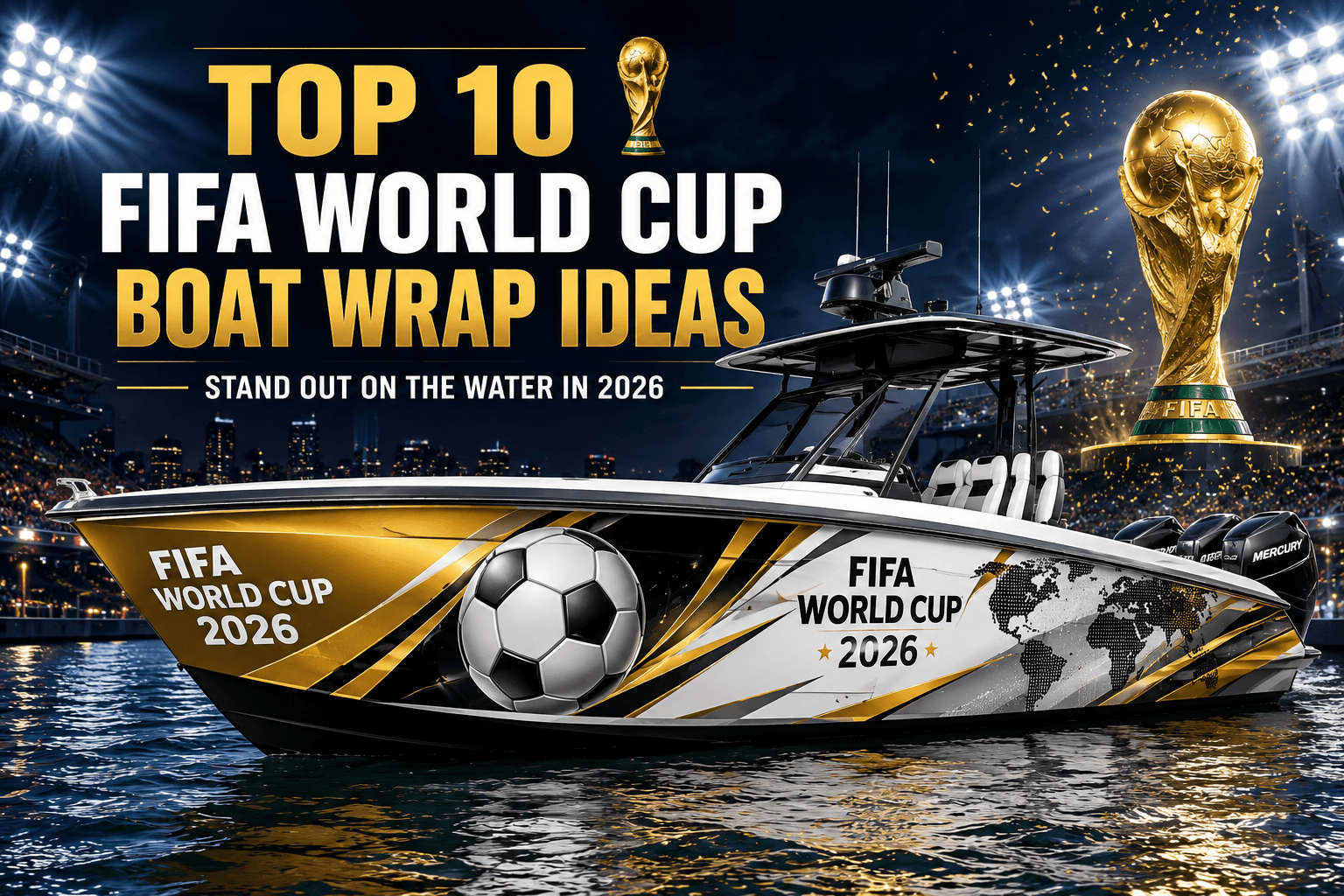
Top 10 FIFA World Cup Boat Wrap Ideas to Try This Season
If you already know you want your boat wrapped for World Cup season, the next question is which design actually fits your vessel.
Boat Wraps Services
Custom Boat Wraps for FIFA World Cup 2026
Get your boat ready for FIFA World Cup 2026 with a luxury custom wrap. Stand out on the water with premium marine graphics, gold finishes, and championship-inspired designs.
Boat Wraps Services
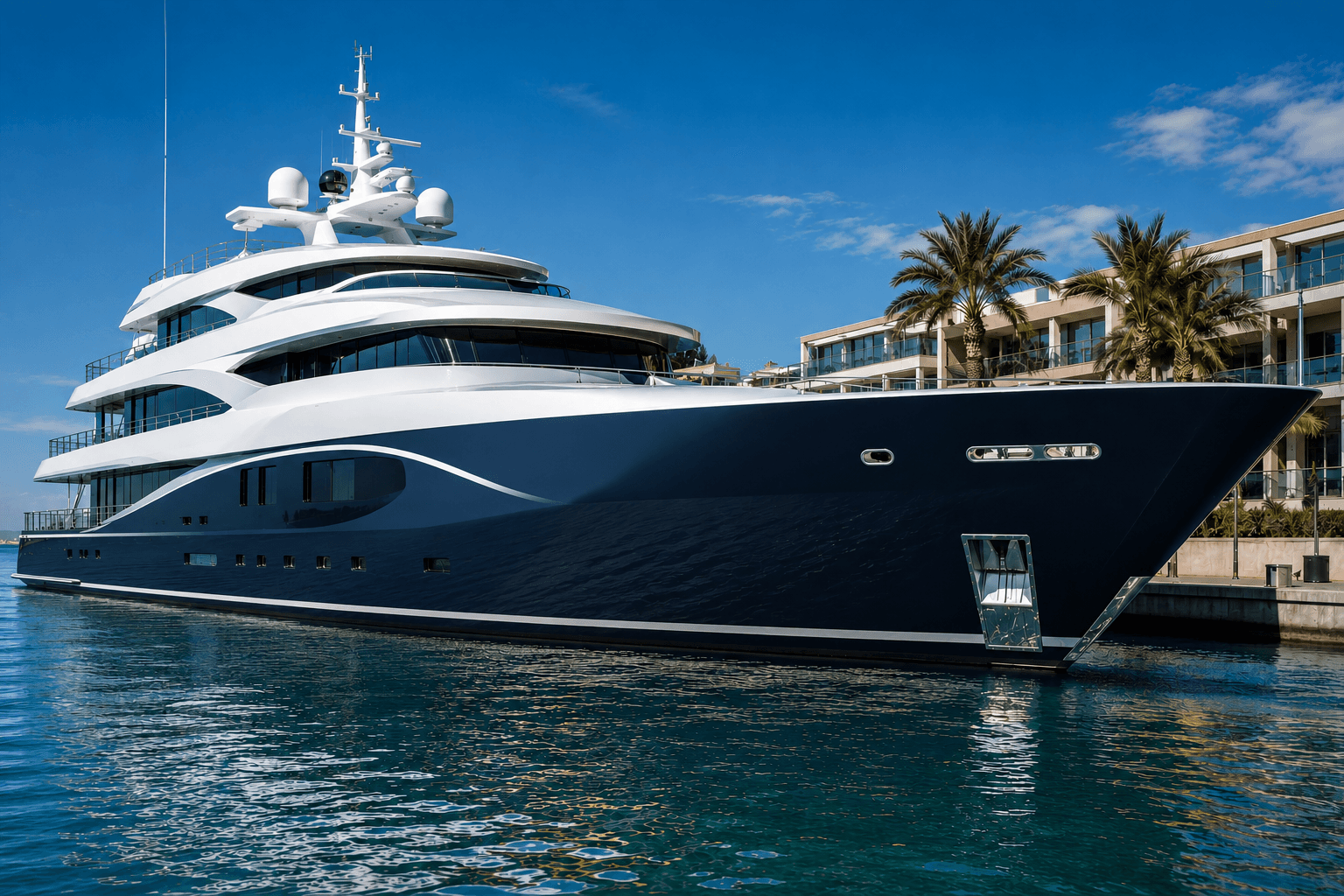
Luxury Yacht Wraps: The Complete Guide to Finishes, Styles, and Custom Marine Vinyl
Ocean Wraps works with luxury yacht and cruiser owners who want professional results, durable materials, and a finish that holds up on the water.
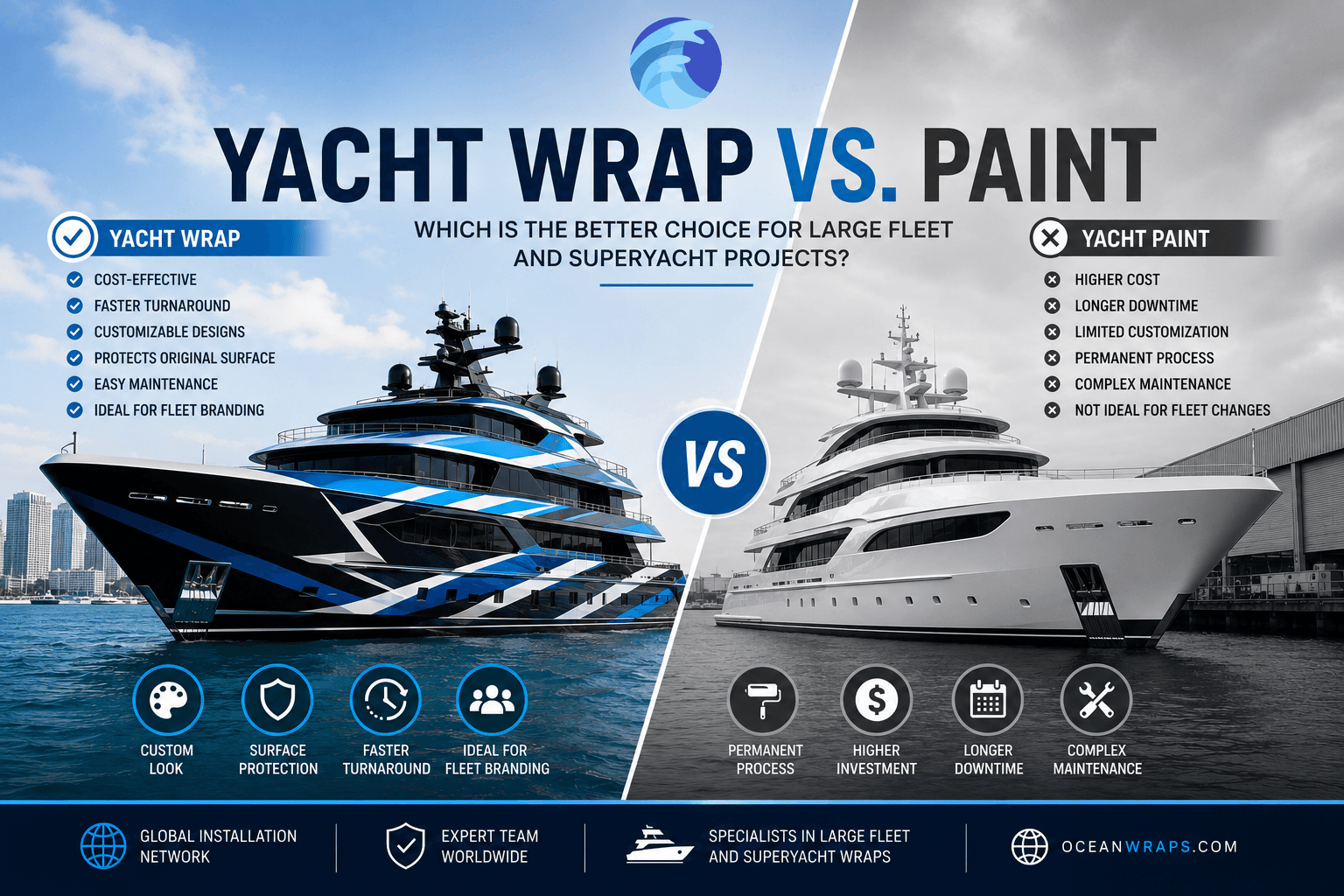
Yacht Wrap vs. Paint for Large Fleet & Superyacht Projects
Deciding between yacht wrap and paint for your fleet or superyacht? We break down real costs, downtime, durability, and which option actually makes sense at scale
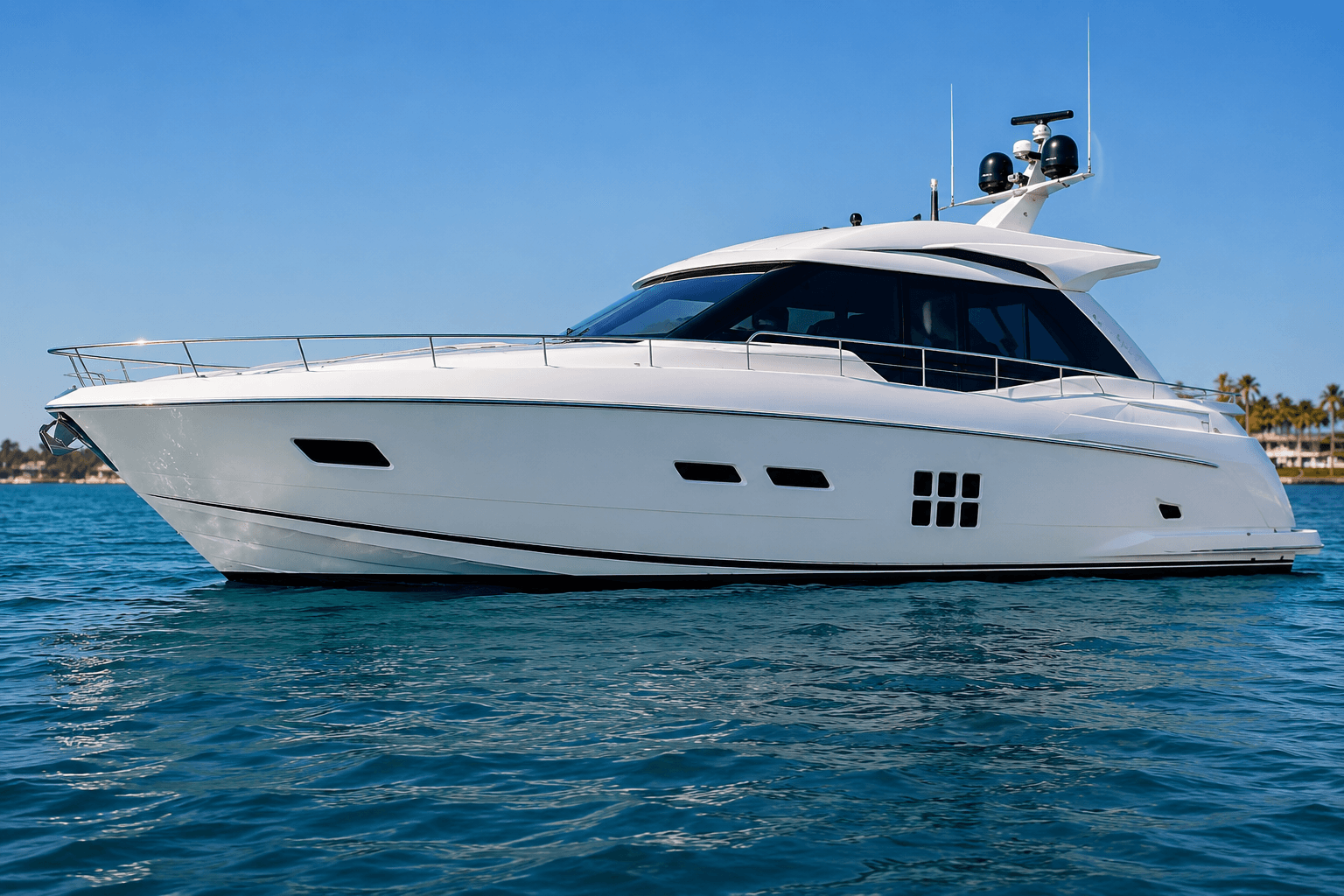
How Much Does a Boat Wrap Cost? Complete Pricing Guide for 2026
Boat wrap prices vary widely depending on size, materials, and installer quality. Here's what a professional wrap actually costs in 2026 — and what to watch out for.
Luxury Yacht Wraps: The Complete Guide to Finishes, Styles, and Custom Marine Vinyl
Ocean Wraps works with luxury yacht and cruiser owners who want professional results, durable materials, and a finish that holds up on the water.
Boat Wraps Services
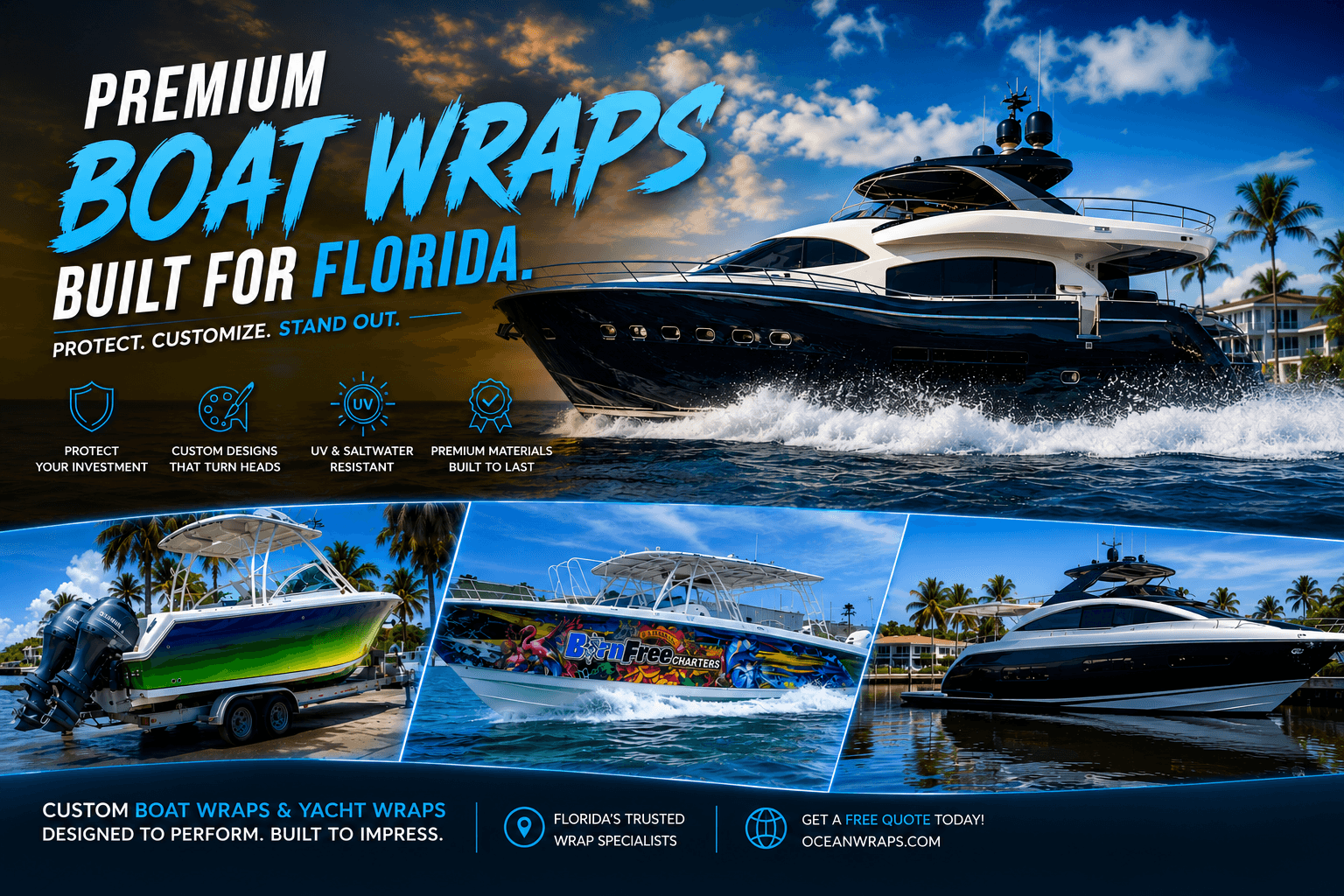
Why Florida Boat Owners Are Choosing Vinyl Boat Wraps in 2026
Discover why Florida boat owners are switching from paint to vinyl boat wraps. Learn the benefits, costs, protection, and customization options.
Guides
Boat Wraps vs Paint: 5 Reasons Why Wraps Win
Boat wraps cost less, install faster, and protect your gel coat better than traditional paint. Here's why so many boat owners are making the switch.
Guides
Yacht Wrap vs. Paint for Large Fleet & Superyacht Projects
Deciding between yacht wrap and paint for your fleet or superyacht? We break down real costs, downtime, durability, and which option actually makes sense at scale
Guides
How Much Does a Boat Wrap Cost? Complete Pricing Guide for 2026
Boat wrap prices vary widely depending on size, materials, and installer quality. Here's what a professional wrap actually costs in 2026 — and what to watch out for.