Ocean Wraps designs durable, compliant boat wraps for commercial fishing fleets. We handle graphics, regulatory markings, and marine-grade installation.
Last updated February 26, 2026
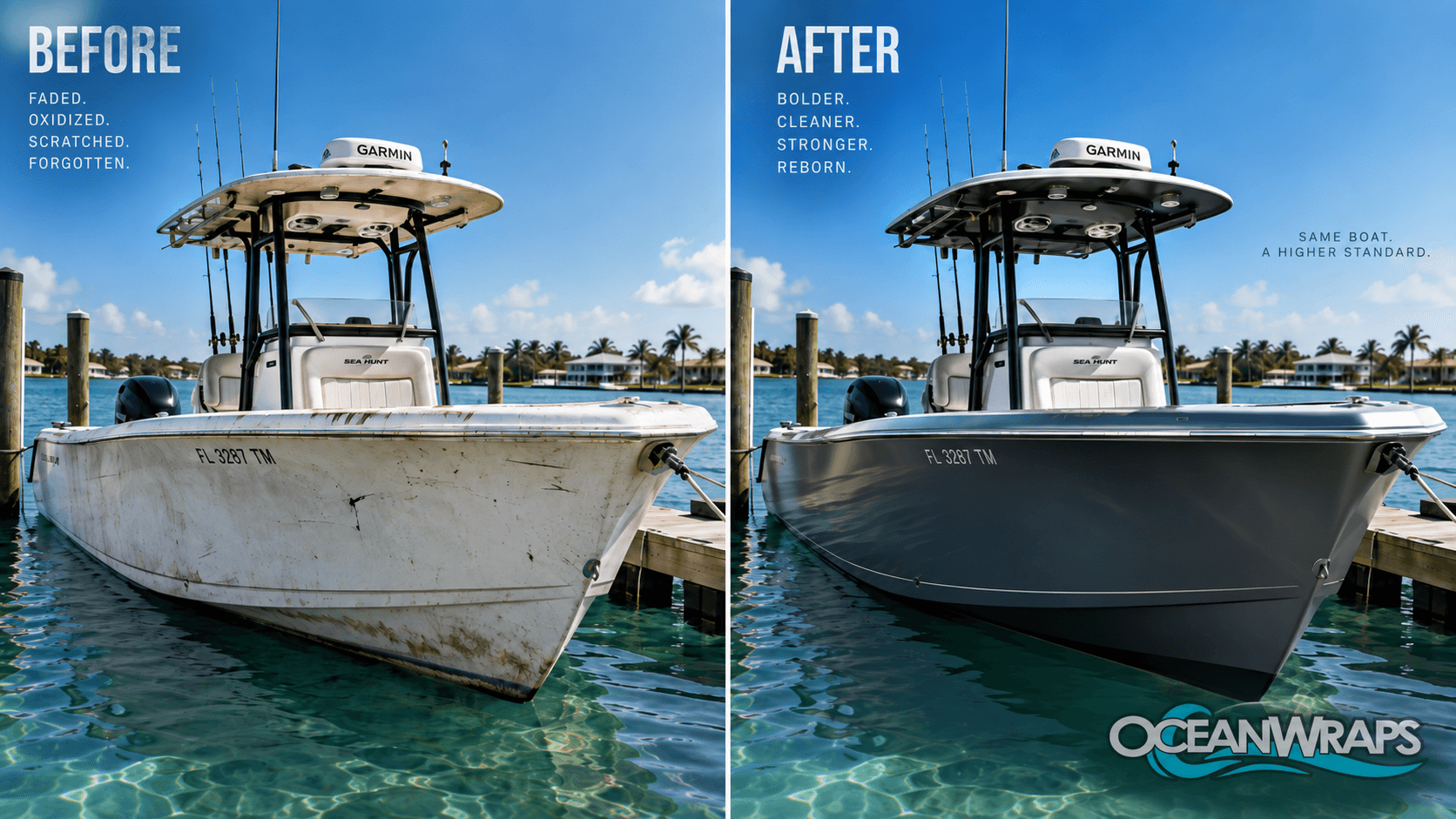
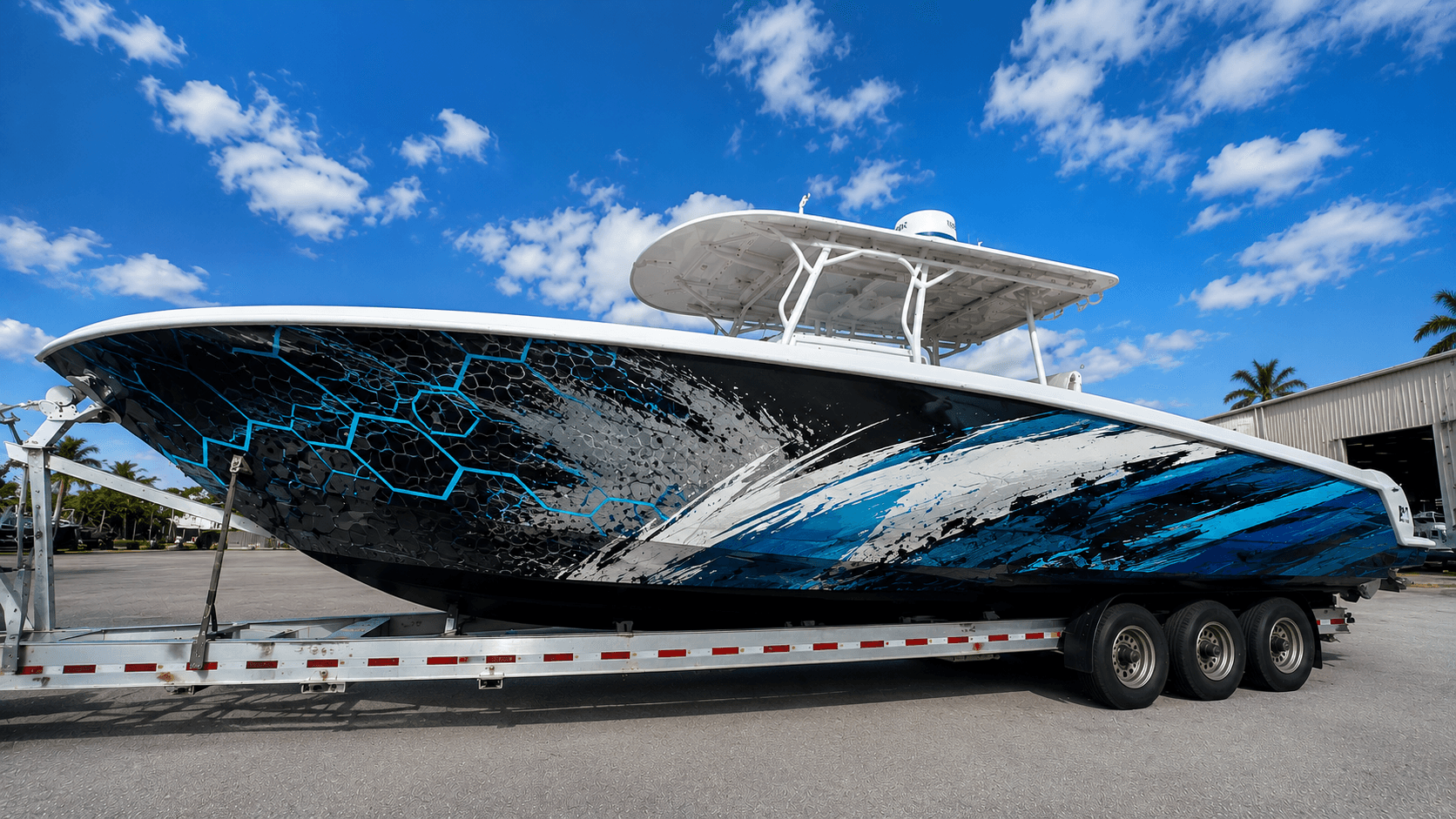
For commercial fishing operations, a vessel's exterior is a critical asset for identification, safety, and compliance. Custom boat wraps offer a superior alternative to traditional paint for applying company graphics, branding, and mandatory regulatory markings. Unlike generic decals, a full or partial hull and topside wrap is a engineered system designed for the marine environment, combining durability with high-impact visual communication. Ocean Wraps specializes in solutions that meet the specific demands of the commercial fishing industry.
The operating profile of a fishing vessel dictates unique requirements for any exterior graphics. Constant exposure to salt spray, fuel, fish oils, and heavy sun demands materials far beyond standard signage vinyl. Furthermore, Coast Guard and other regulatory bodies have strict, permanent rules for the display of vessel names, numbers, and hailing ports. A professional boat wrap must be designed to incorporate these elements seamlessly, ensuring they remain legible and compliant for the life of the installation.
A critical design phase involves mapping the exact placement of all required markings. The wrap graphics must be crafted to frame or surround these elements without covering them. In some cases, markings can be digitally reproduced as part of the wrap itself, provided they meet material and color permanence regulations. This integration ensures a unified, professional appearance while maintaining full legal compliance.
The base film is a premium cast vinyl formulated for marine use. Its conformability is essential for adhering to the compound curves of a hull and topside without wrinkling or lifting. Cast vinyl also possesses superior memory, allowing it to resist shrinkage and distortion over time compared to cheaper calendared films.
A clear, glossy, or matte laminate is liquid-applied or laminated over the printed graphics. This layer is the primary shield, providing UV resistance to prevent fading, and creating a barrier against chemicals, abrasion from docks and gear, and staining. The laminate's hardness and clarity are key performance factors.
The gelcoat must be flawless for optimal adhesion. This involves a thorough de-waxing, degreasing, and compounding to remove oxidation, old wax, and contaminants. Any existing damage should be repaired. The surface must be completely dry and brought to a consistent temperature. Skipping this step is the leading cause of wrap failure.
Using vessel diagrams or precise measurements, the graphic layout is created, incorporating all branding and respecting regulatory marking zones. A critical pre-production step is printing and laminating a small test panel to check color accuracy and material behavior before the full job is produced.
Installation is a multi-person process requiring controlled conditions, ideally indoors or under a sheltered marina dock. The vinyl is carefully positioned, squeegeed to remove air and fluid, and stretched and post-heated to conform to complex shapes. Special attention is paid to edges, hatches, and hardware.
After installation, all edges are sealed with a marine-grade edge sealant to prevent water ingress. The adhesive requires a curing period, typically 48-72 hours, before the vessel can be returned to the water or subjected to heavy weather. The team at Ocean Wraps provides specific aftercare instructions.
How long do commercial fishing boat wraps typically last?#
With professional-grade materials and installation, a wrap on a working vessel can last 5 to 7 years. Lifespan is influenced by sun exposure, maintenance, and operational wear. The protective laminate is the sacrificial layer that degrades first, shielding the printed graphics beneath.
Can you wrap over existing graphics or painted hull numbers?#
A wrap can be applied over stable, well-adhered paint or graphics, but it will replicate the underlying texture. For a flawless finish, old markings are typically removed. Crucially, permanent regulatory markings cannot be simply covered; the wrap design must accommodate them.
What is the difference between a wrap and paint for a working vessel?#
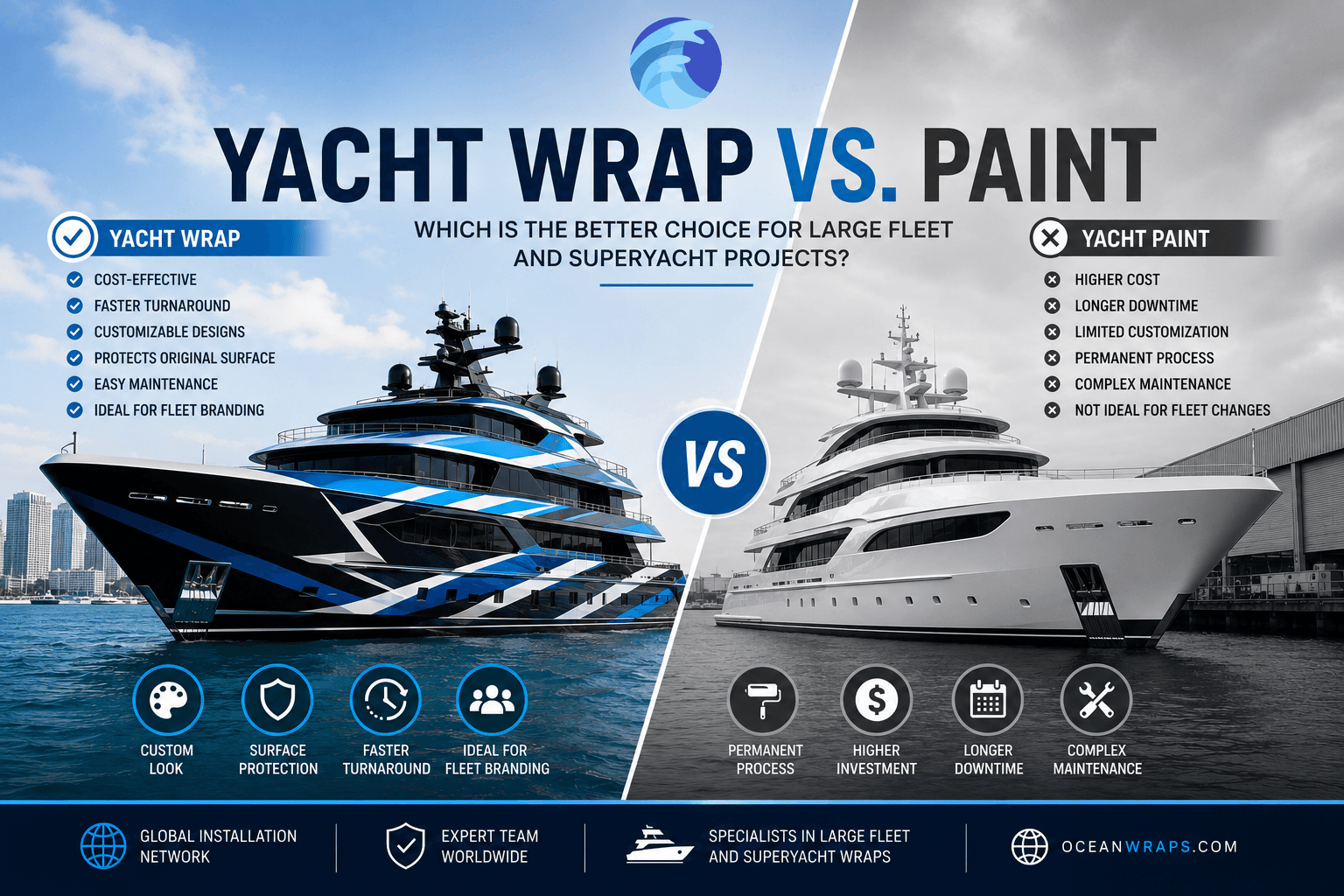
Paint is a permanent coating that chemically bonds to the gelcoat. A wrap is a removable film that protects the substrate. Wraps offer faster application with no curing downtime, more complex graphic possibilities, and easier future changes. Paint may have a longer ultimate lifespan but requires more extensive and disruptive application.
How are complex curves and hardware on the hull handled during installation?#
Experienced installers use techniques like relief cutting, strategic seam placement, and precise heating to stretch and form the vinyl around curves, strakes, and through-hull fittings. Hardware is often removed when possible, or the vinyl is meticulously trimmed and sealed around it.
New Boat Prices Are Skyrocketing — Here's the Smarter Move Boat Owners Are Making
New boat prices are at record highs. Here's why more owners are choosing marine vinyl wraps to refresh their boat's look and protect the hull, without the cost of buying new
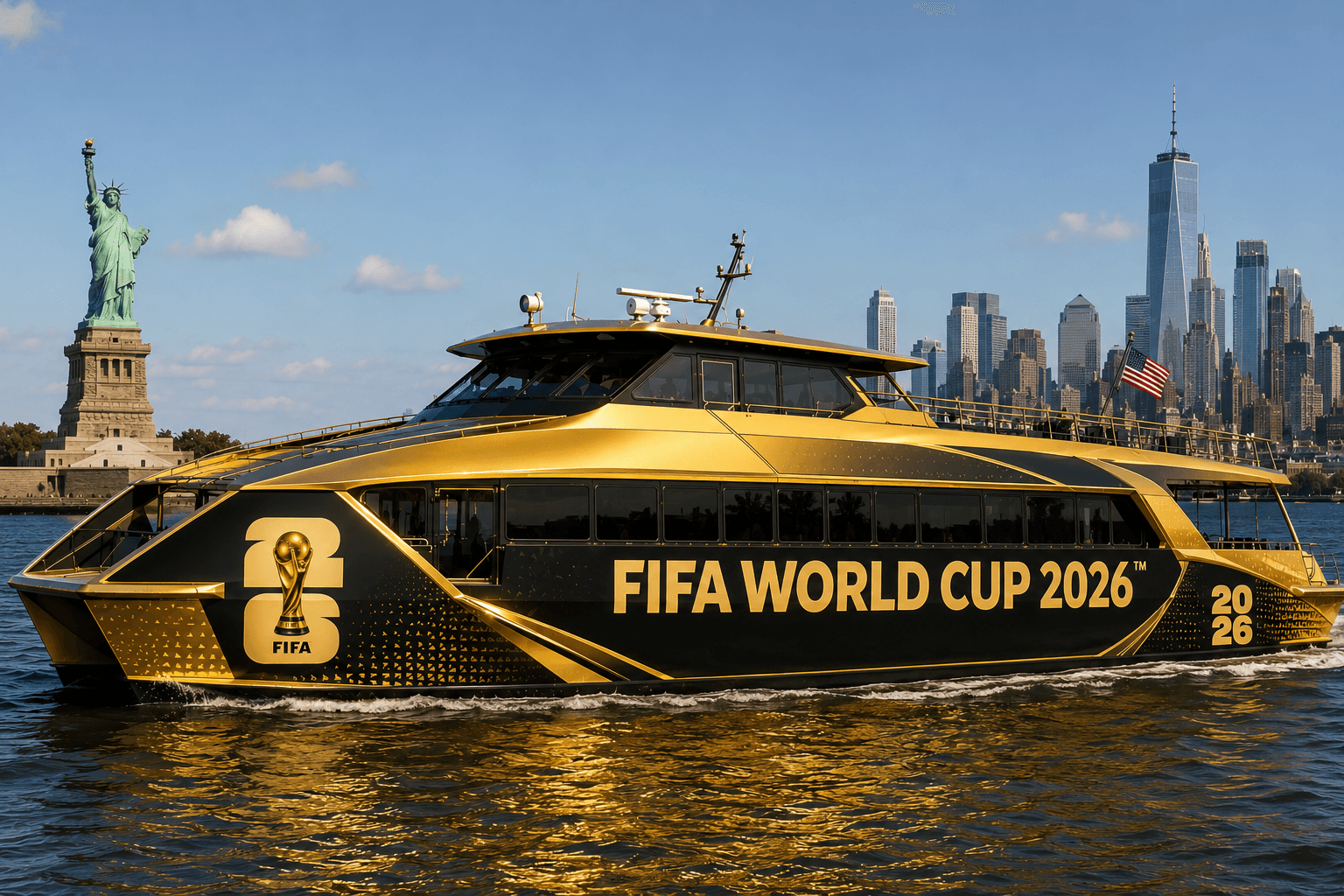
Get your boat ready for FIFA World Cup 2026 with a luxury custom wrap. Stand out on the water with premium marine graphics, gold finishes, and championship-inspired designs.
New Boat Prices Are Skyrocketing — Here's the Smarter Move Boat Owners Are Making
New boat prices are at record highs. Here's why more owners are choosing marine vinyl wraps to refresh their boat's look and protect the hull, without the cost of buying new
Boat Wraps Services
Boat Wrap Designs by Boat Type: What Actually Works on Your Vessel
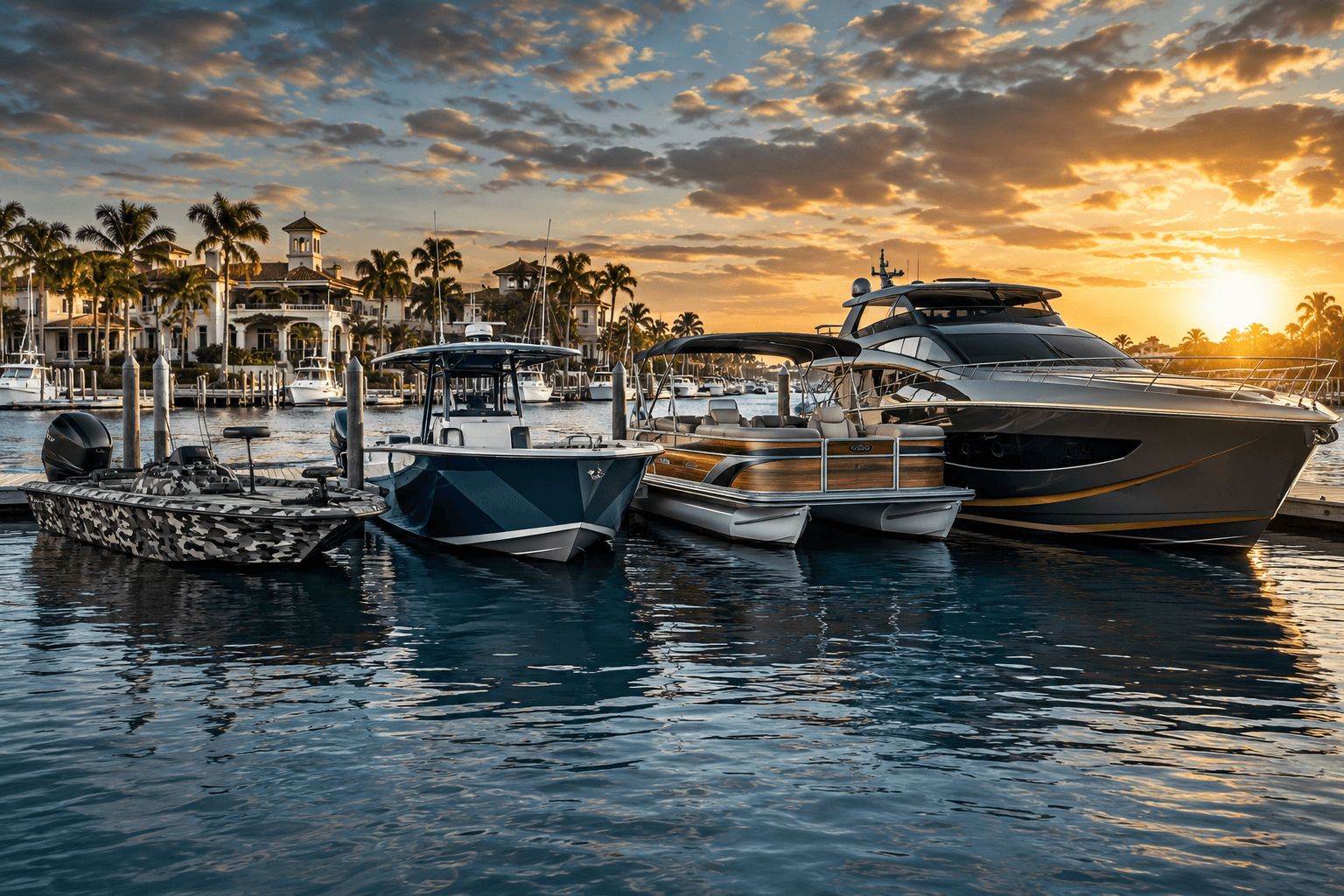
A wrap that's perfect for a sportfishing boat chasing marlin offshore would look completely out of place on a family pontoon.
Boat Wraps Services
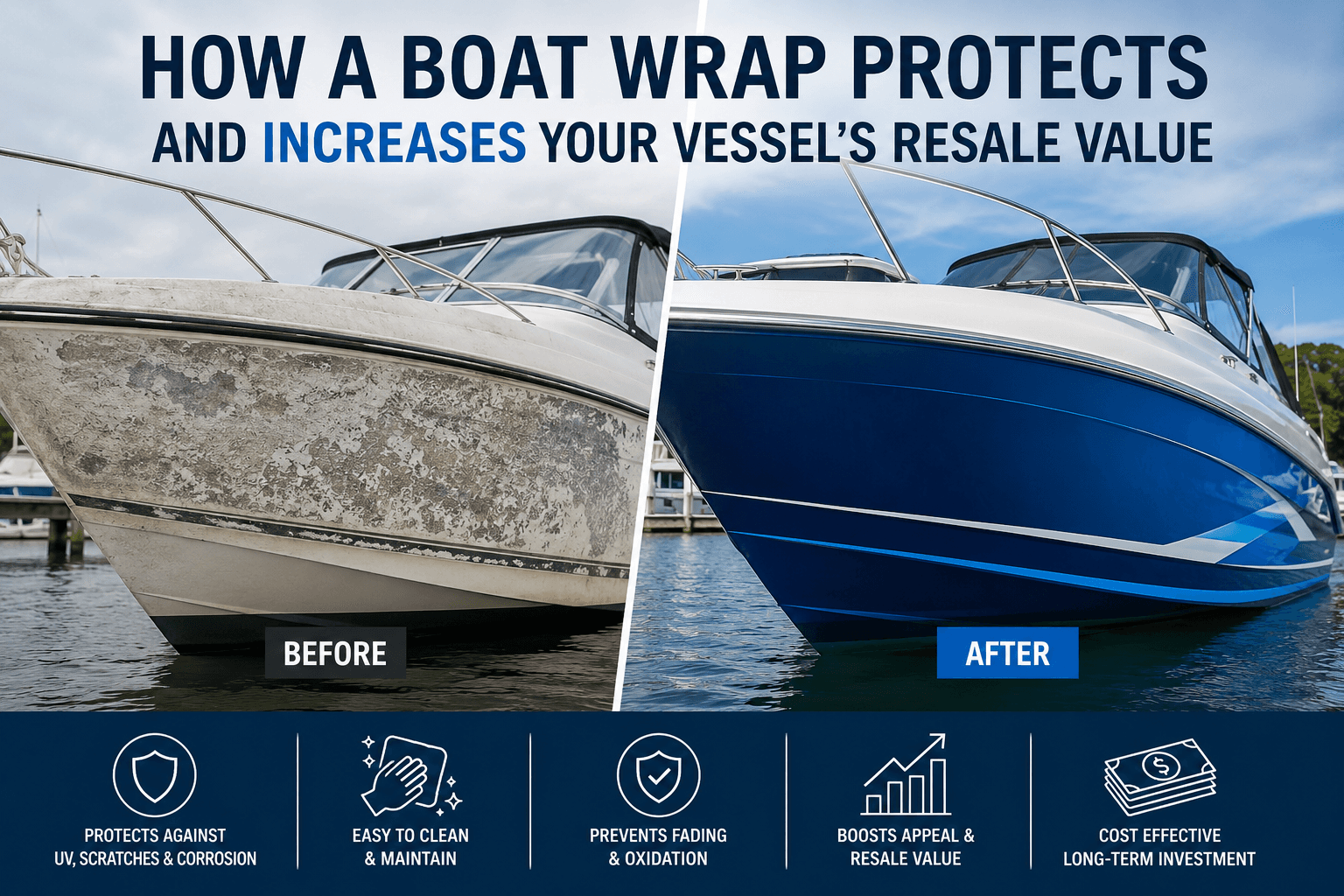
How a Boat Wrap Protects and Increases Your Vessel's Resale Value
How a Boat Wrap Can Protect and Increase Your Vessel's Resale Value
Boat Wraps Services
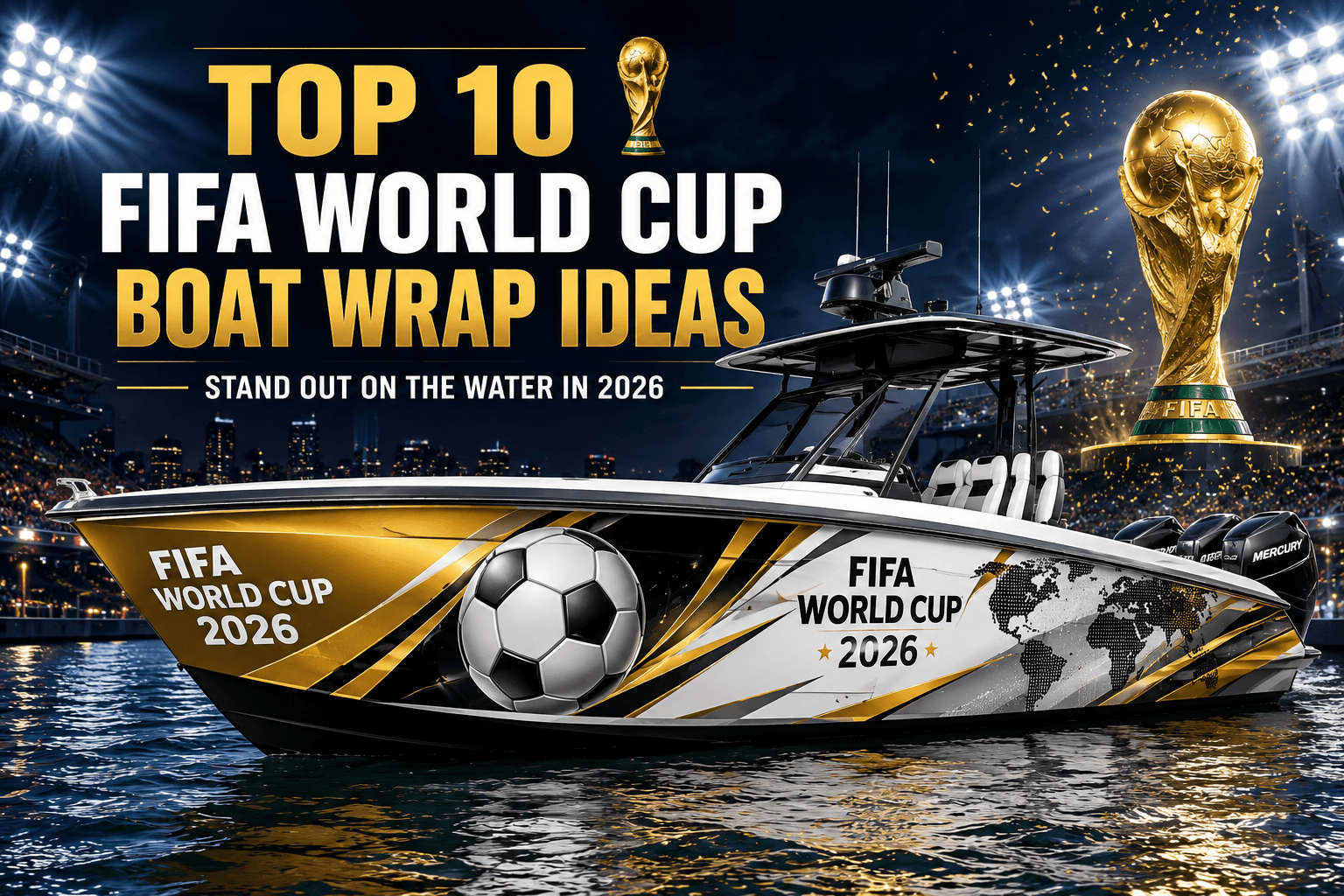
Top 10 FIFA World Cup Boat Wrap Ideas to Try This Season
If you already know you want your boat wrapped for World Cup season, the next question is which design actually fits your vessel.
Boat Wraps Services
Custom Boat Wraps for FIFA World Cup 2026
Get your boat ready for FIFA World Cup 2026 with a luxury custom wrap. Stand out on the water with premium marine graphics, gold finishes, and championship-inspired designs.
Boat Wraps Services
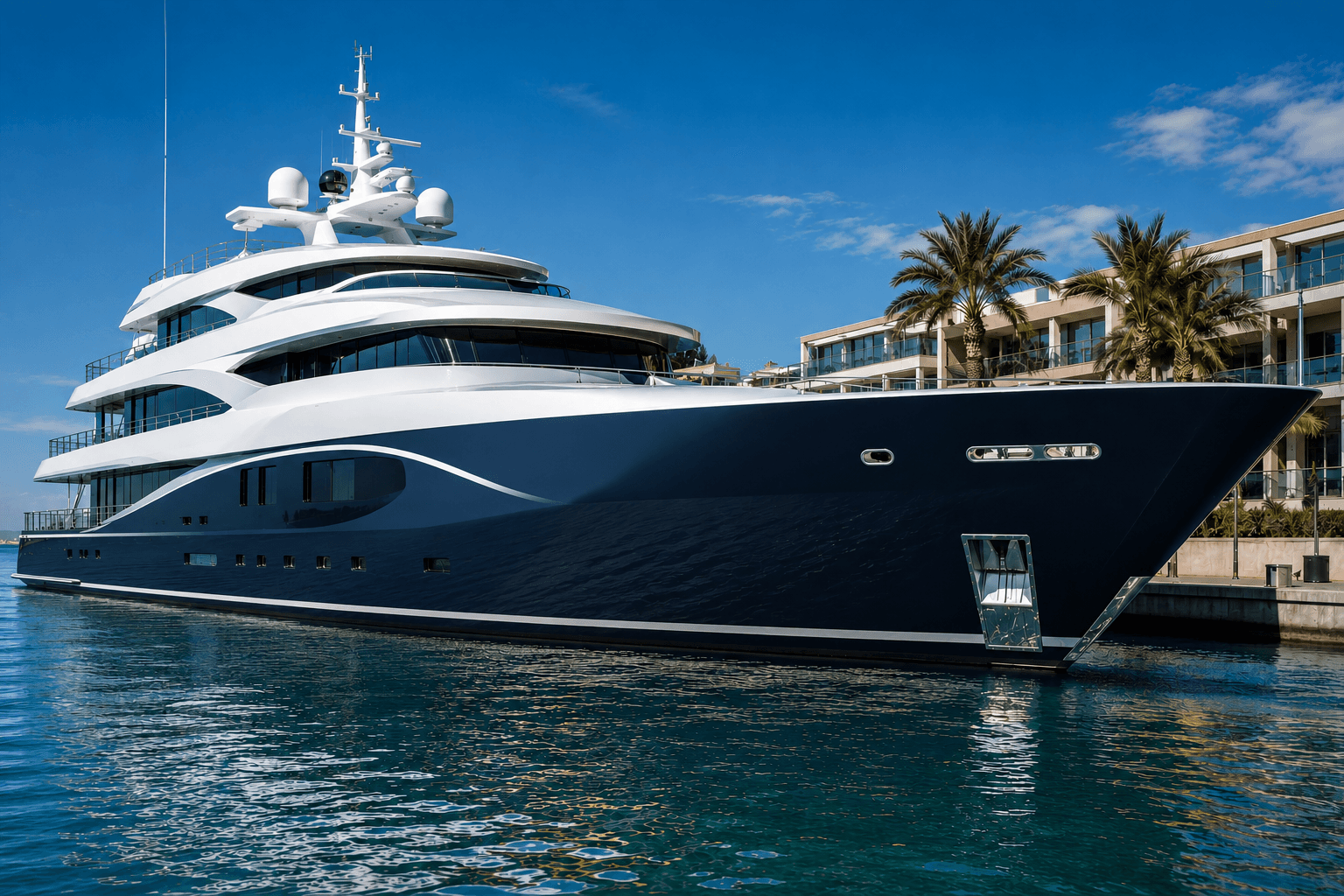
Luxury Yacht Wraps: The Complete Guide to Finishes, Styles, and Custom Marine Vinyl
Ocean Wraps works with luxury yacht and cruiser owners who want professional results, durable materials, and a finish that holds up on the water.
Yacht Wrap vs. Paint for Large Fleet & Superyacht Projects
Deciding between yacht wrap and paint for your fleet or superyacht? We break down real costs, downtime, durability, and which option actually makes sense at scale
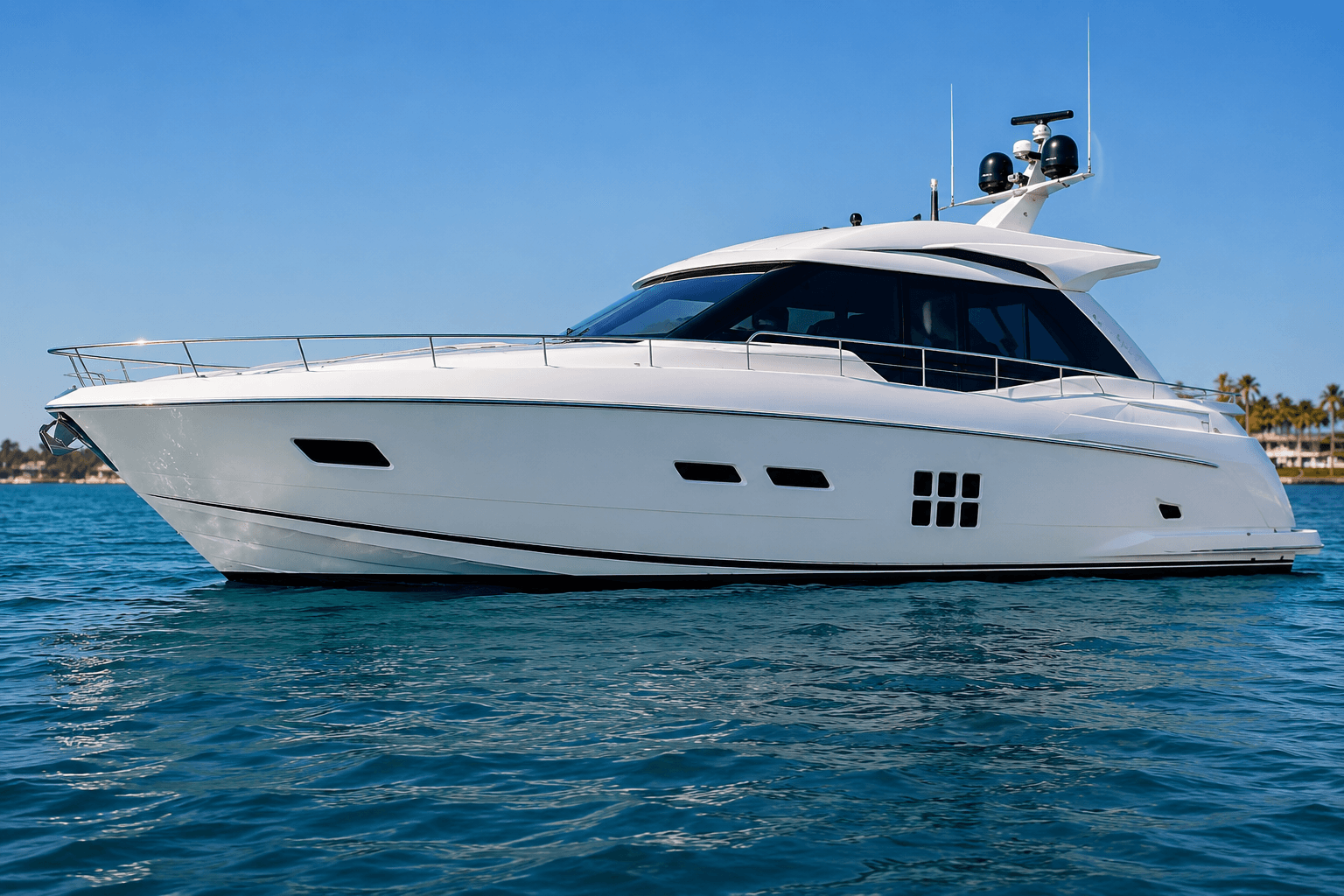
How Much Does a Boat Wrap Cost? Complete Pricing Guide for 2026
Boat wrap prices vary widely depending on size, materials, and installer quality. Here's what a professional wrap actually costs in 2026 — and what to watch out for.
Luxury Yacht Wraps: The Complete Guide to Finishes, Styles, and Custom Marine Vinyl
Ocean Wraps works with luxury yacht and cruiser owners who want professional results, durable materials, and a finish that holds up on the water.
Boat Wraps Services
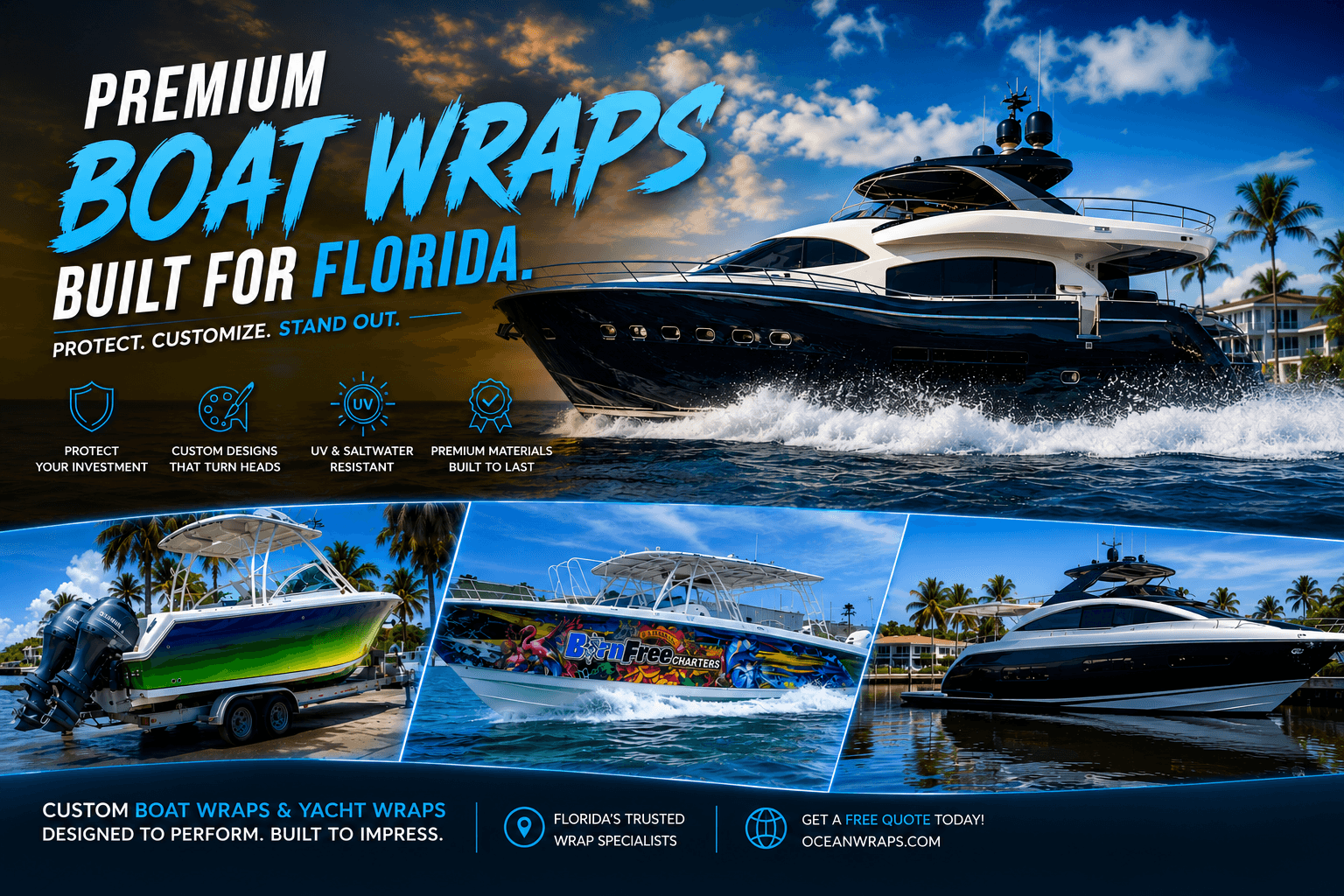
Why Florida Boat Owners Are Choosing Vinyl Boat Wraps in 2026
Discover why Florida boat owners are switching from paint to vinyl boat wraps. Learn the benefits, costs, protection, and customization options.
Guides
Boat Wraps vs Paint: 5 Reasons Why Wraps Win
Boat wraps cost less, install faster, and protect your gel coat better than traditional paint. Here's why so many boat owners are making the switch.
Guides
Yacht Wrap vs. Paint for Large Fleet & Superyacht Projects
Deciding between yacht wrap and paint for your fleet or superyacht? We break down real costs, downtime, durability, and which option actually makes sense at scale
Guides
How Much Does a Boat Wrap Cost? Complete Pricing Guide for 2026
Boat wrap prices vary widely depending on size, materials, and installer quality. Here's what a professional wrap actually costs in 2026 — and what to watch out for.