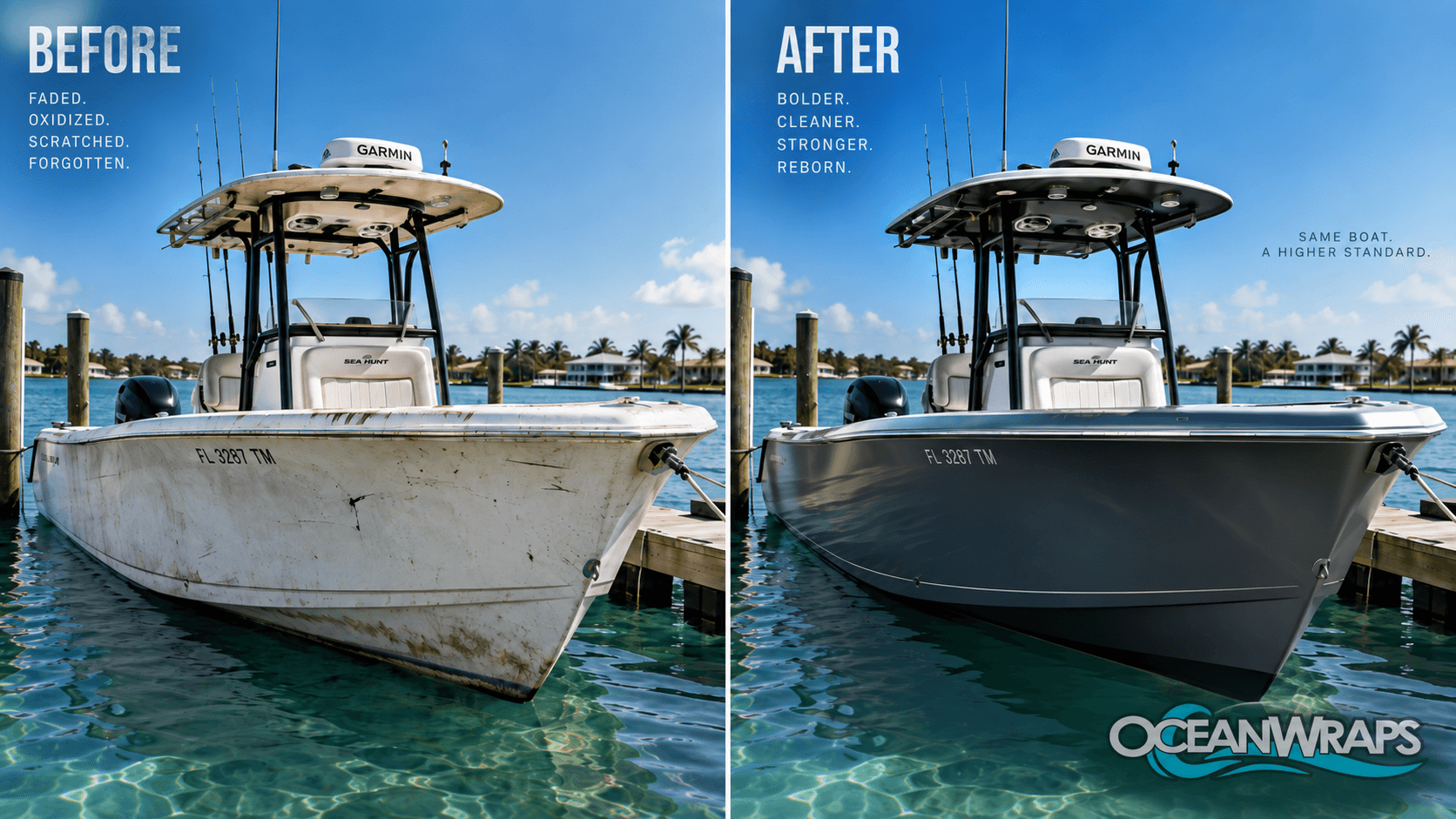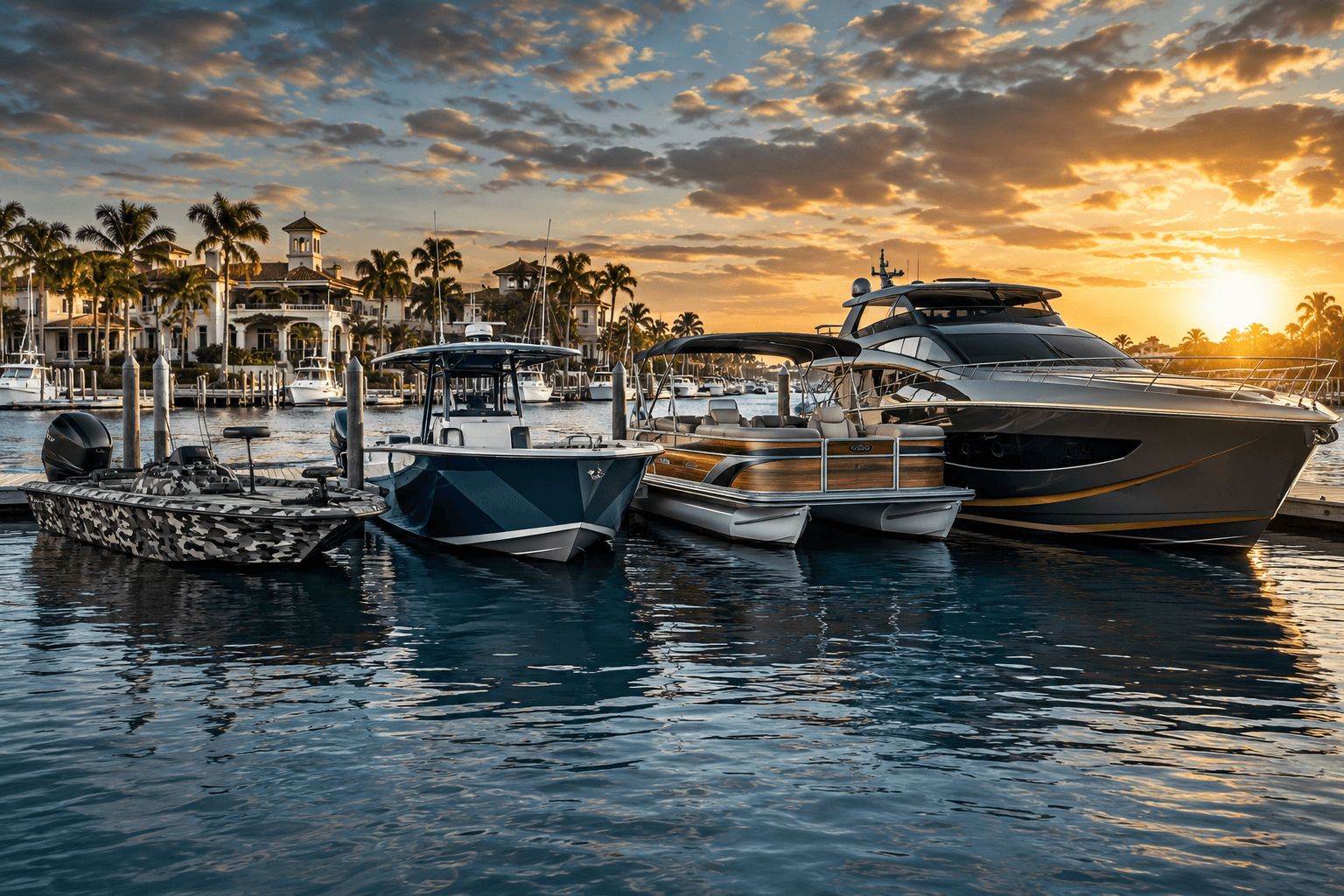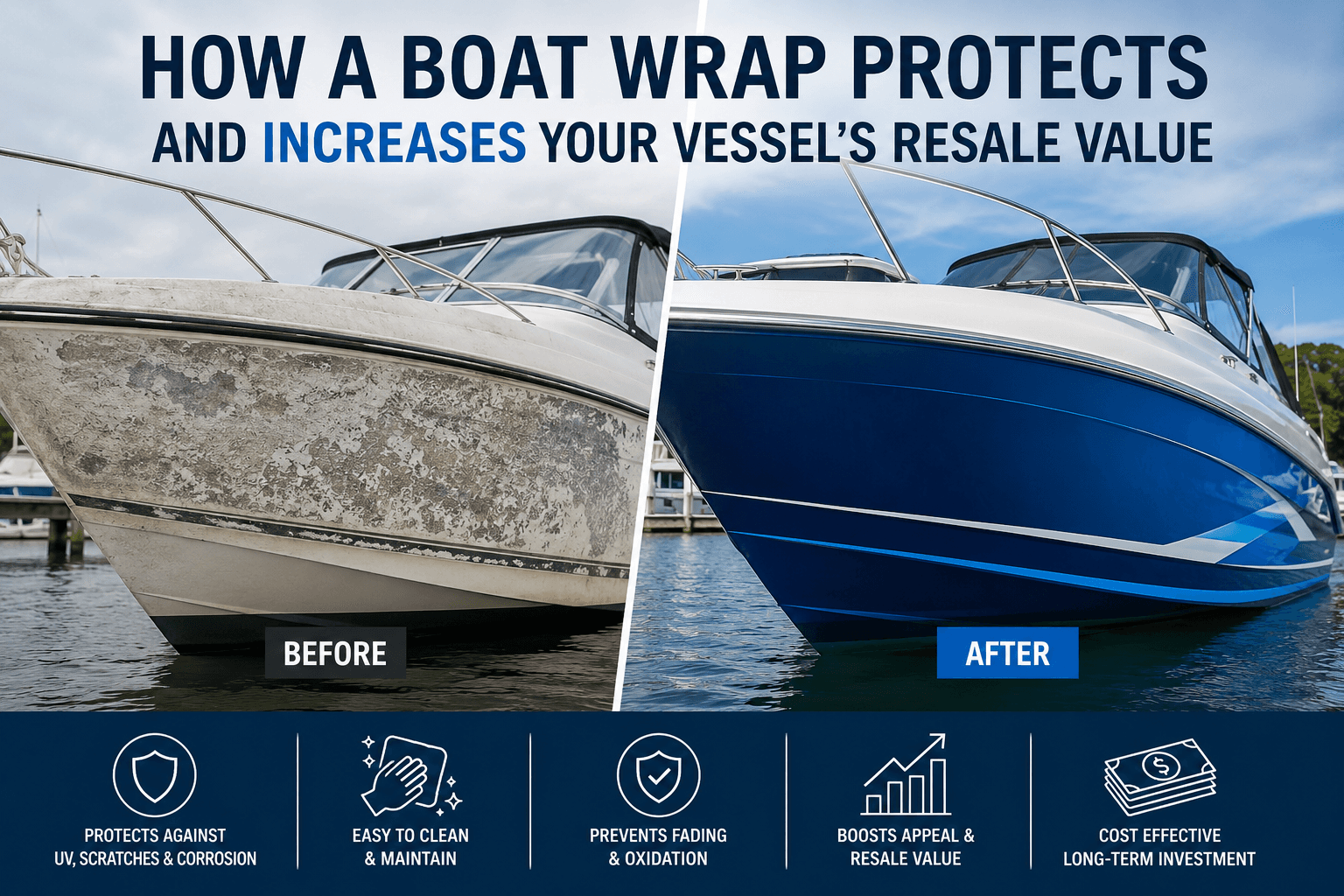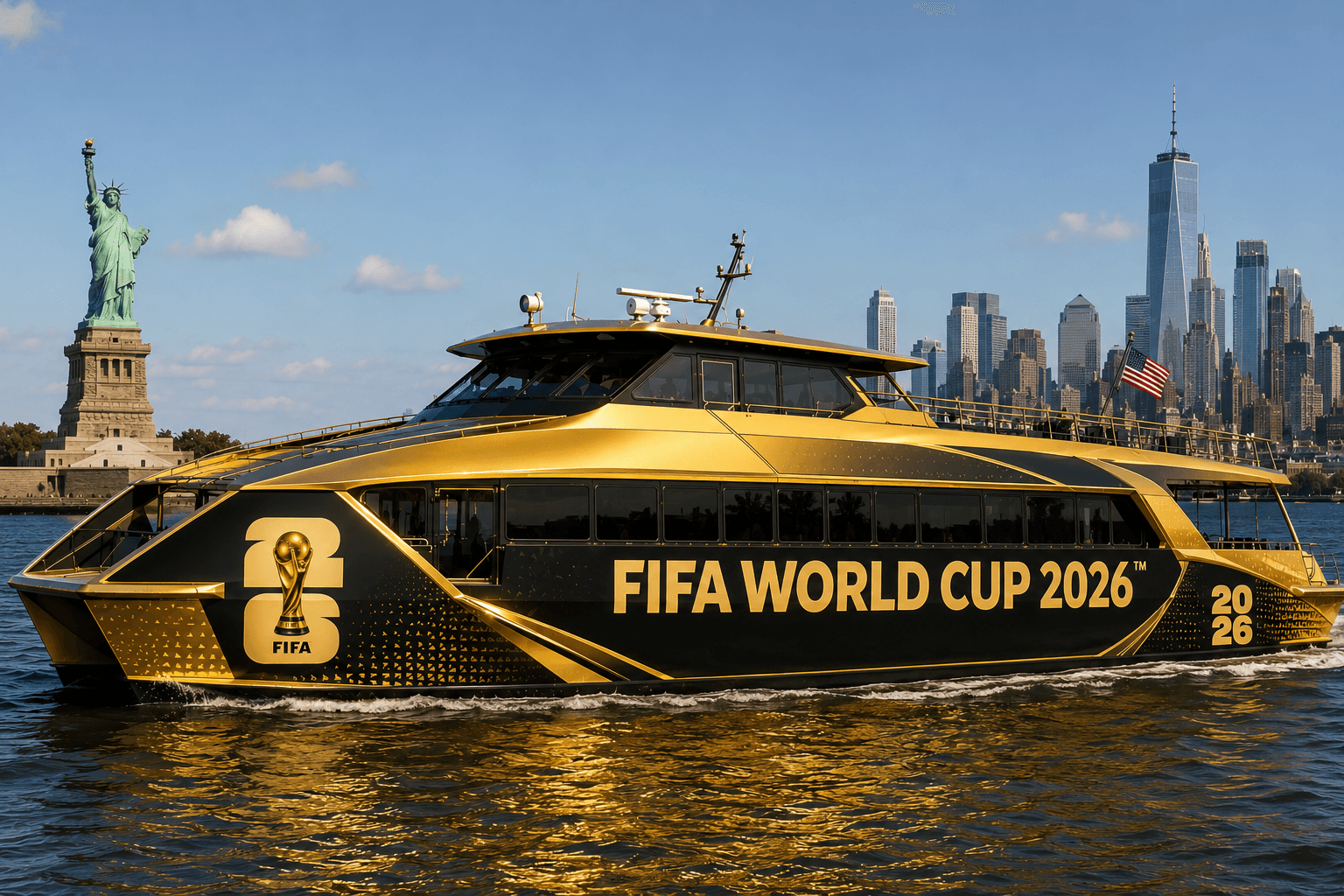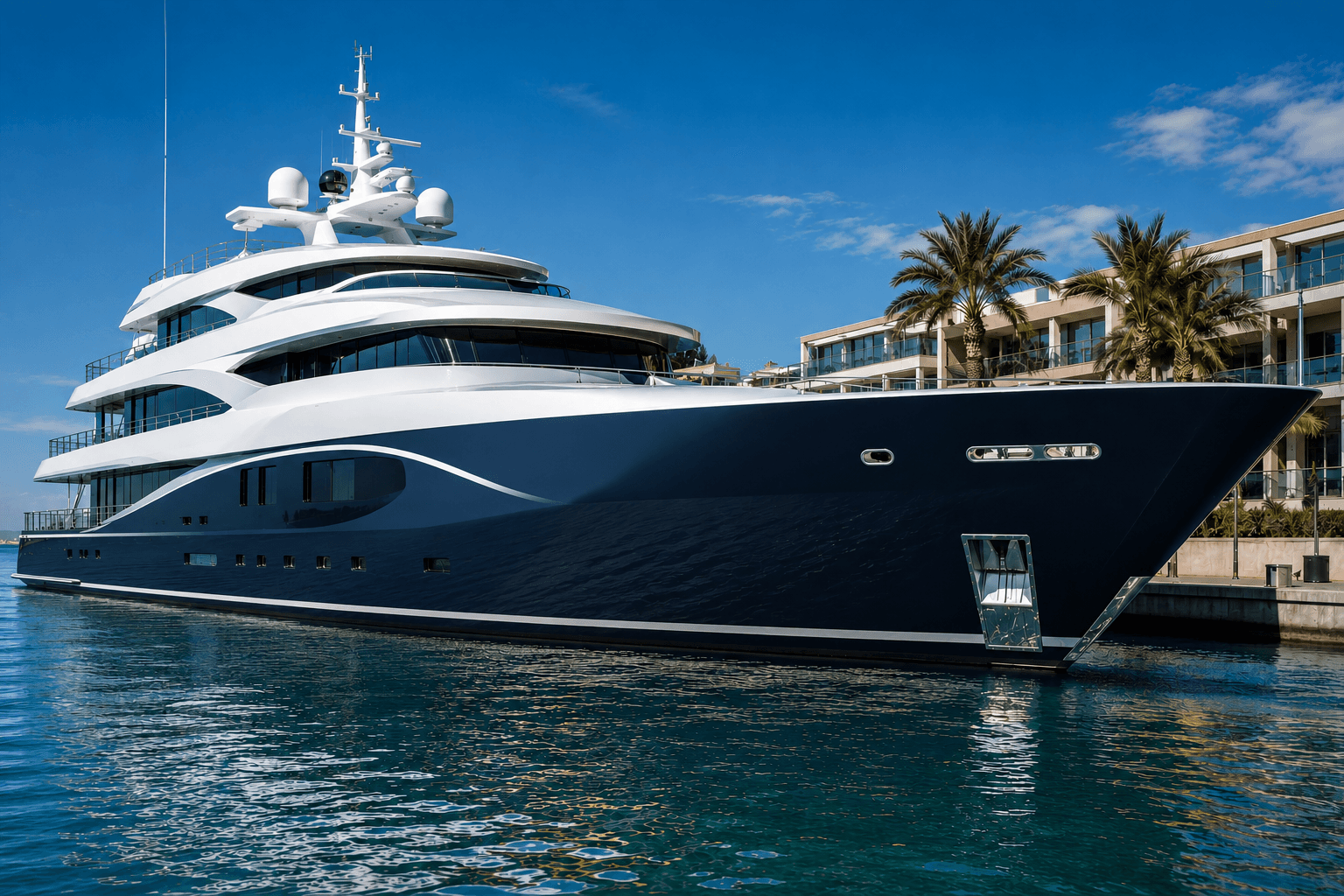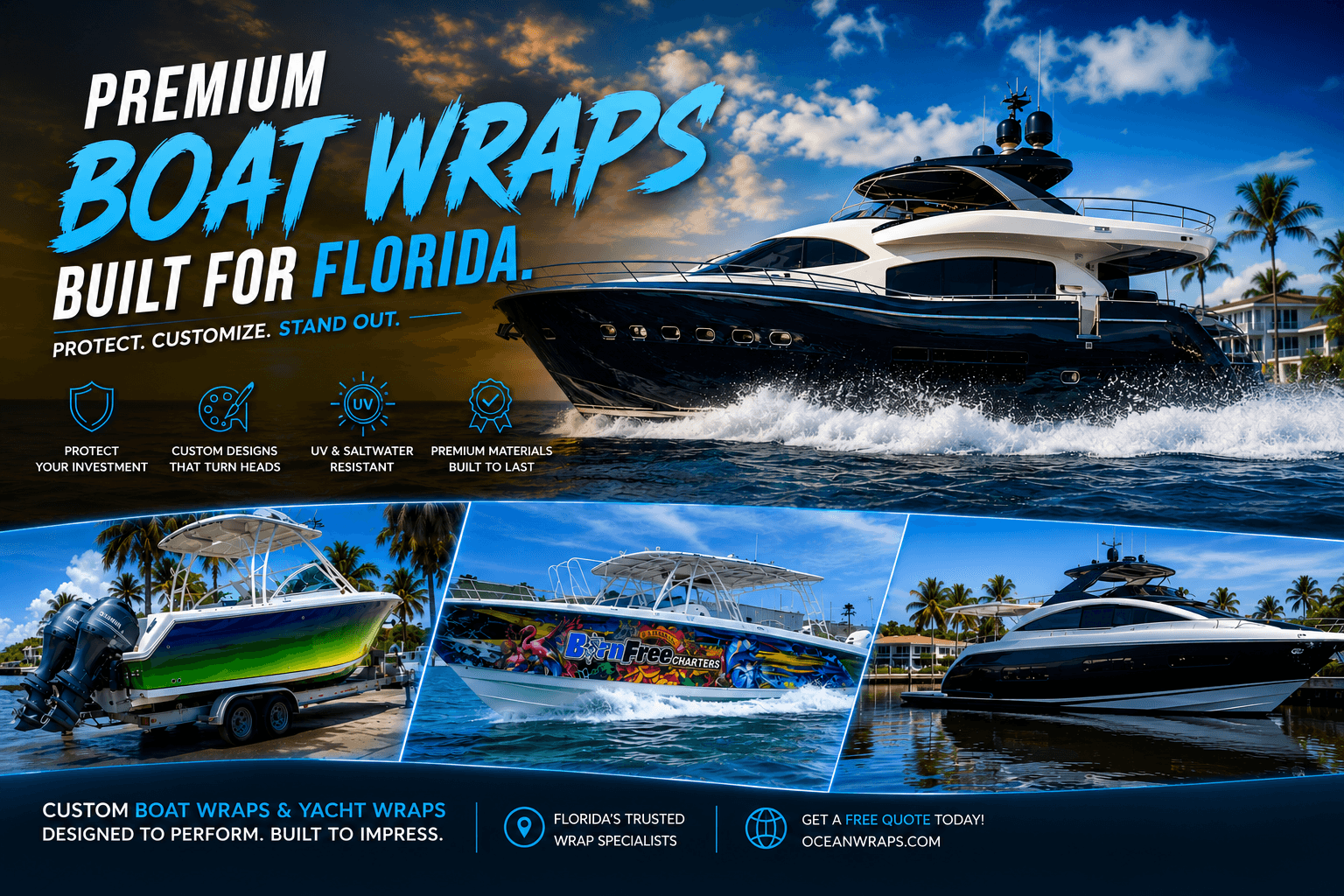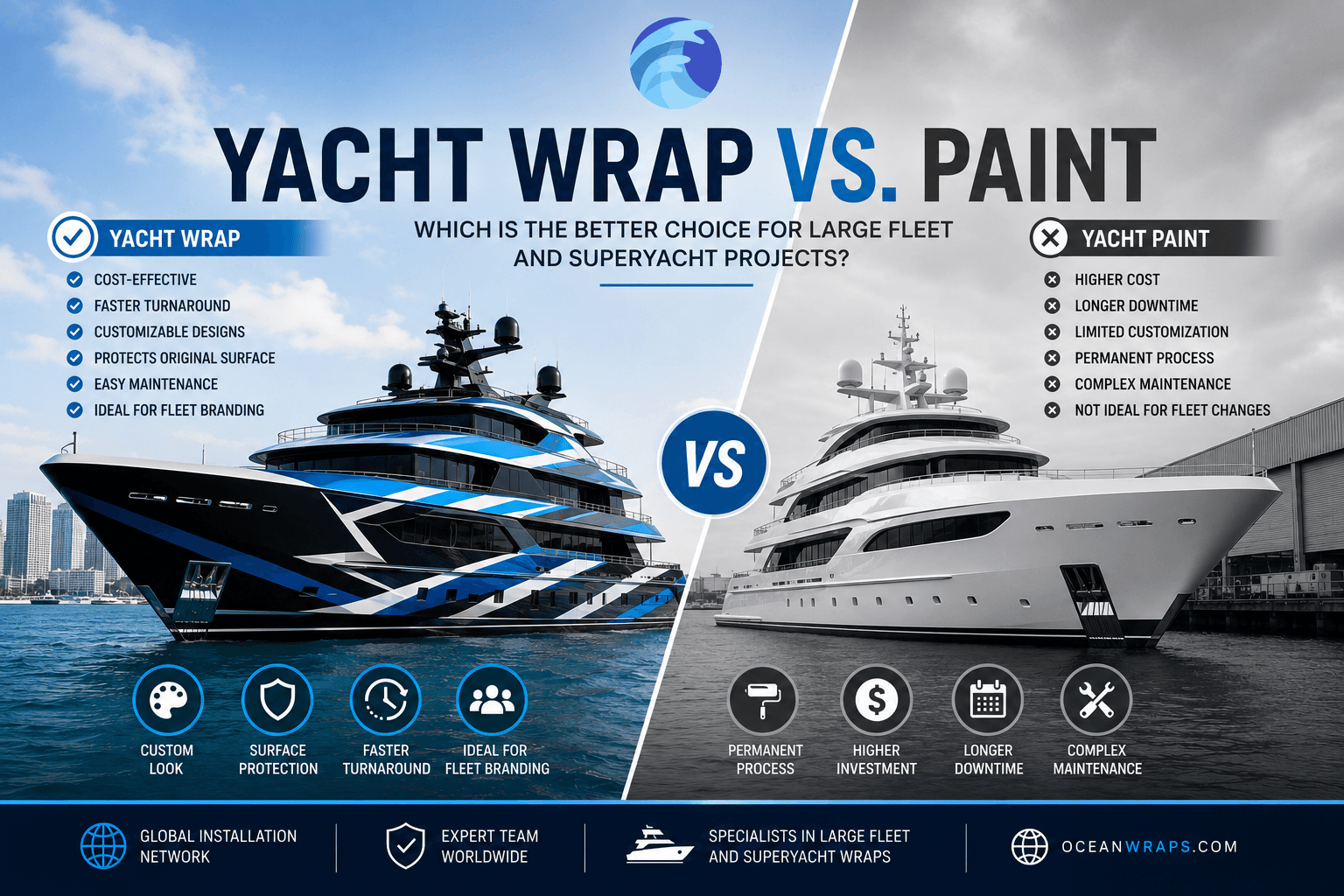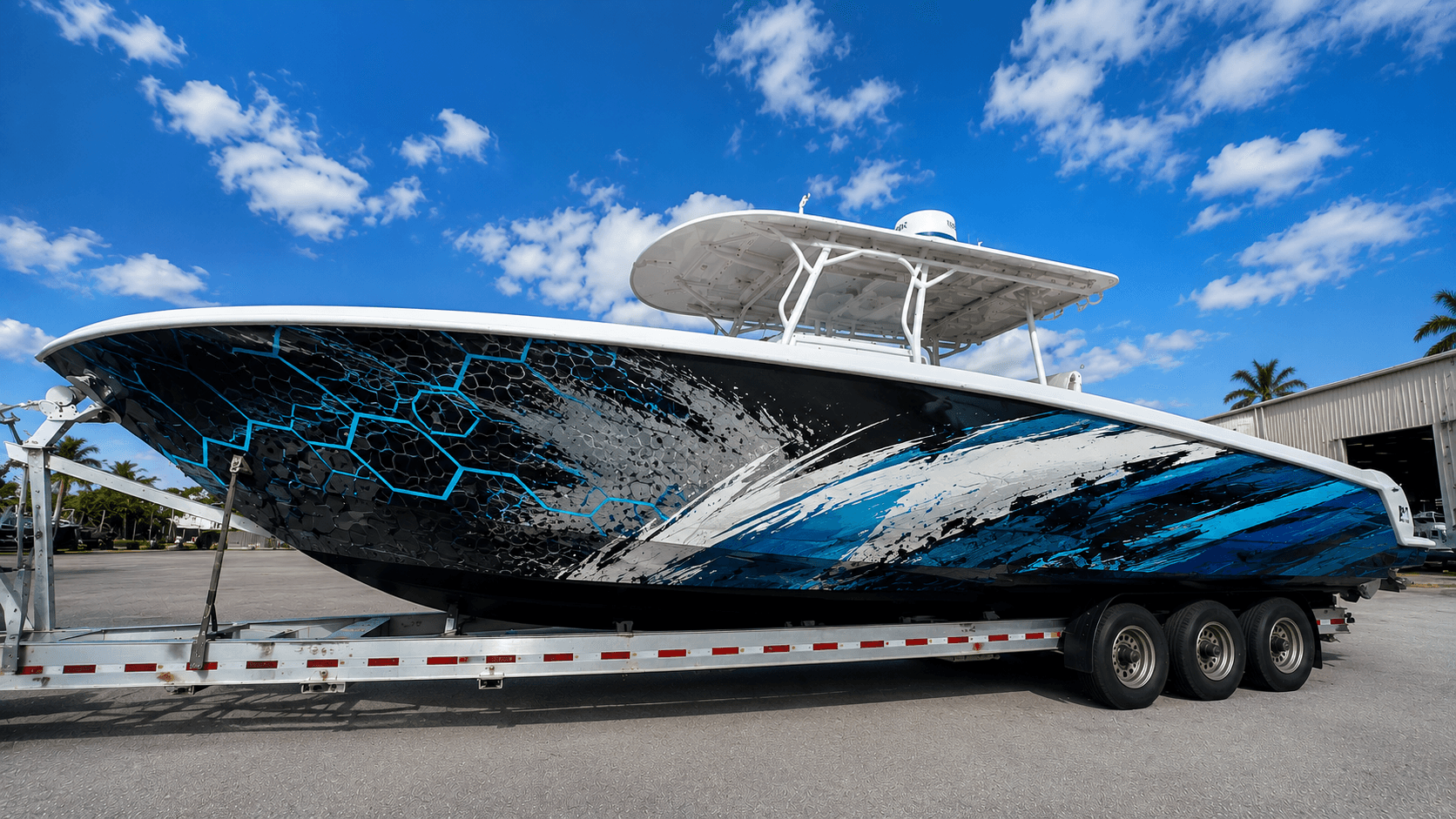

Boat wraps for commercial fishing vessels, tugboats, patrol boats, and utility workboats, a custom boat wrap is a functional marine asset. It serves as durable branding, hull protection, and high-visibility identification engineered for harsh saltwater environments. This page details the specific materials, technical process, and operational factors for applying commercial-grade graphics to working vessels.
Boat Wraps Overview: Custom wraps for commercial fishing vessels and workboats#
Key Takeaways#
- Commercial boat wraps demand marine-grade cast vinyl and protective laminate to resist salt, UV, fuel, and physical abrasion.
- Surface preparation is the critical foundation, requiring complete dewaxing, degreasing, and assessment of the gelcoat.
- Design must account for complex hull curves, hardware placement, and the need for clear, long-distance legibility.
- Professional installation includes precise panel alignment, relief cutting, and meticulous edge sealing to prevent water ingress.

- A correctly specified and installed wrap system protects the underlying gelcoat from UV degradation, preserving hull value.
- Operational factors like wash-down practices, seasonal inspections, and storage conditions directly influence service life.
Process Overview#
- Prep: The hull and topsides undergo thorough cleaning, dewaxing, and degreasing. The gelcoat is assessed for soundness; failing paint or severe oxidation must be remedied first.
- Design: Graphics are engineered for the vessel's specific curves and fixtures. Digital templating ensures proper alignment over complex surfaces like the bow and transom.
- Install: Panels are systematically aligned, applied with careful squeegeeing, and relief-cut around hardware. All cut edges are heat-sealed to create a watertight bond.
- Finish: After installation, a cure period is required for full adhesive strength. A final inspection is conducted, and specific care guidelines for the initial period are provided.
Materials & Finish Options#
Material selection is dictated by the marine environment. The standard system uses premium cast vinyl film, which outperforms calendared vinyl in long-term outdoor durability and conformability to complex curves. For all commercial applications, a durable clear laminate is applied over the printed graphics. This laminate is a critical component, providing an additional barrier against UV radiation, salt spray, chemical exposure, and abrasion from docks and lines.
FAQ#
How long do commercial boat wraps last?#
With professional-grade marine vinyl, laminate, and installation, a service life of 5 to 8 years is a typical expectation. Actual longevity depends on operational exposure, maintenance, and environmental factors.
Can a wrap be applied over existing paint or graphics?#
Yes, provided the existing surface is firmly adhered, smooth, and thoroughly cleaned. Loose, flaking, or chalky substrates must be removed to ensure a stable foundation for the new vinyl.
Does vinyl damage the gelcoat when removed?#
No. A professionally installed and removed wrap protects the gelcoat from UV fading. Upon removal, any residual adhesive is cleaned, typically leaving the protected surface in superior condition compared to unwrapped areas.
What is the typical project timeline?#
Timeline varies by vessel size and complexity. It encompasses design, material procurement, and scheduling installation during suitable weather and vessel availability. For fleet projects or work planned for early 2026, advanced planning is recommended.