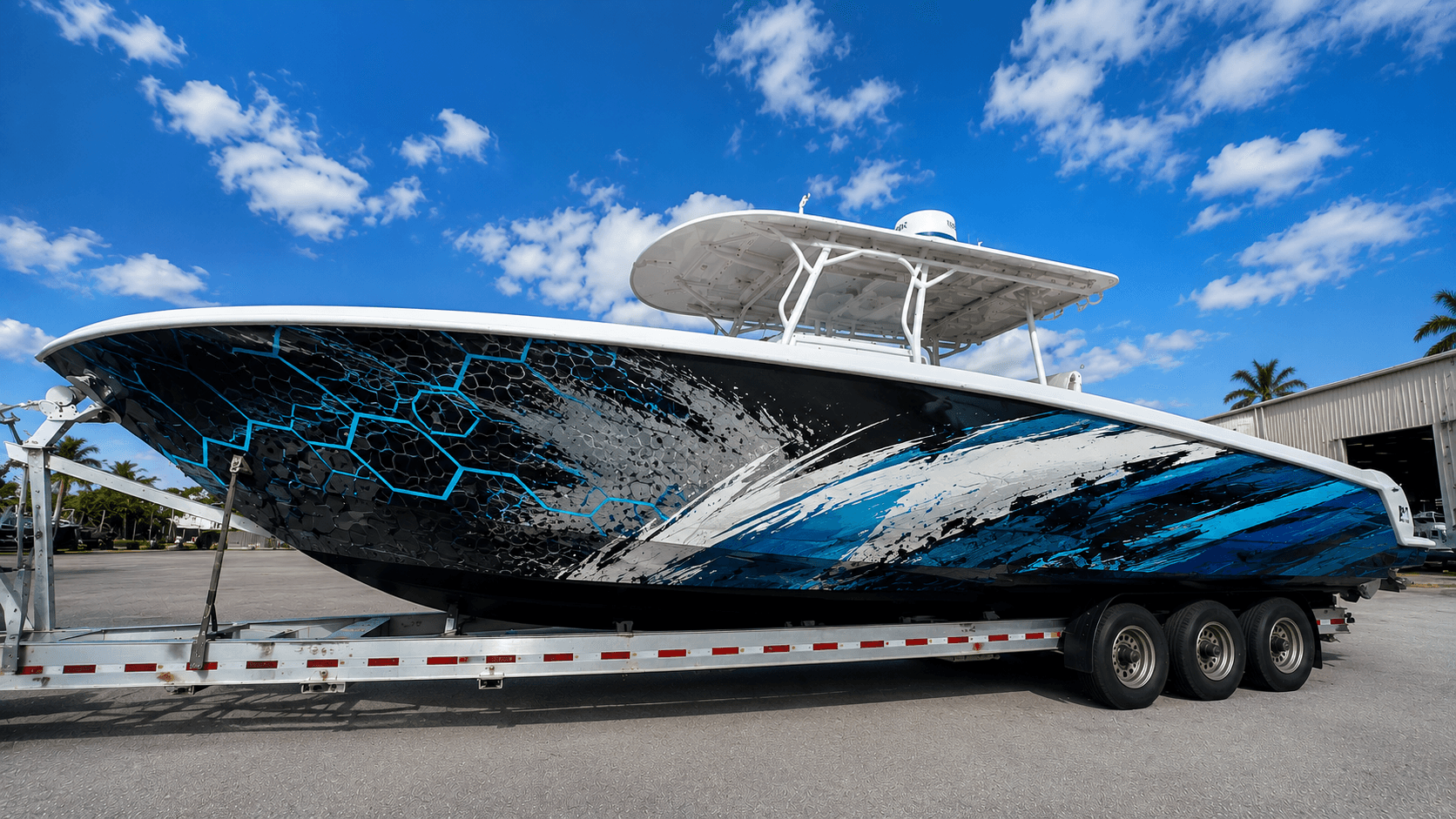
Custom Boat Wraps for Commercial Fishing Vessels & Workboats
Professional-grade boat wraps for commercial fishing vessels and workboats. Durable marine vinyl graphics for hull protection, branding, and vessel identificati
Last updated February 28, 2026
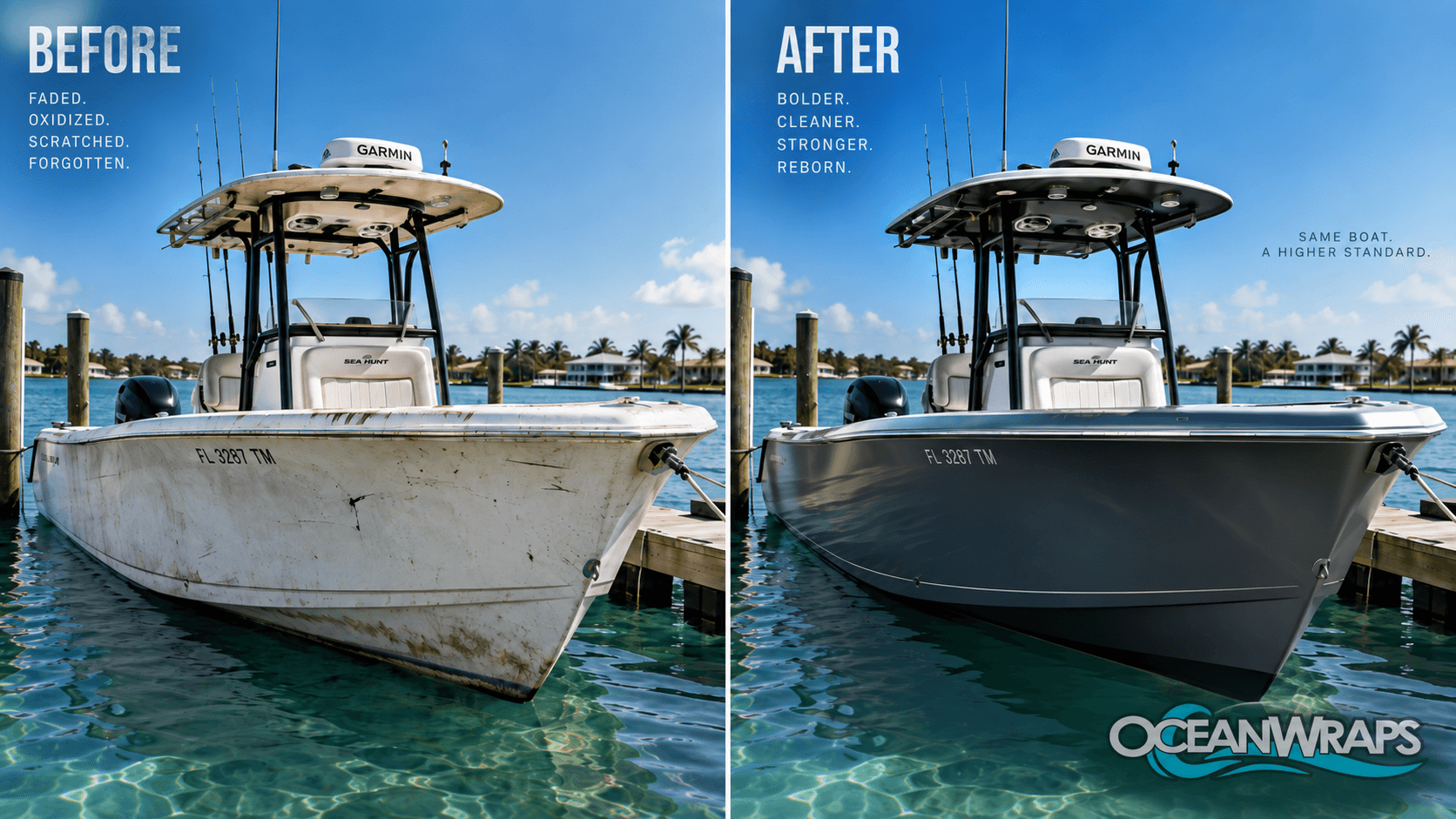
For commercial fishing vessels, patrol boats, tugboats, and other workboats, a hull wrap is a functional asset, not just decoration. Unlike generic solutions, our process is engineered for the harsh marine environment, focusing on durability, clear communication, and protecting your vessel's underlying gelcoat from UV degradation and abrasion. At Ocean Wraps, we specialize in boat wraps that withstand the demands of daily commercial operation while delivering high-impact graphics for branding or regulatory identification.
Why Commercial Vessels Need Specialized Boat Wraps#
The operating profile of a workboat differs vastly from a recreational craft. Graphics must endure constant sun, fuel spills, chemical exposure, heavy wash-downs, and physical contact with docks and gear. A wrap must also maintain integrity across complex curves and high-stress areas like chines and bow entries. The primary goals are asset protection, maintaining a professional appearance, and ensuring critical identification markings remain legible.
A high-quality vinyl wrap acts as a sacrificial layer. It absorbs UV rays that degrade gelcoat, and it takes the brunt of scuffs from fenders, pilings, and gear handling. This can preserve the substrate, potentially extending the service interval for a full hull repaint.
Visibility is a safety and business tool. Bold graphics make your vessel identifiable at a distance for clients or authorities. Custom wraps can incorporate required documentation numbers, home port markings, and company branding in a single, cohesive application that replaces multiple decals or faded paint.
Material selection is critical for longevity. We use premium marine-grade films specifically engineered for prolonged outdoor exposure.
Marine Vinyl: A durable, flexible substrate with strong adhesive systems formulated for constant moisture exposure.
Cast Vinyl: Superior conformability for complex, compound curves found on hulls and topsides. It resists stretching and shrinking over time.
Protective Laminate: An optional clear gloss or matte layer laminated over the printed graphics. It adds significant extra protection against abrasion, chemicals, and UV fading, and is recommended for commercial applications.
Finish choices (gloss, matte, satin) affect both aesthetics and maintenance. A gloss finish is often easier to clean, while a matte finish can help mask minor surface imperfections.
This is the most critical step for adhesion longevity. The hull and topside surfaces must be clean, dry, and free of contaminants like wax, oil, algae, and oxidation. Existing gelcoat may require compounding to create a sound, smooth base. Any failing paint or old decals must be removed.
Graphics are designed to your specifications, accounting for hull curvature and hardware placement. For full hull wraps, a digital template or physical measurements ensure the graphic fits the vessel's unique contours before production.
Installation is a skilled process. Large panels are methodically applied, using heat and tension to conform the material to the hull's shape. The focus is on eliminating air bubbles, ensuring strong adhesion, and managing seams in low-visibility areas.
All edges are meticulously post-heated and sealed to prevent water ingress. Hardware is reinstalled, and a final inspection ensures quality. The crew at Ocean Wraps provides specific care instructions before the vessel returns to service.
Success depends on planning for real-world conditions. Surface prep cannot be rushed; adhesion fails on dirty or unstable substrates. Complex curvature requires experienced installers and the right vinyl type to avoid wrinkles or lift. Always check marina rules regarding in-slip work. Consider off-season timing or storage availability for optimal installation conditions. Finally, establish proper wash practices: avoid abrasive pads, high-pressure nozzles directed at edges, and harsh solvents.
How long do commercial boat wraps typically last?#
With professional-grade materials and installation, expect a service life of 5 to 7 years for a hull wrap on a vessel in active use. Longevity is heavily influenced by sun exposure, maintenance, and the marine environment.
Yes, provided the existing surface is firmly adhered, smooth, and properly prepared. Loose, cracked, or chalky paint must be addressed first. The wrap will not bond to or stabilize a failing substrate.
Generally, yes. A smooth, laminated wrap surface resists staining and is easier to clean than porous paint. Regular washing with mild soap and water is typically sufficient. It eliminates the need for waxing or compounding the underlying gelcoat.
Lead time varies by project scale. After design approval, material production and scheduling for a multi-day installation must be coordinated. Planning several weeks to months in advance, especially for off-season projects, is advisable.
New Boat Prices Are Skyrocketing — Here's the Smarter Move Boat Owners Are Making
New boat prices are at record highs. Here's why more owners are choosing marine vinyl wraps to refresh their boat's look and protect the hull, without the cost of buying new
Get your boat ready for FIFA World Cup 2026 with a luxury custom wrap. Stand out on the water with premium marine graphics, gold finishes, and championship-inspired designs.
New Boat Prices Are Skyrocketing — Here's the Smarter Move Boat Owners Are Making
New boat prices are at record highs. Here's why more owners are choosing marine vinyl wraps to refresh their boat's look and protect the hull, without the cost of buying new
Boat Wraps Services
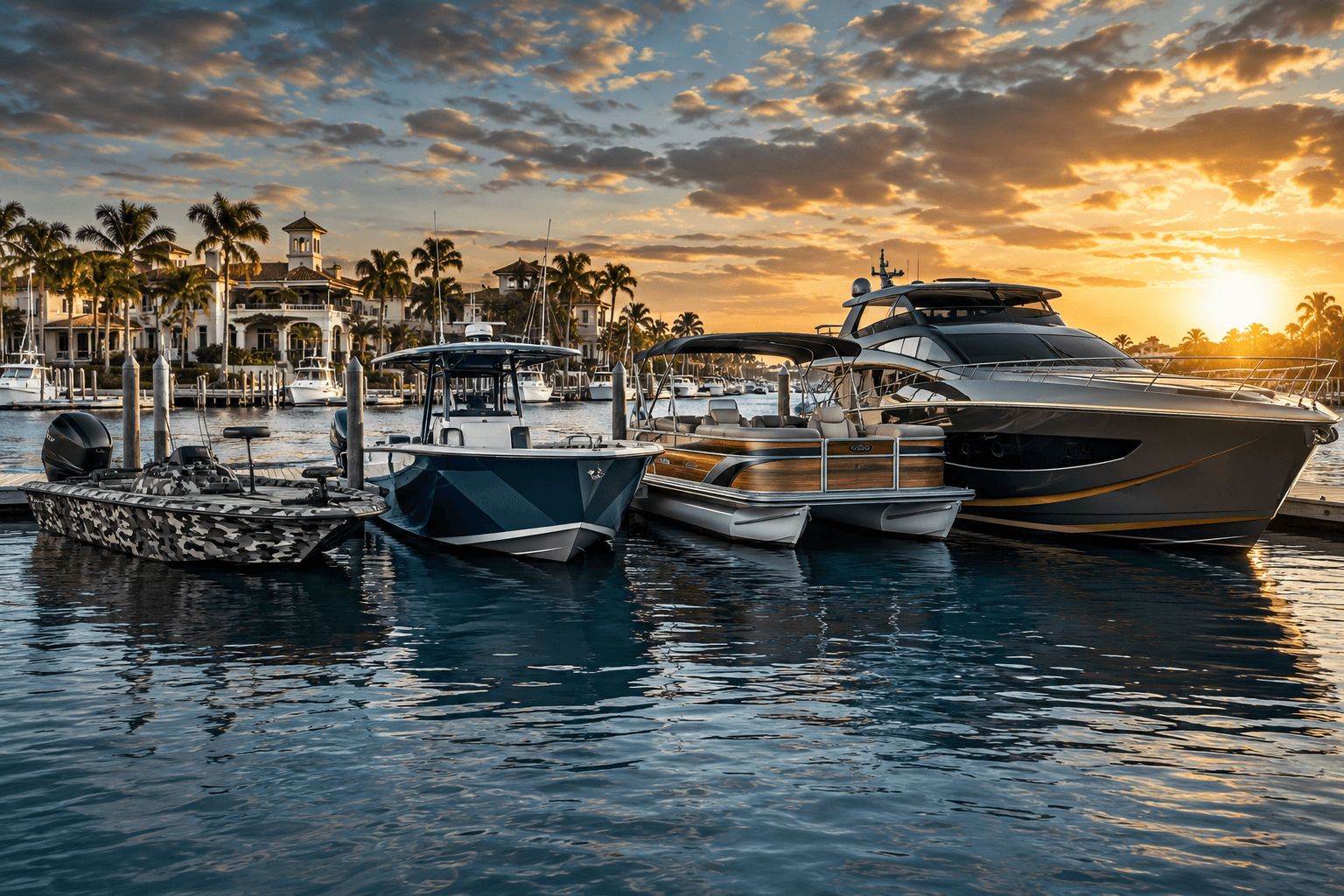
Boat Wrap Designs by Boat Type: What Actually Works on Your Vessel
A wrap that's perfect for a sportfishing boat chasing marlin offshore would look completely out of place on a family pontoon.
Boat Wraps Services
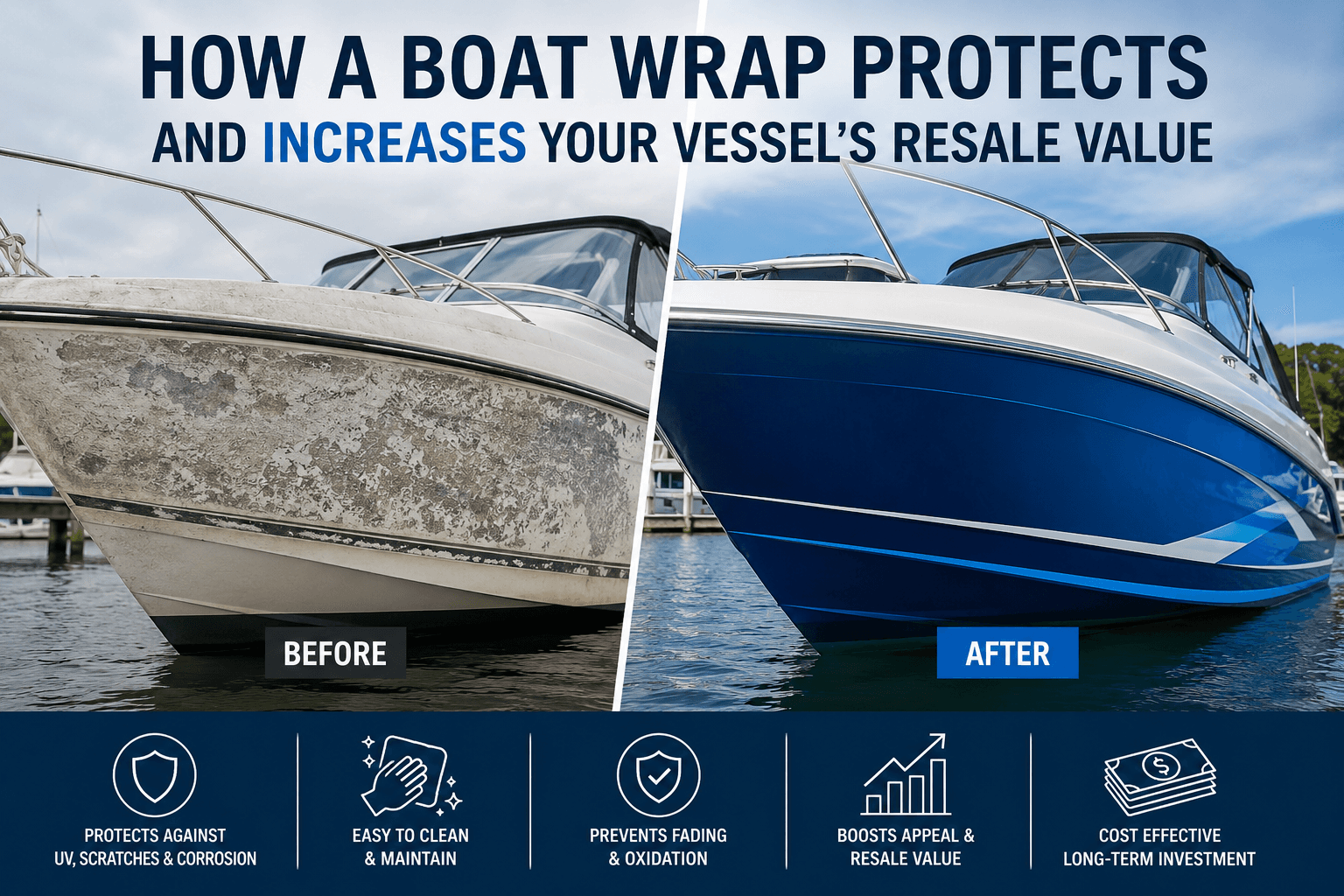
How a Boat Wrap Protects and Increases Your Vessel's Resale Value
How a Boat Wrap Can Protect and Increase Your Vessel's Resale Value
Boat Wraps Services
Top 10 FIFA World Cup Boat Wrap Ideas to Try This Season
If you already know you want your boat wrapped for World Cup season, the next question is which design actually fits your vessel.
Boat Wraps Services
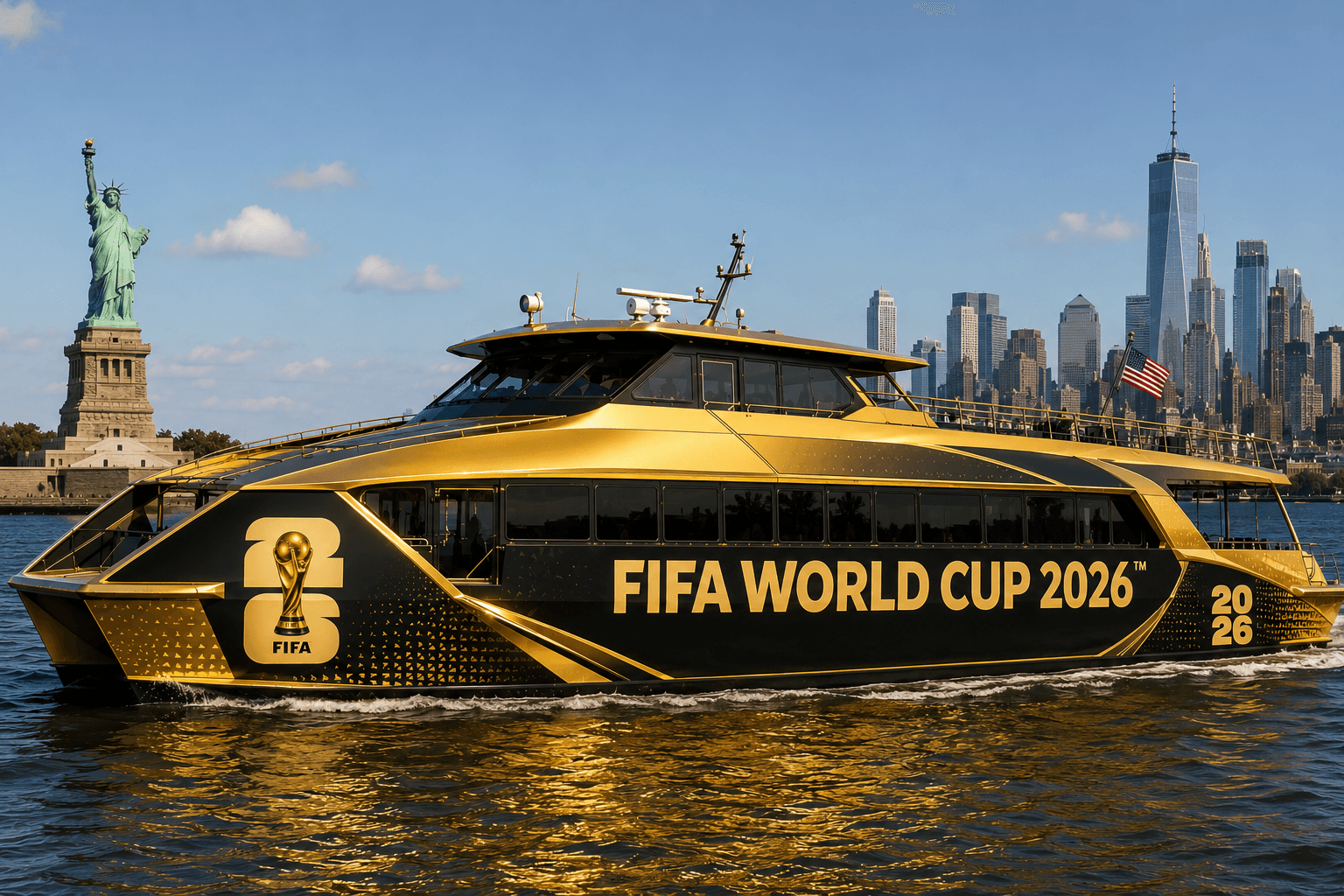
Custom Boat Wraps for FIFA World Cup 2026
Get your boat ready for FIFA World Cup 2026 with a luxury custom wrap. Stand out on the water with premium marine graphics, gold finishes, and championship-inspired designs.
Boat Wraps Services
Luxury Yacht Wraps: The Complete Guide to Finishes, Styles, and Custom Marine Vinyl
Ocean Wraps works with luxury yacht and cruiser owners who want professional results, durable materials, and a finish that holds up on the water.
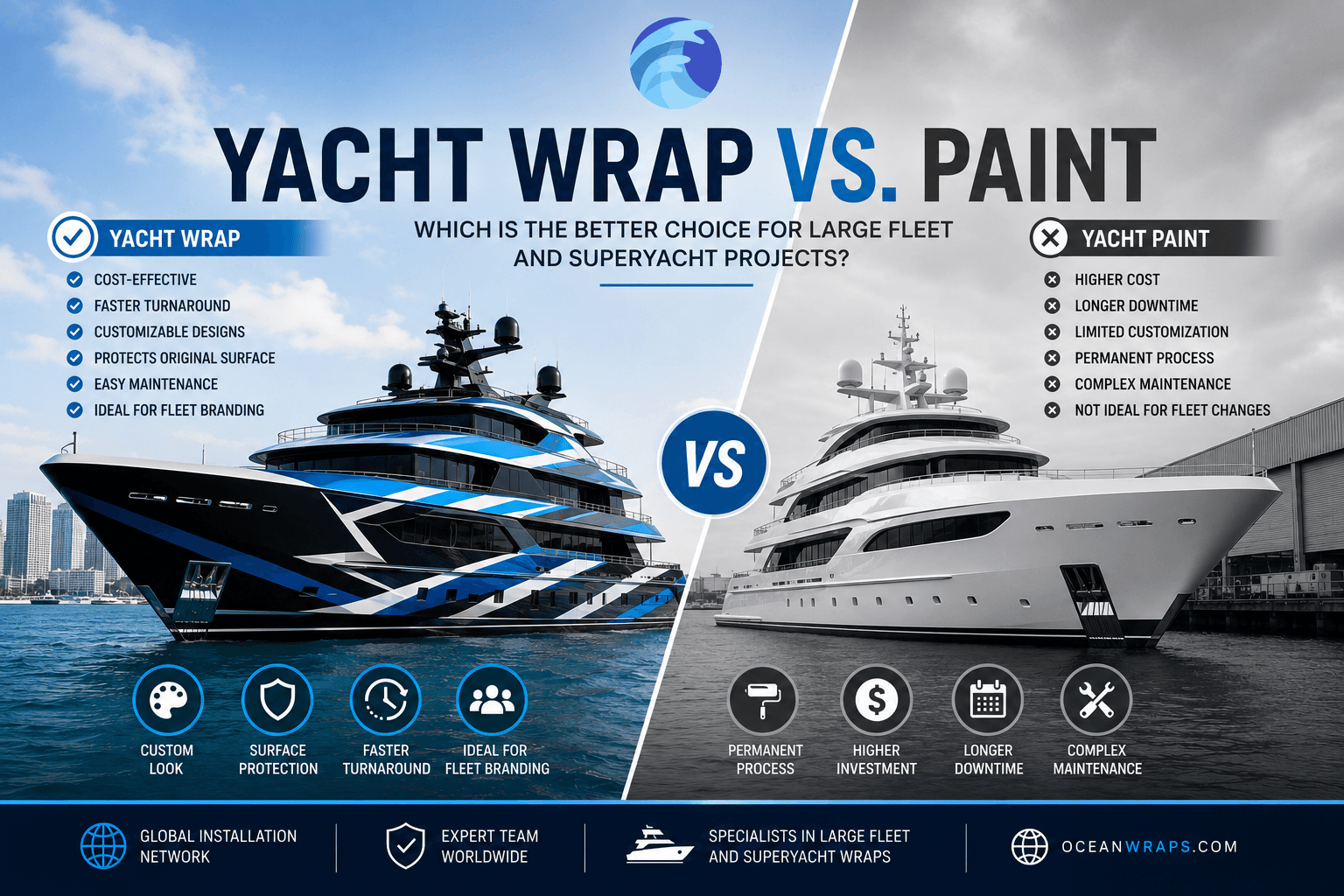
Yacht Wrap vs. Paint for Large Fleet & Superyacht Projects
Deciding between yacht wrap and paint for your fleet or superyacht? We break down real costs, downtime, durability, and which option actually makes sense at scale
How Much Does a Boat Wrap Cost? Complete Pricing Guide for 2026
Boat wrap prices vary widely depending on size, materials, and installer quality. Here's what a professional wrap actually costs in 2026 — and what to watch out for.
Luxury Yacht Wraps: The Complete Guide to Finishes, Styles, and Custom Marine Vinyl
Ocean Wraps works with luxury yacht and cruiser owners who want professional results, durable materials, and a finish that holds up on the water.
Boat Wraps Services
Why Florida Boat Owners Are Choosing Vinyl Boat Wraps in 2026
Discover why Florida boat owners are switching from paint to vinyl boat wraps. Learn the benefits, costs, protection, and customization options.
Guides
Boat Wraps vs Paint: 5 Reasons Why Wraps Win
Boat wraps cost less, install faster, and protect your gel coat better than traditional paint. Here's why so many boat owners are making the switch.
Guides
Yacht Wrap vs. Paint for Large Fleet & Superyacht Projects
Deciding between yacht wrap and paint for your fleet or superyacht? We break down real costs, downtime, durability, and which option actually makes sense at scale
Guides
How Much Does a Boat Wrap Cost? Complete Pricing Guide for 2026
Boat wrap prices vary widely depending on size, materials, and installer quality. Here's what a professional wrap actually costs in 2026 — and what to watch out for.