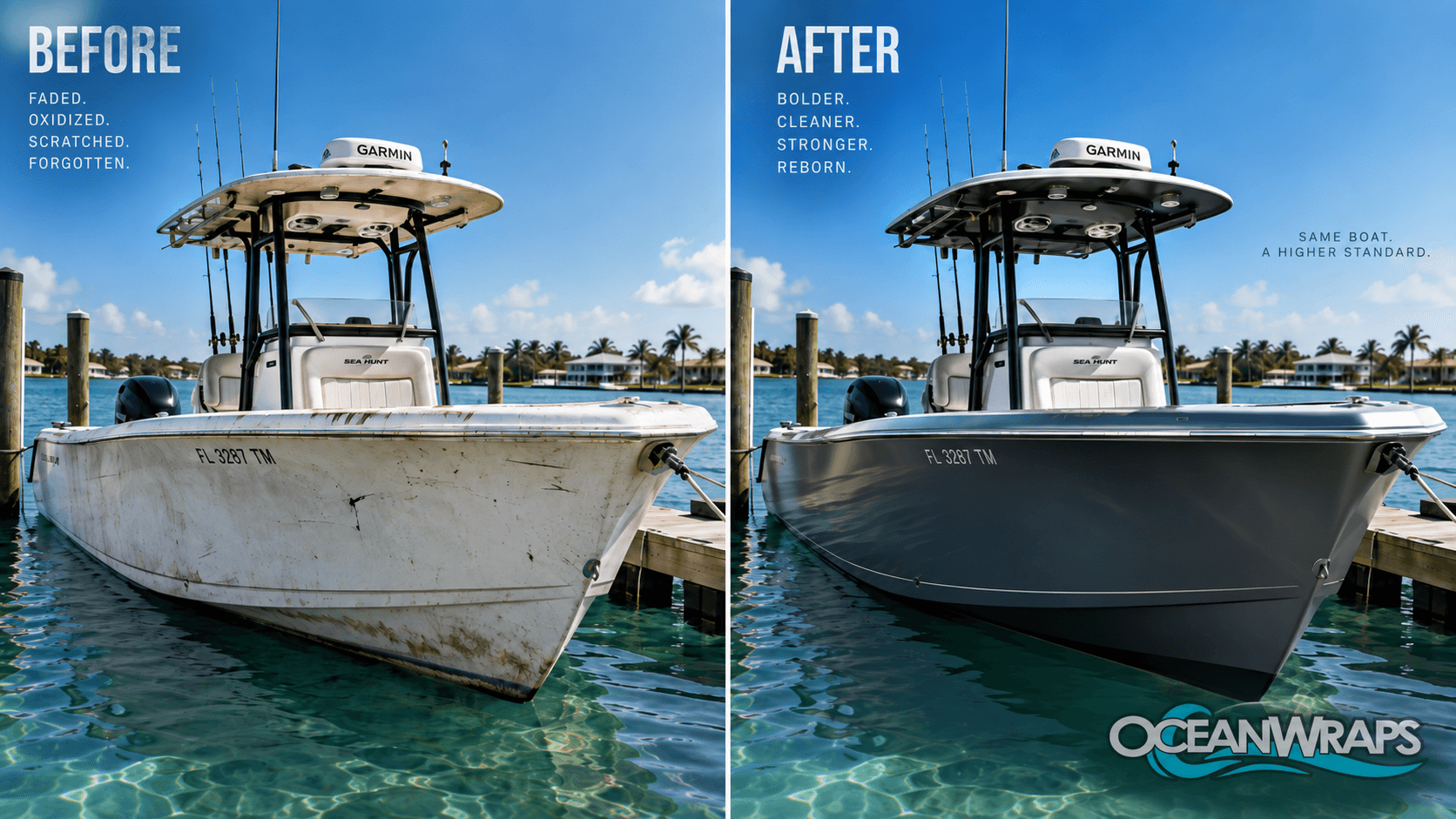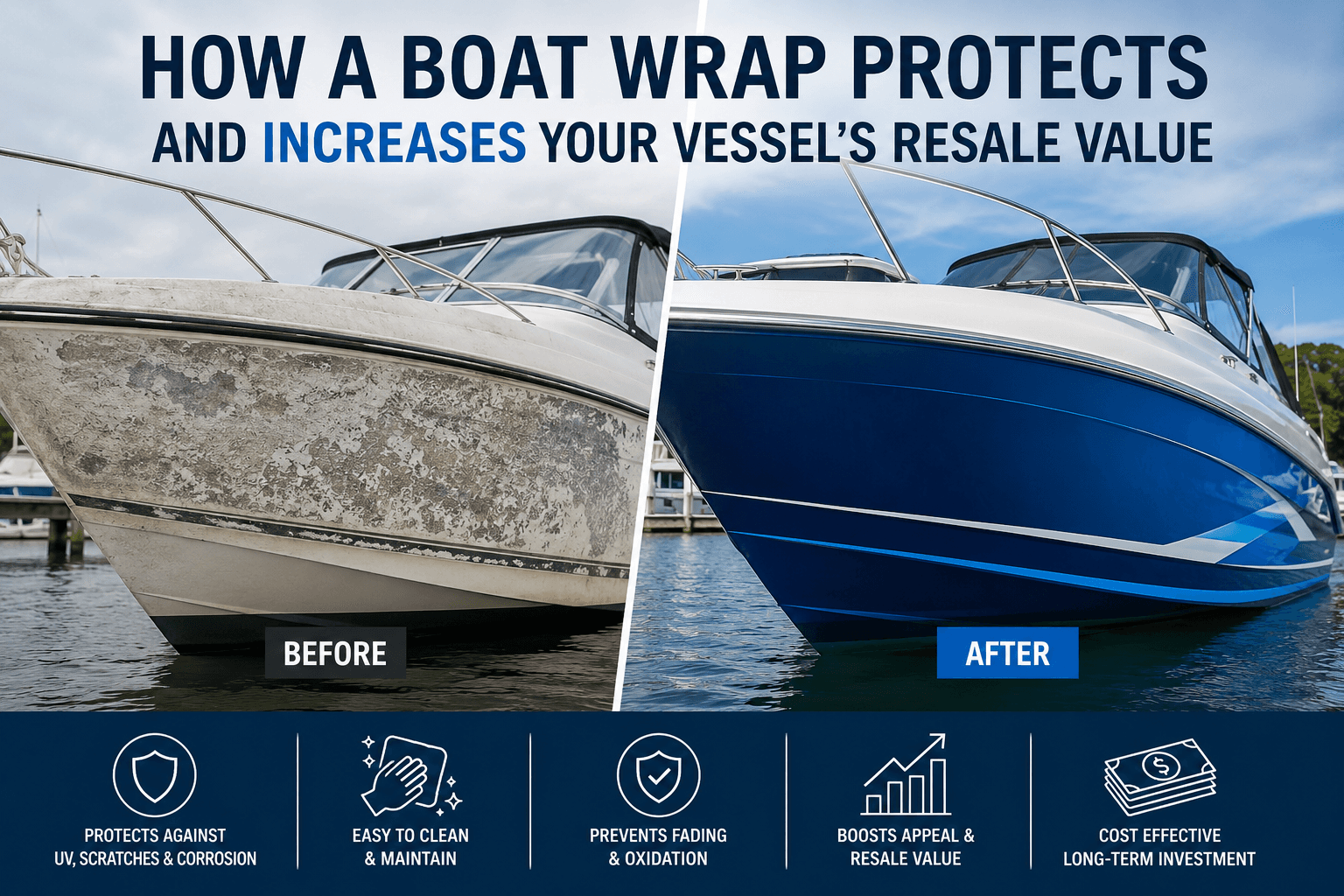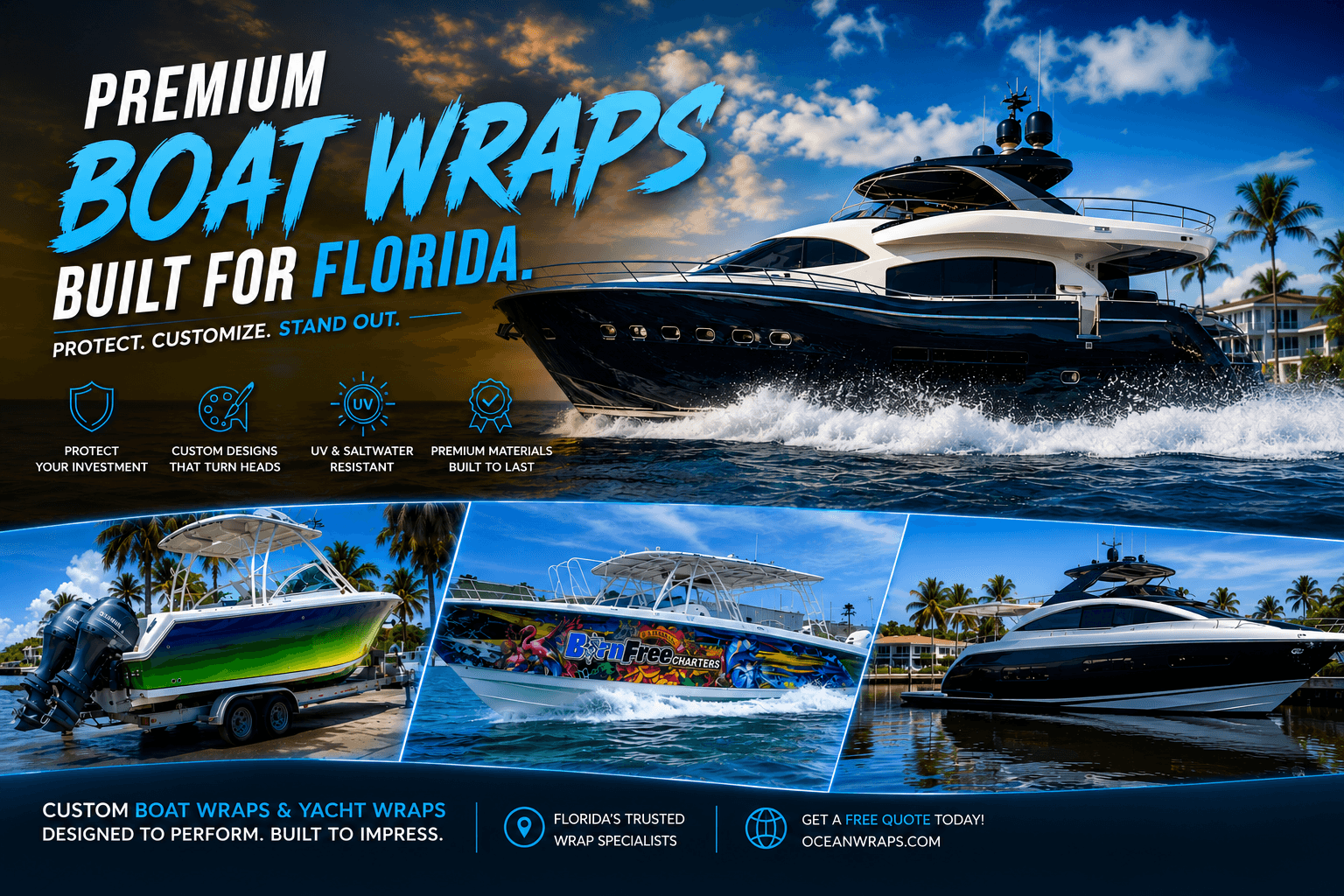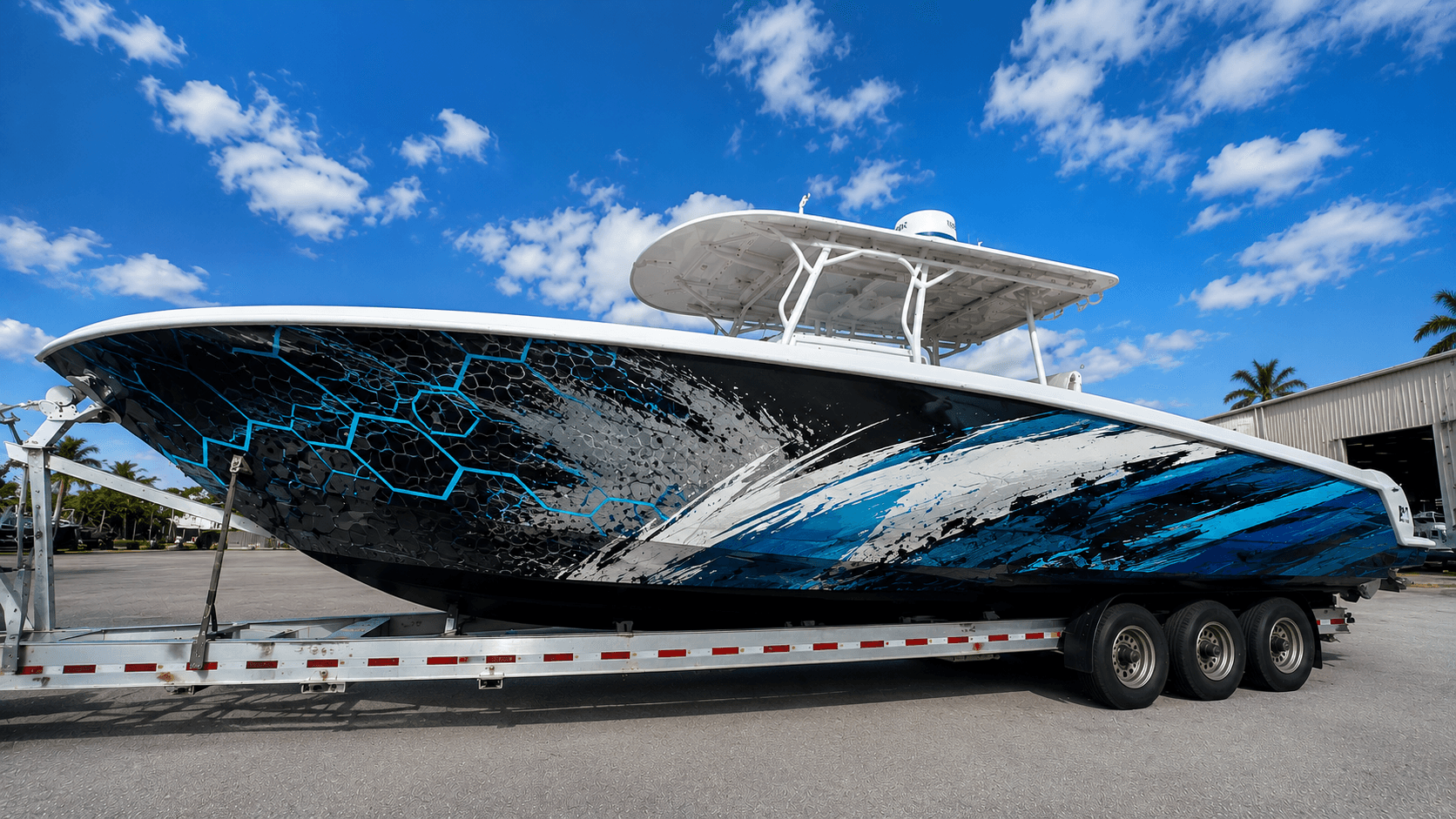

Boat wraps for commercial fishing vessels, tugboats, and workboats, a custom boat wrap is a functional asset. It must withstand UV exposure, salt spray, abrasion, and constant washdowns while maintaining a professional image. This page details the specialized approach for effective, long-lasting graphics on commercial marine assets.
Boat Wraps Overview: Custom wraps for commercial fishing vessels and workboats#
Key Takeaways#
- Commercial boat wraps require marine-grade cast vinyl and protective laminate for multi-year durability in harsh environments.
- Proper surface preparation on existing gelcoat or paint is the most critical factor for adhesion and longevity.
- Design must account for complex hull curvature, safety markings, and high-visibility areas specific to workboat operations.
- Professional installation includes meticulous edge sealing and post-heating to prevent premature failure at seams and corners.

- A well-executed wrap protects the underlying substrate from UV degradation and minor abrasion, extending the life of your paint or gelcoat.
- Practical considerations like marina rules for application and approved wash practices directly impact service life.
Process Overview#
1. Consultation & Surface Preparation#
The process begins with assessing the vessel's surfaces. Existing gelcoat or paint must be sound, clean, and free of wax, grease, and oxidation. Professional preparation involves mechanical deglossing and solvent washing to create an ideal bonding surface.
2. Design & Engineering for Marine Application#
Graphics are designed for the specific vessel, accounting for complex curves, hardware, and safety markings. Templates are created from measurements or scans. Print and cut files are engineered, planning seams in low-stress areas.
3. Professional Installation#
Installation is a skilled craft. Marine vinyl is carefully applied using slip solutions and specialized tools to eliminate air bubbles and ensure conformation. Critical edges and corners are post-heated and sealed to prevent water ingress.
4. Final Inspection & Care Instructions#
A full inspection follows installation. You receive guidelines on wash practices, recommending mild, non-abrasive soaps and avoiding high-pressure nozzles directed at wrap edges.
Materials & Finish Options#
Selecting the correct material suite is non-negotiable for commercial durability. The core component is marine-grade cast vinyl. Unlike calendared vinyl, cast vinyl is dimensionally stable, conforms better to complex curves, and resists shrinkage over time.
The vinyl alone is not enough. A protective laminate is mandatory. This clear top layer provides the primary defense against UV rays, salt, and chemical exposure. The laminate preserves the ink and the vinyl's integrity.
- Marine Vinyl: The general category of vinyl films engineered for wet, UV-exposed environments.
- Cast Vinyl: The recommended type for hulls and complex curves due to its superior conformability and long-term stability.
- Laminate: A clear, liquid-applied or film layer laminated over the printed vinyl. It is the primary shield against UV degradation, abrasion, and chemicals.
FAQ#
How long do commercial boat wraps typically last?#
With professional-grade materials and installation, a service life of 5 to 7 years is typical in harsh saltwater environments. Lifespan is tied to exposure, maintenance, and storage practices.
Can you wrap over existing hull graphics or paint?#
Yes, a wrap can be applied over a stable, well-adhered existing finish. The old surface must be thoroughly cleaned and deglossed to ensure proper bonding. It is a solution for refreshing faded graphics without repainting.
What maintenance is required for a vinyl-wrapped hull?#
Rinse with fresh water regularly. Wash with a soft cloth and a mild automotive or boat soap. Avoid abrasive pads, harsh cleaners with solvents, and directing high-pressure wash nozzles directly at wrap edges.
Are there areas on a workboat that should not be wrapped?#
Yes. High-heat areas like exhaust outlets, surfaces with constant heavy abrasion, and areas where the substrate is unsound should be avoided. A professional installer will identify these zones during consultation.