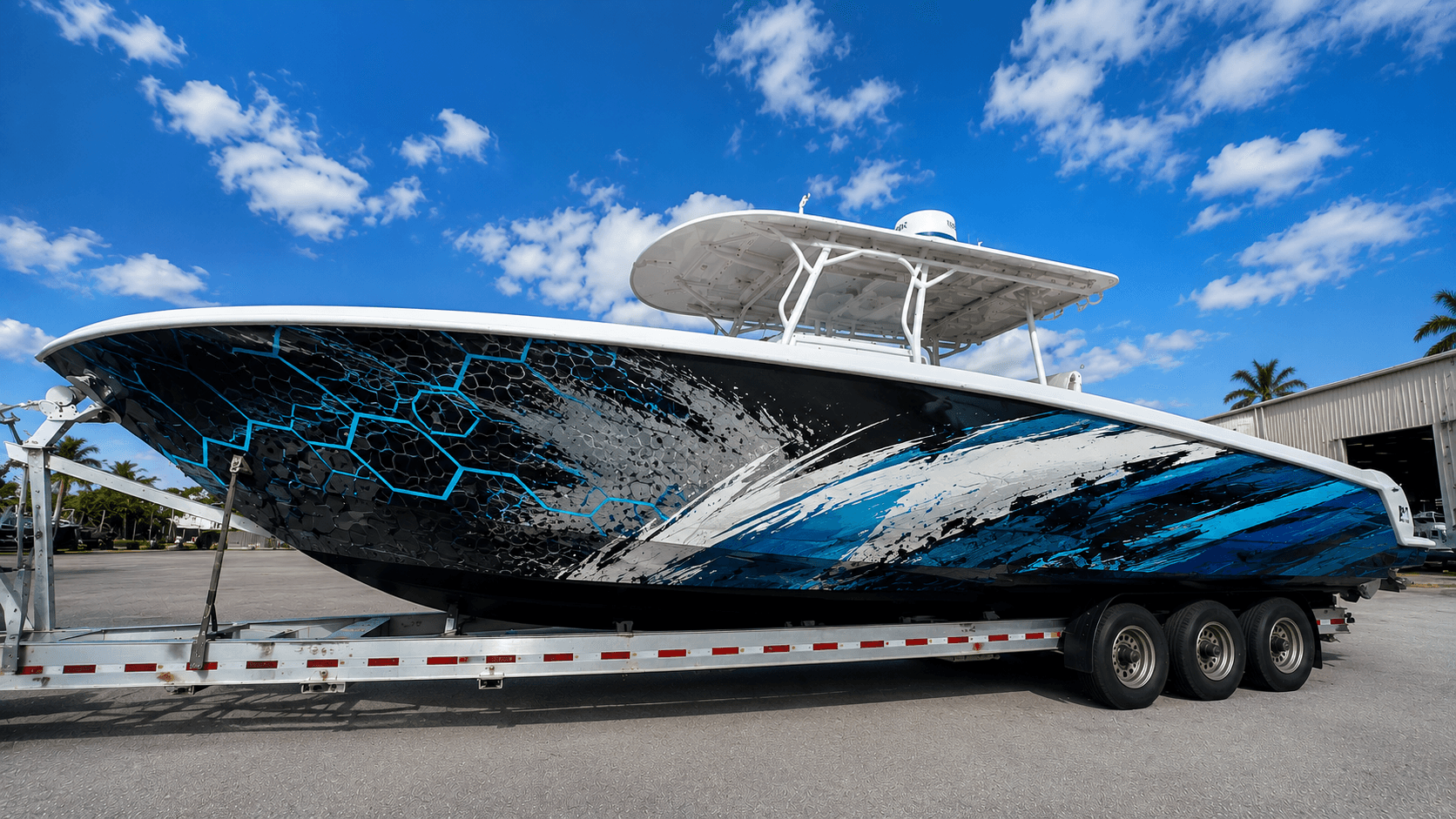
Custom Fleet Livery Design: Boat Wraps for Charter & Rental Operators
Professional custom fleet livery design and installation for charter operators. Durable boat wraps for branding, protection, and a unified corporate presence on
Last updated March 1, 2026
Boat wraps for corporate charter, rental, and tour operators, your vessels are your most visible brand ambassadors. A professional, unified fleet livery does more than look good; it builds immediate recognition, conveys operational scale, and protects a significant capital investment. Unlike temporary decals or paint, modern marine-grade vinyl wrap systems offer a sophisticated solution for durable, full-color graphics applied directly to your vessel's hull and topside. This service page details the strategic and technical approach Ocean Wraps employs for fleet operators, focusing on durability, brand consistency, and seamless integration into marine operations.
Boat Wraps Overview: Custom Fleet Livery Design for Corporate Charter and Rental#
Fleet boat wraps provide consistent, high-visibility branding across multiple vessels, essential for customer recognition and professional credibility.
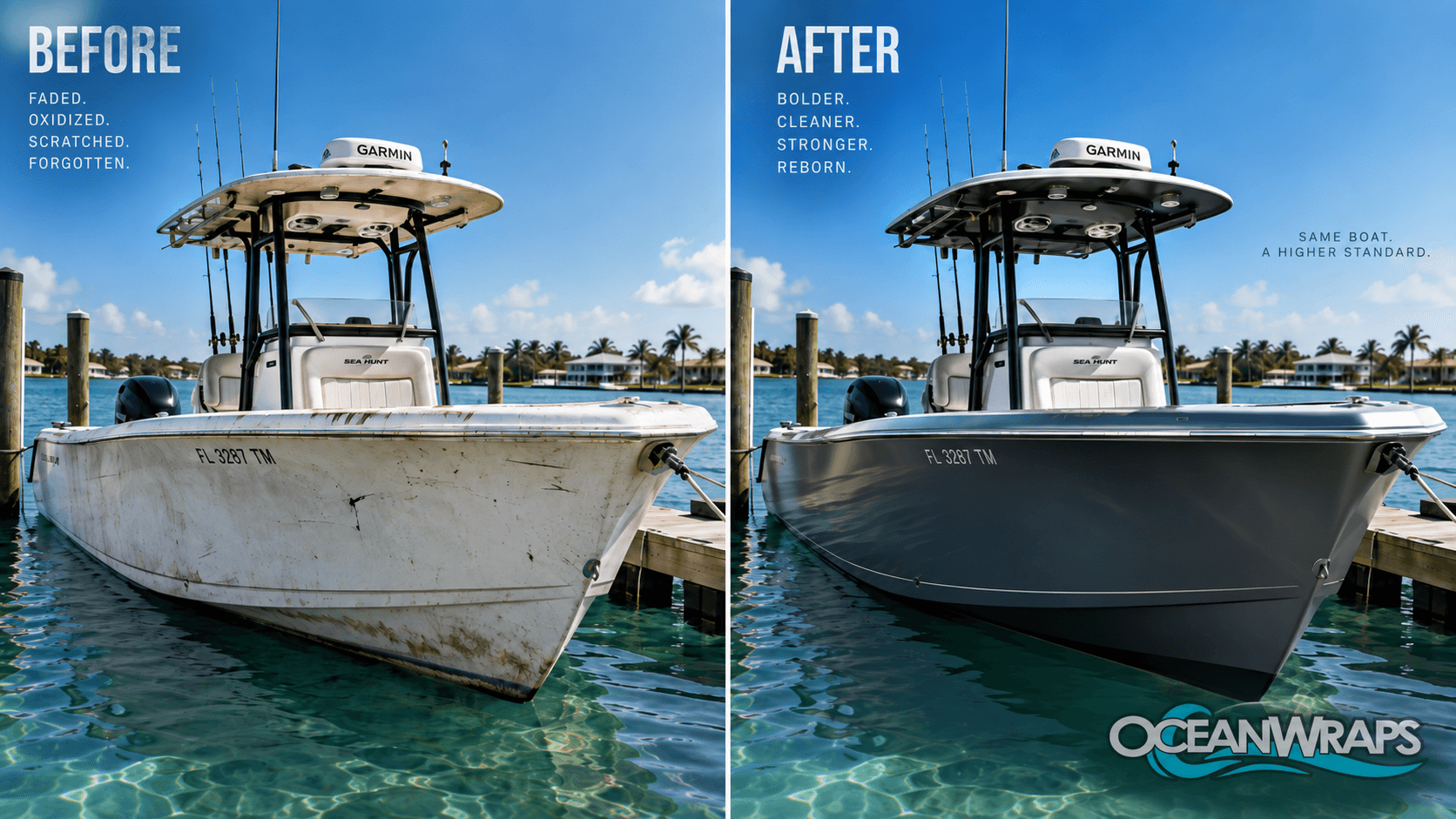
High-performance marine vinyl acts as a protective layer, shielding the underlying gelcoat from UV fading, minor abrasion, and saltwater exposure.
A strategic design process balances brand guidelines with maritime practicality, ensuring graphics are effective both dockside and at a distance on the water.
Professional installation and material selection are critical for long-term durability, requiring specific techniques for complex hull curvature and edge sealing.
A wrapped fleet simplifies maintenance with easy-clean surfaces and allows for cost-effective brand updates or vessel remarketing without a full repaint.
In the competitive charter and rental market, visual cohesion signals professionalism and reliability. A customer should instantly recognize any vessel in your fleet, whether they see it online, at the marina, or from another boat. This consistent identity builds trust and aids in marketing. Furthermore, a well-executed vinyl wrap system protects your assets. The vinyl film guards the factory gelcoat against UV degradation, which can cause chalkiness and color fade, and provides a barrier against dock rash, fuel spills, and other common marina wear. This protection helps maintain the vessel's resale value.
Effective fleet graphics must be designed for the marine context. This involves more than scaling a logo. Considerations include sightlines from shore and water, the impact of hull curvature on graphic perception, and ensuring critical information like vessel names or numbers remain legible. Color selection must account for intense sun and potential fading, while contrast is key for visibility in various weather conditions. The design must also accommodate practical elements like cleats, vents, and hardware, integrating them seamlessly or designing around them.
Every project begins with an assessment of the vessel(s) and operational goals. We then conduct a thorough surface prep. The hull and topside must be impeccably clean, dewaxed, and free of oxidation to ensure optimal vinyl adhesion. Any existing damage or compromised gelcoat is identified, as the wrap will only adhere to a sound, stable surface.
Using precise digital measurements and photographs, we create a template of the vessel's complex curves. Your brand assets are then adapted into a marine-specific livery design. Multiple proofs are shared for review, ensuring accuracy for fleet-wide application before any material is printed.
Approved designs are printed on premium marine vinyl. The graphics are then laminated with a protective clear layer. Installation is a skilled process involving precise panel alignment, careful seam placement, and the use of heat and pressure to conform the material to compound curves and recesses without wrinkles or bubbles.
After installation, edges are meticulously sealed and trimmed. We provide specific care instructions to your team, covering recommended wash practices, products to avoid, and inspection guidelines to maximize the lifespan of the boat wraps.
Material selection is foundational to performance. We use cast vinyl films engineered for marine use, known for their conformability over extreme curves and long-term durability. These films feature UV-resistant inks and polymer structures to resist color shift and cracking. A protective laminate is then applied over the printed graphics. This laminate is a clear, durable top coat that provides an additional barrier against abrasion, chemicals, and UV rays, significantly extending the life and appearance of the wrap. Gloss, matte, and textured finishes are available to achieve the desired aesthetic.
Surface Integrity: Wraps require a solid substrate. Gelcoat blisters, cracks, or severe oxidation must be repaired prior to wrapping.
Marina & Storage Rules: Consider covered versus uncovered storage, as prolonged sun exposure is the primary factor in vinyl lifespan.
Hull Curvature: The stern and bow areas present complex curves that demand high-quality materials and expert installation for a clean finish.
Maintenance Practices: Use non-abrasive cleaners and soft brushes. Avoid high-pressure washes near edges and automatic car washes with harsh bristles.
Warranty & Compliance: Ensure the wrap installer provides clear warranty terms and that the graphics comply with any local vessel identification regulations.
Lifespan varies based on material quality, installation, and environmental exposure. With professional-grade marine vinyl and proper care, a fleet wrap can maintain its appearance for 5 to 7 years, though covered storage when not in use will extend this period significantly.
Can a wrap be applied over existing graphics or paint?#
It can, but only if the existing surface is smooth, firmly adhered, and non-porous. Loose decals or failing paint must be removed. The new vinyl will adopt the texture of the surface beneath it, so a smooth base is critical for a premium result.
When properly installed and removed by professionals, vinyl wrap systems protect the gelcoat. Upon removal, the gelcoat should be in the same or better condition than when wrapped, shielded from UV rays and minor surface abrasion.
How do you ensure consistency across an entire fleet?#
Consistency is achieved through a controlled process. We use the same digital design files, material batches, and installation techniques for each vessel in the fleet. Detailed project documentation and templating ensure color matching and graphic placement are identical from boat to boat.
Investing in a custom fleet livery is a significant operational decision. Begin by auditing your current brand assets and vessel conditions. Document your primary goals: is it brand elevation, fleet uniformity, or gelcoat protection? When engaging a provider like Ocean Wraps, request to see case studies of completed fleet projects and ask detailed questions about their material specifications and installation methodology. A planned, phased approach can often be implemented to minimize vessel downtime across your operating schedule.
New Boat Prices Are Skyrocketing — Here's the Smarter Move Boat Owners Are Making
New boat prices are at record highs. Here's why more owners are choosing marine vinyl wraps to refresh their boat's look and protect the hull, without the cost of buying new
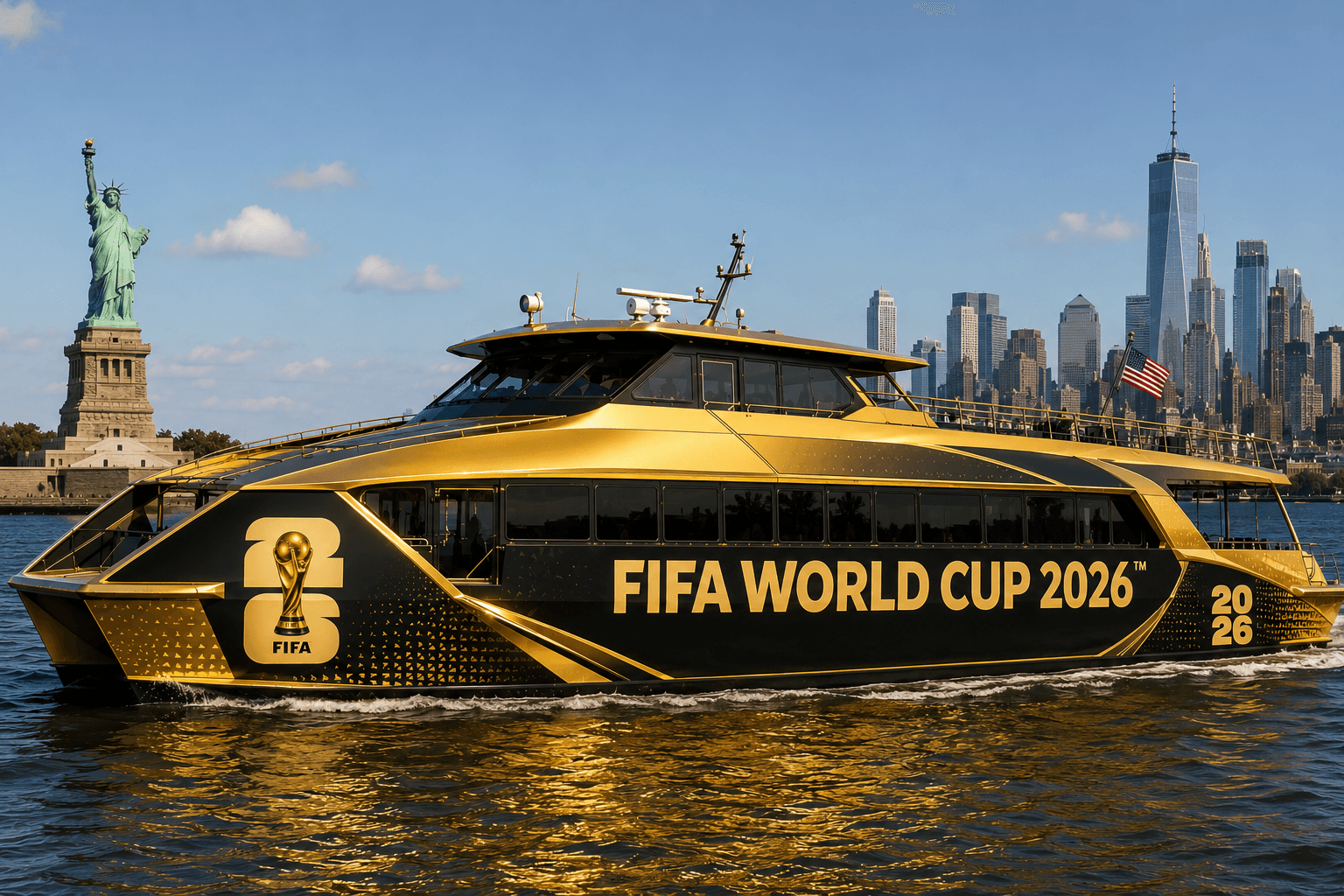
Get your boat ready for FIFA World Cup 2026 with a luxury custom wrap. Stand out on the water with premium marine graphics, gold finishes, and championship-inspired designs.
New Boat Prices Are Skyrocketing — Here's the Smarter Move Boat Owners Are Making
New boat prices are at record highs. Here's why more owners are choosing marine vinyl wraps to refresh their boat's look and protect the hull, without the cost of buying new
Boat Wraps Services
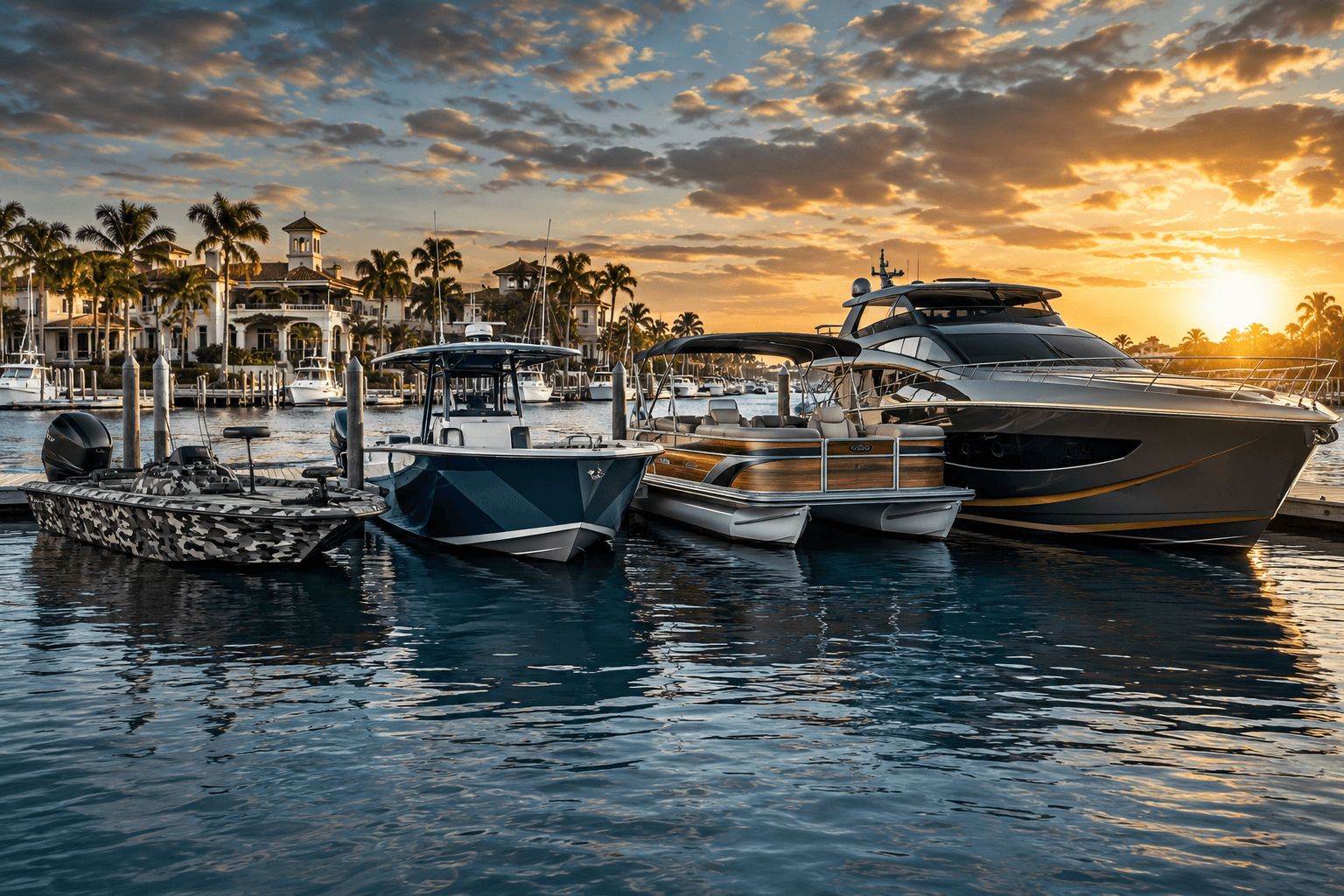
Boat Wrap Designs by Boat Type: What Actually Works on Your Vessel
A wrap that's perfect for a sportfishing boat chasing marlin offshore would look completely out of place on a family pontoon.
Boat Wraps Services
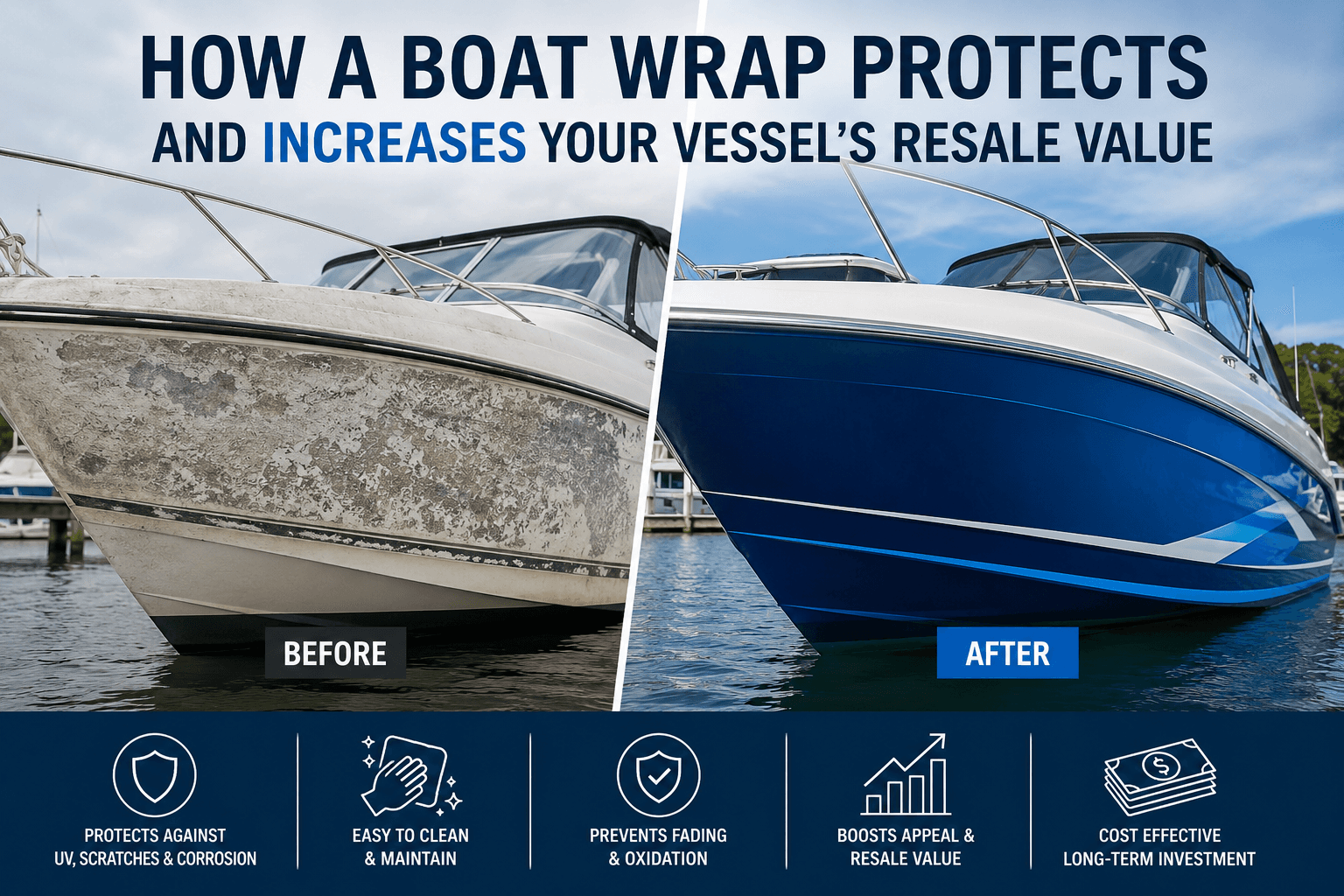
How a Boat Wrap Protects and Increases Your Vessel's Resale Value
How a Boat Wrap Can Protect and Increase Your Vessel's Resale Value
Boat Wraps Services
Top 10 FIFA World Cup Boat Wrap Ideas to Try This Season
If you already know you want your boat wrapped for World Cup season, the next question is which design actually fits your vessel.
Boat Wraps Services
Custom Boat Wraps for FIFA World Cup 2026
Get your boat ready for FIFA World Cup 2026 with a luxury custom wrap. Stand out on the water with premium marine graphics, gold finishes, and championship-inspired designs.
Boat Wraps Services
Luxury Yacht Wraps: The Complete Guide to Finishes, Styles, and Custom Marine Vinyl
Ocean Wraps works with luxury yacht and cruiser owners who want professional results, durable materials, and a finish that holds up on the water.
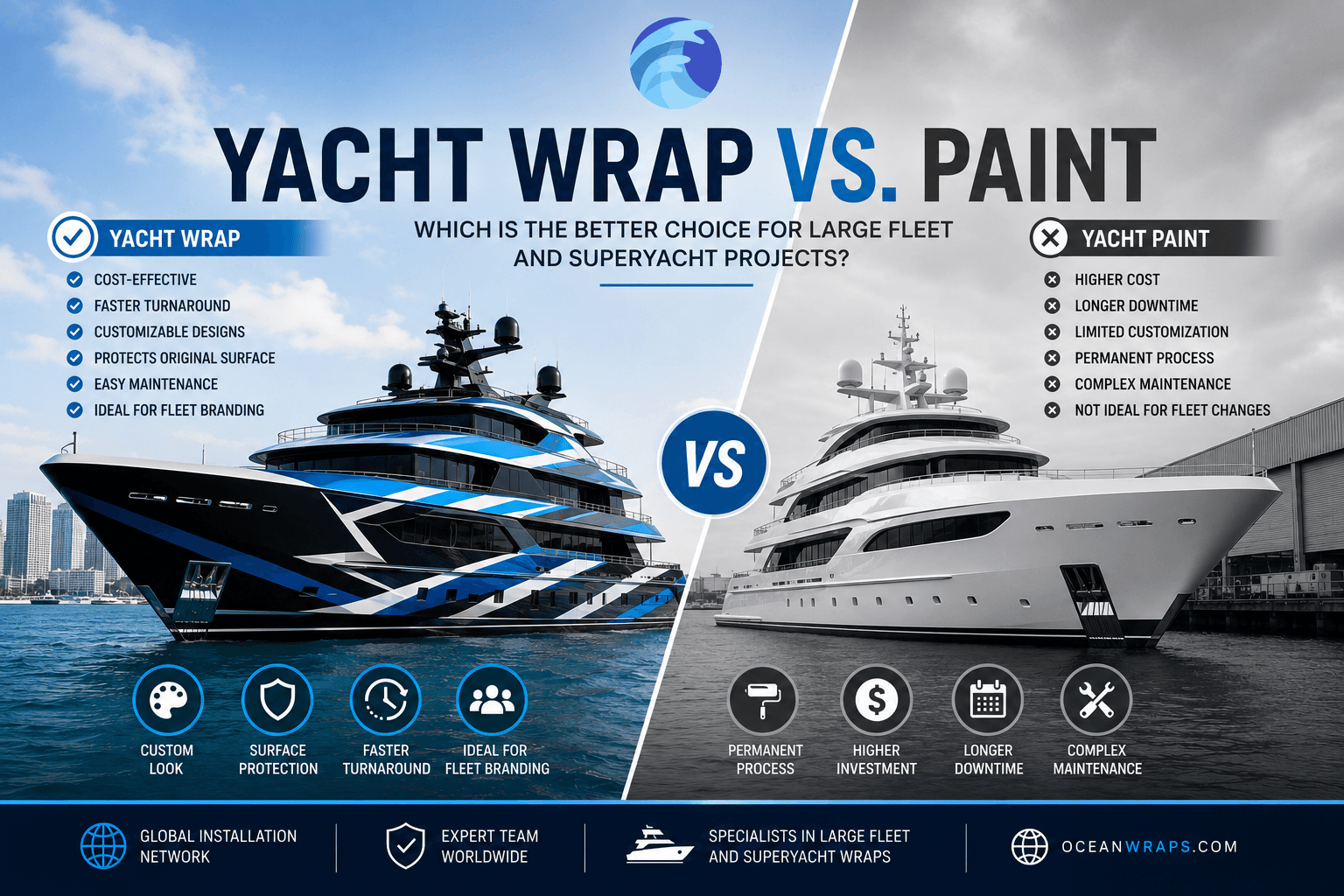
Yacht Wrap vs. Paint for Large Fleet & Superyacht Projects
Deciding between yacht wrap and paint for your fleet or superyacht? We break down real costs, downtime, durability, and which option actually makes sense at scale
How Much Does a Boat Wrap Cost? Complete Pricing Guide for 2026
Boat wrap prices vary widely depending on size, materials, and installer quality. Here's what a professional wrap actually costs in 2026 — and what to watch out for.
Luxury Yacht Wraps: The Complete Guide to Finishes, Styles, and Custom Marine Vinyl
Ocean Wraps works with luxury yacht and cruiser owners who want professional results, durable materials, and a finish that holds up on the water.
Boat Wraps Services
Why Florida Boat Owners Are Choosing Vinyl Boat Wraps in 2026
Discover why Florida boat owners are switching from paint to vinyl boat wraps. Learn the benefits, costs, protection, and customization options.
Guides
Boat Wraps vs Paint: 5 Reasons Why Wraps Win
Boat wraps cost less, install faster, and protect your gel coat better than traditional paint. Here's why so many boat owners are making the switch.
Guides
Yacht Wrap vs. Paint for Large Fleet & Superyacht Projects
Deciding between yacht wrap and paint for your fleet or superyacht? We break down real costs, downtime, durability, and which option actually makes sense at scale
Guides
How Much Does a Boat Wrap Cost? Complete Pricing Guide for 2026
Boat wrap prices vary widely depending on size, materials, and installer quality. Here's what a professional wrap actually costs in 2026 — and what to watch out for.