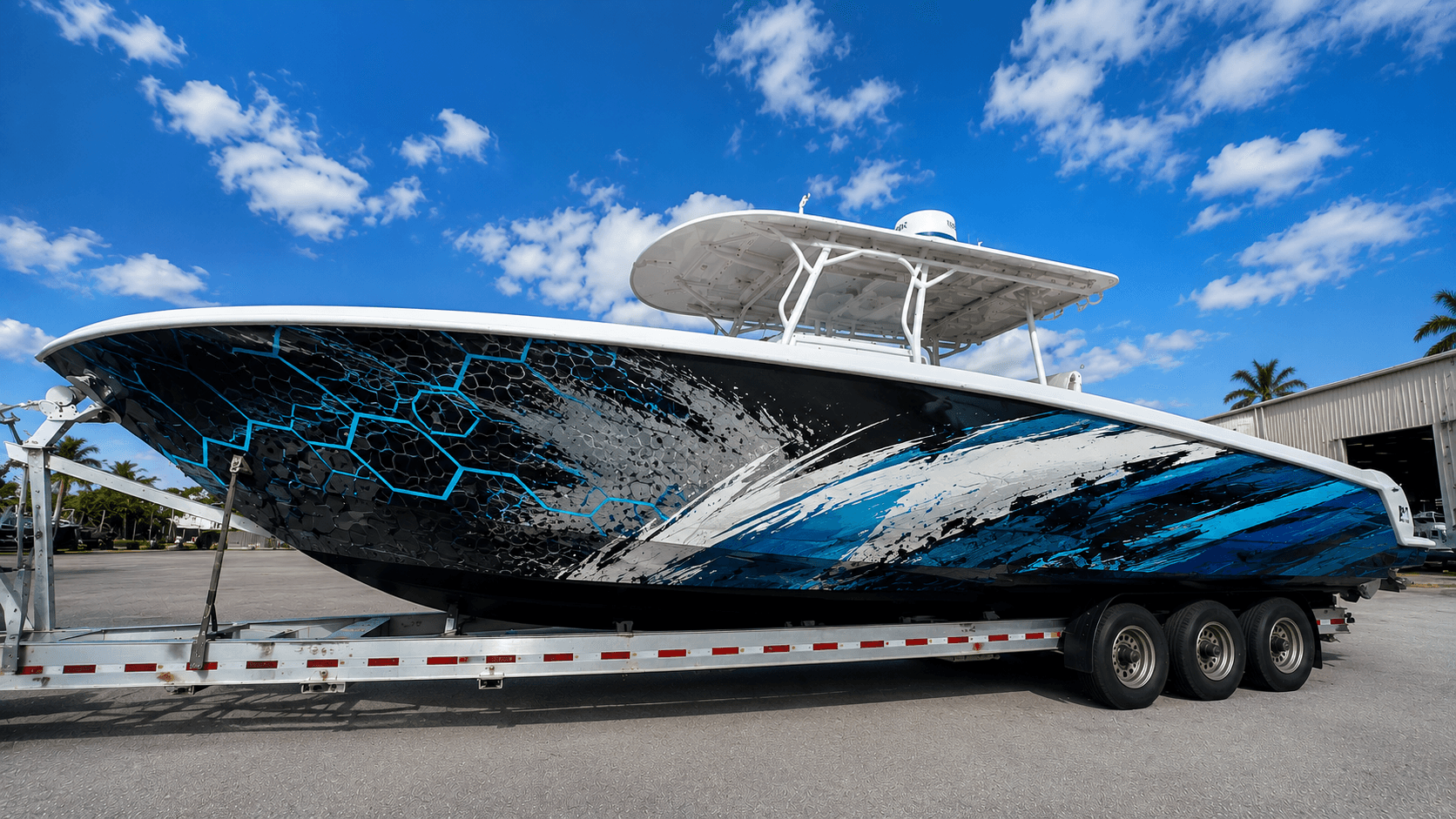
Custom Fleet Livery Design for Marine Research: Advanced Boat Wraps
Purpose-built boat wraps for marine research fleets. Durable hull graphics for vessel identification, branding, and protection in demanding saltwater environmen
Last updated February 27, 2026
For marine research organizations, a fleet is more than transportation; it is a mobile platform for science and a public-facing representation of institutional mission. Custom fleet livery, executed through advanced boat wraps, addresses critical operational needs beyond aesthetics. It provides durable hull and topside graphics for clear vessel identification, enhances on-water visibility for safety, and projects a unified, professional image that reinforces credibility with stakeholders and the public. This tailored approach considers the unique demands of research vessels, from frequent marina operations to extended exposure in harsh saltwater environments.
Boat Wraps Overview: Custom Fleet Livery Design for Marine Research Organizations#
Effective fleet livery serves a strategic function. Consistent application of logos, color schemes, and identification numbers or names across disparate vessels creates a single, recognizable identity. This is crucial for multi-vessel operations, where instant recognition by shore teams, other craft, and aerial observers supports logistical and safety protocols. Furthermore, a professionally presented vessel enhances institutional branding during public outreach, dock-side tours, or media engagements, turning every transit into a potential communication opportunity.
Designing graphics for research vessels involves unique practical constraints. The layout must account for hull curvature, hardware, through-hulls, and operational markings. Color and contrast are selected not just for branding but for high visibility in fog, glare, and low-light conditions. At Ocean Wraps, our design phase includes a detailed review of vessel schematics and an on-site survey to map complex surfaces, ensuring the final graphics are both impactful and technically feasible to install.
The process begins with a detailed assessment of the vessel's condition and operational profile. The hull and topside surfaces are meticulously cleaned and decontaminated. Existing gelcoat is inspected for cracks or osmotic blistering, which must be addressed prior to wrapping. A proper substrate is non-negotiable for adhesion and longevity.
Using vessel dimensions and photographs, designers create digital mockups. This stage involves close collaboration with the organization to align on branding, regulatory markings, and visibility requirements. A key output is a precise installation diagram for the technical team.
Trained installers apply the pre-cut vinyl wrap panels using specialized tools and techniques. This step requires expert handling to manage large panels on curved surfaces, ensuring seamless graphics without wrinkles or trapped air. Particular attention is paid to edge sealing to prevent water ingress.
After installation, a thorough inspection ensures quality. The client receives specific care guidelines covering recommended wash practices, compatible cleaning agents, and considerations for long-term storage to preserve the wrap's appearance and durability.
Material science is foundational to a successful marine wrap. The industry standard uses cast vinyl films, which are more conformable than calendered vinyl and better suited to the complex curves of a boat hull. These films are engineered for extended outdoor durability and UV resistance to resist fading. A protective laminate is typically applied over the printed graphics. This laminate acts as a sacrificial layer, shielding the ink from abrasion, chemical exposure, and UV rays, thereby extending the graphic's lifespan significantly. Selection involves balancing gloss, matte, or textured finishes with the required performance characteristics.
Surface Prep: Gelcoat must be fully cured, clean, and free of wax, silicone, or old failing coatings for proper vinyl adhesion.
Edge Sealing: All cut lines and panel seams must be meticulously sealed to prevent edge lifting and water penetration, a critical step in saltwater service.
Marina Rules: Some facilities have rules regarding work performed dockside; coordination may be required for haul-out or dedicated work space.
Storage Impact: Long-term shrink-wrapping or heavy fender abrasion can affect the wrap; these factors should be discussed during planning.
Wash Practices: Use soft cloths and non-abrasive, non-solvent-based cleaners designed for marine vinyl to maintain the finish.
How long do marine-grade boat wraps typically last?#
With proper material selection, installation, and care, a marine vinyl wrap can last 5 to 7 years. Lifespan is influenced by exposure conditions, usage patterns, and maintenance. The protective laminate is key to achieving this durability.
Can a wrap be applied over existing hull paint or gelcoat damage?#
A wrap requires a sound, stable substrate. It can be applied over intact paint and gelcoat, but it is not a repair solution. Existing cracks, blisters, or peeling paint must be professionally repaired and smoothed prior to installation to ensure proper adhesion and a flawless appearance.
Does the wrap damage the underlying gelcoat when removed?#
When removed correctly using appropriate techniques, high-quality marine vinyl should not damage factory gelcoat. In fact, the wrap often protects the area it covered, potentially leaving a visible contrast with sun-faded surrounding surfaces.
What is the typical downtime for wrapping a research vessel?#
Downtown varies by vessel size and graphic complexity. For a mid-sized research craft, the installation process itself may take 3-5 days. This follows the design and production phase. Planning for a dedicated window, including surface prep and cure time, is essential for scheduling.
New Boat Prices Are Skyrocketing — Here's the Smarter Move Boat Owners Are Making
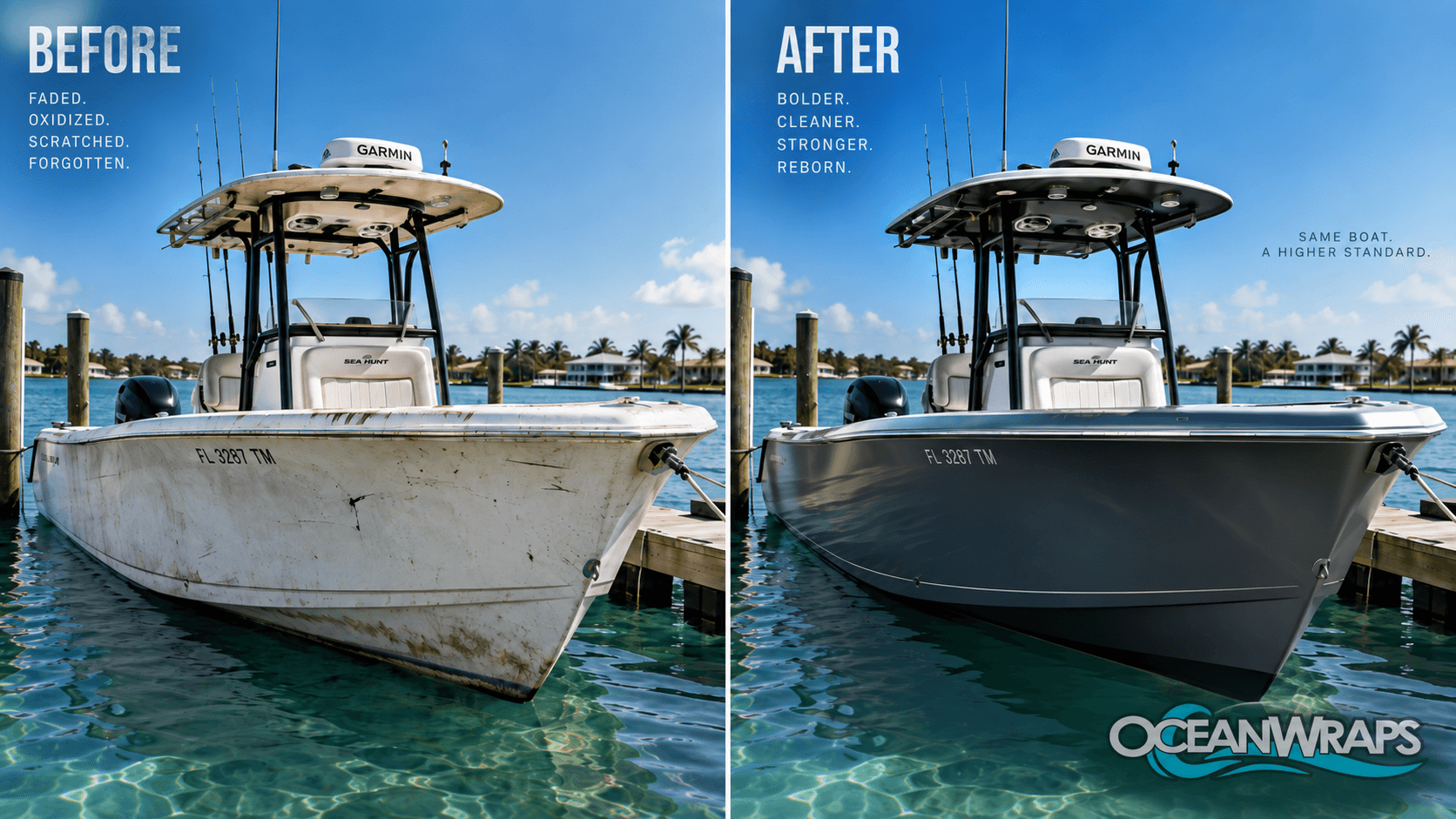
New boat prices are at record highs. Here's why more owners are choosing marine vinyl wraps to refresh their boat's look and protect the hull, without the cost of buying new
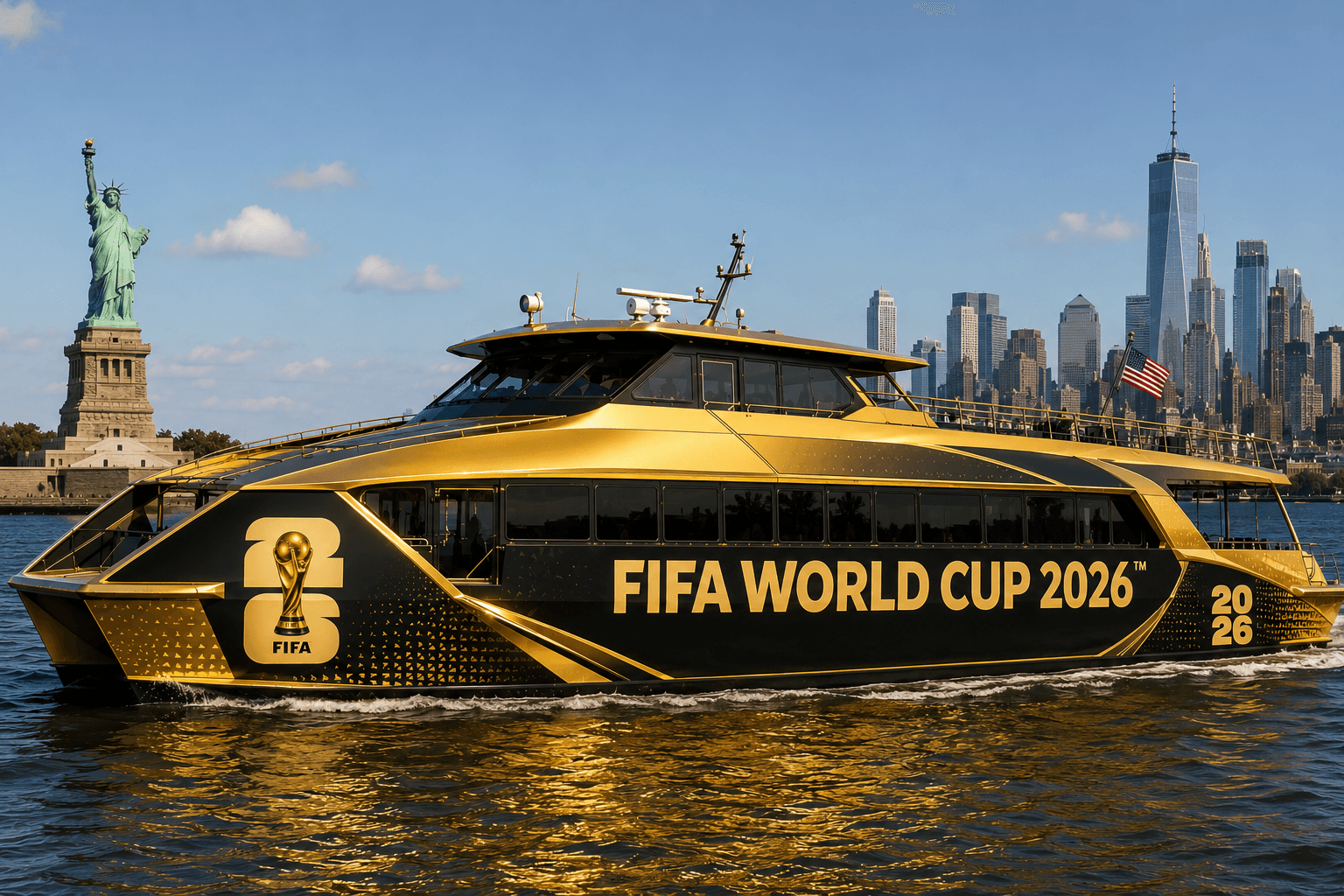
Get your boat ready for FIFA World Cup 2026 with a luxury custom wrap. Stand out on the water with premium marine graphics, gold finishes, and championship-inspired designs.
New Boat Prices Are Skyrocketing — Here's the Smarter Move Boat Owners Are Making
New boat prices are at record highs. Here's why more owners are choosing marine vinyl wraps to refresh their boat's look and protect the hull, without the cost of buying new
Boat Wraps Services
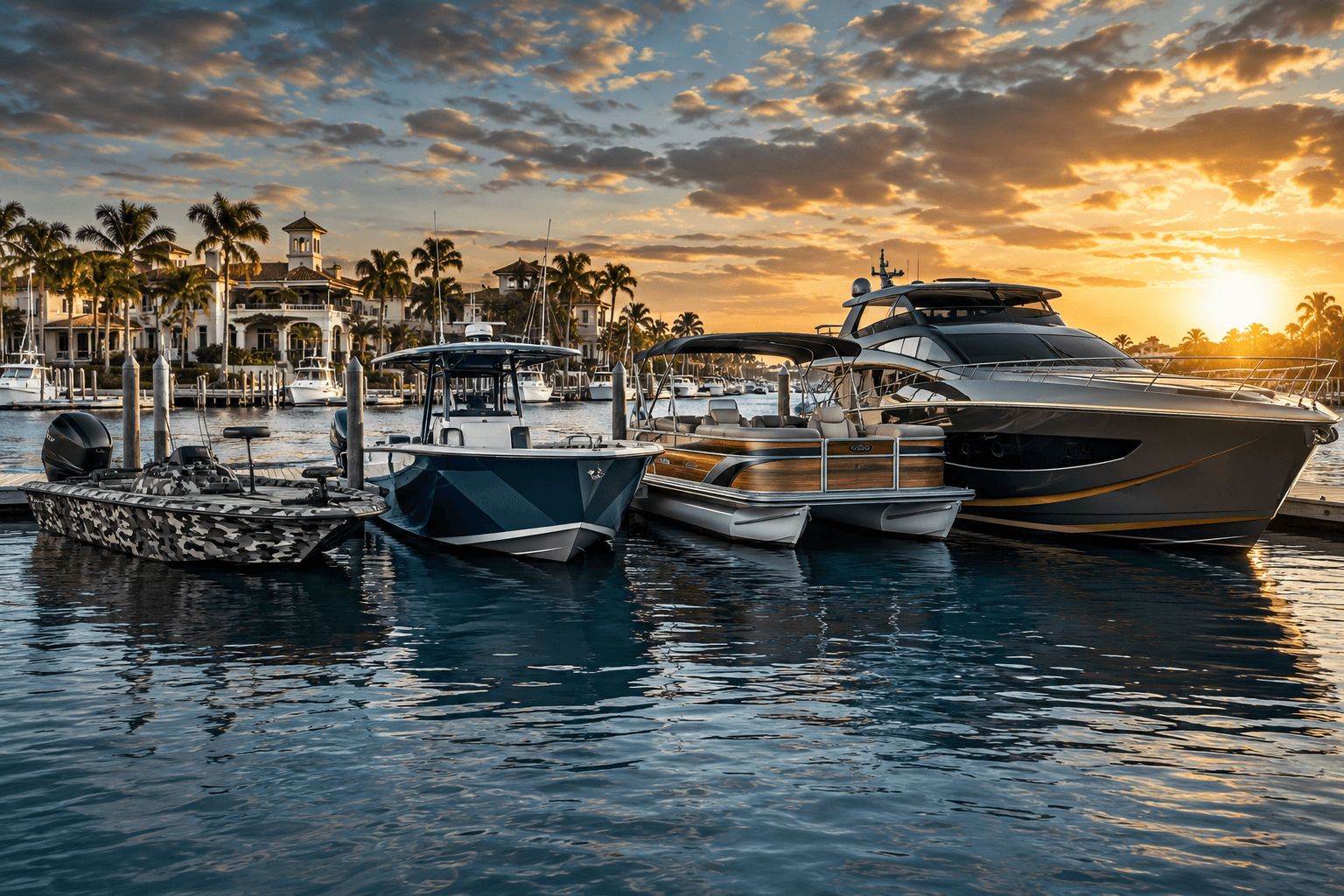
Boat Wrap Designs by Boat Type: What Actually Works on Your Vessel
A wrap that's perfect for a sportfishing boat chasing marlin offshore would look completely out of place on a family pontoon.
Boat Wraps Services
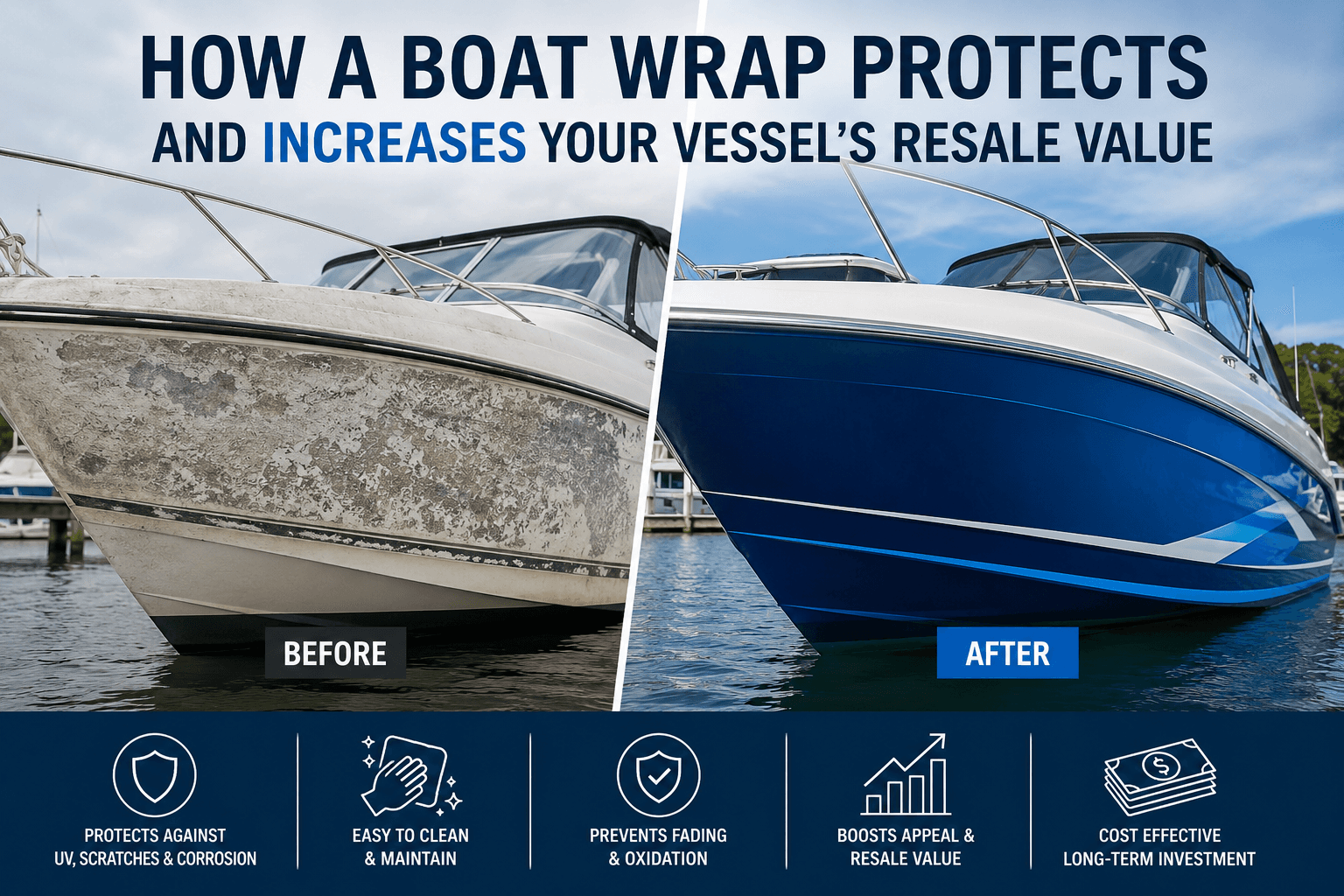
How a Boat Wrap Protects and Increases Your Vessel's Resale Value
How a Boat Wrap Can Protect and Increase Your Vessel's Resale Value
Boat Wraps Services
Top 10 FIFA World Cup Boat Wrap Ideas to Try This Season
If you already know you want your boat wrapped for World Cup season, the next question is which design actually fits your vessel.
Boat Wraps Services
Custom Boat Wraps for FIFA World Cup 2026
Get your boat ready for FIFA World Cup 2026 with a luxury custom wrap. Stand out on the water with premium marine graphics, gold finishes, and championship-inspired designs.
Boat Wraps Services
Luxury Yacht Wraps: The Complete Guide to Finishes, Styles, and Custom Marine Vinyl
Ocean Wraps works with luxury yacht and cruiser owners who want professional results, durable materials, and a finish that holds up on the water.
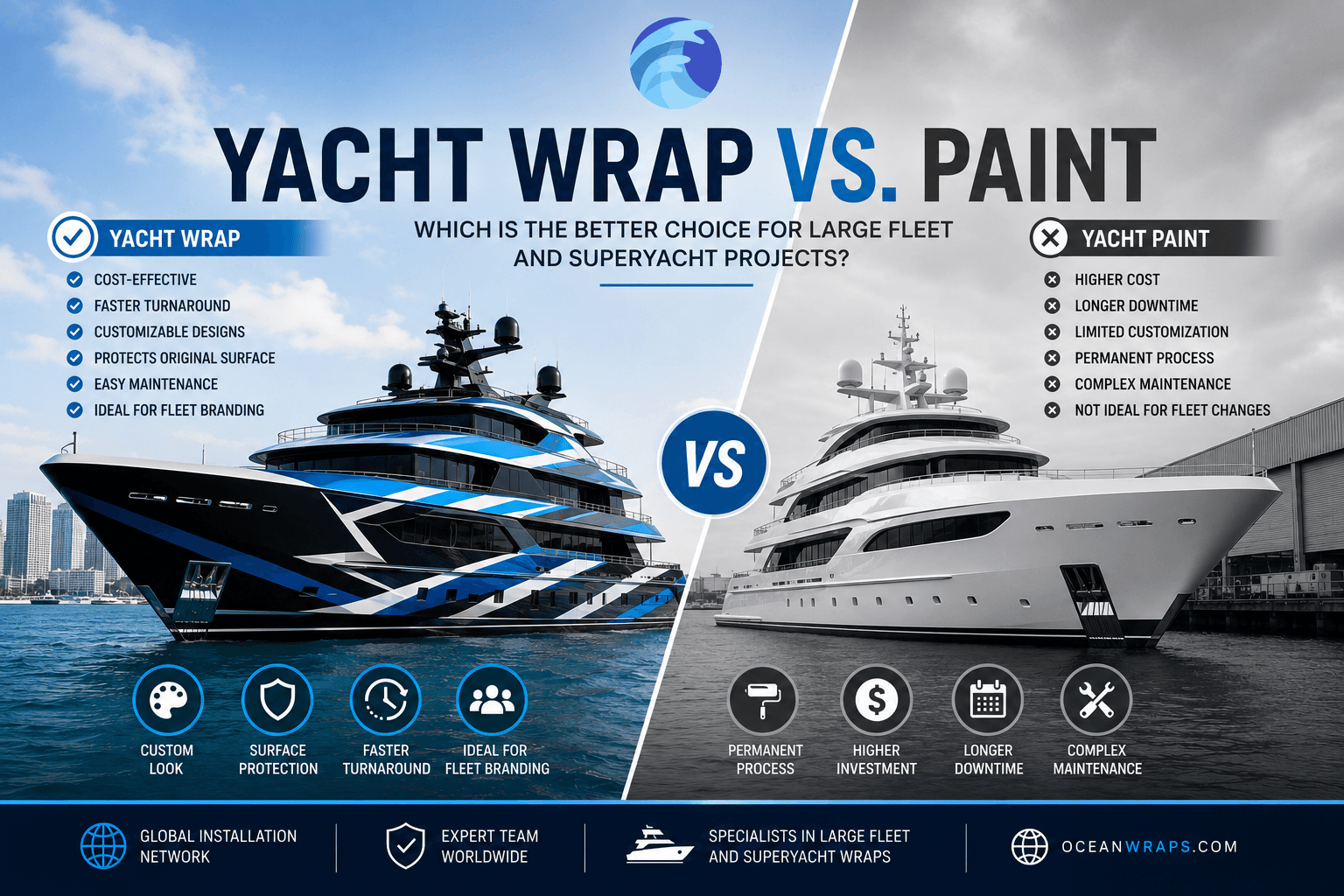
Yacht Wrap vs. Paint for Large Fleet & Superyacht Projects
Deciding between yacht wrap and paint for your fleet or superyacht? We break down real costs, downtime, durability, and which option actually makes sense at scale
How Much Does a Boat Wrap Cost? Complete Pricing Guide for 2026
Boat wrap prices vary widely depending on size, materials, and installer quality. Here's what a professional wrap actually costs in 2026 — and what to watch out for.
Luxury Yacht Wraps: The Complete Guide to Finishes, Styles, and Custom Marine Vinyl
Ocean Wraps works with luxury yacht and cruiser owners who want professional results, durable materials, and a finish that holds up on the water.
Boat Wraps Services
Why Florida Boat Owners Are Choosing Vinyl Boat Wraps in 2026
Discover why Florida boat owners are switching from paint to vinyl boat wraps. Learn the benefits, costs, protection, and customization options.
Guides
Boat Wraps vs Paint: 5 Reasons Why Wraps Win
Boat wraps cost less, install faster, and protect your gel coat better than traditional paint. Here's why so many boat owners are making the switch.
Guides
Yacht Wrap vs. Paint for Large Fleet & Superyacht Projects
Deciding between yacht wrap and paint for your fleet or superyacht? We break down real costs, downtime, durability, and which option actually makes sense at scale
Guides
How Much Does a Boat Wrap Cost? Complete Pricing Guide for 2026
Boat wrap prices vary widely depending on size, materials, and installer quality. Here's what a professional wrap actually costs in 2026 — and what to watch out for.