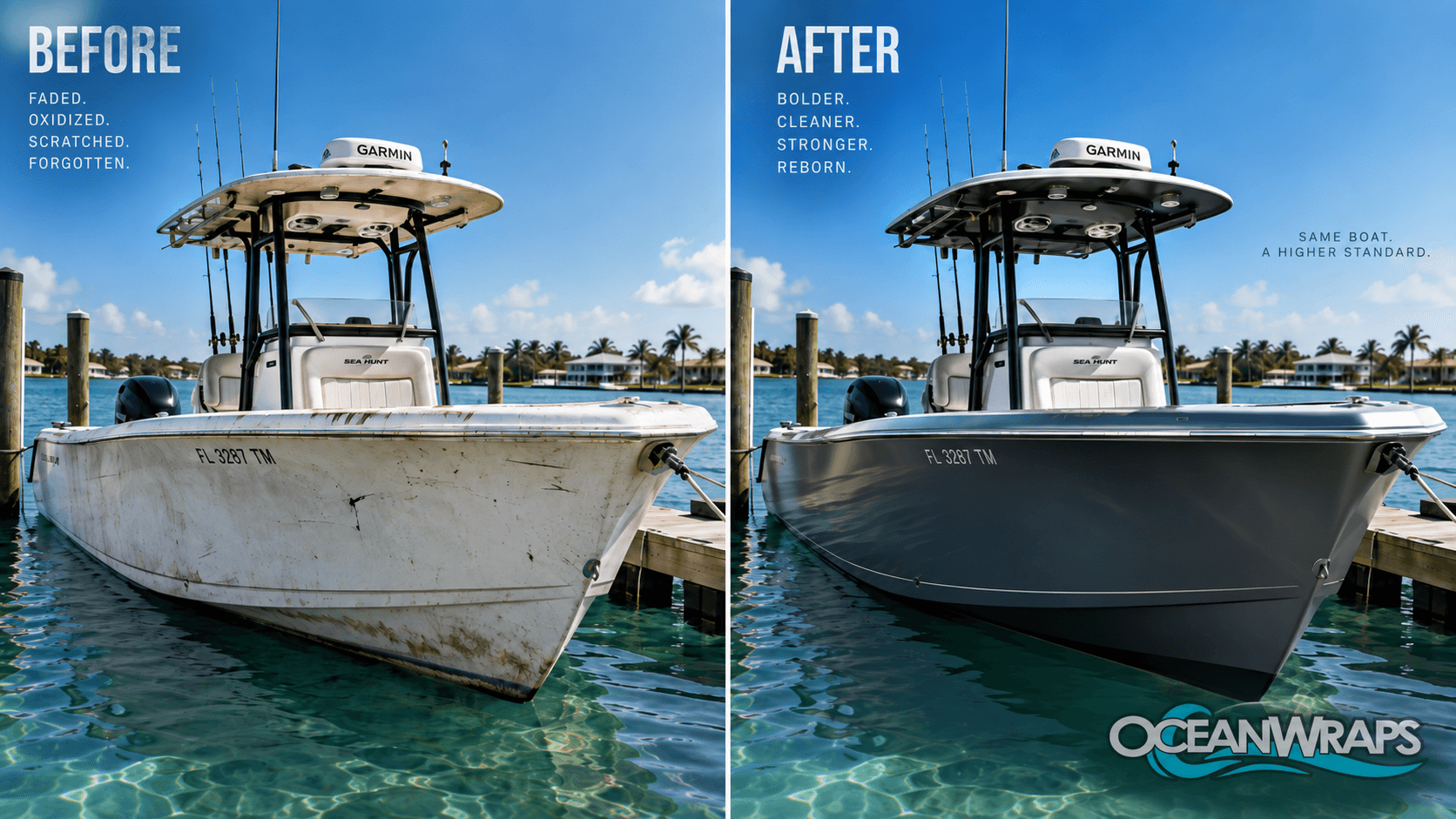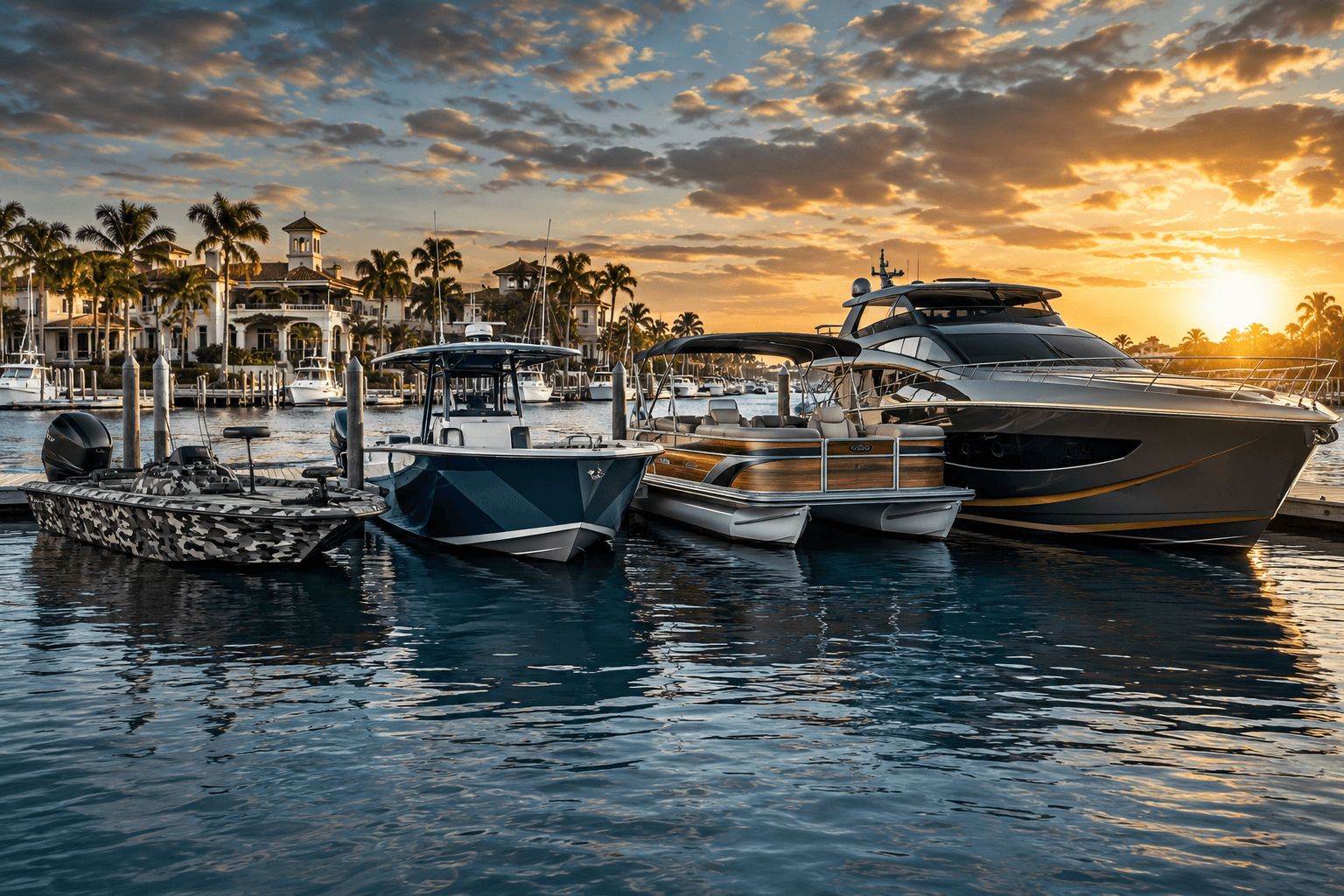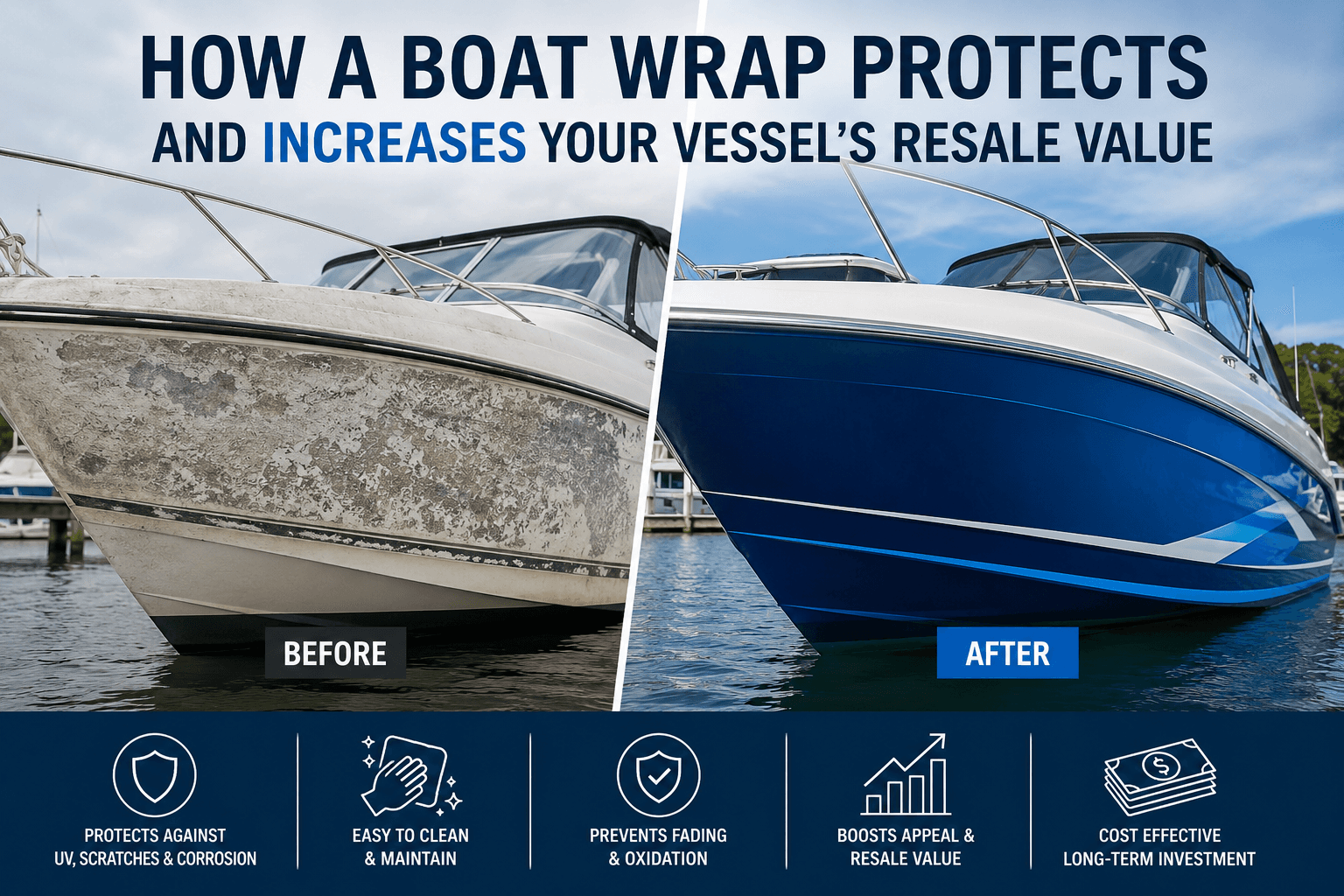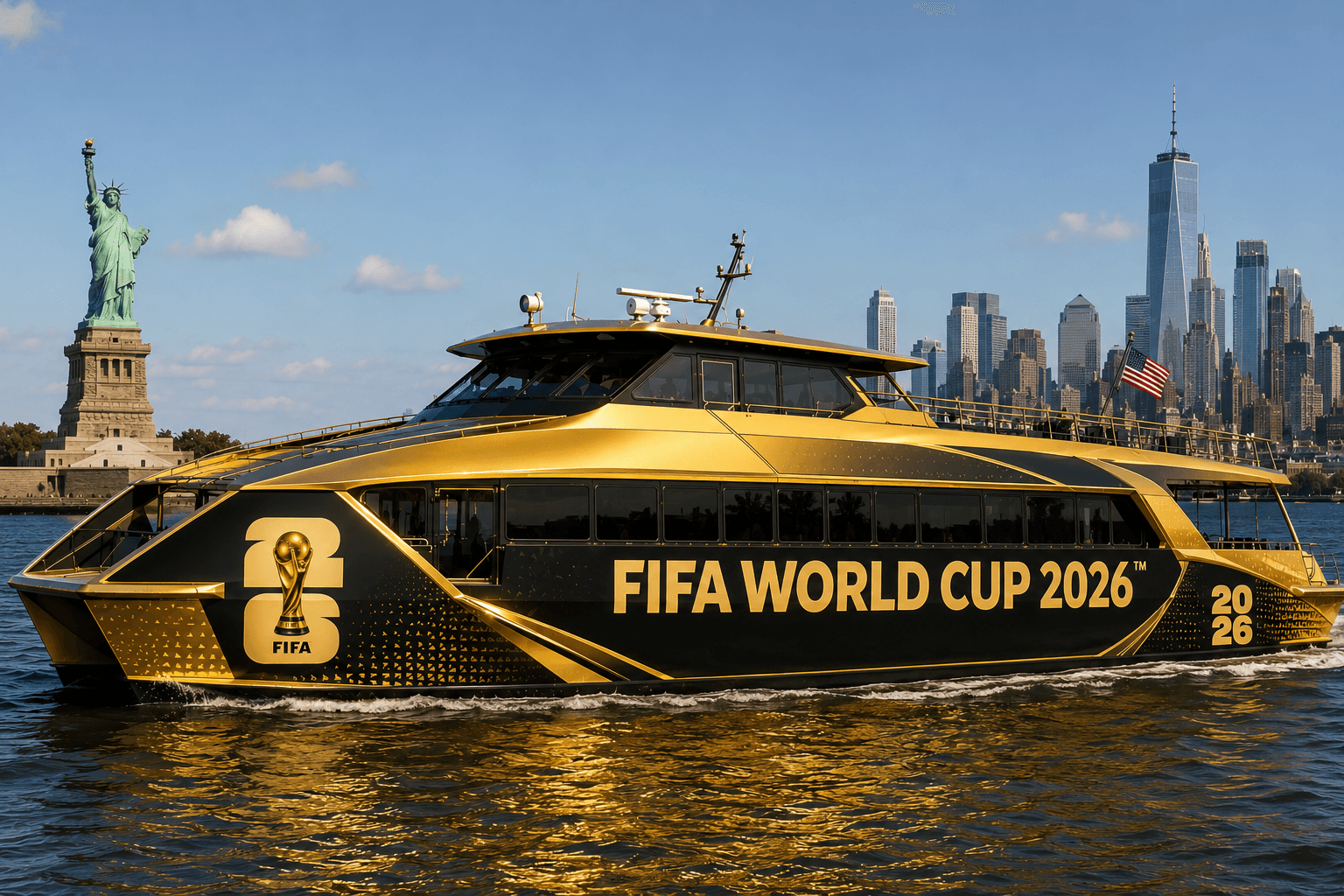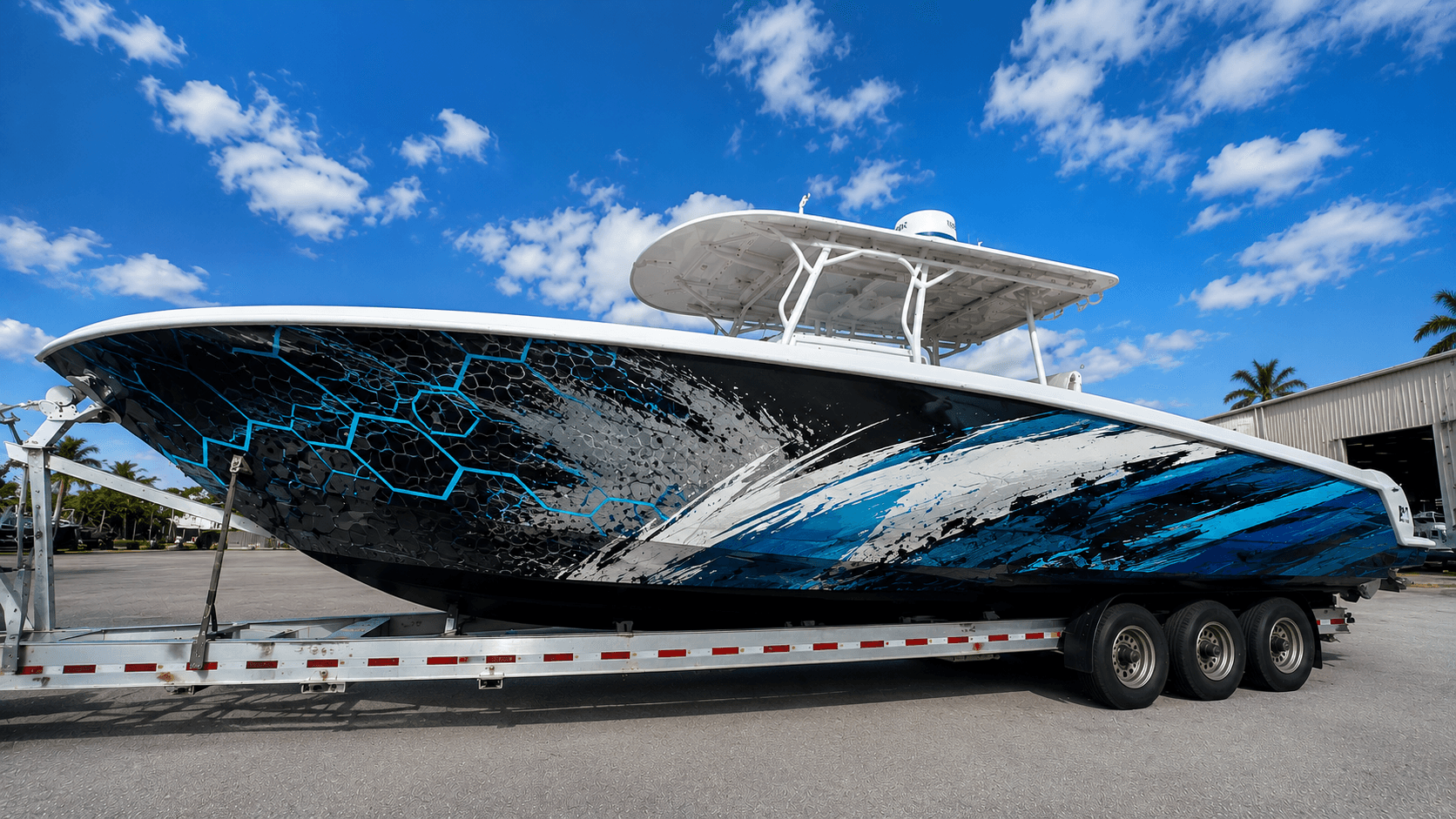

For commercial fishing operations, a vessel is a mobile billboard and a statement of professionalism. A custom fleet livery, executed through high-performance boat wraps, transforms your vessels into cohesive, branded assets. Unlike paint, modern marine vinyl wraps offer a faster, more versatile solution for applying durable graphics and color to hulls and topsides, providing both high-impact visibility and a protective layer for the underlying gelcoat.
Key Takeaways#
- Fleet livery enhances brand recognition and professional credibility in port and at sea.
- Marine-grade boat wraps provide a protective barrier against UV exposure, salt spray, and minor abrasions.
- The installation process is typically faster than traditional painting, minimizing vessel downtime.
- Design must account for vessel curvature, hardware, and the harsh marine operating environment.
- Proper surface preparation and professional installation are critical for long-term durability.
- A well-maintained wrap can last for several years, even on active commercial fishing vessels.

Process Overview#
Surface Preparation and Assessment#
Every successful boat wrap installation begins with meticulous preparation. The hull and topside surfaces must be clean, smooth, and free of contaminants like oil, wax, or failing paint. Existing gelcoat is inspected for cracks or blistering that require repair. This stage ensures optimal vinyl adhesion and longevity.
Design and Digital Templating#
Using vessel photographs and measurements, a digital template is created. Graphics are designed to work with the vessel's specific curves, seams, and hardware placements. This phase involves collaboration to ensure logos, registration numbers, and safety markings are perfectly positioned and compliant.
Print, Laminate, and Installation#
The approved design is printed on marine-grade vinyl. A protective laminate layer is then applied. Installation is a skilled process involving careful panel alignment, heat application to conform to compound curves, and precise trimming. Techniques like post-heating and edge sealing are used to secure the material.
Final Inspection and Care Instructions#
After installation, a thorough inspection ensures no lifting edges or imperfections. The client receives specific care guidelines, including recommended wash practices, to maximize the boat wrap's service life.
Materials & Finish Options#
The performance of a fleet livery depends on the materials selected. The industry standard for long-term marine applications is cast vinyl, known for its superior conformability and durability over complex contours. A high-quality marine vinyl is engineered for extended UV resistance and color stability. The final printed graphics are protected with a clear, marine-grade laminate. This laminate is the primary shield against abrasion and UV degradation, and it determines the final gloss level and texture.
Boat Wraps for Commercial Fleets#
- Environmental and Operational Factors: Wraps must withstand constant sun exposure, saltwater immersion, fuel spills, and physical contact with docks and gear.
- Installation Logistics: Scheduling must align with haul-out periods or marina availability to minimize operational disruption.
- Maintenance and Longevity: Routine washing with mild soap and water removes salt and contaminants. Avoid high-pressure washes near seams and edges.
- Compliance: Check with your home port or marina regarding any specific rules on graphic size or appearance for commercial vessels.
FAQ#
How long do boat wraps last on commercial fishing vessels?#
With professional installation and proper care, a marine-grade wrap can last between 5 to 7 years, even in harsh environments. Lifespan is influenced by sun exposure, maintenance, and operational wear and tear.
Can you wrap over existing paint or gelcoat?#
Yes, provided the substrate is sound, firmly adhered, and properly prepared. Loose, flaking, or chalky paint must be removed. The surface must be cleaned and degreased to ensure a strong bond.
What is the advantage of a wrap versus a new paint job?#
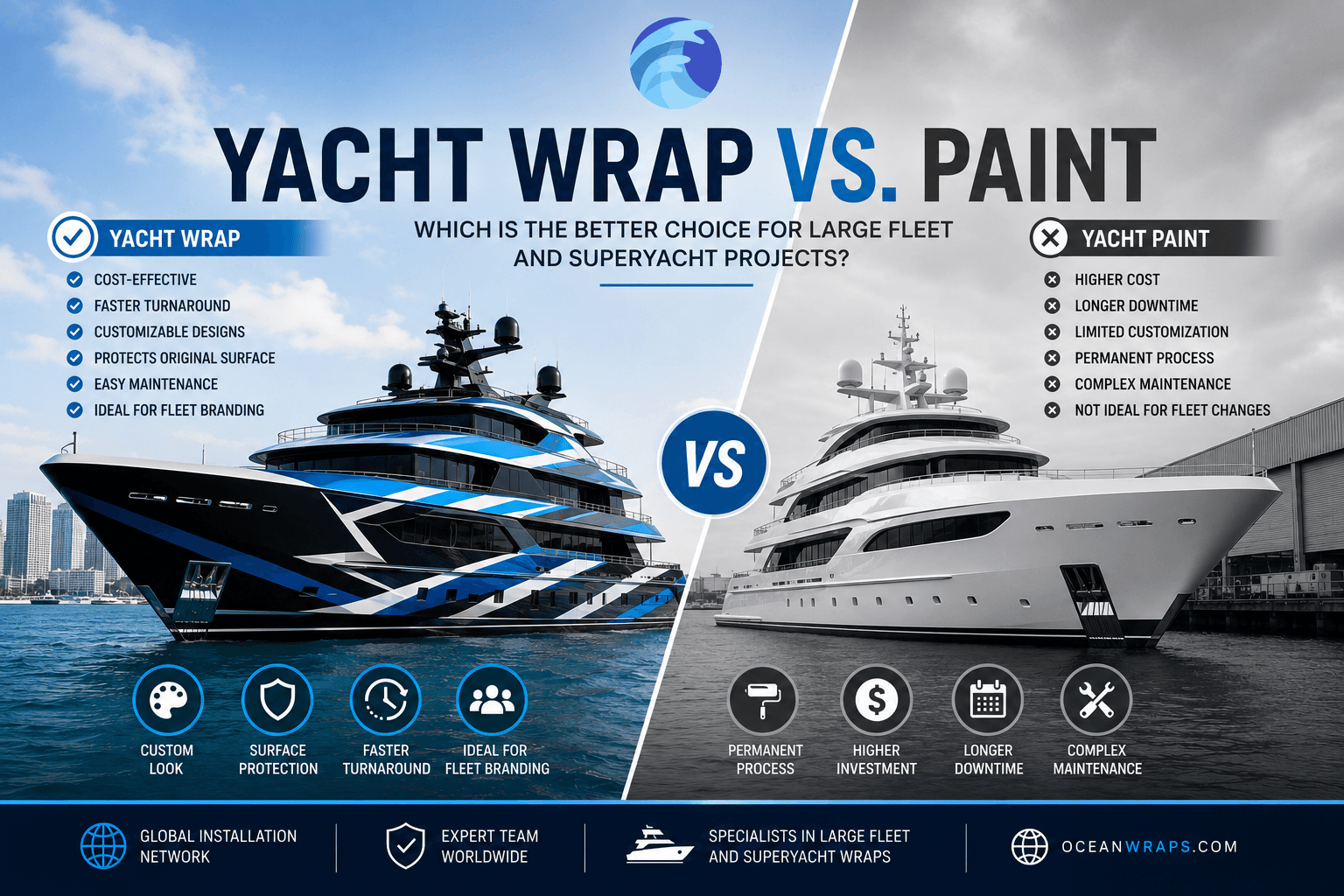
Boat wraps offer faster application, reducing vessel downtime. They provide extensive graphic and color possibilities without the extensive masking, sanding, and curing time of paint. The vinyl also adds a protective layer to the underlying surface.
Is the wrap removable?#
Yes, marine vinyl is designed to be removable. Professional removal is recommended to avoid damage to the underlying gelcoat or paint. The ease of removal depends on the vinyl grade, exposure time, and substrate condition.
A unified fleet livery is not a cosmetic expense; it is a capital asset that projects scale, reliability, and pride in your operation every day it leaves the dock.