Lettering is often the first graphic a boat gets and the one that people read most. A boat name, business name, or phone number has to be legible from a distance and from a moving boat, and it has to fit the shape of the hull. Good lettering follows a few simple rules.
Choosing a font#
Decorative script fonts can look elegant on a transom, but they can be hard to read from far away. Ask yourself:
- Can someone read it from another boat or the end of a dock?
- Does it hold up in a single color without outlines?
- Are letters like a, e, and o distinct from each other?
- Does it suit the style of the boat?
For businesses, clean and bold fonts usually work best. For a private boat name, more personality is fine, but it should still be readable at a glance.
Getting the size right#
Lettering that looks large on a computer screen can look small on the water. Before you approve a size, tape a printed mockup or paper template to the hull and step back. Look at it from where people will actually see it, such as a neighboring slip or a passing boat. Remember that registration numbers and other required markings may have their own minimum sizes, so confirm the rules that apply to your boat.
Placement on the hull#
- Transom: The traditional place for a boat name and hailing port.
- Hull sides near the bow: Visible from docks and other boats.
- Hull sides toward the stern: Common for business names and contact details.
- Hardtop or T-top edges: Visible from far away on some boats.
Avoid placing letters across vents, fittings, or curves that distort them. Keep them high enough to stay clear of the waterline and spray.
Contrast and outlines#
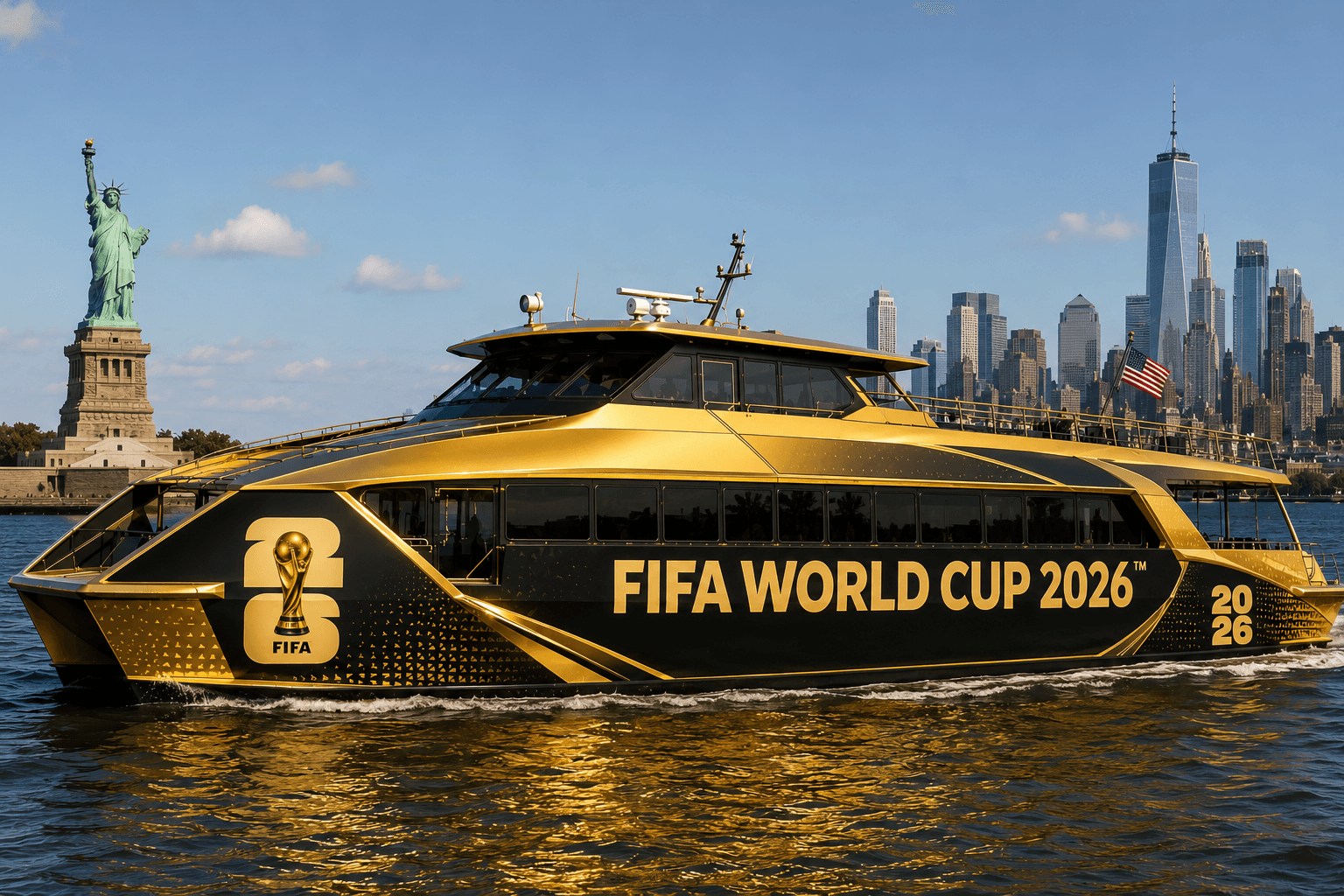
Strong contrast matters most. Dark letters on a white hull or white letters on a dark hull read clearly. A thin outline or shadow can help when the background is busy, such as a printed design. Too many effects can make lettering harder to read, though.
Lettering as part of a larger design#
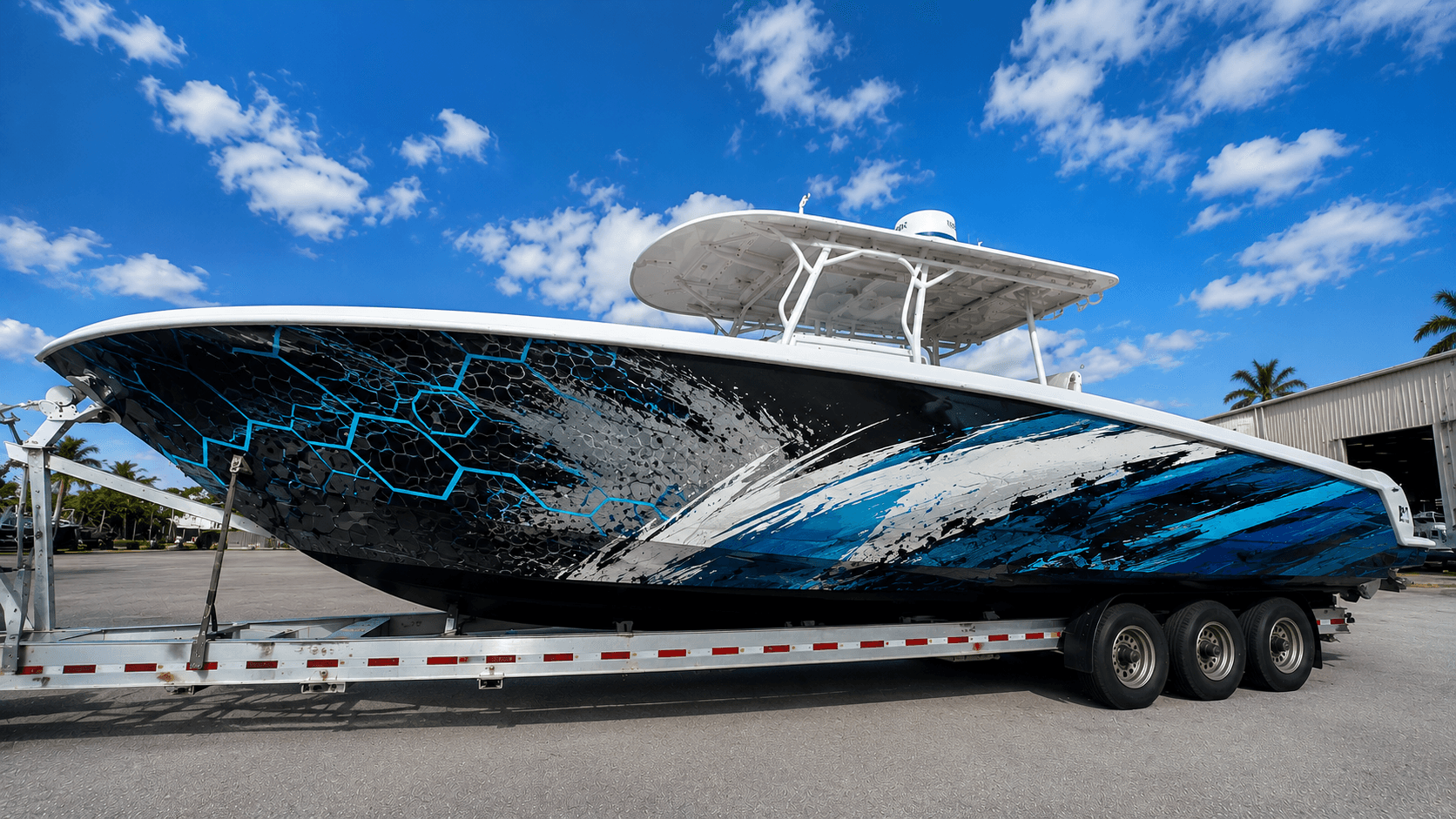
If lettering sits on top of a full wrap, plan it at the design stage, so it lines up with stripes and color breaks. Our custom boat wraps service covers lettering as part of complete designs, while our vinyl boat wraps page explains how names and logos can be added on their own.
Quick checklist#
- Choose a readable font and test it at full size
- Check the rules for any required markings
- Keep letters off fittings and tight curves
- Use strong contrast
- Make sure text reads correctly on both sides of the boat