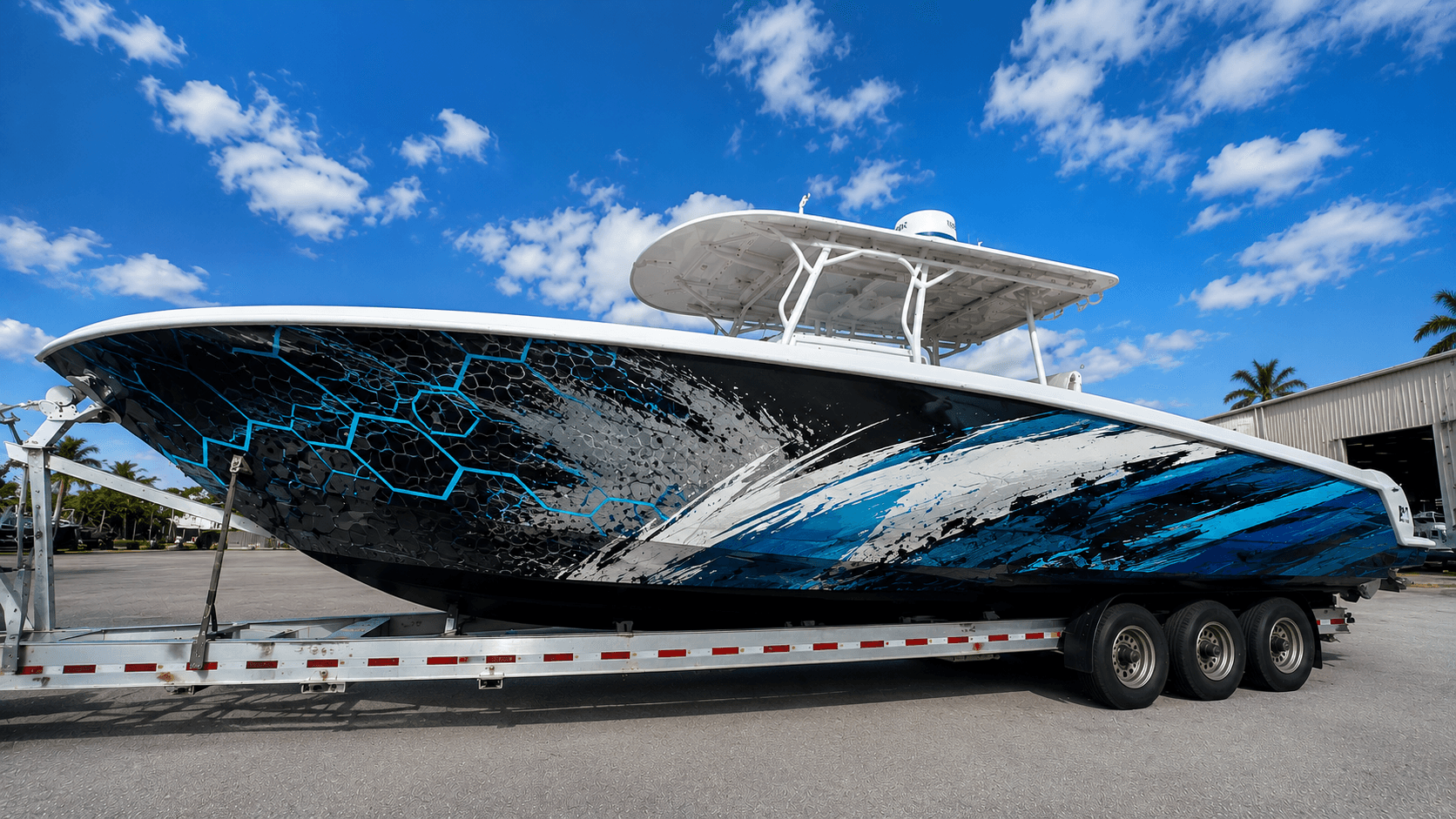
Boat Wraps for Multi-Hull Vessels: Expert Design and Durability Guide
Expert guide to custom boat wraps for catamarans & trimarans. Learn critical design, material, and installation considerations for lasting performance from indu
Last updated March 14, 2026
Boat wraps for catamaran and trimaran owners, a custom boat wrap is a superior solution for branding, personalization, and gelcoat protection. The expansive, complex geometry of multi-hull vessels presents unique challenges that demand a specialized, expert approach far beyond standard monohull applications. Success hinges on meticulous design planning, marine-specific materials, and certified installation techniques to ensure longevity and visual continuity across multiple hulls.
Boat Wraps Overview: Boat Wrap Customization for Multi-Hull Vessels: Design and D#
Multi-hull boat wraps require advanced digital templating to manage graphics alignment across separate hulls and complex curves, a core competency of professional shops like OceanWraps.
Durability is dictated by material science; only marine-grade cast vinyl with a protective laminate offers the UV, chemical, and saltwater resistance needed for long-term performance.
Professional installation is non-negotiable. Certified technicians use proven techniques to manage large panels, strategic seam placement, and edge sealing critical for adhesion in marine environments.
The substrate condition is paramount. A flawless, contaminant-free gelcoat surface achieved through professional prep is the absolute foundation for wrap longevity and appearance.
A trusted provider follows a documented process from consultation to post-installation care, demonstrating the expertise that separates a premium result from a compromised one.
A professional boat wrap is the product of a disciplined, multi-stage process where expertise at each phase determines the final outcome. This structured approach is what defines industry-leading service.
The process begins with a detailed hull assessment. Professional installers mandate a surgically clean substrate. This involves a multi-step decontamination, degreasing, and mechanical compounding to remove all oxidation, wax, and impurities. Any gelcoat repair is completed at this stage, as a wrap will only adhere to a sound, smooth surface.
Using 3D scanning or precise manual measurement, a digital template of each hull and structure is created. This is where strategic design expertise is critical: graphics must be engineered to flow seamlessly across distinct hulls, with seams planned for low-visibility areas to maintain visual integrity from all sightlines.
Installation is a team operation requiring specific marine vinyl techniques. Large panels are methodically applied using controlled heat and tension to conform to complex contours without bubbles or wrinkles. Precision trimming and post-heating edges seals the adhesive, creating a critical moisture barrier.
A final inspection under varied lighting ensures flawless application. The client receives a detailed care protocol outlining proper washing techniques and compatible cleaning agents to preserve the wrap's finish and longevity, completing the professional service cycle.
The performance of a boat wrap is directly tied to its material composition. Professional applications utilize a specific material stack engineered for the marine environment.
Marine-Grade Cast Vinyl: The essential foundation. Cast vinyl, unlike calendared, offers superior dimensional stability and conformability, allowing it to stretch and adhere to compound curves without shrinking, lifting, or cracking over time.
Protective Laminate: A mandatory component for durability. This optically clear, ultra-durable top layer acts as a sacrificial shield. It absorbs UV radiation, protects the printed graphics beneath from fading, and provides exceptional resistance to abrasion from dock lines, debris, and cleaning.
Professional Adhesive Systems: High-performance, pressure-activated adhesives are formulated for marine substrates. They provide a strong, consistent bond to gelcoat that withstands hull flex, thermal cycling, and constant moisture exposure.
OceanWraps leverages this specific material stack, selecting from proven manufacturers to ensure every project meets superior standards for longevity and appearance.
What is the typical lifespan of a professionally installed boat wrap?#
With premium materials and expert installation, a marine wrap typically lasts 5 to 7 years. Lifespan is directly influenced by environmental exposure, storage conditions, and maintenance. OceanWraps utilizes laminate-protected cast vinyl specifically engineered for maximum UV, chemical, and abrasion resistance to ensure lasting performance.
No. A vinyl wrap is not a repair product. It requires a perfectly sound, smooth, and clean substrate. Crazing, cracks, or osmotic blisters will telegraph through the material and compromise adhesive bonding. A professional installer will always recommend and often facilitate necessary gelcoat repair before the wrapping process begins.
When professionally installed and later removed, a high-quality wrap protects the gelcoat from UV degradation and minor surface abrasion. Upon professional removal, the original gelcoat is revealed, often in superior condition compared to unwrapped sections. The key is the expertise in both application and removal techniques, which prevent adhesive residue and substrate stress.
Why is professional installation critical for multi-hull boat wraps?#
The scale, separate hull structures, and need for precise graphic alignment make multi-hulls among the most complex wrap projects. Professionals bring specialized tools, multi-technician teams, and proven methodologies to manage large material panels, strategic seam placement, and environmental variables like wind and temperature. The risk of material waste, misalignment, and premature adhesion failure is prohibitively high without this certified expertise.
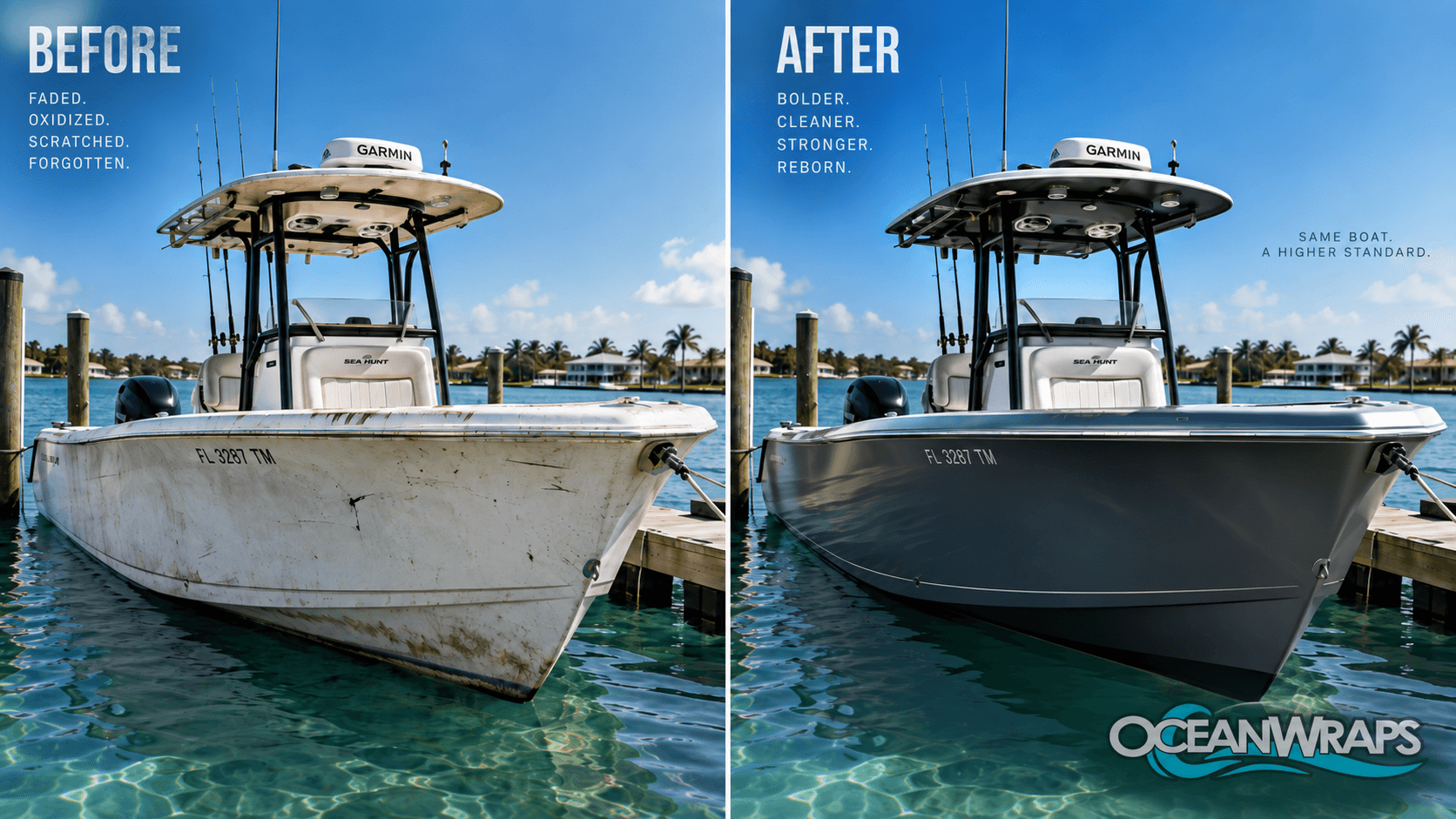
New Boat Prices Are Skyrocketing — Here's the Smarter Move Boat Owners Are Making
New boat prices are at record highs. Here's why more owners are choosing marine vinyl wraps to refresh their boat's look and protect the hull, without the cost of buying new
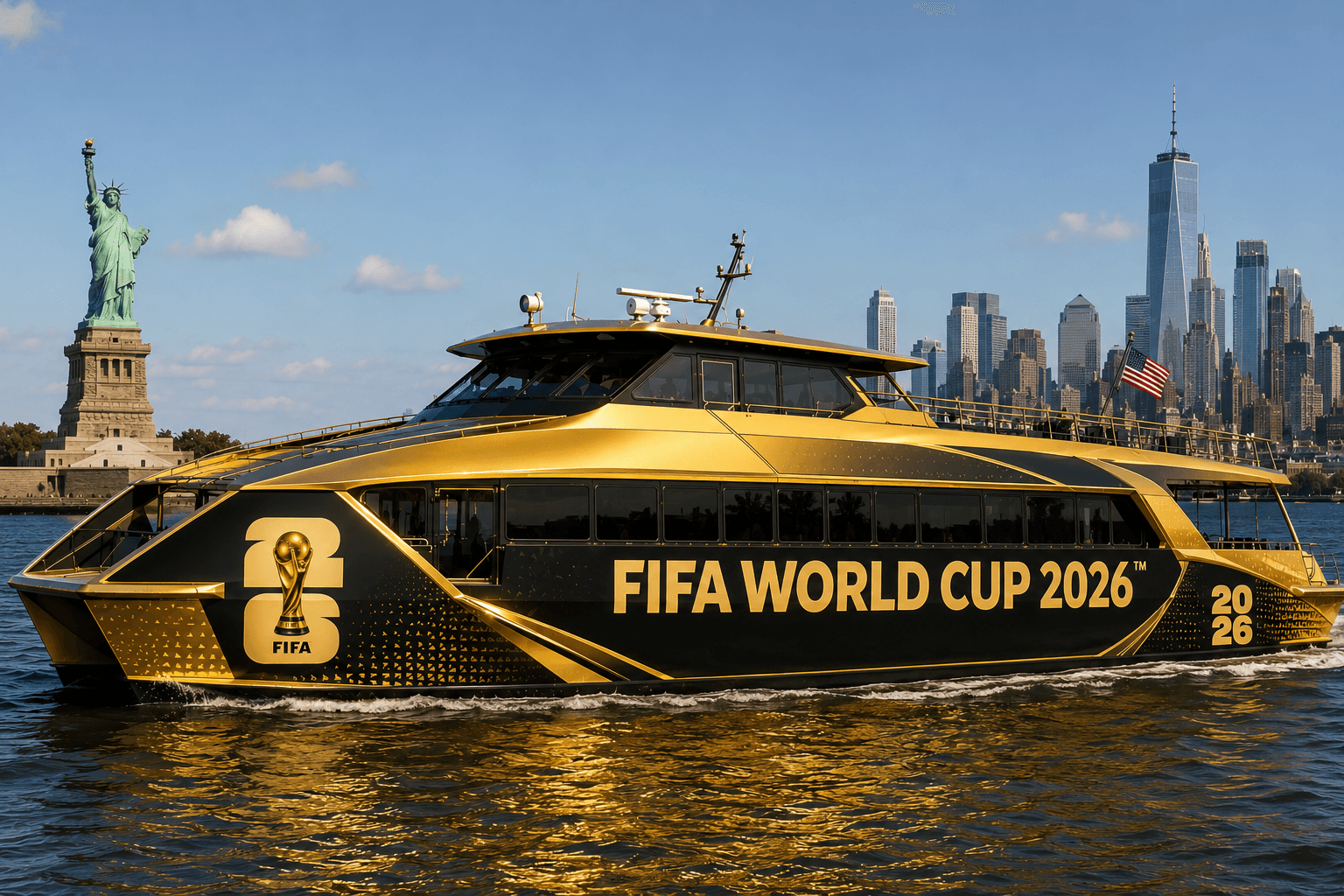
Get your boat ready for FIFA World Cup 2026 with a luxury custom wrap. Stand out on the water with premium marine graphics, gold finishes, and championship-inspired designs.
New Boat Prices Are Skyrocketing — Here's the Smarter Move Boat Owners Are Making
New boat prices are at record highs. Here's why more owners are choosing marine vinyl wraps to refresh their boat's look and protect the hull, without the cost of buying new
Boat Wraps Services
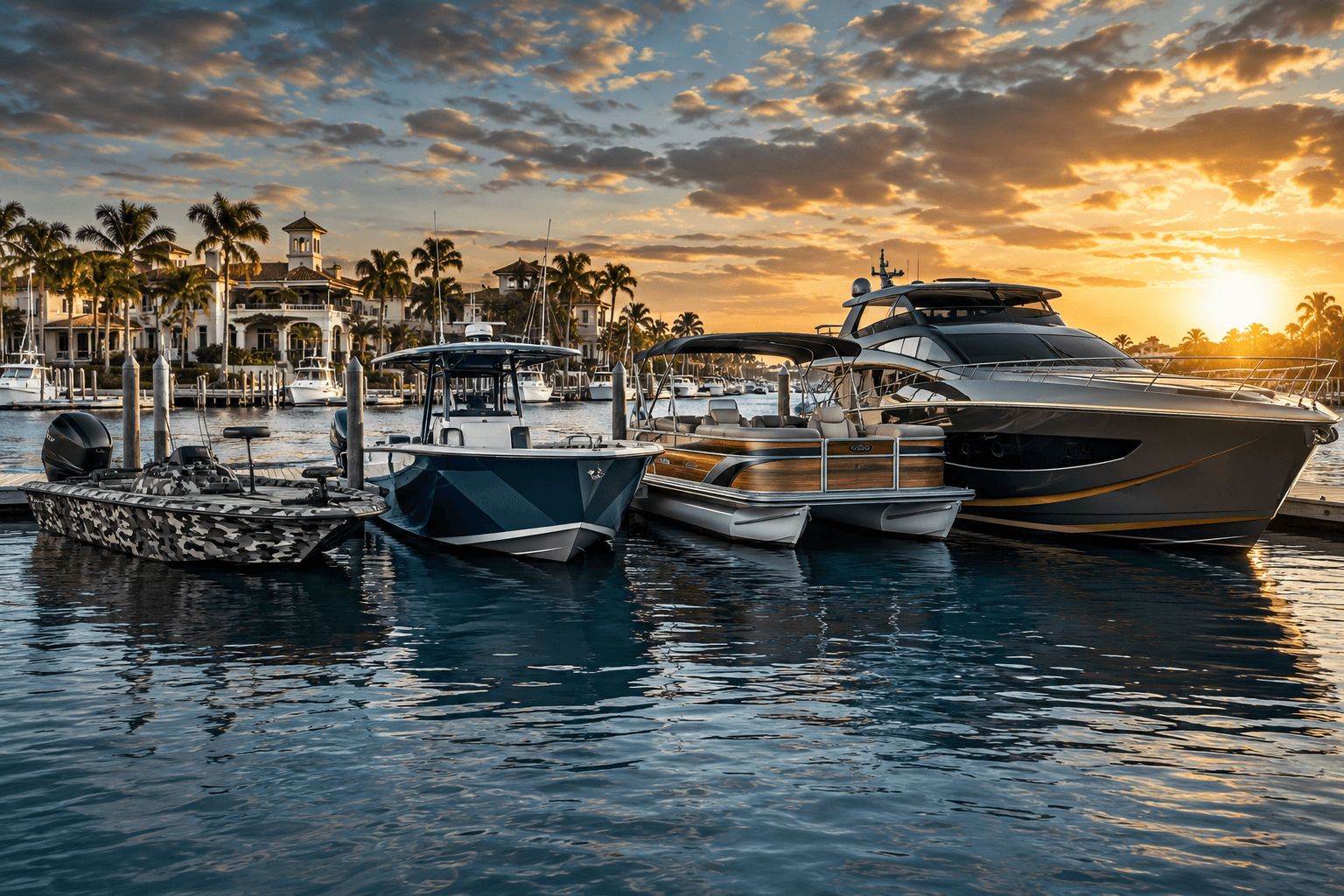
Boat Wrap Designs by Boat Type: What Actually Works on Your Vessel
A wrap that's perfect for a sportfishing boat chasing marlin offshore would look completely out of place on a family pontoon.
Boat Wraps Services
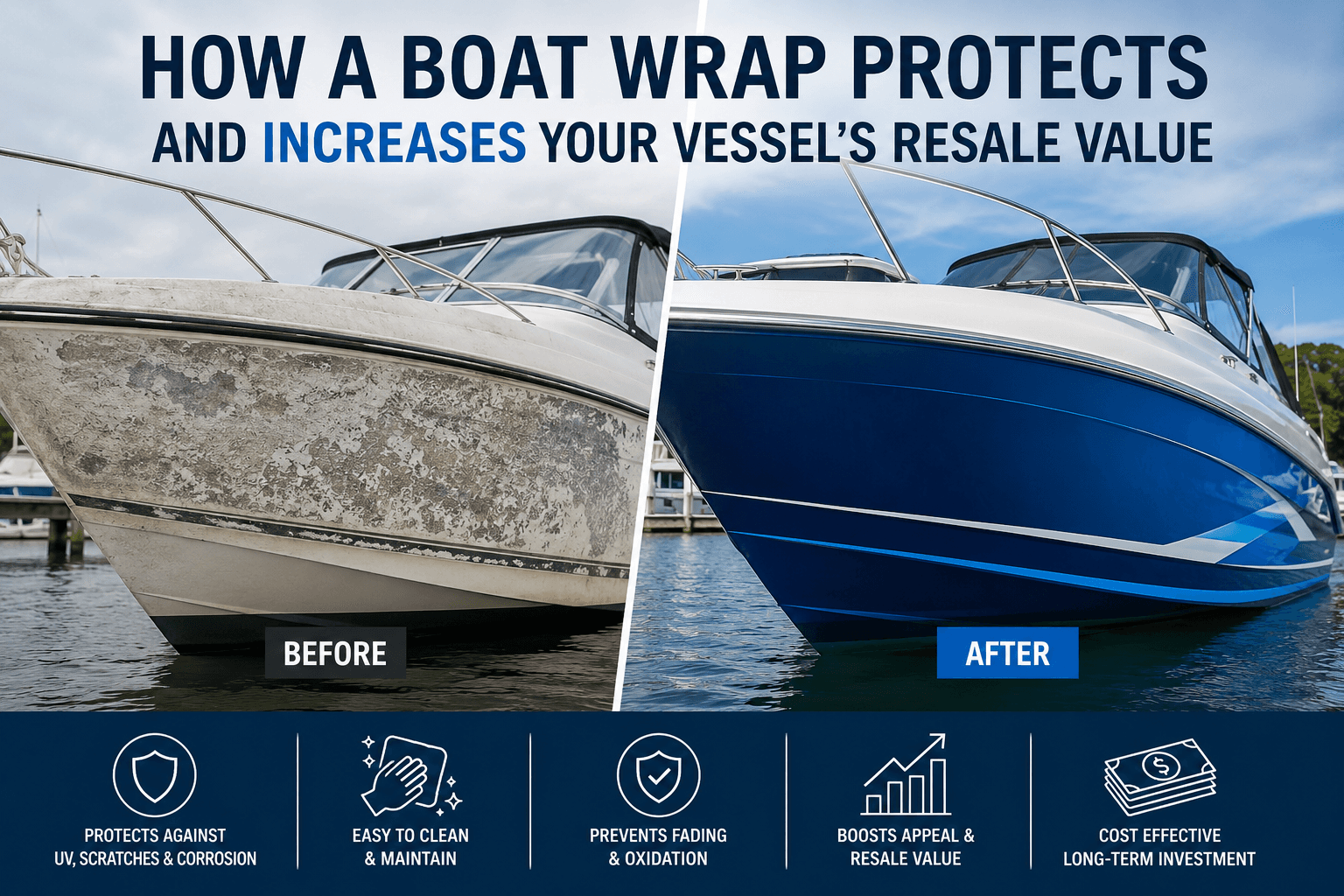
How a Boat Wrap Protects and Increases Your Vessel's Resale Value
How a Boat Wrap Can Protect and Increase Your Vessel's Resale Value
Boat Wraps Services
Top 10 FIFA World Cup Boat Wrap Ideas to Try This Season
If you already know you want your boat wrapped for World Cup season, the next question is which design actually fits your vessel.
Boat Wraps Services
Custom Boat Wraps for FIFA World Cup 2026
Get your boat ready for FIFA World Cup 2026 with a luxury custom wrap. Stand out on the water with premium marine graphics, gold finishes, and championship-inspired designs.
Boat Wraps Services
Luxury Yacht Wraps: The Complete Guide to Finishes, Styles, and Custom Marine Vinyl
Ocean Wraps works with luxury yacht and cruiser owners who want professional results, durable materials, and a finish that holds up on the water.
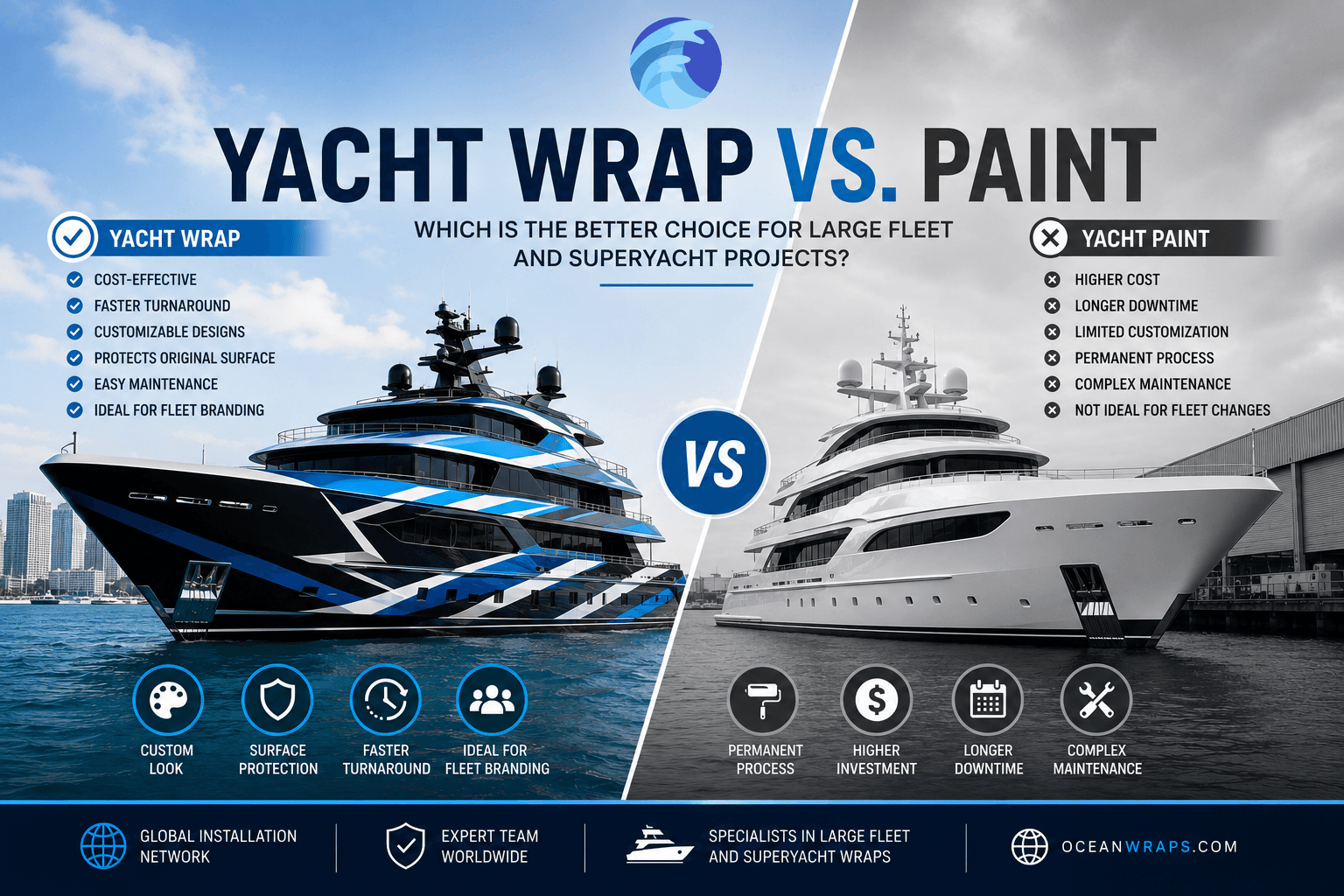
Yacht Wrap vs. Paint for Large Fleet & Superyacht Projects
Deciding between yacht wrap and paint for your fleet or superyacht? We break down real costs, downtime, durability, and which option actually makes sense at scale
How Much Does a Boat Wrap Cost? Complete Pricing Guide for 2026
Boat wrap prices vary widely depending on size, materials, and installer quality. Here's what a professional wrap actually costs in 2026 — and what to watch out for.
Luxury Yacht Wraps: The Complete Guide to Finishes, Styles, and Custom Marine Vinyl
Ocean Wraps works with luxury yacht and cruiser owners who want professional results, durable materials, and a finish that holds up on the water.
Boat Wraps Services
Why Florida Boat Owners Are Choosing Vinyl Boat Wraps in 2026
Discover why Florida boat owners are switching from paint to vinyl boat wraps. Learn the benefits, costs, protection, and customization options.
Guides
Boat Wraps vs Paint: 5 Reasons Why Wraps Win
Boat wraps cost less, install faster, and protect your gel coat better than traditional paint. Here's why so many boat owners are making the switch.
Guides
Yacht Wrap vs. Paint for Large Fleet & Superyacht Projects
Deciding between yacht wrap and paint for your fleet or superyacht? We break down real costs, downtime, durability, and which option actually makes sense at scale
Guides
How Much Does a Boat Wrap Cost? Complete Pricing Guide for 2026
Boat wrap prices vary widely depending on size, materials, and installer quality. Here's what a professional wrap actually costs in 2026 — and what to watch out for.