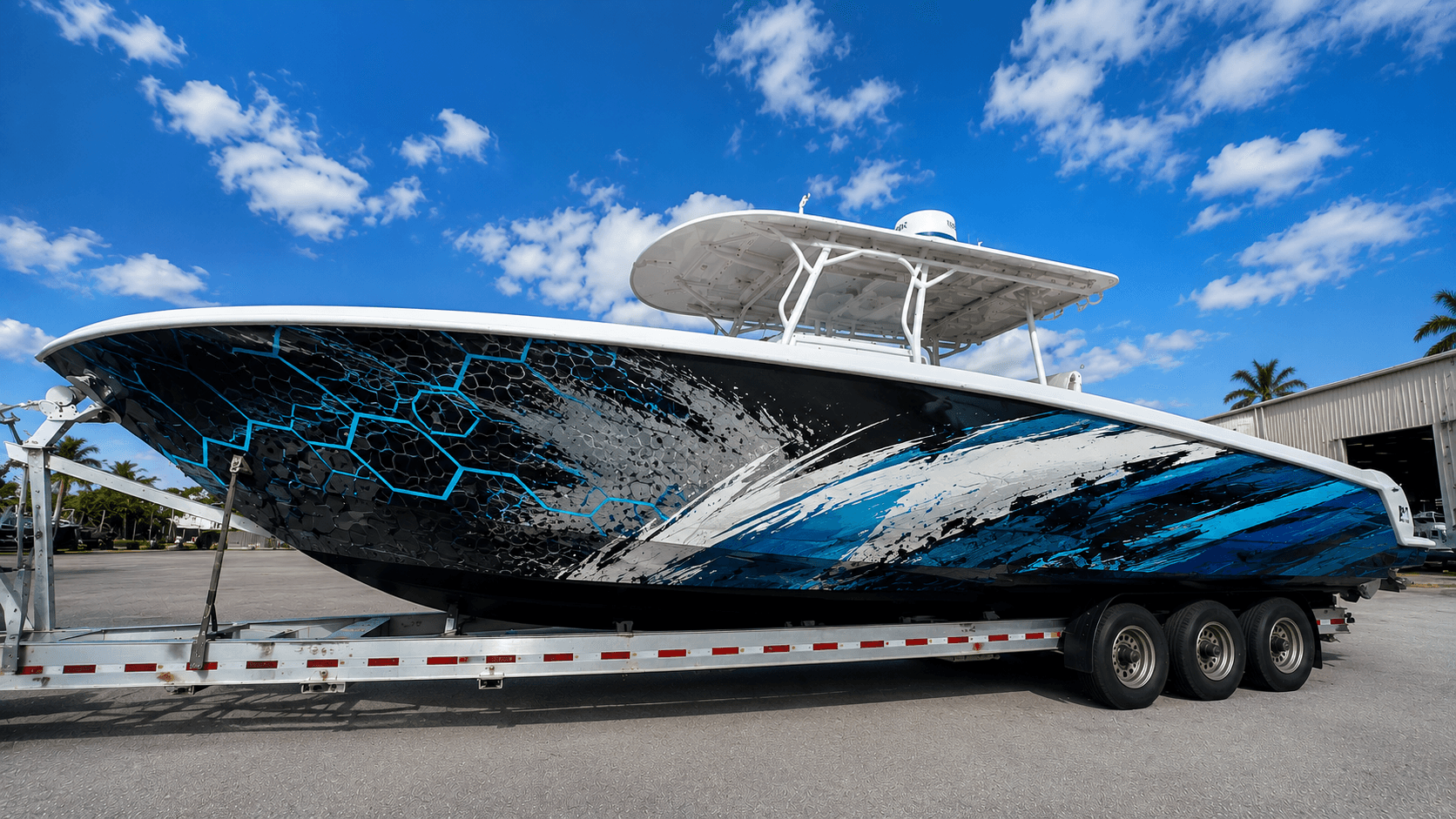
Boat Wraps vs Paint: A Cost-Benefit Analysis for Miami Vessels
Professional analysis comparing boat wraps and paint for Miami boats. Evaluate durability, value, and performance in South Florida's harsh marine climate.
Last updated April 9, 2026
For Miami boat owners, refreshing a vessel's appearance is a strategic investment dictated by our harsh marine environment. The choice between modern boat wraps and traditional paint requires a clear analysis that accounts for intense UV, salt air, and operational needs. This evaluation moves beyond initial cost to assess long-term value, durability, and practicality for vessels in Biscayne Bay, Miami Beach marinas, and the Atlantic.
Boat Wraps Overview: Cost-Benefit Analysis: Boat Wraps vs Paint for Miami Vessels#
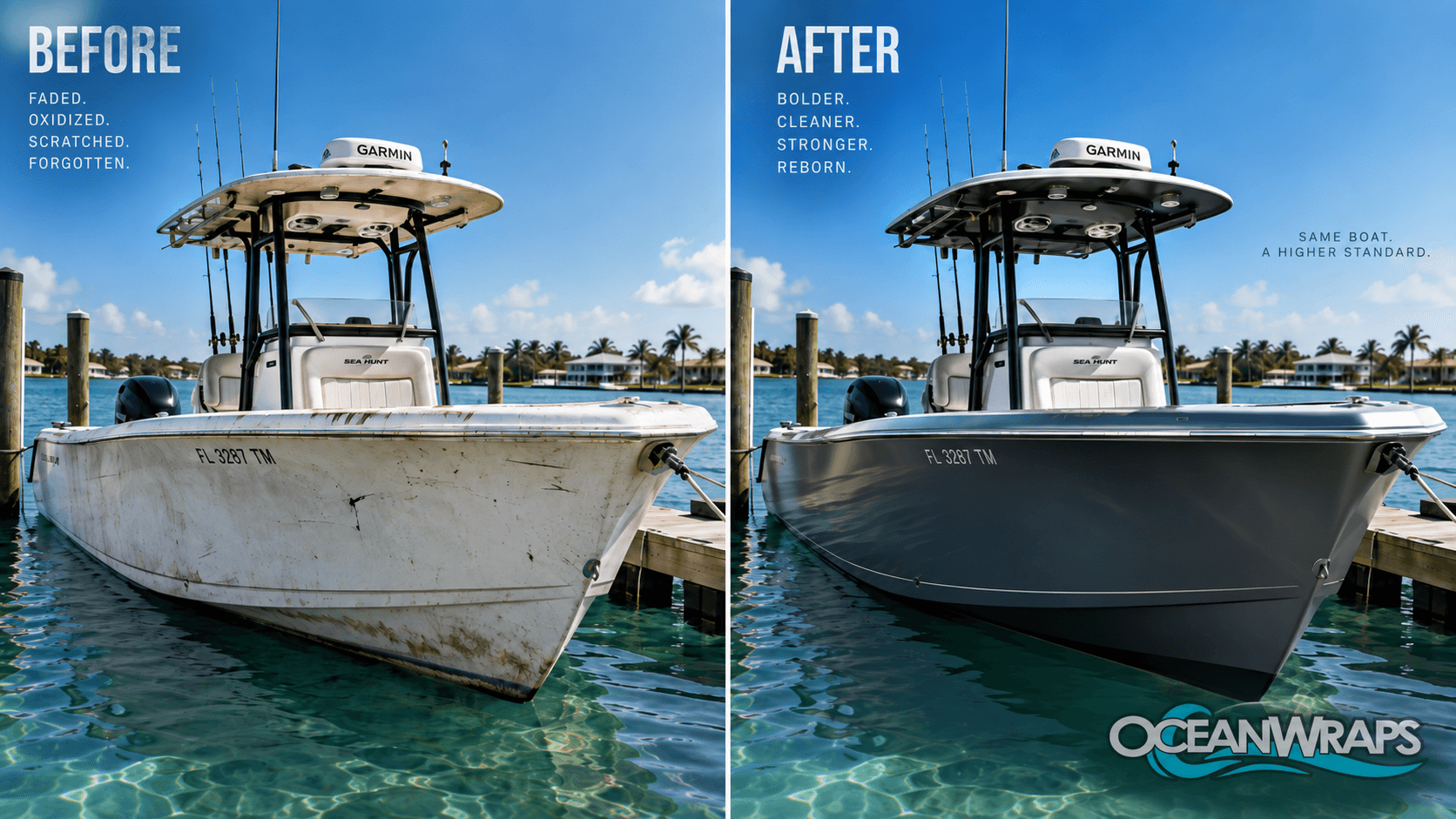
Professional expertise - OceanWraps certified team. Premium marine-grade boat wraps offer superior UV and salt resistance in Miami's climate, with material warranties often exceeding 5 years.
Professional wrap installation minimizes vessel downtime, often completed in days versus the weeks required for paint curing in a controlled environment.
Wraps provide unmatched design flexibility for custom graphics and full hull artwork, enabling personalization that reflects Miami's vibrant style.
Get Started
Ready to bring your vision to life?
Get a fast free quote today. Let's create something amazing together.
A true cost comparison for Miami must account for regional factors. The initial investment for a professional, full-vessel wrap is often competitive with a high-quality marine paint job. The long-term cost trajectory, however, diverges. Miami's intense UV radiation relentlessly breaks down coatings. Premium cast vinyl with UV-inhibitive laminates is engineered for this, often outperforming paint before showing significant fade. Salt spray accelerates oxidation on painted surfaces, demanding frequent compounding. A properly installed wrap serves as a sealed barrier, simplifying maintenance to gentle washing.
Miami marina space is premium, with strict rules on sanding, spraying, and extended occupancy for paint work. The containment needed for spray painting is often impractical dockside. Wrap installation, a dry process with no VOCs, faces fewer restrictions and can frequently be performed at your slip, eliminating costly haul-out fees. For commercial operators, a boat wrap is a dynamic marketing tool; graphics can be updated far more feasibly than repainting.
The longevity and finish of a boat wrap are directly tied to expert execution. This is not a DIY project in Miami's challenging environment. The process demands professional skill at every stage.
The hull must be immaculate, free of wax, oxidation, and contaminants. This involves mechanical de-waxing and light compounding of the gelcoat to ensure perfect vinyl adhesion. Any substrate flaws must be repaired, as the wrap will conform to the surface beneath it.
Professionals use digital templates and design software to plan graphics, ensuring precise alignment over hatches, vents, and curves. This pre-planning minimizes seams and material waste while guaranteeing design intent.
Using specialized tools, heat, and tension, installers meticulously apply the vinyl, working out air and ensuring adhesion over complex contours. Strategic seam placement, often hidden along natural body lines, is permanently bonded to prevent water intrusion.
All edges are carefully trimmed and post-heated to activate the adhesive, creating a sealed bond that withstands wave impact and pressure washing. This critical final step dictates longevity in salt water.
Not all vinyl suits marine use. The industry standard for durability is cast marine vinyl, which offers superior conformability and dimensional stability compared to calendared films. A marine-grade laminate is then applied over printed graphics, providing the gloss, texture, and protection against UV, abrasion, and chemical exposure. Finishes range from high-gloss and metallic to matte. Expertise lies in selecting and working with these certified material systems, a fundamental factor in any accurate cost-benefit analysis.
Pre-Existing Hull Assessment: Professionals evaluate and prepare the substrate, ensuring minor imperfections are addressed for a flawless finish.
Precision Edge Sealing: Areas like bow rails and hardware bases receive meticulous sealing to prevent moisture migration, a critical step for Miami boats.
Complex Curvature Management: The sharp chines of performance hulls demand technical skill to avoid wrinkles or premature lifting.
Marina Compliance: Experienced installers navigate local marina rules and permits for on-site work efficiently.
Maintenance Guidance: Professionals provide care protocols, recommending non-abrasive cleaners and proper washing techniques to maximize lifespan.
With professional installation and premium materials, a marine wrap in Miami typically lasts 5-7 years, often longer with proper care. This lifespan is highly competitive with paint given local UV and salt exposure, favoring wraps in a long-term value analysis.
Can a wrap be applied over existing paint or graphics?#
Yes, provided the existing surface is sound, firmly adhered, and professionally prepared. An expert assessment ensures the substrate is a suitable foundation, making this a common method to transform a vessel's look without the cost of paint removal.
No. When installed and removed correctly by professionals, a wrap protects the underlying gelcoat from UV fade and minor abrasion. The protected gelcoat is often in better condition upon removal, helping preserve resale value.
What is the biggest factor in a successful boat wrap?#
Professional installation is the paramount factor. The complexity of the vessel's geometry demands specific technical skill, while the grade of vinyl and laminate determines performance. For a precise evaluation, consult with a certified installer who employs proven methods and superior material standards.
New Boat Prices Are Skyrocketing — Here's the Smarter Move Boat Owners Are Making
New boat prices are at record highs. Here's why more owners are choosing marine vinyl wraps to refresh their boat's look and protect the hull, without the cost of buying new
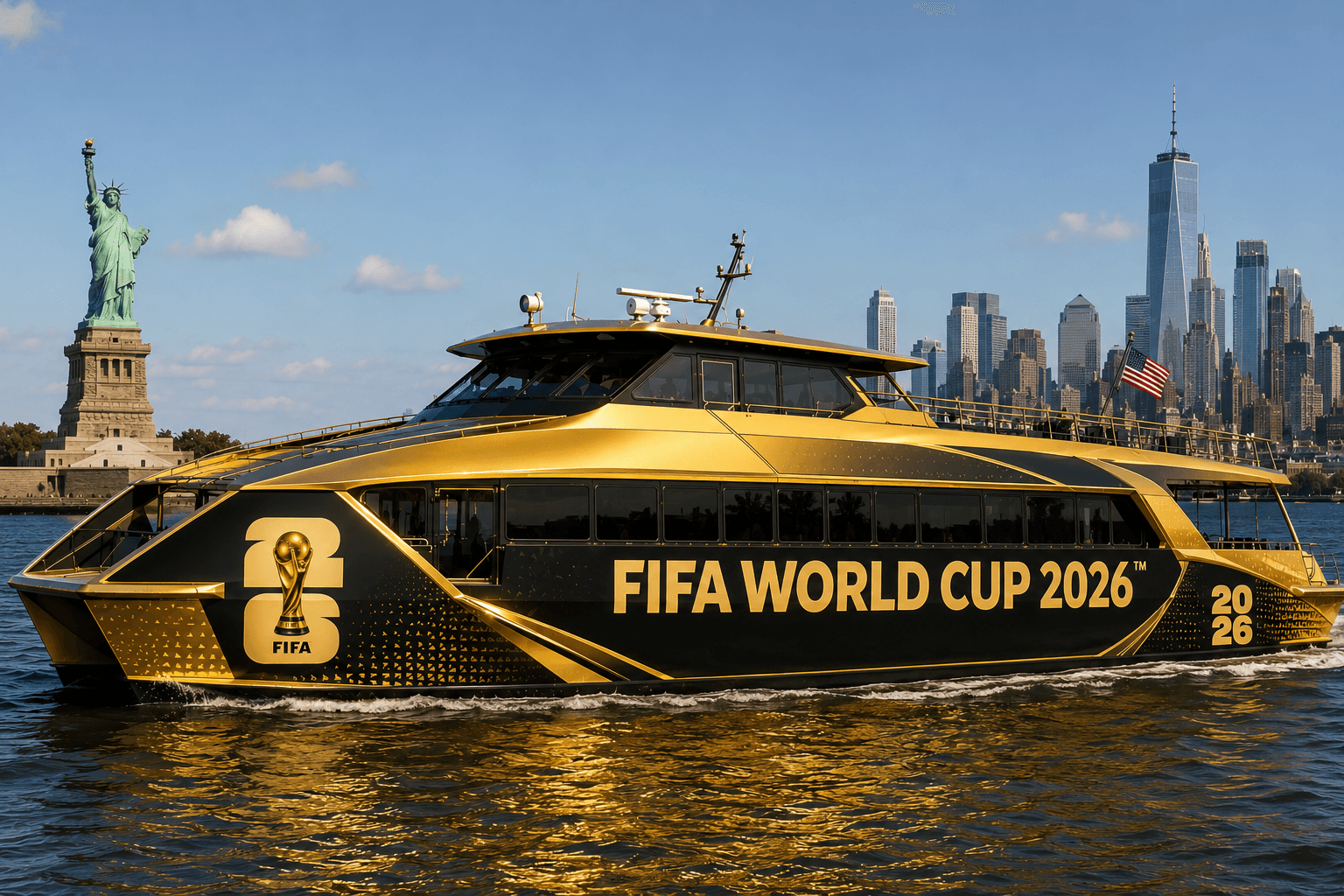
Get your boat ready for FIFA World Cup 2026 with a luxury custom wrap. Stand out on the water with premium marine graphics, gold finishes, and championship-inspired designs.
New Boat Prices Are Skyrocketing — Here's the Smarter Move Boat Owners Are Making
New boat prices are at record highs. Here's why more owners are choosing marine vinyl wraps to refresh their boat's look and protect the hull, without the cost of buying new
Boat Wraps Services
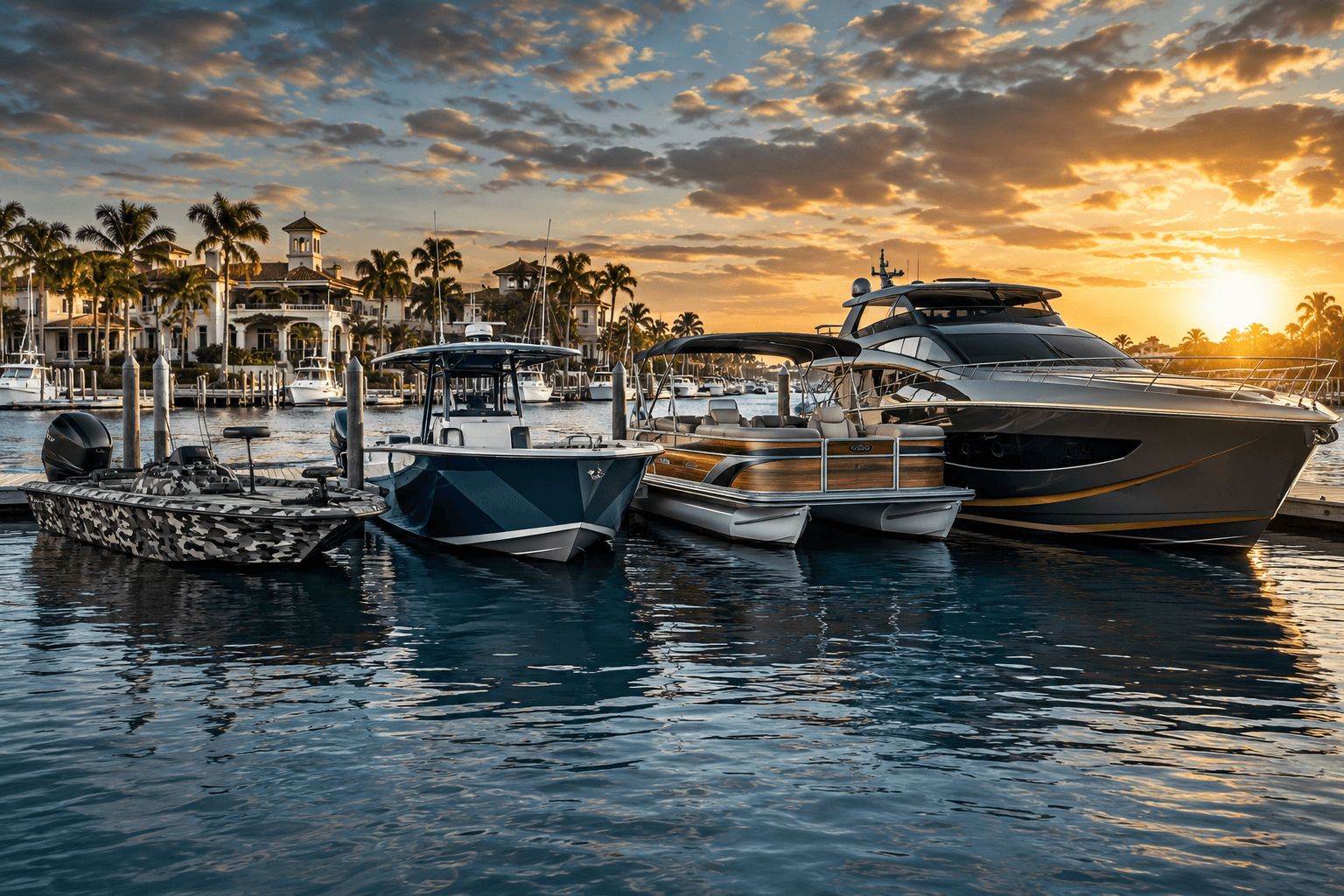
Boat Wrap Designs by Boat Type: What Actually Works on Your Vessel
A wrap that's perfect for a sportfishing boat chasing marlin offshore would look completely out of place on a family pontoon.
Boat Wraps Services
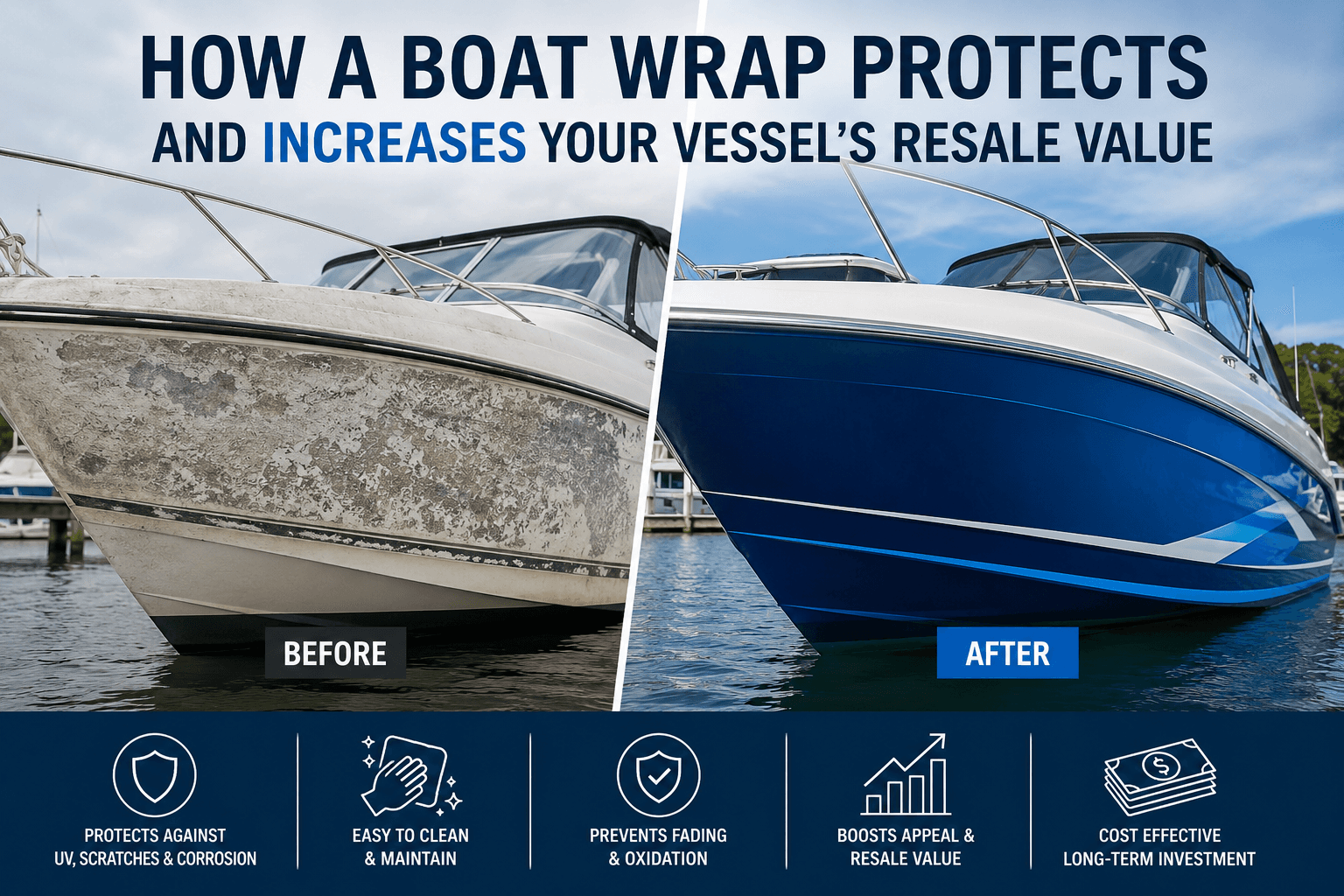
How a Boat Wrap Protects and Increases Your Vessel's Resale Value
How a Boat Wrap Can Protect and Increase Your Vessel's Resale Value
Boat Wraps Services
Top 10 FIFA World Cup Boat Wrap Ideas to Try This Season
If you already know you want your boat wrapped for World Cup season, the next question is which design actually fits your vessel.
Boat Wraps Services
Custom Boat Wraps for FIFA World Cup 2026
Get your boat ready for FIFA World Cup 2026 with a luxury custom wrap. Stand out on the water with premium marine graphics, gold finishes, and championship-inspired designs.
Boat Wraps Services
Luxury Yacht Wraps: The Complete Guide to Finishes, Styles, and Custom Marine Vinyl
Ocean Wraps works with luxury yacht and cruiser owners who want professional results, durable materials, and a finish that holds up on the water.
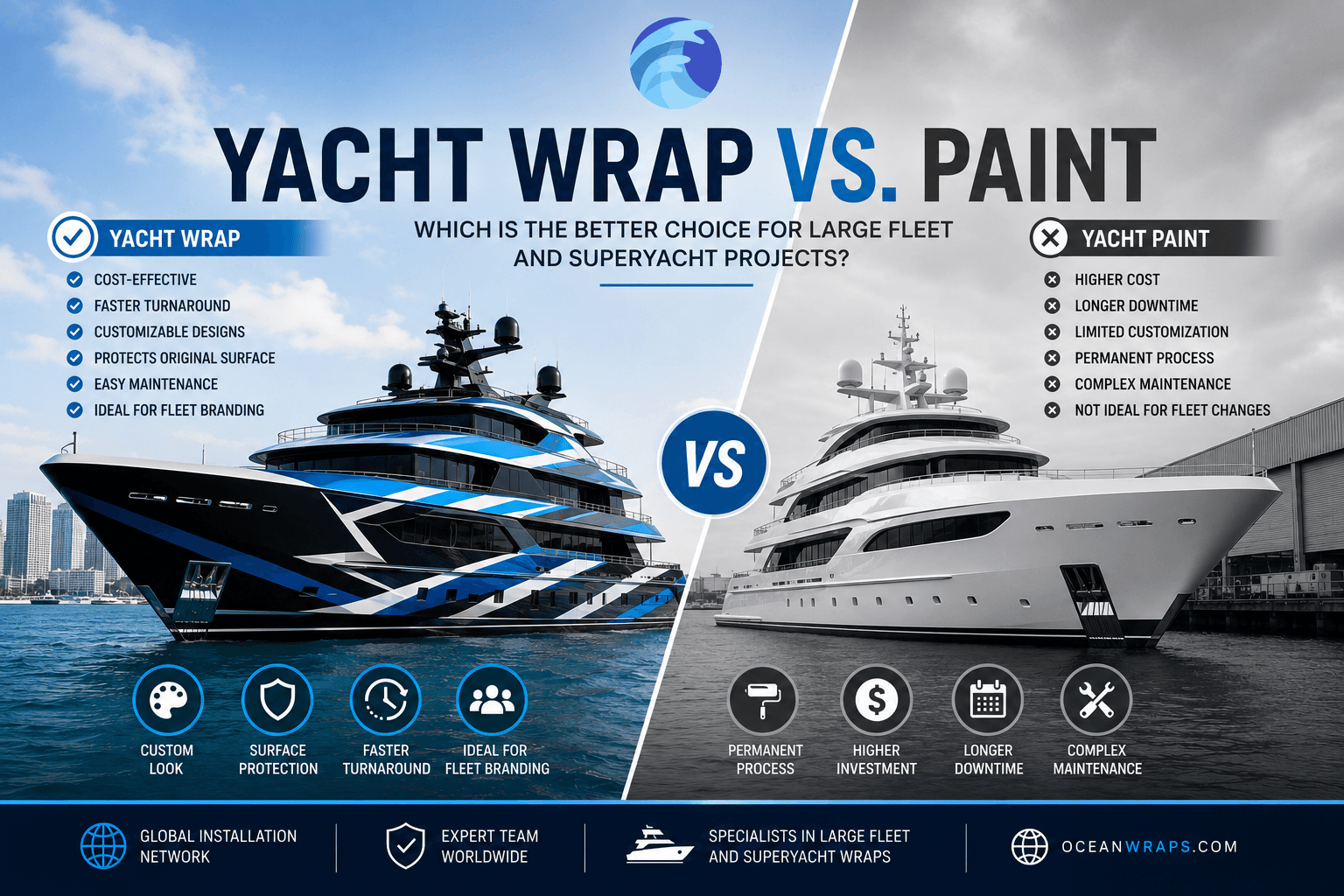
Yacht Wrap vs. Paint for Large Fleet & Superyacht Projects
Deciding between yacht wrap and paint for your fleet or superyacht? We break down real costs, downtime, durability, and which option actually makes sense at scale
How Much Does a Boat Wrap Cost? Complete Pricing Guide for 2026
Boat wrap prices vary widely depending on size, materials, and installer quality. Here's what a professional wrap actually costs in 2026 — and what to watch out for.
Luxury Yacht Wraps: The Complete Guide to Finishes, Styles, and Custom Marine Vinyl
Ocean Wraps works with luxury yacht and cruiser owners who want professional results, durable materials, and a finish that holds up on the water.
Boat Wraps Services
Why Florida Boat Owners Are Choosing Vinyl Boat Wraps in 2026
Discover why Florida boat owners are switching from paint to vinyl boat wraps. Learn the benefits, costs, protection, and customization options.
Guides
Boat Wraps vs Paint: 5 Reasons Why Wraps Win
Boat wraps cost less, install faster, and protect your gel coat better than traditional paint. Here's why so many boat owners are making the switch.
Guides
Yacht Wrap vs. Paint for Large Fleet & Superyacht Projects
Deciding between yacht wrap and paint for your fleet or superyacht? We break down real costs, downtime, durability, and which option actually makes sense at scale
Guides
How Much Does a Boat Wrap Cost? Complete Pricing Guide for 2026
Boat wrap prices vary widely depending on size, materials, and installer quality. Here's what a professional wrap actually costs in 2026 — and what to watch out for.