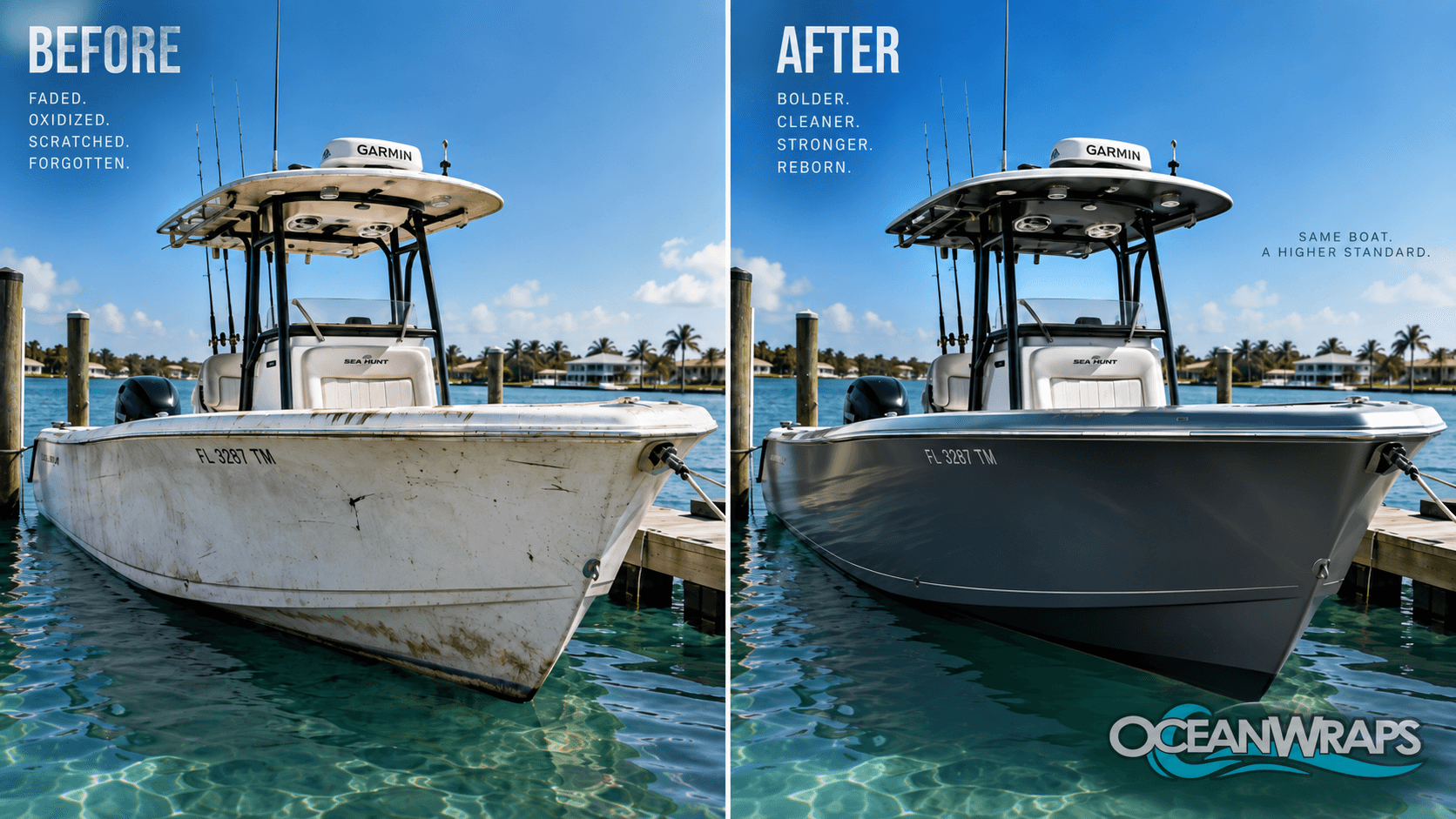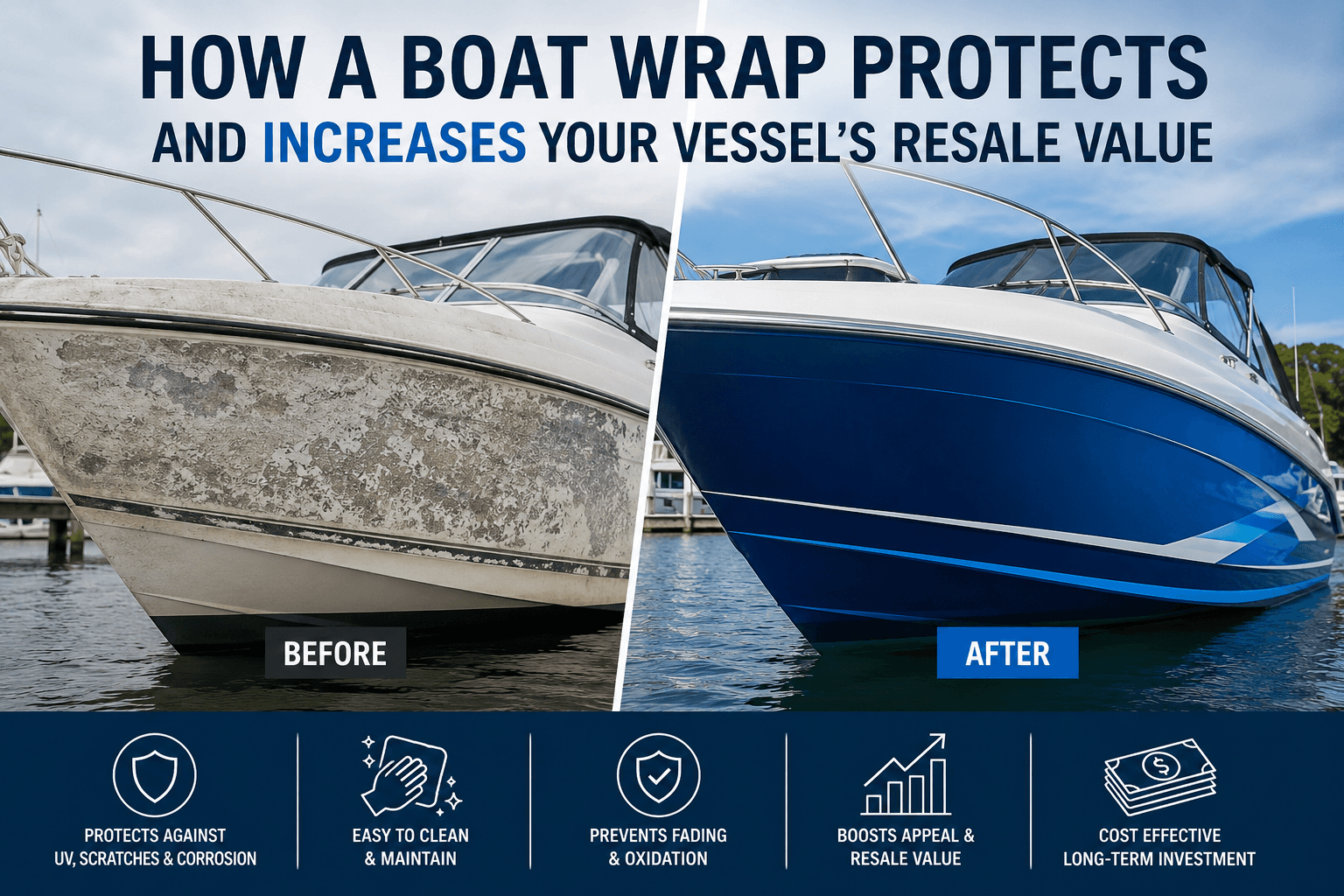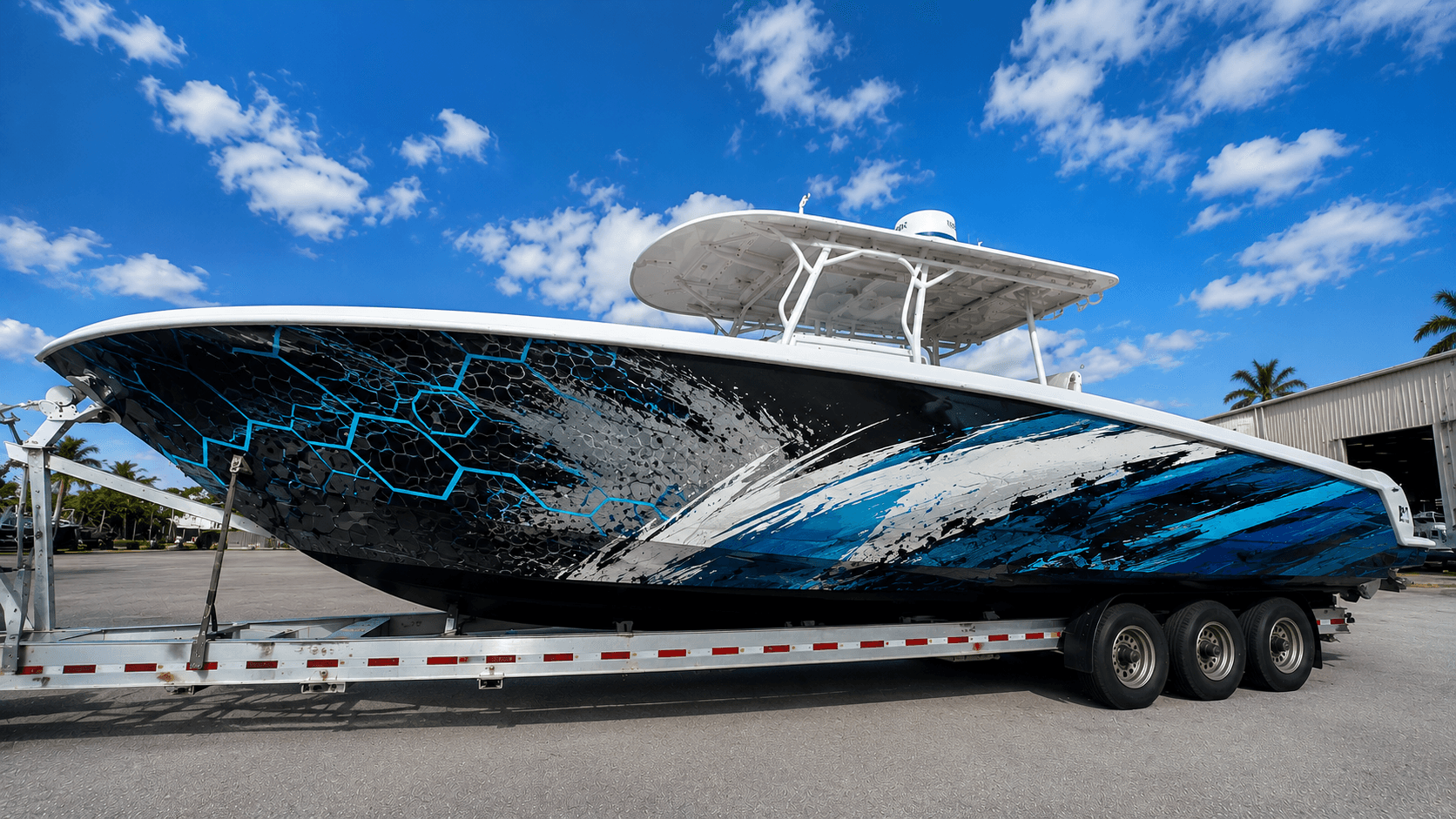
The sticker price is only one part of the wrap versus paint decision. For California boat owners, yard availability, environmental rules, downtime, and how long you plan to keep the boat can all change which option offers better value. Here is a simple way to compare them.
Start with a like-for-like quote#
Our boat wrap cost guide gives planning ranges, from about $1,500 for simple small-boat projects to $15,000–$50,000 or more for large yachts. Paint quotes vary widely based on prep and the coating system. To compare fairly, ask both contractors to quote the same:
- Surfaces and square footage
- Repairs and surface preparation
- Colors, graphics, or artwork
- Hardware removal and refitting
- Haul-out, yard, and storage fees
A simple cost-per-year calculation#
Divide each total by the number of years you expect it to look acceptable. For example, use these placeholders with your own numbers:
- Wrap: total quote ÷ your expected years of service (5–7 years is our planning range)
- Paint: total quote ÷ the years your painter expects before refinishing
Then adjust for anything else that matters, such as downtime, future color changes, or the expense of removing film. A paint job with a longer life may cost less per year even if its upfront price is higher. A wrap may win if you want to change colors, or if you only plan to keep the boat a few years.
California factors to consider#
California has some of the country's stricter environmental and air-quality rules, and they can differ by region. Yards may have specific requirements for sanding, spraying, and capturing runoff, which can affect availability and price. Ask each contractor how they comply and whether those costs are included in the quote. Storage conditions matter too, as a boat in the strong sun of San Diego faces different exposure from one under a cover in a foggier part of the state.
Non-financial differences#
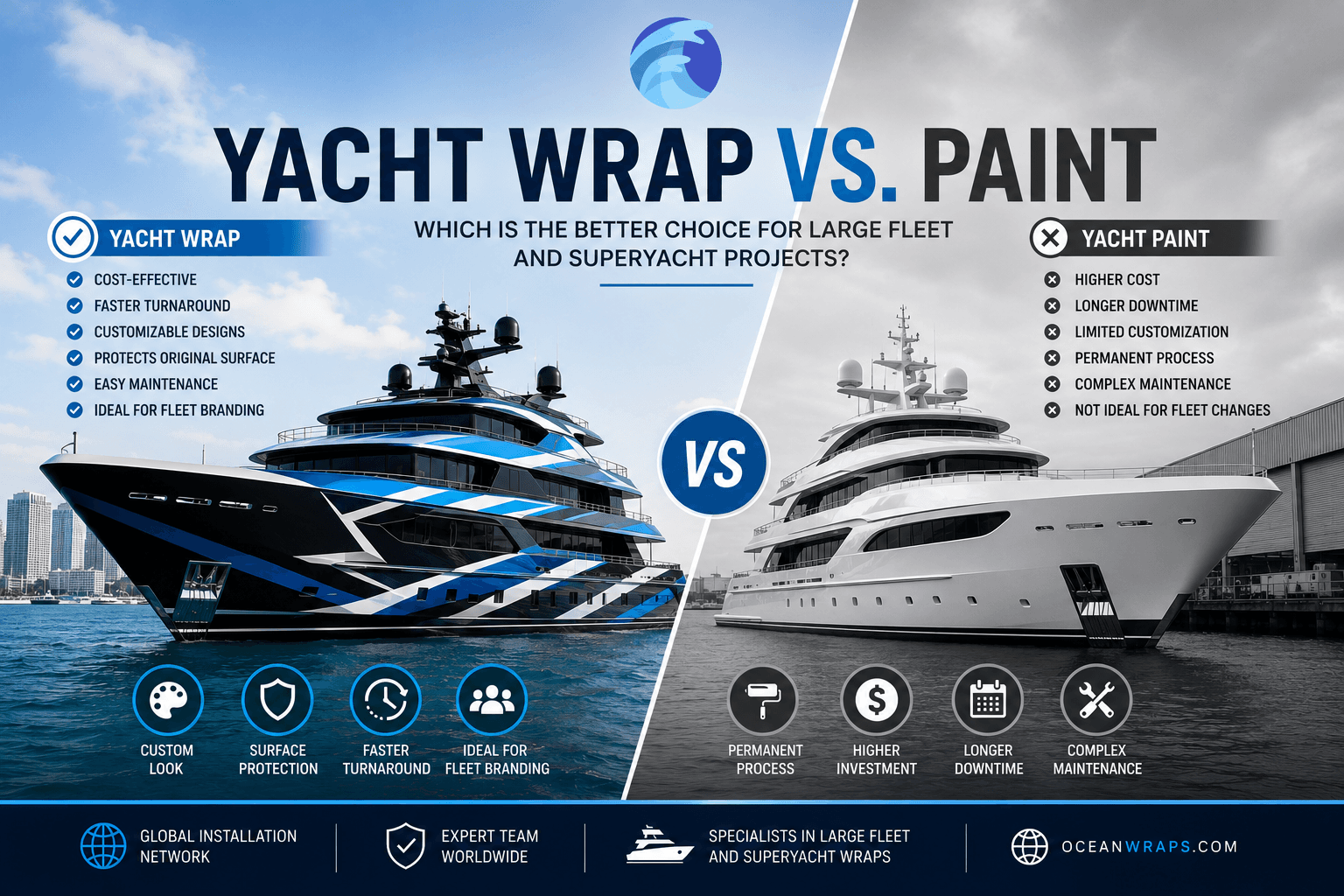
- Downtime: Wraps are often faster, but scheduling and prep can add time.
- Reversibility: Film can be removed. Paint is a long-term commitment.
- Design: Printed film makes complex artwork easier, whereas paint offers its own depth.
- Repair: Wrap panels can be replaced, but older film may not match new film exactly. Paint repairs depend on blending.
- Surface condition: Neither choice should hide a failing surface.
Our boat wraps vs paint comparison goes into these differences in more detail.
When each option usually wins#
A wrap often suits owners who want a color change, custom graphics, or flexibility. Paint often makes more sense for a badly degraded surface, or for someone keeping a boat long term and wanting a permanent, repairable finish. Sometimes the best answer is both: paint where the surface needs it, and film for graphics.
Frequently asked questions#
Can I wrap over failing paint?#
It is not recommended. Film may lift and can pull weak paint off when removed, so the surface should be repaired first.
Does a wrap affect bottom paint?#
A topside wrap generally stops at or above the waterline, while antifouling is a separate system that continues to need its own maintenance.
Do you work with California boats?#
Qualifying projects can be coordinated nationwide. Learn more on our boat wraps USA page.