Boat Wraps vs Paint: A Cost-Benefit Analysis for Texas Vessels
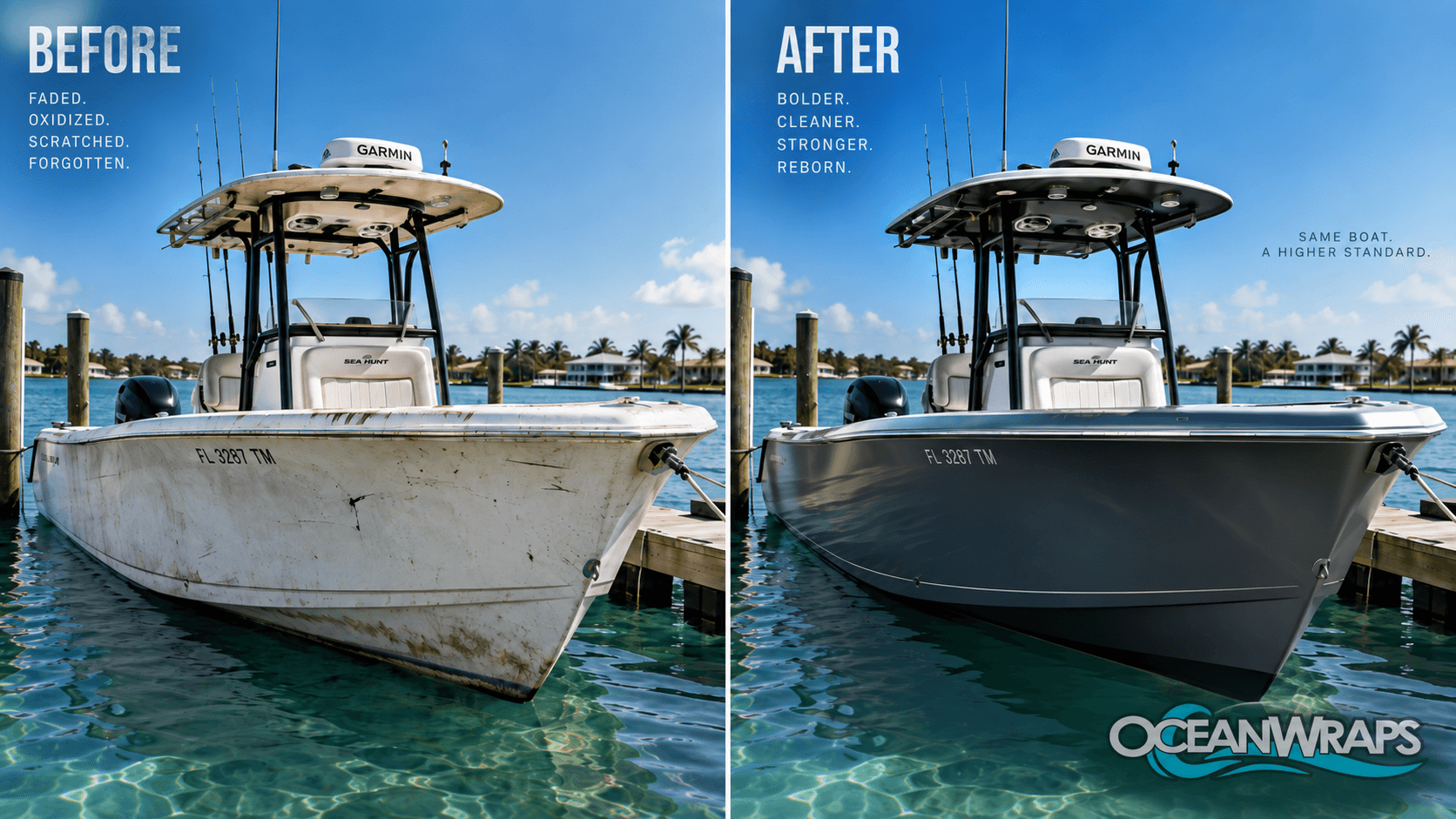
A factual analysis comparing boat wraps and paint for Texas vessels. We cover durability, value, and regional factors like UV and salt water without hype.
Last updated April 4, 2026
Boat wraps for Texas boat owners, the decision to refresh a vessel's appearance and protection is a significant investment. The core choice often comes down to a modern vinyl boat wrap or traditional paint. This analysis provides a factual framework to determine the superior value proposition, weighing initial cost, durability, maintenance, and the unique environmental challenges of Texas waters.
Professional expertise - OceanWraps certified team. Total lifecycle cost often favors wraps due to reduced vessel downtime and lower surface preparation requirements.
Premium marine-grade materials offer engineered resistance to UV degradation and abrasion, critical for Texas climates.
Professional installation is non-negotiable for longevity, requiring expertise in substrate prep and complex hull contouring.
A wrap preserves the original gelcoat, maintaining the vessel's underlying structural integrity and resale value.
The process allows for complete design versatility, enabling custom graphics or branding not feasible with paint at a comparable investment.
Choosing a provider with proven expertise, like OceanWraps, ensures material selection and installation techniques meet superior marine standards.
Get Started
Ready to bring your vision to life?
Get a fast free quote today. Let's create something amazing together.
A genuine cost-benefit analysis looks beyond price per square foot. It must account for surface preparation, labor, vessel downtime, and long-term maintenance. Traditional paint requires extensive, labor-intensive prep—sanding, fairing, and priming—which adds significant cost. A professional wrap requires a clean, sound substrate but avoids the extensive material removal. This difference alone impacts the total project cost substantially, especially on larger vessels.
Downtime is a critical financial factor. A multi-stage paint job requires specific environmental conditions and can sideline a boat for weeks. A professional wrap installation is typically completed in days, minimizing lost usage time. For commercial vessels, this faster turnaround directly affects revenue potential.
The Texas marine climate dictates material performance. Intense UV exposure degrades pigments and binders. Premium cast vinyl films incorporate UV-inhibitive laminates engineered to resist fading longer than many marine paints. Salt water is highly corrosive. A professionally installed wrap acts as a protective, sacrificial barrier over the gelcoat, shielding it from salt spray and micro-abrasions. Localized damage can often be repaired without the need for a full panel respray.
The longevity and appearance of a boat wrap are directly tied to a meticulous, expert-driven process. This is not a DIY project; it requires certified technique.
Every installation begins with meticulous surface decontamination. All wax, silicone, and pollutants must be removed to ensure perfect vinyl adhesion. The digital design phase then accounts for complex curves, hardware, and hull strakes to create graphics that fit precisely.
Certified installers use specialized tools, controlled heat, and precise tensioning to conform the material to compound curves without imperfections. Critical edges and corners are meticulously post-heated and sealed. This edge sealing is paramount for withstanding Texas heat cycles and hydrodynamic pressure at speed.
Material science is foundational. Professional marine applications use premium cast vinyl films, chosen for superior conformability and long-term dimensional stability compared to calendared vinyl. A marine-grade protective laminate is applied over printed graphics. This laminate is critical, providing gloss retention, enhanced UV resistance, and protection against fuel, abrasion, and chemicals. Finish options include high-gloss, matte, and textured surfaces, offering aesthetic versatility that meets or exceeds paint.
Marina Regulations: Many Texas marinas restrict on-site painting due to overspray and VOCs; wrapping is a cleaner, compliant alternative.
Storage Conditions: Whether on a lift or in a covered slip, a wrap provides consistent protection against environmental exposure.
Maintenance Practices: Use non-abrasive cleaners and avoid directing high-pressure water at wrap edges; professional installers provide specific care protocols.
Resale Value: A well-maintained wrap preserves the factory gelcoat underneath, a significant factor for future valuation.
Local Water Conditions: Discuss your primary boating environment—brackish coastal water versus freshwater lakes—with your installer to inform material selection.
How long does a professional boat wrap last in Texas?#
With expert installation and proper care, a premium marine wrap can last 5 to 7 years or more under intense Texas sun. Lifespan is primarily determined by laminate quality and the integrity of the edge sealing.
Can a wrap be applied over existing paint or gelcoat?#
Yes, provided the existing surface is firmly adhered, smooth, and free of major defects like flaking paint or chalky oxidation. A professional assessment is essential to guarantee proper adhesion and a successful outcome.
Typically, yes. Significant damage to paint often requires blending an entire section. A wrap can usually be patched or a single panel replaced with a digitally matched graphic, making repairs more localized, faster, and cost-effective.
Why does professional installation matter for boat wraps?#
Extreme heat, humidity, and UV exposure demand expert knowledge of marine substrates, material science, and advanced installation techniques. This expertise in preparation, contouring, and sealing prevents premature failure, ensuring the investment delivers maximum durability and visual return.
New Boat Prices Are Skyrocketing — Here's the Smarter Move Boat Owners Are Making
New boat prices are at record highs. Here's why more owners are choosing marine vinyl wraps to refresh their boat's look and protect the hull, without the cost of buying new
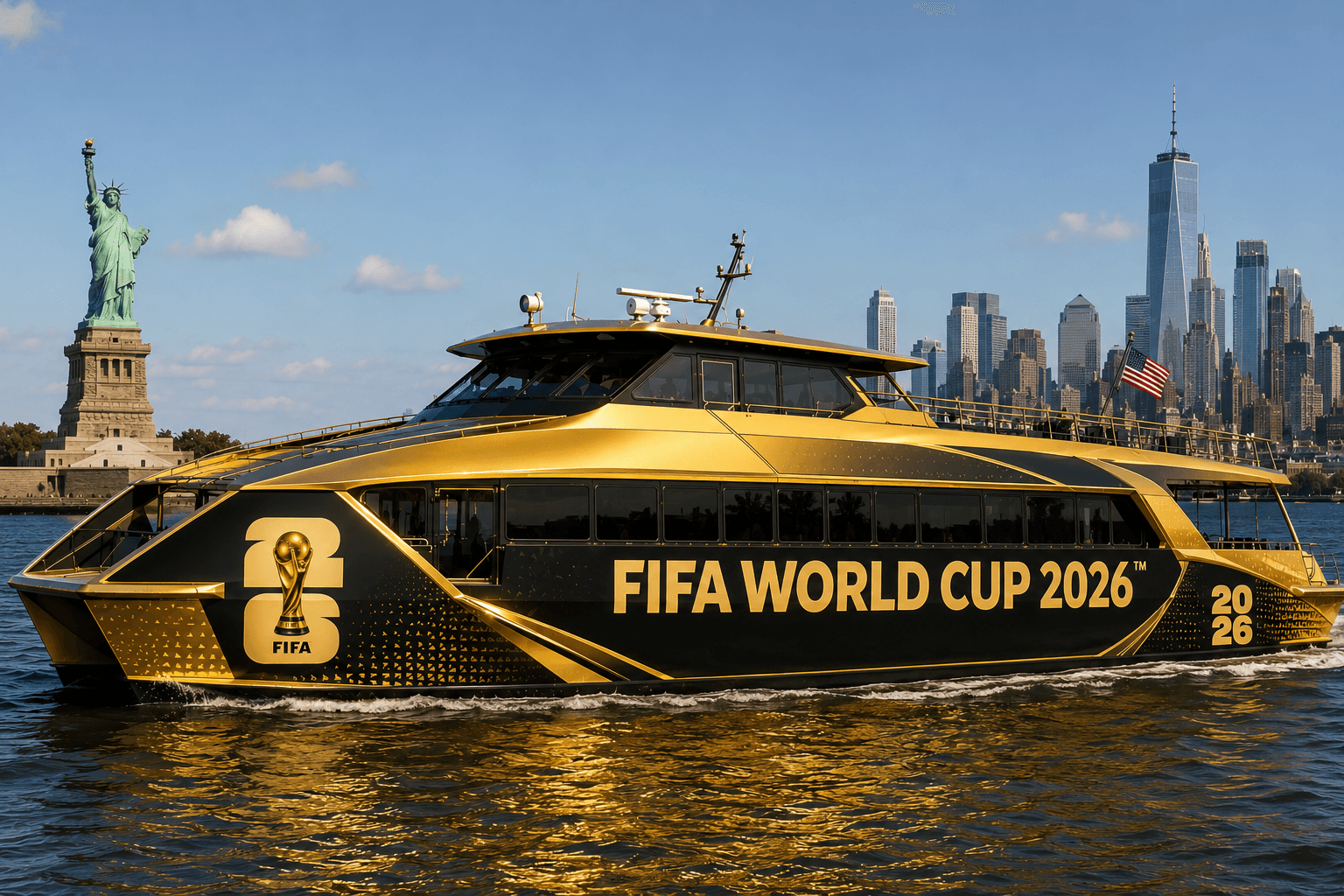
Get your boat ready for FIFA World Cup 2026 with a luxury custom wrap. Stand out on the water with premium marine graphics, gold finishes, and championship-inspired designs.
New Boat Prices Are Skyrocketing — Here's the Smarter Move Boat Owners Are Making
New boat prices are at record highs. Here's why more owners are choosing marine vinyl wraps to refresh their boat's look and protect the hull, without the cost of buying new
Boat Wraps Services
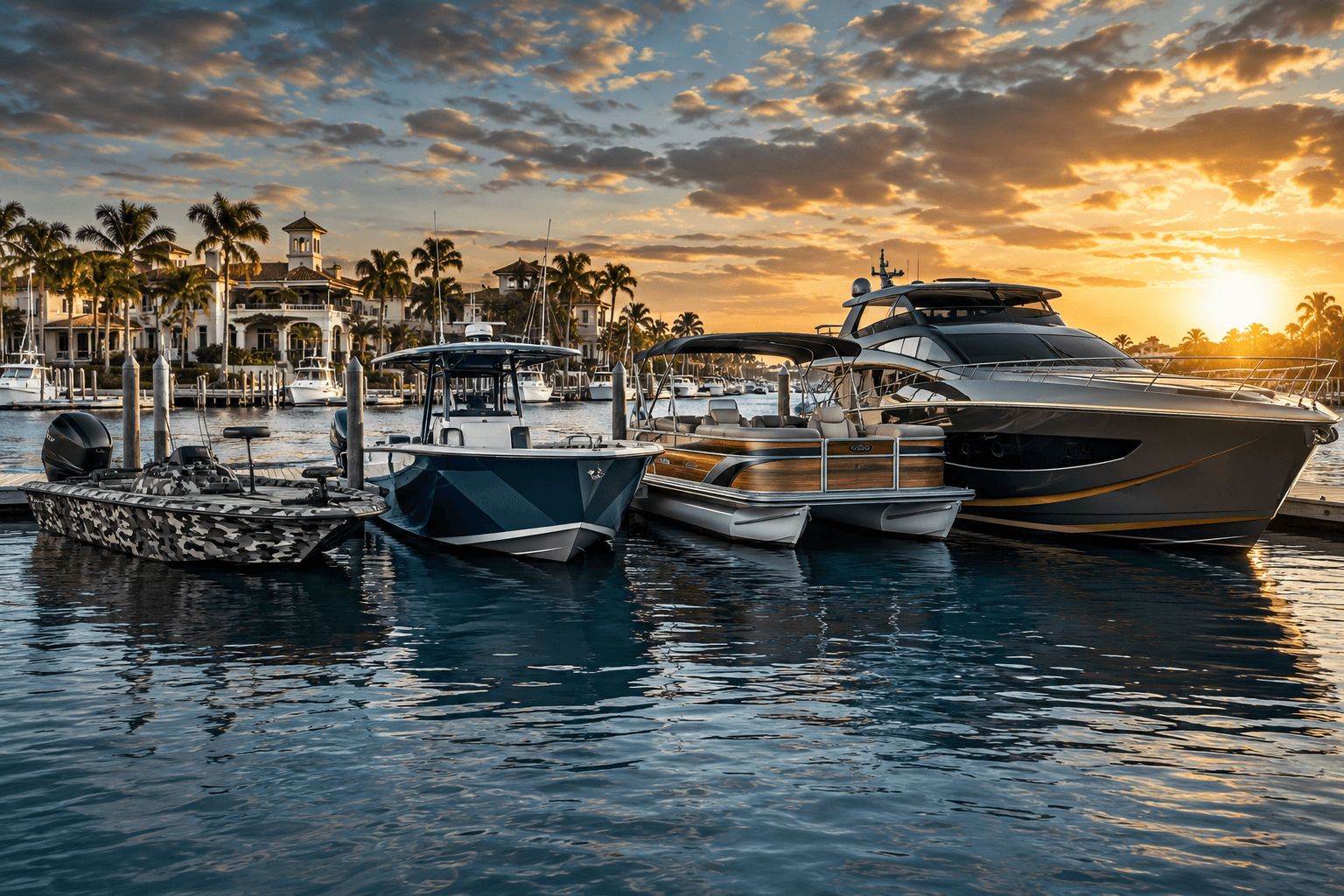
Boat Wrap Designs by Boat Type: What Actually Works on Your Vessel
A wrap that's perfect for a sportfishing boat chasing marlin offshore would look completely out of place on a family pontoon.
Boat Wraps Services
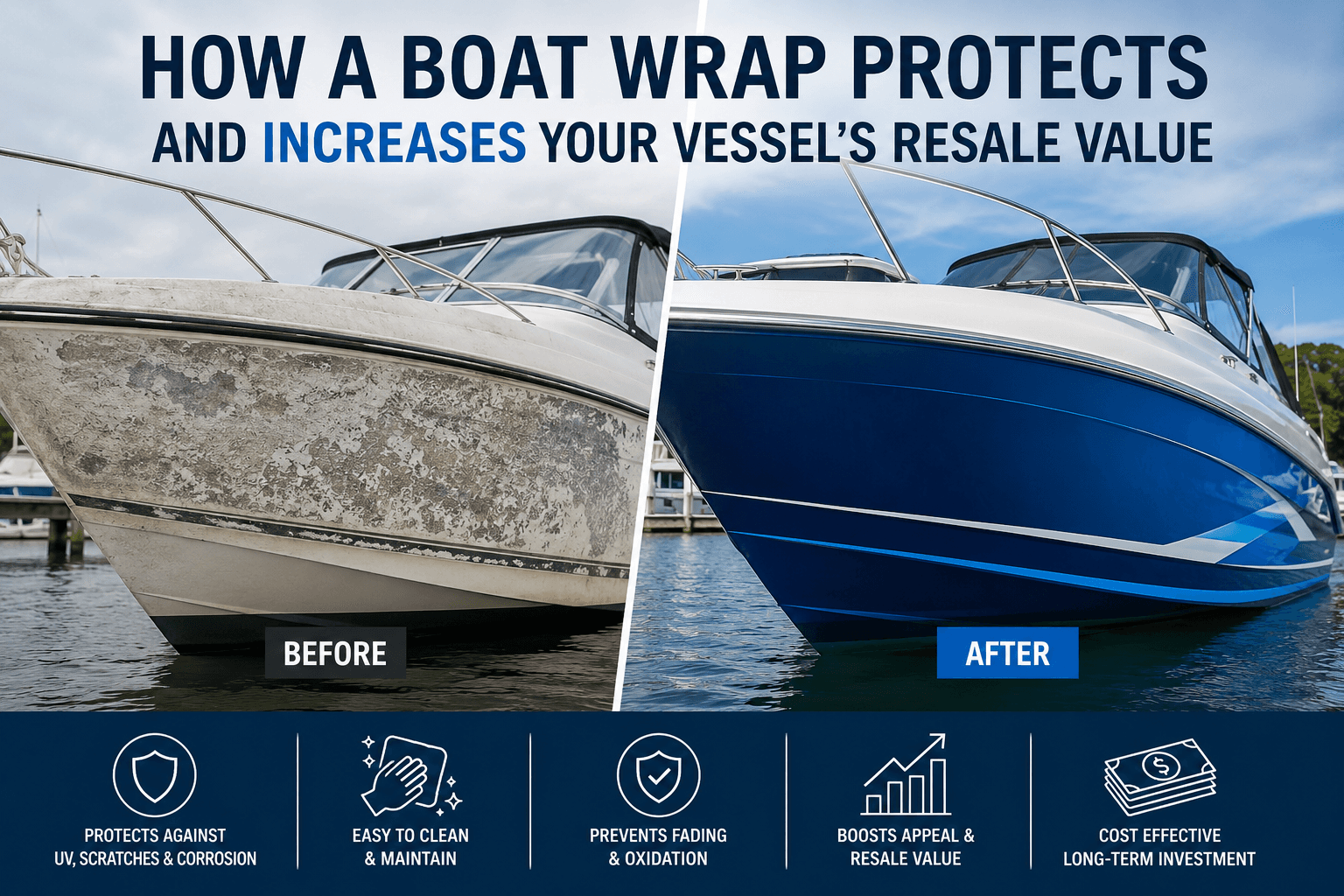
How a Boat Wrap Protects and Increases Your Vessel's Resale Value
How a Boat Wrap Can Protect and Increase Your Vessel's Resale Value
Boat Wraps Services
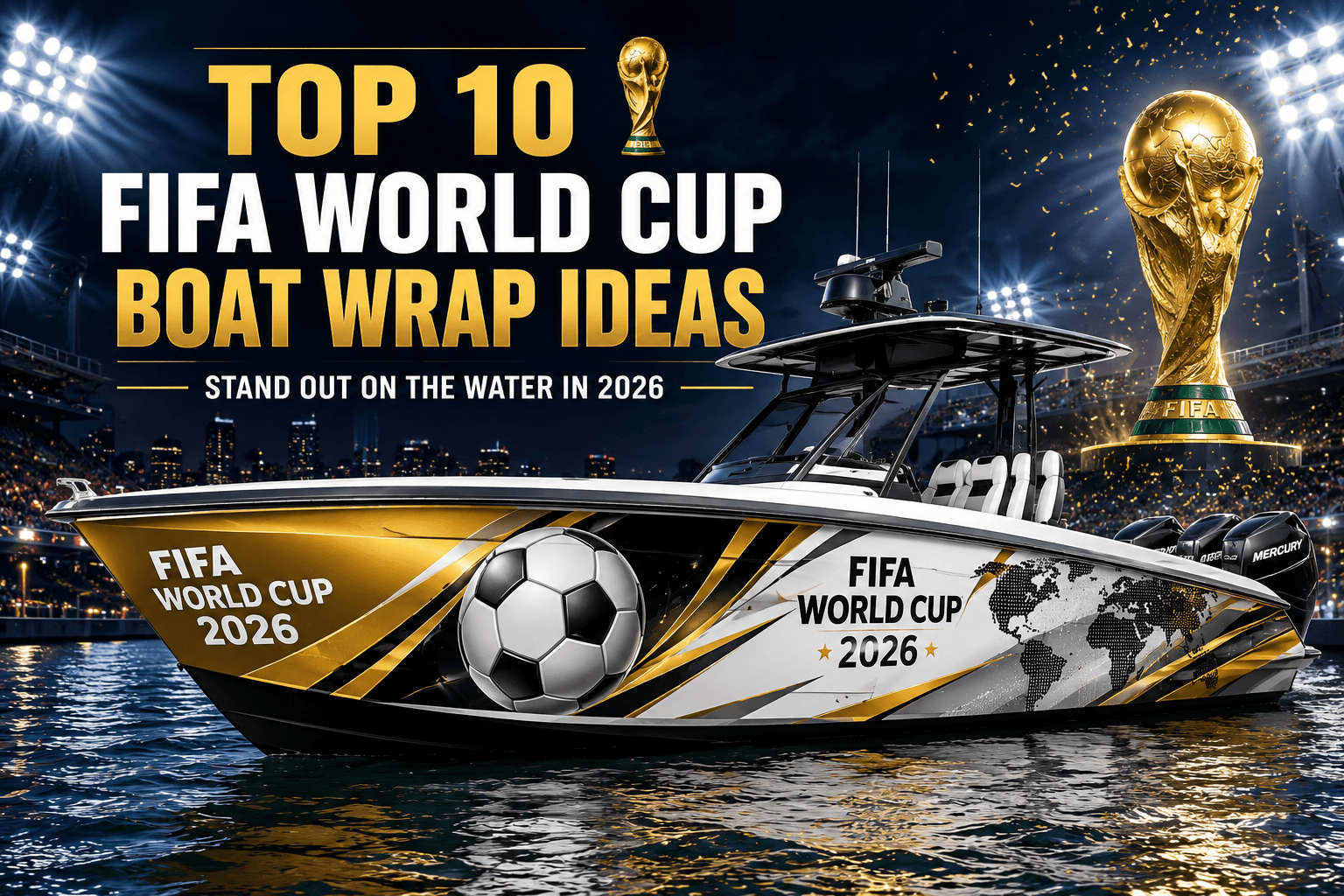
Top 10 FIFA World Cup Boat Wrap Ideas to Try This Season
If you already know you want your boat wrapped for World Cup season, the next question is which design actually fits your vessel.
Boat Wraps Services
Custom Boat Wraps for FIFA World Cup 2026
Get your boat ready for FIFA World Cup 2026 with a luxury custom wrap. Stand out on the water with premium marine graphics, gold finishes, and championship-inspired designs.
Boat Wraps Services
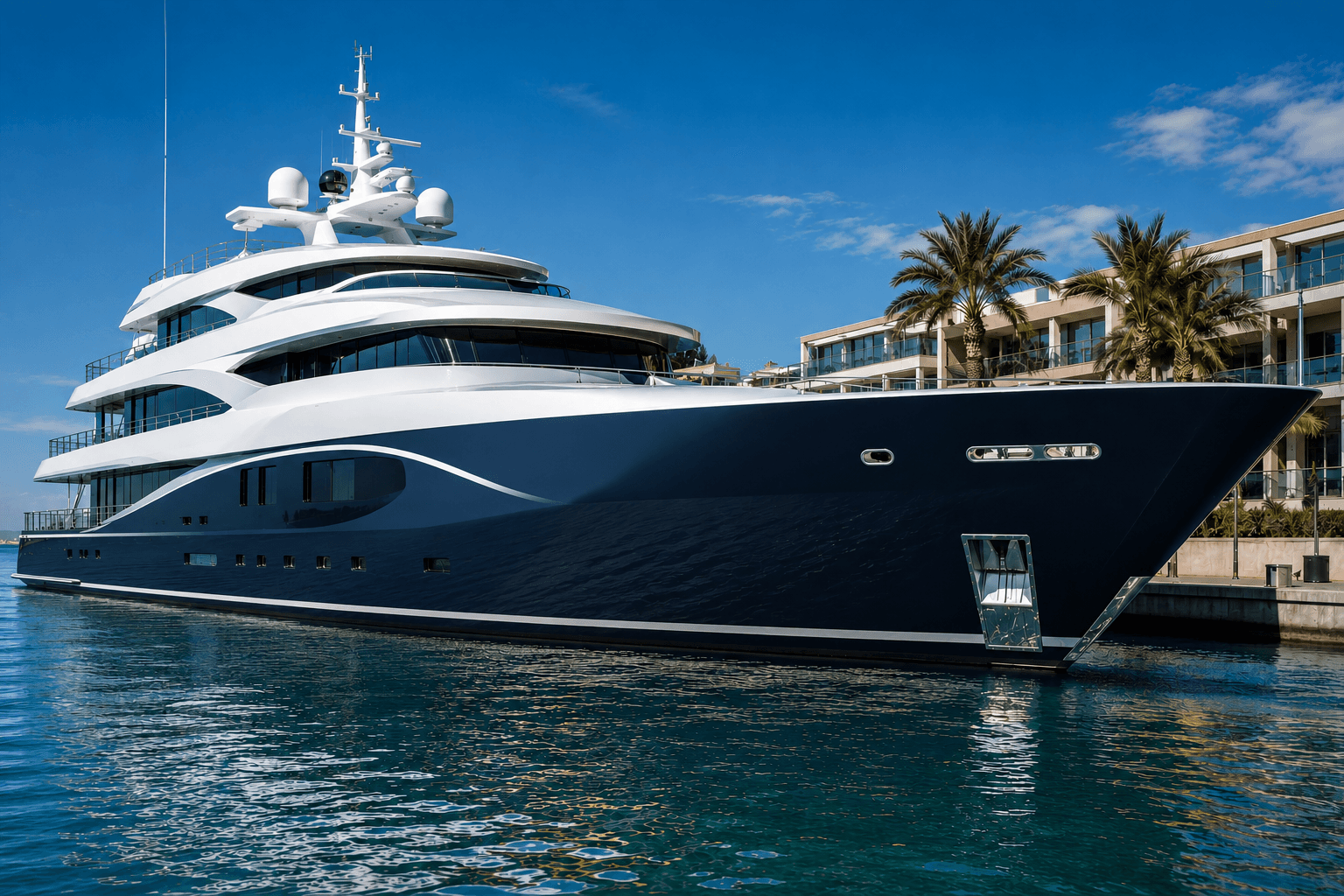
Luxury Yacht Wraps: The Complete Guide to Finishes, Styles, and Custom Marine Vinyl
Ocean Wraps works with luxury yacht and cruiser owners who want professional results, durable materials, and a finish that holds up on the water.
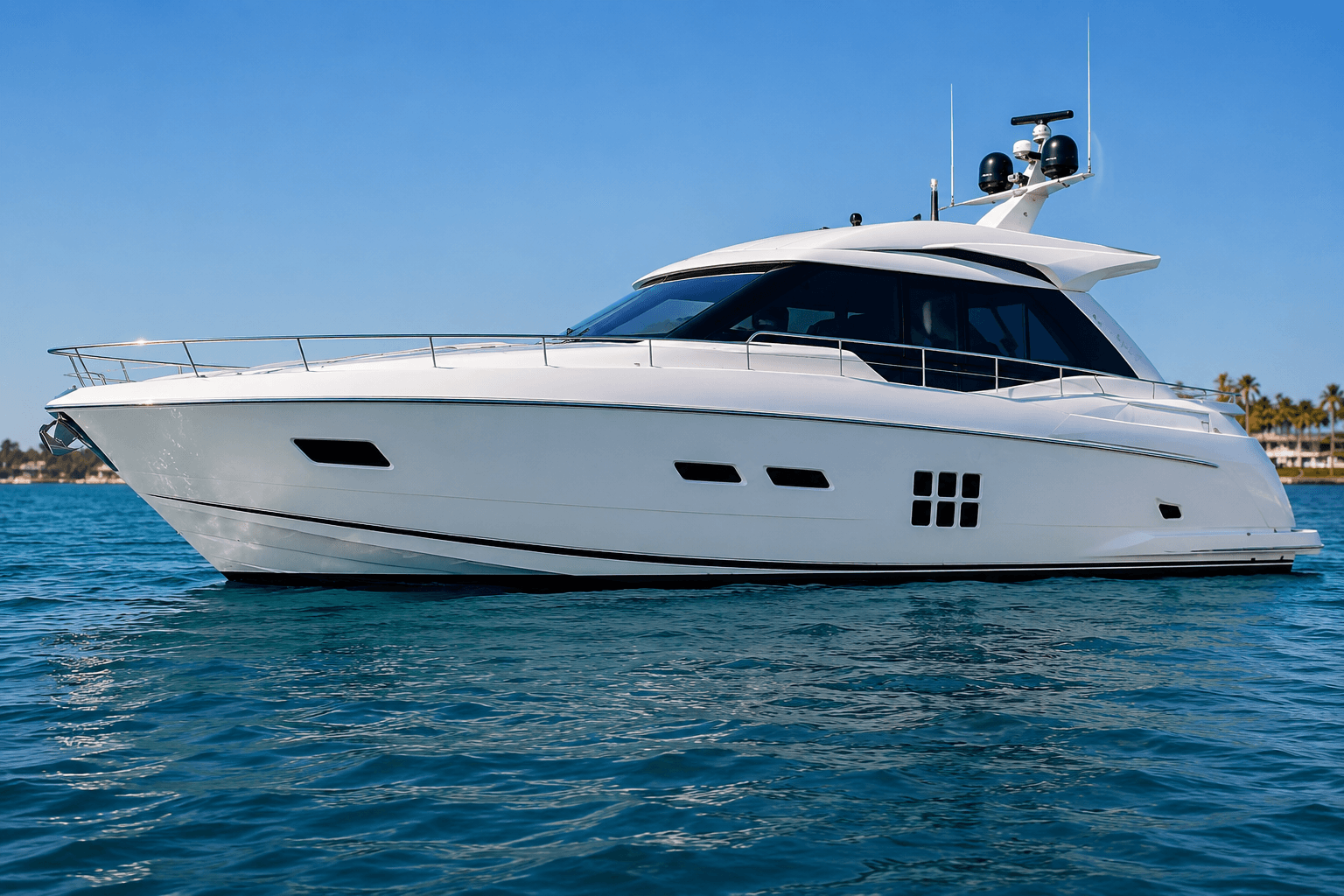
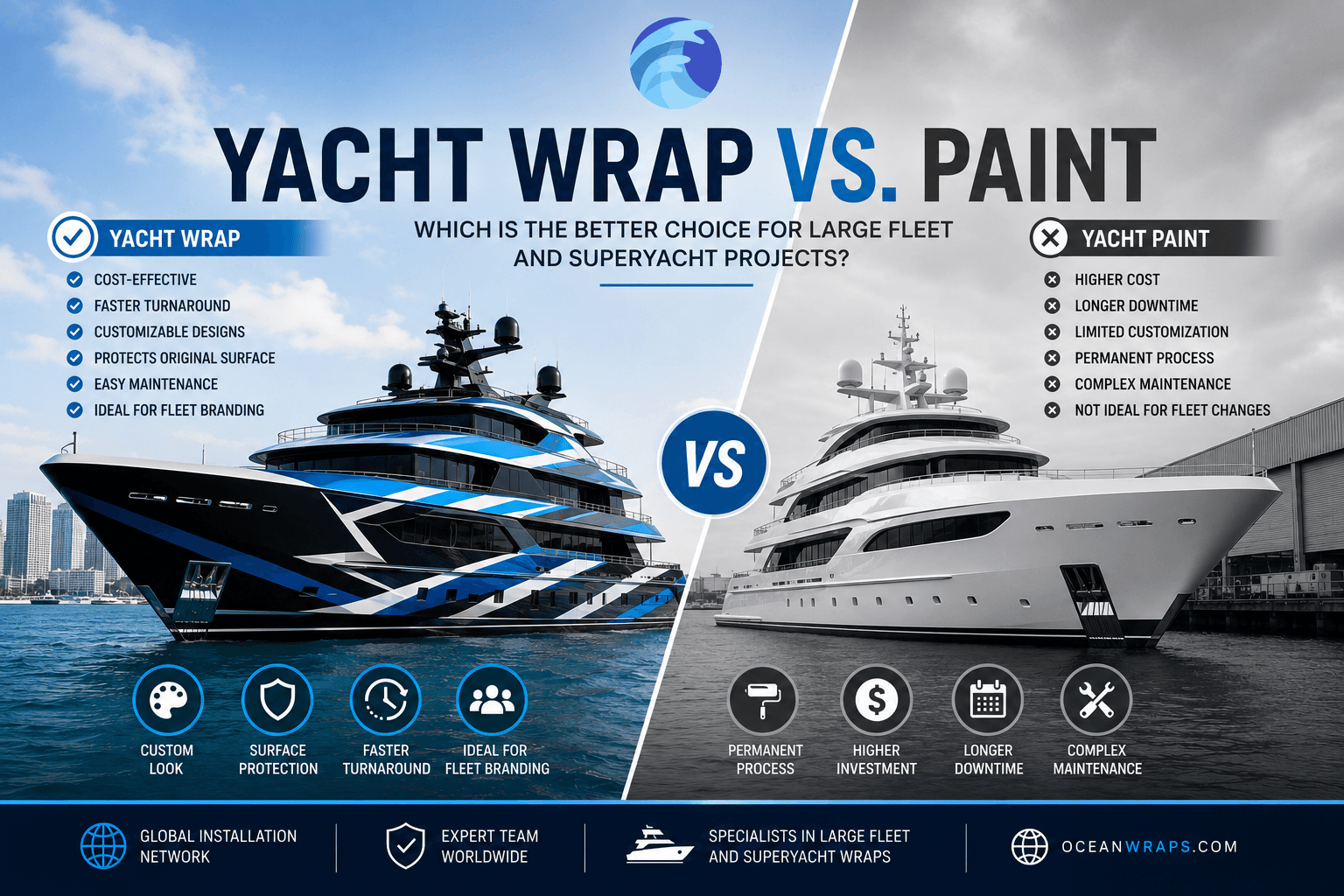
Yacht Wrap vs. Paint for Large Fleet & Superyacht Projects
Deciding between yacht wrap and paint for your fleet or superyacht? We break down real costs, downtime, durability, and which option actually makes sense at scale
How Much Does a Boat Wrap Cost? Complete Pricing Guide for 2026
Boat wrap prices vary widely depending on size, materials, and installer quality. Here's what a professional wrap actually costs in 2026 — and what to watch out for.
Luxury Yacht Wraps: The Complete Guide to Finishes, Styles, and Custom Marine Vinyl
Ocean Wraps works with luxury yacht and cruiser owners who want professional results, durable materials, and a finish that holds up on the water.
Boat Wraps Services
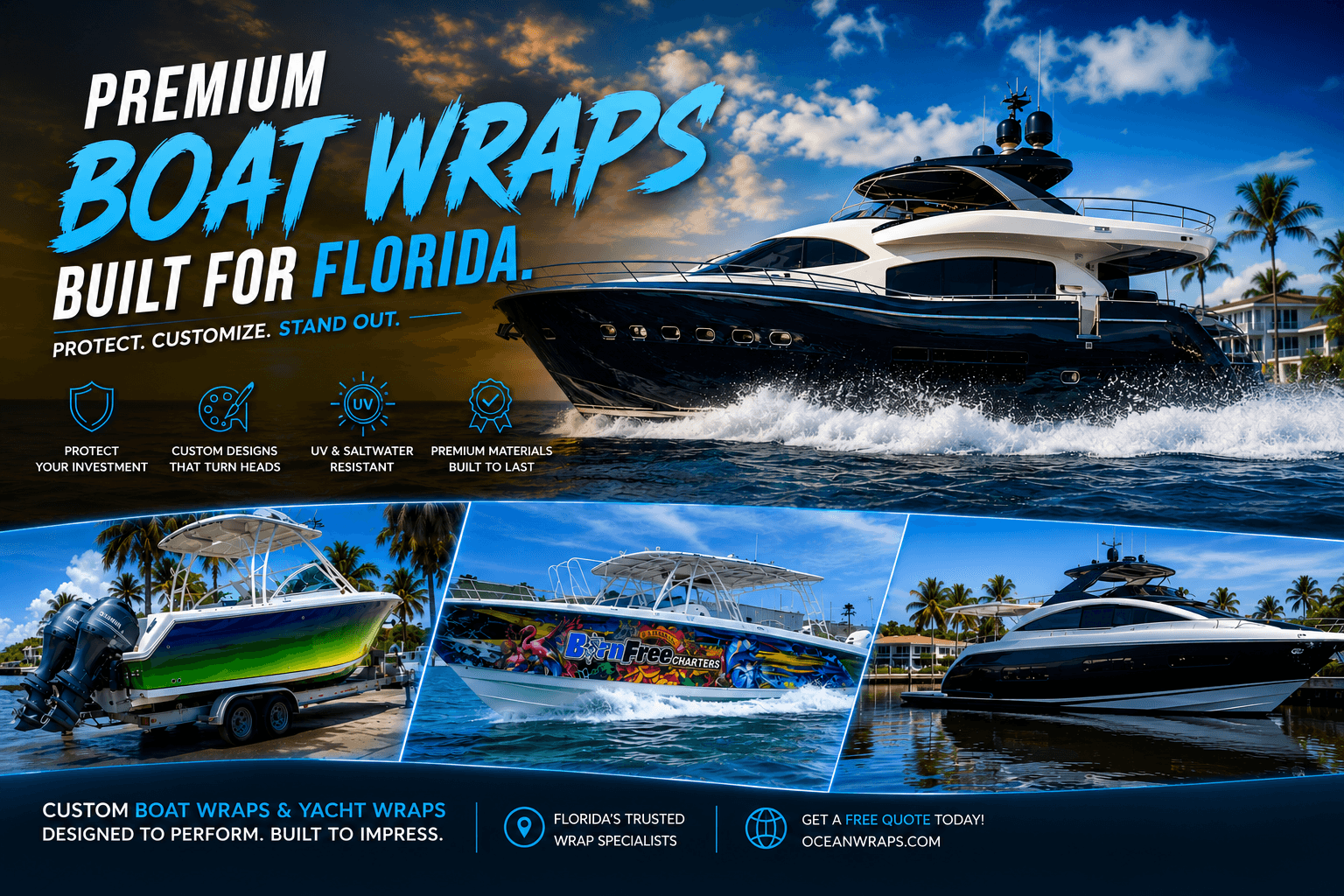
Why Florida Boat Owners Are Choosing Vinyl Boat Wraps in 2026
Discover why Florida boat owners are switching from paint to vinyl boat wraps. Learn the benefits, costs, protection, and customization options.
Guides
Boat Wraps vs Paint: 5 Reasons Why Wraps Win
Boat wraps cost less, install faster, and protect your gel coat better than traditional paint. Here's why so many boat owners are making the switch.
Guides
Yacht Wrap vs. Paint for Large Fleet & Superyacht Projects
Deciding between yacht wrap and paint for your fleet or superyacht? We break down real costs, downtime, durability, and which option actually makes sense at scale
Guides
How Much Does a Boat Wrap Cost? Complete Pricing Guide for 2026
Boat wrap prices vary widely depending on size, materials, and installer quality. Here's what a professional wrap actually costs in 2026 — and what to watch out for.