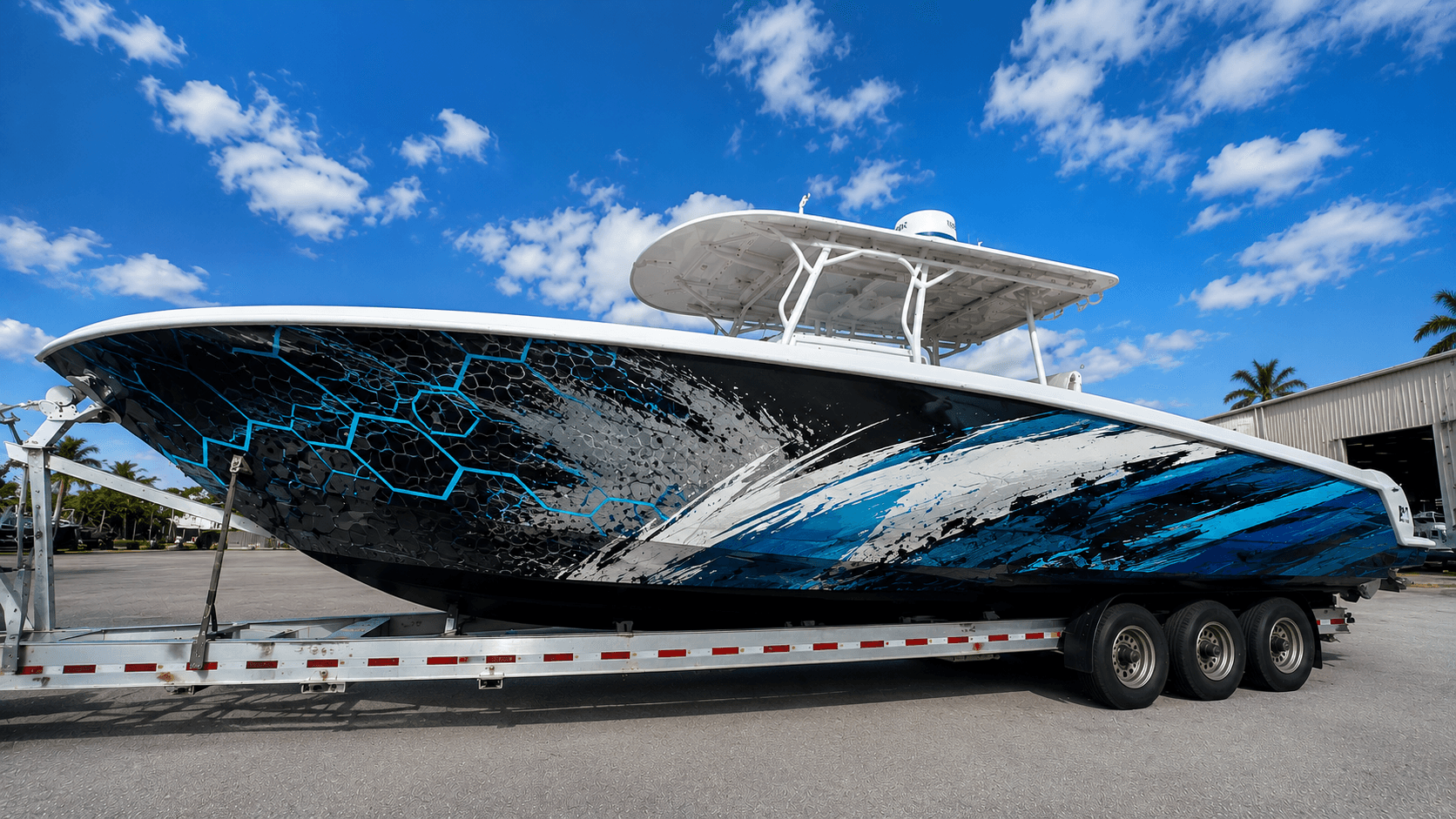
Texas Boat Wraps vs. Professional Paint: A 5-Year Cost Analysis for Center Consoles
A detailed 5-year cost analysis of boat wraps vs. paint for Texas center consoles, factoring in climate, salt water, and local marine conditions. Learn the true
Last updated March 29, 2026
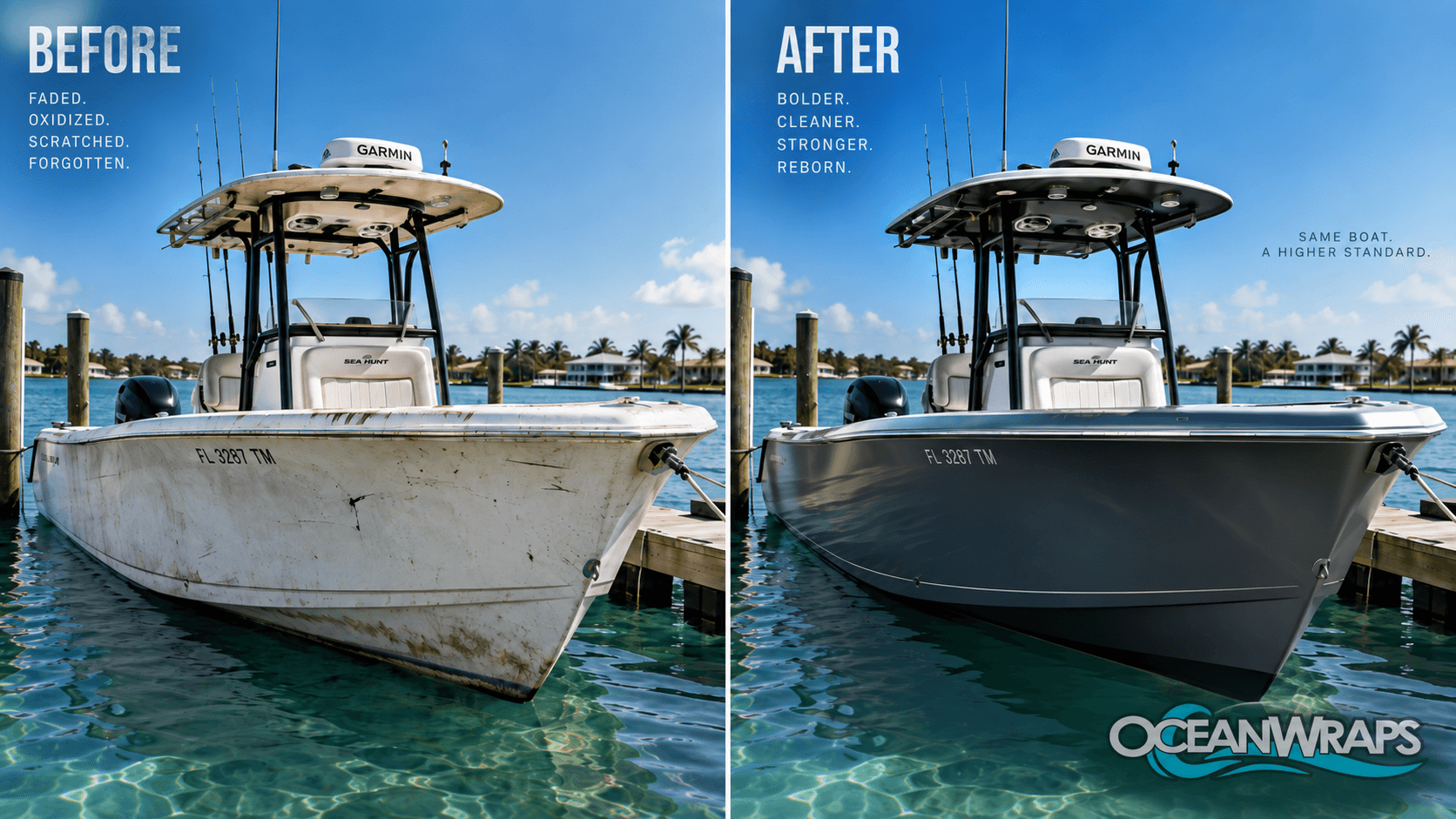
Boat wraps for Texas center console owners, the decision between a custom boat wrap and a professional paint job is a significant investment in both aesthetics and protection. While initial quotes often dominate the conversation, the true cost unfolds over years of exposure to the Gulf Coast's punishing sun, salt-laden air, and active boating lifestyle. This analysis provides a detailed, five-year cost of ownership framework, moving beyond simple pricing to evaluate total value, durability, and operational impact. Understanding this comprehensive boat wrap cost comparison is essential for making an informed decision that protects your asset and reflects your passion on the water.
Professional expertise - OceanWraps certified team. Over a 5-year period, a premium boat wrap typically offers a 30-50% lower total cost of ownership compared to a show-quality marine paint system when factoring in maintenance, repairs, and potential downtime.
Texas-specific conditions—extreme UV radiation, high salinity, and frequent temperature swings—accelerate paint oxidation and fading but are expertly countered by modern cast vinyl films with UV-inhibitive laminates.
Professional installation is non-negotiable; proper surface prep, seam placement, and edge sealing dictate long-term performance, especially on complex center console hulls and topsides.
Operational flexibility is a key financial advantage; wraps allow for graphic updates, full-color designs, and easier damage repair without haul-out periods that sideline your boat during prime Texas boating seasons.
Local marina rules and storage practices (covered vs. uncovered) dramatically influence longevity. A wrap provides a sacrificial, replaceable layer that protects the underlying gelcoat, preserving hull value.
The resale value equation differs: a pristine, easily removable wrap reveals perfect factory gelcoat, while a repaint, though durable, permanently alters the vessel and can raise concerns over quality and underlying hull condition.
The longevity and finish quality of a boat wrap hinge entirely on professional execution. The process is a precise, technical operation that transcends simple adhesion, where expertise directly dictates value and durability.
Both wraps and paint require immaculate, contaminant-free surfaces. For a wrap, this means a meticulous de-wax, de-grease, and mechanical scuff of the gelcoat to promote maximum vinyl adhesion. Any existing hull imperfections are addressed, as the vinyl will conform to, not hide, significant flaws.
Digital designs are engineered to the specific make and model of your center console. Expert installers plan seam placement in low-visibility, low-stress areas, and pattern the vinyl to account for complex curves and hardware, minimizing waste and ensuring a coherent graphic flow.
This is the critical phase. Using heat, tension, and specialized tools, certified installers conform the material to compound curves, ensuring no bridging or air entrapment. All edges are meticulously post-heated and sealed to prevent moisture ingress—a crucial step for salt water longevity. Hardware is typically removed and reinstalled over the material for a seamless, OEM-quality appearance.
The performance of a professional boat wrap is defined by its materials. Premium marine wraps utilize cast vinyl films. Unlike cheaper calendared vinyl, cast film is dimensionally stable, resisting shrinkage and stretching over time, with exceptional conformability for sharp curves. A protective laminate is then applied, providing an additional barrier against UV rays, abrasion, and salt corrosion. Finish options extend beyond gloss to include matte, satin, metallic, and textured finishes, offering aesthetic versatility. This material science, combined with expert application, is what separates a durable investment from a short-term graphic.
Moving beyond initial investment reveals the true cost dynamics. This framework assumes a 24-foot center console with moderate design complexity.
Year 1 (Initial Investment): Professional Paint: High-end paint, labor, and prep work represent the peak cost. Professional Wrap: Design, premium materials, and installation are the primary costs. The wrap investment is often 30-40% lower at this stage.
Years 2-4 (Maintenance & Upkeep): Paint requires annual compounding and waxing to maintain gloss and combat oxidation. Minor chip repairs from dock strikes or trailering are common. A wrap requires only routine washing with non-abrasive cleaners. No waxing or polishing is needed. Repair of a section is typically faster and less costly.
Year 5 (Refreshing & Value): Paint may show significant fade, requiring a costly cut-and-buff or consideration of a new topcoat. A high-quality wrap will still retain vibrant color and can be removed cleanly, revealing the preserved gelcoat beneath. The owner can re-wrap with a new design or return to the original hull color, a flexibility paint cannot offer.
This analysis consistently shows the wrap's cost advantage widening over time, especially when valuing your time and boat's availability. The operational benefit of avoiding a multi-week haul-out for a repaint is a significant financial and recreational advantage for Texas boaters.
How long does a boat wrap last in Texas compared to paint?#
A professionally installed premium boat wrap, using marine-grade materials, typically maintains its aesthetic and protective integrity for 5-7 years in Texas conditions. A high-end marine paint job can last longer in terms of film integrity, but will require significant annual maintenance to combat oxidative fading and will likely show visible wear and tear sooner. The functional lifespan before a major refresh is often comparable, but the wrap's maintenance profile is far lower.
No, when installed and removed correctly by professionals, a wrap protects the gelcoat. The vinyl acts as a sacrificial shield against UV rays and minor abrasion. Upon removal, any residual adhesive is cleaned with industry-standard solutions that do not harm the underlying surface. In fact, the gelcoat underneath is preserved in its original, un-faded state.
Is a wrap a good choice for a boat kept in a wet slip year-round?#
Yes, but with qualifications. Premium marine vinyl and laminates are engineered for constant moisture exposure. The critical factor is the quality of the installation, specifically the sealing of all edges and penetrations to prevent water migration underneath the film. For boats in saline environments like Galveston Bay, this is a non-negotiable standard of work that requires proven expertise.
How do I choose a qualified installer for my boat wrap in Texas?#
Seek out installers with specific, demonstrated experience in marine applications. Review their portfolio of center consoles and similar complex hulls. Inquire about the specific brands of cast vinyl and laminate they use—they should be premium materials with stated marine durability. Ask about their preparation and edge-sealing processes. A trusted leader like OceanWraps will transparently detail their certified methodology and use of industry-best materials, ensuring your investment is protected.
New Boat Prices Are Skyrocketing — Here's the Smarter Move Boat Owners Are Making
New boat prices are at record highs. Here's why more owners are choosing marine vinyl wraps to refresh their boat's look and protect the hull, without the cost of buying new
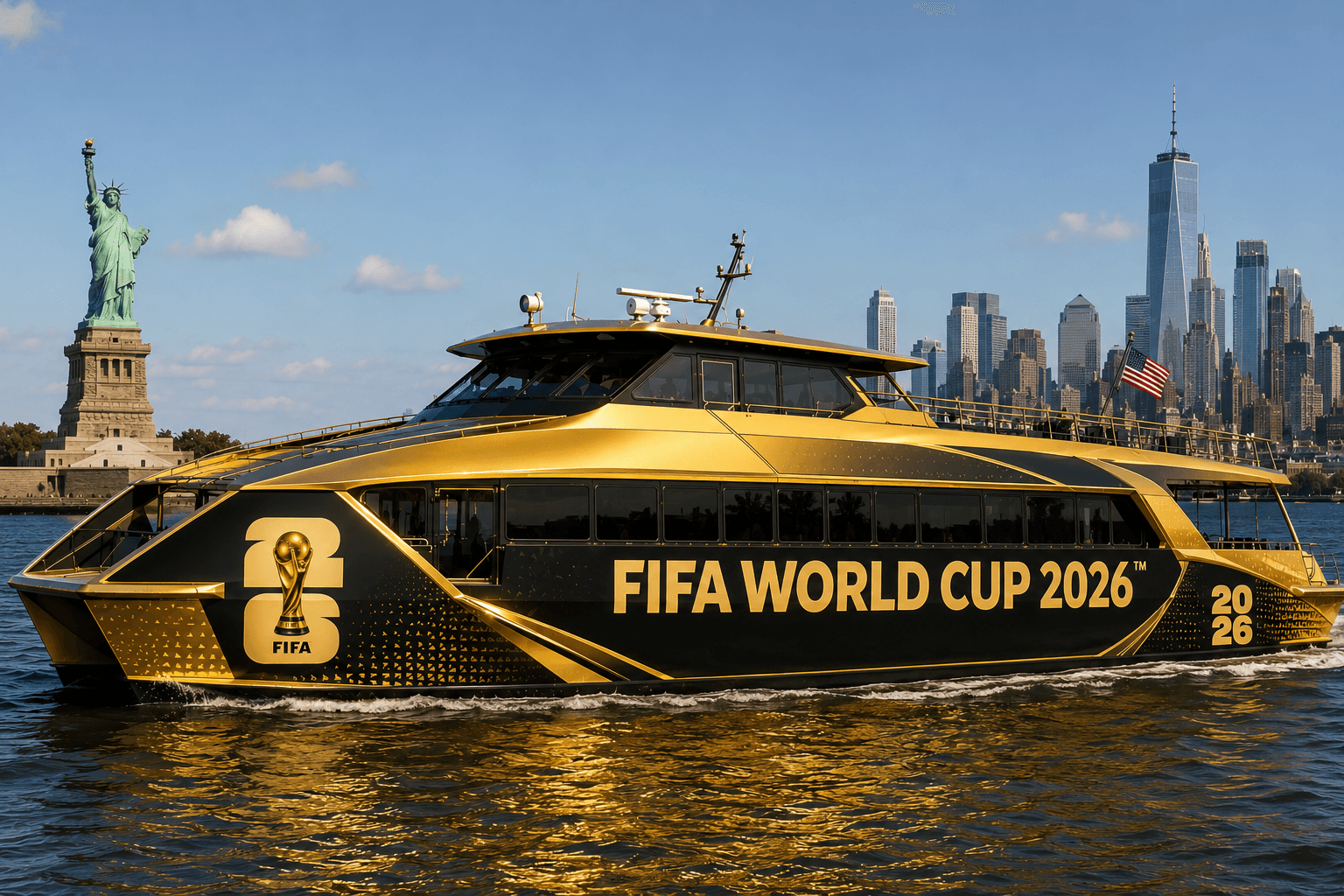
Get your boat ready for FIFA World Cup 2026 with a luxury custom wrap. Stand out on the water with premium marine graphics, gold finishes, and championship-inspired designs.
New Boat Prices Are Skyrocketing — Here's the Smarter Move Boat Owners Are Making
New boat prices are at record highs. Here's why more owners are choosing marine vinyl wraps to refresh their boat's look and protect the hull, without the cost of buying new
Boat Wraps Services
Boat Wrap Designs by Boat Type: What Actually Works on Your Vessel
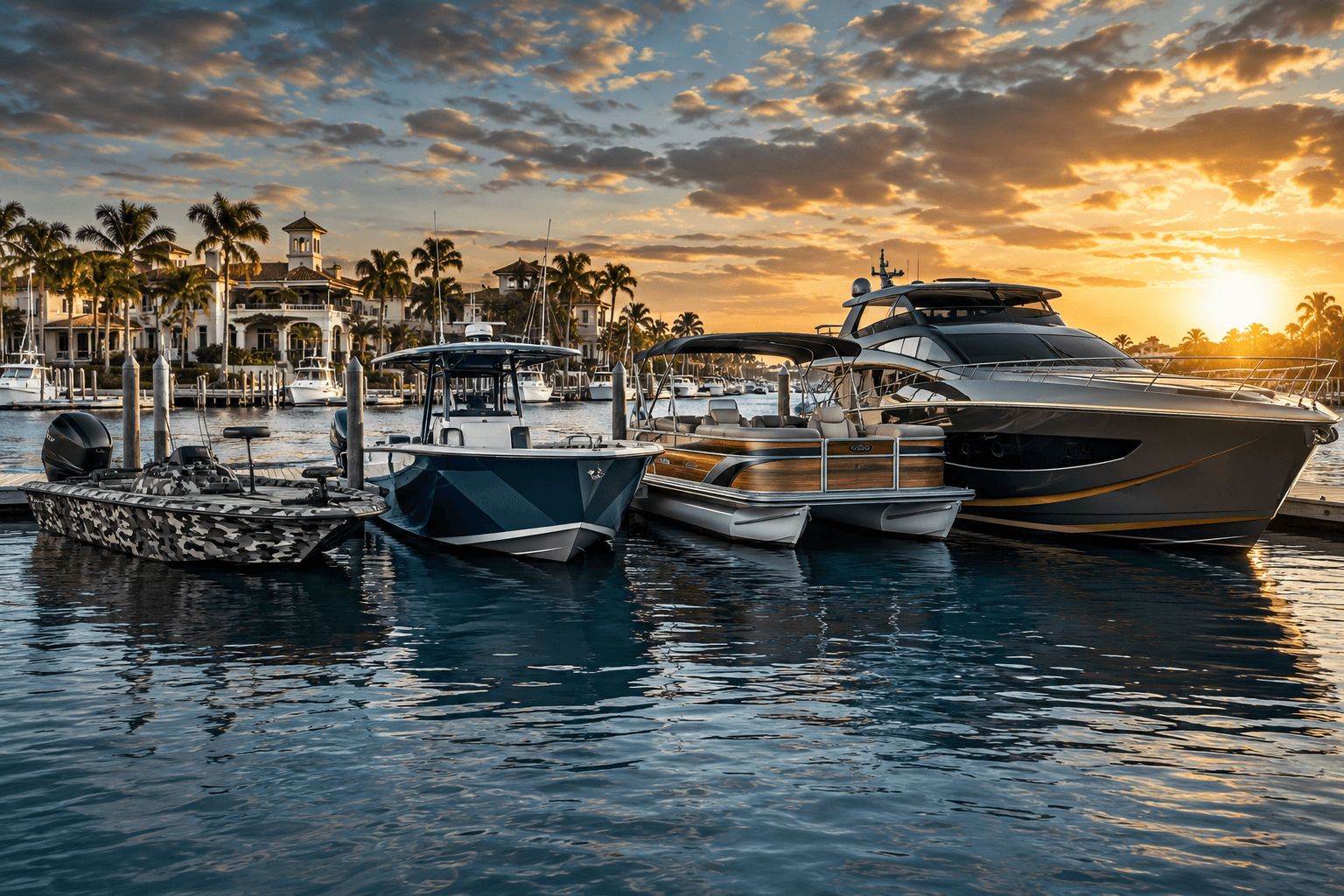
A wrap that's perfect for a sportfishing boat chasing marlin offshore would look completely out of place on a family pontoon.
Boat Wraps Services
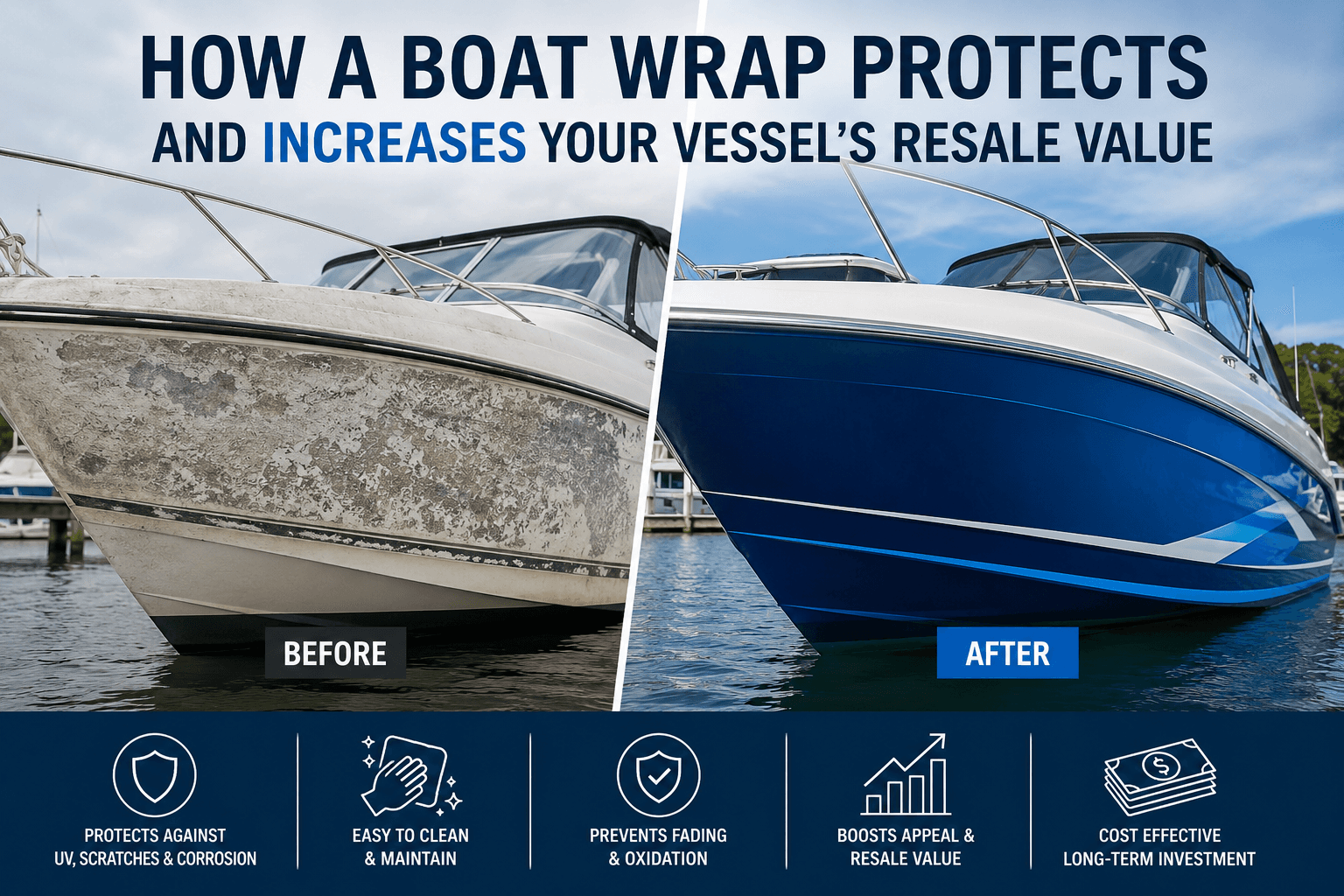
How a Boat Wrap Protects and Increases Your Vessel's Resale Value
How a Boat Wrap Can Protect and Increase Your Vessel's Resale Value
Boat Wraps Services
Top 10 FIFA World Cup Boat Wrap Ideas to Try This Season
If you already know you want your boat wrapped for World Cup season, the next question is which design actually fits your vessel.
Boat Wraps Services
Custom Boat Wraps for FIFA World Cup 2026
Get your boat ready for FIFA World Cup 2026 with a luxury custom wrap. Stand out on the water with premium marine graphics, gold finishes, and championship-inspired designs.
Boat Wraps Services
Luxury Yacht Wraps: The Complete Guide to Finishes, Styles, and Custom Marine Vinyl
Ocean Wraps works with luxury yacht and cruiser owners who want professional results, durable materials, and a finish that holds up on the water.
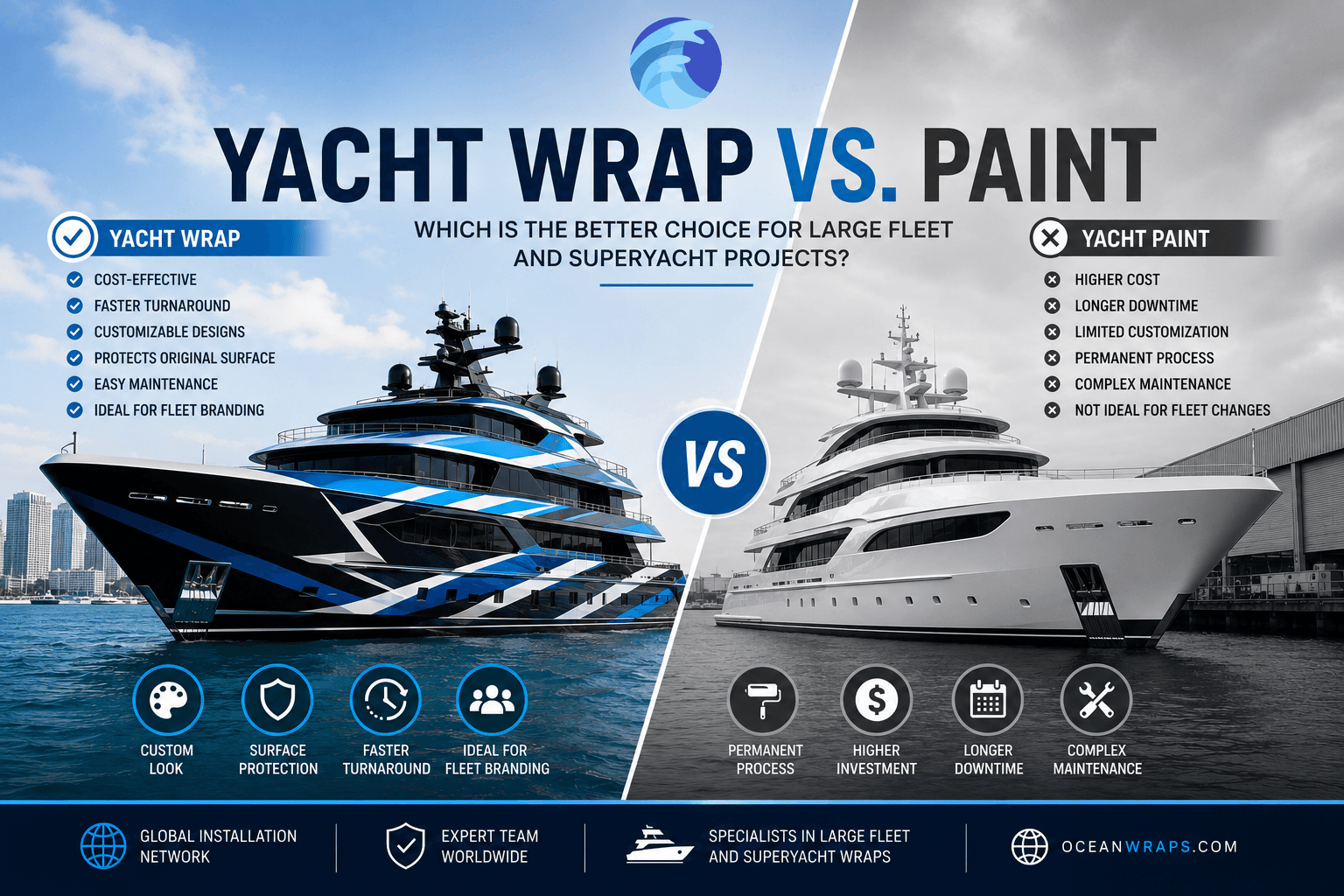
Yacht Wrap vs. Paint for Large Fleet & Superyacht Projects
Deciding between yacht wrap and paint for your fleet or superyacht? We break down real costs, downtime, durability, and which option actually makes sense at scale
How Much Does a Boat Wrap Cost? Complete Pricing Guide for 2026
Boat wrap prices vary widely depending on size, materials, and installer quality. Here's what a professional wrap actually costs in 2026 — and what to watch out for.
Luxury Yacht Wraps: The Complete Guide to Finishes, Styles, and Custom Marine Vinyl
Ocean Wraps works with luxury yacht and cruiser owners who want professional results, durable materials, and a finish that holds up on the water.
Boat Wraps Services
Why Florida Boat Owners Are Choosing Vinyl Boat Wraps in 2026
Discover why Florida boat owners are switching from paint to vinyl boat wraps. Learn the benefits, costs, protection, and customization options.
Guides
Boat Wraps vs Paint: 5 Reasons Why Wraps Win
Boat wraps cost less, install faster, and protect your gel coat better than traditional paint. Here's why so many boat owners are making the switch.
Guides
Yacht Wrap vs. Paint for Large Fleet & Superyacht Projects
Deciding between yacht wrap and paint for your fleet or superyacht? We break down real costs, downtime, durability, and which option actually makes sense at scale
Guides
How Much Does a Boat Wrap Cost? Complete Pricing Guide for 2026
Boat wrap prices vary widely depending on size, materials, and installer quality. Here's what a professional wrap actually costs in 2026 — and what to watch out for.