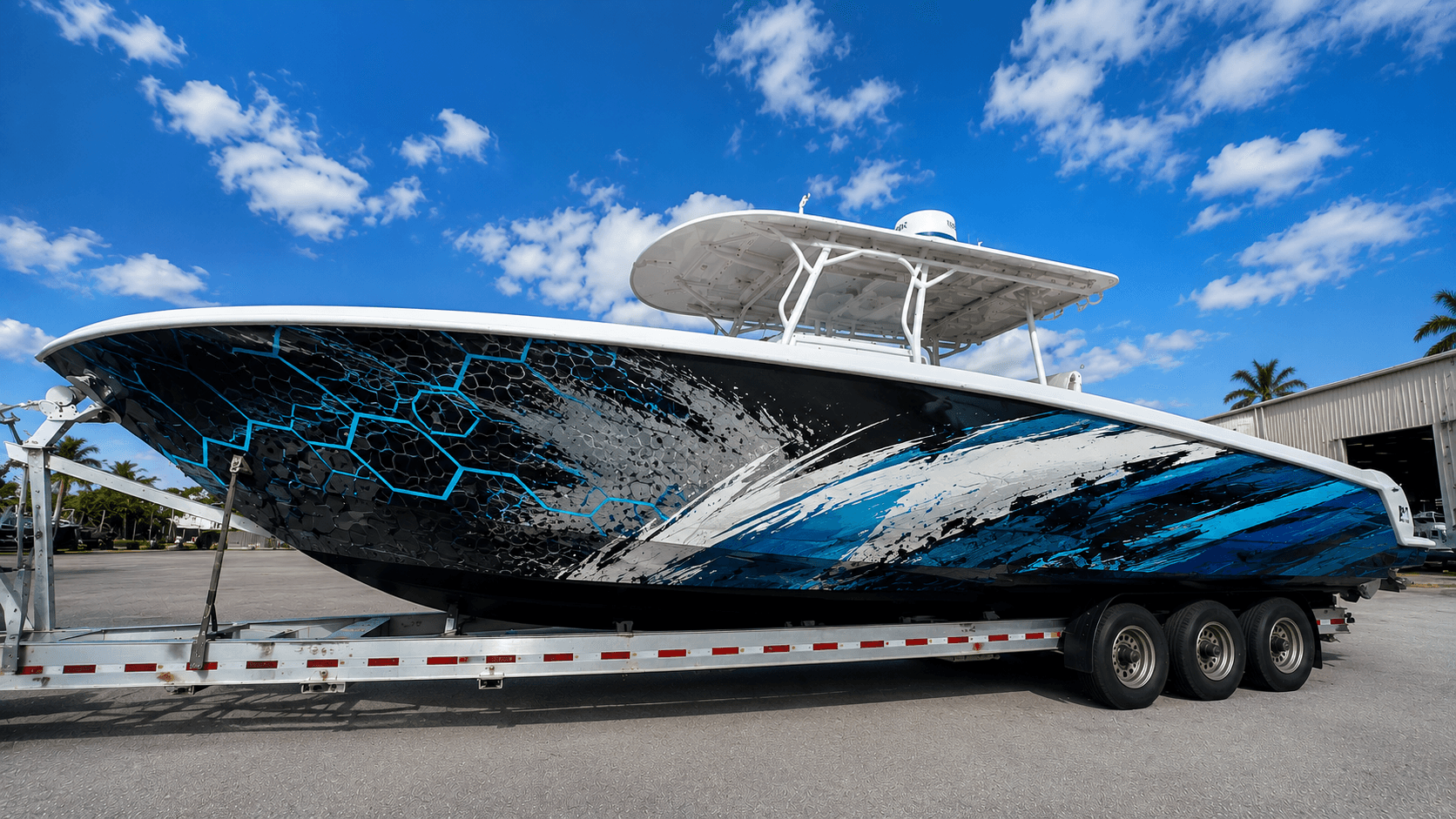
Custom Fleet Livery Design for Marine Research Vessels | Boat Wraps
Professional boat wraps for marine research fleets. Durable vinyl graphics for hull and topside branding, designed for harsh marine environments and UV resistan
Last updated March 1, 2026
For marine research institutions, a vessel is more than transportation; it's a mobile laboratory and a public-facing asset. Standard paint schemes often fail to communicate mission or withstand harsh operational profiles. Custom fleet livery via professional boat wraps offers a superior solution, merging advanced graphic communication with exceptional durability for hull and topside surfaces.
Boat Wraps Overview: Custom Fleet Livery Design for Marine Research Vessels#
Unlike recreational craft, research vessels operate in extreme conditions, from polar regions to tropical seas. Graphics must endure constant UV exposure, salt spray, chemical spills, and frequent docking. The design must also be functional, avoiding interference with sensors, winches, and working decks while incorporating safety markings. A wrap must be a resilient tool, not just a decorative layer.
Effective livery communicates purpose. This involves strategically placing institutional logos, partner logos, and educational graphics about the vessel's mission. The design often needs to work around existing hull features like bulbous bows or sonar domes, requiring careful digital templating. Ocean Wraps approaches this as a technical design challenge, ensuring graphics remain legible and impactful from both dock and distance.
The process begins with a detailed assessment of each vessel's substrate, typically gelcoat or painted steel/aluminum. All surfaces must be clean, smooth, and free of contaminants, wax, or failing paint. Any cracks or imperfections in the gelcoat are addressed, as vinyl will mirror the underlying surface. This stage may involve coordination with marina or dry-dock schedules.
Using vessel diagrams and physical measurements, a digital template is created. This allows for precise placement of complex graphics over the curved planes of the hull and superstructure. Design proofs are reviewed for technical accuracy and visual impact before production.
Graphics are printed and laminated on marine-grade vinyl. Installation is a meticulous process, often performed in sections. Experienced technicians use specialized tools to apply the material, managing tension and curvature without trapping air or causing wrinkles, particularly around vents, rails, and thru-hulls.
After application, all edges are carefully sealed and trimmed. A final inspection ensures no lifting seams or imperfections. The client is briefed on proper care and maintenance to maximize the wrap's service life.
Material selection is foundational for performance. Cast vinyl is the standard for marine wraps due to its superior conformability over complex curves and long-term dimensional stability. A high-quality cast vinyl features a durable polymeric PVC face and aggressive, long-lifetime adhesive.
For longevity, a protective laminate is mandatory. This clear overlay provides scratch resistance and, crucially, enhanced UV resistance to prevent ink fading. The laminate also facilitates easier cleaning. Gloss, matte, and satin finishes are available, with gloss typically offering the highest color vibrancy and ease of cleaning.
Surface Prep is Non-Negotiable: Time invested in perfecting the gelcoat or paint surface directly correlates to wrap adhesion and lifespan. This includes dewaxing and a final wipe with isopropyl alcohol.
Account for Marina Rules: Some facilities have restrictions on work performed dockside. Planning installation during scheduled dry-dock periods is often most efficient.
Consider Storage Conditions: While UV resistant, prolonged off-season sun exposure can be mitigated with covers or sheltered storage.
Establish Wash Practices: Use mild, non-abrasive cleaners and soft brushes. Avoid high-pressure nozzles directed at wrap edges and harsh solvents.
Plan for Hardware & Access: Graphics may need to be removed and reapplied for future hull inspections or transducer servicing. Discuss this with your installer.
With professional-grade materials and installation, a marine wrap can last 5 to 7 years, even in high-UV environments. Actual lifespan depends on exposure, maintenance, and operational conditions.
Yes, provided the paint is firmly adhered, smooth, and non-chalking. The substrate must be sound. Loose or flaking paint must be removed and the area refinished prior to wrap application.
Properly installed and removed vinyl does not damage intact gelcoat. In fact, it protects the surface from UV degradation and minor abrasion. Removal requires professional heat application and technique.
What is the lead time for a multi-vessel fleet project?#
Lead times vary by scope. A typical single-vessel project from design to completion may take 3-6 weeks. For fleets, a phased approach coordinated with vessel availability is standard. Planning well ahead of the intended installation date, such as by March 1, 2026, for a summer season, is advisable.
New Boat Prices Are Skyrocketing — Here's the Smarter Move Boat Owners Are Making
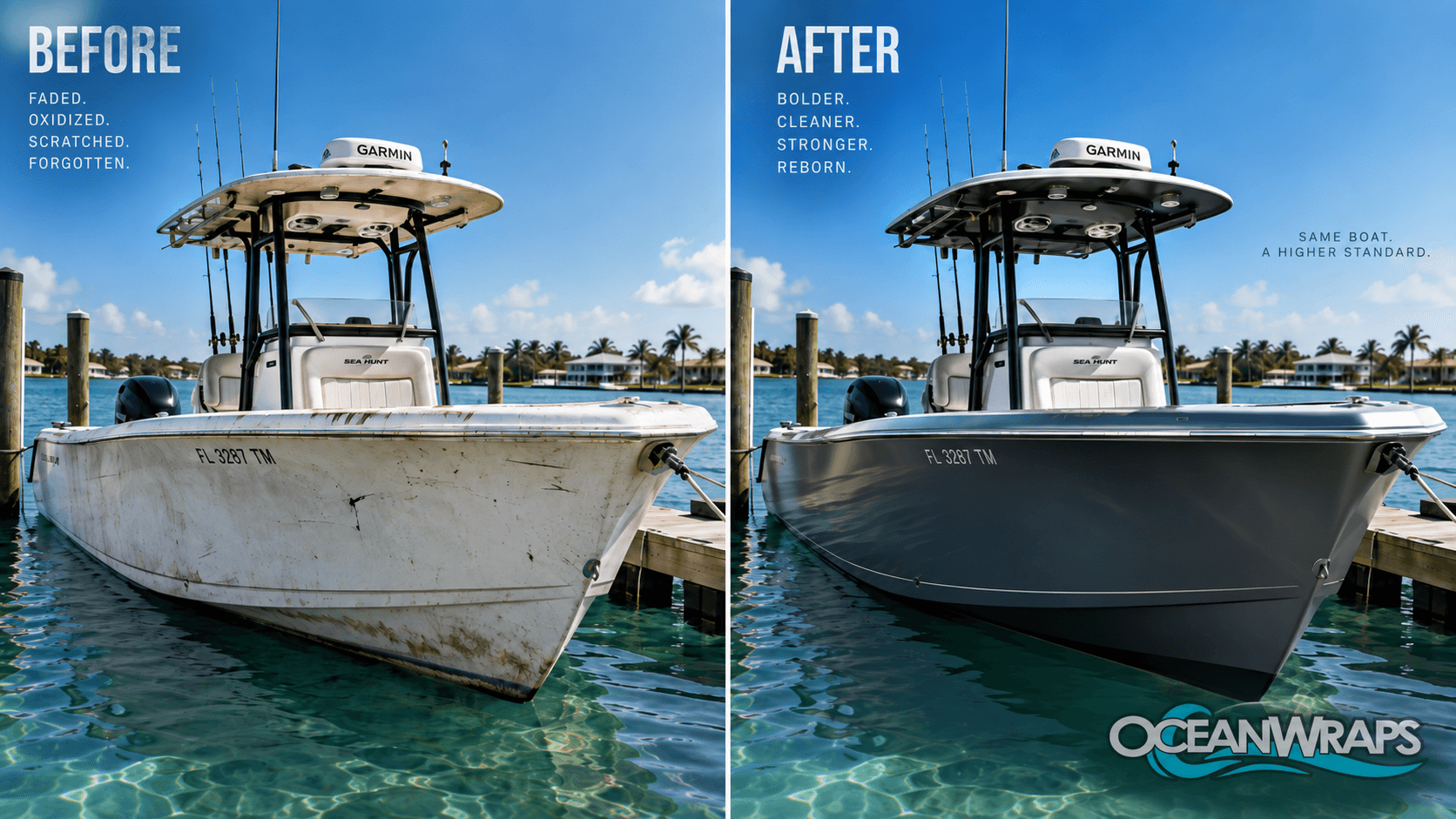
New boat prices are at record highs. Here's why more owners are choosing marine vinyl wraps to refresh their boat's look and protect the hull, without the cost of buying new
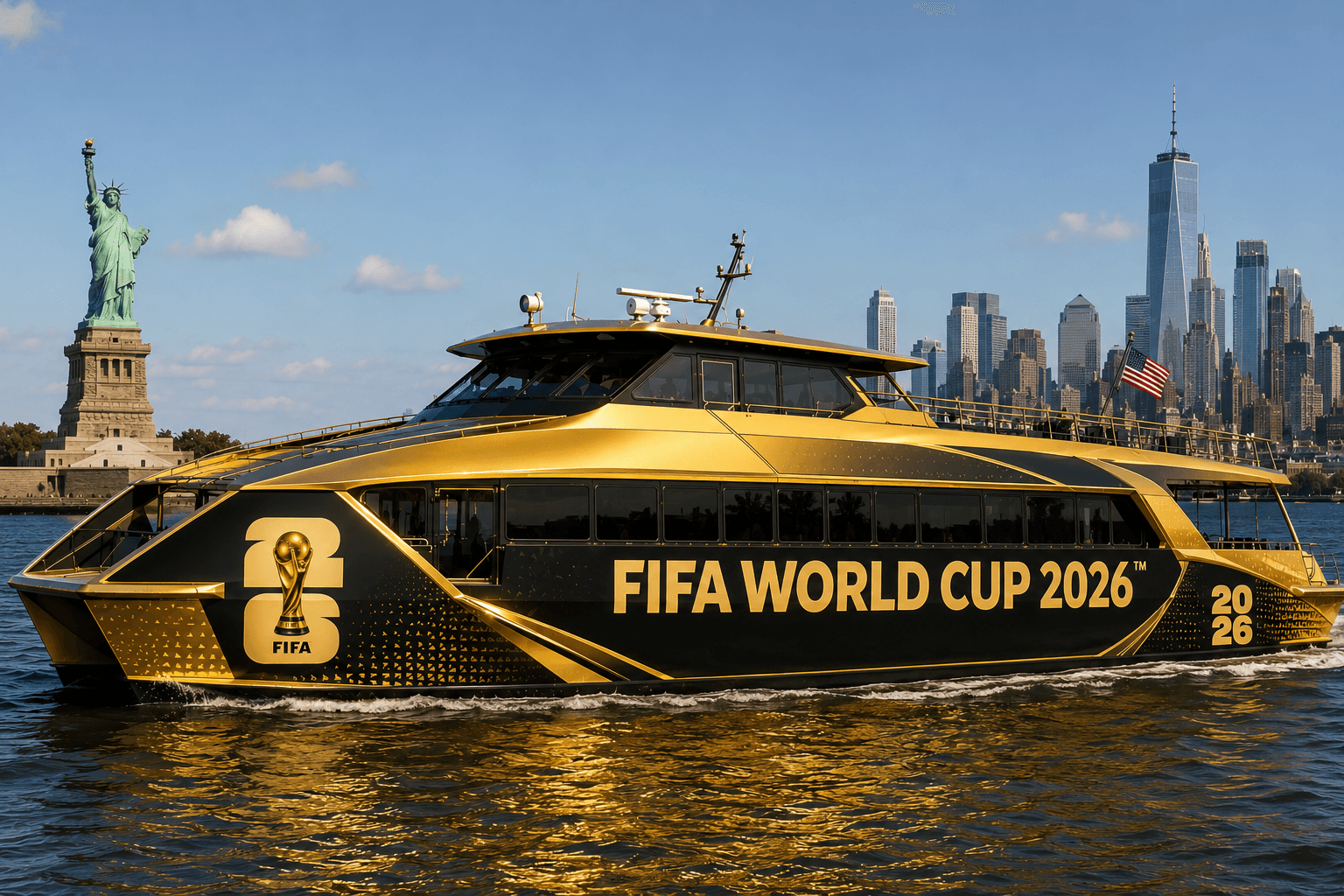
Get your boat ready for FIFA World Cup 2026 with a luxury custom wrap. Stand out on the water with premium marine graphics, gold finishes, and championship-inspired designs.
New Boat Prices Are Skyrocketing — Here's the Smarter Move Boat Owners Are Making
New boat prices are at record highs. Here's why more owners are choosing marine vinyl wraps to refresh their boat's look and protect the hull, without the cost of buying new
Boat Wraps Services
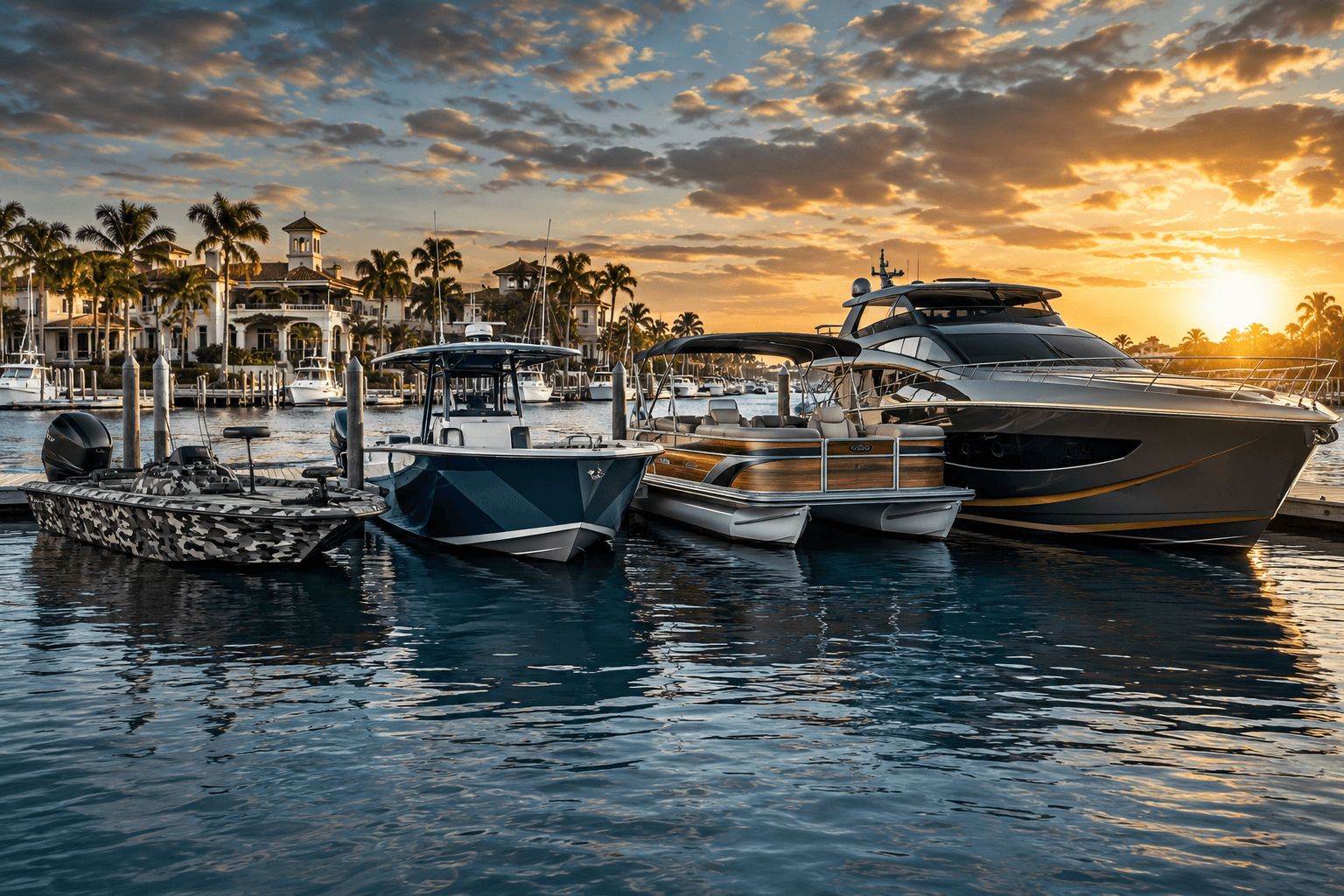
Boat Wrap Designs by Boat Type: What Actually Works on Your Vessel
A wrap that's perfect for a sportfishing boat chasing marlin offshore would look completely out of place on a family pontoon.
Boat Wraps Services
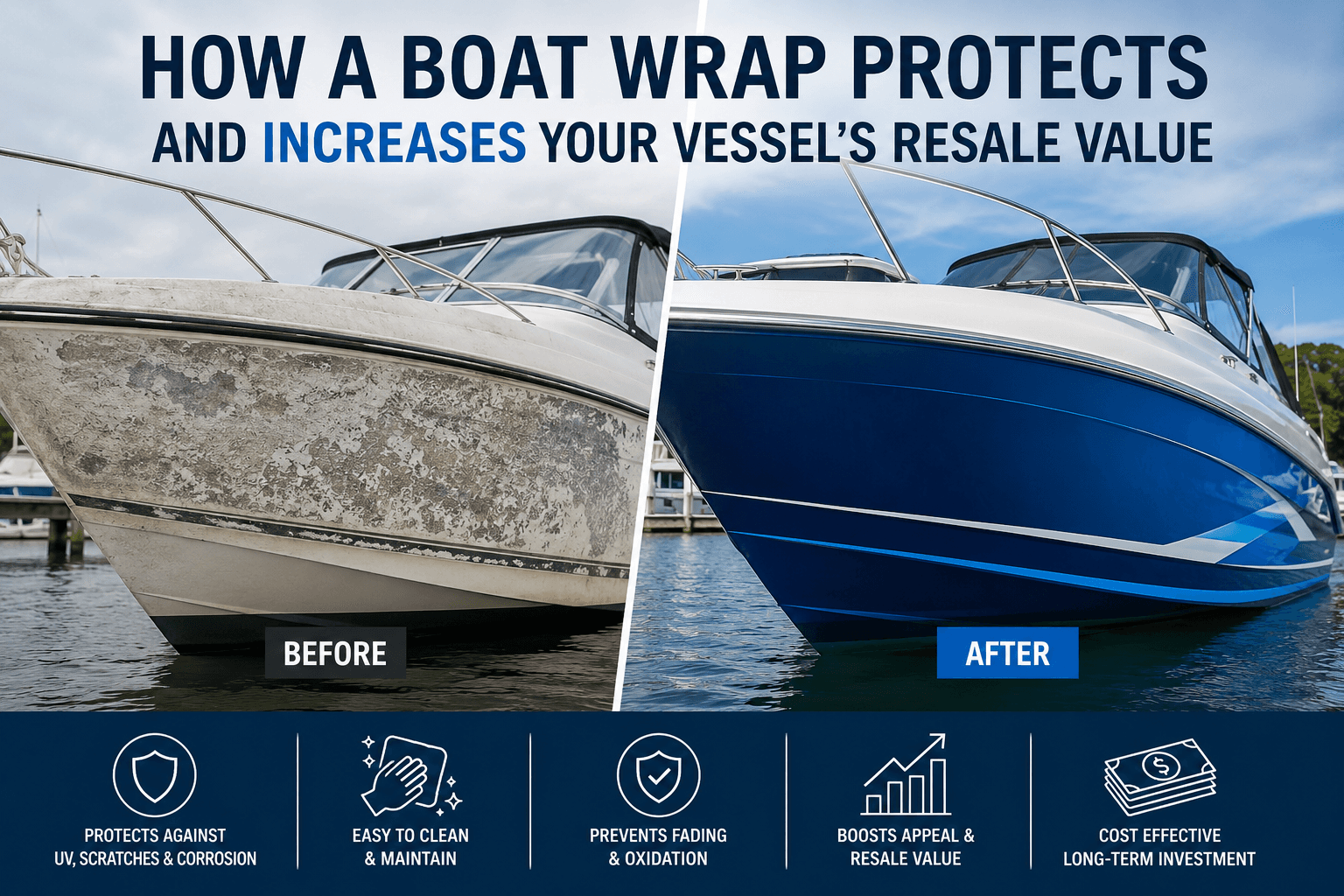
How a Boat Wrap Protects and Increases Your Vessel's Resale Value
How a Boat Wrap Can Protect and Increase Your Vessel's Resale Value
Boat Wraps Services
Top 10 FIFA World Cup Boat Wrap Ideas to Try This Season
If you already know you want your boat wrapped for World Cup season, the next question is which design actually fits your vessel.
Boat Wraps Services
Custom Boat Wraps for FIFA World Cup 2026
Get your boat ready for FIFA World Cup 2026 with a luxury custom wrap. Stand out on the water with premium marine graphics, gold finishes, and championship-inspired designs.
Boat Wraps Services
Luxury Yacht Wraps: The Complete Guide to Finishes, Styles, and Custom Marine Vinyl
Ocean Wraps works with luxury yacht and cruiser owners who want professional results, durable materials, and a finish that holds up on the water.
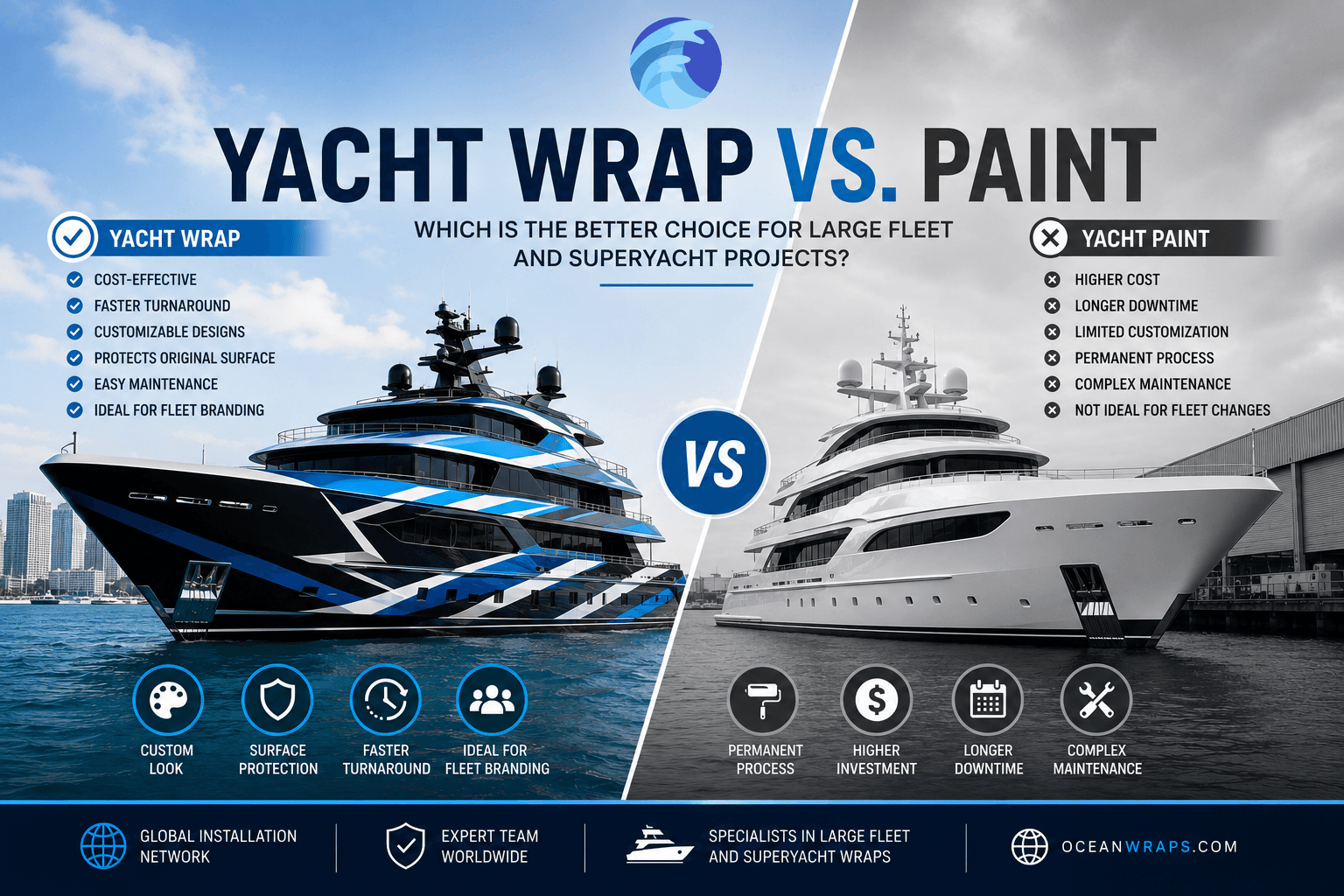
Yacht Wrap vs. Paint for Large Fleet & Superyacht Projects
Deciding between yacht wrap and paint for your fleet or superyacht? We break down real costs, downtime, durability, and which option actually makes sense at scale
How Much Does a Boat Wrap Cost? Complete Pricing Guide for 2026
Boat wrap prices vary widely depending on size, materials, and installer quality. Here's what a professional wrap actually costs in 2026 — and what to watch out for.
Luxury Yacht Wraps: The Complete Guide to Finishes, Styles, and Custom Marine Vinyl
Ocean Wraps works with luxury yacht and cruiser owners who want professional results, durable materials, and a finish that holds up on the water.
Boat Wraps Services
Why Florida Boat Owners Are Choosing Vinyl Boat Wraps in 2026
Discover why Florida boat owners are switching from paint to vinyl boat wraps. Learn the benefits, costs, protection, and customization options.
Guides
Boat Wraps vs Paint: 5 Reasons Why Wraps Win
Boat wraps cost less, install faster, and protect your gel coat better than traditional paint. Here's why so many boat owners are making the switch.
Guides
Yacht Wrap vs. Paint for Large Fleet & Superyacht Projects
Deciding between yacht wrap and paint for your fleet or superyacht? We break down real costs, downtime, durability, and which option actually makes sense at scale
Guides
How Much Does a Boat Wrap Cost? Complete Pricing Guide for 2026
Boat wrap prices vary widely depending on size, materials, and installer quality. Here's what a professional wrap actually costs in 2026 — and what to watch out for.