Custom Boat Wraps for Commercial Fishing Vessels: Durability & Fleet ID
Purpose-built boat wraps for commercial fishing fleets. We detail durable marine vinyl materials, surface prep, and design for vessel identification and protect
Last updated February 23, 2026
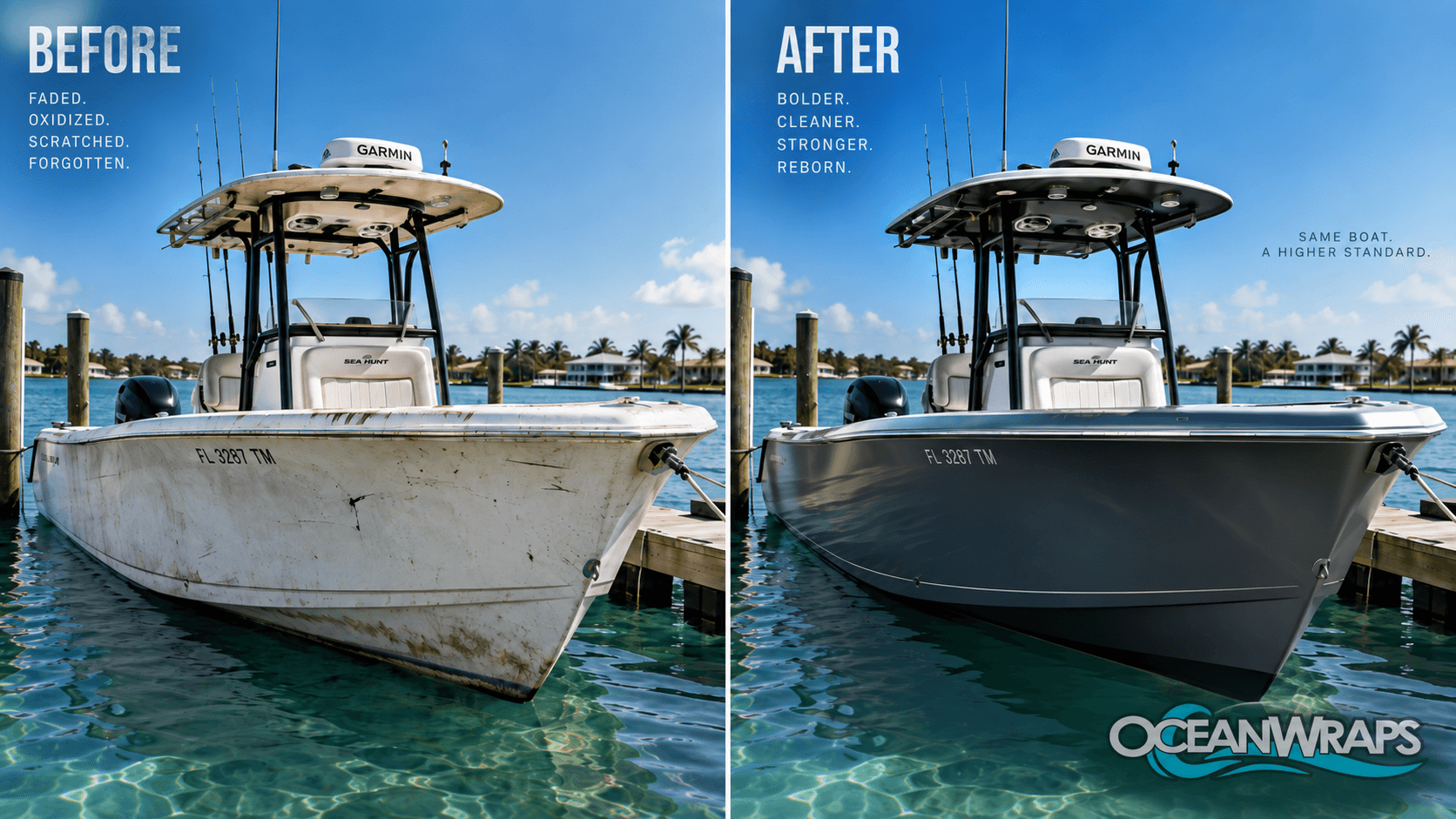
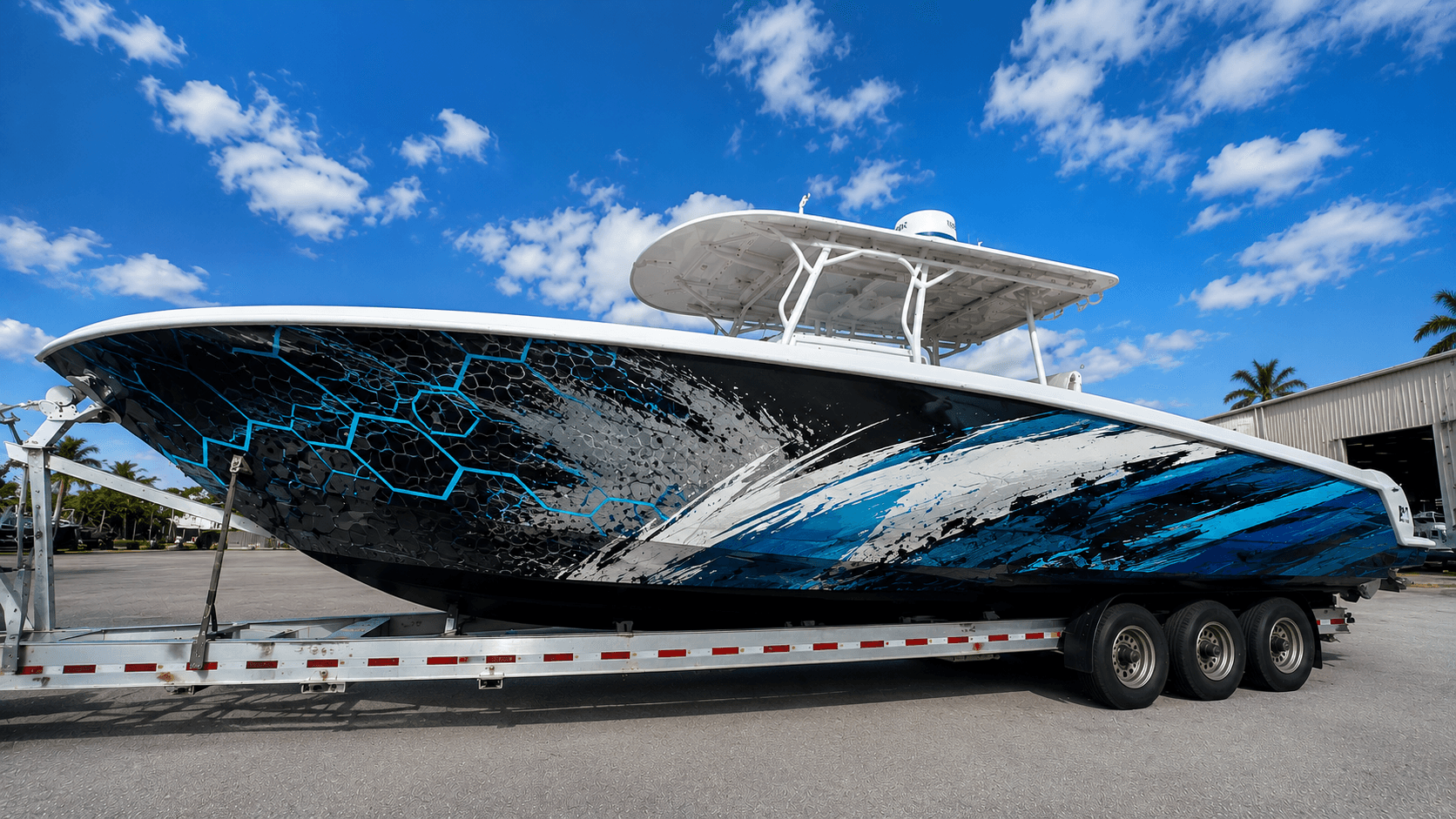
Boat wraps for commercial fishing operations, a vessel's exterior is a high-impact asset. It faces constant UV exposure, saltwater immersion, physical abrasion, and chemical contact. A professionally designed and installed boat wrap is a strategic tool that addresses two critical needs: applying a durable protective layer and establishing unmistakable fleet identification. Unlike generic signage or paint, a modern marine vinyl wrap is engineered for this environment, offering a balance of longevity and high-impact visual communication that withstands the rigors of daily commercial use.
Marine-grade cast vinyl with protective laminate is the standard for commercial durability, offering superior UV resistance and flexibility compared to calendared films.
Proper surface preparation, including dewaxing and degreasing the gelcoat, is the single most critical factor for long-term adhesion and wrap longevity.
Full hull wraps provide maximum protection and visual impact, while topside graphics focus on identification for vessels that frequently raft together in the marina.
Edge sealing and post-heating during installation are non-negotiable steps to prevent premature lifting and water ingress, especially on curved surfaces.
A well-executed wrap simplifies maintenance; regular washing with mild, non-abrasive cleaners preserves the graphics and underlying substrate.
Consistent fleet graphics across multiple vessels build brand recognition and can aid in regulatory identification and security.
Graphics on a charter boat and a commercial trawler serve different masters. The former prioritizes curb appeal; the latter requires functional resilience. The hull and topsides are subjected to relentless physical stress from dock lines, fishing gear, and debris. Fuel spills, fish oils, and intensive cleaning protocols demand chemical resistance. Furthermore, the graphics must remain legible and vibrant not just at the dock, but in low-light conditions at sea and from a distance. This dictates specific material choices and installation techniques that go far beyond typical decorative applications.
Why Vinyl Wrap Outperforms Paint for Fleet Applications#
While paint has its place, vinyl wrap offers distinct operational advantages for working fleets. Application is faster, meaning less vessel downtime. Complex graphics, logos, and regulatory markings are printed with precision and consistency across an entire fleet, ensuring uniform branding. The vinyl layer acts as a sacrificial barrier, protecting the original gelcoat from fading and minor abrasion. When the time comes for a rebrand or update, removal is significantly less labor-intensive than sanding and repainting, reducing long-term maintenance costs.
Cast vinyl is the required grade. It is manufactured with a slower casting process, resulting in a more stable, conformable, and durable film with longer-lasting polymers. It outperforms calendared vinyl in elongation and memory, allowing it to conform to complex hull curves and rivet lines without shrinking or lifting over time. Its inherent UV resistance is far superior.
After printing, a clear laminate is liquid-coated or laminated over the graphics. This layer is the workhorse, providing abrasion resistance, chemical resistance, and enhanced UV protection. It seals the printed inks and provides a uniform gloss or matte finish. The choice between gloss and matte is aesthetic and practical; gloss is easier to clean, while matte can better hide minor surface imperfections.
A durable wrap is the product of a meticulous, multi-stage process. At Ocean Wraps, each phase is handled with commercial endurance as the primary metric.
The substrate must be clean, dry, and contaminant-free. This involves a thorough wash, followed by dewaxing and degreasing with marine-specific solvents. Any existing failing paint or loose gelcoat must be repaired and sanded smooth. This step cannot be rushed, as adhesion failure always traces back to poor prep.
Graphics are designed for both impact and durability. Critical identification, like vessel names and numbers, is placed for maximum visibility. Digital templates are created, often using on-site measurements or photographs to account for unique hull curvature and hardware placement.
The design is printed on the cast vinyl using eco-solvent or latex inks for outdoor durability. It is then laminated. Large hull wraps are printed in manageable panels with strategic seams, often placed along natural hull lines or in less visible areas to facilitate installation.
Installers use slip solutions to position panels accurately. They systematically squeegee out fluid and air, working from the center outward. Complex curves require strategic relief cuts and careful stretching. The most critical phase is post-heating and edge sealing, where heat activates the adhesive and ensures all edges are fully bonded to prevent water intrusion.
Marina and Dock Rules: Confirm any restrictions on work being performed dockside, including power requirements and containment of application fluids.
Storage Post-Installation: Allow a 48-72 hour cure period before putting the vessel back in the water, especially in cooler or humid conditions, for optimal adhesion.
Wash Practices: Use soft cloths or brushes and mild, non-abrasive marine cleaners. Avoid pressure washers on direct, close-range settings, particularly on panel edges.
Surface Imperfections: A wrap will not bridge cracks or hide significant hull damage. These issues must be addressed in the preparation phase.
Long-Term Inspection: Periodically check high-wear areas like rub rails and waterlines for any signs of lifting, which can be spot-repaired if addressed early.
How long do commercial fishing boat wraps typically last?#
With professional-grade marine cast vinyl and laminate, expect a service life of 5 to 7 years, depending on operational intensity, geographic sun exposure, and maintenance. Harsh, year-round conditions in some fisheries may see a shorter lifespan, while seasonal use with proper care can extend it.
Can you wrap over existing paint or old graphics?#
Yes, but the existing coating must be firmly adhered. Loose, flaking, or chalky paint must be removed. Old vinyl graphics should be peeled off. The surface will then be cleaned and prepared as normal. Wrapping over a sound, stable substrate is standard practice.
Properly installed and removed, a vinyl wrap protects the gelcoat from UV fading and minor abrasion. Upon removal, any adhesive residue is cleaned with appropriate solvents. If the gelcoat was in good condition prior to wrapping, it should be unharmed, and often in better condition than adjacent unwrapped areas due to the protection offered.
What is the lead time for a full fleet graphics program?#
Lead time depends on the scale and design complexity. After design approval, production for a single vessel may take 1-2 weeks. For a multi-vessel fleet, a phased rollout is common to coordinate with vessel availability and minimize downtime. Planning several months ahead for a full fleet update is advisable.
A cohesive fleet identity, executed through durable boat wraps, is more than just branding. It projects professionalism, aids in at-a-glance identification for buyers and regulators, and can foster crew pride. The investment is measured not just in the initial application, but in the years of reduced maintenance and sustained visual impact it provides. Selecting a provider experienced with the specific demands of working vessels ensures the graphics are built and applied as a marine-grade component, not just a decoration.
New Boat Prices Are Skyrocketing — Here's the Smarter Move Boat Owners Are Making
New boat prices are at record highs. Here's why more owners are choosing marine vinyl wraps to refresh their boat's look and protect the hull, without the cost of buying new
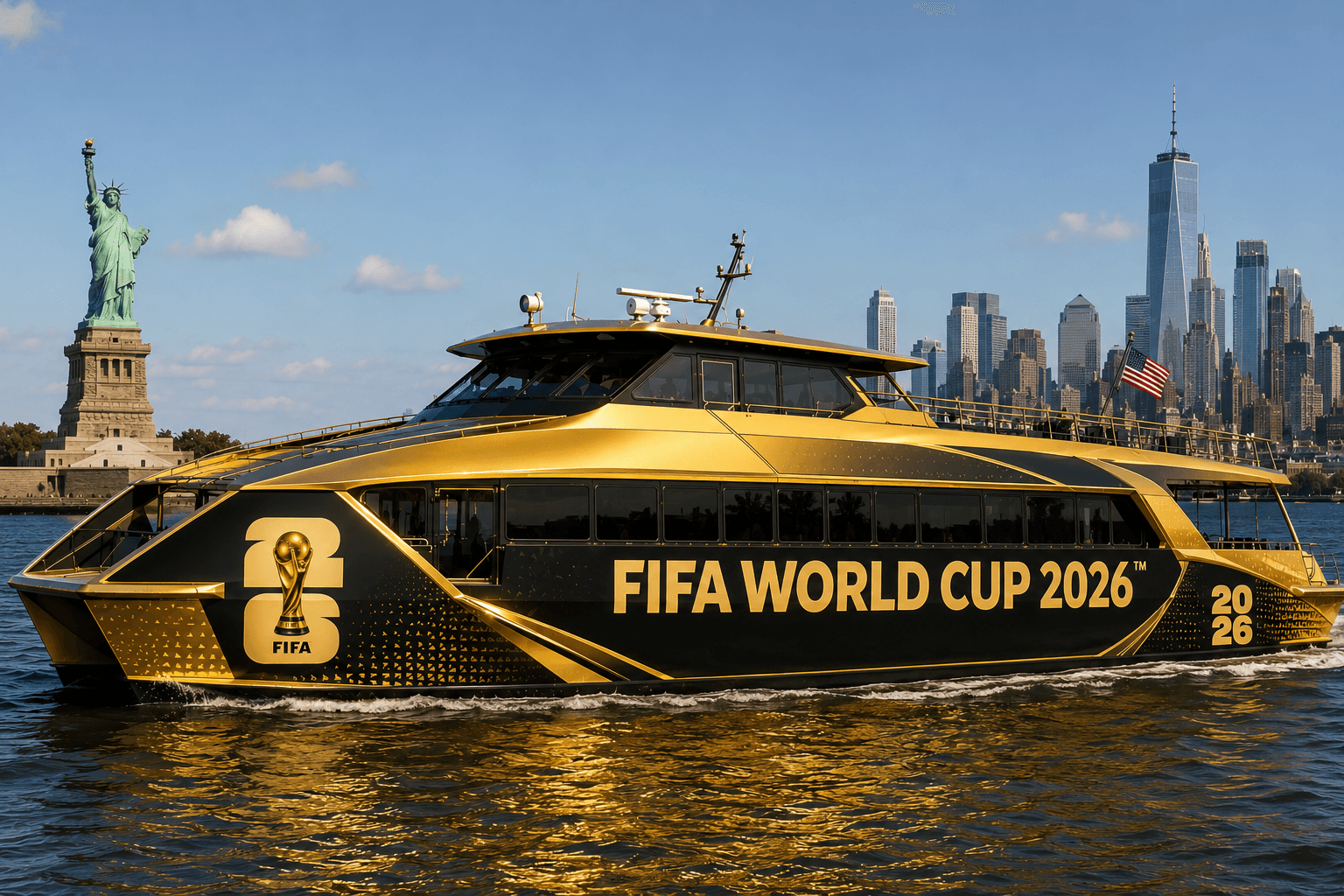
Get your boat ready for FIFA World Cup 2026 with a luxury custom wrap. Stand out on the water with premium marine graphics, gold finishes, and championship-inspired designs.
New Boat Prices Are Skyrocketing — Here's the Smarter Move Boat Owners Are Making
New boat prices are at record highs. Here's why more owners are choosing marine vinyl wraps to refresh their boat's look and protect the hull, without the cost of buying new
Boat Wraps Services
Boat Wrap Designs by Boat Type: What Actually Works on Your Vessel
A wrap that's perfect for a sportfishing boat chasing marlin offshore would look completely out of place on a family pontoon.
Boat Wraps Services
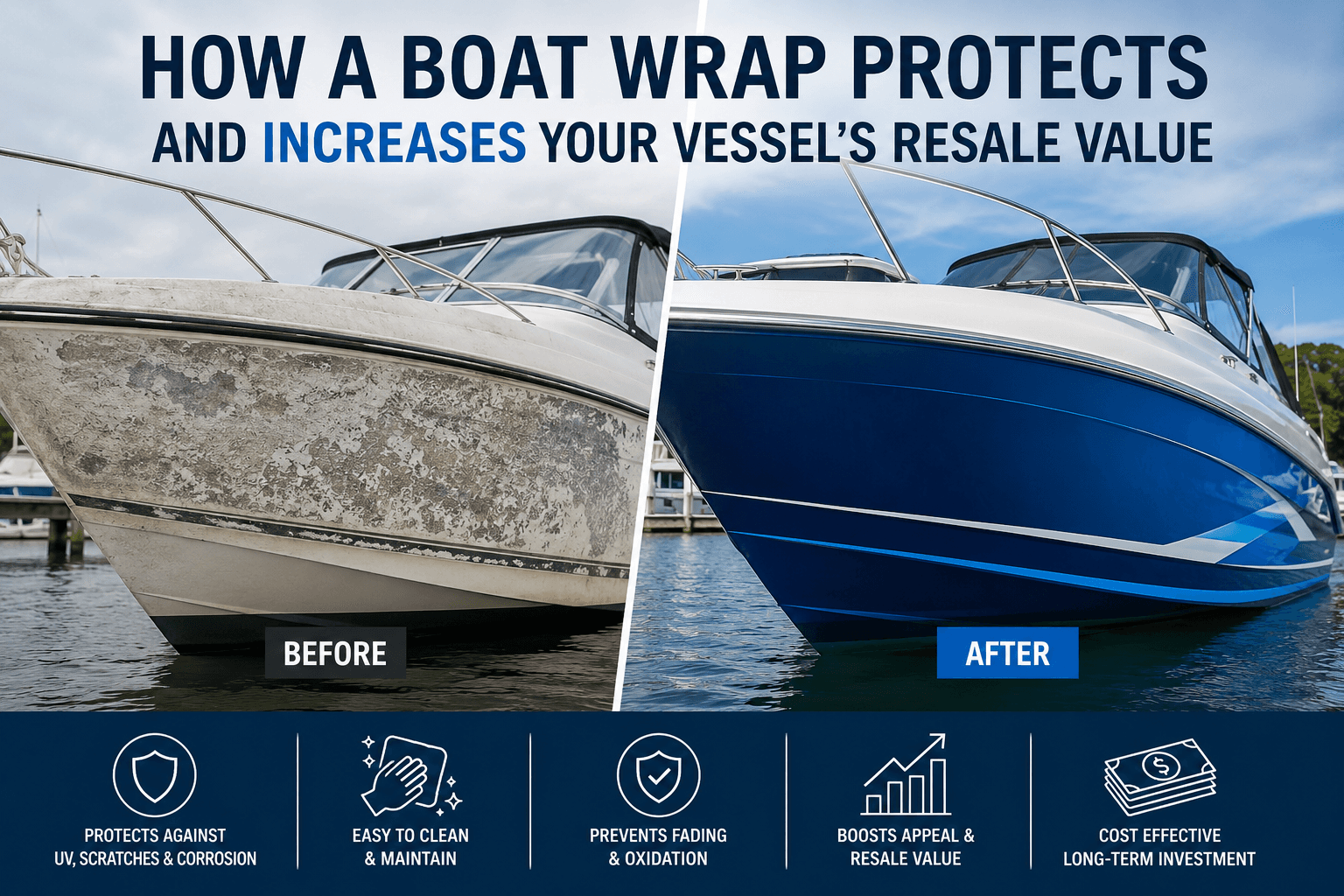
How a Boat Wrap Protects and Increases Your Vessel's Resale Value
How a Boat Wrap Can Protect and Increase Your Vessel's Resale Value
Boat Wraps Services
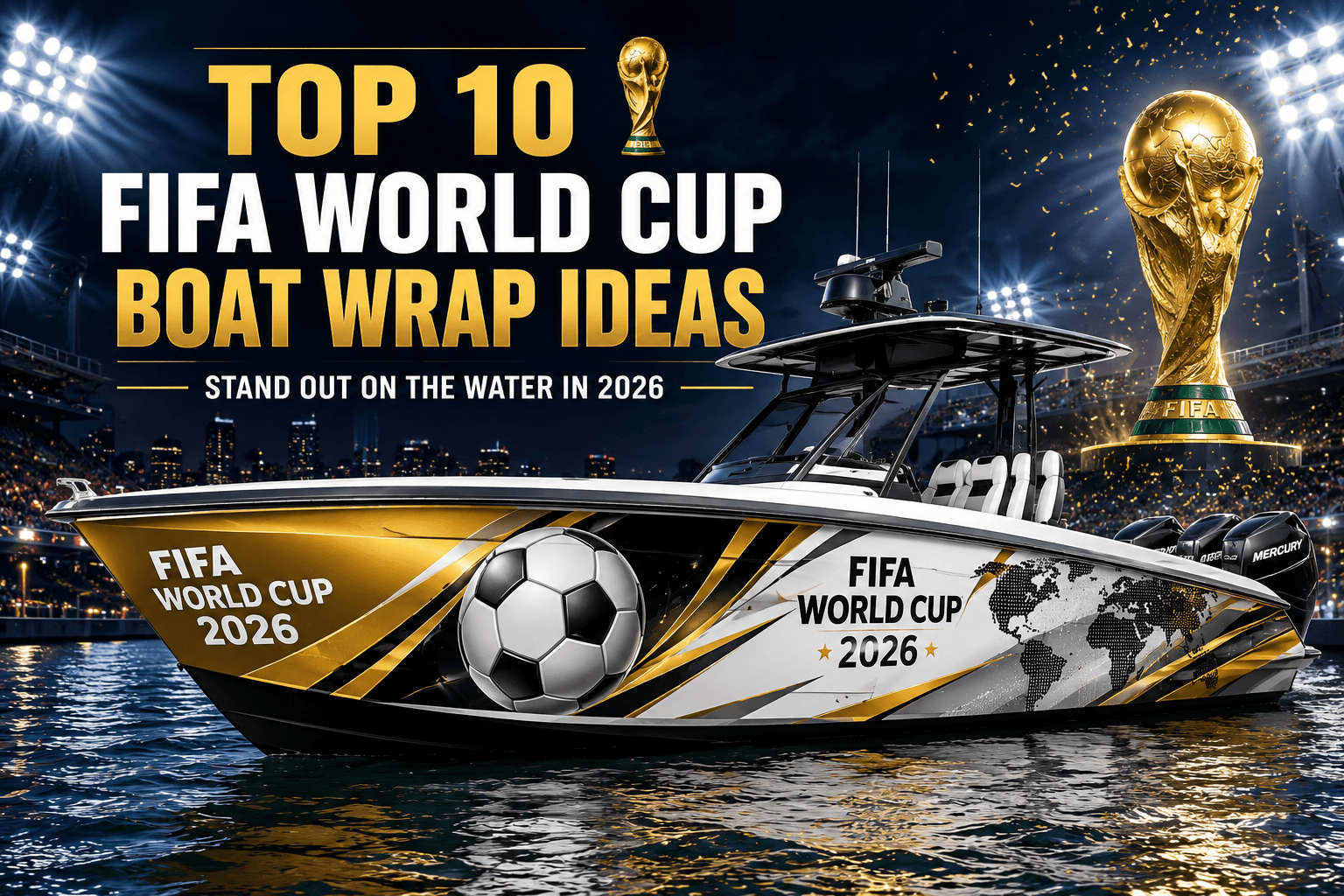
Top 10 FIFA World Cup Boat Wrap Ideas to Try This Season
If you already know you want your boat wrapped for World Cup season, the next question is which design actually fits your vessel.
Boat Wraps Services
Custom Boat Wraps for FIFA World Cup 2026
Get your boat ready for FIFA World Cup 2026 with a luxury custom wrap. Stand out on the water with premium marine graphics, gold finishes, and championship-inspired designs.
Boat Wraps Services
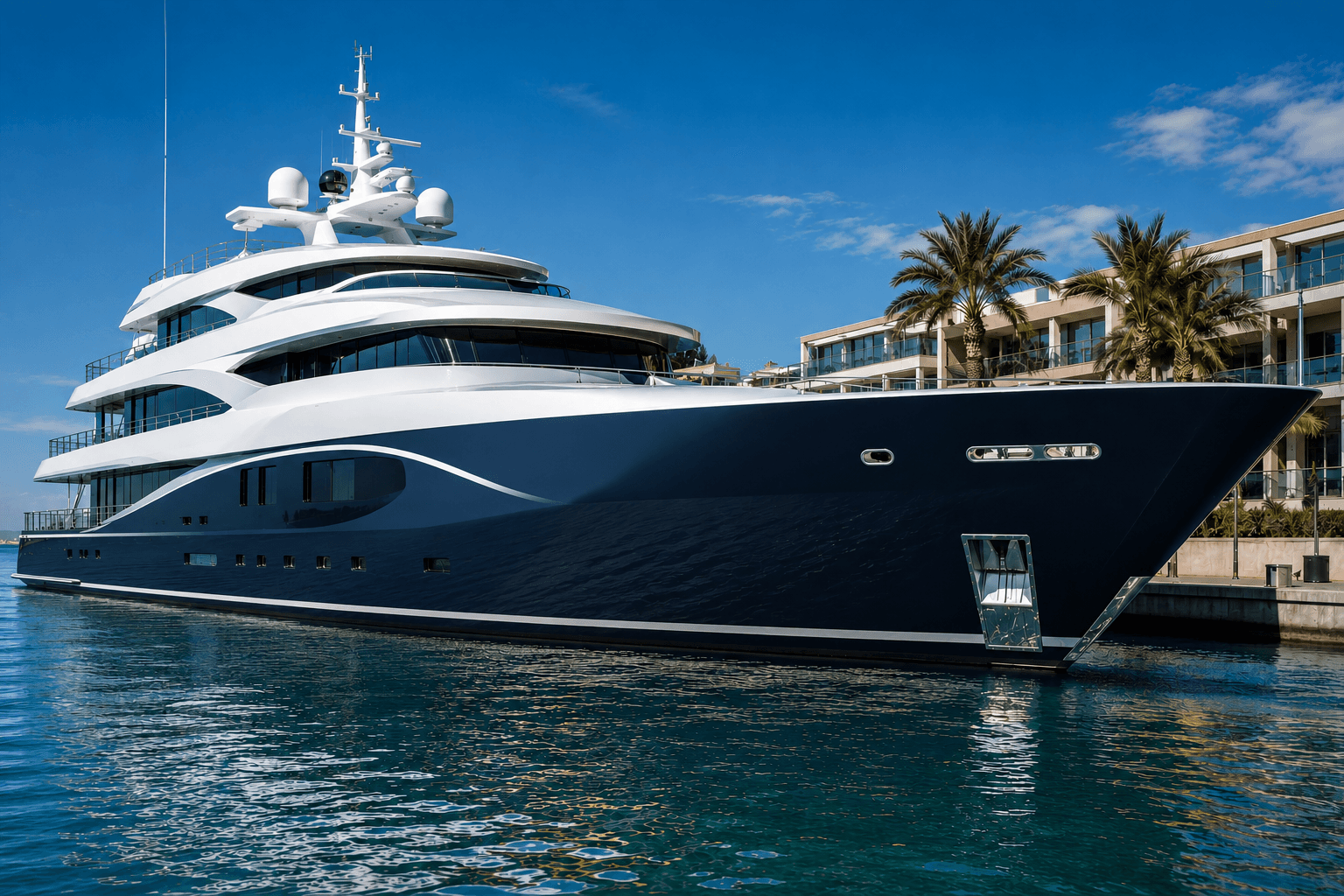
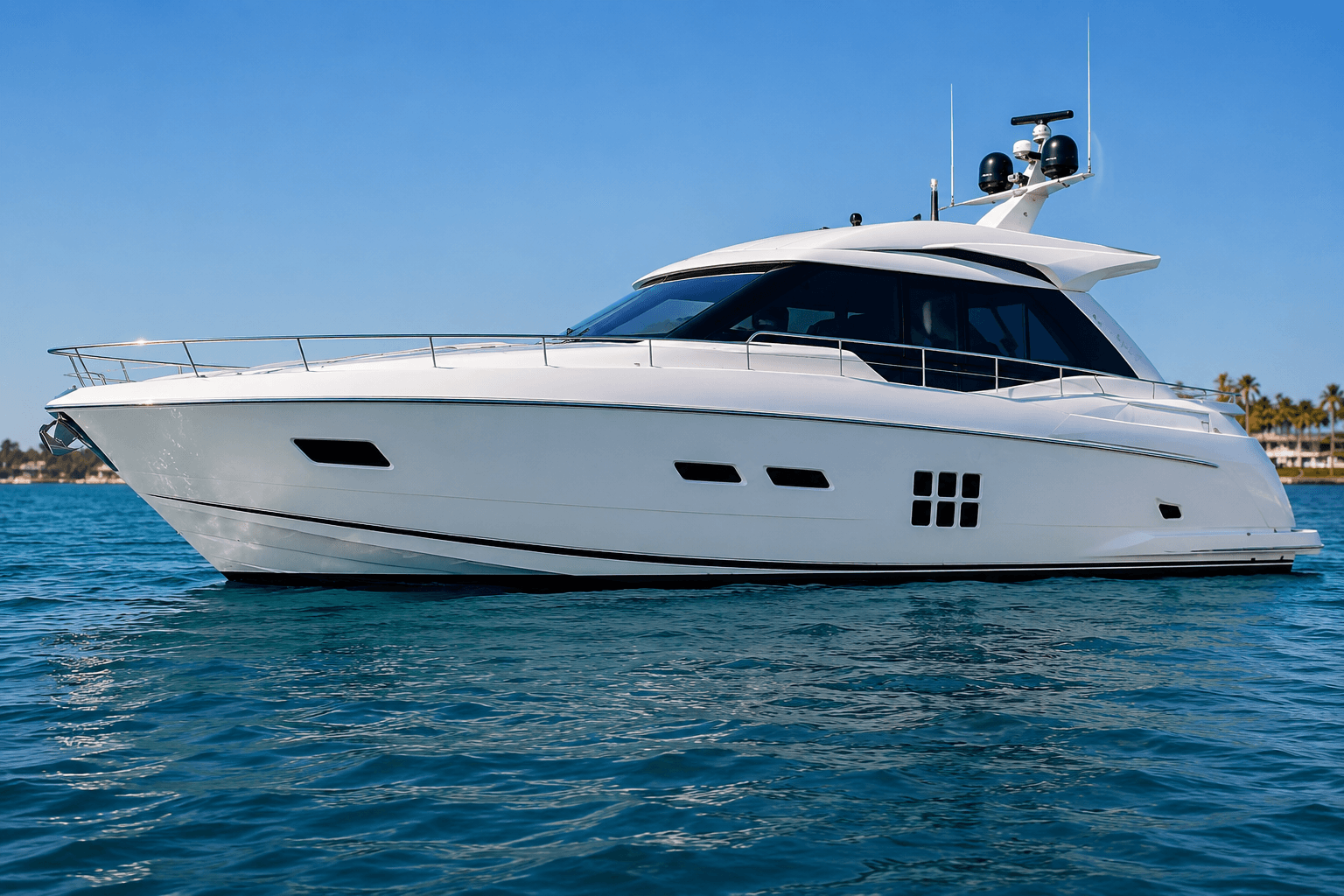
Luxury Yacht Wraps: The Complete Guide to Finishes, Styles, and Custom Marine Vinyl
Ocean Wraps works with luxury yacht and cruiser owners who want professional results, durable materials, and a finish that holds up on the water.
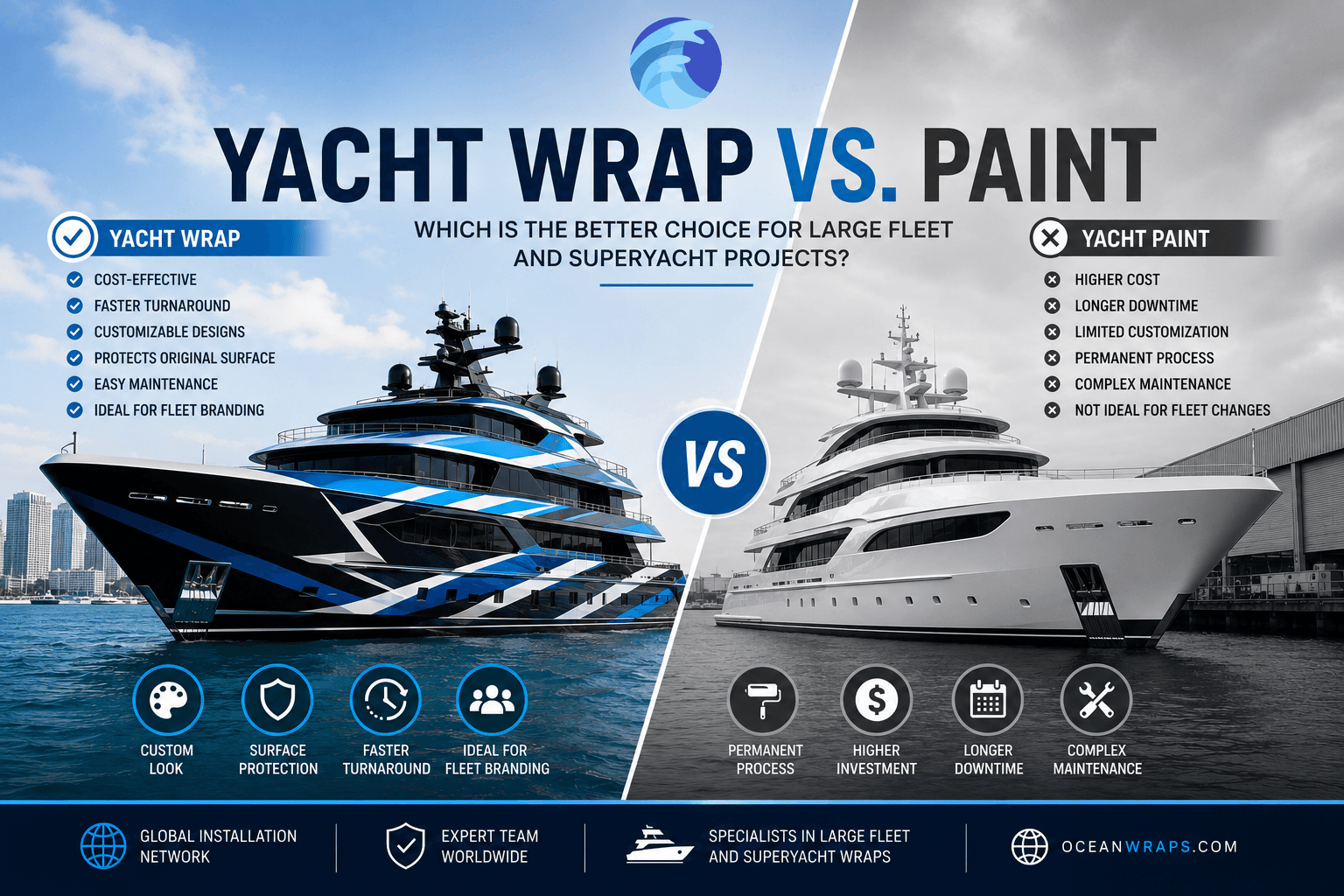
Yacht Wrap vs. Paint for Large Fleet & Superyacht Projects
Deciding between yacht wrap and paint for your fleet or superyacht? We break down real costs, downtime, durability, and which option actually makes sense at scale
How Much Does a Boat Wrap Cost? Complete Pricing Guide for 2026
Boat wrap prices vary widely depending on size, materials, and installer quality. Here's what a professional wrap actually costs in 2026 — and what to watch out for.
Luxury Yacht Wraps: The Complete Guide to Finishes, Styles, and Custom Marine Vinyl
Ocean Wraps works with luxury yacht and cruiser owners who want professional results, durable materials, and a finish that holds up on the water.
Boat Wraps Services
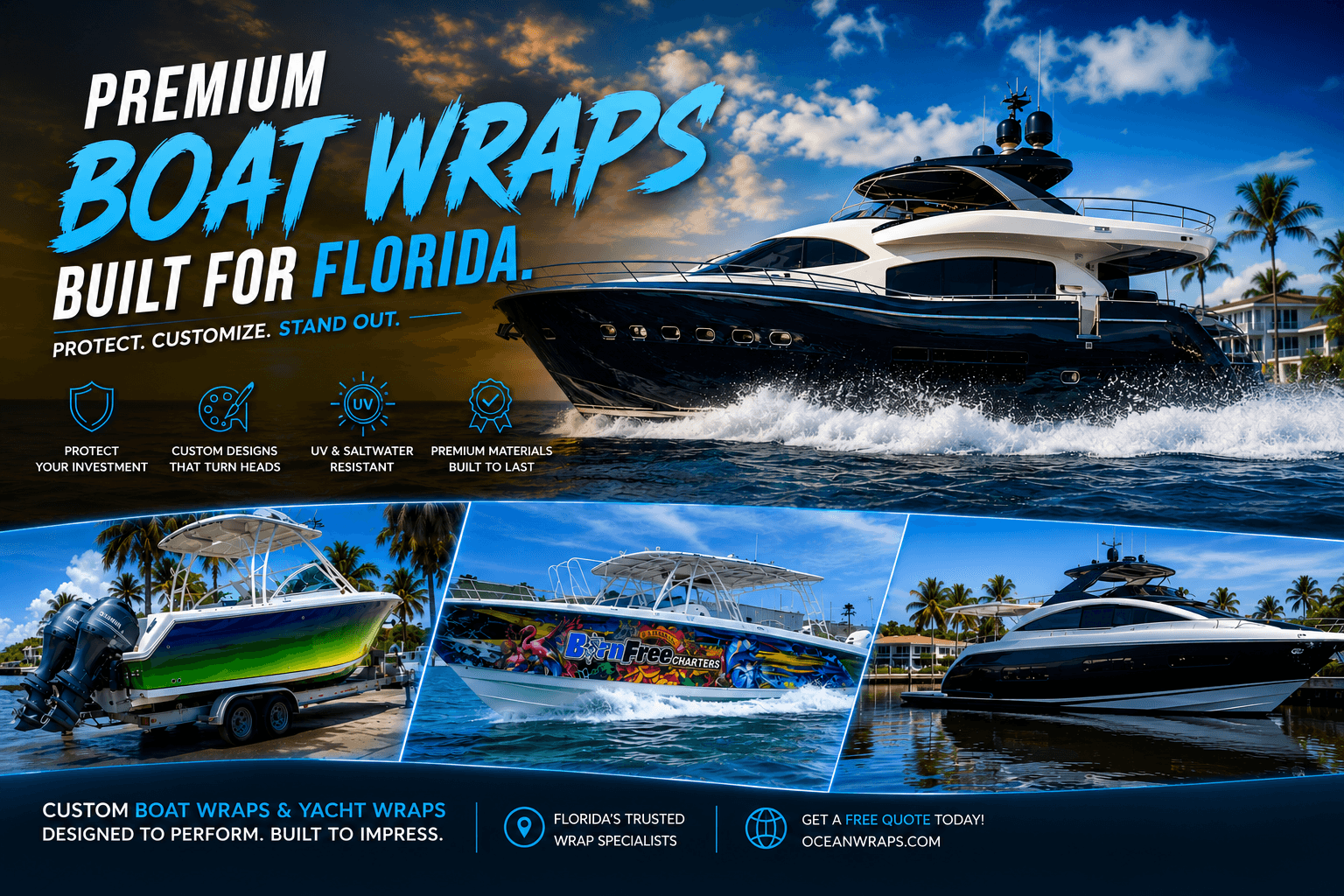
Why Florida Boat Owners Are Choosing Vinyl Boat Wraps in 2026
Discover why Florida boat owners are switching from paint to vinyl boat wraps. Learn the benefits, costs, protection, and customization options.
Guides
Boat Wraps vs Paint: 5 Reasons Why Wraps Win
Boat wraps cost less, install faster, and protect your gel coat better than traditional paint. Here's why so many boat owners are making the switch.
Guides
Yacht Wrap vs. Paint for Large Fleet & Superyacht Projects
Deciding between yacht wrap and paint for your fleet or superyacht? We break down real costs, downtime, durability, and which option actually makes sense at scale
Guides
How Much Does a Boat Wrap Cost? Complete Pricing Guide for 2026
Boat wrap prices vary widely depending on size, materials, and installer quality. Here's what a professional wrap actually costs in 2026 — and what to watch out for.