
Introduction: Protecting Your Investment#
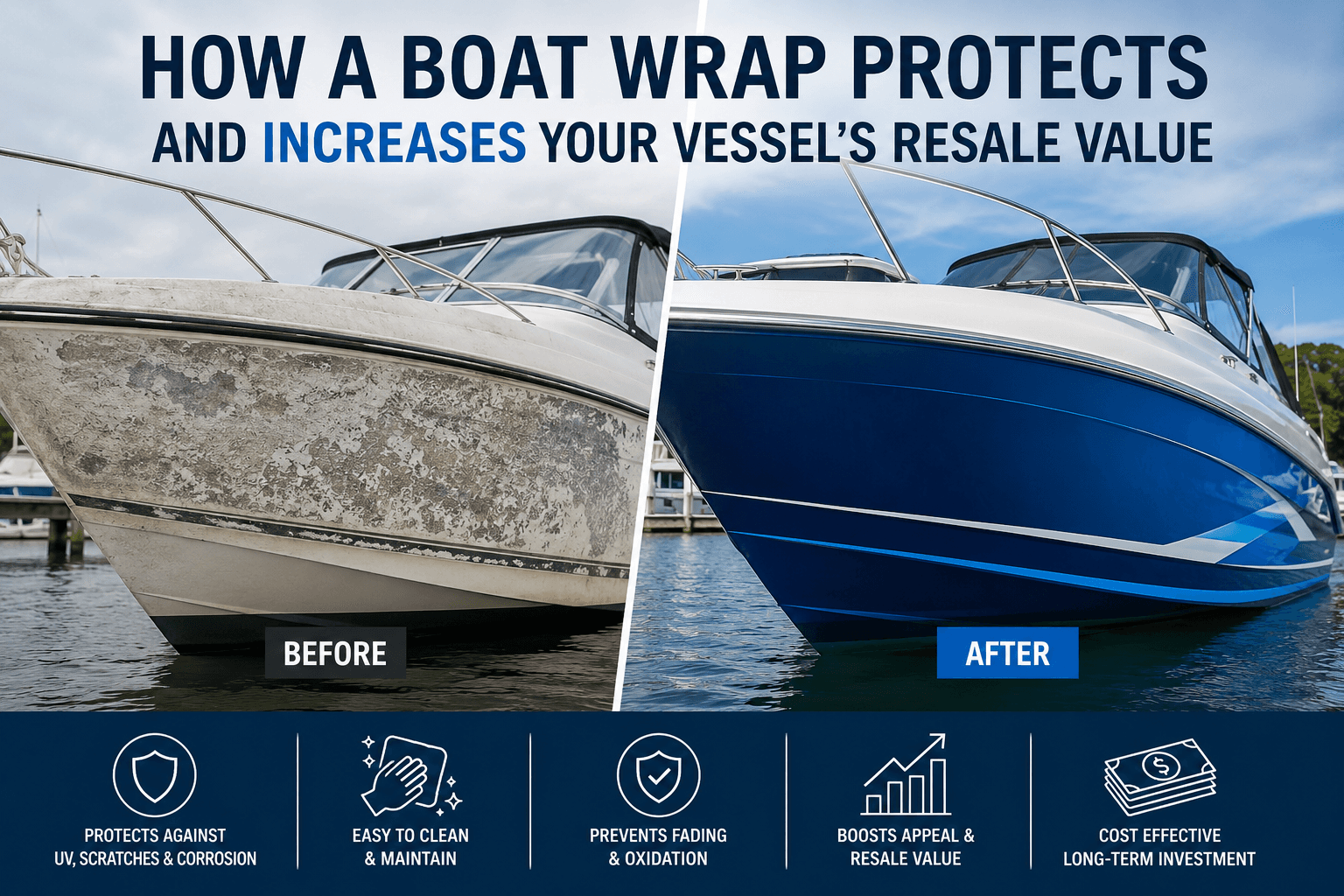
A professionally installed boat wrap from Ocean Wraps does more than just transform your vessel's look; it provides a durable, protective layer for your gel coat. Like any high-performance marine product, its longevity is directly influenced by how you care for it. By following a consistent and proper maintenance routine, you can ensure your graphics stay vibrant, your adhesive remains strong, and your investment pays off for many seasons to come.
The Fundamentals of Routine Cleaning#
Regular cleaning is the single most important factor in preserving your wrap's appearance and integrity. Saltwater, bird droppings, fuel spills, and environmental pollutants can degrade the vinyl's top coat and pigments if left unattended.
Recommended Cleaning Process#
- Rinse First: Always start with a thorough rinse using fresh, cool water to remove loose dirt and salt crystals that can scratch the surface during washing.
- Use Proper Solutions: Wash with a mild, marine-grade soap or a cleaner specifically formulated for vinyl graphics. Avoid household detergents, abrasive cleaners, waxes, or harsh chemicals.
- Soft Touch: Use a soft microfiber cloth, sponge, or a dedicated soft-bristle boat brush. Gently wash in a back-and-forth motion, not circles.
- Rinse Thoroughly: Remove all soap residue with fresh water.
- Dry Gently: Use a clean, soft microfiber towel to dry the surface or allow it to air dry. This prevents water spotting.
What to Avoid During Cleaning#
Never use stiff brushes, scouring pads, or pressure washers with a narrow, high-pressure tip. Avoid direct high-pressure streams on wrap edges and seams. Solvents like acetone, gasoline, or strong bug and tar removers can permanently damage the vinyl's finish and should never be used.
Strategic Storage and Mooring#
Optimal Storage Conditions#
When your boat is not in use, storage practices play a critical role. Whenever possible, store your vessel under a cover or in a covered slip. If using a boat cover, ensure it is a breathable, soft material and that it does not chafe against the wrap surface. A well-fitted, Ocean Wraps-recommended cover is ideal. Prolonged direct UV exposure is a wrap's primary environmental enemy, so mitigation is key.
Mooring and Docking Considerations#
Use adequate fenders to prevent constant rubbing against docks or pilings. Be mindful of lines and cables that may scrape against wrapped surfaces. In areas with heavy bird activity, consider using deterrents, as bird droppings are highly acidic and can stain or etch the vinyl if not cleaned promptly.
Handling Repairs and Damage#
Even with the best care, minor damage can occur. Addressing issues quickly prevents them from worsening.
Dealing with Scratches and Scuffs#
Light surface scuffs can often be minimized with careful cleaning. For deeper scratches that have not penetrated the vinyl layer, a professional may apply a color-matched liquid laminate. Do not attempt to buff or compound a vinyl wrap as you would gel coat, as this will remove the protective top layer.
Managing Lifting Edges and Bubbles#
If you notice a small edge beginning to lift or a bubble forming, avoid pulling on it. Contact a professional installer immediately. They have the tools and techniques to reactivate the adhesive and reseal the area properly, preventing further lifting.
Seasonal and Long-Term Maintenance#
A seasonal check-up is a wise habit. As of February 18, 2026, industry best practices recommend a thorough inspection at the start and end of your primary boating season. Look for any signs of lifting, fading in specific areas, or physical damage. This proactive approach allows for minor repairs before they become major issues.
The Role of Protective Coatings#
Some owners opt for a marine-grade ceramic coating or a vinyl-specific protectant applied by a professional after installation. These can provide an additional barrier against UV rays, contaminants, and make cleaning easier. Consult with your installer to see if this is a recommended option for your specific wrap material and usage.
Frequently Asked Questions (FAQ)#
How often should I clean my boat wrap?#
You should rinse your wrap with fresh water after every saltwater use. A full wash with appropriate soap should be performed every 1-2 weeks during active boating season, and immediately after contact with pollutants like fuel, oil, or bird droppings.
Can I wax my boat wrap?#
No, traditional paste or liquid waxes are not formulated for vinyl wraps and can cause hazing or damage to the top coat. Only use products specifically labeled as safe for vinyl graphics or vehicle wraps. Your installer can recommend suitable products.
What is the expected lifespan of a well-maintained wrap?#
While lifespan varies based on material quality, climate, and usage, a premium marine-grade wrap that receives consistent, proper care can typically retain its excellent appearance for 5 to 7 years, or even longer in ideal conditions with protective storage.
Is it safe to use a pressure washer?#
Use extreme caution. Only use a wide-angle (40-degree) tip, keep the nozzle at least 12-18 inches from the surface, and never aim directly at edges, seams, or any area where the vinyl may be lifting. A gentle rinse setting is always preferable.
Conclusion: Care for Long-Lasting Beauty#
Your boat wrap is designed for the marine environment, but its resilience is maximized by your stewardship. Simple, consistent habits—gentle cleaning, mindful storage, and prompt attention to minor issues—will pay enormous dividends. By following this guide, you ensure that the vibrant design and glossy finish that first caught your eye will continue to turn heads and protect your hull for countless adventures ahead.
Proper maintenance is the key to preserving the vibrant look and protective quality of your marine graphics investment.