Top Boat Wraps Caribbean: A Sustainable Defense Against Biofouling
Explore premium boat wraps in the Caribbean for durable, sustainable hull protection against intense UV, salt, and biofouling. Expert installation for the marin
Last updated March 15, 2026
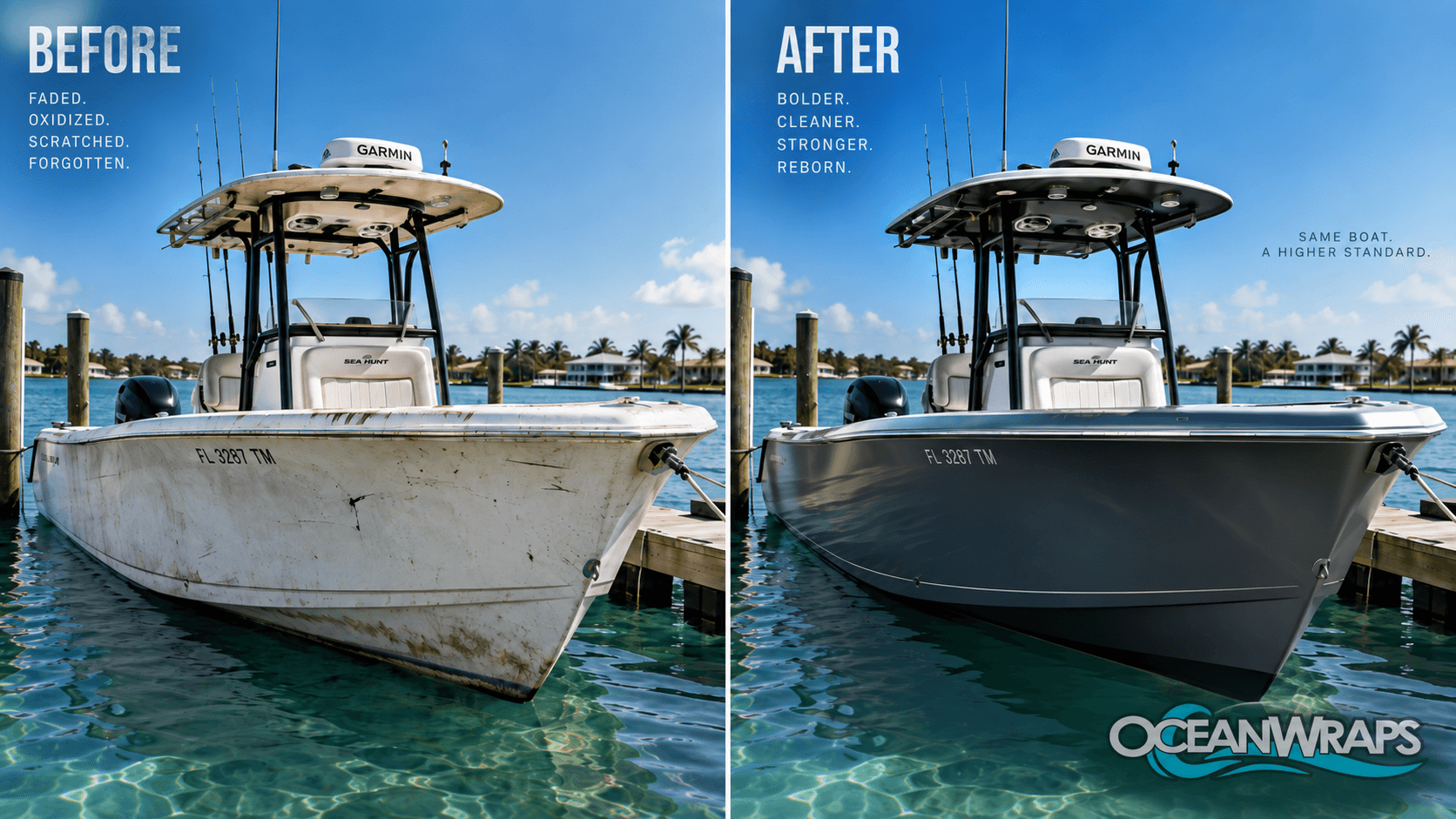
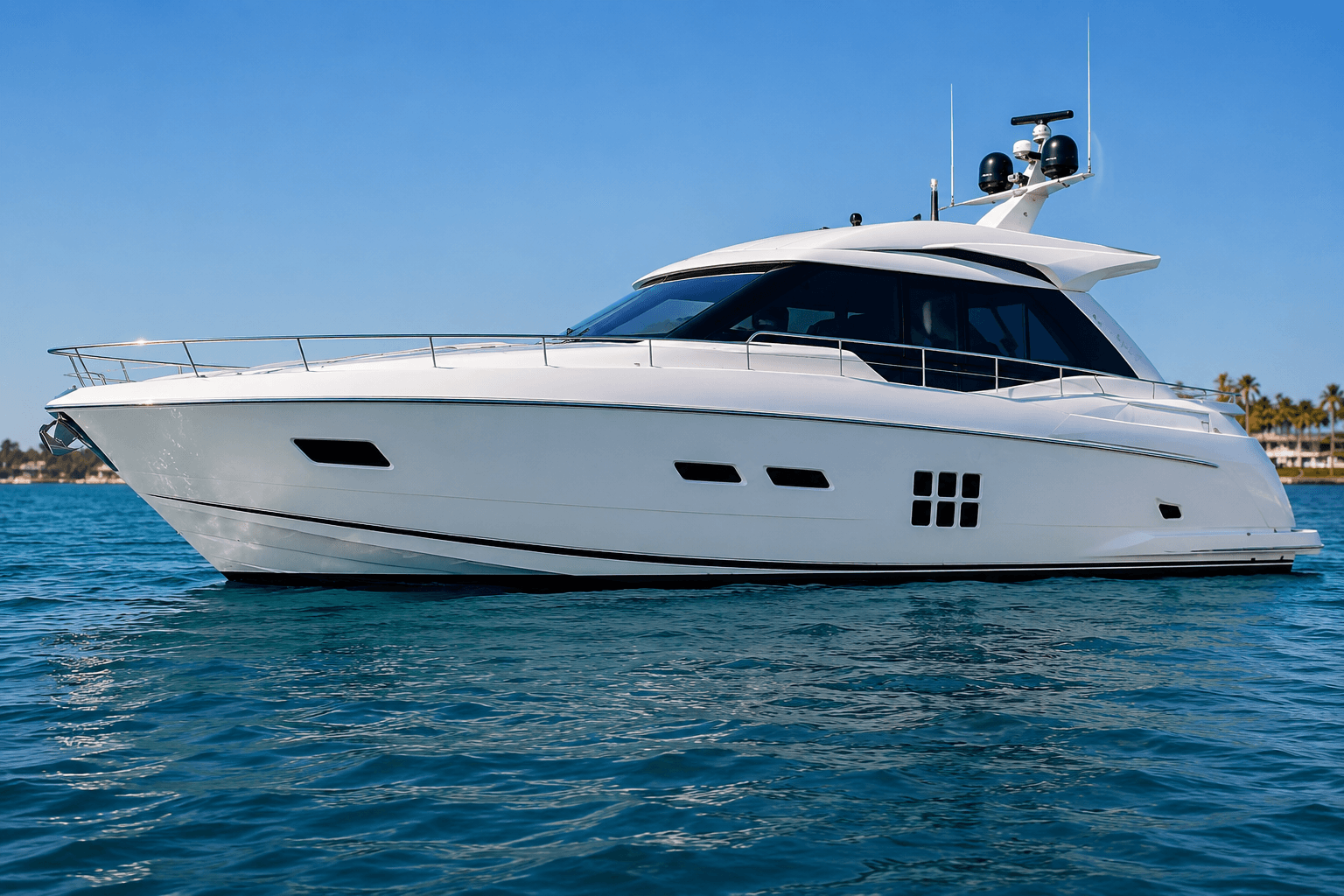
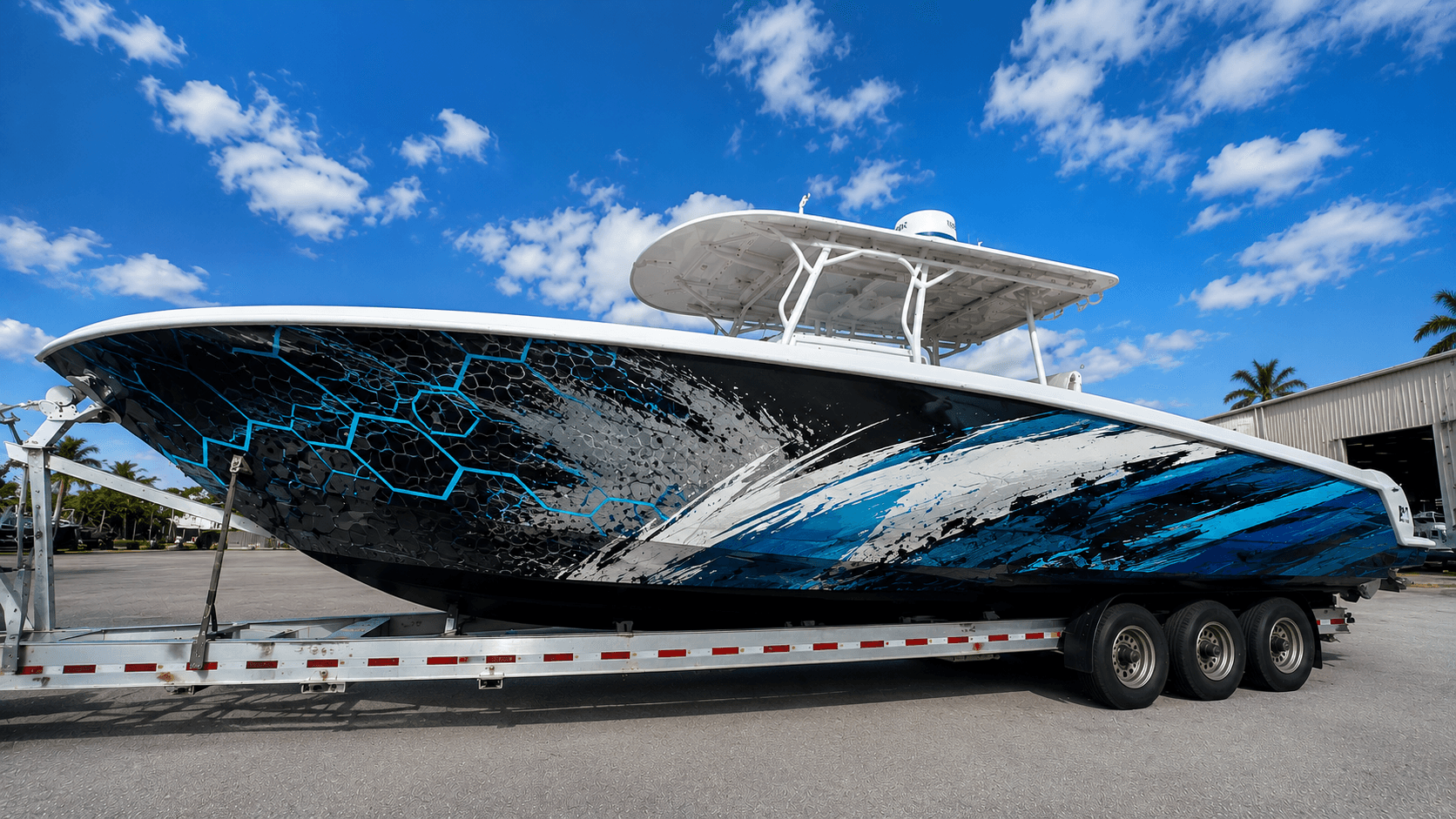
Boat wraps for boat owners navigating the pristine waters of the Caribbean, protecting your vessel is synonymous with protecting the marine environment. The region's intense sun, warm saline waters, and rich biodiversity create a perfect storm for aggressive biofouling, which damages hulls and threatens fragile coral ecosystems. A professionally installed boat wrap is not merely a cosmetic upgrade; it is a strategic, sustainable defense system. This advanced solution provides a durable, non-toxic barrier that combats fouling organisms, preserves gelcoat, and maintains performance, all while offering unparalleled graphic customization. Understanding the unique demands of the Caribbean marine climate is essential for selecting the right protection for your yacht, sportfish, or catamaran.
Boat Wraps Overview: Boat Wraps in the Caribbean: A Sustainable Defense Against C#
Professional boat wraps act as a sustainable, non-toxic physical barrier against biofouling, reducing the need for harmful bottom paints that can damage coral reefs.
Premium marine-grade vinyl with enhanced UV inhibitors is non-negotiable for Caribbean conditions, where solar radiation degrades standard materials rapidly.
Expert surface preparation and edge sealing are critical for longevity in high-salinity environments, preventing moisture intrusion and lift at the waterline.
A certified installation by a team like OceanWraps accounts for complex hull curvature and local marina rules, ensuring a flawless, durable finish.
Superior graphics and branding potential offer commercial vessels a significant market advantage in competitive charter hubs like the Virgin Islands or The Bahamas.
Proper post-installation care, including specific wash practices and storage considerations, maximizes the wrap's lifespan and protective performance.
The Caribbean Challenge: Climate, Culture, and Conservation#
The Caribbean boating experience is unparalleled, but it imposes unique stresses on your vessel. UV exposure here is among the most intense on the planet, breaking down unprotected surfaces and fading colors. The warm, nutrient-rich saltwater accelerates the growth of algae, barnacles, and other organisms on your hull. This biofouling increases drag and fuel consumption, but more critically, when boats travel between reefs, these organisms can introduce invasive species and diseases to vulnerable coral. Local environmental regulations are increasingly stringent, discouraging traditional copper-based antifouling paints. A high-quality vinyl wrap addresses all these issues, providing a slick, non-porous surface that is far more resistant to fouling attachment and is completely inert in the marine environment.
Why Professional Installation is Critical for Island Conditions#
A DIY wrap or a job by an uncertified installer is a high-risk venture in the Caribbean. The combination of heat, humidity, and wind during application requires precise technique and climate-controlled conditions often only found in professional bay facilities. An expert understands how to prepare older gelcoat, which may be chalked or oxidized from years of sun exposure, to ensure perfect adhesion. They meticulously seal every edge and overlap, particularly around thru-hulls, rudders, and keels, to prevent saltwater from penetrating behind the film. This level of detail, as practiced by leading specialists like OceanWraps, is what separates a multi-year investment from a costly, short-lived problem.
The success of a boat wrap in a demanding environment hinges on a meticulous, multi-stage process. Each step requires professional expertise to ensure durability and performance.
The hull and topside surfaces must be immaculate, free of contaminants, wax, and oxidation. This often involves a multi-step compounding and polishing process. Simultaneously, graphics are engineered digitally, accounting for hull curvature and specific vessel dimensions to avoid distortion. For commercial operators in ports like Fort Lauderdale or Simpson Bay, this phase is crucial for creating impactful, brand-accurate visuals.
Using specialized tools and techniques, installers methodically apply the vinyl, working out air and ensuring a seamless bond over complex curves. The use of post-heating techniques and precision trimming is essential. The final stage involves a thorough inspection and the application of a premium marine laminate, which adds an extra layer of protection against abrasion and UV rays, a critical step for Caribbean-based vessels.
Not all vinyl is created equal for marine use. The only appropriate choice is premium cast vinyl specifically formulated for marine environments. This material possesses superior conformability to handle the compound curves of a hull and exceptional memory to resist shrinking and lifting. It is paired with aggressive, long-lasting adhesive systems. A protective laminate is then applied over the printed graphics. This laminate is the workhorse, providing the scratch resistance, chemical resistance, and additional UV protection that defines the wrap's longevity. Gloss, matte, and textured finishes are available, each offering a distinct aesthetic while maintaining the same protective qualities.
Beyond protection, a boat wrap delivers tangible benefits for the regional boater. For charter fleets and dive operators, vibrant, professional graphics are a powerful marketing tool that stands out in crowded anchorages. The wrap safeguards the underlying gelcoat from etching and fading, preserving the vessel's resale value. Furthermore, when it is time for a change, removal is straightforward and does not damage the original surface, unlike repainting. This makes it an adaptable and cost-effective long-term strategy for vessel management in the islands.
With professional installation and proper care, a premium marine wrap can last 5 to 7 years in the Caribbean. The intense UV is the primary limiting factor. A certified installer like OceanWraps uses materials with the highest UV inhibitor ratings and protective laminates specifically designed to extend lifespan in tropical zones.
Can a wrap be applied over existing bottom paint?#
No. For a permanent, reliable application, all existing antifouling paint must be completely removed. The hull surface must be bare, clean gelcoat or a compatible primer. This ensures the vinyl adhesive bonds directly to a stable substrate, preventing failure due to the paint breaking down or leaching biocides underneath the wrap.
A wrap creates an extremely smooth, non-porous surface that is significantly more difficult for organisms to adhere to compared to porous gelcoat or painted surfaces. While it is not a 100% foolproof antifouling solution, it drastically reduces growth rates and makes cleaning much easier and less abrasive to the underlying hull, supporting a more sustainable boating practice.
What is the cost comparison to a traditional paint job?#
A professional wrap is a competitive investment compared to a high-quality marine paint job, especially when considering complex graphics. The value proposition includes shorter downtime, no noxious fumes, unparalleled design flexibility, and the preservation of the original gelcoat. For a detailed analysis based on your vessel and location, consulting with a proven expert is recommended.
New Boat Prices Are Skyrocketing — Here's the Smarter Move Boat Owners Are Making
New boat prices are at record highs. Here's why more owners are choosing marine vinyl wraps to refresh their boat's look and protect the hull, without the cost of buying new
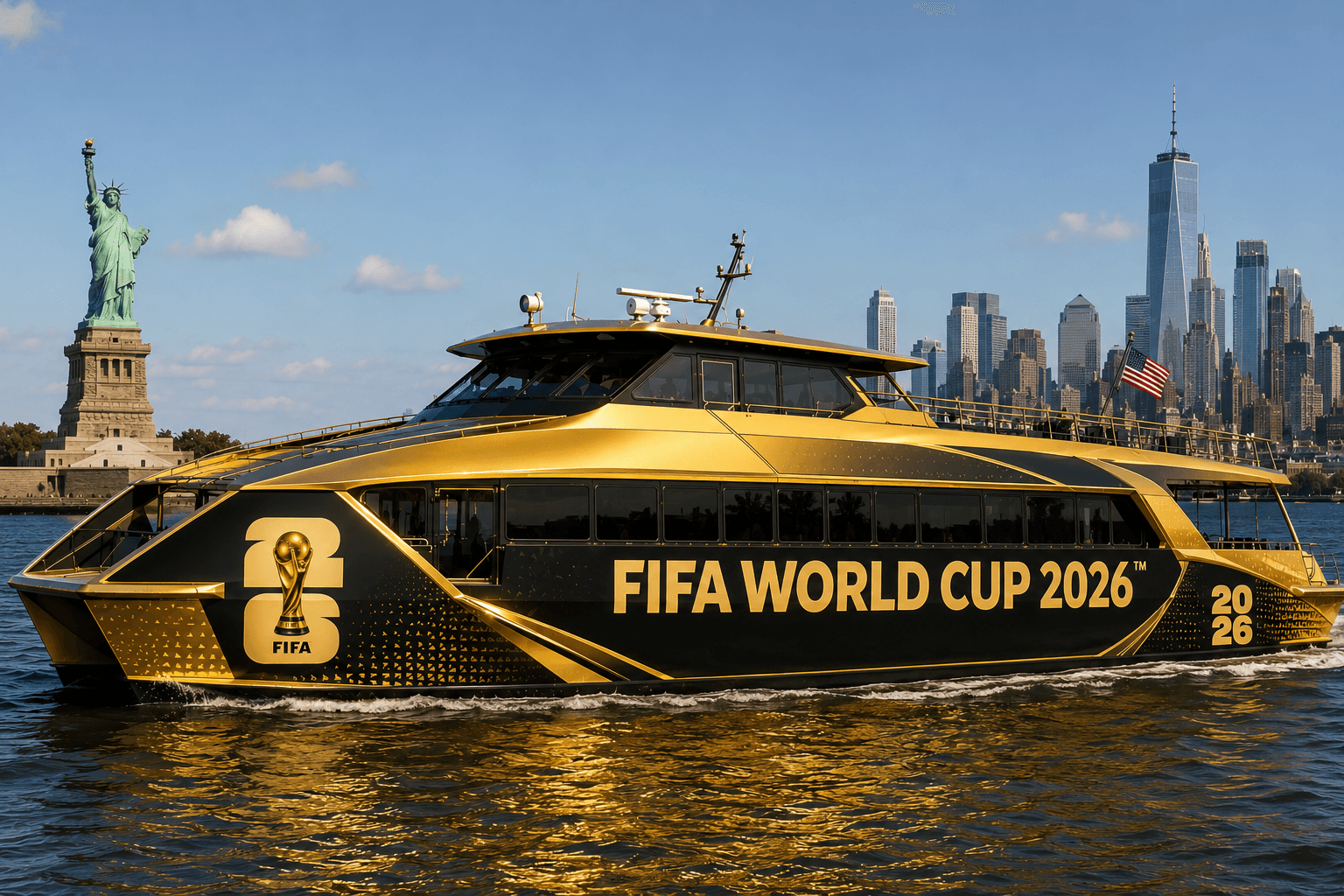
Get your boat ready for FIFA World Cup 2026 with a luxury custom wrap. Stand out on the water with premium marine graphics, gold finishes, and championship-inspired designs.
New Boat Prices Are Skyrocketing — Here's the Smarter Move Boat Owners Are Making
New boat prices are at record highs. Here's why more owners are choosing marine vinyl wraps to refresh their boat's look and protect the hull, without the cost of buying new
Boat Wraps Services
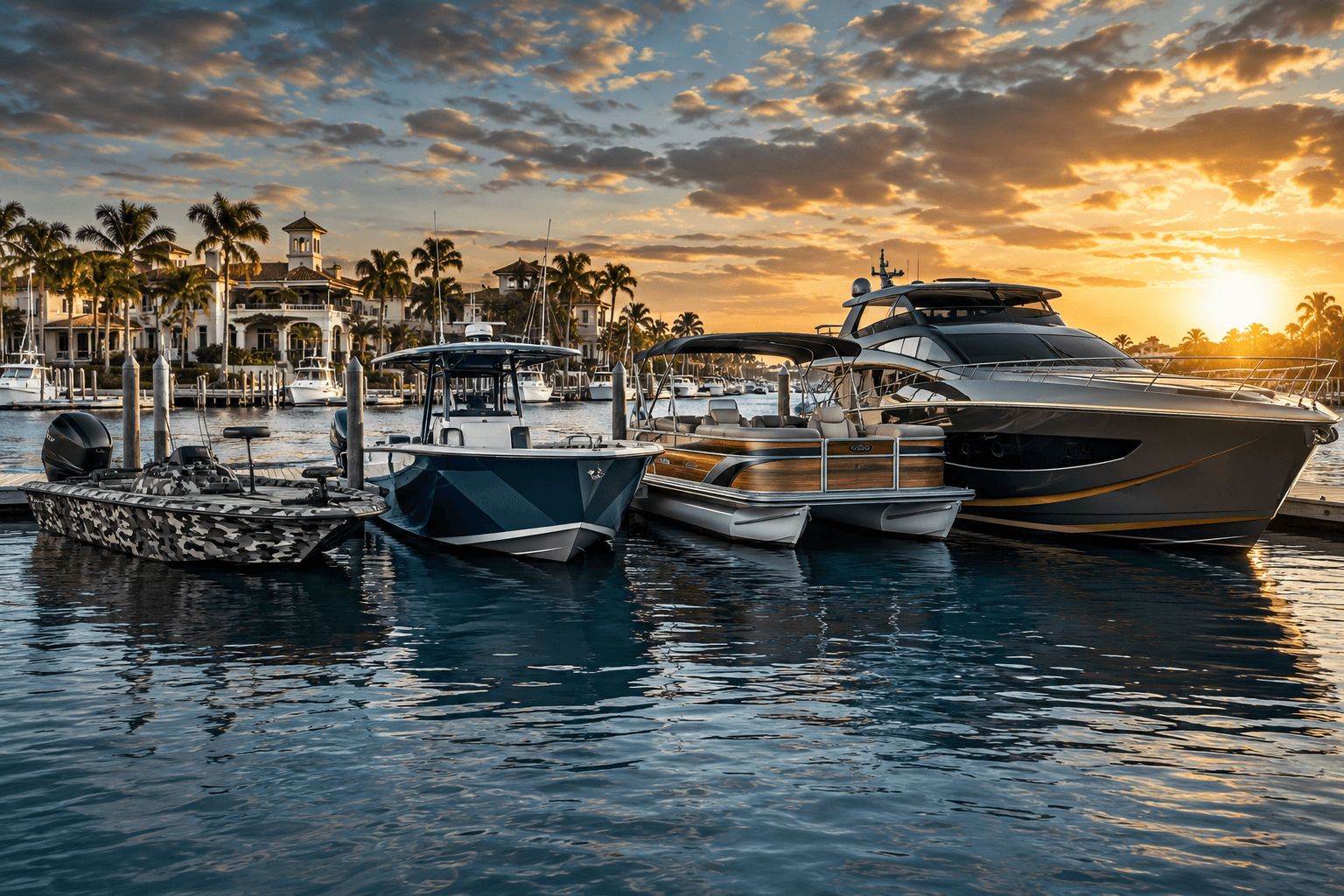
Boat Wrap Designs by Boat Type: What Actually Works on Your Vessel
A wrap that's perfect for a sportfishing boat chasing marlin offshore would look completely out of place on a family pontoon.
Boat Wraps Services
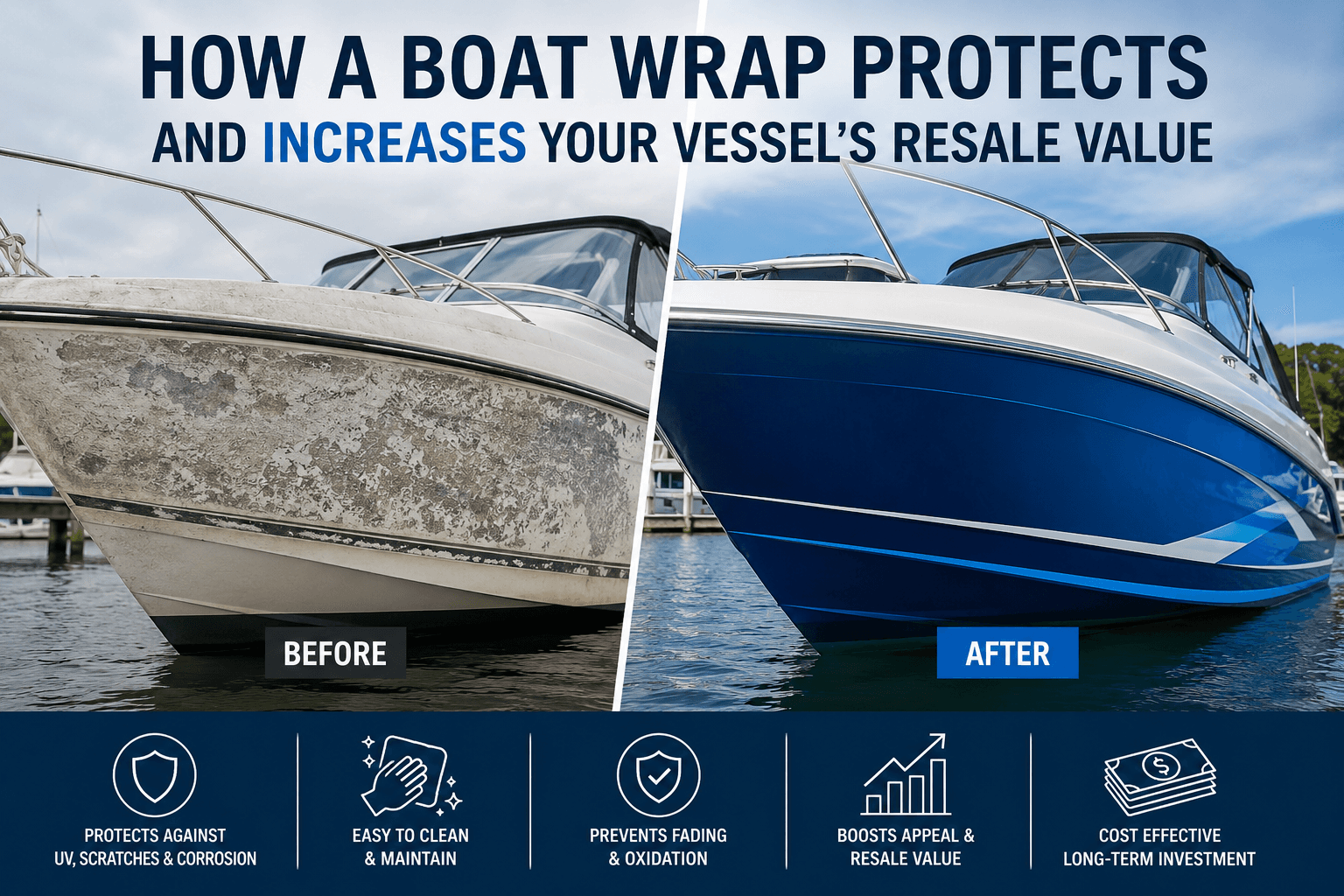
How a Boat Wrap Protects and Increases Your Vessel's Resale Value
How a Boat Wrap Can Protect and Increase Your Vessel's Resale Value
Boat Wraps Services
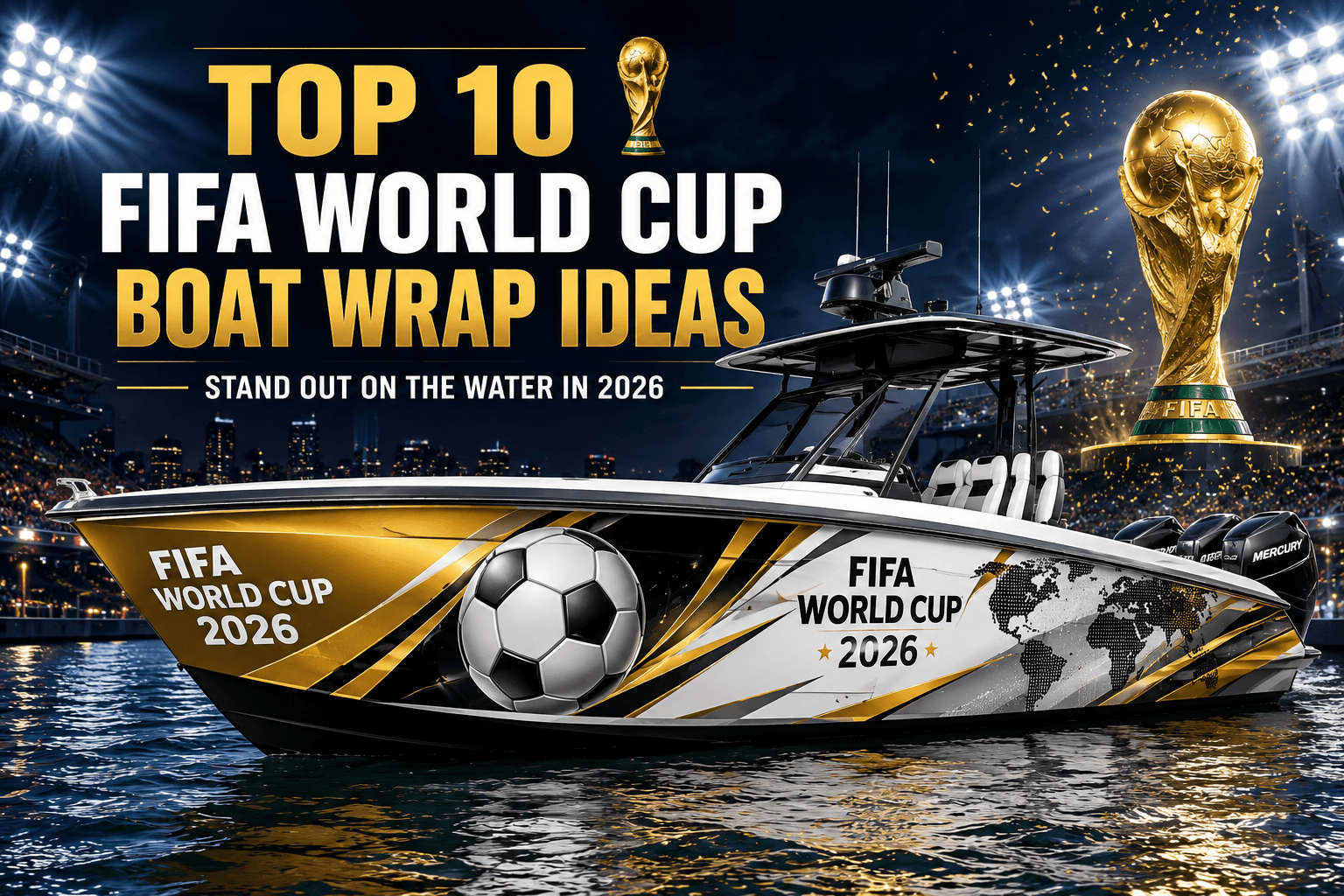
Top 10 FIFA World Cup Boat Wrap Ideas to Try This Season
If you already know you want your boat wrapped for World Cup season, the next question is which design actually fits your vessel.
Boat Wraps Services
Custom Boat Wraps for FIFA World Cup 2026
Get your boat ready for FIFA World Cup 2026 with a luxury custom wrap. Stand out on the water with premium marine graphics, gold finishes, and championship-inspired designs.
Boat Wraps Services
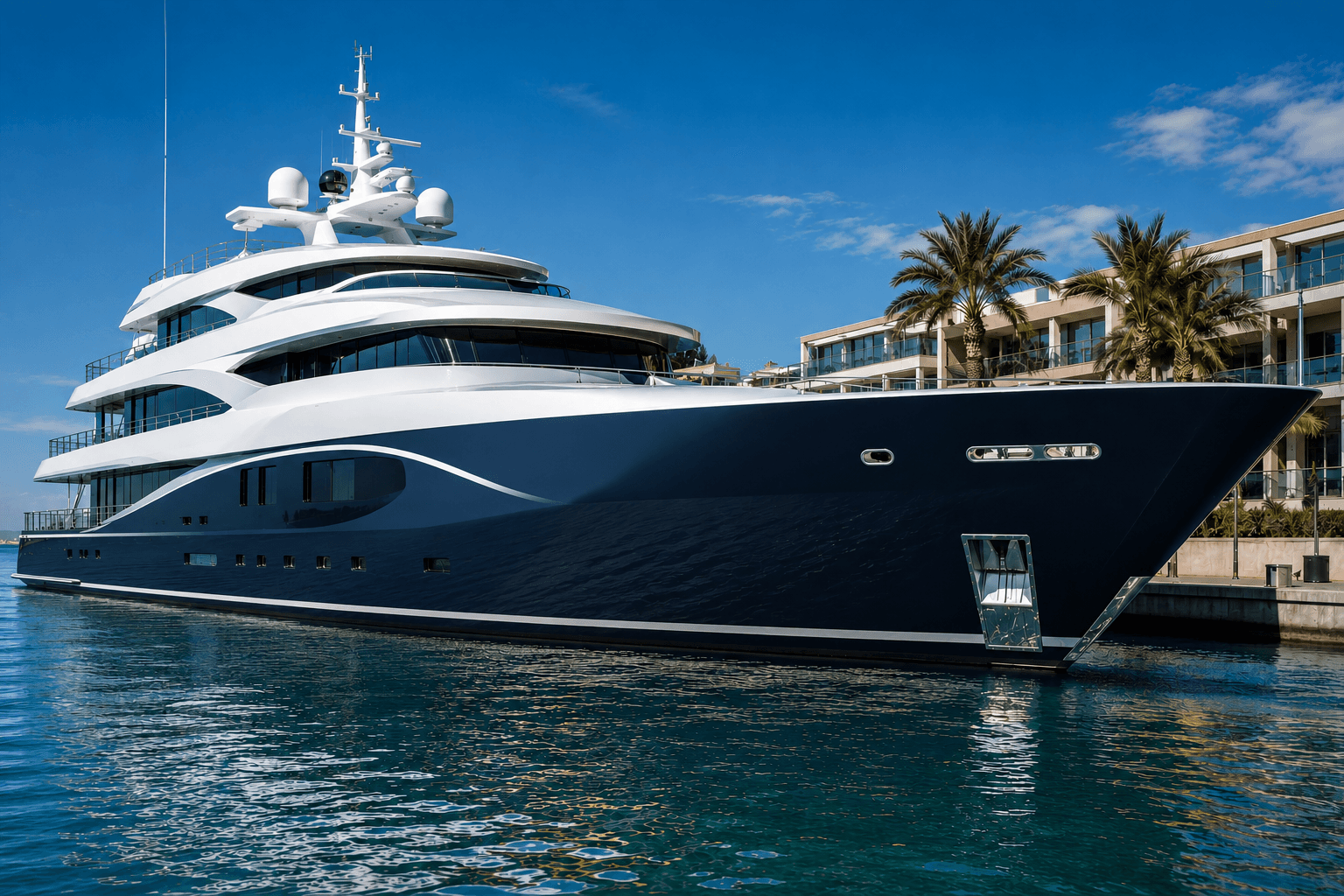
Luxury Yacht Wraps: The Complete Guide to Finishes, Styles, and Custom Marine Vinyl
Ocean Wraps works with luxury yacht and cruiser owners who want professional results, durable materials, and a finish that holds up on the water.
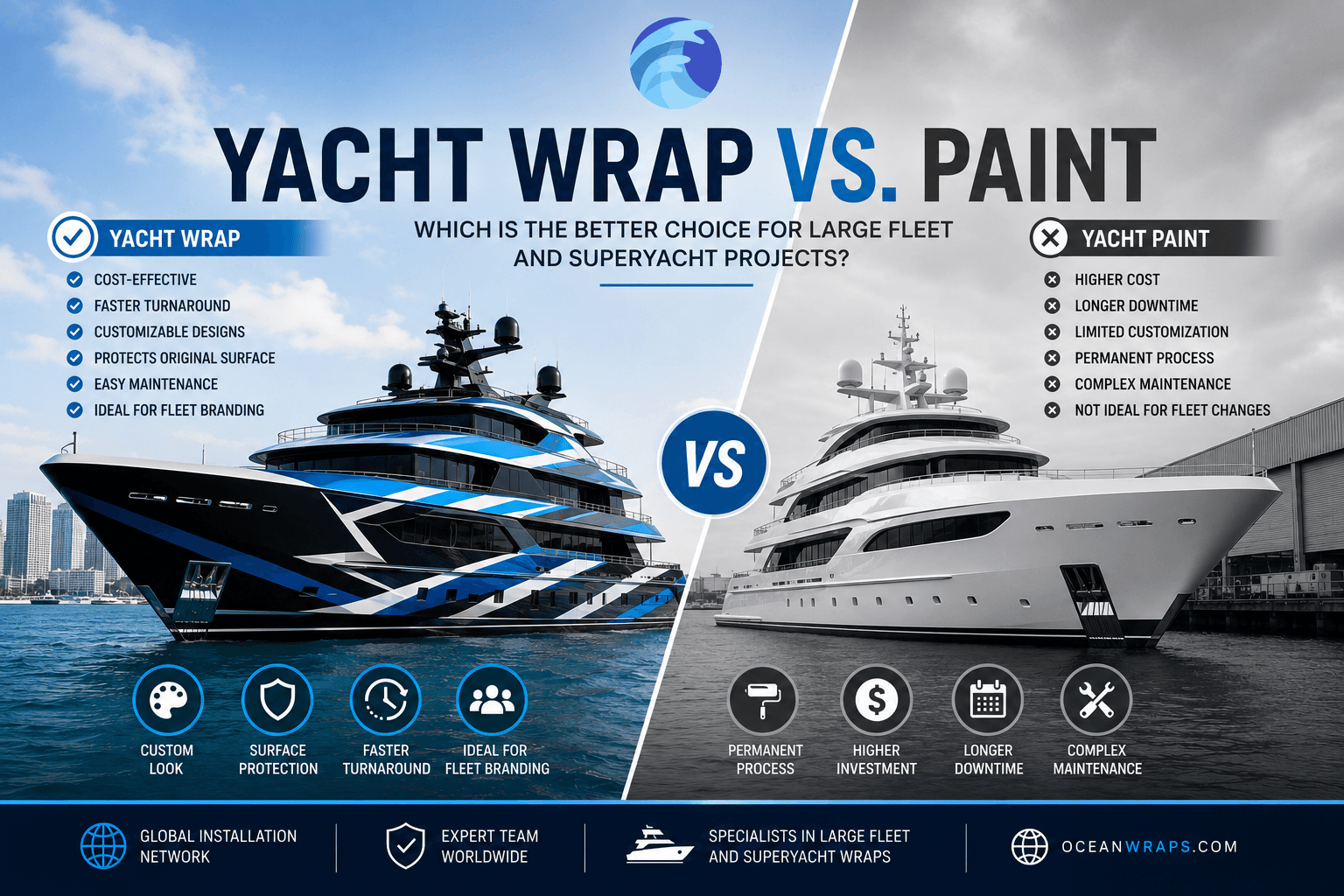
Yacht Wrap vs. Paint for Large Fleet & Superyacht Projects
Deciding between yacht wrap and paint for your fleet or superyacht? We break down real costs, downtime, durability, and which option actually makes sense at scale
How Much Does a Boat Wrap Cost? Complete Pricing Guide for 2026
Boat wrap prices vary widely depending on size, materials, and installer quality. Here's what a professional wrap actually costs in 2026 — and what to watch out for.
Luxury Yacht Wraps: The Complete Guide to Finishes, Styles, and Custom Marine Vinyl
Ocean Wraps works with luxury yacht and cruiser owners who want professional results, durable materials, and a finish that holds up on the water.
Boat Wraps Services
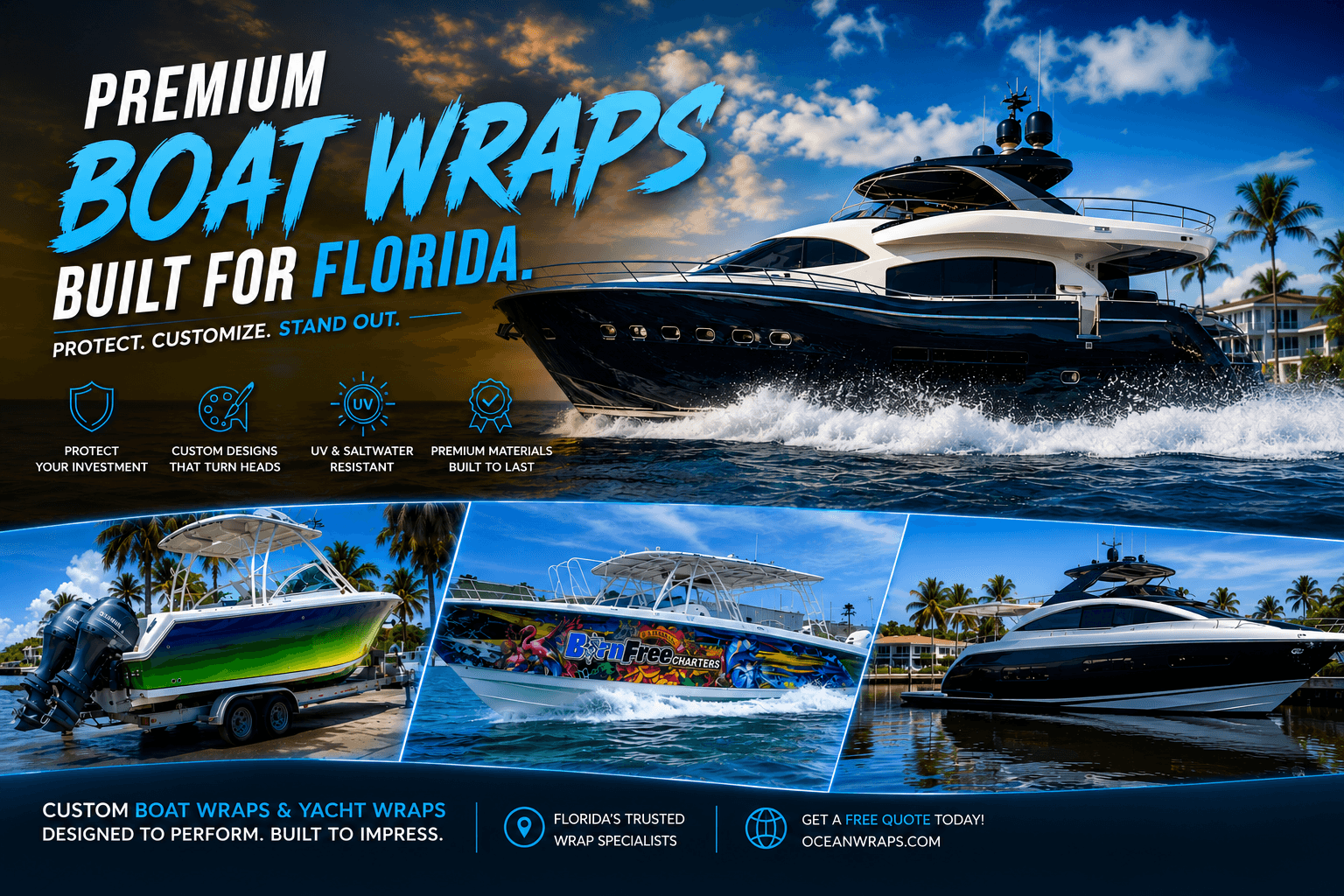
Why Florida Boat Owners Are Choosing Vinyl Boat Wraps in 2026
Discover why Florida boat owners are switching from paint to vinyl boat wraps. Learn the benefits, costs, protection, and customization options.
Guides
Boat Wraps vs Paint: 5 Reasons Why Wraps Win
Boat wraps cost less, install faster, and protect your gel coat better than traditional paint. Here's why so many boat owners are making the switch.
Guides
Yacht Wrap vs. Paint for Large Fleet & Superyacht Projects
Deciding between yacht wrap and paint for your fleet or superyacht? We break down real costs, downtime, durability, and which option actually makes sense at scale
Guides
How Much Does a Boat Wrap Cost? Complete Pricing Guide for 2026
Boat wrap prices vary widely depending on size, materials, and installer quality. Here's what a professional wrap actually costs in 2026 — and what to watch out for.