Top Boat Wraps Caribbean: Your Complete Guide to Boat Wrap Durability
Discover durable boat wraps designed for Caribbean conditions. Professional marine vinyl installation with superior UV and salt water protection. Get a quote to
Last updated May 7, 2026
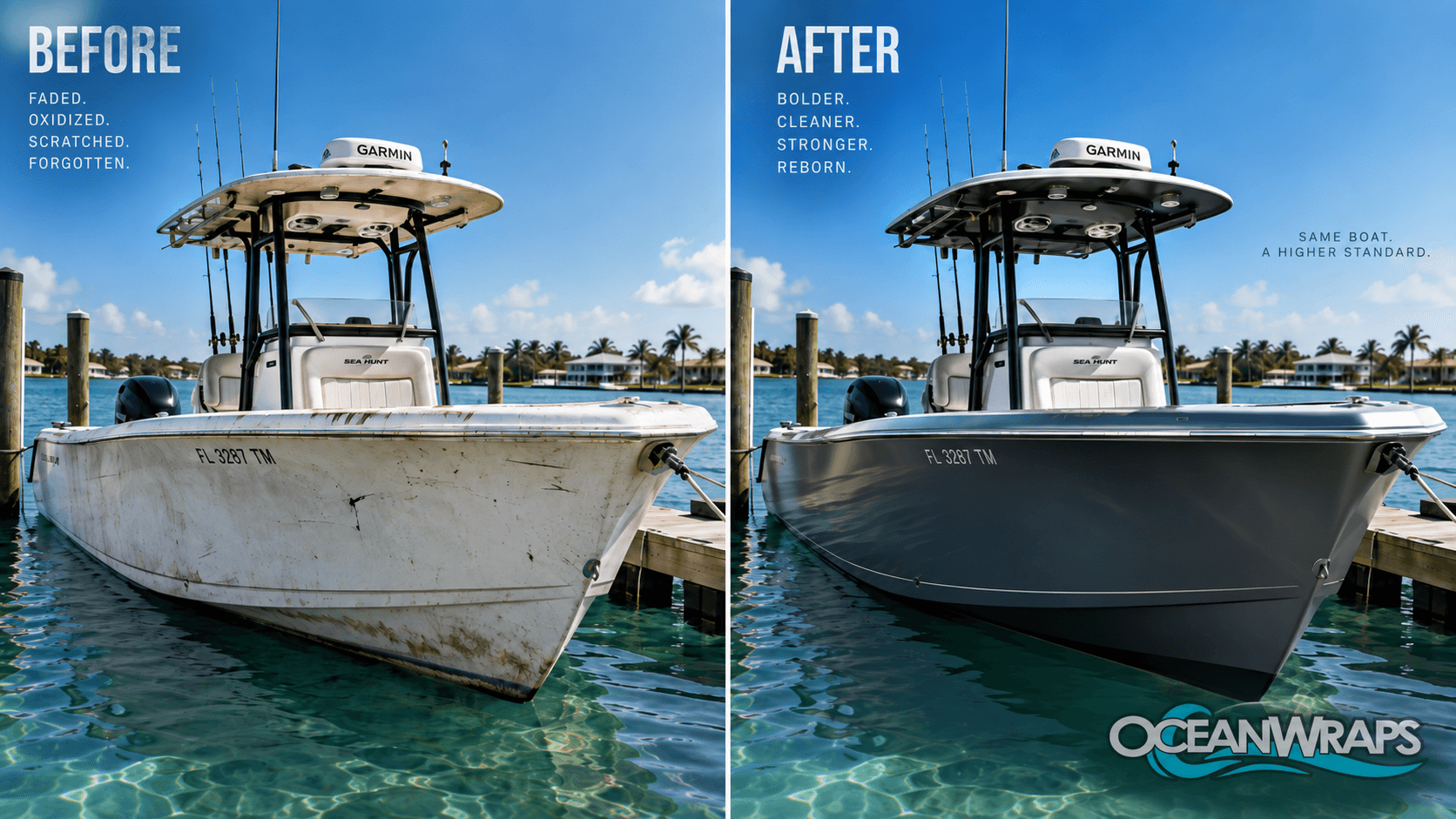
For boat owners navigating Caribbean waters, protecting your vessel while maintaining its appearance presents unique challenges. Salt air, intense tropical UV exposure, and the constant assault of marine conditions demand solutions specifically engineered for this environment. Professional boat wraps offer an effective alternative to traditional gelcoat restoration, combining aesthetic customization with practical hull protection. This comprehensive guide examines how boat wraps perform in Caribbean conditions, what affects boat wrap durability, and why working with certified marine vinyl installers makes the difference between a wrap that lasts and one that fails prematurely.
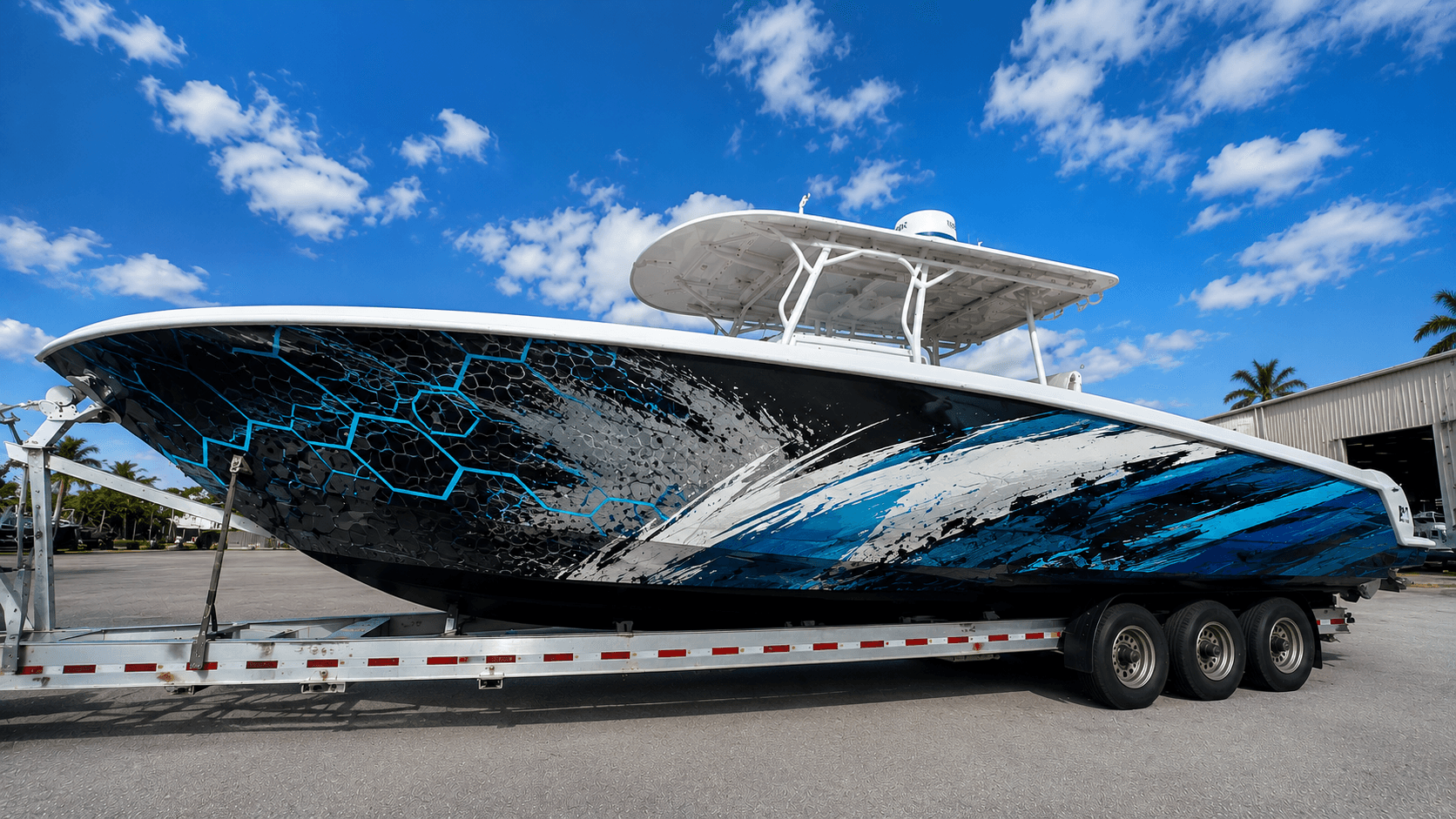
Professional expertise - OceanWraps certified team. Marine-grade vinyl wraps provide superior protection against Caribbean UV radiation and salt water corrosion when properly installed
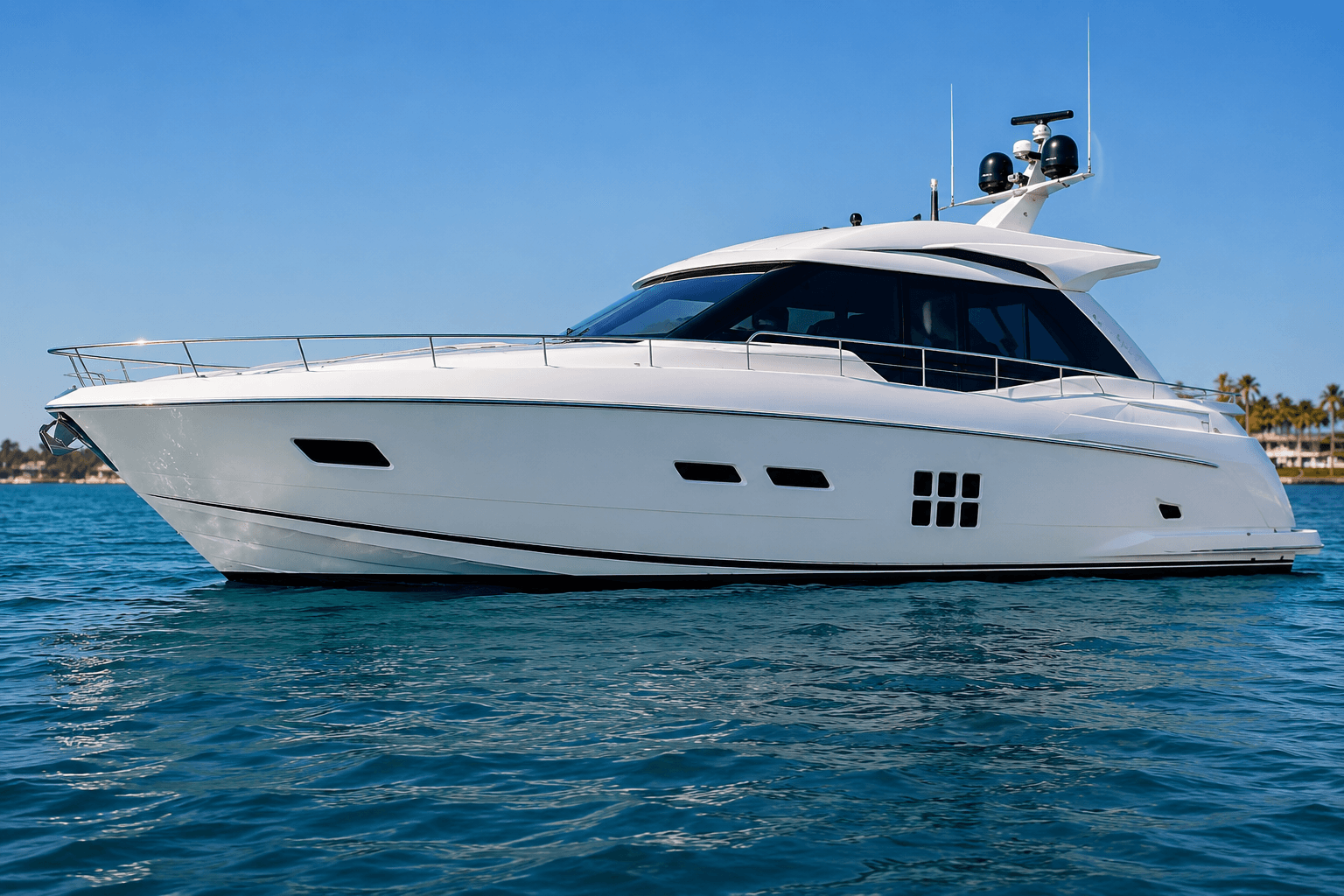
Professional boat wrap installation ensures proper adhesion on curved hull surfaces common on fishing boats, sailboats, and power vessels
Quality boat wraps can significantly outlast seasonal paint applications while maintaining color vibrancy in tropical sun exposure
Premium cast vinyl with protective laminate offers the best boat wrap longevity for vessels operating year-round in marine environments
Professional boat wrap maintenance extends performance through proper cleaning protocols and periodic inspections
Understanding how long boat wraps last requires examining the specific challenges Caribbean waters present. The combination of relentless sunshine, salt spray, and humidity creates conditions that test any exterior surface. Professional marine vinyl wraps, when installed by experienced technicians using quality materials, deliver reliable boat wrap durability across these demanding environments.
The Caribbean presents distinctive environmental factors that directly impact boat wrap performance. Ultraviolet radiation in tropical latitudes operates at significantly higher intensities than temperate regions, accelerating degradation of inferior vinyl products. Marine-grade materials with UV-resistant additives resist this breakdown, maintaining both structural integrity and color saturation over extended periods.
Salt water exposure creates additional challenges for any surface treatment. Unlike freshwater environments, Caribbean marine conditions expose vessel hulls to corrosive elements that compromise traditional coatings. Quality boat wraps create a protective barrier that shields gelcoat from salt accumulation while resisting the adhesive degradation that occurs when salt penetrates beneath poorly installed graphics.
Hurricane season introduces temporary but severe stress factors including high winds, storm surge, and debris impact. Professional installers account for these conditions through reinforced edge sealing and strategic material selection. Durable boat vinyl wraps engineered for marine applications demonstrate superior tear resistance and adhesive stability during extreme weather events common to the Caribbean basin.
Professional boat wrap installation follows a systematic process designed to maximize longevity and visual quality. Understanding each phase helps vessel owners evaluate potential service providers and recognize the differences between amateur installations and professional marine wrapping.
Successful boat wrap durability begins with thorough surface preparation. Technicians pressure-wash the hull to remove accumulated growth, salt deposits, and surface contaminants. Next comes clay bar treatment to extract embedded particles, followed by isopropyl alcohol wipe-down that eliminates waxes, silicones, and remaining debris. Any gelcoat imperfections receive spot filling and sanding to create a smooth, uniform substrate for vinyl adhesion.
Digital measurement capture records precise hull contours and dimensions. Professional installers use computer-aided design software to create custom templates that account for curvature, hardware cutouts, and panel transitions. This precision mapping ensures efficient material usage while guaranteeing complete coverage without unsightly seams on visible surfaces.
Skilled technicians apply vinyl using specialized techniques adapted for marine substrates. Heat forming conforms material to compound curves and reverse chine configurations common on sport fishing vessels and cabin cruisers. Slip solutions allow precise positioning while squeegee application eliminates air pockets and ensures complete adhesive contact across the entire surface.
Final processing includes trimming around hardware mounts, through-hulls, and waterline transitions. Edge sealing treatments protect vulnerable perimeters from moisture intrusion. Post-installation inspection verifies complete coverage, confirms adhesion security, and documents the finished installation for warranty purposes.
Material selection fundamentally determines boat wrap longevity and performance in Caribbean conditions. Professional marine wrapping companies specify products engineered specifically for demanding marine environments rather than relying on automotive or promotional grade materials.
Premium cast vinyl formulations offer superior conformability for complex hull geometries while providing enhanced resistance to UV degradation and salt exposure. These products feature plasticizer compositions that resist migration, maintaining flexibility without becoming brittle or developing surface cracking over time.
Clear protective laminates shield printed graphics from abrasion, chemical exposure, and environmental contamination. Marine-rated laminates incorporate UV stabilizers that extend the life of underlying color layers while providing an easily maintained outer surface that resists staining from fuel splashes and common marina contaminants.
Vessel owners select from matte, satin, and gloss finishes depending on aesthetic preferences and maintenance considerations. Metallic and pearl effect films add visual distinction while specialty options including carbon fiber textures and holographic patterns create unique appearances for vessels requiring distinctive branding or personal expression.
Practical Considerations Before Installing Boat Wraps#
Surface condition assessment determines whether gelcoat requires repairs before installation; damaged substrates compromise adhesive performance and create visible imperfections
Marina regulations vary across Caribbean ports; some harbors restrict wrapped waterlines while others maintain specific color requirements for commercial vessels
Curvature complexity affects installation time and material costs; deep-V hulls and stepped transoms demand experienced technicians familiar with advanced forming techniques
Seasonal storage arrangements influence wrap exposure; vessels remaining in water face different stress factors than those hauled during hurricane season
Maintenance practices directly impact boat wrap durability; automated brush systems can damage edges while pressure washing requires appropriate distance and pressure settings
Boat wrap lifespan in Caribbean conditions typically ranges from five to seven years for premium marine vinyl installations, with professional maintenance extending this period. Factors including UV exposure intensity, salt exposure frequency, and physical abrasion from docking and underway operations influence actual longevity. Regular cleaning and periodic inspections help identify developing issues before they compromise the installation.
What affects boat wrap durability the most in tropical climates?#
Ultraviolet radiation represents the primary degradation factor for boat wraps in the Caribbean, followed closely by salt-induced adhesive breakdown. Inferior materials fail faster under these combined stresses, while marine-grade products with UV inhibitors and salt-resistant adhesives maintain structural integrity longer. Installation quality also significantly affects durability, as improper edge sealing allows moisture penetration that accelerates failure.
Can boat wraps withstand hurricane conditions in the Caribbean?#
Professional marine vinyl wraps demonstrate reasonable hurricane resilience when properly installed. High-quality materials resist tearing from windborne debris better than traditional gelcoat, and the vinyl actually absorbs some impact energy. However, severe storm conditions can damage any exterior surface treatment. Professional installers reinforce vulnerable areas and specify appropriate materials for vessels operating in hurricane-prone regions.
How does boat wrap cost compare to repainting for Caribbean vessels?#
Professional boat wraps generally cost between one-third and one-half of premium marine paint application when considering equivalent coverage areas. Beyond initial investment, boat wraps offer removable customization options and protect underlying gelcoat from UV and salt damage, potentially preserving resale value. The comparison depends on vessel size, finish complexity, and expected service life of each treatment.
Selecting experienced providers ensures boat wrap durability matched to Caribbean conditions. OceanWraps specializes in marine vinyl installations designed specifically for vessels navigating tropical waters, with certified technicians trained in hurricane-zone installation techniques and regional marina requirements. Professional consultation helps vessel owners understand how quality materials and proper installation translate into reliable performance across seasons of Caribbean boating.
New Boat Prices Are Skyrocketing — Here's the Smarter Move Boat Owners Are Making
New boat prices are at record highs. Here's why more owners are choosing marine vinyl wraps to refresh their boat's look and protect the hull, without the cost of buying new
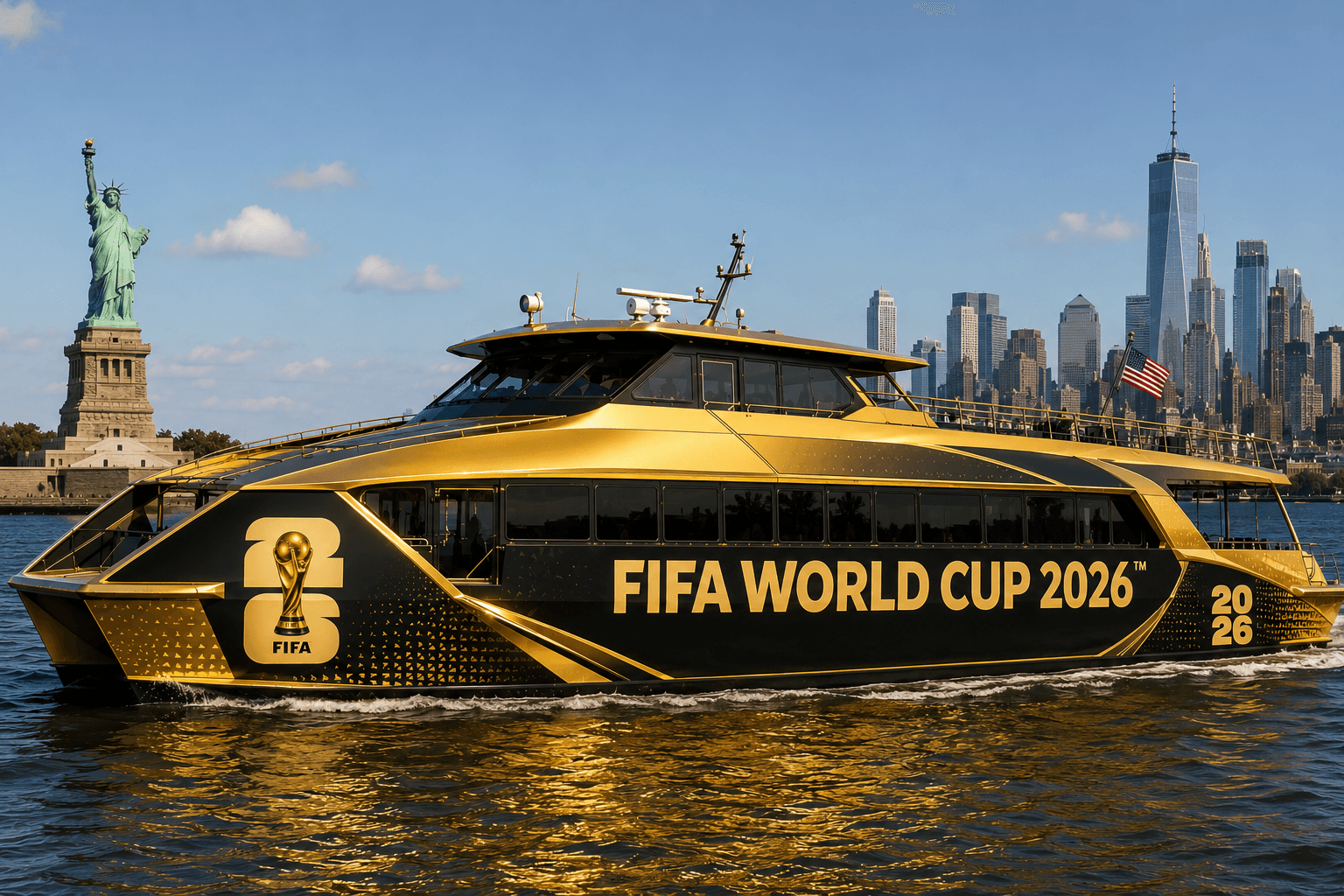
Get your boat ready for FIFA World Cup 2026 with a luxury custom wrap. Stand out on the water with premium marine graphics, gold finishes, and championship-inspired designs.
New Boat Prices Are Skyrocketing — Here's the Smarter Move Boat Owners Are Making
New boat prices are at record highs. Here's why more owners are choosing marine vinyl wraps to refresh their boat's look and protect the hull, without the cost of buying new
Boat Wraps Services
Boat Wrap Designs by Boat Type: What Actually Works on Your Vessel
A wrap that's perfect for a sportfishing boat chasing marlin offshore would look completely out of place on a family pontoon.
Boat Wraps Services
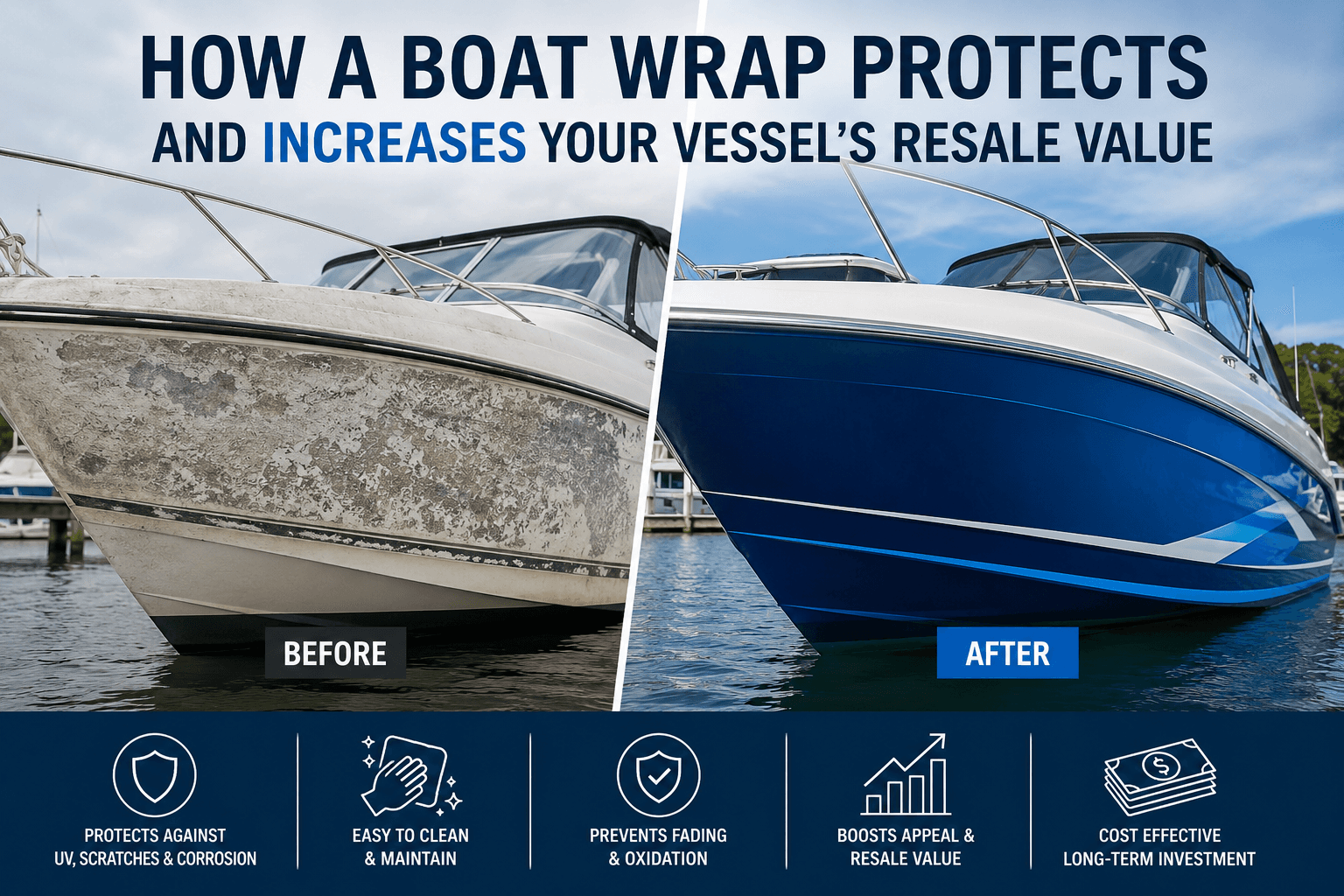
How a Boat Wrap Protects and Increases Your Vessel's Resale Value
How a Boat Wrap Can Protect and Increase Your Vessel's Resale Value
Boat Wraps Services
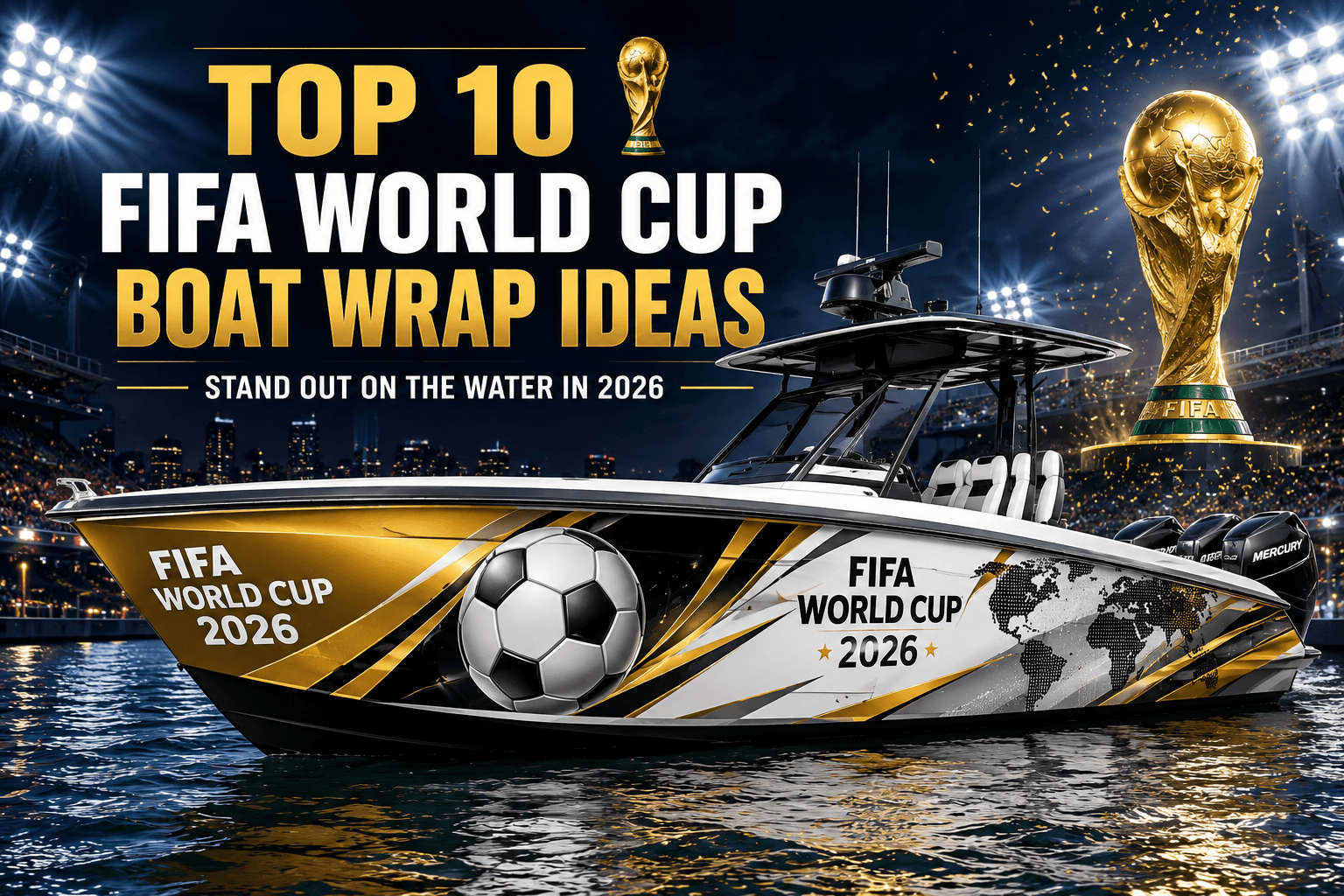
Top 10 FIFA World Cup Boat Wrap Ideas to Try This Season
If you already know you want your boat wrapped for World Cup season, the next question is which design actually fits your vessel.
Boat Wraps Services
Custom Boat Wraps for FIFA World Cup 2026
Get your boat ready for FIFA World Cup 2026 with a luxury custom wrap. Stand out on the water with premium marine graphics, gold finishes, and championship-inspired designs.
Boat Wraps Services
Luxury Yacht Wraps: The Complete Guide to Finishes, Styles, and Custom Marine Vinyl
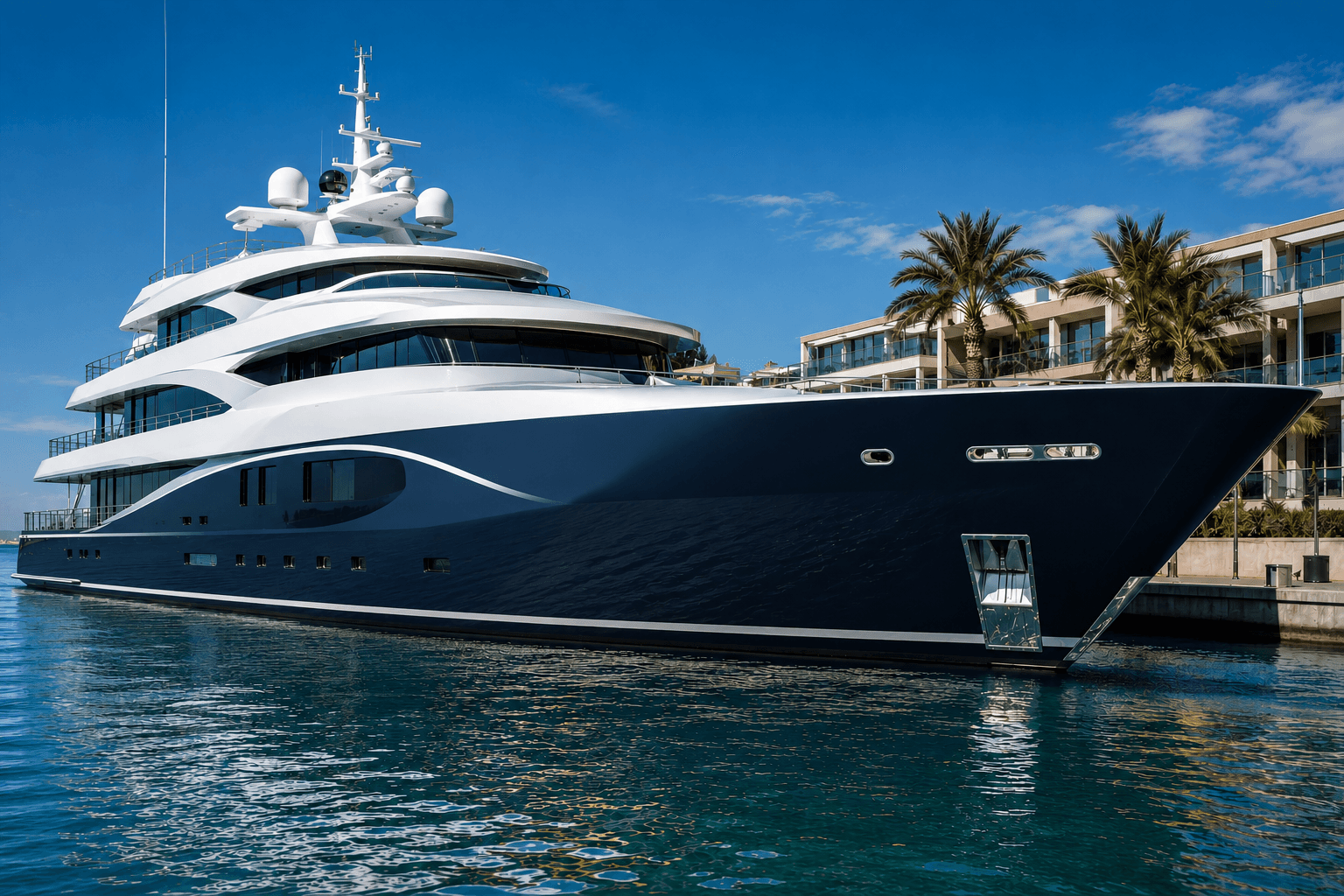
Ocean Wraps works with luxury yacht and cruiser owners who want professional results, durable materials, and a finish that holds up on the water.
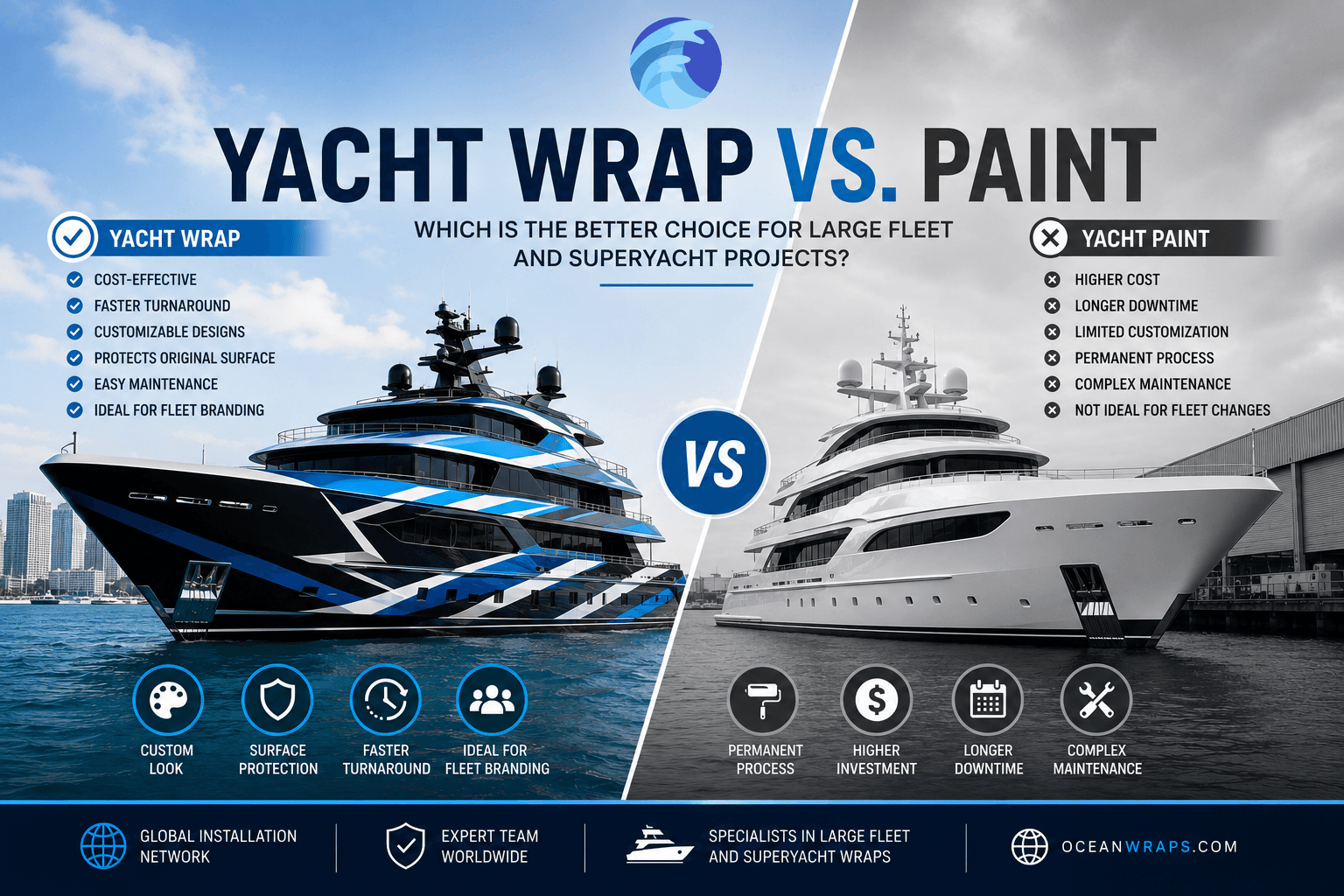
Yacht Wrap vs. Paint for Large Fleet & Superyacht Projects
Deciding between yacht wrap and paint for your fleet or superyacht? We break down real costs, downtime, durability, and which option actually makes sense at scale
How Much Does a Boat Wrap Cost? Complete Pricing Guide for 2026
Boat wrap prices vary widely depending on size, materials, and installer quality. Here's what a professional wrap actually costs in 2026 — and what to watch out for.
Luxury Yacht Wraps: The Complete Guide to Finishes, Styles, and Custom Marine Vinyl
Ocean Wraps works with luxury yacht and cruiser owners who want professional results, durable materials, and a finish that holds up on the water.
Boat Wraps Services
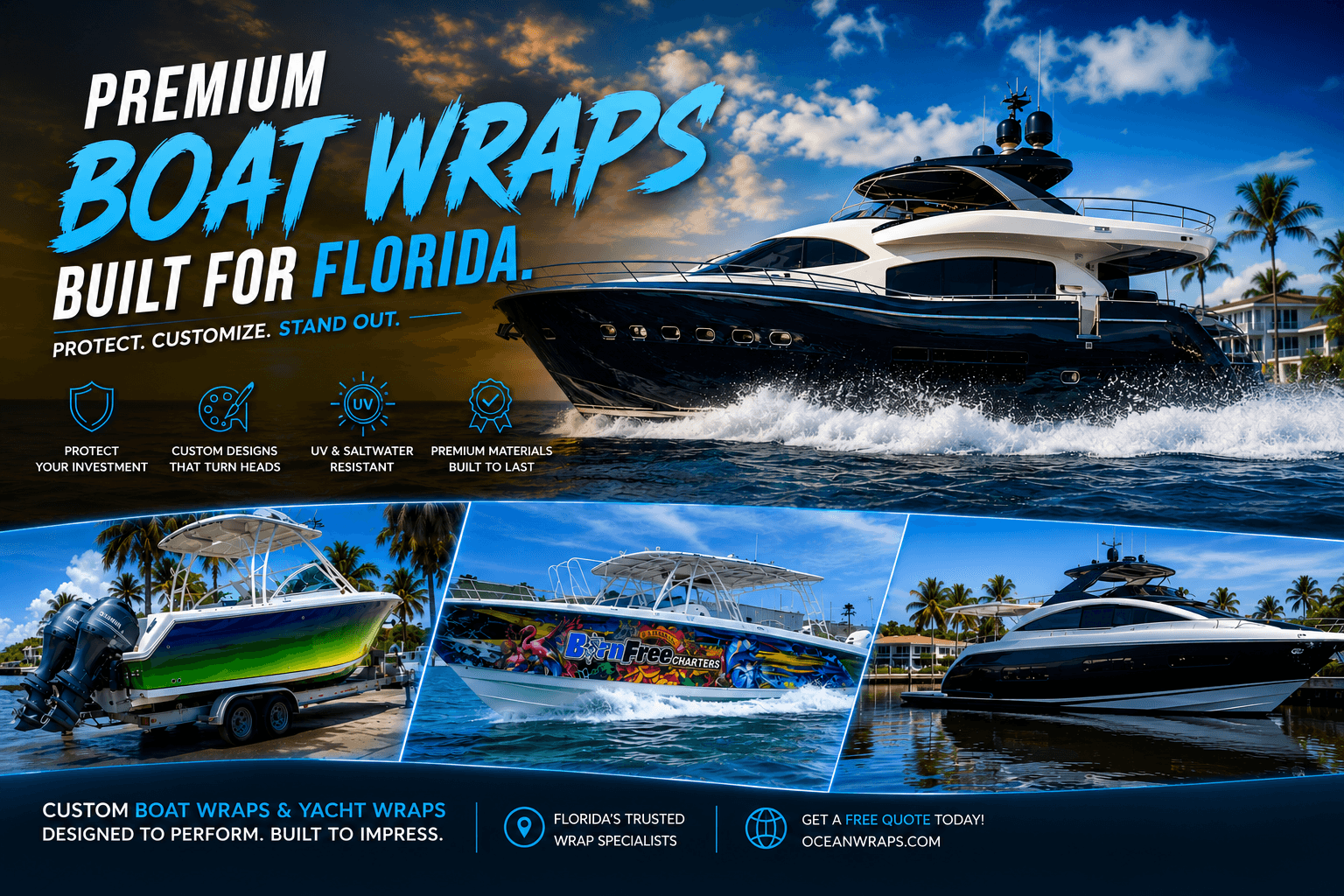
Why Florida Boat Owners Are Choosing Vinyl Boat Wraps in 2026
Discover why Florida boat owners are switching from paint to vinyl boat wraps. Learn the benefits, costs, protection, and customization options.
Guides
Boat Wraps vs Paint: 5 Reasons Why Wraps Win
Boat wraps cost less, install faster, and protect your gel coat better than traditional paint. Here's why so many boat owners are making the switch.
Guides
Yacht Wrap vs. Paint for Large Fleet & Superyacht Projects
Deciding between yacht wrap and paint for your fleet or superyacht? We break down real costs, downtime, durability, and which option actually makes sense at scale
Guides
How Much Does a Boat Wrap Cost? Complete Pricing Guide for 2026
Boat wrap prices vary widely depending on size, materials, and installer quality. Here's what a professional wrap actually costs in 2026 — and what to watch out for.