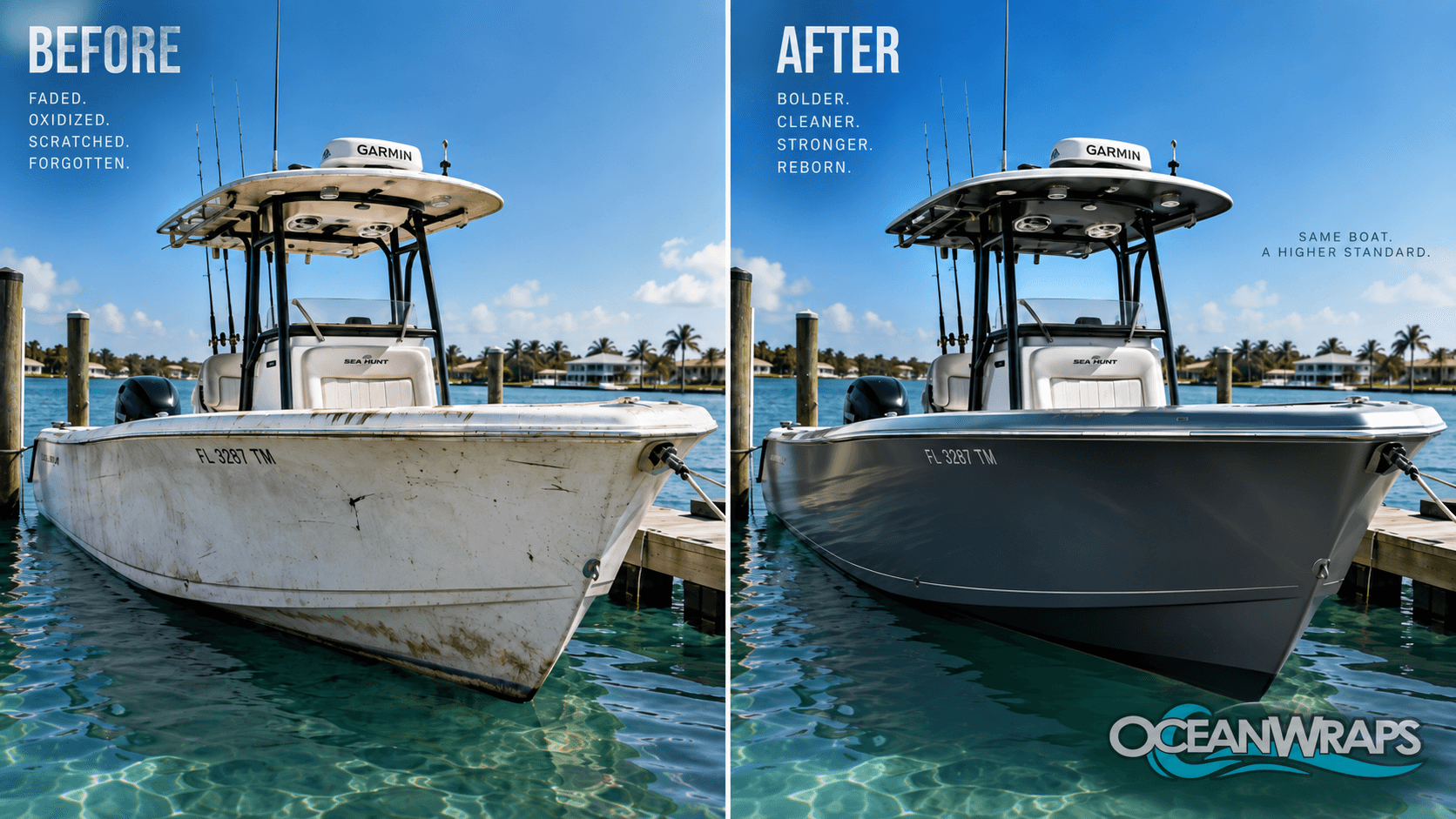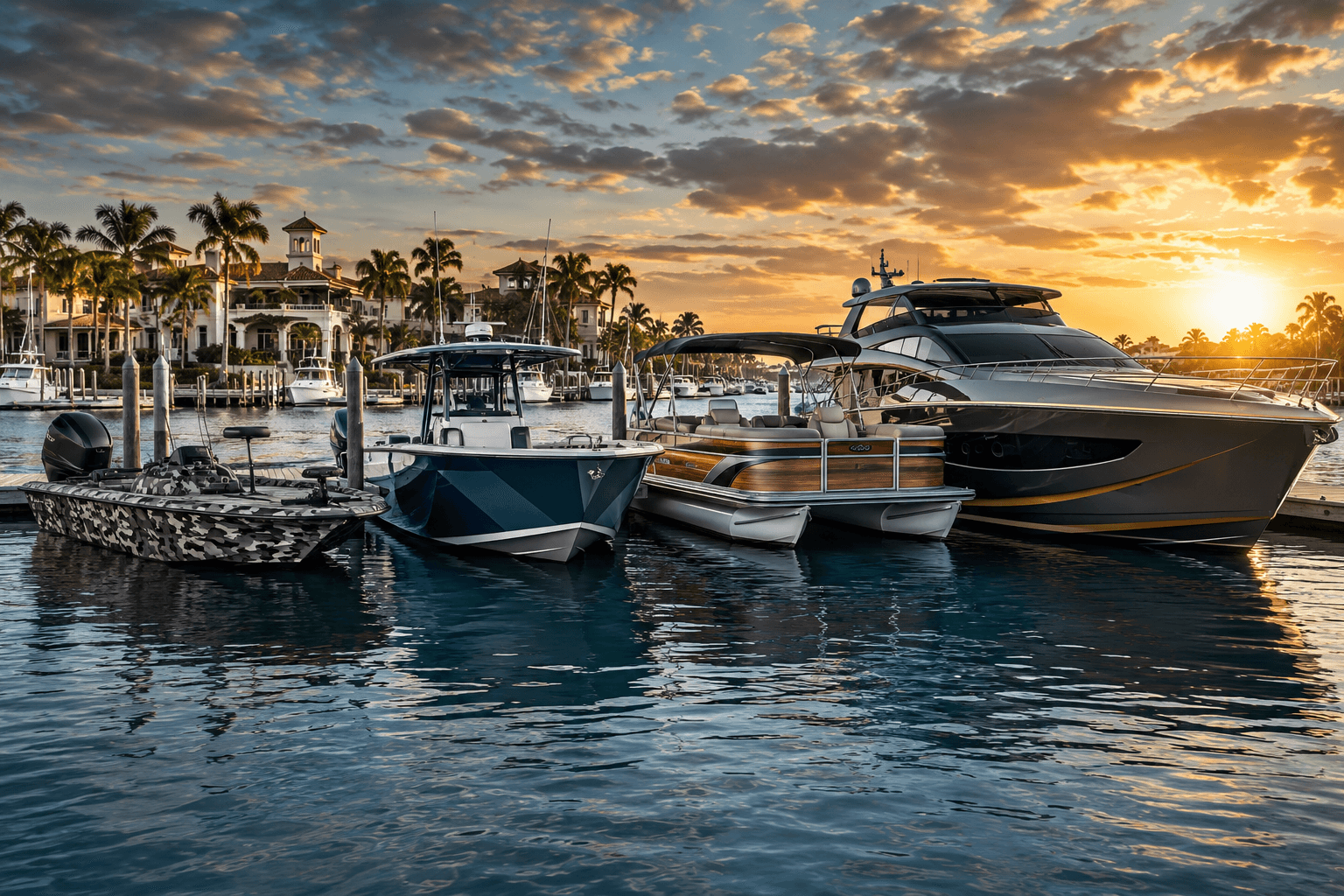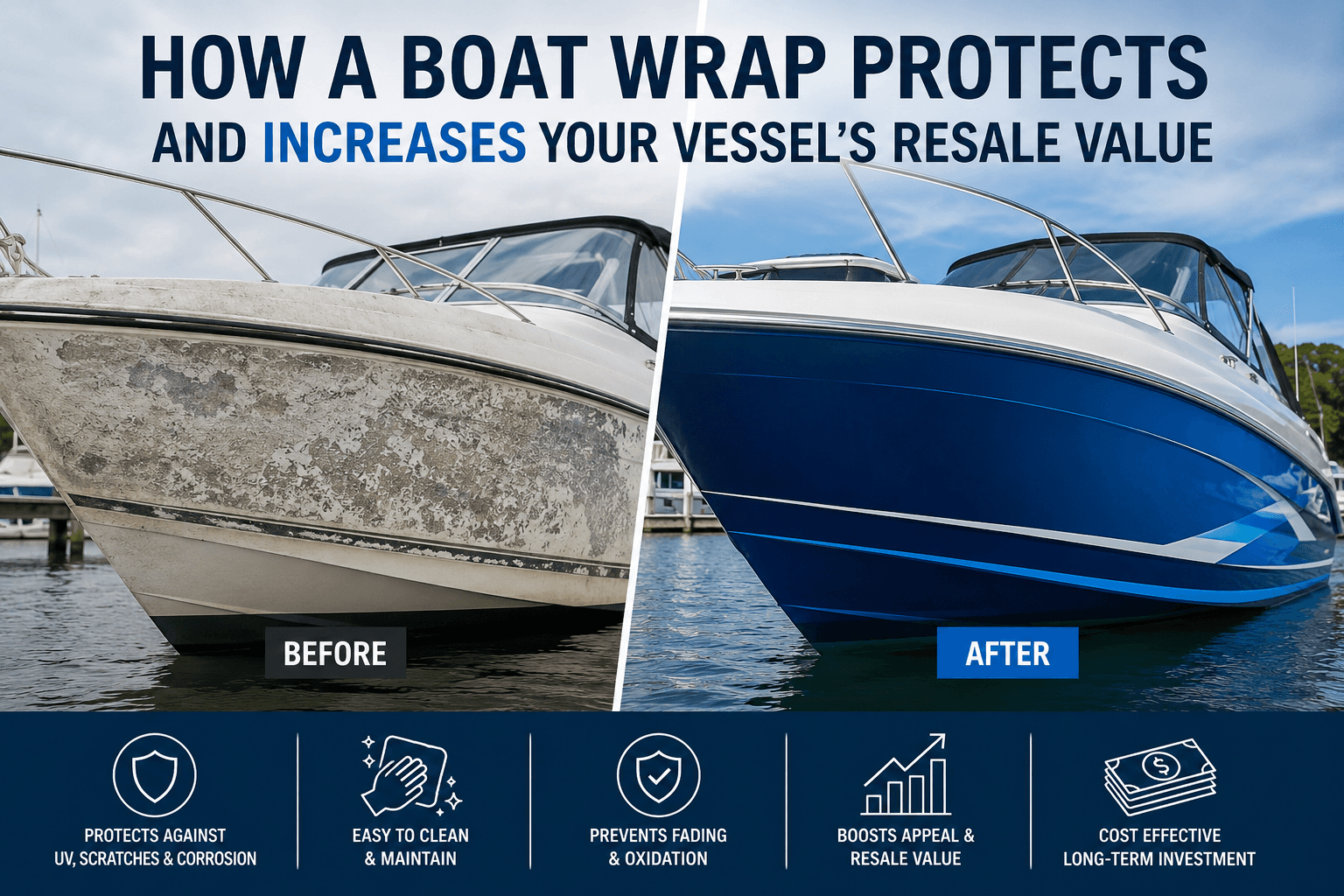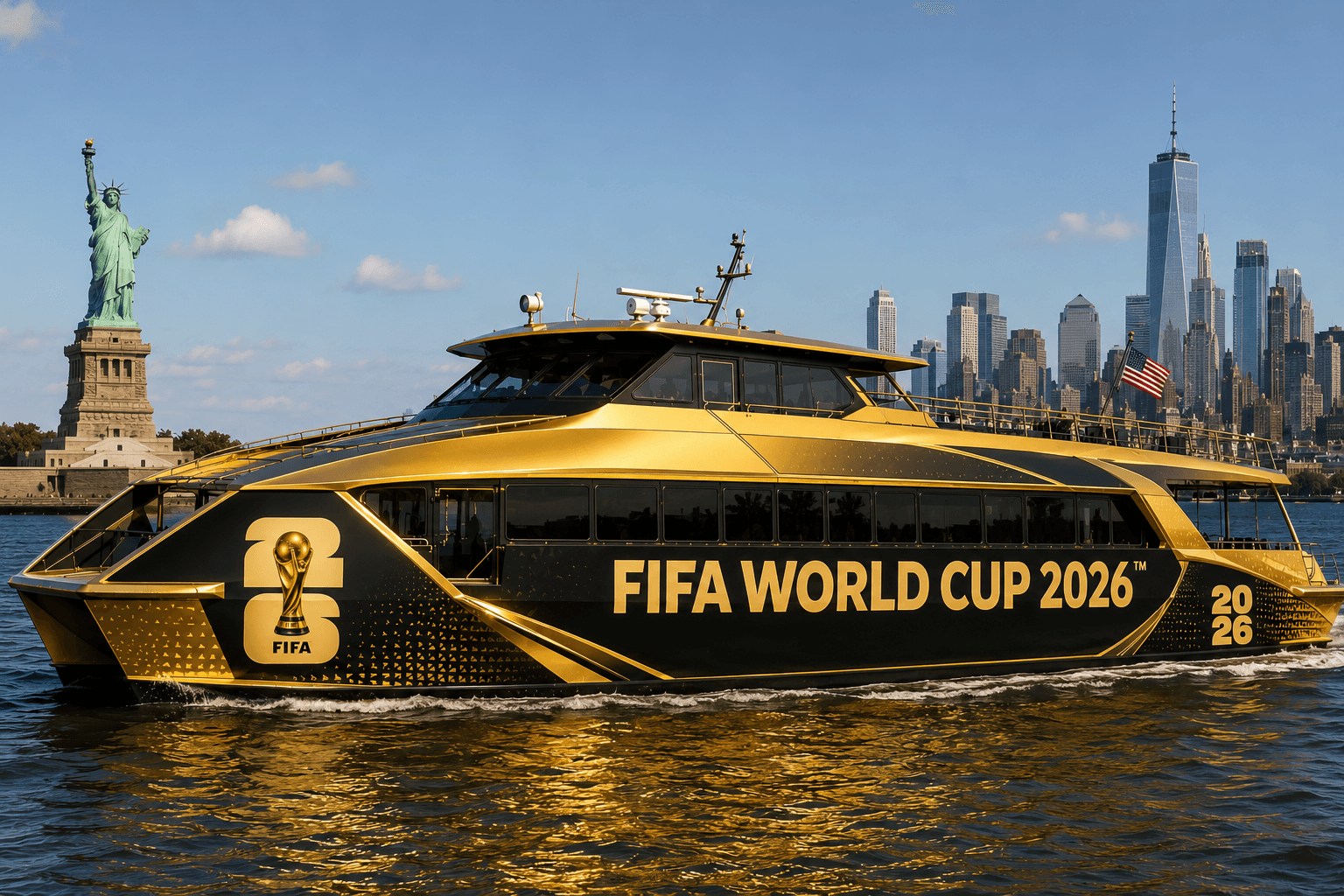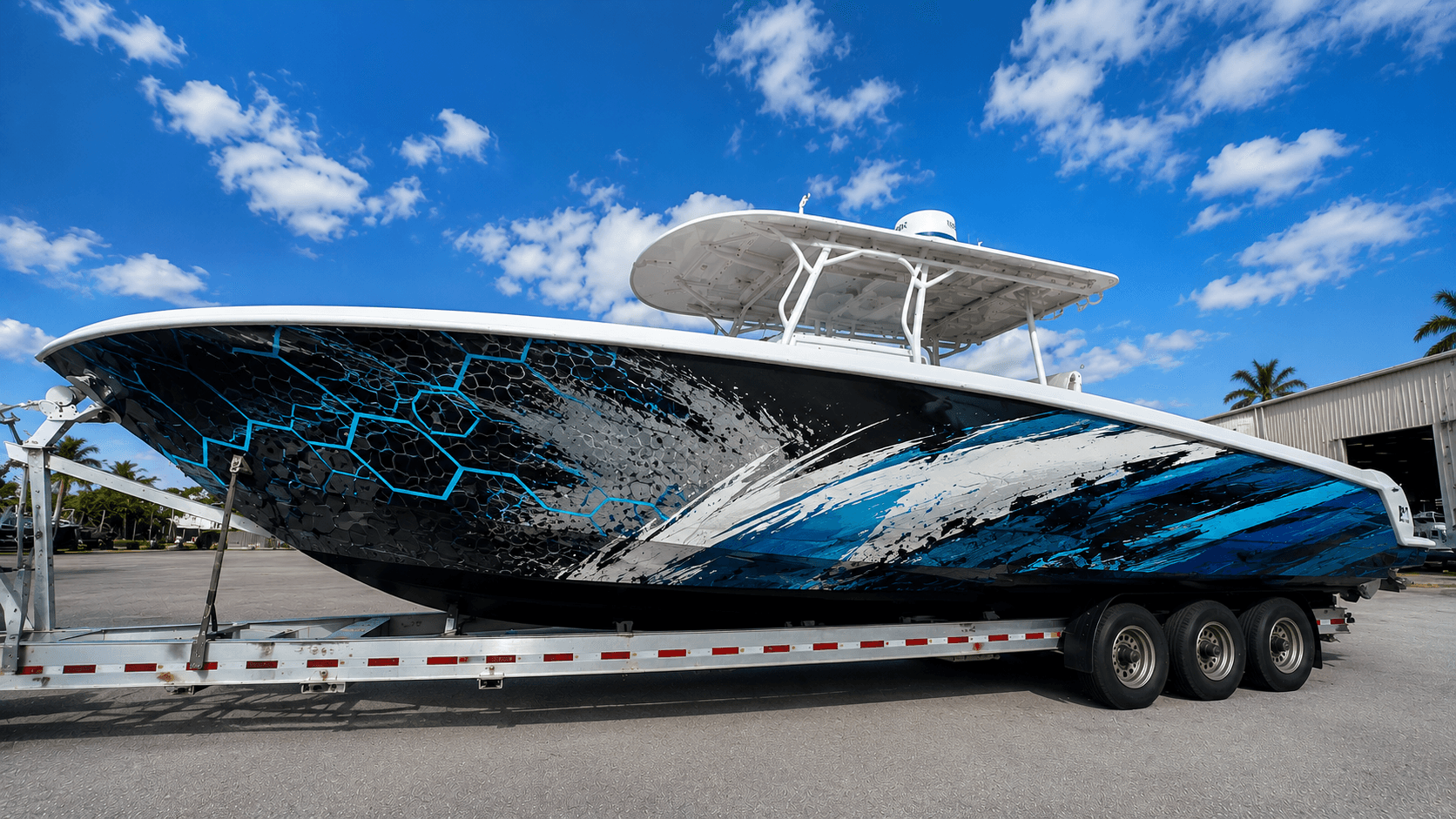
For boat owners in Texas, selecting the right boat wraps is a critical decision that impacts vessel protection, presentation, and long-term value. The intense UV index, persistent salt spray in marinas from Galveston to South Padre, and the abrasive dock conditions unique to the Gulf Coast demand solutions beyond generic automotive vinyl. This guide details the professional approach to boat wraps, focusing on the technical specifications and installation precision required for the Texas marine environment.
Key Takeaways#
- Superior UV & Salt Resistance: Professionally specified marine vinyl with UV-stable laminate combats Texas sun degradation and saltwater corrosion far better than paint or non-marine vinyl.
- Precision Installation: Certified technicians like those at OceanWraps ensure meticulous surface preparation and edge sealing around hardware, rub rails, and high-contact zones to prevent lifting and water intrusion.
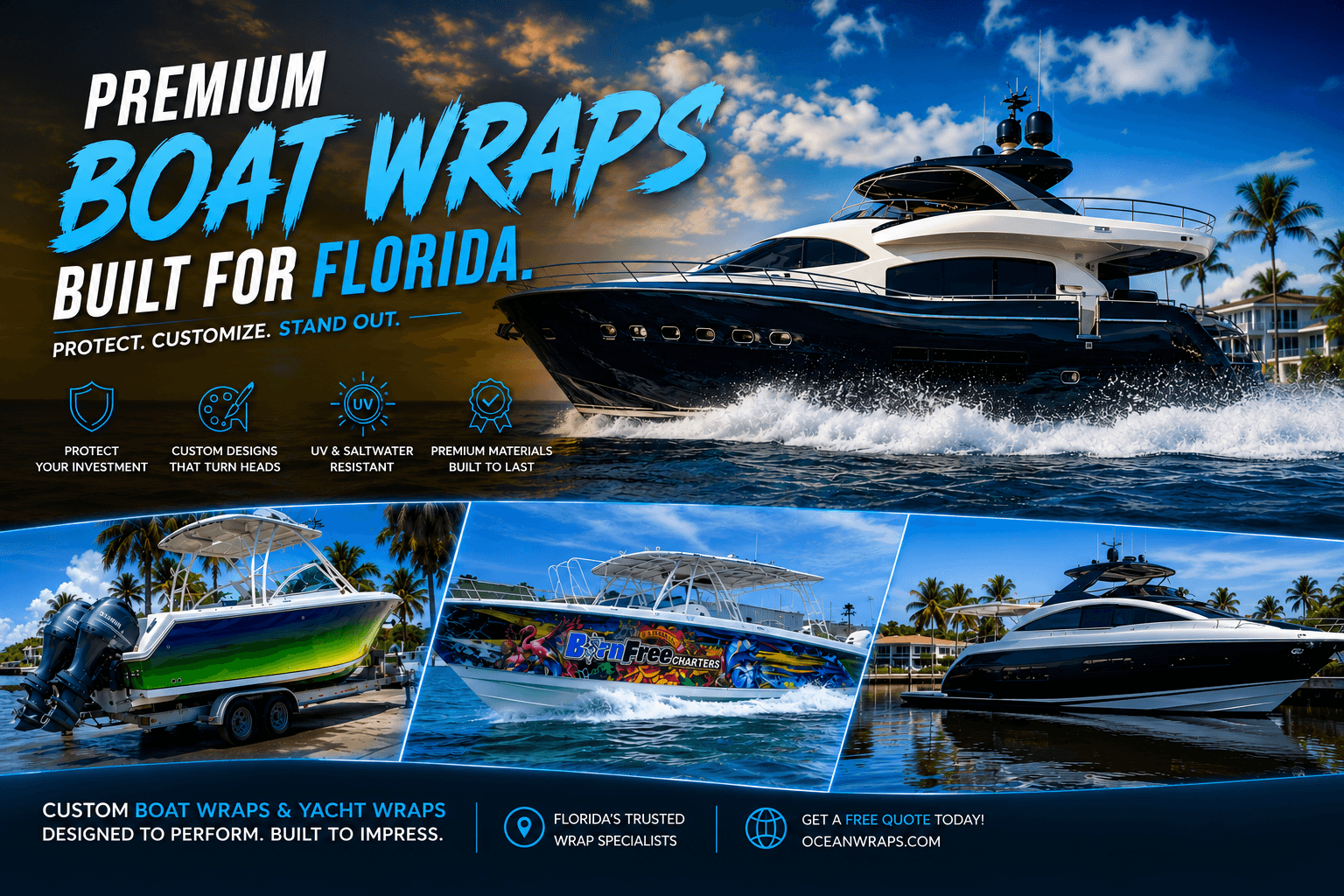
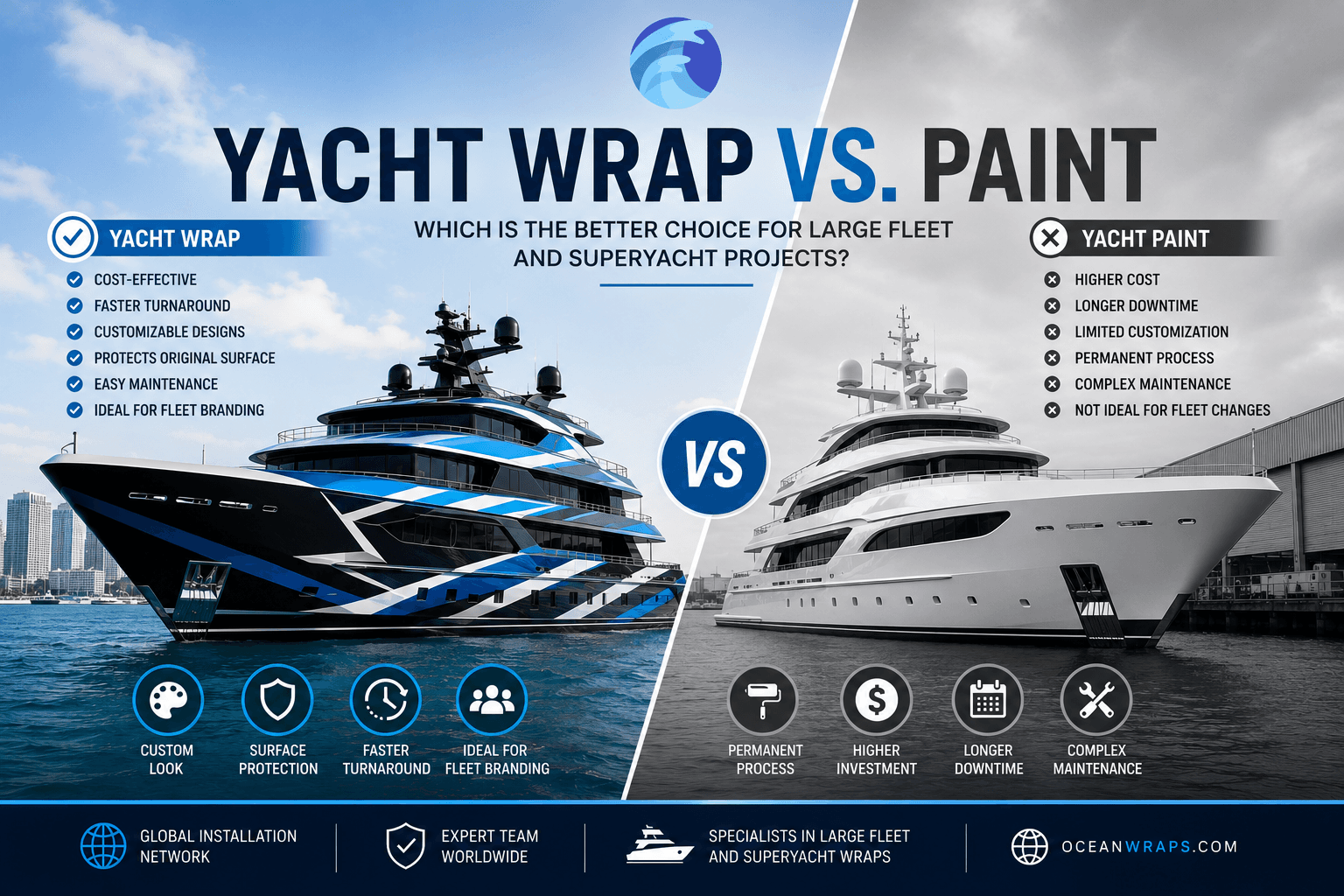
- Cost-Effective Customization: Boat wraps offer full graphic customization at a fraction of the cost and downtime of custom marine paint, with options for complex designs and branding.
- Hull & Gelcoat Protection: A quality wrap acts as a barrier, shielding the underlying gelcoat from dock abrasion, minor scratches, and environmental pollutants, preserving resale value.
- Efficient Turnaround: The boat wrap process, from design to application, is significantly faster than traditional painting, minimizing time out of the water for busy Texas boating seasons.
Why Texas Marine Conditions Demand Specialized Boat Wraps#
Texas coastal waters present a unique set of challenges. The combination of intense solar radiation, high humidity, and constant salt exposure accelerates the degradation of non-marine materials. Standard vinyl wraps designed for cars will quickly fail, showing signs of chalking, peeling, and color fade within one or two seasons. Professional boat wraps utilize cast vinyl and laminates formulated specifically for the marine environment, providing essential resistance to these factors.
Furthermore, Texas boating culture is vibrant and competitive, particularly for sport fishing vessels and tender fleets. A boat wrap is not just protection; it is a statement of identity and professionalism. Compliance with local marina aesthetic rules and the desire for high-visibility graphics require a solution that is both durable and visually precise.
Process Overview#
Professional boat wrap installation is a multi-stage process that cannot be rushed. A certified installer follows a proven methodology:
1. Assessment & Design#
A thorough hull assessment identifies hardware that must be removed or worked around, checks gelcoat condition, and measures complex curves. The design phase considers the vessel's lines, maximizing visual impact while accounting for seams and material stretch.
2. Surface Preparation#
This is the most critical step. The hull is washed, chemically cleaned with a marine-safe degreaser, and may be lightly abraded. All wax, oxidization, and contaminants must be removed to ensure perfect adhesion. Any deep scratches in the gelcoat should be filled.
3. Material Application#
Using heat guns and specialized tools, technicians apply the printed vinyl graphic panel by panel, carefully stretching and conforming it to the hull's contours. Air is meticulously removed to prevent bubbles.
4. Finishing & Sealing#
Edges are trimmed and sealed with high-grade marine sealant, especially around cleats, through-hulls, and the waterline. This step is non-negotiable for preventing water from getting behind the wrap, which is a primary cause of failure in saltwater conditions.
Materials & Finish Options#
The quality of a boat wrap is defined by its materials. We specify only materials rated for permanent marine use.
- Marine-Grade Cast Vinyl: Unlike cheaper calendered vinyl, cast vinyl is dimensionally stable, flexible for complex curves, and less prone to shrinkage over time.
- UV-Stable Overlaminate: A clear laminate layer is applied over the printed graphics. This is essential in Texas to block UV rays, preventing fading and protecting the ink from scratching and chemical exposure.
- Finish Options: Choices include high-gloss (resembling paint), satin, or matte finishes. Specialty finishes like carbon fiber or chrome effects can be used for accents.
- Removability: High-quality boat wraps are designed to be removable after years of service without damaging the underlying gelcoat, provided the gelcoat was in good condition initially.
FAQ#
How long do professional boat wraps last in Texas?#
A professionally installed marine-grade boat wrap using cast vinyl and UV laminate can last 7-10 years with proper care. Lifespan depends on factors like docking location, frequency of use, and maintenance practices.
Can a boat wrap be applied over an old paint job?#
Yes, if the existing paint or gelcoat is in good, stable condition—firm, not peeling, flaking, or heavily oxidized. The surface still requires the same rigorous preparation. A professional assessment is required to determine suitability.
What is the difference between a boat wrap and boat graphics?#
Boat graphics are typically decals or stripes applied to a portion of the hull. A boat wrap covers the entire visible hull surface with printed vinyl, offering complete transformation and protection. It is a more comprehensive solution.
How should I maintain my wrapped boat?#
Regular washing with fresh water and a mild marine soap is recommended. Avoid high-pressure washers directly on edges. Do not use abrasive cleaners or polishes. Waxes and sealants designed for marine vinyl can be applied to enhance UV resistance.
Practical Considerations for Texas Boat Wraps#
Planning a boat wrap project involves several practical details. Surface preparation time is a key factor in the overall project timeline. The curvature and hardware configuration of your vessel dictate how the material must be stretched and where seams can be placed. Be aware that some marinas in Texas may have specific rules regarding the type or extent of graphics allowed. Finally, storage is important; keeping your boat in a covered slip when not in use will significantly extend the life of any wrap by reducing direct UV exposure.