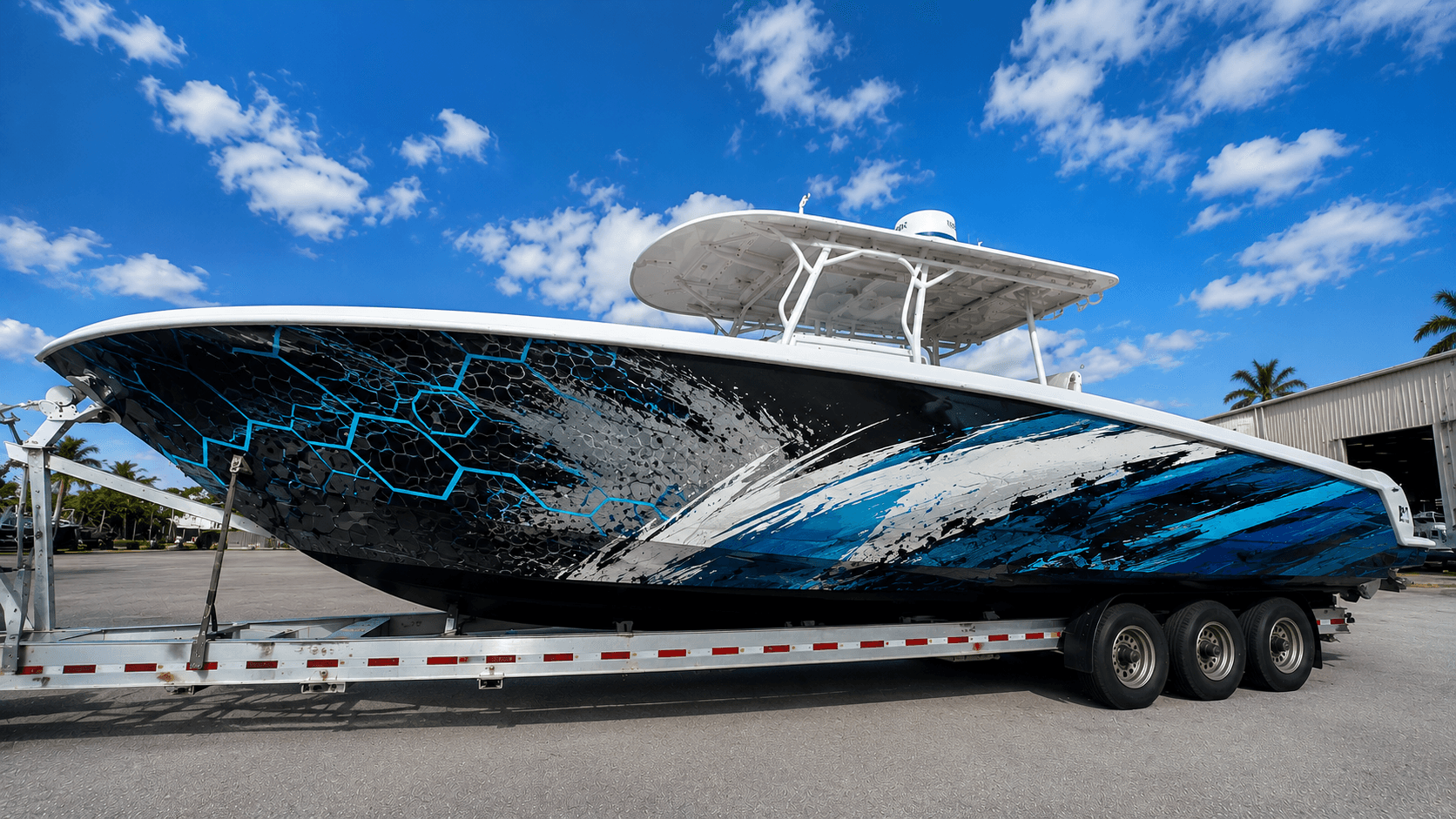
Trailered boats lead double lives. They spend time on the water and time on the road, and both can be hard on a wrap. Road grit, trailer bunks, rollers, and straps all touch the hull in places that boats kept in the water never experience. With some planning, a trailered boat can still keep a wrap looking good.
Where the trailer touches the hull#
Check these points before your wrap is designed:
- Bunks along the bottom of the hull
- Rollers, which press on small areas
- Guide-ons or side bunks near the hull sides
- The bow stop and winch strap
- Transom tie-down straps
If a wrap extends into these contact areas, it can wear quickly. Many trailered boats keep film above the bunks and away from the bow stop.
Prepare the trailer first#
A well-maintained trailer protects the wrap:
- Replace worn or torn bunk carpet
- Clean grit and shell fragments from bunks and rollers
- Check that rollers spin freely and have no sharp edges
- Adjust guide-ons so they do not rub the hull when loading
- Pad straps where they cross the hull or gunwale
Road debris#
Stones and grit thrown up by the tow vehicle and trailer tires can chip paint and cut film, especially on the lower bow. Mud flaps on the tow vehicle and trailer fenders that cover the tires help. Some owners add clear protection film to the lower bow, where impacts are most common. Our paint protection film service explains how this differs from a color wrap.
Launching and loading#
Ramps can be busy, but rushing causes damage. Line up straight so the hull does not drag along the guide-ons. Keep the winch strap from rubbing across the film, and check that nothing scrapes the hull as the boat comes out. After each trip, rinse the boat and trailer, especially after launching in salt water.
Covers on the road#
Trailering covers protect a boat, but a loose cover can flap against film at highway speed and wear it down. Use a cover designed for towing, strap it tightly, and check that the straps are padded. If the cover is not rated for towing, take it off before you drive.
Plan the design around the trailer#
Talk to your installer about your trailer setup before the design is finished. Keeping the lower edge of the wrap above the bunks, or using simpler graphics in high-contact areas, can save repairs later. For boats used mainly on lakes and bays, see our vinyl boat wraps page for coverage options.
Storing a trailered boat between trips#
How the boat sits between trips matters too. A boat left on its trailer outdoors gets full sun on the same side day after day, so fade can be uneven. Park it in shade where possible, or use a breathable cover that is strapped tight. Check tire pressure and bunk condition while you are there, since a sagging bunk can shift the hull against a guide-on.