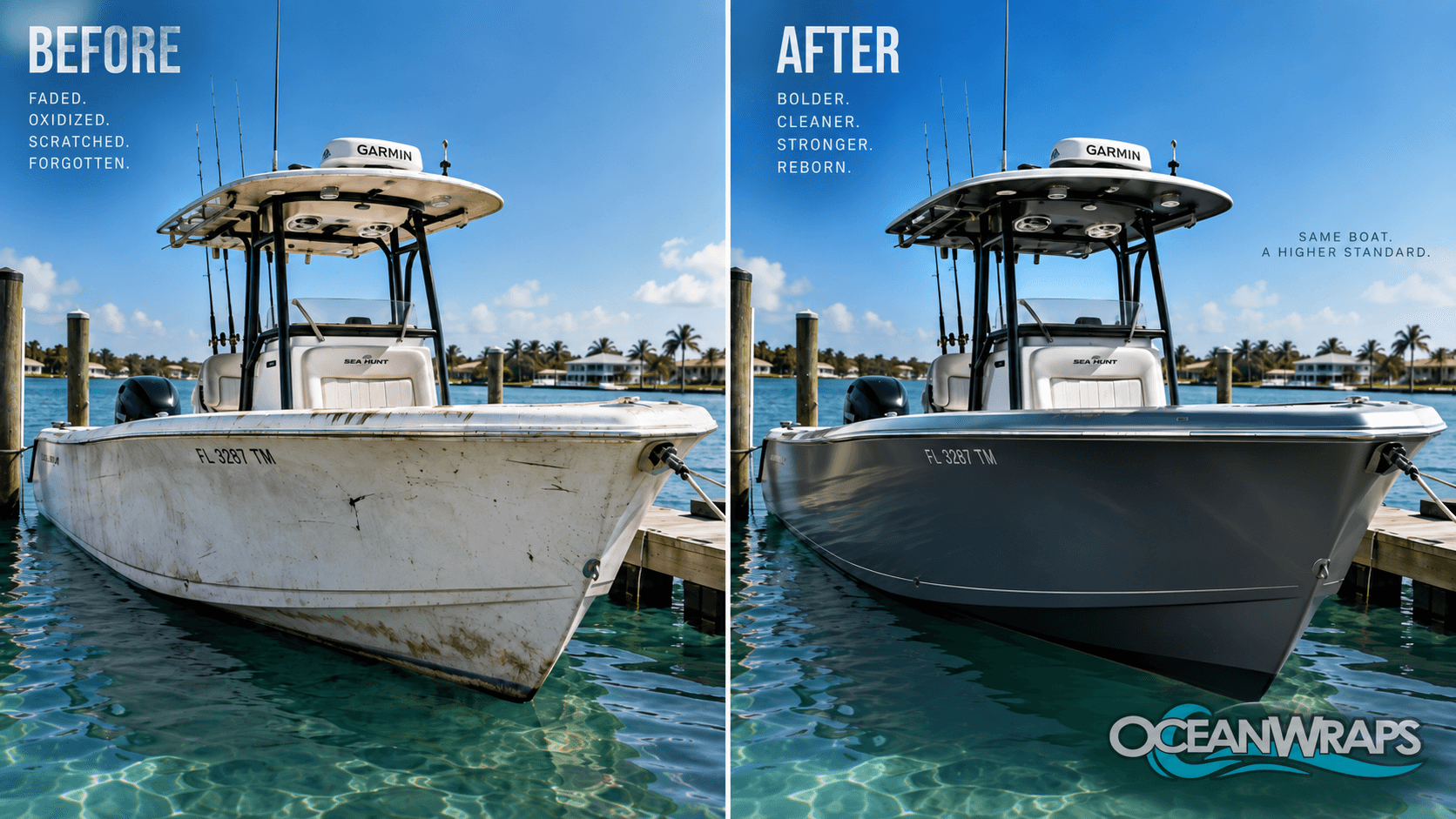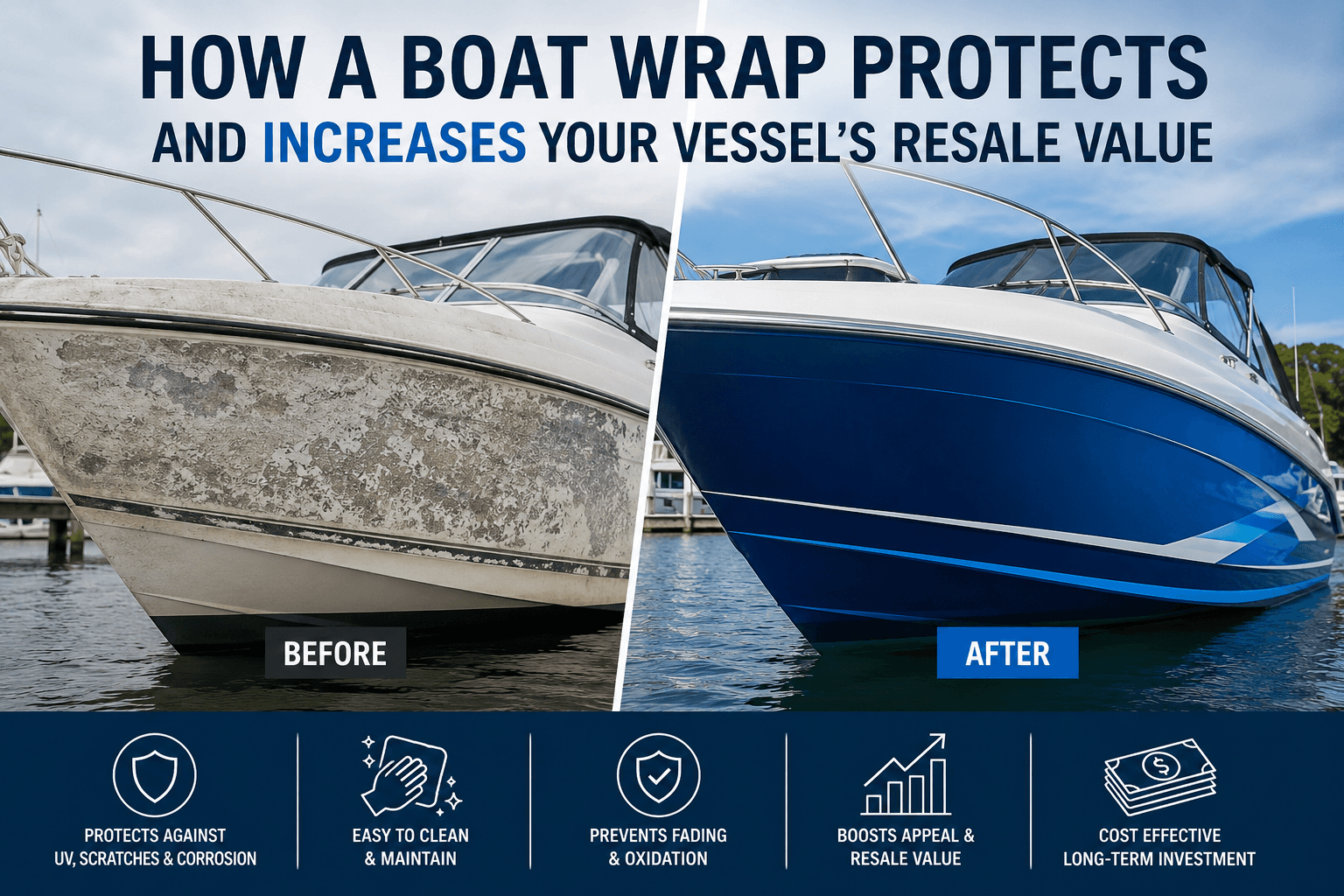
Salt on its own is only part of the problem. As spray dries, it leaves a crust that holds grit against the film, attracts moisture, and can work its way into edges. In the Caribbean, where boats may spend months away from easy shore water, a realistic saltwater routine can do a lot to preserve a wrap.
How salt affects a wrap#
Dried salt can dull a wrap's surface and leave visible marks. Wiping it off dry can cause scratches, because the crystals work like a fine abrasive. Salt also collects along seams, around fittings, and at the lower edges of panels, where it can hold moisture against the film. Keeping these spots clean is more important than making the whole boat look spotless.
A rinse routine for regular marina access#
When you have shore water, follow this basic routine:
- Rinse from the top down to wash salt off rather than rubbing it in
- Use plenty of water before touching the surface with a mitt
- Wash with a mild, wrap-safe soap and a soft mitt or brush
- Rinse seams and fittings carefully, without forcing water under edges
- Dry the boat if your water leaves spots
When fresh water is limited#
Cruisers and remote charter boats often need to ration water. In this case, prioritize:
- Sun-exposed panels, where salt can bake on
- Edges, seams, and around fittings
- The areas that guests touch and lean against
Before you fill the tanks or arrive at a marina, plan a thorough wash for when water becomes available. Using a spray bottle and a soft microfiber for spot cleaning can help between washes, but wet the surface first and never rub dry salt. Also use a clean cloth, so you're not grinding salt into the film.
Avoid these saltwater mistakes#
- Dragging a dry cloth or chamois across a salty surface
- Using strong pressure on edges
- Leaving dirty fenders against the hull
- Applying polish over salt residue
- Using household cleaners, which may be too harsh for film
- Waiting until haul-out to deal with lifted edges
Don't forget the waterline#
Waterline edges have a hard life, since they're constantly wet and can develop growth. Make sure your wrap stops at an appropriate height above the waterline, and take care cleaning near the lower edge. Scrubbing growth from the waterline is a common source of edge damage, so use soft tools and work parallel to the edge, not against it. Anyone who cleans your boat, including hired hull cleaners, should know that the boat is wrapped.
Seasonal deep clean#
Plan a closer check when you reach a good marina or at a haul-out, ideally at least once a season. Wash thoroughly, inspect all edges, and record anything that needs repair. Reach out to your installer early if you need help. Remote locations can make repairs slower to arrange, so catching problems early matters even more here.
Frequently asked questions#
Can I rinse a wrap with seawater?#
A seawater rinse can remove loose dirt, but it leaves salt behind. Follow it with a freshwater rinse as soon as you can.
Should I wax a wrapped boat?#
Only use products approved for your film. Some waxes can stain or damage certain finishes, especially matte and satin.
Can you help with a wrap in the Caribbean?#
Yes. Let us know where you are on our Caribbean boat wraps page. Our lifespan guide also has more information about what affects how long film lasts.