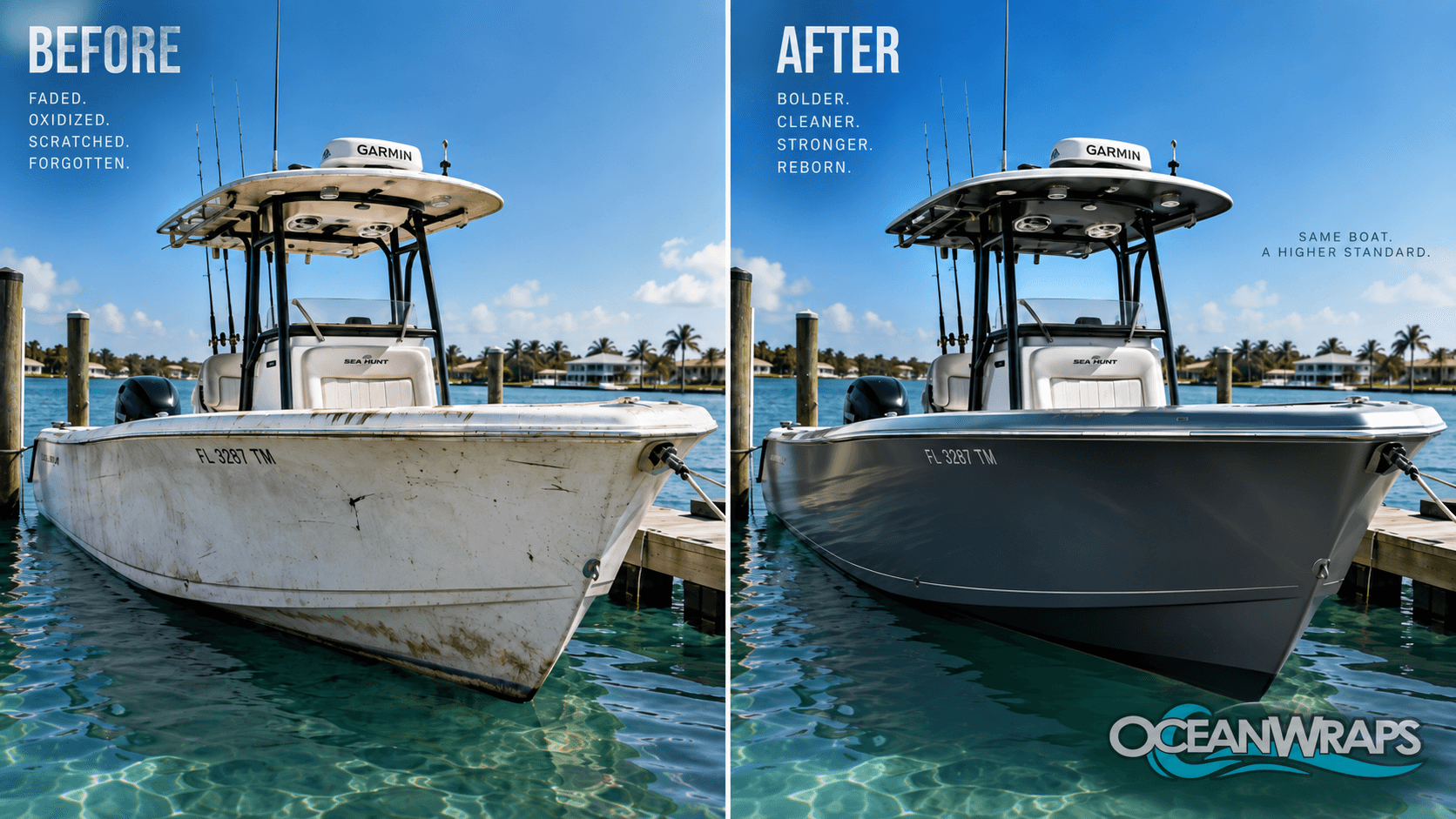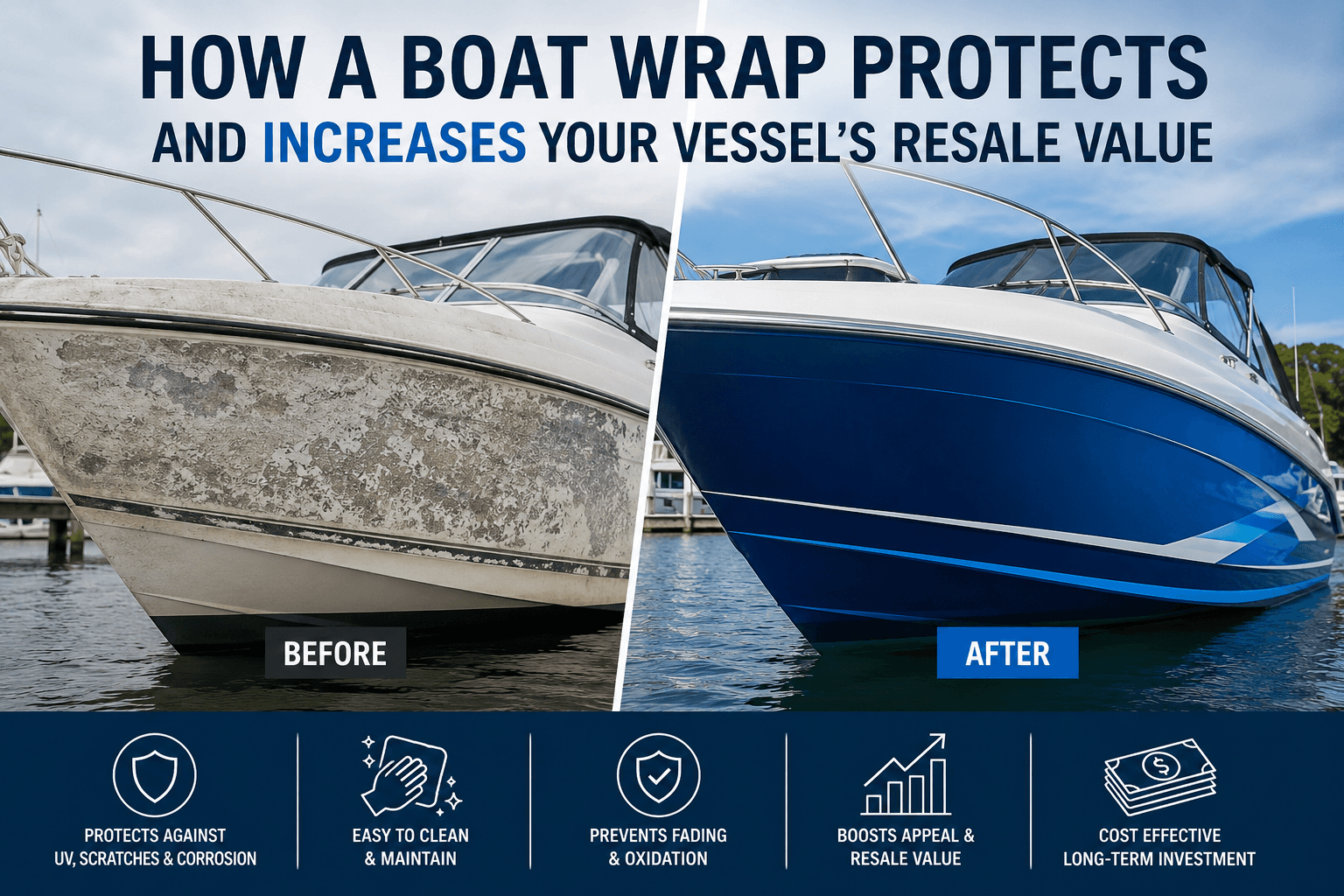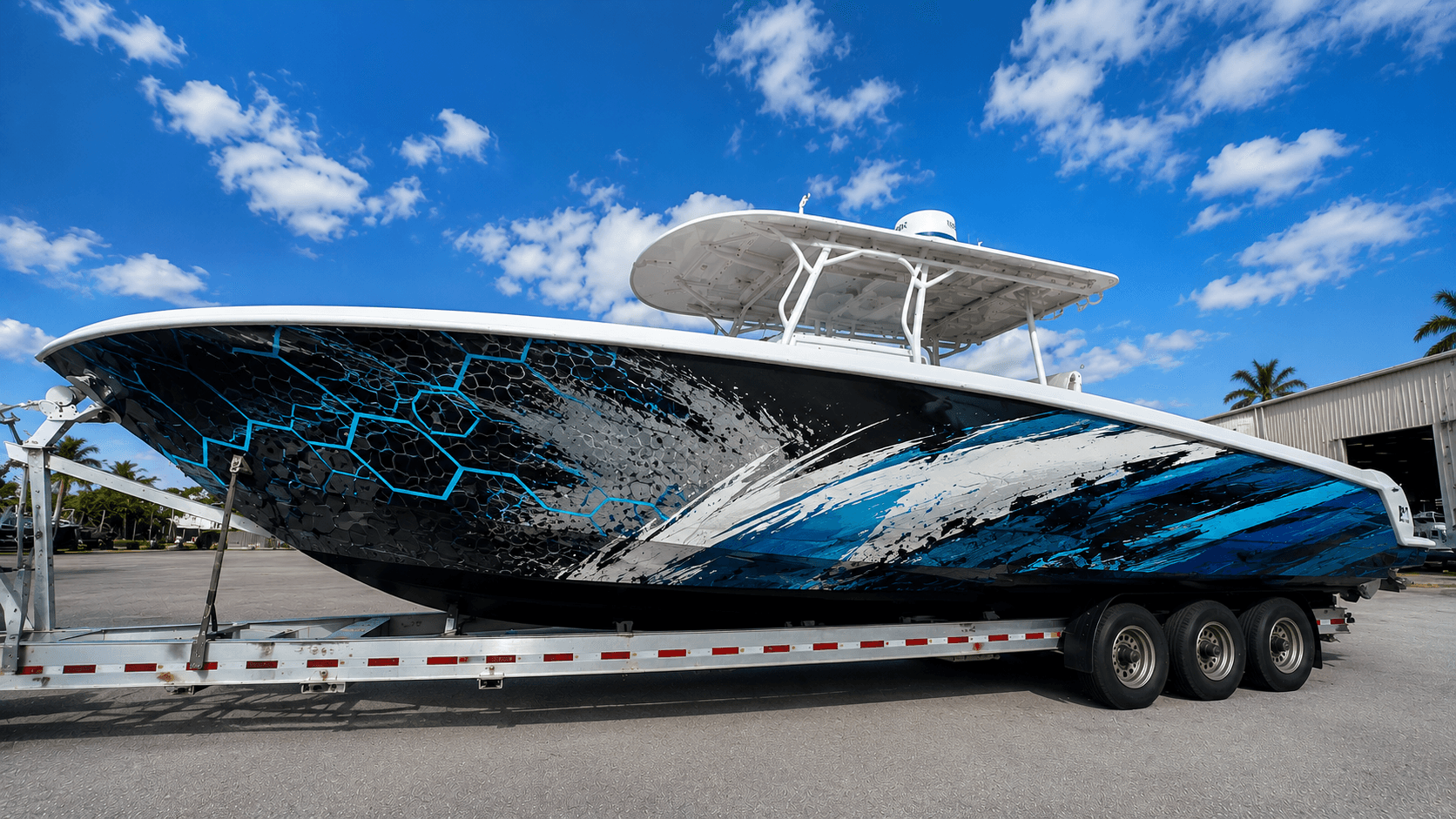
From a few yards away, most fresh wraps look good. The difference shows up up close: in the seams, the corners, and the areas around fittings. If you are comparing installers in Miami or checking finished work, these are the details worth looking at.
Seams and overlaps#
Long hulls often can't be covered in a single piece. Good seam work means:
- Seams are planned, not placed wherever a roll runs out
- They follow body lines or design breaks where possible
- Overlaps generally face away from the direction of water flow
- Printed designs line up across the join
- There are no dirt-catching gaps at the overlap
A visible seam is not automatically a fault, but a poorly placed one is. Ask to see the planned seam locations before work begins.
Relief cuts and tight corners#
Film can only stretch so far. On complex shapes, such as around vents or sharp recesses, installers make small relief cuts so that the film can lie flat without excess tension. These should be neat and deliberate, and they should not cut into the surface below. If you see gouges in the gelcoat or knife marks next to a seam, ask how the cutting was done.
Post-heating#
Stretched film has a "memory" and can try to return to its original shape. Many film makers recommend post-heating stretched areas and recessed curves to a specified temperature, which helps the film to stay in place. It is usually an unglamorous step, but skipping it can lead to lifting weeks later. Ask your installer how they follow the film maker's post-heat method and how they verify it.
Tucks and edge wraps#
Where possible, film should wrap around an edge and end on a less visible, more protected surface. A clean tuck under a rub rail or around a hull edge usually lasts better than a film edge left on an exposed face. Check that edges have been fully pressed down, with no folds or trapped air.
Fittings and hardware#
Well-finished wraps look as though they were there before the hardware was fitted. Where hardware can be removed, film should run underneath it and be properly sealed when the fitting returns. When it can't be removed, the cuts around it should be neat and close. Around through-hulls and vents, also check that water can drain without collecting under an edge.
A final inspection checklist#
Before you sign off, walk the boat in good light and look for:
- Bubbles, wrinkles, or trapped debris
- Stretch marks or color changes on curves
- Lifted edges or corners
- Crooked lines or poor pattern alignment
- Scratches on the hull, glass, or trim
- Leftover adhesive or masking material
Small bubbles may settle in some film types, so ask which ones to monitor and which need attention.
Frequently asked questions#
How do I know if a seam is acceptable?#
It should be straight, tight, and consistent, and ideally be positioned along a natural break. If it looks out of place, ask why it was placed there.
Are all edges sealed with sealant?#
No. Some systems do not need it in most places, and others may use it in specific areas. Follow the film maker's guidance.
How should I care for finished edges?#
Our Naples edge-sealing checklist explains how to inspect them. For local projects, see our Miami boat wraps page.