Two boat wrap quotes can look alike and still perform very differently after a few seasons under Caribbean sun. Durability is hard to judge from a brochure, so it helps to know which questions reveal the most about a film and the way it will be installed.
Why brochure numbers can mislead#
A film's rated life often assumes particular conditions, such as a certain climate, angle of exposure, and use. A hull running in the tropics may see very different conditions. Treat a headline number as a starting point, and ask what it covers for marine use. Also ask whether the rating applies to the color you want, as some colors and print combinations can behave differently.
Our site uses 5–7 years as a planning range for a properly specified wrap with good care, and our boat wrap lifespan guide explains why results vary.
Questions to ask about any film#
- Is the film cast or calendered, and is it suitable for curved marine surfaces?
- Is it specifically approved or recommended for marine use?
- Which overlaminate is being paired with a printed design?
- Does the manufacturer offer a warranty for this use, and what does it exclude?
- Who is responsible if a problem turns out to be installation-related?
Get the product names in writing. A quote that only says "premium marine vinyl" gives you little to compare.
Four signs of wear to compare over time#
If you have seen wrapped boats in your harbor, or you are assessing your own, look at these points:
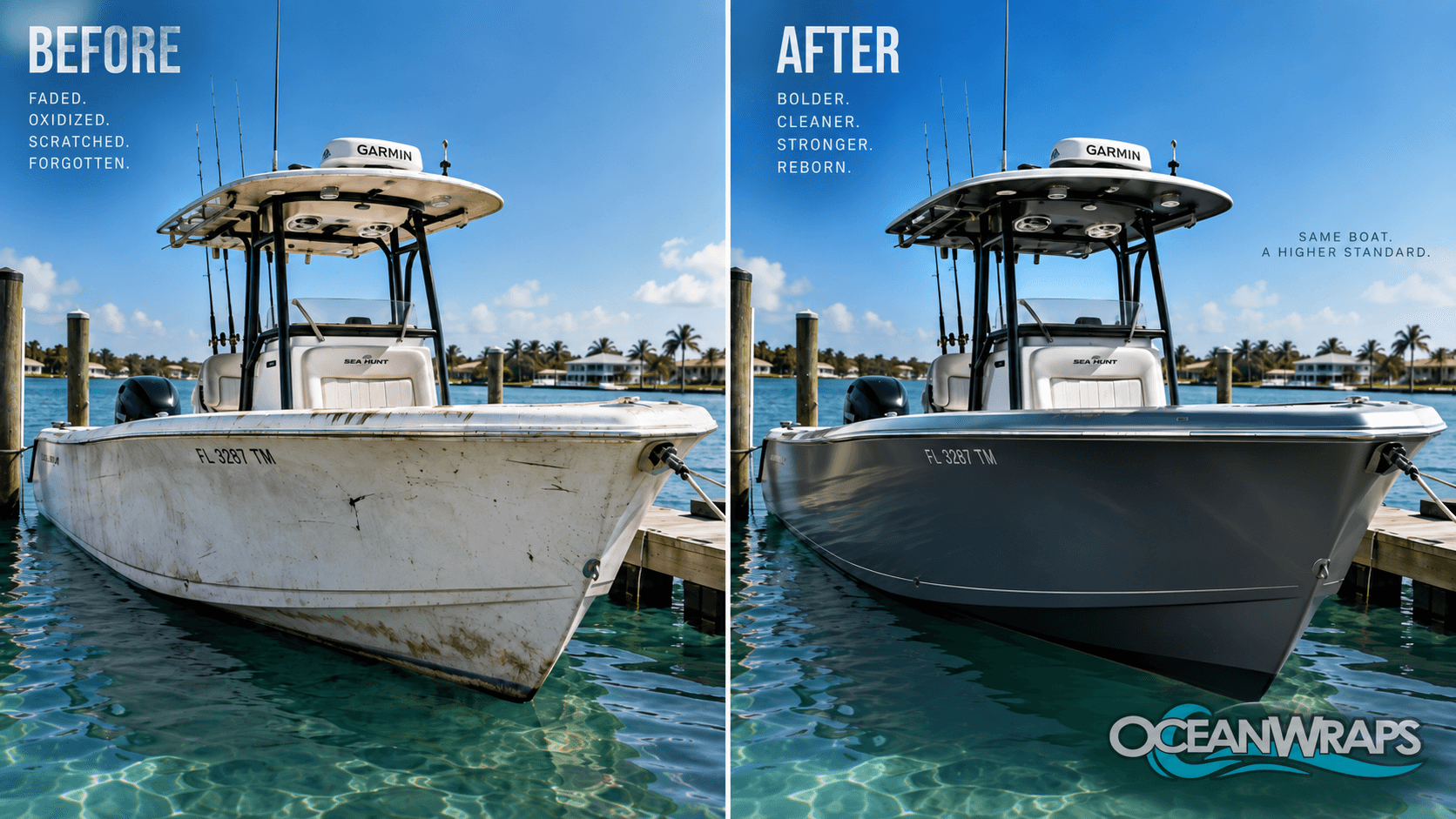
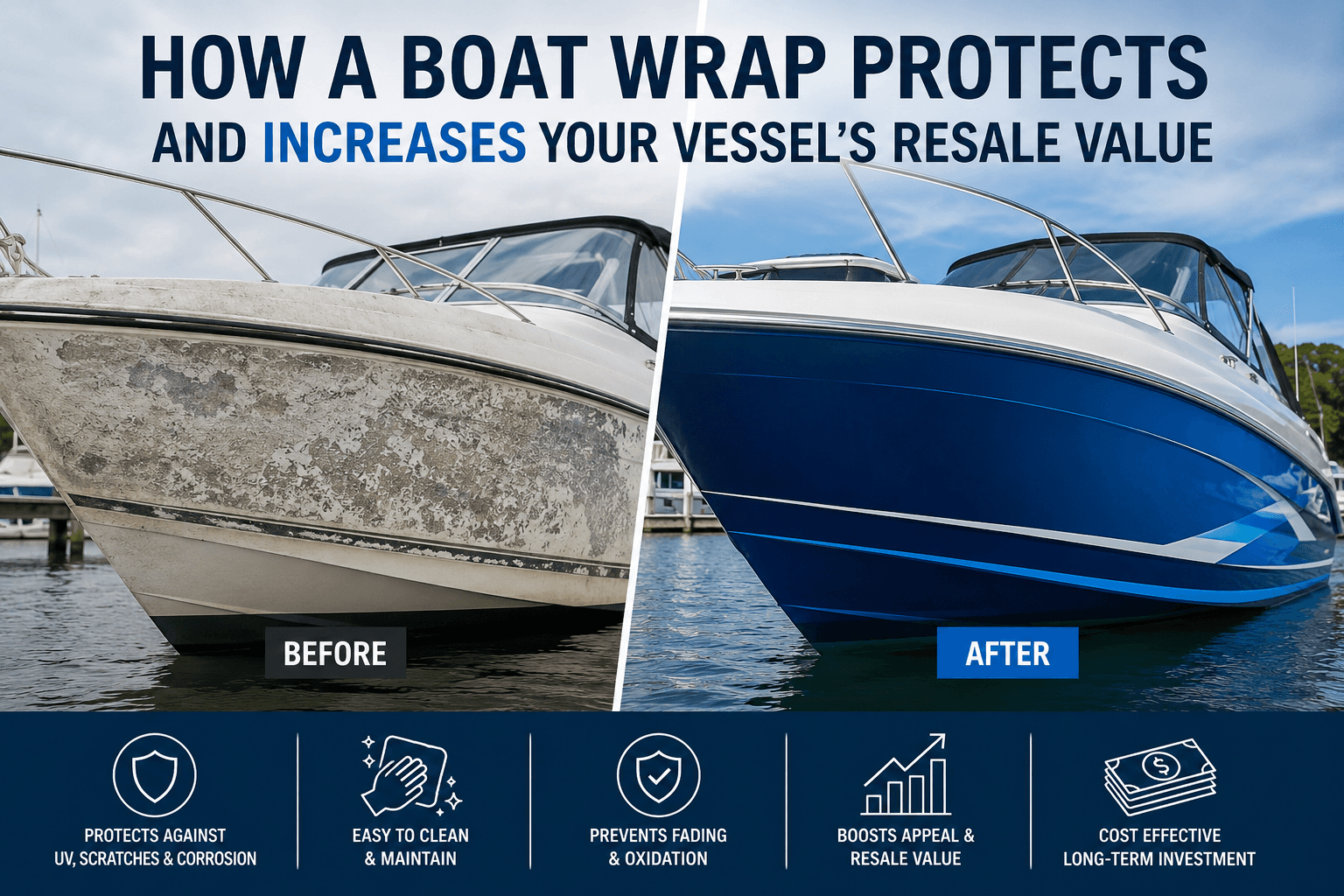
- Fade: Compare sun-facing surfaces with shaded ones. Differences reveal how much color has shifted.
- Gloss loss: Look at how sharply the surface reflects its surroundings.
- Edge condition: Check for lifting, shrinkage, or a dirt line around cut edges.
- Surface chalking or cracking: These signs often mean the film is near the end of its useful life.
What affects durability besides the film#
Even a strong product can fail early for other reasons. Surface preparation, the condition of the underlying gelcoat or paint, how edges were finished, and later care all play a large part. Horizontal surfaces generally take more sun than vertical hull sides, so a deck section may age quicker than a topside panel. A boat kept under cover or on a lift can also age differently from one moored in full sun all year.
Keep your own records#
Create a simple file for your wrap, which should include the film and laminate product names, batch details if available, the installation date, and photos taken from fixed spots each year. These records make warranty conversations easier and give you real evidence about how your wrap is ageing.
Frequently asked questions#
Which color lasts longest in tropical sun?#
This varies by film range, so ask for the manufacturer's data on the specific color. Printed designs also depend on their inks and overlaminate.
Does salt water shorten a wrap's life?#
Salt residue can dry on the film and hold abrasive grit against it, so regular freshwater rinsing is important. Sun exposure is usually a major factor too.
Can you help me compare options?#
Yes. Tell us about your boat through our Caribbean boat wrap page, and we can talk through suitable film systems.