Boat owners in Miami sometimes hear that a wrap will "stop corrosion". That is misleading. Vinyl can shield the surface it covers from direct contact with salt spray, but it is not a corrosion treatment. Understanding the difference can save you from a costly surprise later.
What a wrap can protect#
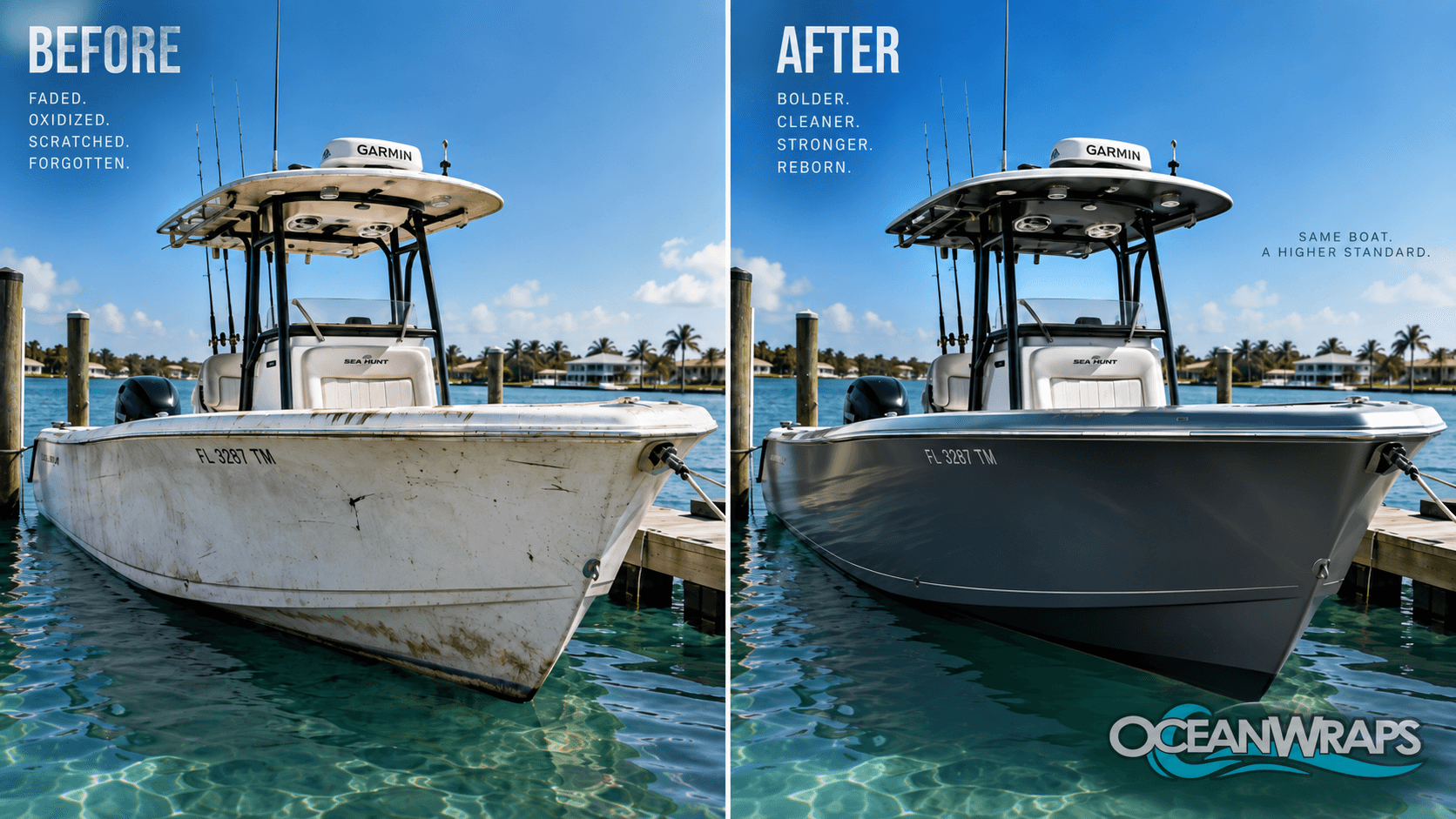
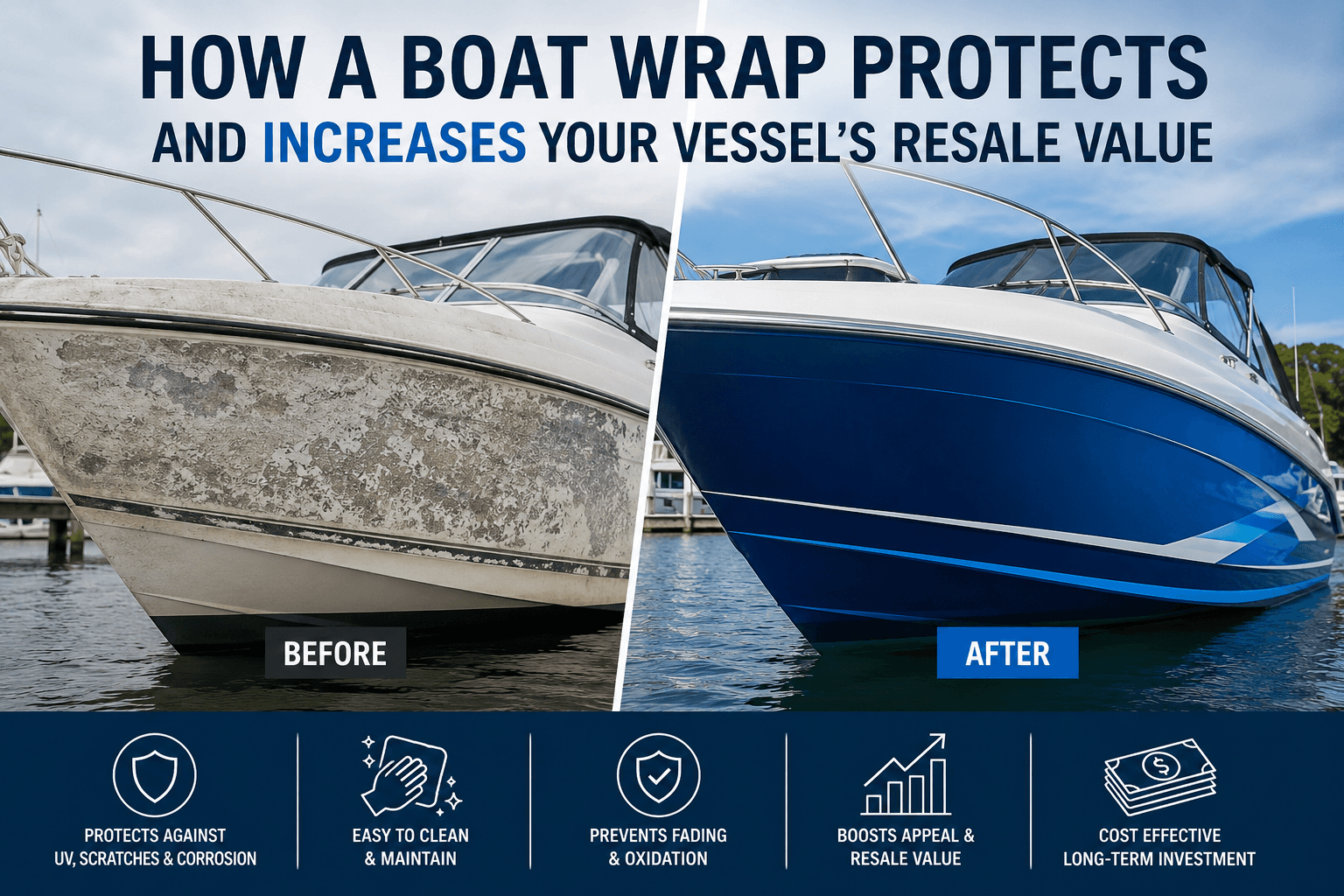
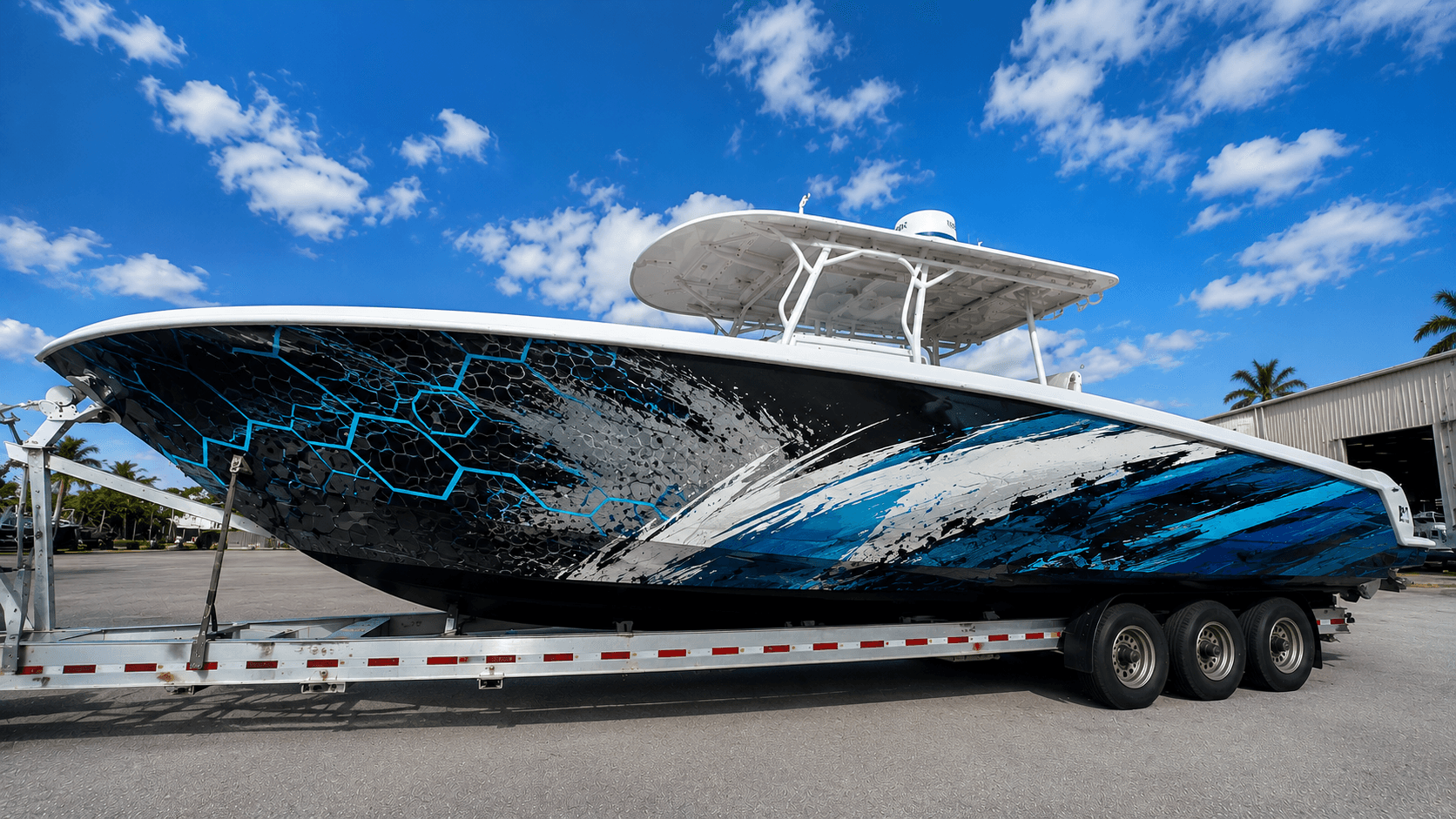
A properly installed wrap creates a barrier over sound surfaces such as gelcoat and painted panels. This limits direct contact with salt residue and sun on the covered area, which may help preserve the look of the finish underneath.
What a wrap cannot protect#
Corrosion problems usually involve metal, and a wrap does not treat them. Keep in mind:
- It will not stop corrosion that has already started under paint or around a fitting
- It does not protect engines, shafts, seacocks, or electrical connections
- It does not replace anodes or corrosion-protection systems
- It should not cover any surface where corrosion needs monitoring
In some cases, wrapping over a failing metal surface can hide a problem while it gets worse. That is why inspection comes first.
Aluminum hulls and metal surfaces#
Aluminum boats and metal superstructures need extra caution. Paint blisters, bubbling, or chalky white deposits can be signs of corrosion, and these need to be diagnosed and repaired before film goes on. Otherwise, the corrosion may continue under the wrap and eventually push the film up from below. Ask your yard or a marine professional to assess any suspicious areas first.
Where edges and fittings come in#
Salt is more likely to cause trouble where film ends. Around rails, cleats, and through-hull fittings, moisture and salt can sit in small gaps. Good practice at these points includes removing hardware where practical, finishing edges carefully, and using a suitable sealant at fittings where appropriate. Rebedding hardware and maintaining its sealant remains part of normal boat care, whether the hull is wrapped or not.
Signs of a problem under the film#
Check the following during regular washes:
- Rust stains running from a fitting across the wrap
- Bubbles or raised lines that were not there before
- White powder at the edge of a panel on aluminum
- Film lifting around screws or rivets
- Soft or swollen spots around hardware
If you notice any of these, have the area inspected, and do not simply press the film back down.
A simple salt routine for Miami boats#
- Rinse with fresh water after every saltwater outing, including hardware and edges
- Wash with a wrap-safe soap on a regular schedule
- Clean and protect metal fittings using products that will not harm the film
- Keep corrosive cleaners and acid-based products away from vinyl, or follow the film maker's advice
- Have your hardware and anodes checked as part of normal maintenance
Frequently asked questions#
Will wrapping an aluminum boat prevent corrosion?#
Not by itself. Correct prep, compatible coatings, and treating any existing corrosion all matter much more. The wrap should sit on a sound surface.
Can a wrap hide corrosion from a surveyor?#
It can make visual inspection harder, which is another reason to fix issues first and keep records.
Can you inspect my boat before quoting?#
Yes. Surface review is part of planning a wrap. Learn more on our Miami boat wraps page.