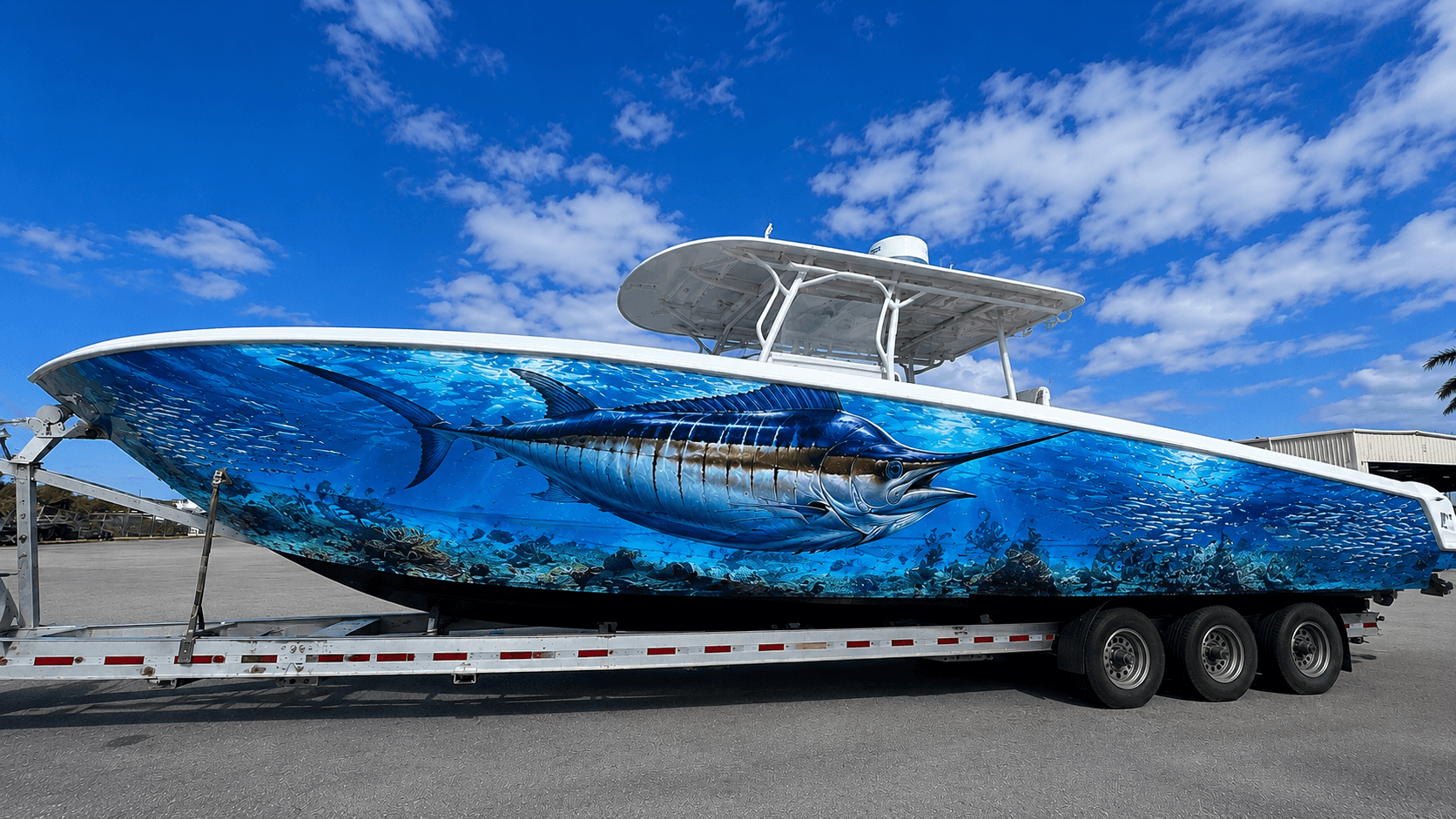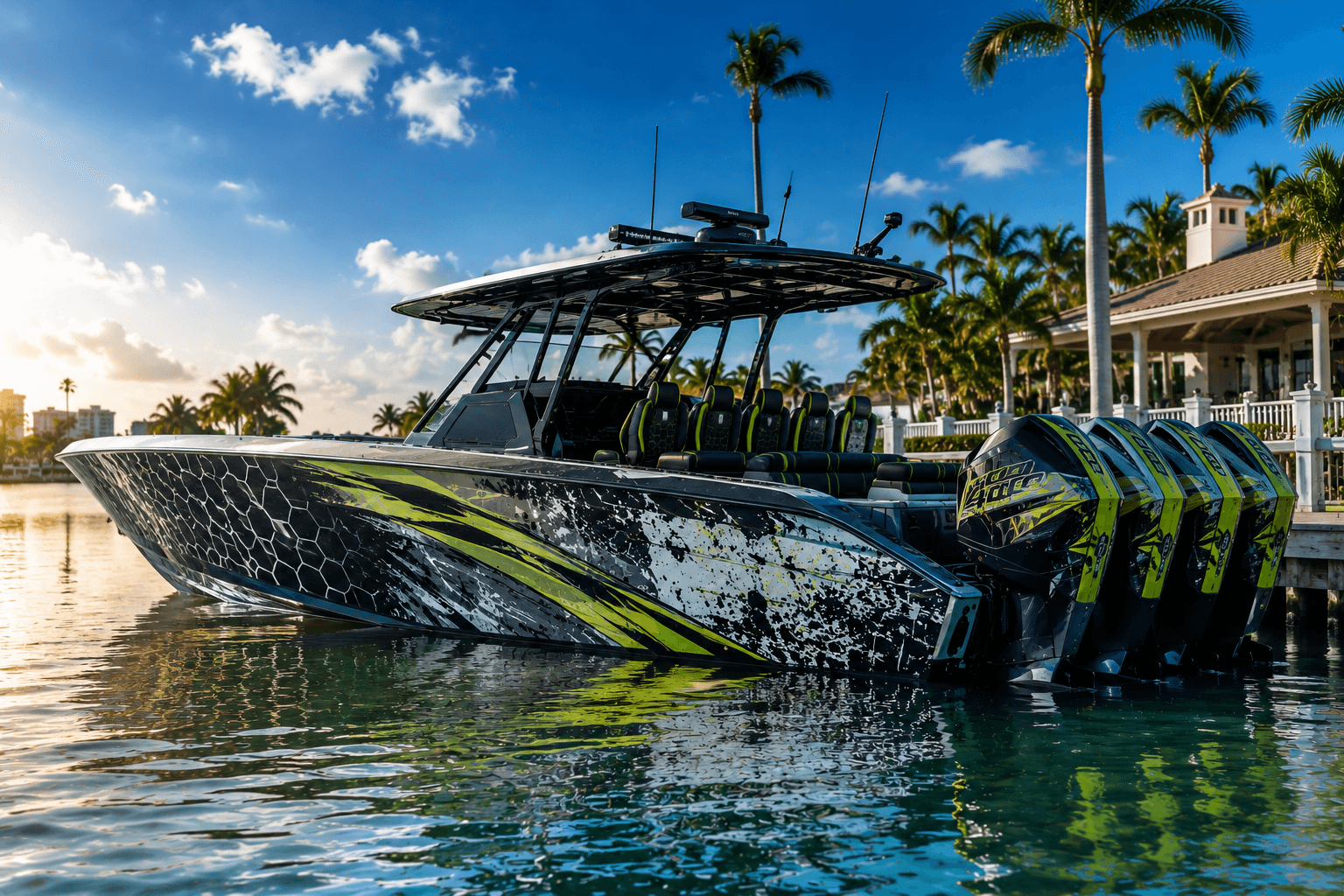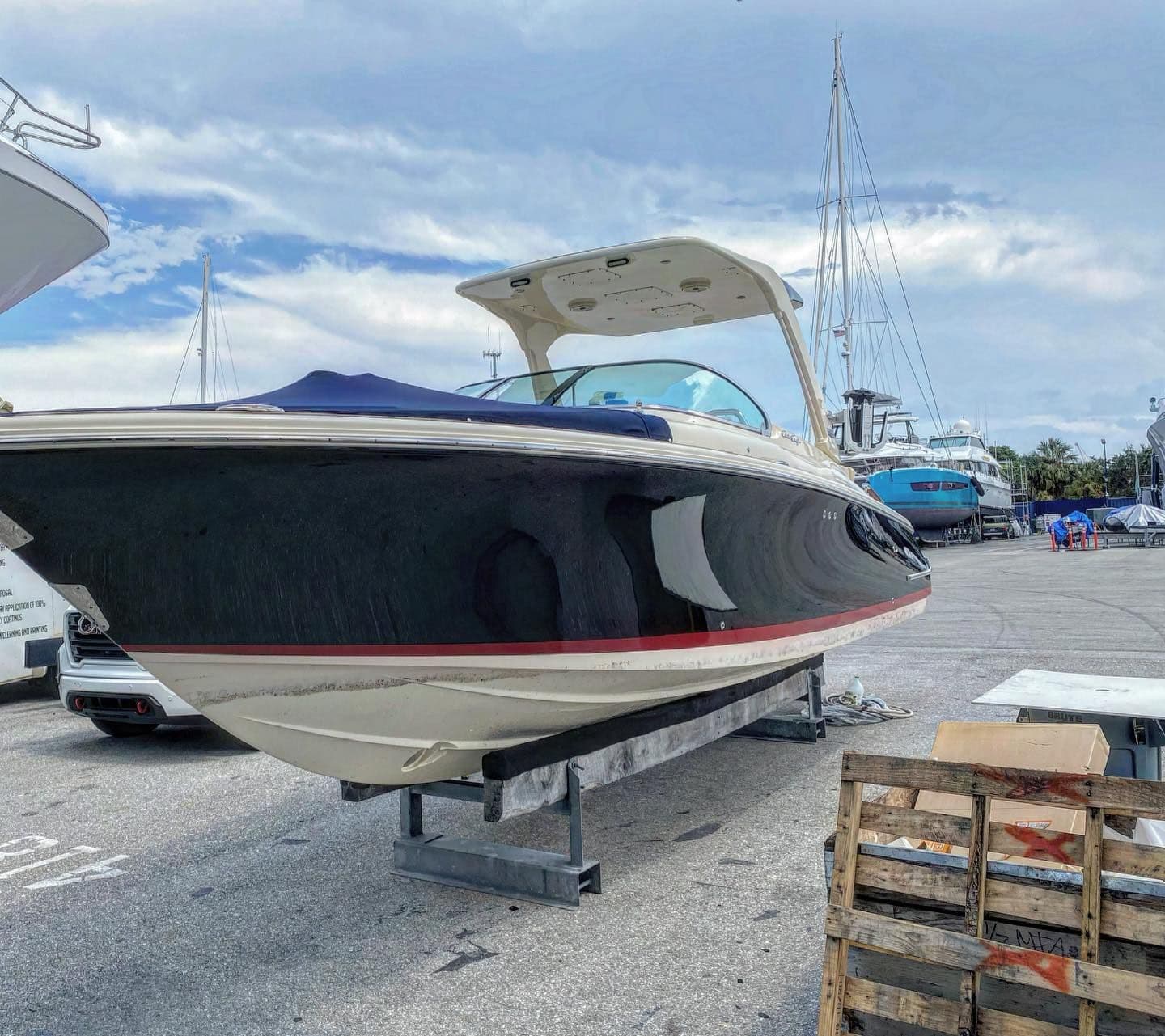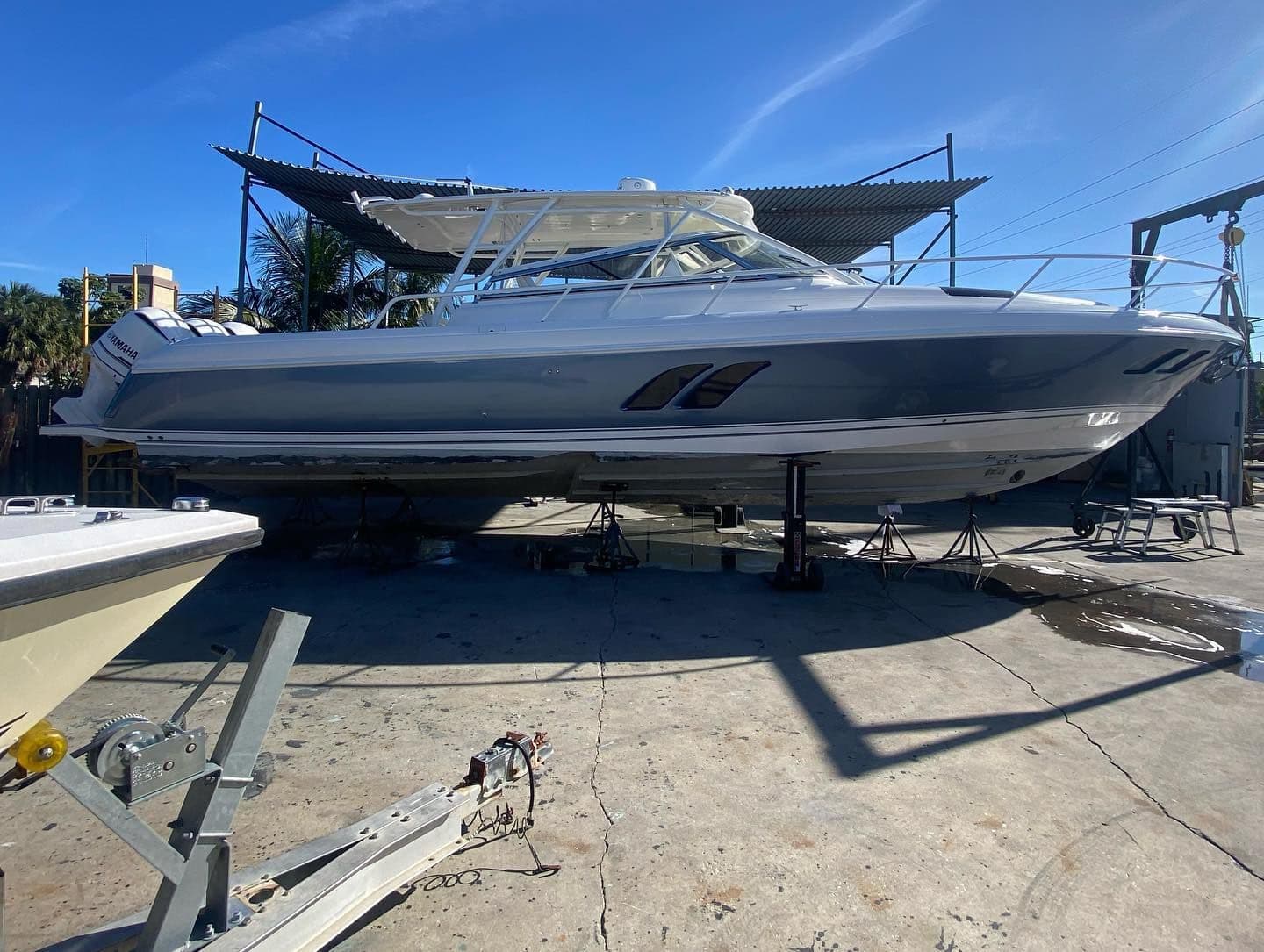

For commercial fishing operations, a vessel's exterior is more than a surface; it's a mobile billboard, a protective shell, and a statement of professionalism. Standard paint has limitations in this demanding role. Purpose-engineered boat wraps offer a superior solution, merging extreme durability with powerful fleet identification. This page details the specific considerations for applying high-performance vinyl wraps to commercial fishing hulls and topsides, focusing on materials that endure and graphics that unify your fleet.
Key Takeaways#
- Marine-grade cast vinyl with protective laminate is the standard for long-term durability against salt, sun, and physical abrasion.
- A professional wrap transforms your vessel into a primary branding asset, ensuring instant recognition at the dock and on the water.
- Proper surface preparation, including gelcoat repair and degreasing, is the single most critical factor for wrap adhesion and longevity.
- Strategic design accounts for vessel curvature, hardware, and high-wear areas to ensure a clean install and easier maintenance.
- Unlike paint, a high-quality wrap can be removed, allowing for future rebranding or sale without damaging the underlying substrate.
- Working with an experienced installer like Ocean Wraps ensures correct material selection and techniques for the challenging marine environment.
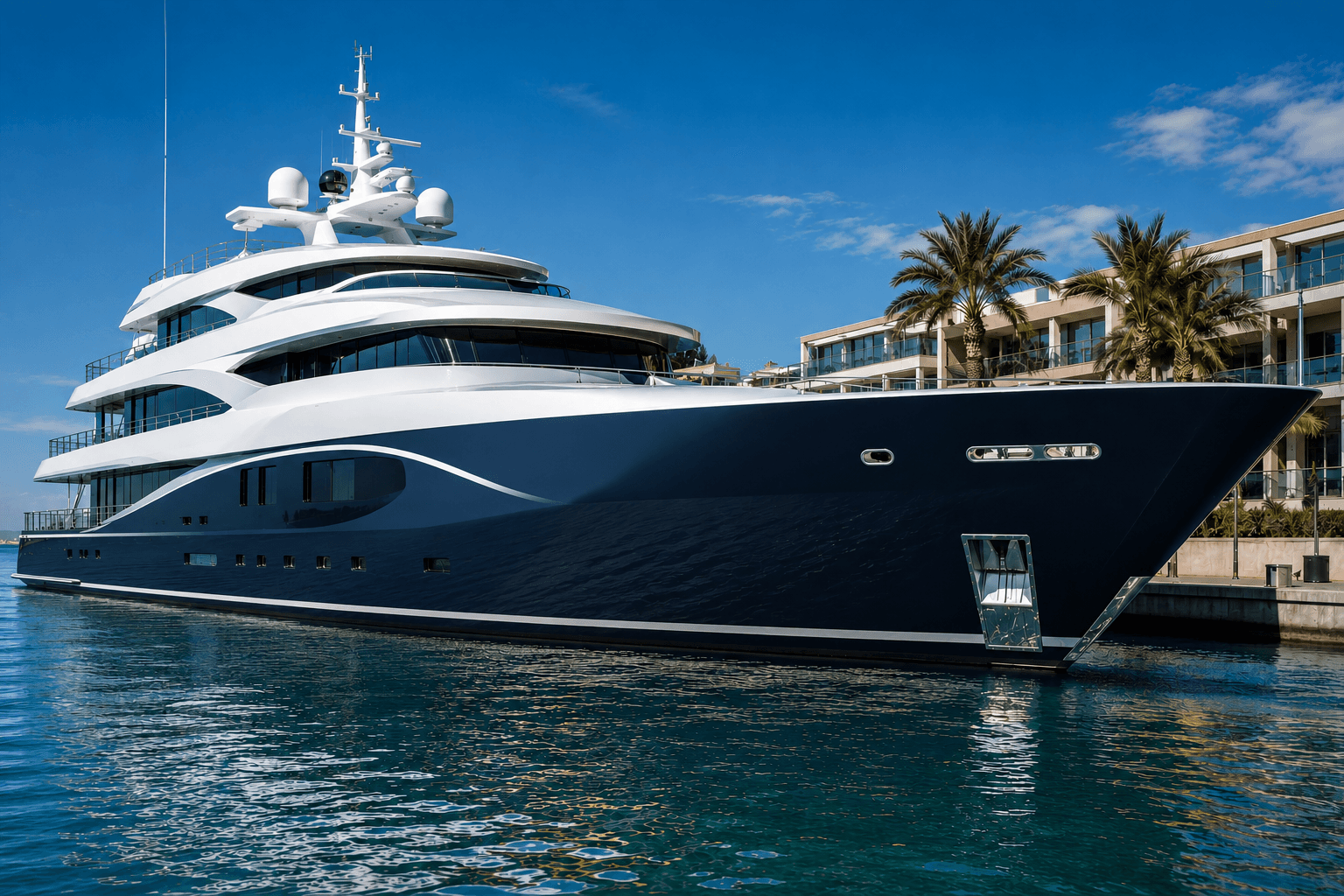
Why Boat Wraps Outperform Paint for Commercial Fleets#
The commercial fishing environment is a perfect storm of UV radiation, saltwater immersion, fuel spills, and physical contact with docks, gear, and catch. While paint can chip and fade, a professionally installed boat wrap system is engineered for this abuse. The vinyl itself provides a resilient, flexible skin, while the overlaminate acts as a sacrificial shield against UV degradation and minor scratches. This combination maintains color vibrancy and graphic integrity for years, far outperforming most painted finishes in terms of colorfastness and gloss retention.
Fleet Identification and Brand Cohesion#
Consistent graphics across your fleet projects stability, scale, and professionalism. It makes your vessels instantly identifiable to suppliers, buyers, and authorities. A custom wrap allows for full-color logos, vessel names, radio call signs, and safety markings to be integrated into a single, cohesive design. This level of branding is difficult and expensive to achieve with paint alone, especially for complex graphics or photorealistic imagery.
Materials & Finish Options#
Not all vinyl is suitable for marine use. The industry standard for long-term hull and topside applications is a three-layer system.
- Marine Cast Vinyl: This is the foundational film. Cast vinyl is manufactured to be highly conformable, allowing it to stretch and adhere smoothly over complex curves and rivets without wrinkling or lifting. It has superior dimensional stability compared to cheaper calendared films, meaning it resists shrinking and expanding with temperature fluctuations.
- Print-Receptive Layer: High-quality cast vinyl includes a consistent coating designed to accept solvent or latex inks, ensuring graphics are sharp and bonded to the vinyl.
- Protective Laminate: This clear, durable top layer is laminated over the printed graphics. It provides essential UV resistance, protects against abrasion from fenders and debris, and shields the ink from chemicals, fuel, and salt. Laminates are available in different gloss levels and textures.
Process Overview#
Surface Preparation#
The substrate must be clean, sound, and dry. This involves a thorough wash and degrease, removal of all waxes and contaminants, and sanding of the gelcoat to create a microscopically rough surface for optimal adhesive bonding. Any cracks or chips in the gelcoat must be repaired beforehand.
Design & Templating#
Graphics are designed to account for hatches, through-hulls, and other hardware. A digital template or physical measurements ensure graphics align correctly on the vessel. Considerations for sight lines from the marina and water are integrated.
Installation#
Panels are meticulously applied using a slip solution, allowing for precise positioning. Installers use heat and specialized tools to conform the material around tight radii and compound curves, ensuring no trapped air and firm adhesion.
Finishing & Sealing#
All edges are firmly sealed and post-heated to activate the adhesive fully. Trimming is done with precision. Hardware is reinstalled, and a final inspection ensures quality.
Practical Considerations for Commercial Vessels#
Success depends on addressing real-world conditions. First, edge sealing on a hull is critical; all cut lines must be burnished down to prevent water ingress. Second, understand your vessel's curvature; complex stems or bulwarks require expert handling to avoid bridging. Third, check marina rules if you plan to install on-site. Fourth, while wraps are durable, high-pressure washing directly on edges should be avoided. Finally, consider storage; prolonged, direct sun exposure when not in use will accelerate wear, though UV-resistant materials mitigate this.
FAQ#
How long do boat wraps last on commercial fishing vessels?#
With professional-grade marine vinyl and laminate, expect a service life of 5 to 7 years, depending on environmental exposure, maintenance, and physical wear. Harsh, year-round commercial use will be on the lower end of that range compared to seasonal recreational use.
Can you wrap over old paint or gelcoat?#
Yes, but the substrate must be stable. Loose, flaking, or chalky paint must be removed. The surface must be solid, clean, and properly prepared. A well-maintained gelcoat is an ideal substrate for vinyl wrap installation.
Does a wrap damage the underlying surface?#
When installed and removed correctly by professionals, a vinyl wrap will not damage a sound gelcoat or painted surface. In fact, it protects it from UV rays and minor abrasion. The removal process uses heat and careful technique to release the adhesive.
What maintenance is required for a wrapped hull?#
Routine washing with mild soap and water is sufficient. Avoid abrasive cleaners or pads. Periodically inspect edges and high-contact areas. Promptly clean off fuel spills or strong chemicals. This simple care maximizes the lifespan of the graphics.
A fleet's visual identity is a critical business asset. Durable, custom boat wraps ensure that asset withstands the toughest conditions while communicating professionalism on every horizon.