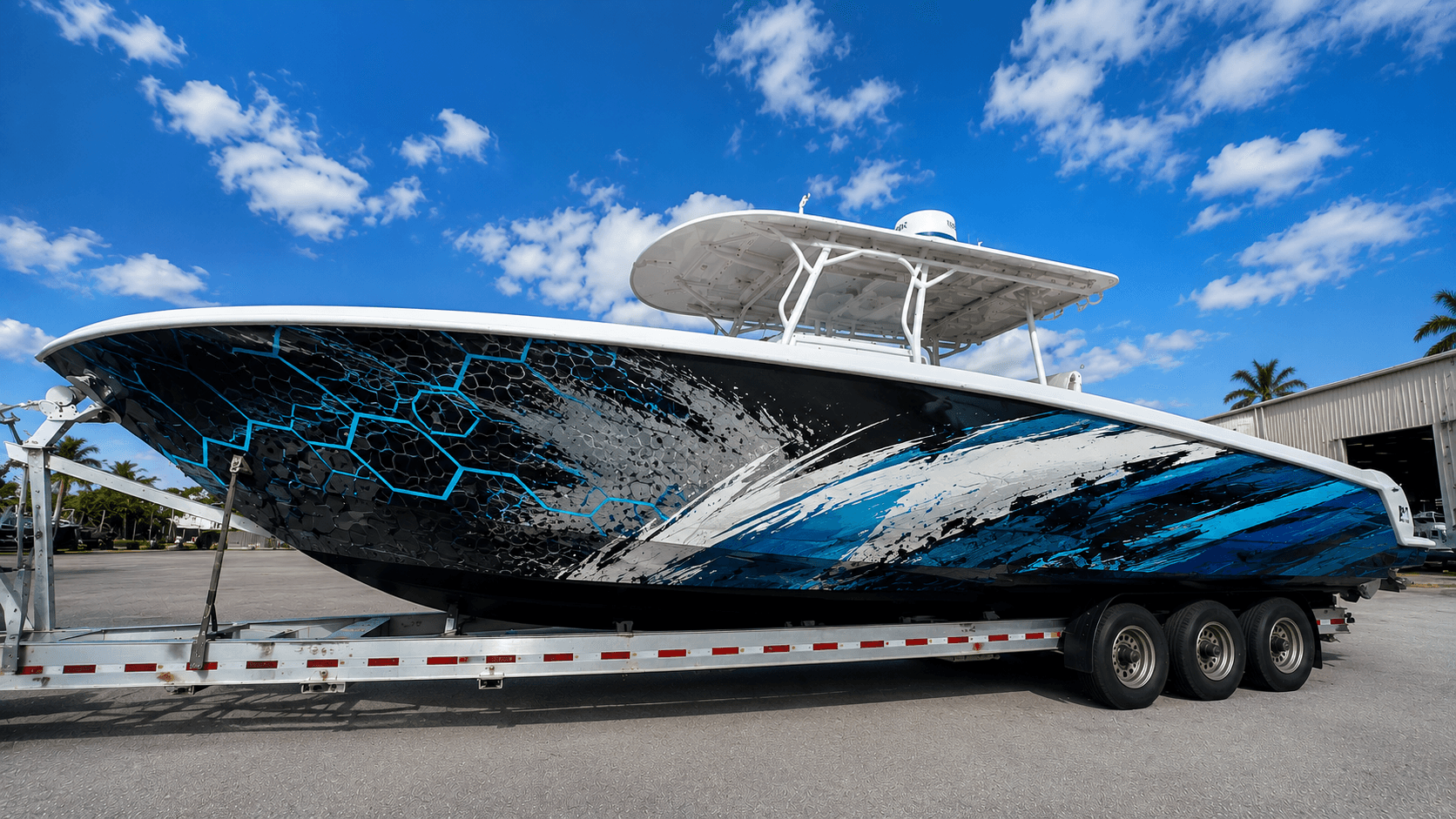
Purpose-built boat wraps for commercial fishing fleets. We detail durable marine vinyl materials, installation for hulls and topsides, and maximizing brand visi
Last updated February 22, 2026
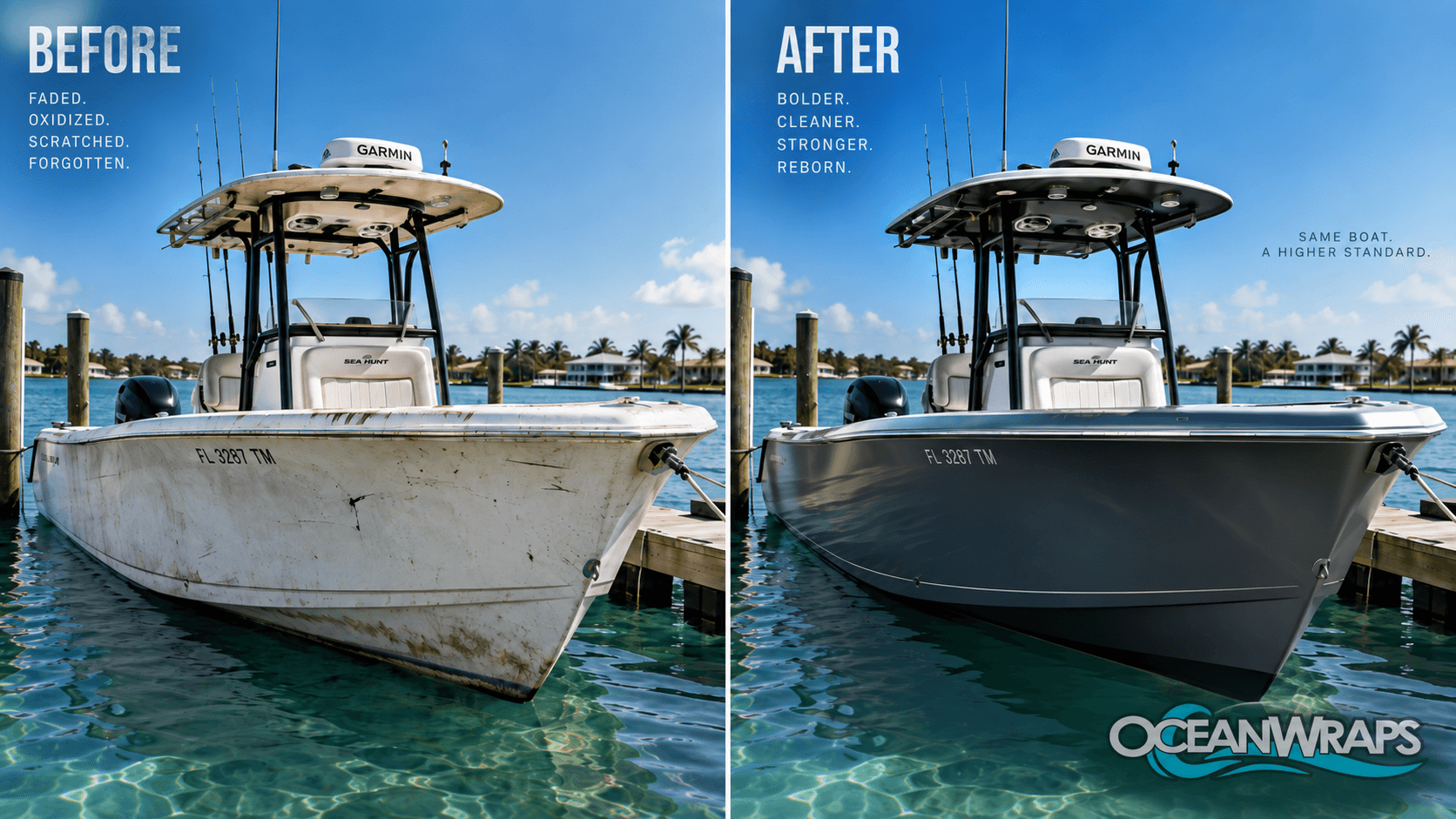
Boat wraps for commercial fishing operations, your vessel is a primary business asset and a mobile billboard. A professionally designed and installed boat wrap is a strategic investment that serves two critical functions: protecting your hull and topside substrates while transforming the vessel into a high-impact branding tool. Unlike generic signage, a marine-grade vinyl wrap for a workboat must be engineered for saltwater, UV exposure, physical abrasion, and constant washdowns. This page details the technical considerations for durable, long-lasting graphics on commercial fishing vessels.
Marine-grade cast vinyl with protective laminate is the standard for long-term durability against salt, sun, and abrasion on hulls and topsides.
Proper surface preparation, including dewaxing and degreasing the gelcoat, is non-negotiable for adhesion and wrap longevity.
Design must account for vessel curvature, hardware, and safety markings to ensure a professional, functional install.
A full hull wrap offers maximum brand visibility at the marina and on the water, acting as continuous advertising.
Professional installation includes precise edge sealing and post-heating to resist peeling in high-stress areas.
Regular freshwater washing and avoiding high-pressure nozzles directly on edges are best practices for maintenance.
The Demands on Commercial Fishing Vessel Graphics#
Graphics on a charter boat or yacht face one environment; graphics on a commercial fishing vessel face several simultaneously. The hull confronts constant saltwater immersion, potential impact from debris, and aggressive cleaning. The topsides and cabin face relentless UV radiation, salt spray, and frequent physical contact from gear and crew. A standard printed adhesive decal will fail quickly. The solution is a multi-layer system using flexible, high-tack vinyl engineered for marine use. This approach allows for full coverage of complex curves, providing a seamless protective layer and a unified brand image far superior to painted lettering.
Durability is not just about appearance; it is about cost-effectiveness and reducing vessel downtime. A wrap that cracks, fades, or peels requires costly removal and reapplication. A durable wrap protects the underlying gelcoat from UV degradation and minor abrasions, potentially preserving resale value. It must withstand daily washdowns with industrial cleaners and the mechanical stress of fenders rubbing against the dock. The materials selected must have a proven track record in these conditions.
The performance of a boat wrap is dictated by its material composition. The industry standard for long-term marine applications is a three-part system.
This is the foundational film. Cast vinyl is manufactured with superior dimensional stability, meaning it conforms to complex compound curves without shrinking or lifting over time. It contains UV inhibitors within the vinyl itself to resist fading. Its adhesive is formulated for long-term bonding to painted surfaces and gelcoat, even with thermal expansion and contraction.
The vinyl is printed with solvent or eco-solvent inks for color saturation and outdoor longevity. This printed layer is then sealed with a clear, protective laminate. This laminate is critical: it provides the first line of defense against abrasion, chemical exposure, and UV rays, shielding the printed ink from direct sunlight and physical wear. The laminate finish can be gloss for a deep, wet look or matte for a non-reflective, tactical appearance.
We assess the vessel, noting hull condition, curvature, and existing damage. The installation surface must be impeccably clean, sound, and dry. This involves a thorough dewaxing, degreasing, and mechanical decontamination of the gelcoat to ensure maximum adhesive bonding. Any compromised substrate must be addressed before proceeding.
Graphics are designed to scale, accounting for hatches, rails, through-hulls, and required safety markings. We often create digital templates from vessel photos to ensure precise fit for large hull sections, minimizing material waste and on-water installation time.
The design is printed on marine-grade cast vinyl, laminated, and precisely cut. Installation uses specialized tools and slip solutions to position large panels accurately. The installers work out air and water using squeegees, meticulously trimming around hardware.
The final and most critical phase is post-heating and edge sealing. Heat activates the adhesive and relaxes the vinyl for a permanent conform. All edges are firmly sealed and, where appropriate, a marine-grade edge sealant is applied to prevent water ingress, a common failure point on working vessels.
A commercial fishing vessel has unmatched advertising reach. It operates in front of competitors, suppliers, and the public daily. A full or partial hull wrap presents your logo, name, and contact information on a massive, moving canvas. The design can incorporate high-visibility colors and graphics that are legible from a distance, making your vessel stand out in a crowded harbor or fishing ground. This turns every transit into brand exposure, reinforcing your market presence more effectively than static land-based signage.
How long do boat wraps last on commercial vessels?#
With professional-grade marine materials and installation, expect a lifespan of 5 to 7 years. Actual longevity depends on environmental exposure, maintenance practices, and physical wear from fishing operations.
Yes, but the existing coating must be firmly adhered. Loose, flaking, or chalky paint must be removed. We test adhesion beforehand. It is often more reliable to apply wraps over stable factory gelcoat or a recently painted and fully cured surface.
Properly installed and removed, a vinyl wrap protects the gelcoat from UV fading and minor scratches. Removal requires professional techniques using heat and gentle adhesive removers designed for marine surfaces to avoid damage.
Lead time varies by vessel size and design complexity. After the initial consultation, allow 2-4 weeks for design, template approval, and material production. Installation itself typically requires 3-5 days of dry-dock access, depending on the vessel's size and the wrap's scope.
New Boat Prices Are Skyrocketing — Here's the Smarter Move Boat Owners Are Making
New boat prices are at record highs. Here's why more owners are choosing marine vinyl wraps to refresh their boat's look and protect the hull, without the cost of buying new
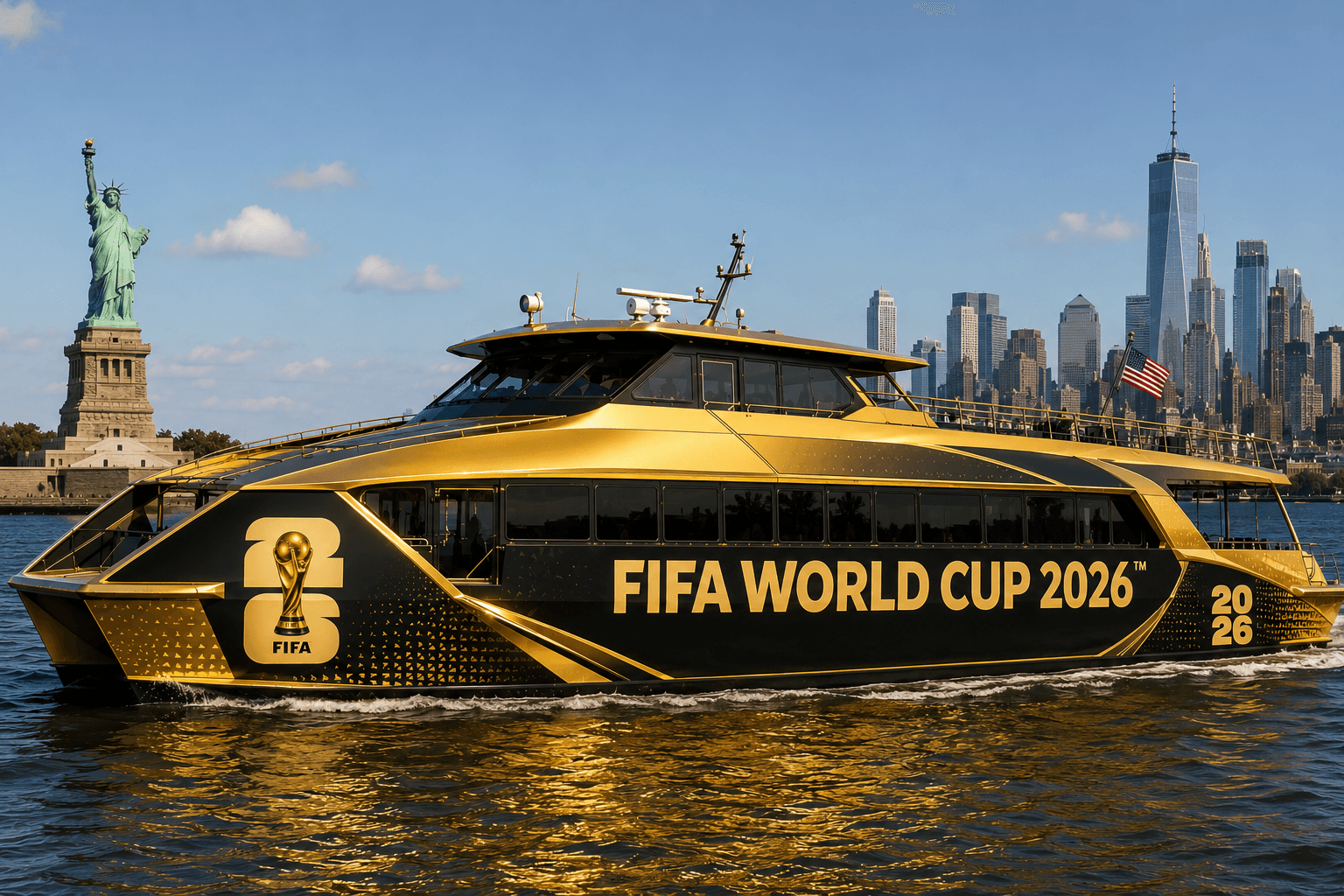
Get your boat ready for FIFA World Cup 2026 with a luxury custom wrap. Stand out on the water with premium marine graphics, gold finishes, and championship-inspired designs.
New Boat Prices Are Skyrocketing — Here's the Smarter Move Boat Owners Are Making
New boat prices are at record highs. Here's why more owners are choosing marine vinyl wraps to refresh their boat's look and protect the hull, without the cost of buying new
Boat Wraps Services
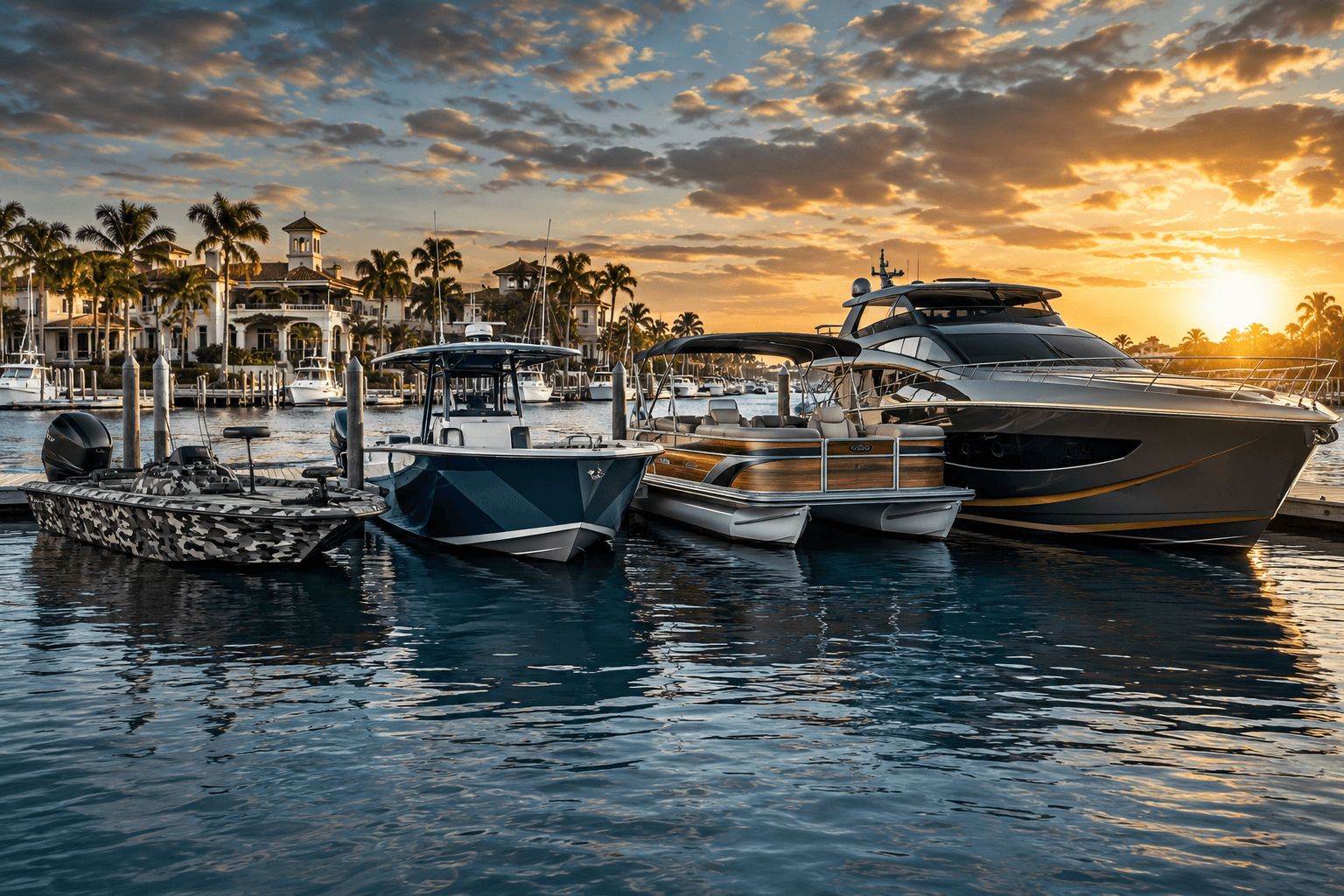
Boat Wrap Designs by Boat Type: What Actually Works on Your Vessel
A wrap that's perfect for a sportfishing boat chasing marlin offshore would look completely out of place on a family pontoon.
Boat Wraps Services
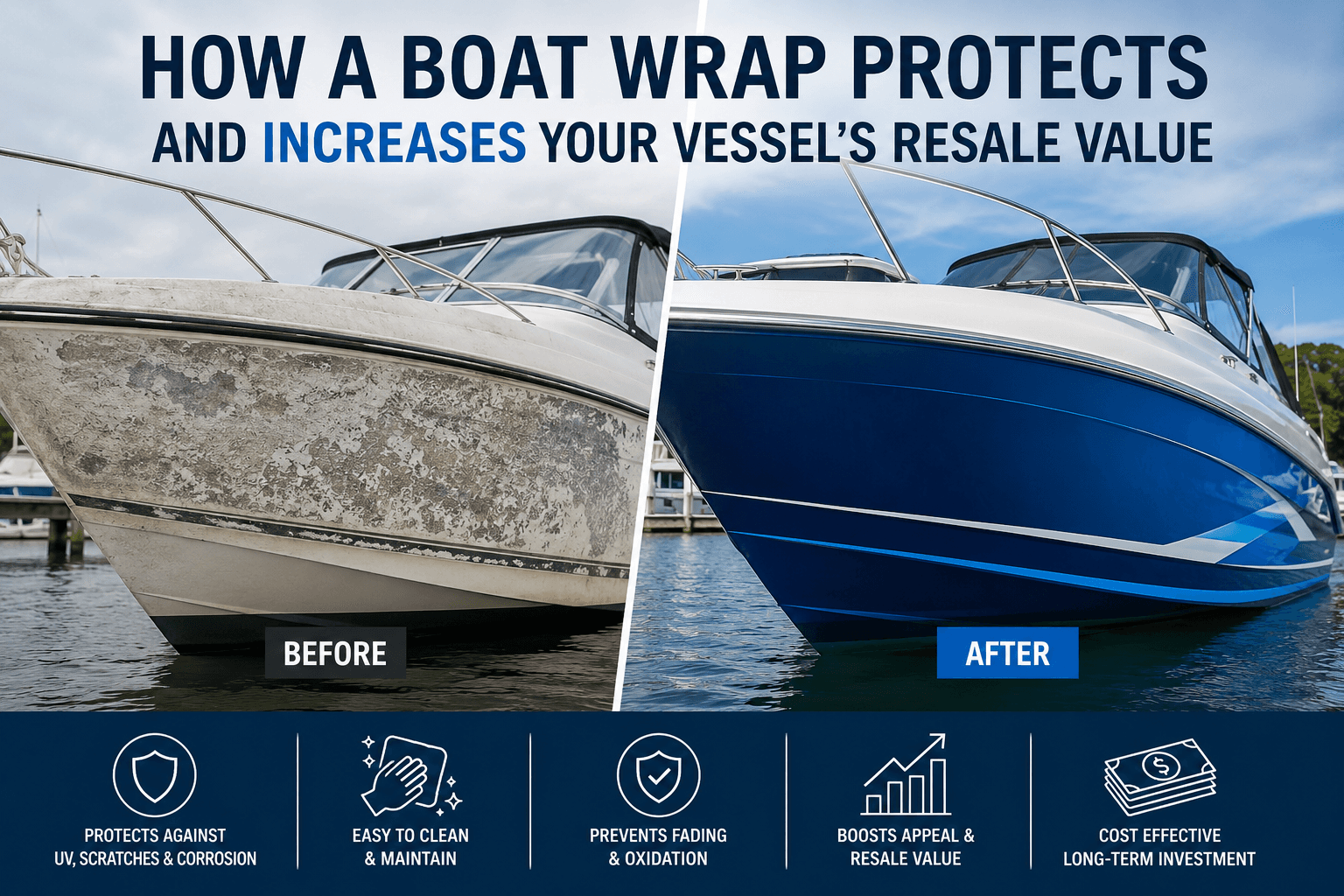
How a Boat Wrap Protects and Increases Your Vessel's Resale Value
How a Boat Wrap Can Protect and Increase Your Vessel's Resale Value
Boat Wraps Services
Top 10 FIFA World Cup Boat Wrap Ideas to Try This Season
If you already know you want your boat wrapped for World Cup season, the next question is which design actually fits your vessel.
Boat Wraps Services
Custom Boat Wraps for FIFA World Cup 2026
Get your boat ready for FIFA World Cup 2026 with a luxury custom wrap. Stand out on the water with premium marine graphics, gold finishes, and championship-inspired designs.
Boat Wraps Services
Luxury Yacht Wraps: The Complete Guide to Finishes, Styles, and Custom Marine Vinyl
Ocean Wraps works with luxury yacht and cruiser owners who want professional results, durable materials, and a finish that holds up on the water.
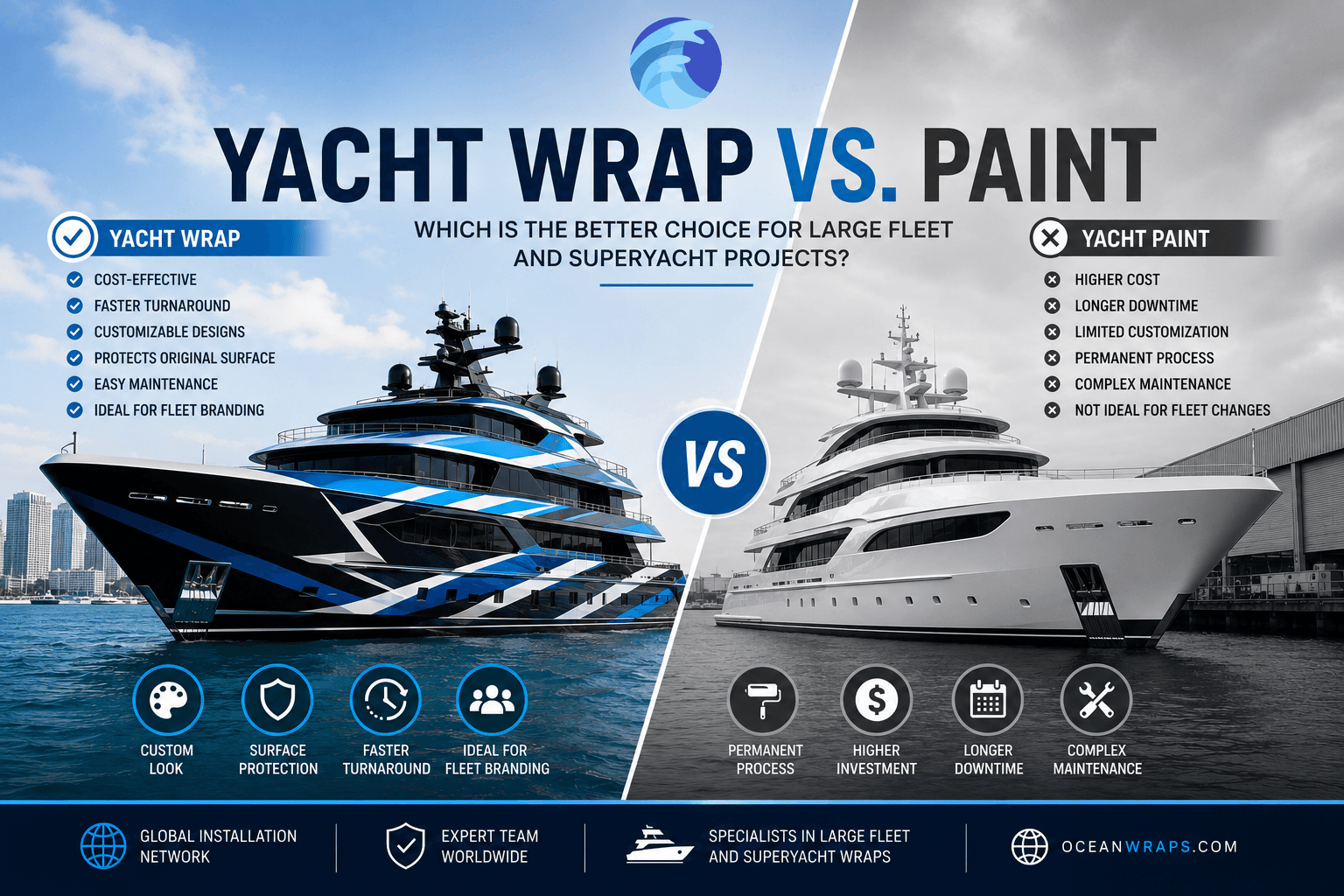
Yacht Wrap vs. Paint for Large Fleet & Superyacht Projects
Deciding between yacht wrap and paint for your fleet or superyacht? We break down real costs, downtime, durability, and which option actually makes sense at scale
How Much Does a Boat Wrap Cost? Complete Pricing Guide for 2026
Boat wrap prices vary widely depending on size, materials, and installer quality. Here's what a professional wrap actually costs in 2026 — and what to watch out for.
Luxury Yacht Wraps: The Complete Guide to Finishes, Styles, and Custom Marine Vinyl
Ocean Wraps works with luxury yacht and cruiser owners who want professional results, durable materials, and a finish that holds up on the water.
Boat Wraps Services
Why Florida Boat Owners Are Choosing Vinyl Boat Wraps in 2026
Discover why Florida boat owners are switching from paint to vinyl boat wraps. Learn the benefits, costs, protection, and customization options.
Guides
Boat Wraps vs Paint: 5 Reasons Why Wraps Win
Boat wraps cost less, install faster, and protect your gel coat better than traditional paint. Here's why so many boat owners are making the switch.
Guides
Yacht Wrap vs. Paint for Large Fleet & Superyacht Projects
Deciding between yacht wrap and paint for your fleet or superyacht? We break down real costs, downtime, durability, and which option actually makes sense at scale
Guides
How Much Does a Boat Wrap Cost? Complete Pricing Guide for 2026
Boat wrap prices vary widely depending on size, materials, and installer quality. Here's what a professional wrap actually costs in 2026 — and what to watch out for.