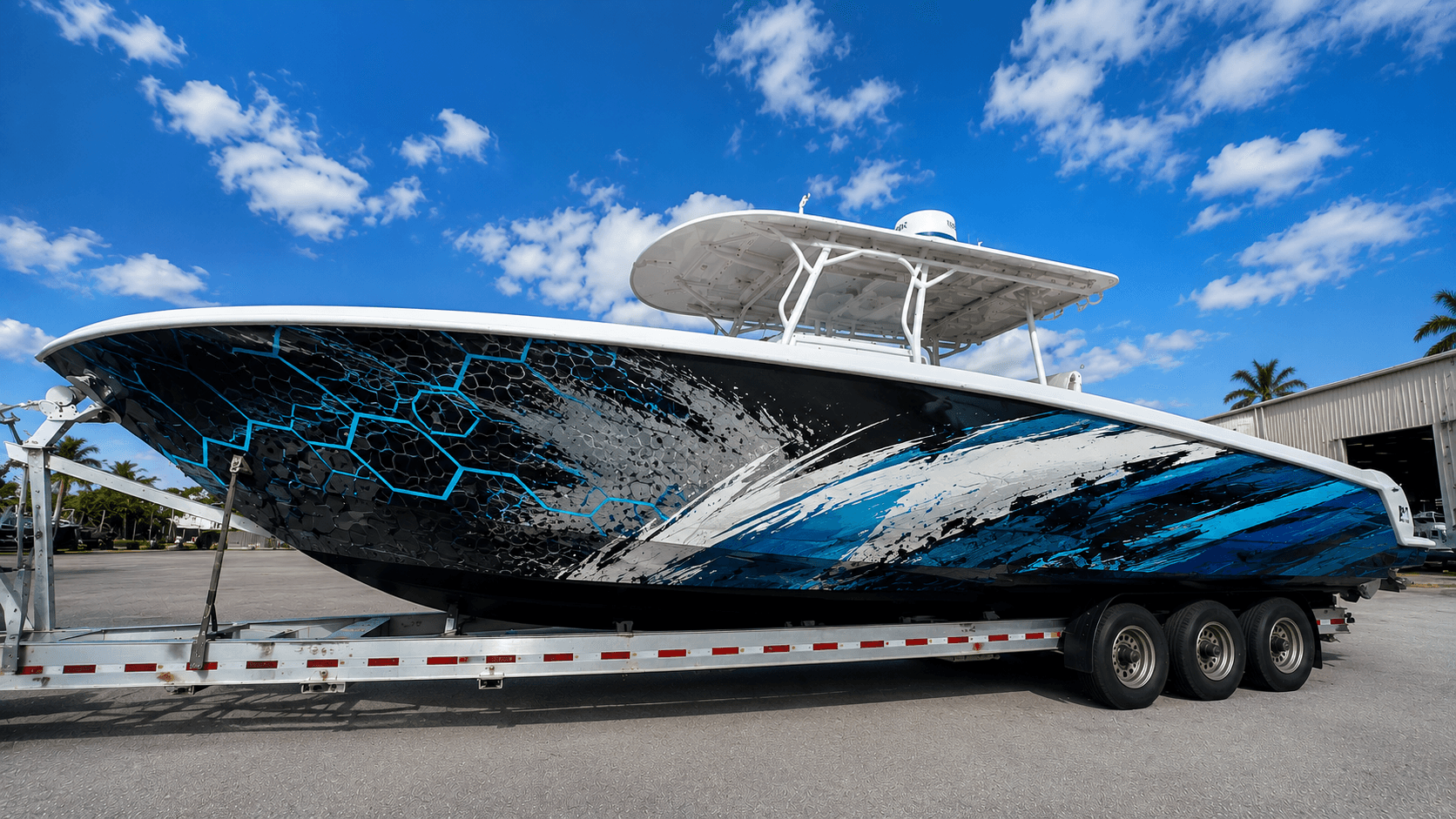
Custom Boat Wraps for Commercial Fishing Vessels: Durability & Branding
Heavy-duty boat wraps for commercial fishing fleets. Marine-grade vinyl for hull branding, UV protection, and long-term durability in harsh saltwater environmen
Last updated February 25, 2026
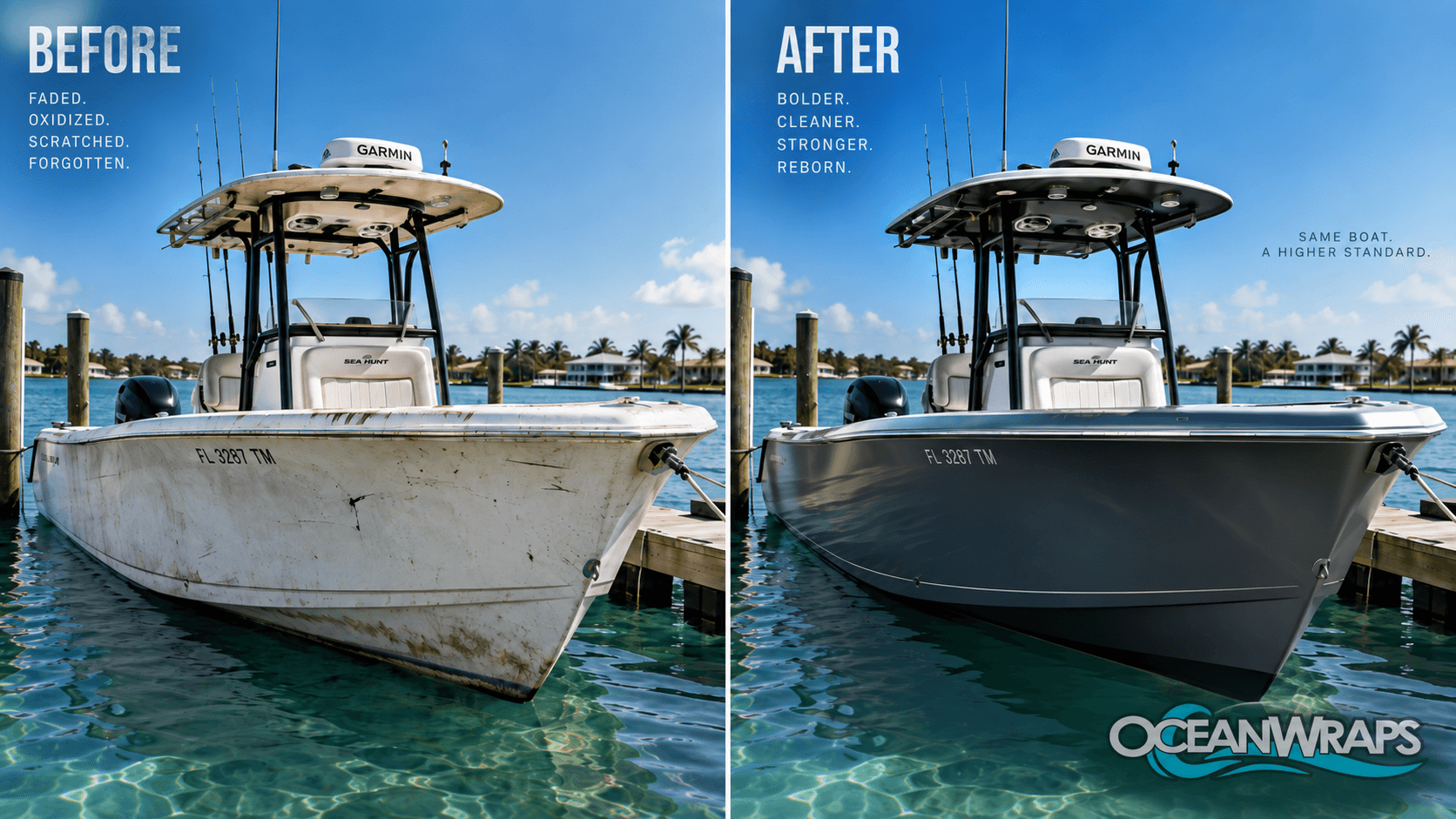
For commercial fishing operations, a vessel's exterior is a critical asset for both protection and promotion. Custom boat wraps offer a strategic solution that merges heavy-duty durability with high-impact branding. Unlike temporary decals or costly repaints, a professionally installed vinyl wrap acts as a sacrificial layer, shielding your vessel's gelcoat from UV degradation, salt spray, and minor abrasions. Simultaneously, it transforms your hull and topside into a mobile billboard, displaying your boat name, radio call sign, and company graphics with crisp, professional clarity. For fleet managers, this consistency across vessels strengthens brand recognition in every marina.
Boat wraps utilize marine-grade cast vinyl and protective laminate, engineered for long-term UV resistance and saltwater exposure.
The installation process requires meticulous surface prep and professional techniques to ensure adhesion and durability on complex hull curves.
Wraps provide a cost-effective alternative to paint for fleet branding, allowing for complex graphics and easy future updates.
Properly maintained wraps can extend the life of your underlying gelcoat by shielding it from environmental damage.
Strategic graphic design enhances vessel visibility and professionalism, crucial for commercial operations and dock-side marketing.
Practical considerations include marina rules for installation, proper wash practices, and understanding the role of edge sealing in longevity.
Why Commercial Fishing Vessels Benefit from Wraps#
The operating environment for a fishing vessel is among the most demanding. Traditional paint can chip and fade, requiring frequent dry-dock time for repainting. A high-quality vinyl wrap is engineered for this challenge. The primary benefit is durability; the material withstands constant sun and salt, preventing the chalky oxidation that degrades unprotected gelcoat. From a branding perspective, graphics remain vibrant for years, ensuring your vessel is identifiable at sea and in port. This dual function makes a wrap a operational asset, not just a cosmetic upgrade.
Durability is measured in material science and application. The vinyl must resist prolonged UV exposure to prevent fading and cracking. It must also maintain adhesion through temperature swings, hull flex, and constant water immersion. A professional wrap from a provider like Ocean Wraps addresses this through material selection and expert installation, focusing on high-stress areas like the waterline and bow.
Your vessel is a floating logo. Clear, bold graphics displaying your company name, contact information, and home port build credibility. This visibility aids in marketing at the dock and creates a professional image for potential clients and partners. For multi-boat fleets, wraps ensure brand consistency where paint matches can vary.
The performance of a boat wrap hinges on its material composition. Not all vinyl is suitable for marine use.
Marine Vinyl: This is a broad category for films with enhanced plasticizers and adhesives formulated for moisture resistance and extended outdoor life.
Cast Vinyl: The preferred grade for complex hull curvatures. It is dimensionally stable, resists stretching and shrinking, and conforms smoothly to compound curves without lifting or wrinkling.
Laminate: A clear, durable top layer is liquid-applied or film-based over the printed graphics. It provides an additional barrier against UV rays, salt, abrasion from dockside fenders, and harsh chemical washes.
Finishes range from high-gloss to matte. A gloss finish is common for its easy-clean properties and vibrant color pop, while matte offers a subdued, non-reflective look.
This is the most critical step for long-term adhesion. The hull and topside must be immaculately clean, dewaxed, and degreased. Any existing oxidation is removed, and the gelcoat is lightly sanded to create a perfect bonding surface. The work is typically done under cover to control dust and moisture.
Graphics are designed to account for hull curvature, hardware, and waterlines. They are then printed with UV-resistant inks on the chosen vinyl. The printed material is often contour-cut to precise dimensions before shipping or on-site trimming.
Installers use specialized tools, heat, and slip solutions to maneuver large panels onto the hull. Skill is required to avoid trapping air, stretch the material properly over curves, and seam pieces invisibly. Techniques like edge sealing with a marine-grade sealant are often applied to vulnerable perimeter edges.
After installation, the wrap is inspected for bubbles or lifting edges. A post-heat treatment ensures full adhesive activation. The wrap then requires a curing period, typically 24-72 hours, before the vessel can be returned to the water, as per the adhesive manufacturer's specifications.
Successful wrapping requires planning. First, consult your marina about rules for on-site work, including power access and containment of cleaning runoff. Surface preparation is non-negotiable; old antifouling paint must be fully removed. Understand that complex curvature, like a deep keel or rounded bow, requires expert handling to avoid unsightly seams. For storage, while wraps are durable, prolonged direct sun when not in use can accelerate wear. Finally, establish proper wash practices: use soft brushes, non-abrasive cleaners, and avoid high-pressure nozzles directed at wrap edges.
With professional installation and proper marine-grade materials, a wrap can last 5 to 7 years or more. Lifespan depends on sun exposure, maintenance, and operational conditions. It is a long-term, but not permanent, solution.
Wrapping over old antifouling paint is not recommended. The surface must be stable, smooth, and clean. All antifouling must be completely removed down to the gelcoat. Existing topside paint in good condition can sometimes be wrapped after proper preparation and testing.
Properly installed and removed, a wrap protects the gelcoat. Upon removal, any adhesive residue is cleaned with appropriate solvents. The gelcoat underneath is often in better condition than exposed areas, as it was shielded from UV and oxidation.
Lead time varies by vessel size and complexity. It includes design approval, material printing, and scheduling installation. For a standard commercial fishing vessel, planning for a 2 to 4 week project timeline from design start to completion is prudent, accounting for weather and prep work.
New Boat Prices Are Skyrocketing — Here's the Smarter Move Boat Owners Are Making
New boat prices are at record highs. Here's why more owners are choosing marine vinyl wraps to refresh their boat's look and protect the hull, without the cost of buying new
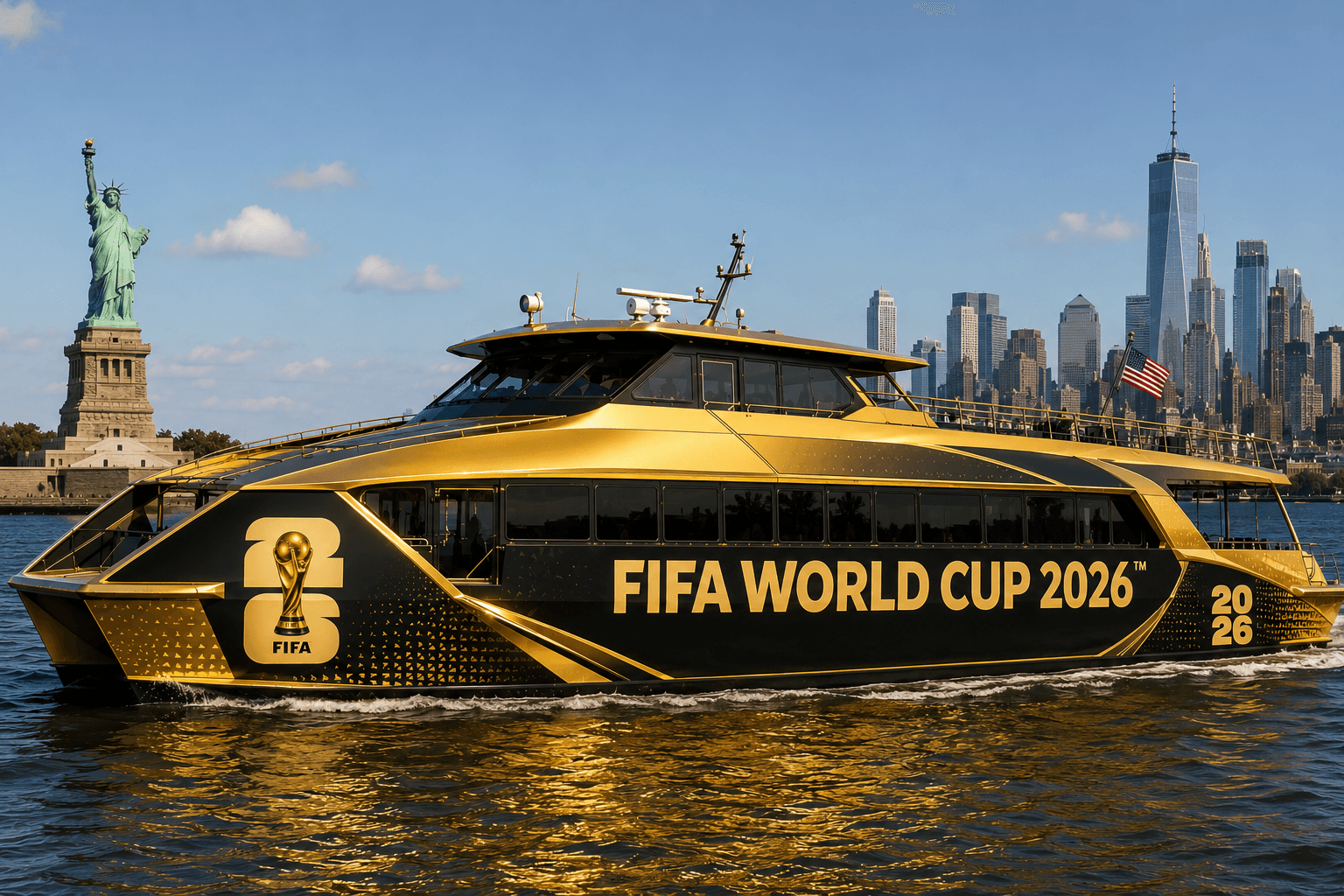
Get your boat ready for FIFA World Cup 2026 with a luxury custom wrap. Stand out on the water with premium marine graphics, gold finishes, and championship-inspired designs.
New Boat Prices Are Skyrocketing — Here's the Smarter Move Boat Owners Are Making
New boat prices are at record highs. Here's why more owners are choosing marine vinyl wraps to refresh their boat's look and protect the hull, without the cost of buying new
Boat Wraps Services
Boat Wrap Designs by Boat Type: What Actually Works on Your Vessel
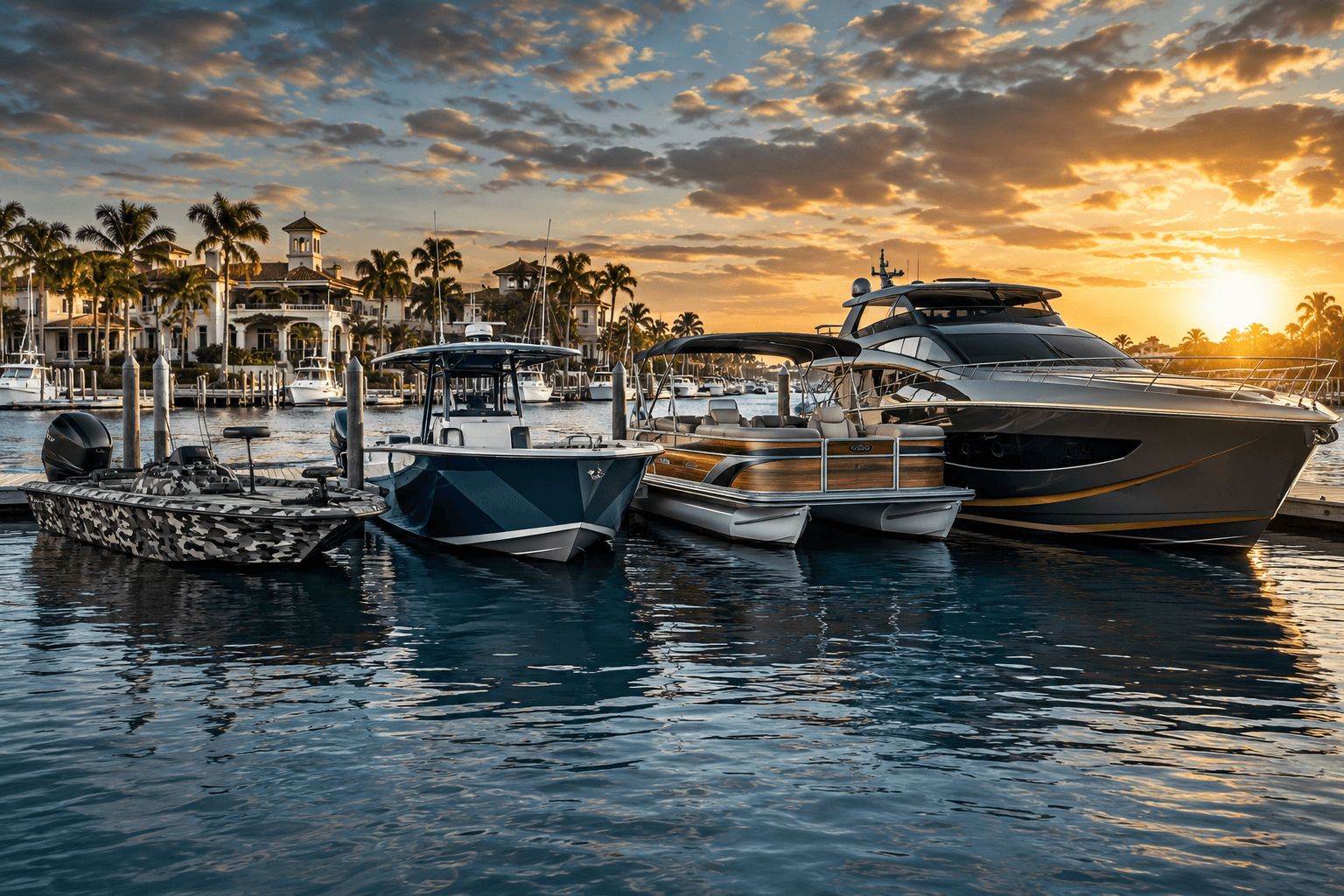
A wrap that's perfect for a sportfishing boat chasing marlin offshore would look completely out of place on a family pontoon.
Boat Wraps Services
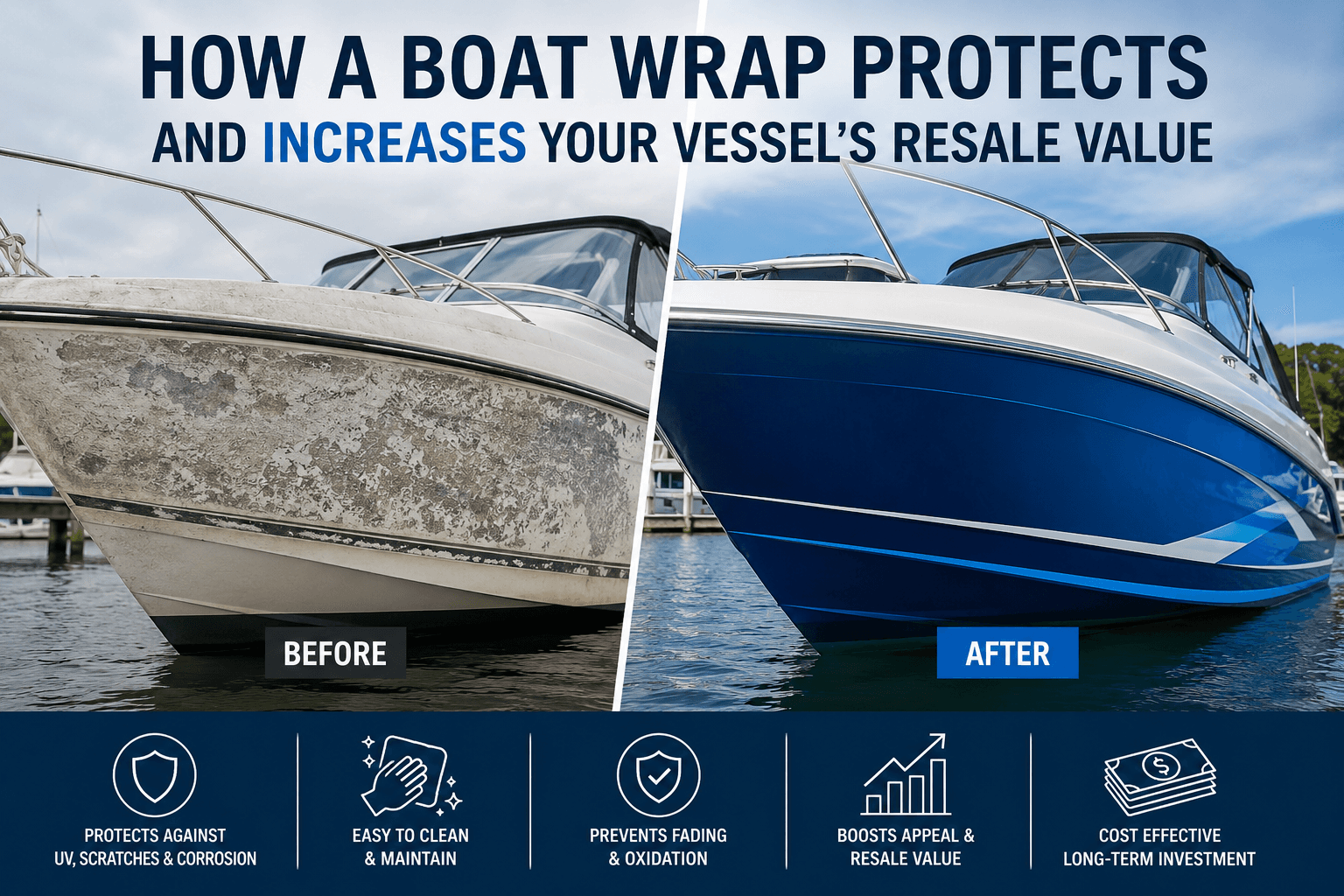
How a Boat Wrap Protects and Increases Your Vessel's Resale Value
How a Boat Wrap Can Protect and Increase Your Vessel's Resale Value
Boat Wraps Services
Top 10 FIFA World Cup Boat Wrap Ideas to Try This Season
If you already know you want your boat wrapped for World Cup season, the next question is which design actually fits your vessel.
Boat Wraps Services
Custom Boat Wraps for FIFA World Cup 2026
Get your boat ready for FIFA World Cup 2026 with a luxury custom wrap. Stand out on the water with premium marine graphics, gold finishes, and championship-inspired designs.
Boat Wraps Services
Luxury Yacht Wraps: The Complete Guide to Finishes, Styles, and Custom Marine Vinyl
Ocean Wraps works with luxury yacht and cruiser owners who want professional results, durable materials, and a finish that holds up on the water.
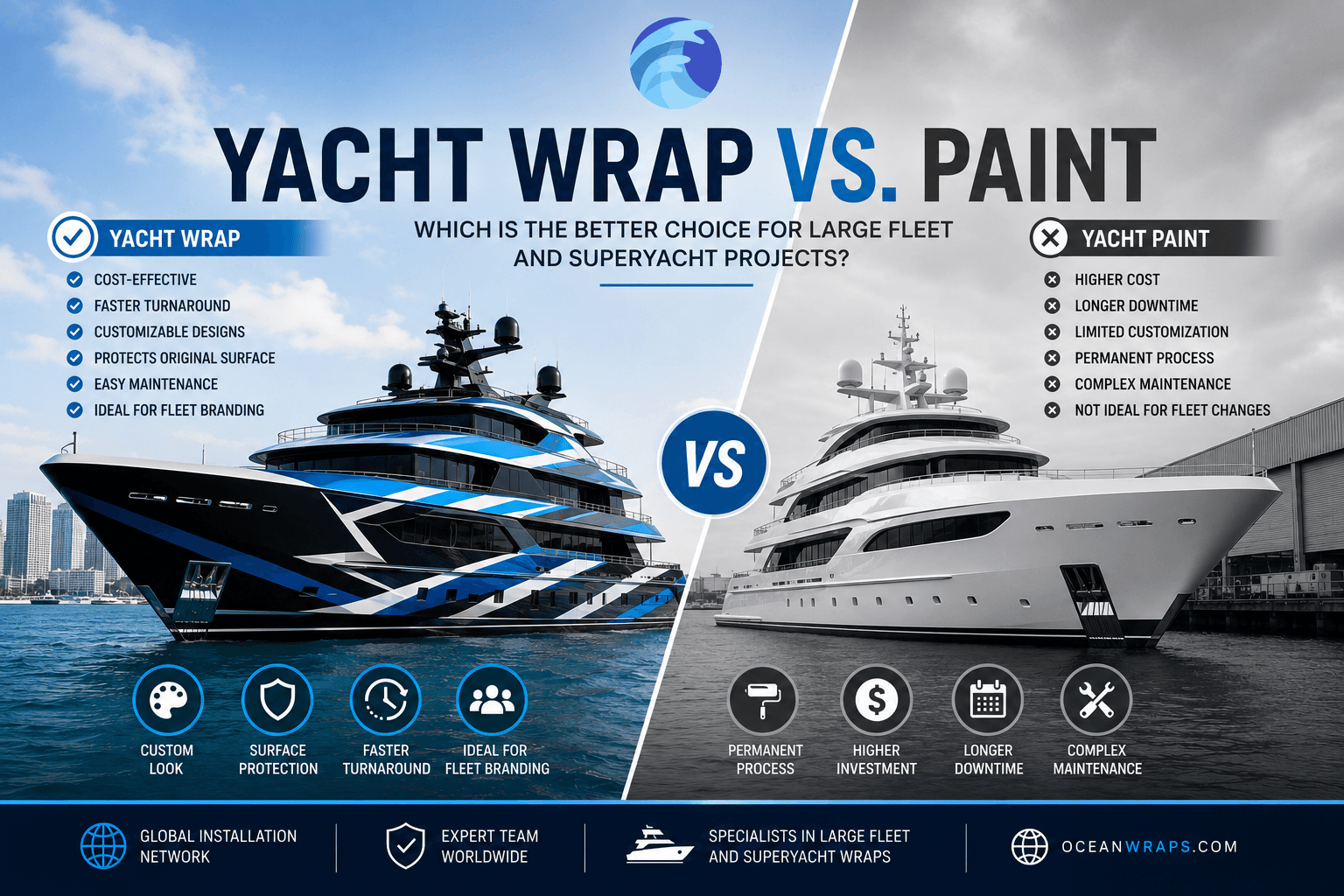
Yacht Wrap vs. Paint for Large Fleet & Superyacht Projects
Deciding between yacht wrap and paint for your fleet or superyacht? We break down real costs, downtime, durability, and which option actually makes sense at scale
How Much Does a Boat Wrap Cost? Complete Pricing Guide for 2026
Boat wrap prices vary widely depending on size, materials, and installer quality. Here's what a professional wrap actually costs in 2026 — and what to watch out for.
Luxury Yacht Wraps: The Complete Guide to Finishes, Styles, and Custom Marine Vinyl
Ocean Wraps works with luxury yacht and cruiser owners who want professional results, durable materials, and a finish that holds up on the water.
Boat Wraps Services
Why Florida Boat Owners Are Choosing Vinyl Boat Wraps in 2026
Discover why Florida boat owners are switching from paint to vinyl boat wraps. Learn the benefits, costs, protection, and customization options.
Guides
Boat Wraps vs Paint: 5 Reasons Why Wraps Win
Boat wraps cost less, install faster, and protect your gel coat better than traditional paint. Here's why so many boat owners are making the switch.
Guides
Yacht Wrap vs. Paint for Large Fleet & Superyacht Projects
Deciding between yacht wrap and paint for your fleet or superyacht? We break down real costs, downtime, durability, and which option actually makes sense at scale
Guides
How Much Does a Boat Wrap Cost? Complete Pricing Guide for 2026
Boat wrap prices vary widely depending on size, materials, and installer quality. Here's what a professional wrap actually costs in 2026 — and what to watch out for.