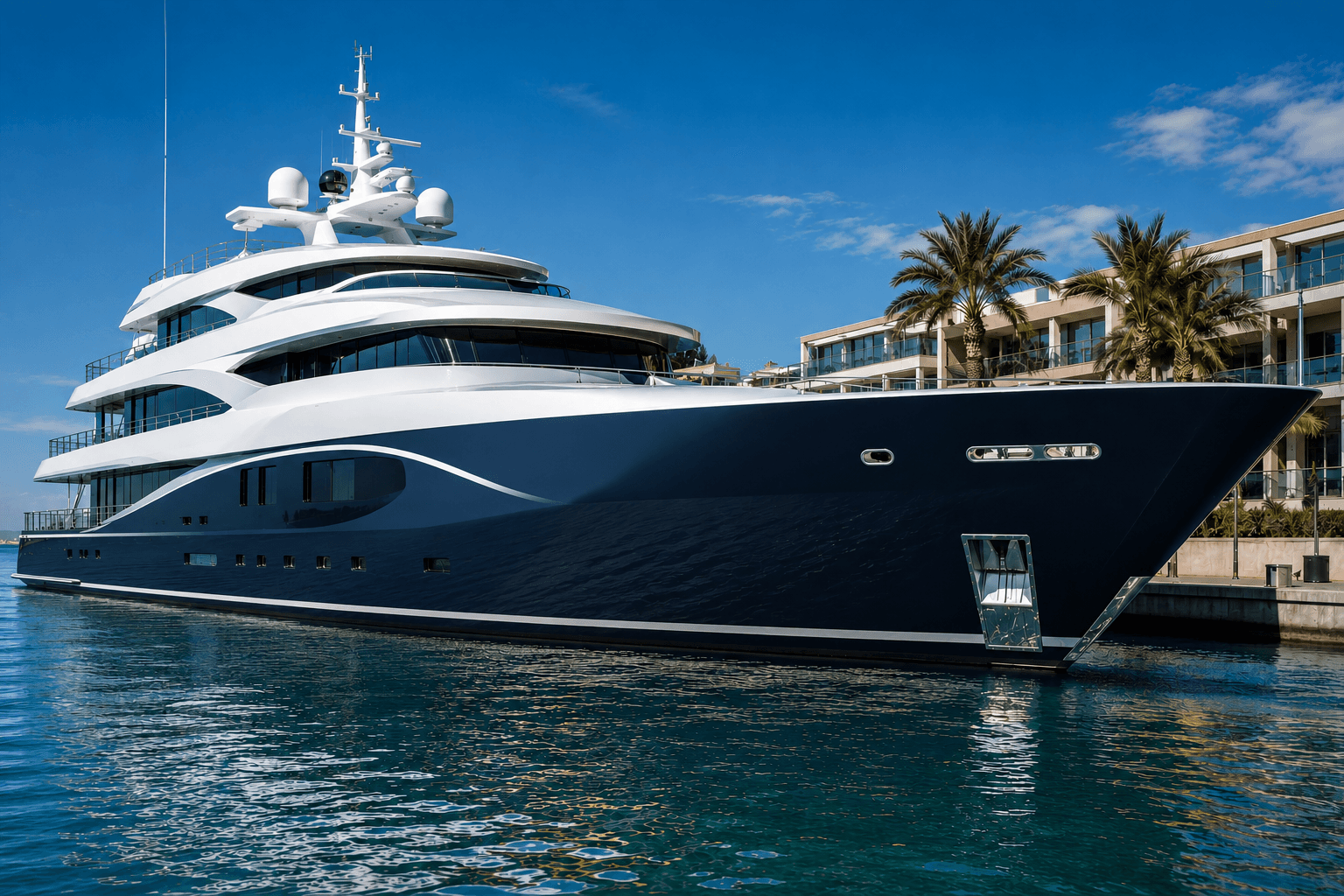
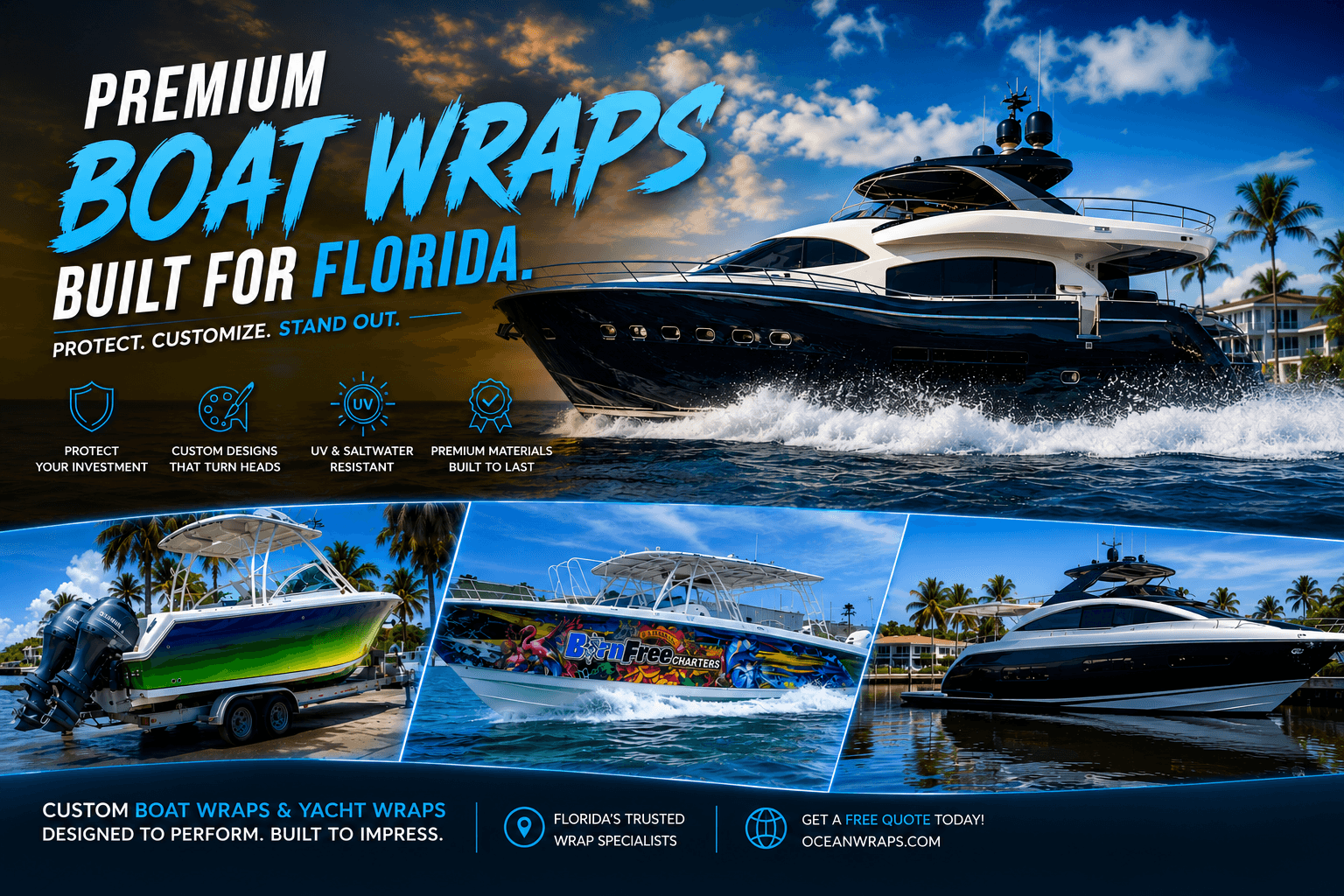
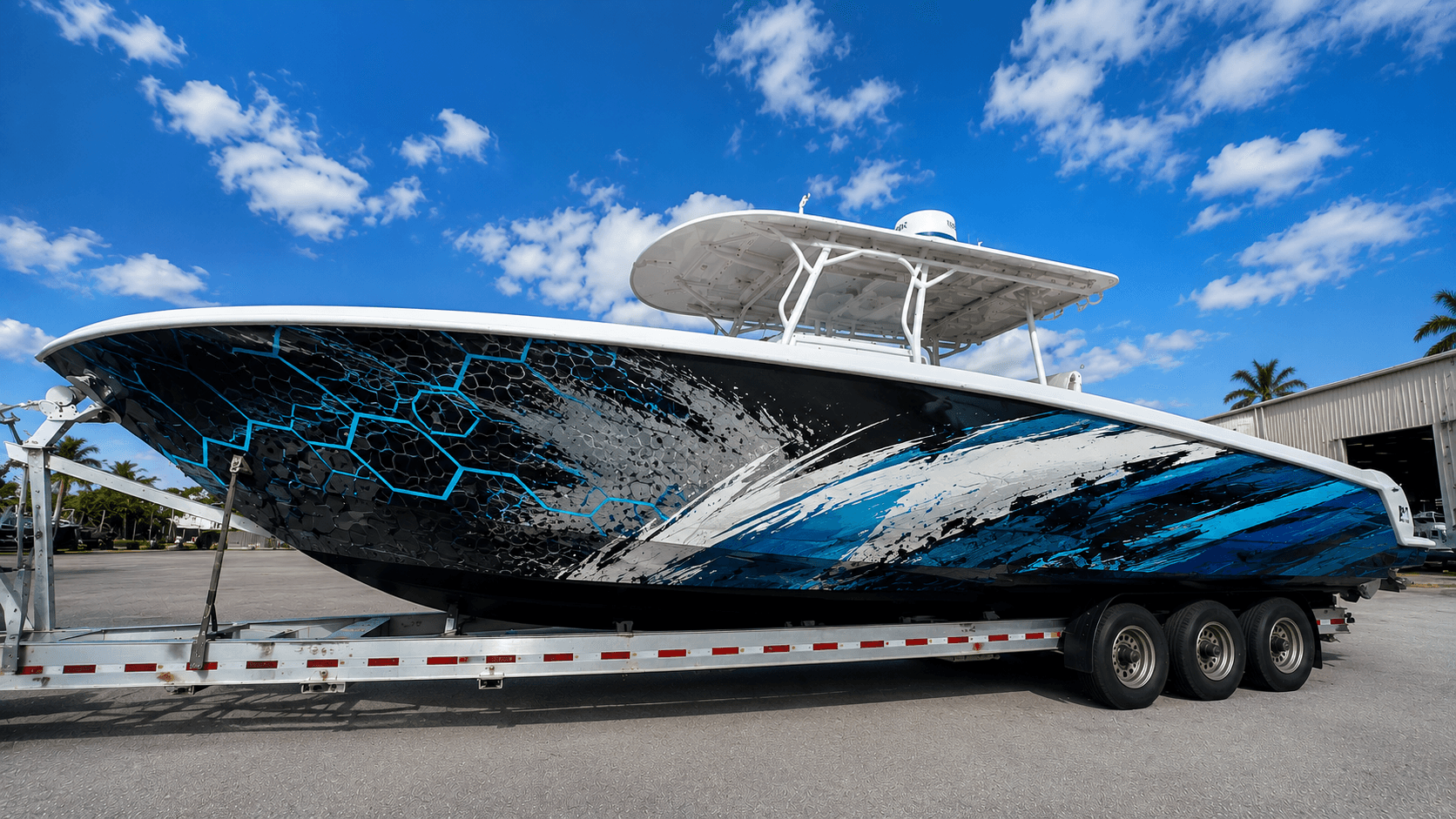
Custom Boat Wraps for Commercial Fishing Vessels and Workboats
Professional-grade boat wraps for commercial vessels. We use marine vinyl for durable hull and topside graphics that withstand harsh conditions. Learn about our
Last updated February 21, 2026
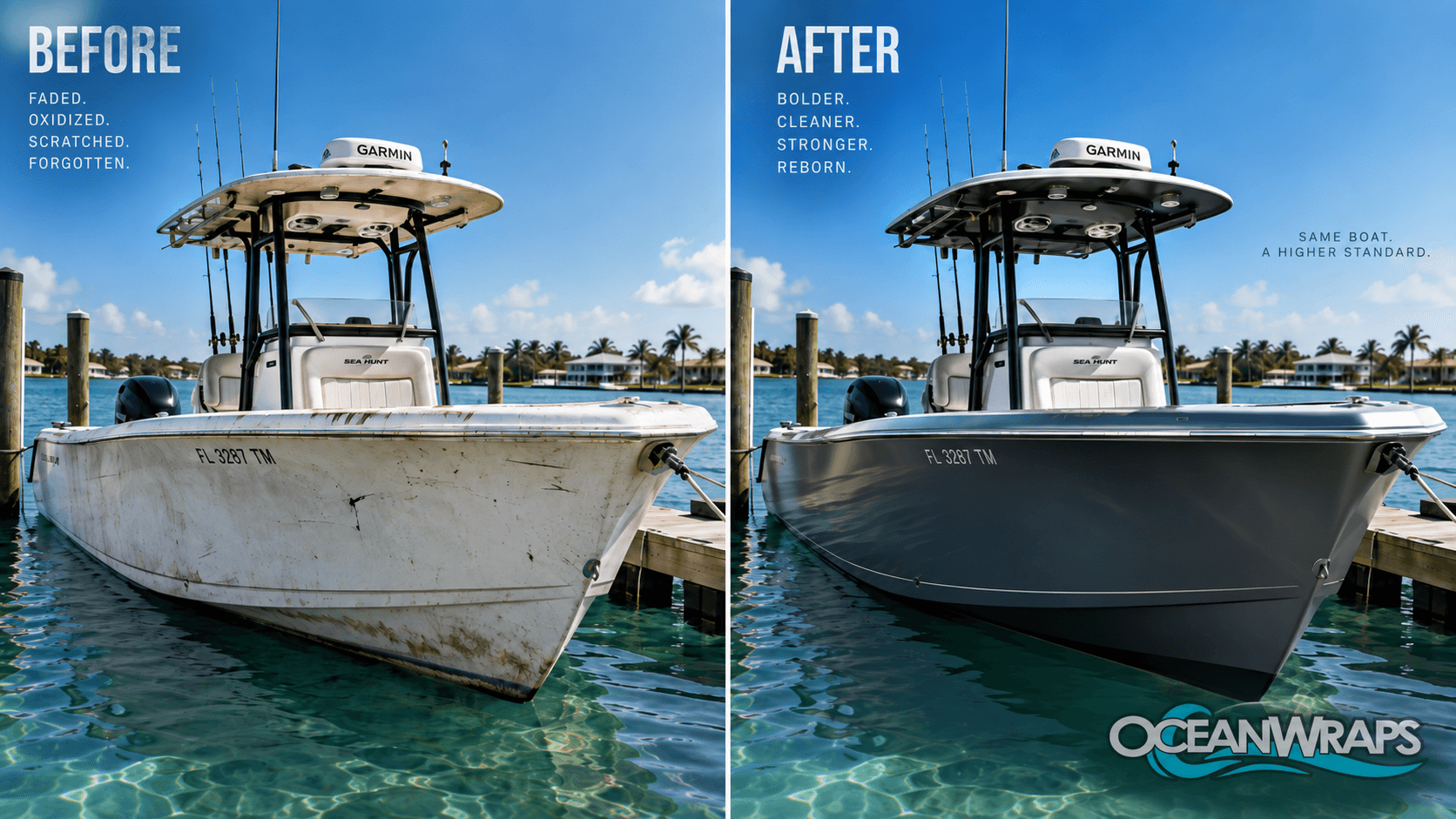
Boat wraps for commercial fishing vessels, patrol boats, tugboats, and other workboats, a custom boat wrap is a functional asset, not just decoration. It is a durable, replaceable layer of graphics and color applied directly to your hull and topsides. Unlike paint, a high-quality marine vinyl wrap offers a faster application, easier future updates, and an additional protective barrier for your gelcoat against UV rays, saltwater, and minor abrasion. For fleet managers and vessel owners, this translates to clear branding and practical preservation of the asset. Ocean Wraps specializes in the specific demands of the commercial marine environment.
Boat Wraps Overview: Custom wraps for commercial fishing vessels and workboats#
The operating profile of a workboat dictates different priorities than a recreational craft. Graphics must endure constant sun exposure, salt spray, fuel spills, heavy fendering, and frequent pressure washing. The vinyl film itself must have exceptional dimensional stability to conform to often complex, rounded hull shapes without buckling or lifting. Furthermore, design is not merely aesthetic; it incorporates high-contrast identification numbers, company branding for marketing on the water, and safety markings. This demands a technical approach from material selection through to installation.
The primary function is robust, long-lasting graphics. However, a correctly specified and applied boat wrap also acts as a sacrificial shield. It absorbs UV radiation that would otherwise degrade your gelcoat or paint, and it can protect against light scratches from docks, debris, or gear. When the wrap eventually reaches the end of its service life, it can be removed, potentially revealing a well-preserved underlying surface, which is a significant consideration for vessel valuation.
Not all vinyl is suitable for the marine environment. The industry standard for long-term commercial applications is a cast vinyl film with a protective laminate.
Marine-Grade Cast Vinyl: This material is engineered for extended outdoor exposure. It has superior conformability to compound curves and a durable, flexible adhesive system designed to withstand thermal expansion and contraction of the hull.
Protective Laminate: A clear, polyurethane laminate is liquid-coated or laminated over the printed graphics. This layer provides the essential UV resistance, chemical resistance against fuels and cleaners, and abrasion protection. The laminate quality directly dictates the gloss retention and longevity of the wrap.
Finish: Typically, a high-gloss finish is used for maximum color vibrancy and ease of cleaning. Matte finishes are available but may require more specific maintenance.
With professional installation on a properly prepared surface, a commercial-grade boat wrap using quality cast vinyl and laminate can last 5 to 8 years or more. Lifespan is influenced by geographic location (UV index), usage patterns, and maintenance. Vessels in tropical, high-sun regions will experience faster laminate degradation than those in temperate climates.
The hull and topsides must be impeccably clean, dry, and free of contaminants. This involves a thorough wash, de-waxing, and degreasing. Any existing failing paint, heavy oxidation, or silicone residues must be removed. The surface is then wiped down with a high-grade isopropyl alcohol solution to ensure perfect adhesion. This step cannot be rushed.
Graphics are designed to accommodate the vessel's specific lines. For complex hulls, a physical template or digital scan may be used to ensure graphics align correctly over curves and strakes. Design files are then printed on the marine vinyl using eco-solvent or latex printers for outdoor durability.
Installation is a skilled process. The vinyl is carefully positioned, using a slip solution to allow adjustment. Installers use squeegees and heat guns to mold the material smoothly over contours, removing all air and water pockets. Special attention is paid to edges, which are firmly sealed and post-heated to prevent lifting.
Once installed, the wrap needs a curing period, typically 48-72 hours, before the vessel can be launched. This allows the adhesive to fully bond to the substrate. The installer will do a final inspection and provide care instructions.
Success depends on planning and maintenance. First, coordinate with your marina regarding space and power for a mobile installation team if the boat cannot be hauled. Discuss storage; while wraps are durable, off-season shrink-wrapping directly over a new wrap can cause adhesion issues if not done carefully. For washing, use a mild detergent and avoid abrasive pads or high-pressure nozzles directed at the wrap edges. Regularly inspect edges and areas around hardware for any signs of lifting, which can be addressed promptly. Finally, understand that while durable, a wrap is not armor; it can be punctured or torn by sharp impacts.
With premium marine-grade materials and professional installation, expect a service life of 5 to 8 years. Environmental factors like intense sun, extreme temperatures, and operational wear will influence the exact lifespan.
Yes, but the substrate must be sound. Loose, flaking, or chalky paint must be removed and the surface smoothed. The gelcoat must be solid, with no major cracks or osmotic blistering. The wrap will only be as stable as the surface it is bonded to.
In many ways, yes. Application is faster with no drying time between coats, and there are no VOC fumes. It also allows for intricate, multi-color graphics impossible with paint masking. Crucially, changing the design or repairing a section is simpler than with paint.
Wash regularly with fresh water and a mild, non-abrasive automotive or boat soap. Avoid harsh chemicals, abrasive cleaners, and scrubbing pads. Do not use high-pressure washers closer than 12 inches from the wrap edges. Inspect periodically for any lifting.
Ready to Specify Your Project?
A commercial vessel wrap is a significant investment in your boat's appearance and protection. The process requires precise planning, from assessing the hull condition to designing practical graphics and scheduling the installation. Ocean Wraps focuses on the technical execution required for vessels that work for a living, ensuring a result that is both visually sharp and built to last.
New Boat Prices Are Skyrocketing — Here's the Smarter Move Boat Owners Are Making
New boat prices are at record highs. Here's why more owners are choosing marine vinyl wraps to refresh their boat's look and protect the hull, without the cost of buying new
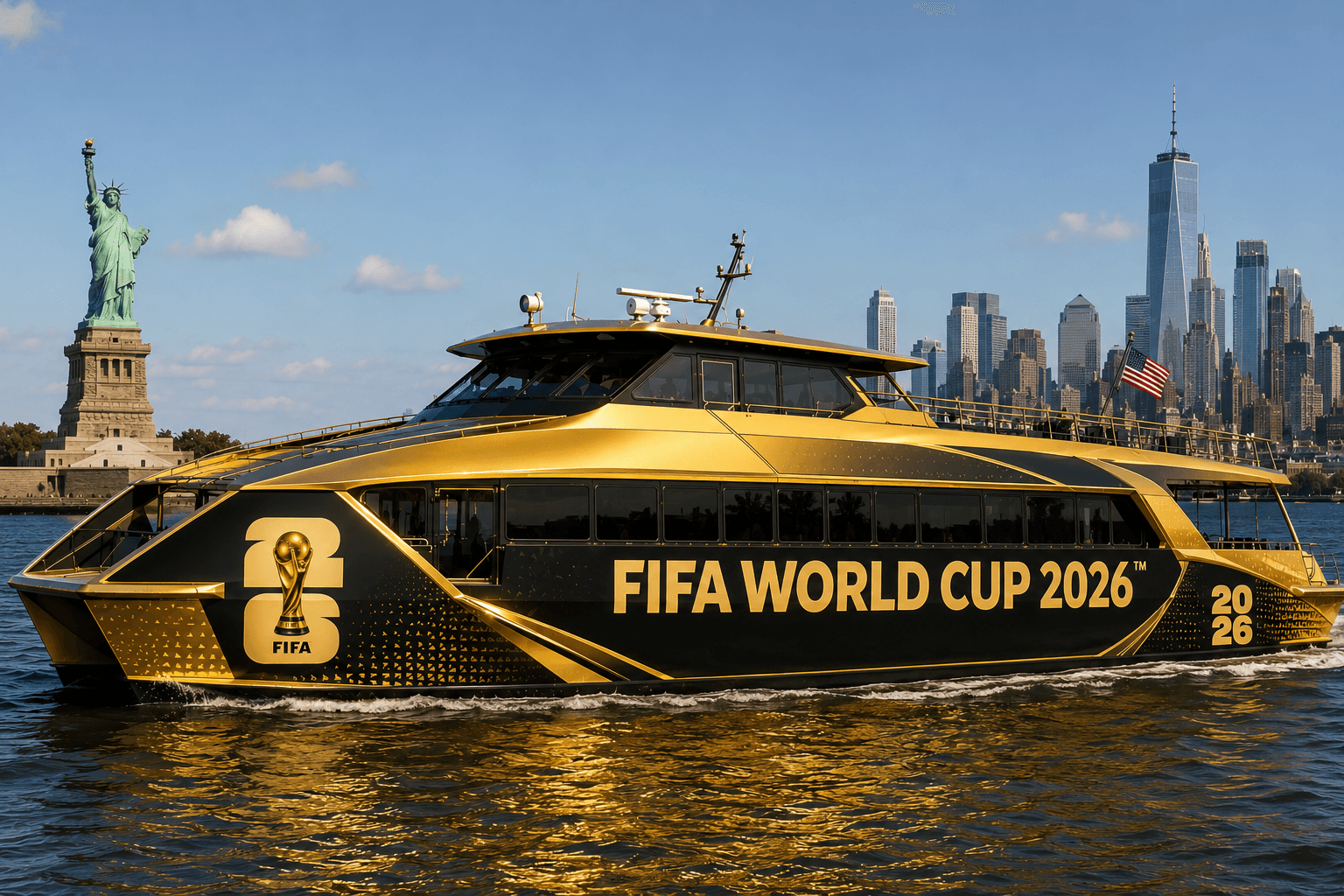
Get your boat ready for FIFA World Cup 2026 with a luxury custom wrap. Stand out on the water with premium marine graphics, gold finishes, and championship-inspired designs.
New Boat Prices Are Skyrocketing — Here's the Smarter Move Boat Owners Are Making
New boat prices are at record highs. Here's why more owners are choosing marine vinyl wraps to refresh their boat's look and protect the hull, without the cost of buying new
Boat Wraps Services
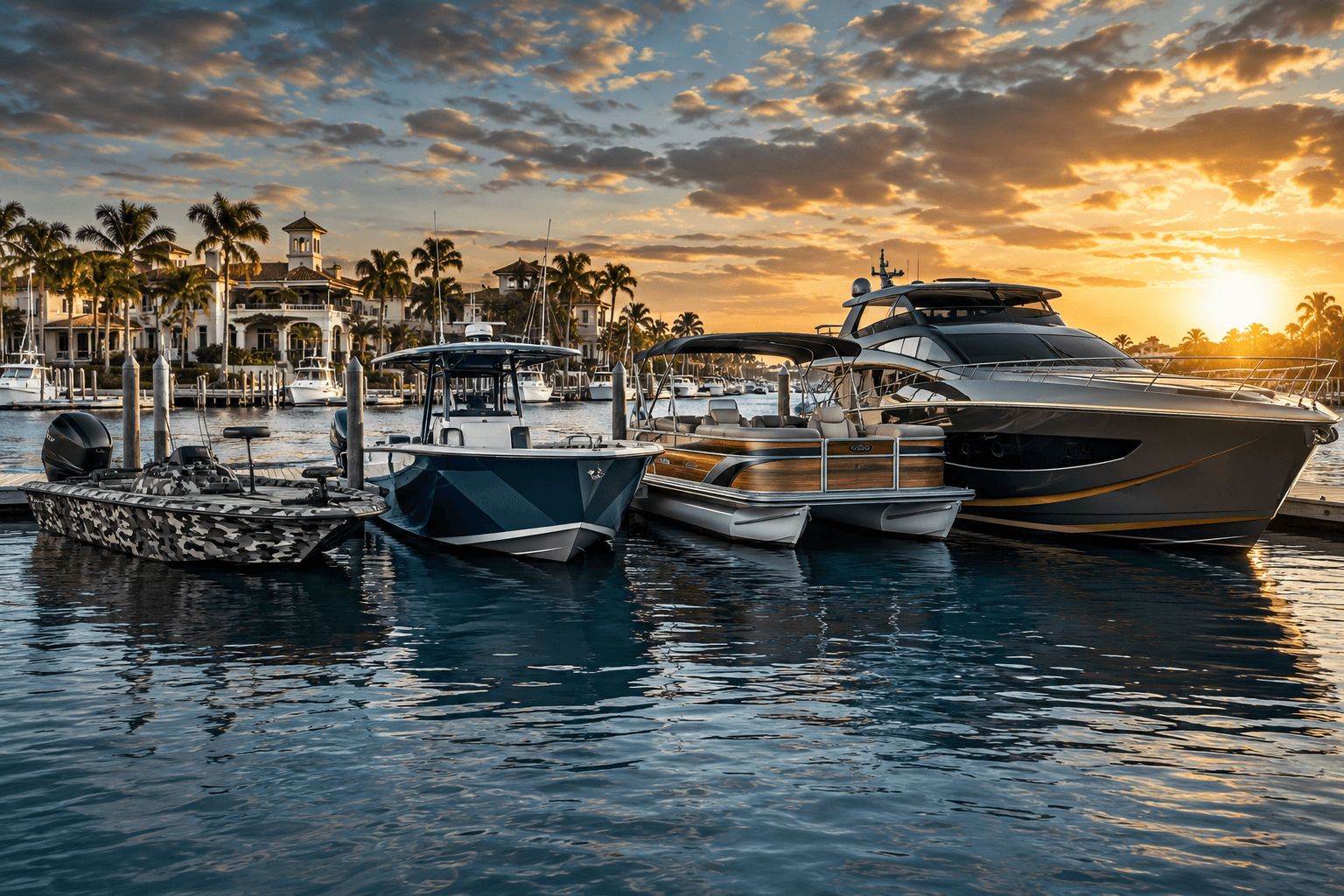
Boat Wrap Designs by Boat Type: What Actually Works on Your Vessel
A wrap that's perfect for a sportfishing boat chasing marlin offshore would look completely out of place on a family pontoon.
Boat Wraps Services
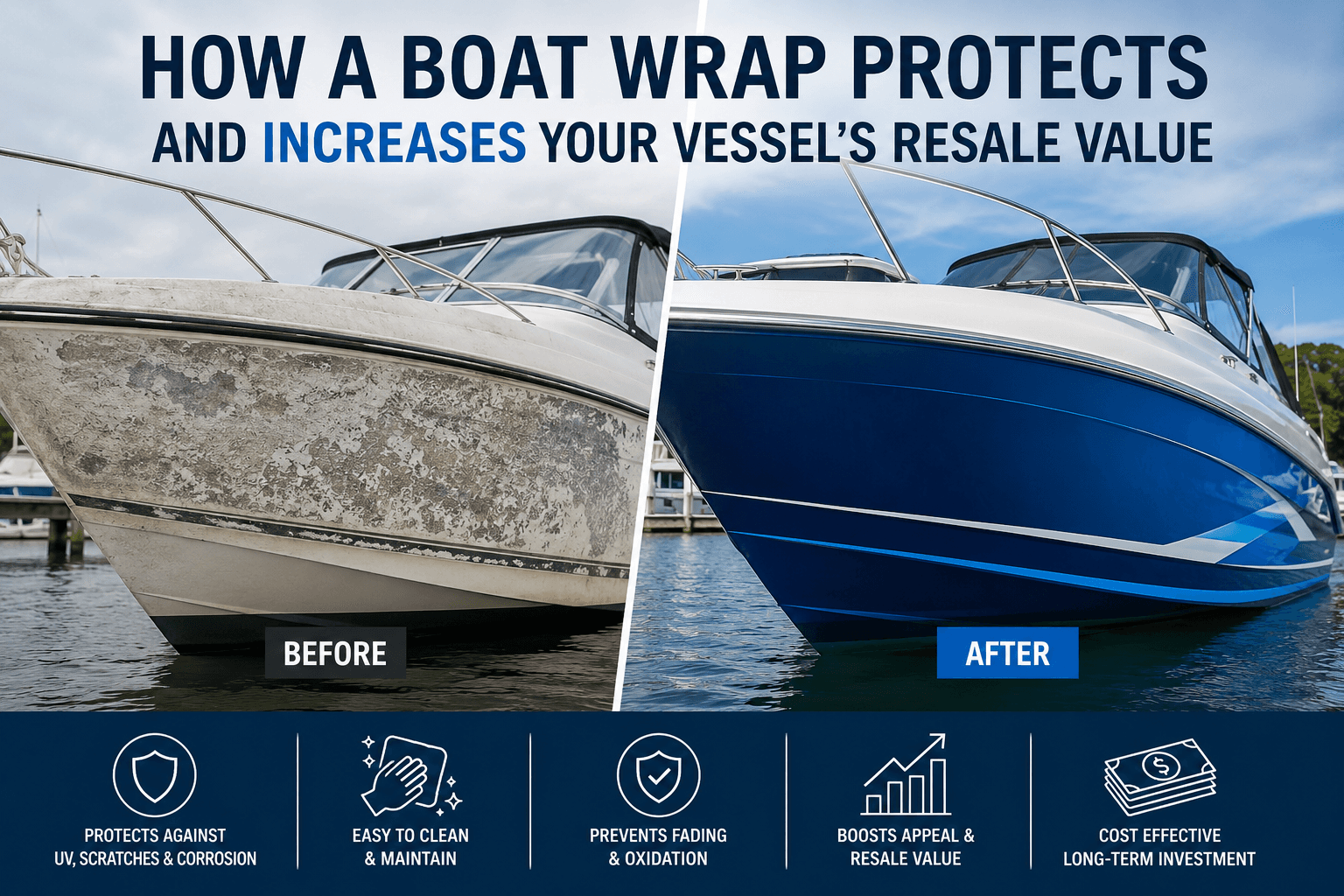
How a Boat Wrap Protects and Increases Your Vessel's Resale Value
How a Boat Wrap Can Protect and Increase Your Vessel's Resale Value
Boat Wraps Services
Top 10 FIFA World Cup Boat Wrap Ideas to Try This Season
If you already know you want your boat wrapped for World Cup season, the next question is which design actually fits your vessel.
Boat Wraps Services
Custom Boat Wraps for FIFA World Cup 2026
Get your boat ready for FIFA World Cup 2026 with a luxury custom wrap. Stand out on the water with premium marine graphics, gold finishes, and championship-inspired designs.
Boat Wraps Services
Luxury Yacht Wraps: The Complete Guide to Finishes, Styles, and Custom Marine Vinyl
Ocean Wraps works with luxury yacht and cruiser owners who want professional results, durable materials, and a finish that holds up on the water.
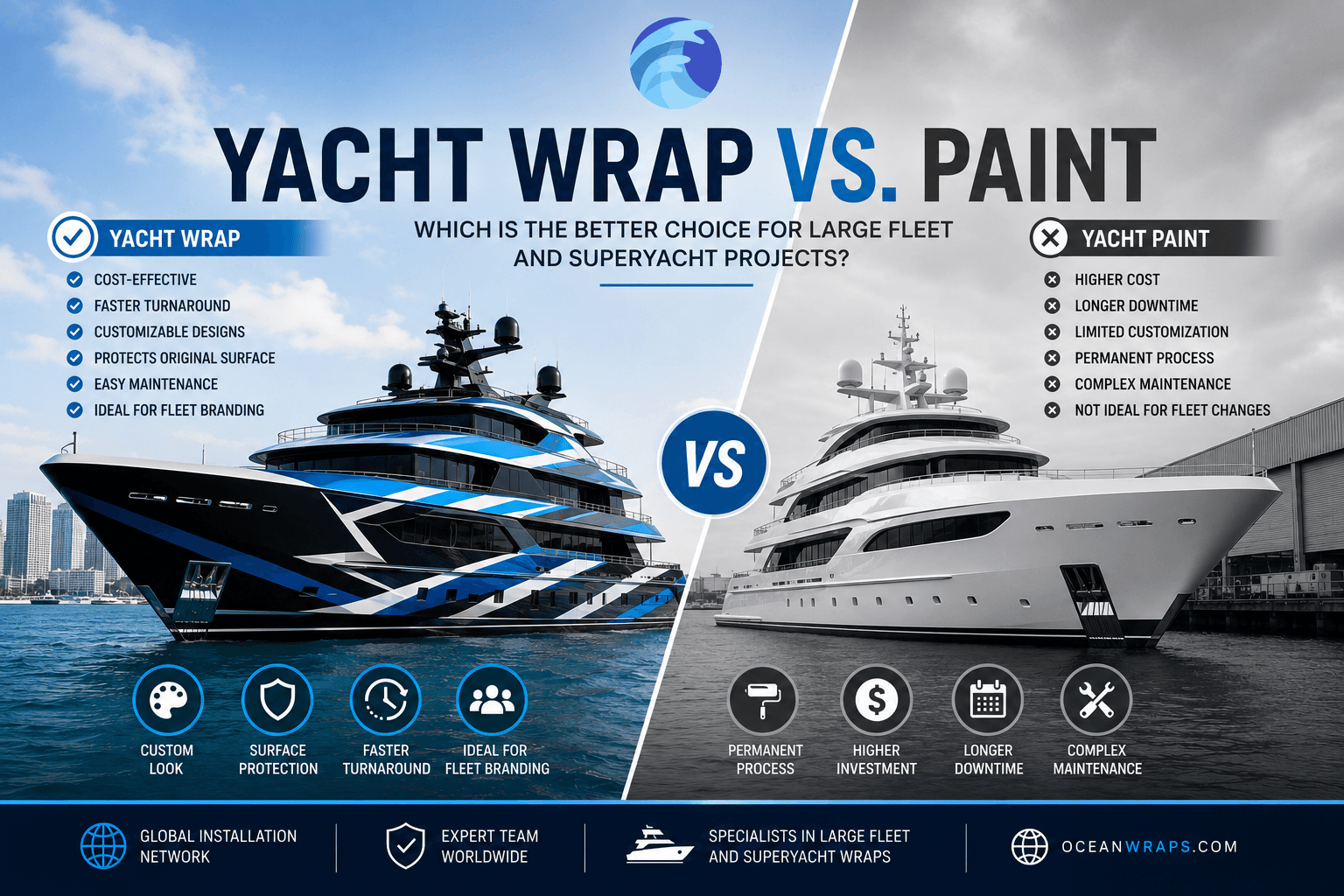
Yacht Wrap vs. Paint for Large Fleet & Superyacht Projects
Deciding between yacht wrap and paint for your fleet or superyacht? We break down real costs, downtime, durability, and which option actually makes sense at scale
How Much Does a Boat Wrap Cost? Complete Pricing Guide for 2026
Boat wrap prices vary widely depending on size, materials, and installer quality. Here's what a professional wrap actually costs in 2026 — and what to watch out for.
Luxury Yacht Wraps: The Complete Guide to Finishes, Styles, and Custom Marine Vinyl
Ocean Wraps works with luxury yacht and cruiser owners who want professional results, durable materials, and a finish that holds up on the water.
Boat Wraps Services
Why Florida Boat Owners Are Choosing Vinyl Boat Wraps in 2026
Discover why Florida boat owners are switching from paint to vinyl boat wraps. Learn the benefits, costs, protection, and customization options.
Guides
Boat Wraps vs Paint: 5 Reasons Why Wraps Win
Boat wraps cost less, install faster, and protect your gel coat better than traditional paint. Here's why so many boat owners are making the switch.
Guides
Yacht Wrap vs. Paint for Large Fleet & Superyacht Projects
Deciding between yacht wrap and paint for your fleet or superyacht? We break down real costs, downtime, durability, and which option actually makes sense at scale
Guides
How Much Does a Boat Wrap Cost? Complete Pricing Guide for 2026
Boat wrap prices vary widely depending on size, materials, and installer quality. Here's what a professional wrap actually costs in 2026 — and what to watch out for.