Custom Boat Wraps for Commercial Fishing: Durability & Brand Visibility
Purpose-built boat wraps for commercial fishing vessels. We detail durable marine vinyl, application process, and how graphics boost brand visibility on the wat
Last updated March 10, 2026
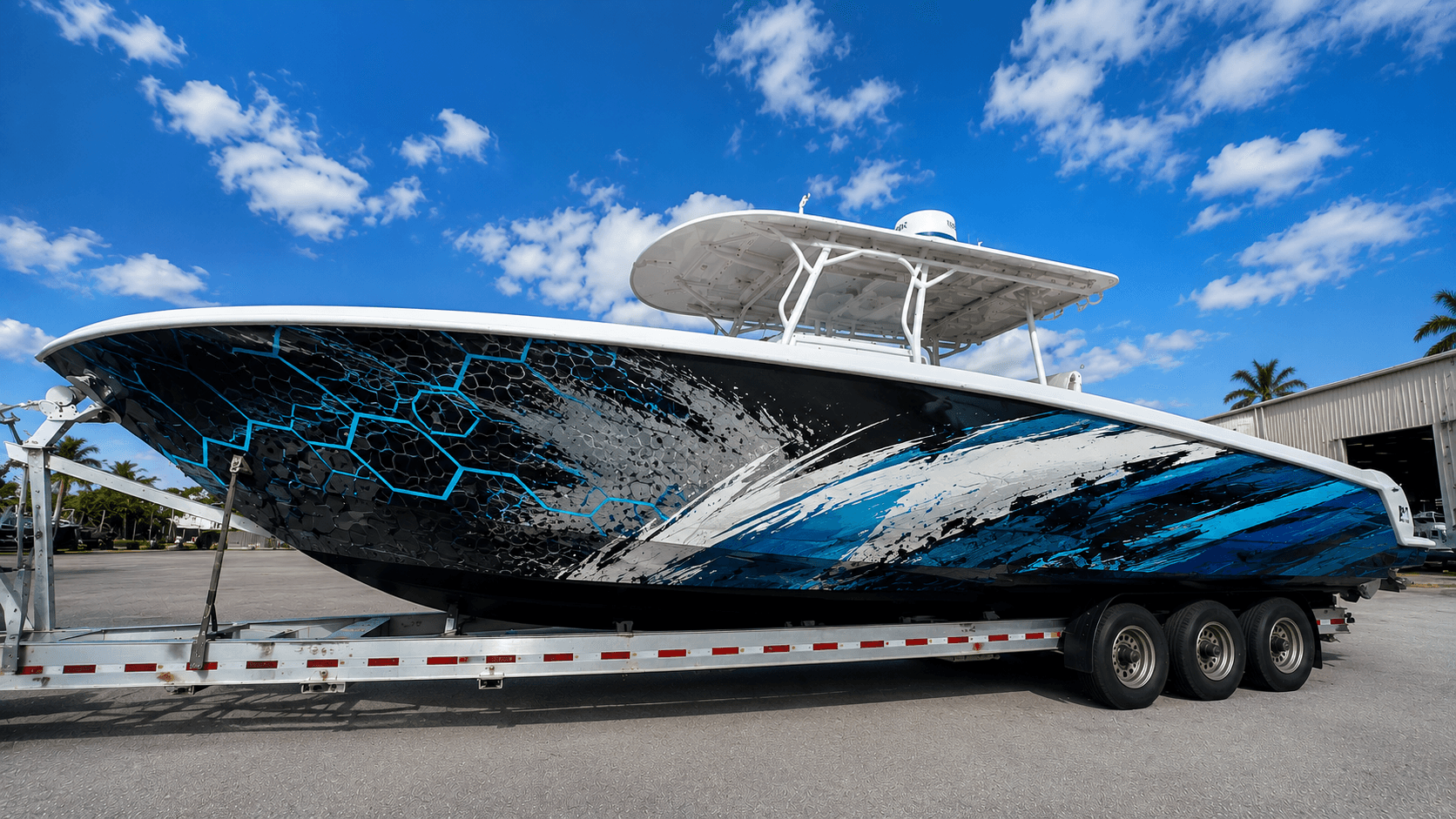
Boat wraps for commercial fishing operations, a vessel is both a critical tool and a mobile billboard. A custom boat wrap engineered for this environment serves two core functions: providing exceptional durability against salt, sun, and abrasion, and transforming your hull and topside into a high-impact branding asset. Unlike generic signage, a marine-grade vinyl wrap is a protective, adhesive skin designed for the unique contours and rigors of a working boat. At Ocean Wraps, we focus on the technical specifications and installation precision required for commercial fishing applications, where failure is not an option.
Marine-grade cast vinyl with protective laminate is the standard for long-term durability and UV resistance on commercial vessels.
Proper surface preparation, including dewaxing and degreasing the gelcoat, is the single most critical factor for adhesion longevity.
Graphics designed for high contrast and simple, bold elements ensure brand visibility is maintained at a distance and in poor weather.
Professional installation includes meticulous edge sealing and post-heating to prevent premature lifting, especially on curved surfaces.
A well-maintained wrap can protect the underlying gelcoat, potentially extending repaint intervals and maintaining asset value.
Checking marina rules or local regulations regarding dock-side advertising is a recommended pre-design step.
Why Specialized Boat Wraps Matter for Fishing Vessels#
The operating profile of a commercial fishing vessel presents distinct challenges that not all graphics solutions can meet. Constant exposure to salt spray, fuel slicks, UV radiation, and physical contact with docks, gear, and catch demands a material science approach. A durable boat wrap acts as a sacrificial layer, shielding the factory gelcoat from microfading and minor abrasions. From a marketing perspective, your vessel operates in high-traffic waterways, marinas, and ports, making it one of your most visible brand touchpoints. Effective graphics communicate professionalism and stability to potential clients, partners, and regulators.
The goal is not just to survive, but to remain visually effective. Colors must resist UV fading to prevent your brand from looking washed out within a single season. Ink and laminate systems must resist chemical staining from common marine pollutants. The design must also account for practical obstructions like rub rails, hawse pipes, and hull curvature to ensure a cohesive look without compromising material integrity.
Cast vinyl is the preferred material for long-term marine wraps. Its manufacturing process creates a more dimensionally stable and conformable film than calendared vinyl, which is crucial for adhering to the complex curves of a hull and cabin without wrinkling or shrinking over time. It features a permanent adhesive formulated for extended adhesion to boat gelcoat.
A liquid laminate or overlaminated film is applied over the printed graphics. This layer is the primary shield, providing UV resistance, scratch resistance, and chemical protection. It also enhances the graphic's gloss or matte finish. The choice between gloss and matte finishes is aesthetic; both offer comparable durability, though gloss may facilitate slightly easier cleaning.
A successful installation is a multi-stage process where each step depends on the previous one. Ocean Wraps follows a documented protocol for commercial vessels.
The gelcoat must be flawless for adhesion. This involves a thorough wash, dewaxing with a marine-specific solvent, and a final wipe with isopropyl alcohol. Any existing wax or silicone contamination will cause adhesive failure. Minor gelcoat imperfections are often smoothed.
Graphics are designed to accommodate vessel-specific contours. Digital templates or physical measurements account for hatches, rails, and curves to ensure patterns align correctly. This stage includes client approval of a detailed proof.
The design is printed on marine cast vinyl, then laminated. Installation uses a wet-application method for positioning, followed by skilled squeegeeing to remove fluid and ensure adhesion. Strategic relief cuts and post-heating allow the material to conform to compound curves.
All edges are firmly sealed and post-heated. The installer provides care guidelines, typically recommending mild, non-abrasive cleaners and avoiding high-pressure washes directly on wrap edges. A final inspection ensures quality.
How long do boat wraps last on commercial fishing vessels?#
With professional-grade marine materials and installation, expect a lifespan of 5 to 7 years. Actual longevity depends on sun exposure, maintenance, and operational wear. Vessels in continuous, harsh service may see a shorter service life.
Can a wrap be applied over existing gelcoat damage?#
A wrap is not a repair solution. It will conform to and highlight surface imperfections like cracks, chips, or heavy oxidation. The gelcoat should be in good, stable condition before wrapping. Minor surface flaws can often be smoothed prior to application.
How are graphics designed for optimal visibility?#
We recommend high-contrast color combinations, bold typography, and simplified logos. Fine details and gradients can be lost at a distance or in glare. The design should be legible from both the water and the dock.
What is the maintenance routine for a wrapped vessel?#
Frequent freshwater rinsing to remove salt is the most beneficial practice. Wash with a mild, non-abrasive soap and a soft brush or cloth. Avoid abrasive pads, harsh chemicals, and directing high-pressure washer nozzles at the edges of the wrap.
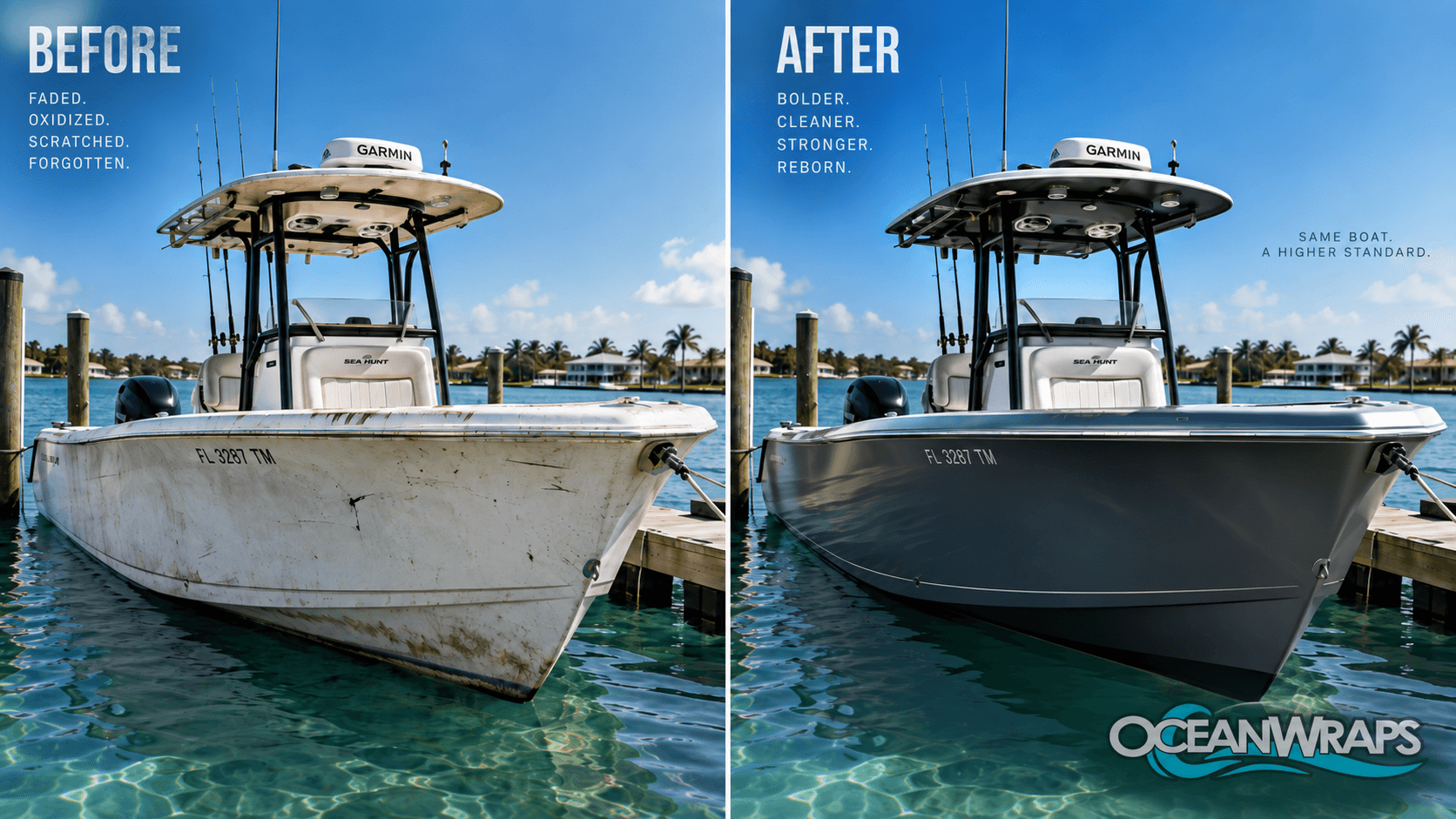
New Boat Prices Are Skyrocketing — Here's the Smarter Move Boat Owners Are Making
New boat prices are at record highs. Here's why more owners are choosing marine vinyl wraps to refresh their boat's look and protect the hull, without the cost of buying new
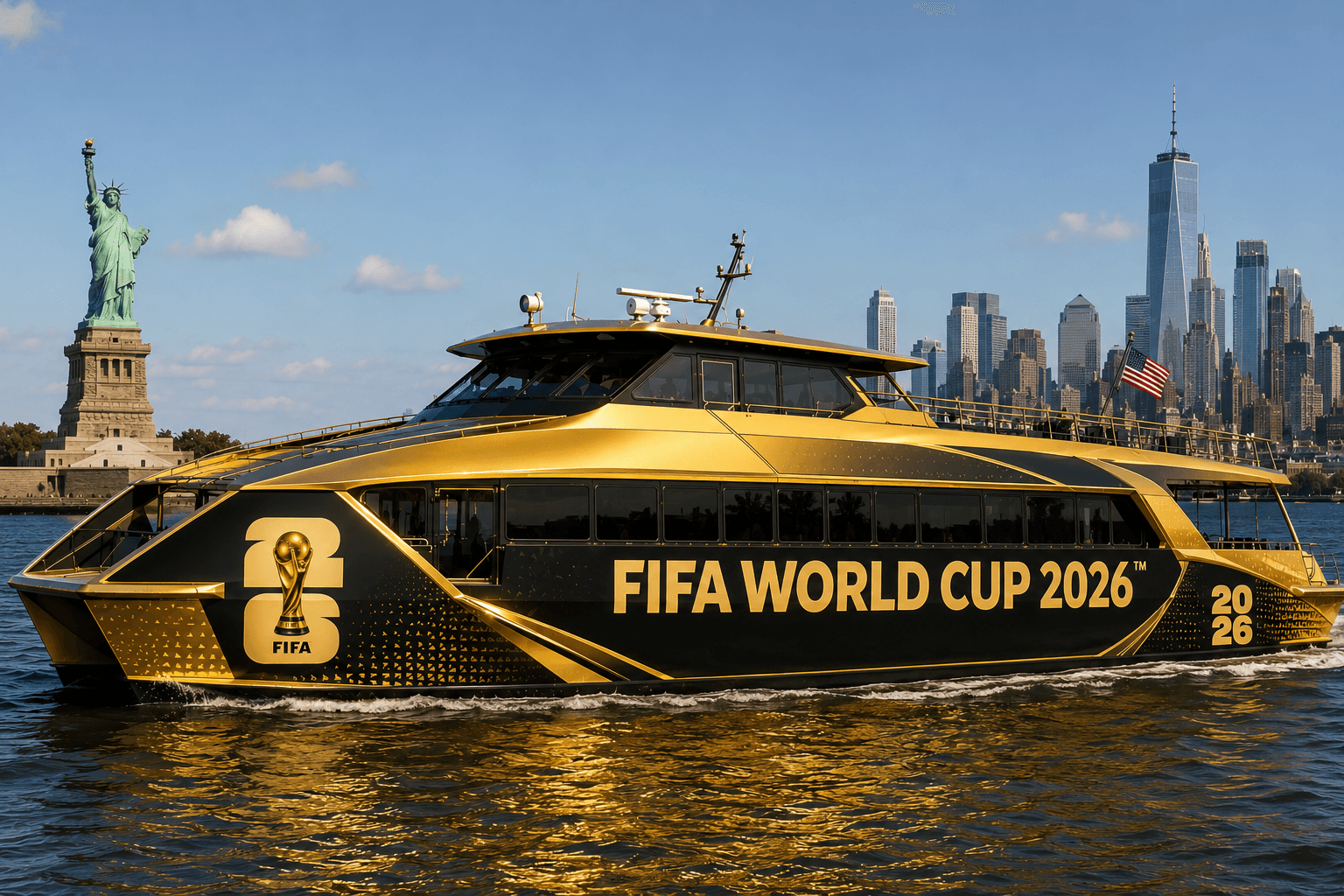
Get your boat ready for FIFA World Cup 2026 with a luxury custom wrap. Stand out on the water with premium marine graphics, gold finishes, and championship-inspired designs.
New Boat Prices Are Skyrocketing — Here's the Smarter Move Boat Owners Are Making
New boat prices are at record highs. Here's why more owners are choosing marine vinyl wraps to refresh their boat's look and protect the hull, without the cost of buying new
Boat Wraps Services
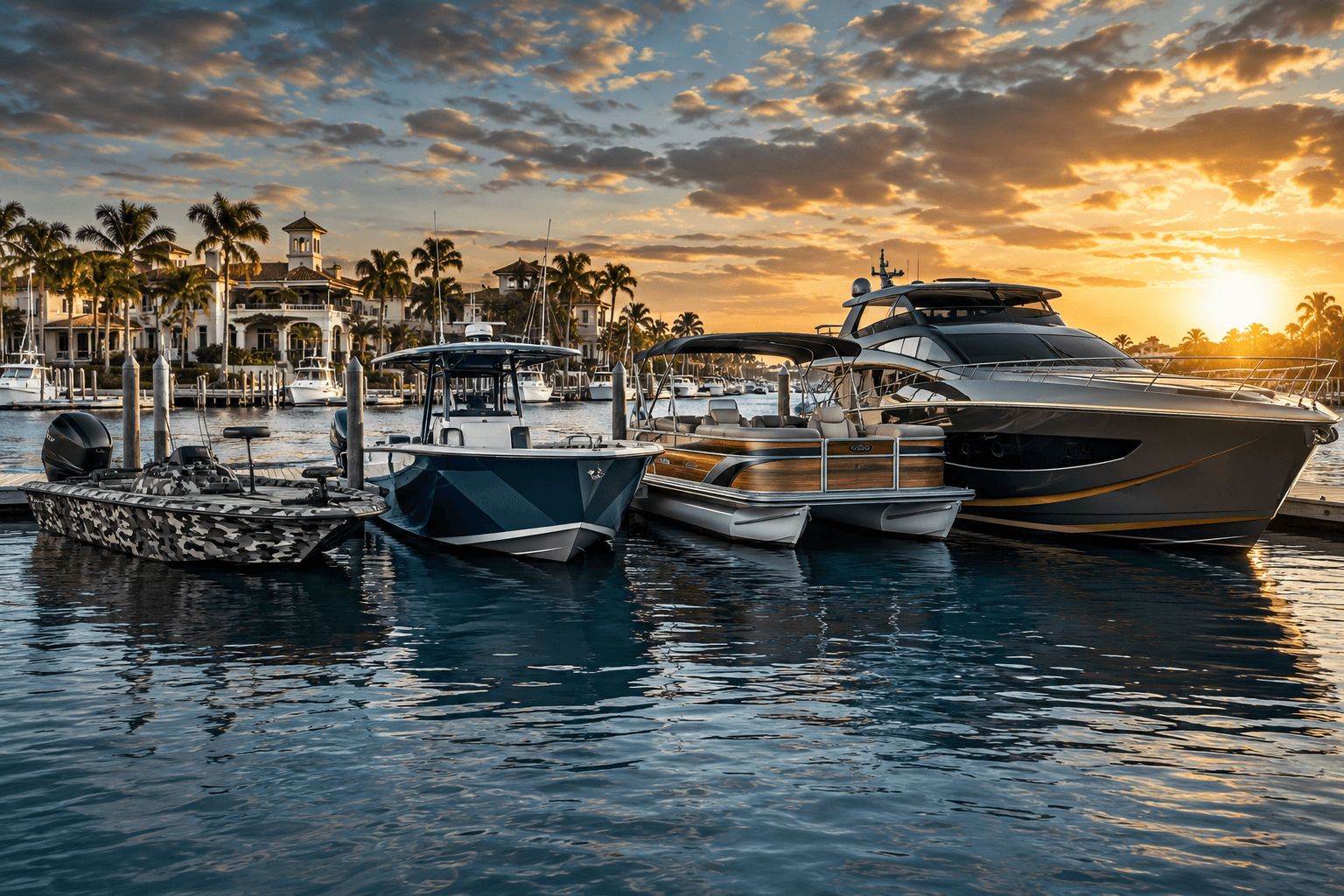
Boat Wrap Designs by Boat Type: What Actually Works on Your Vessel
A wrap that's perfect for a sportfishing boat chasing marlin offshore would look completely out of place on a family pontoon.
Boat Wraps Services
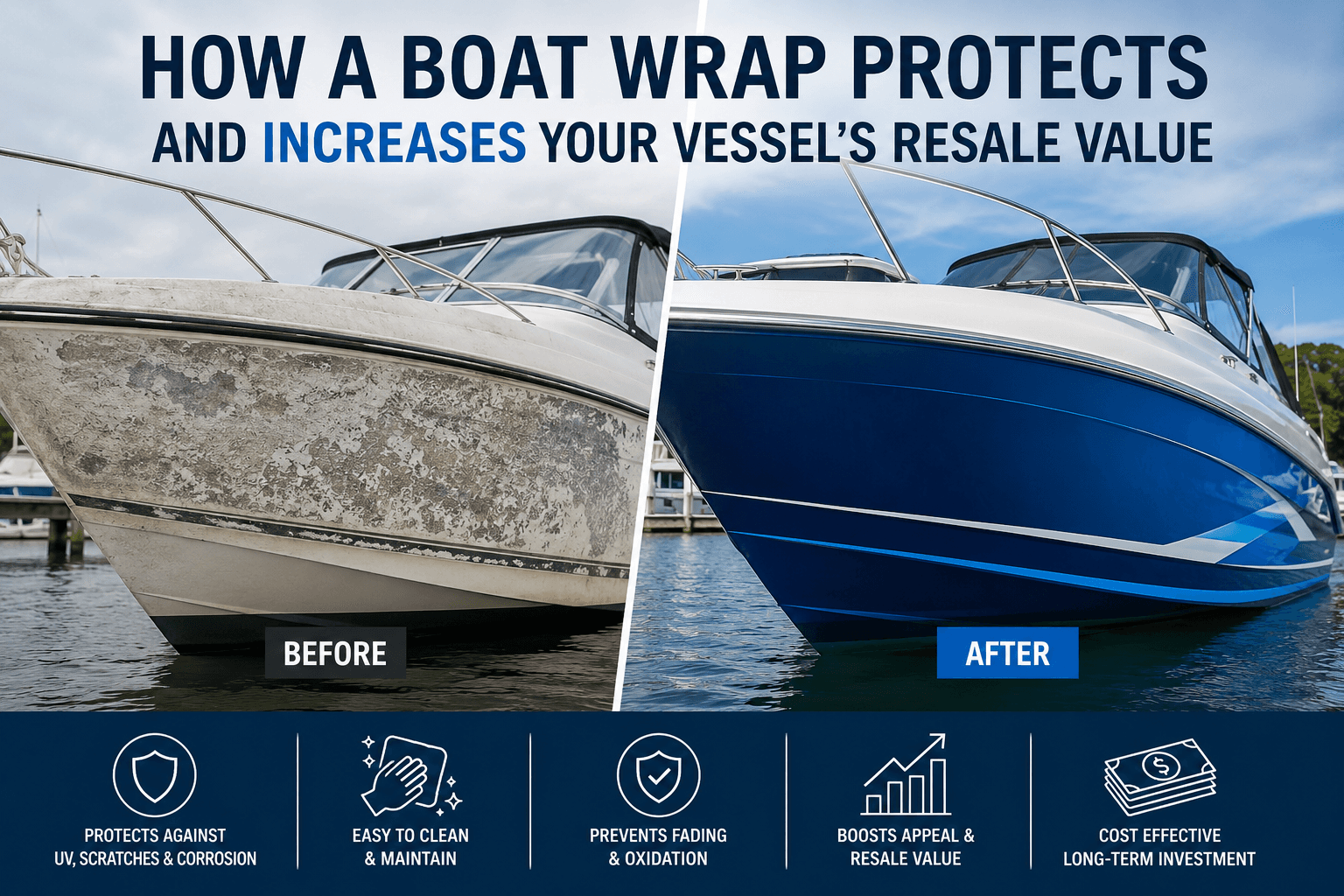
How a Boat Wrap Protects and Increases Your Vessel's Resale Value
How a Boat Wrap Can Protect and Increase Your Vessel's Resale Value
Boat Wraps Services
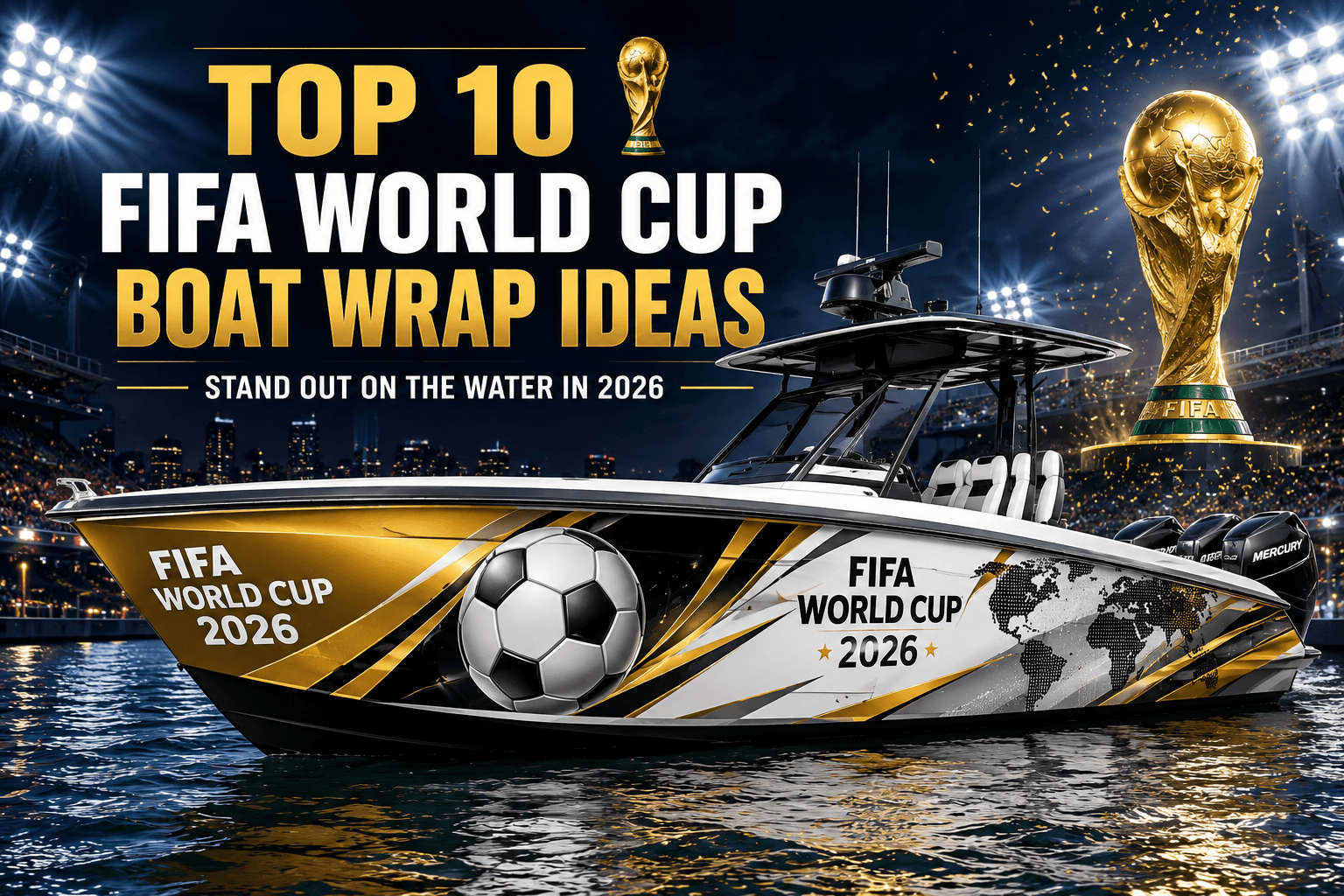
Top 10 FIFA World Cup Boat Wrap Ideas to Try This Season
If you already know you want your boat wrapped for World Cup season, the next question is which design actually fits your vessel.
Boat Wraps Services
Custom Boat Wraps for FIFA World Cup 2026
Get your boat ready for FIFA World Cup 2026 with a luxury custom wrap. Stand out on the water with premium marine graphics, gold finishes, and championship-inspired designs.
Boat Wraps Services
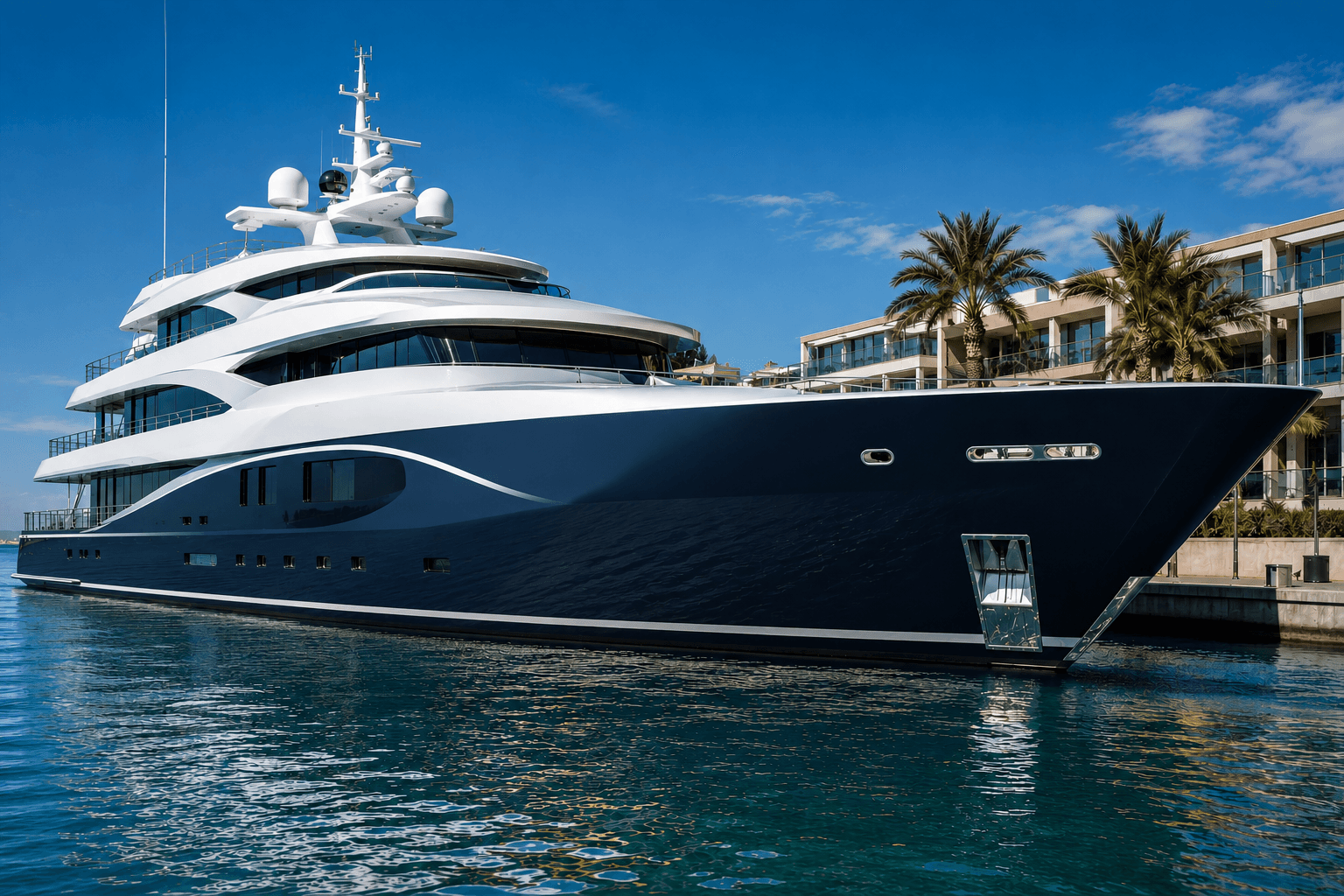
Luxury Yacht Wraps: The Complete Guide to Finishes, Styles, and Custom Marine Vinyl
Ocean Wraps works with luxury yacht and cruiser owners who want professional results, durable materials, and a finish that holds up on the water.
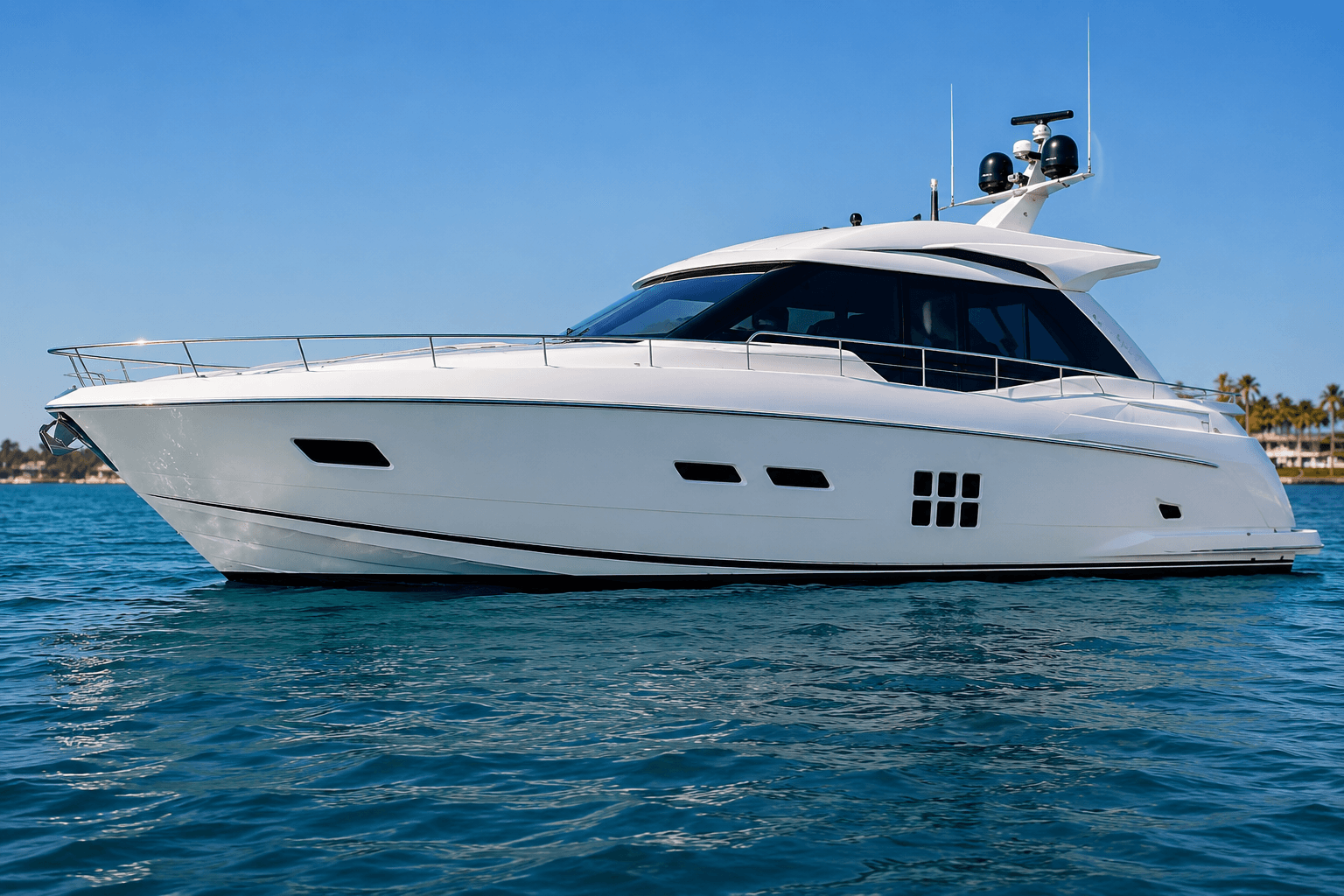
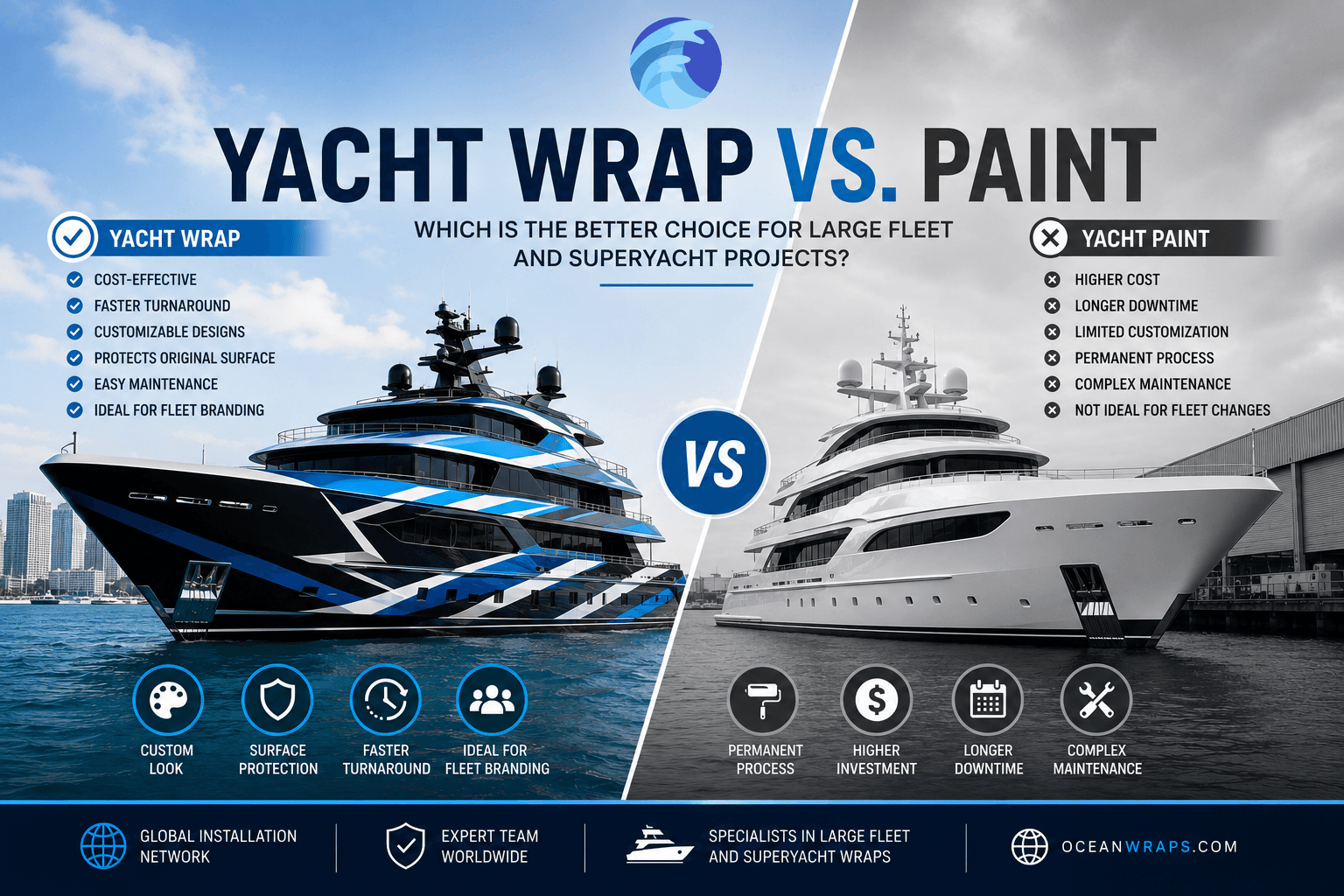
Yacht Wrap vs. Paint for Large Fleet & Superyacht Projects
Deciding between yacht wrap and paint for your fleet or superyacht? We break down real costs, downtime, durability, and which option actually makes sense at scale
How Much Does a Boat Wrap Cost? Complete Pricing Guide for 2026
Boat wrap prices vary widely depending on size, materials, and installer quality. Here's what a professional wrap actually costs in 2026 — and what to watch out for.
Luxury Yacht Wraps: The Complete Guide to Finishes, Styles, and Custom Marine Vinyl
Ocean Wraps works with luxury yacht and cruiser owners who want professional results, durable materials, and a finish that holds up on the water.
Boat Wraps Services
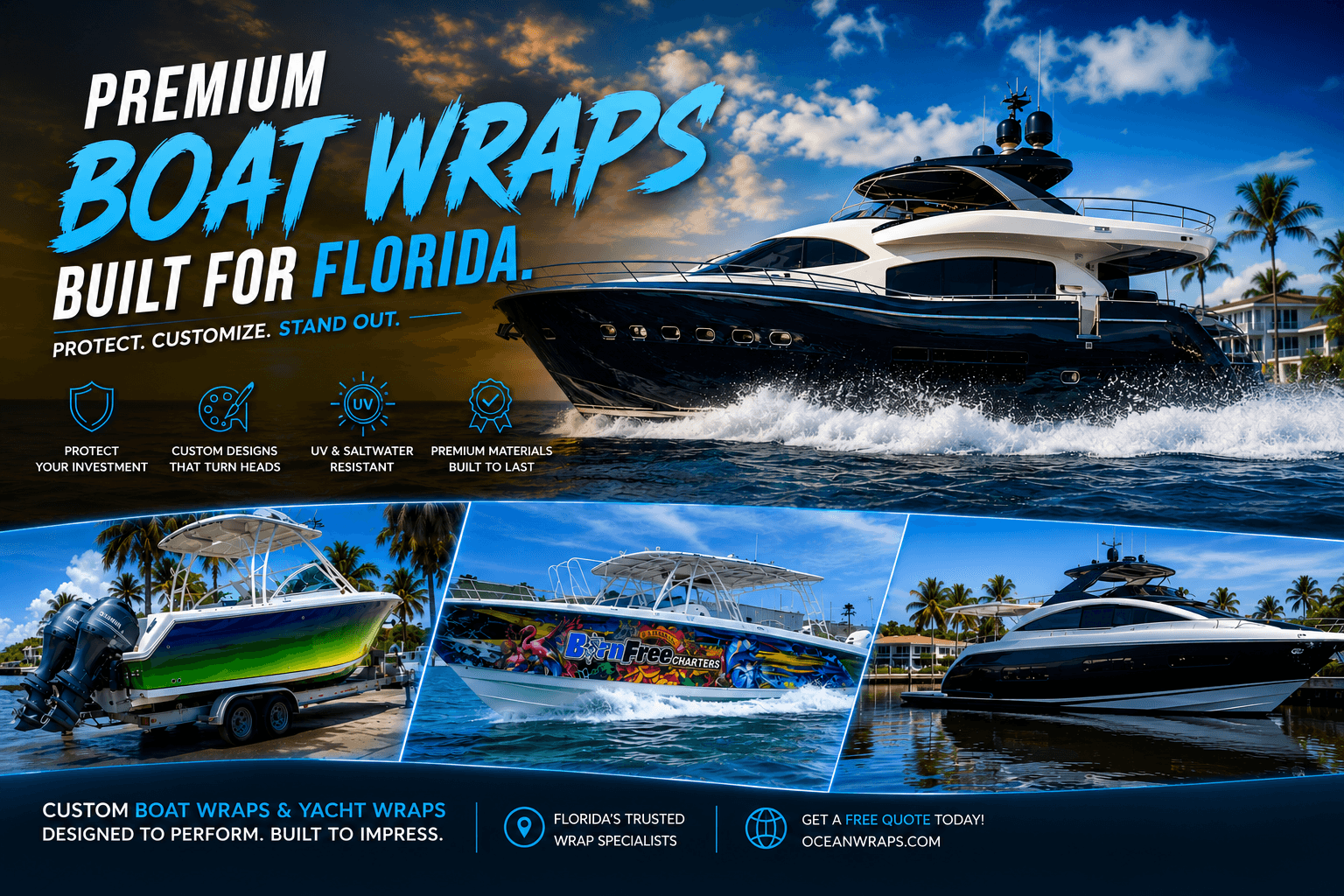
Why Florida Boat Owners Are Choosing Vinyl Boat Wraps in 2026
Discover why Florida boat owners are switching from paint to vinyl boat wraps. Learn the benefits, costs, protection, and customization options.
Guides
Boat Wraps vs Paint: 5 Reasons Why Wraps Win
Boat wraps cost less, install faster, and protect your gel coat better than traditional paint. Here's why so many boat owners are making the switch.
Guides
Yacht Wrap vs. Paint for Large Fleet & Superyacht Projects
Deciding between yacht wrap and paint for your fleet or superyacht? We break down real costs, downtime, durability, and which option actually makes sense at scale
Guides
How Much Does a Boat Wrap Cost? Complete Pricing Guide for 2026
Boat wrap prices vary widely depending on size, materials, and installer quality. Here's what a professional wrap actually costs in 2026 — and what to watch out for.