Marine Vinyl vs Cast Vinyl: The Ultimate Guide to Boat Wraps for Michigan
Professional comparison of marine vinyl and cast vinyl for boat wraps in Michigan. Learn which material best withstands Great Lakes UV, climate, and conditions.
Last updated March 26, 2026
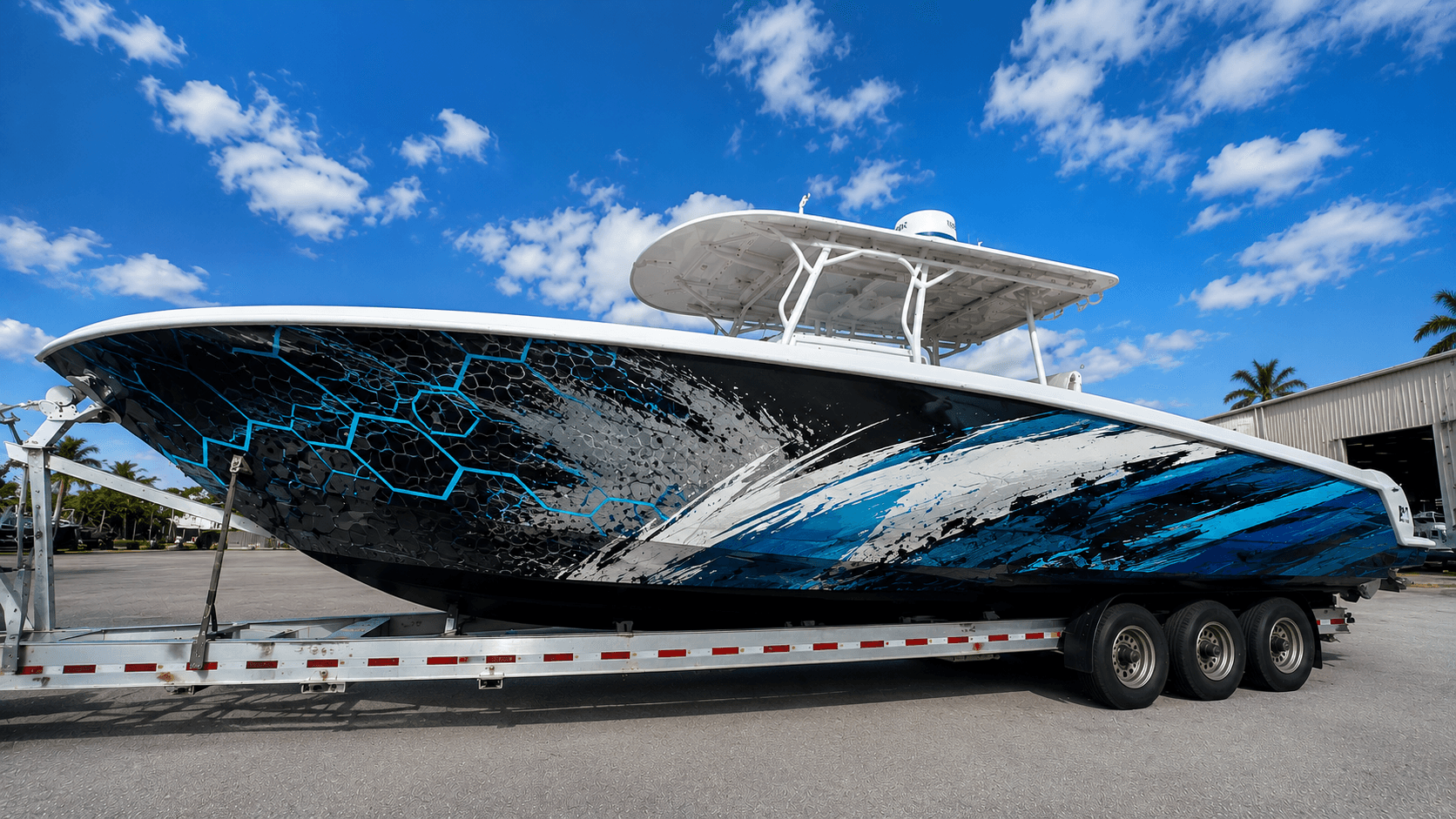
Boat wraps for Michigan boat owners, a professional boat wrap is a strategic investment in protection and personalization. The performance and longevity of your graphics depend fundamentally on material science. In the demanding freshwater environment of the Great Lakes, choosing between marine vinyl and cast vinyl is a technical decision with direct consequences for durability. This guide provides a factual comparison tailored to Michigan's unique climate, from Lake Superior's cold to Lake St. Clair's busy waters.
Professional expertise - OceanWraps certified team. Marine-grade vinyl is engineered for structural durability on large, flat hull surfaces, resisting flex and impact common on the Great Lakes.
Cast vinyl offers superior conformability for complex curves and long-term graphics, making it the choice for intricate designs on bows and consoles.
Michigan's intense seasonal UV and dramatic temperature swings demand specific adhesive and laminate systems to prevent failure.
Professional installation is non-negotiable; proper surface prep, seam strategy, and edge sealing are what validate material warranties and ensure longevity.
A premium cast laminate is essential for all Michigan boat wraps, providing the critical UV and abrasion resistance that preserves graphics.
Partnering with an experienced provider like OceanWraps ensures correct material mapping and installation protocols specific to local conditions.
The performance of your wrap begins with the vinyl film. The two primary categories are marine vinyl (typically calendered) and cast vinyl, each with distinct properties for different applications.
Marine vinyl is a calendered material pressed through heated rollers, creating a thick, rigid film. It is formulated for harsh marine environments, offering excellent resistance to moisture, temperature fluctuation, and the mechanical stress of hull flex. For large, relatively flat areas like hull sides on Great Lakes vessels, it provides robust, cost-effective protection.
Cast vinyl is manufactured by casting liquid PVC onto a sheet, resulting in a thinner, more pliable film with exceptional memory. It conforms to complex contours, tight radii, and compound curves without lifting or cracking over time. For long-term, intricate graphics on modern curved surfaces, cast vinyl is the superior technical choice.
The Great Lakes present a unique set of challenges that directly inform material selection and installation protocols.
Intense UV Exposure: Summer sun on the water is relentless, requiring films and laminates with advanced UV stabilizers to prevent fading and brittleness.
Dramatic Temperature Swings: Hulls can experience shifts exceeding 50°F. Materials must expand and contract cohesively without telegraphing or losing bond.
Freshwater & Mineral Content: While less corrosive than salt, Great Lakes water contains minerals and pollutants; films must resist staining and chemical attack.
Seasonal Storage: Off-season conditions, whether dry heated storage or cold damp indoor, affect longevity. Professional edge sealing prevents moisture ingress during storage.
Every square inch of gelcoat is de-waxed, decontaminated, and mechanically abraded to a perfect profile. Professionals inspect for old repairs, osmotic blistering, and substrate integrity—critical steps for permanent adhesion.
Graphics are engineered for the specific hull, accounting for curves, hardware, and strategic seam placement. Digital templating ensures pattern alignment and minimizes waste of premium materials.
Certified installers use specialized tools, heat, and tension to conform material without over-stressing it. Seams are placed strategically—never on sharp edges—and are overlapped or welded with precision to prevent water intrusion.
All edges are post-heated and sealed. The installation undergoes a final inspection under bright light for bubbles, wrinkles, or contamination. This rigorous standard separates a seasonal graphic from one that lasts for years.
Selection extends beyond the base vinyl. A high-gloss cast vinyl may be chosen for graphic impact on curved surfaces, while a textured marine vinyl suits non-skid applications. The unifying component for all Michigan installations is a premium cast laminate. This clear protective layer is laminated over the printed vinyl, providing the essential defense against UV degradation, abrasion, and chemical exposure. Trusted professionals utilize certified material systems where the vinyl, ink, and laminate are engineered as a cohesive unit, ensuring performance and warranty compliance.
What is the best material for boat wraps on the Great Lakes?#
A hybrid approach is often optimal. Cast vinyl is superior for complex curves on bows and consoles for long-term conformity, while heavy-duty marine vinyl excels on large, flat hull surfaces taking wave impact. A professional assessment determines the correct material map for your vessel.
How long do professional boat wraps last in Michigan?#
With premium materials and certified installation, expect 5-7 years of service. This assumes proper care and seasonal storage. Michigan's intense summer UV is the primary limiting factor, underscoring the necessity of a UV-inhibitive laminate.
Can a boat wrap be installed during colder Michigan months?#
Professional installation requires a controlled environment. Vinyl becomes less pliable and adhesives cannot cure properly in cold temperatures. Reputable services work in climate-controlled bays, a key advantage for early spring or late fall projects.
Does a wrap protect or harm the underlying gelcoat?#
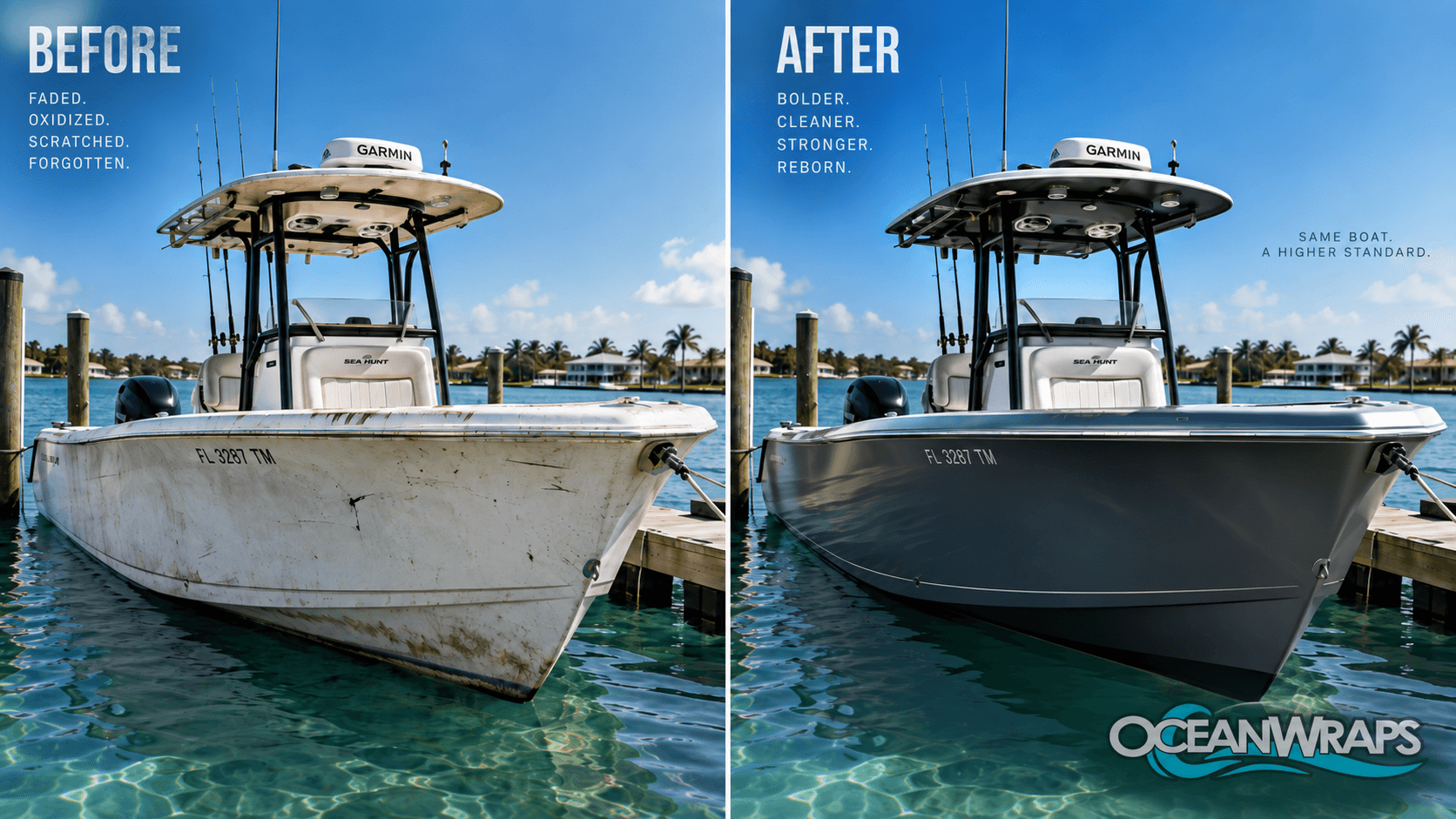
A correctly installed wrap acts as a sacrificial shield, protecting gelcoat from UV degradation, minor abrasion, and oxidation. Upon professional removal, the underlying gelcoat is preserved in its original, protected state, offering proven asset protection.
New Boat Prices Are Skyrocketing — Here's the Smarter Move Boat Owners Are Making
New boat prices are at record highs. Here's why more owners are choosing marine vinyl wraps to refresh their boat's look and protect the hull, without the cost of buying new
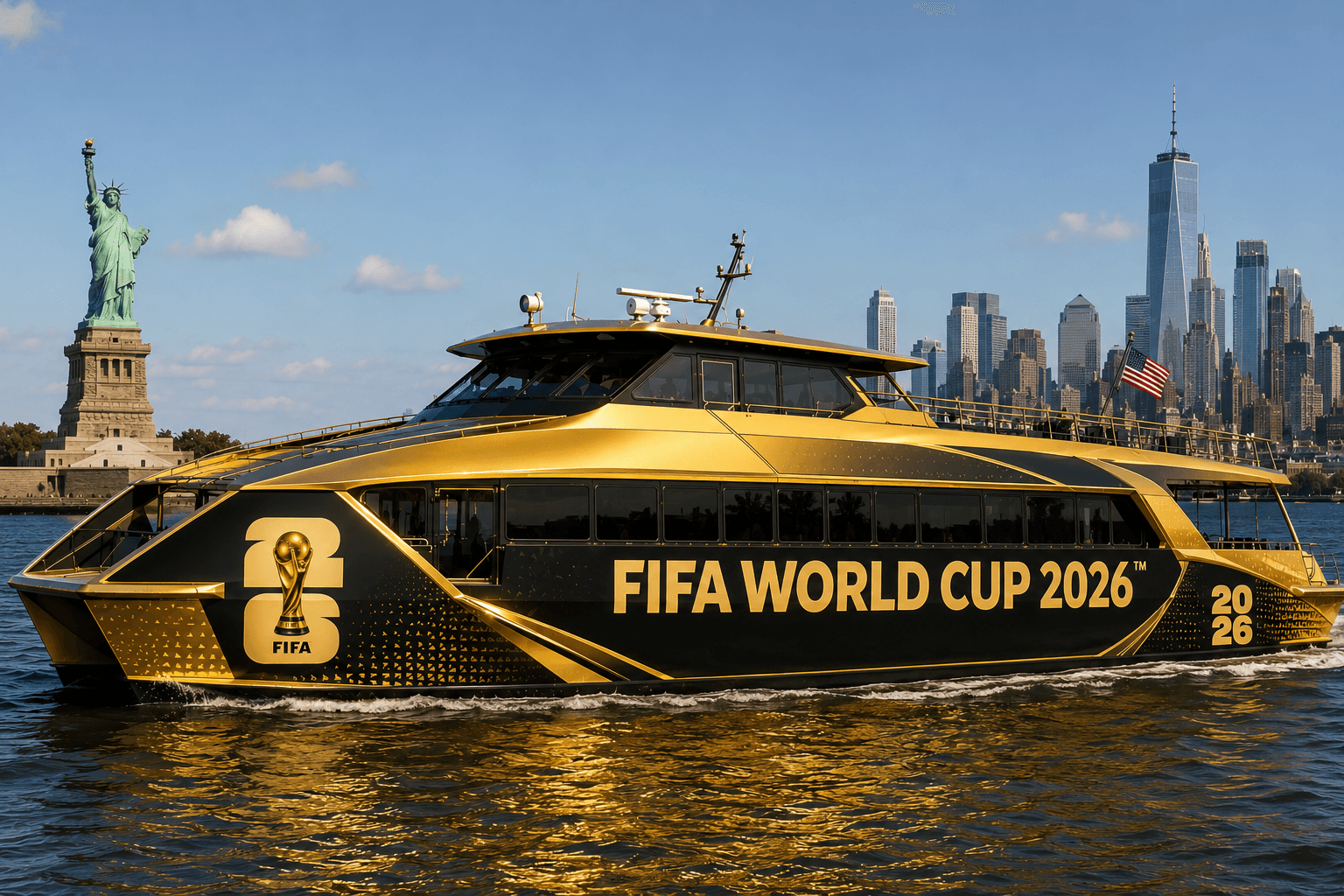
Get your boat ready for FIFA World Cup 2026 with a luxury custom wrap. Stand out on the water with premium marine graphics, gold finishes, and championship-inspired designs.
New Boat Prices Are Skyrocketing — Here's the Smarter Move Boat Owners Are Making
New boat prices are at record highs. Here's why more owners are choosing marine vinyl wraps to refresh their boat's look and protect the hull, without the cost of buying new
Boat Wraps Services
Boat Wrap Designs by Boat Type: What Actually Works on Your Vessel
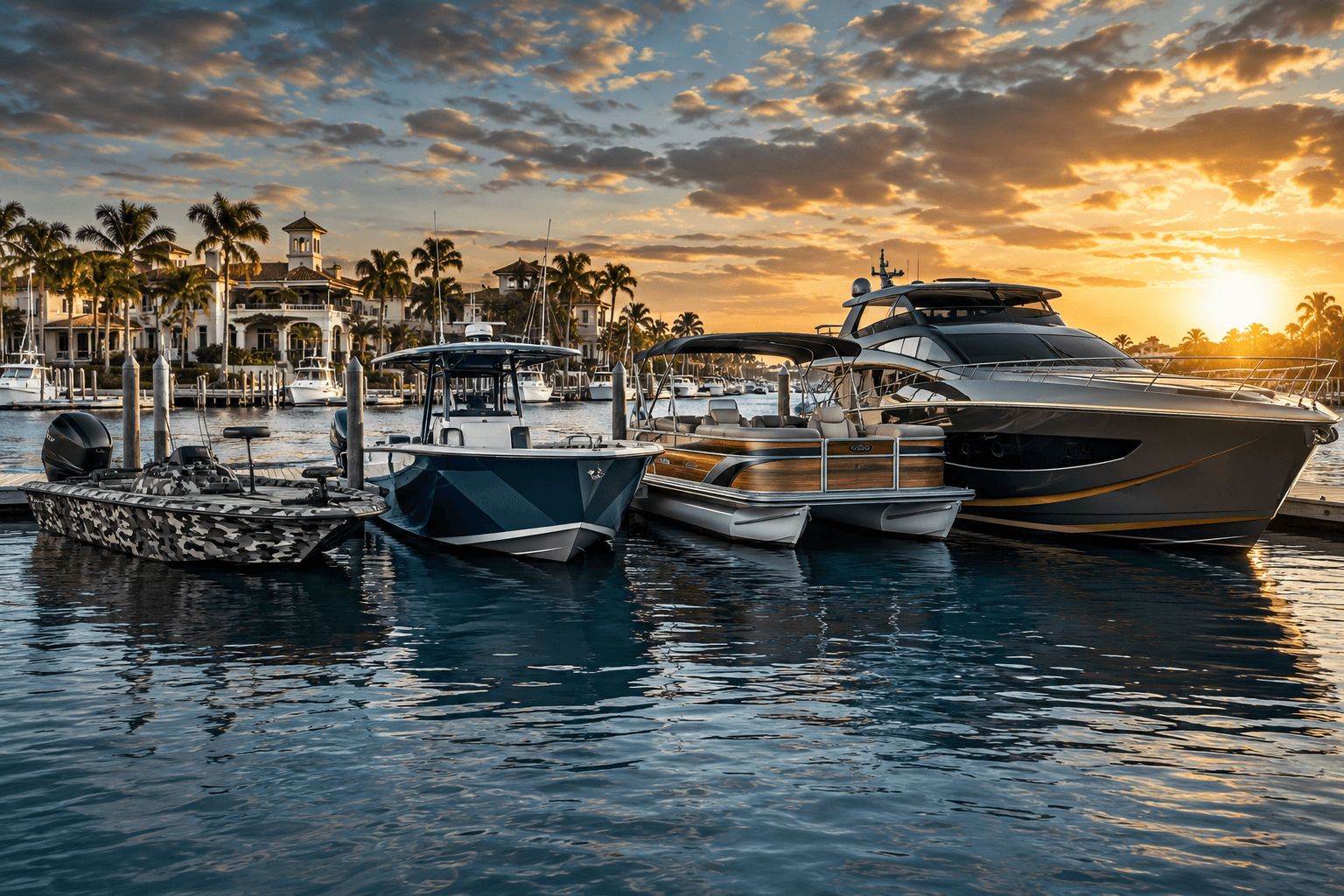
A wrap that's perfect for a sportfishing boat chasing marlin offshore would look completely out of place on a family pontoon.
Boat Wraps Services
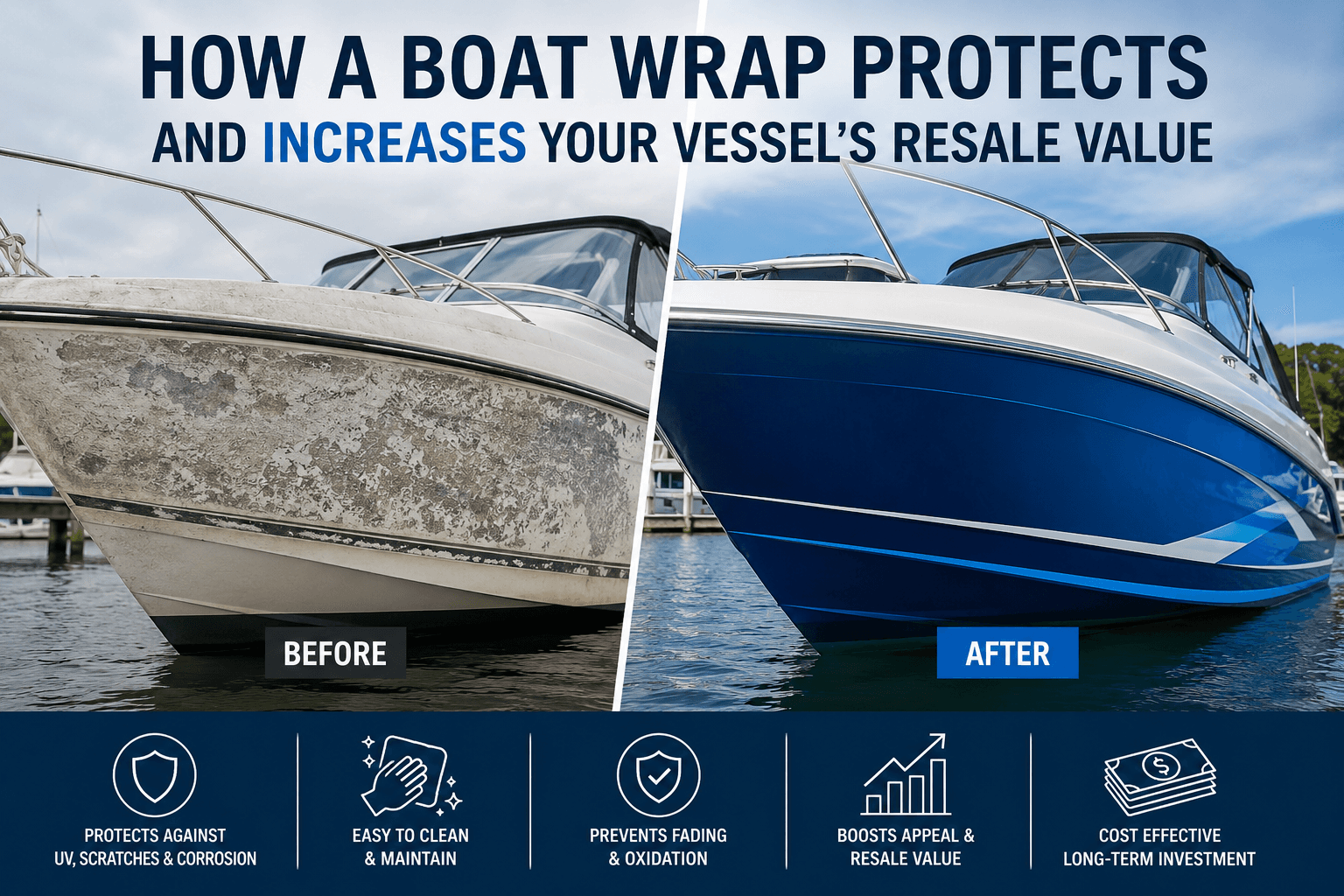
How a Boat Wrap Protects and Increases Your Vessel's Resale Value
How a Boat Wrap Can Protect and Increase Your Vessel's Resale Value
Boat Wraps Services
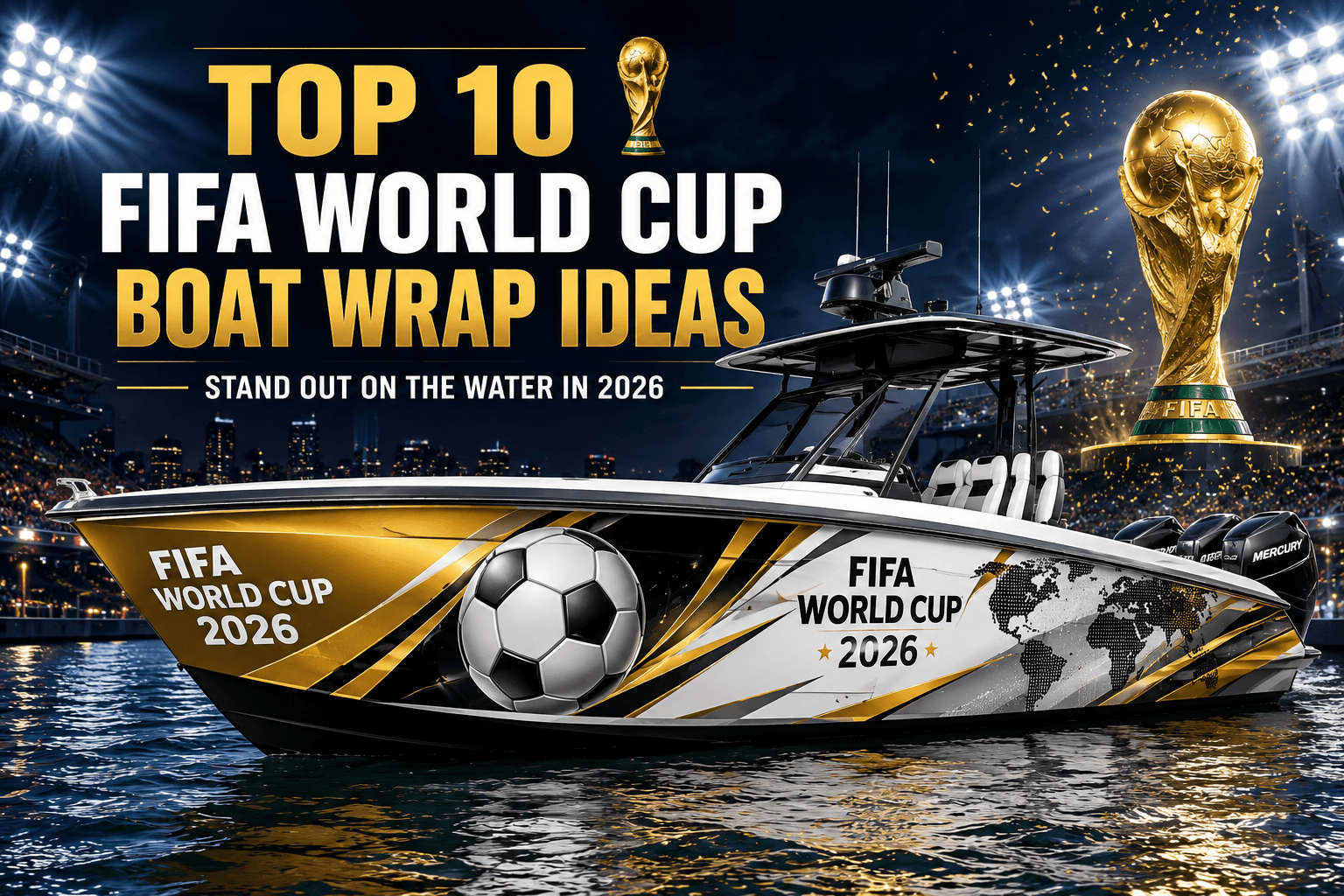
Top 10 FIFA World Cup Boat Wrap Ideas to Try This Season
If you already know you want your boat wrapped for World Cup season, the next question is which design actually fits your vessel.
Boat Wraps Services
Custom Boat Wraps for FIFA World Cup 2026
Get your boat ready for FIFA World Cup 2026 with a luxury custom wrap. Stand out on the water with premium marine graphics, gold finishes, and championship-inspired designs.
Boat Wraps Services
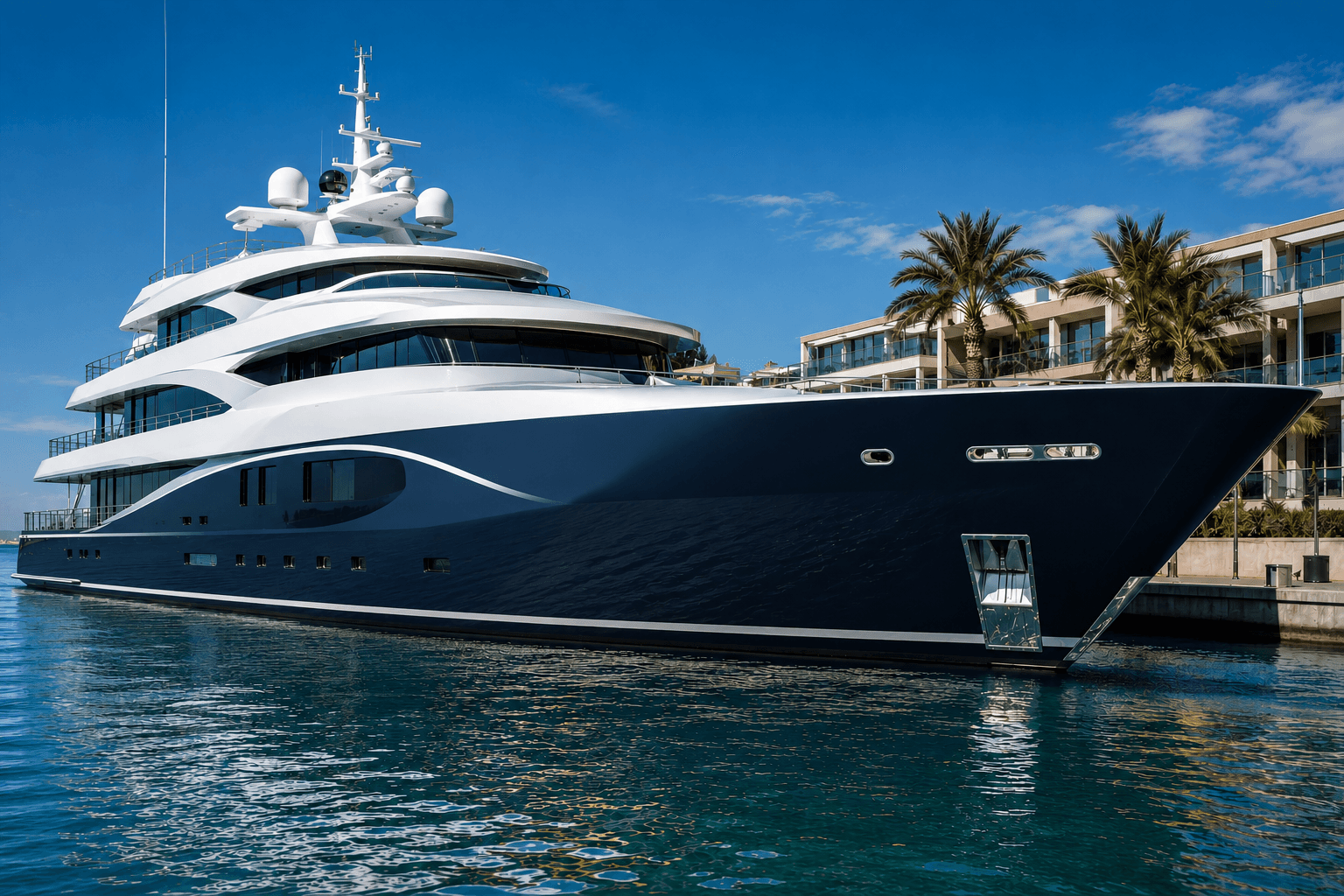
Luxury Yacht Wraps: The Complete Guide to Finishes, Styles, and Custom Marine Vinyl
Ocean Wraps works with luxury yacht and cruiser owners who want professional results, durable materials, and a finish that holds up on the water.
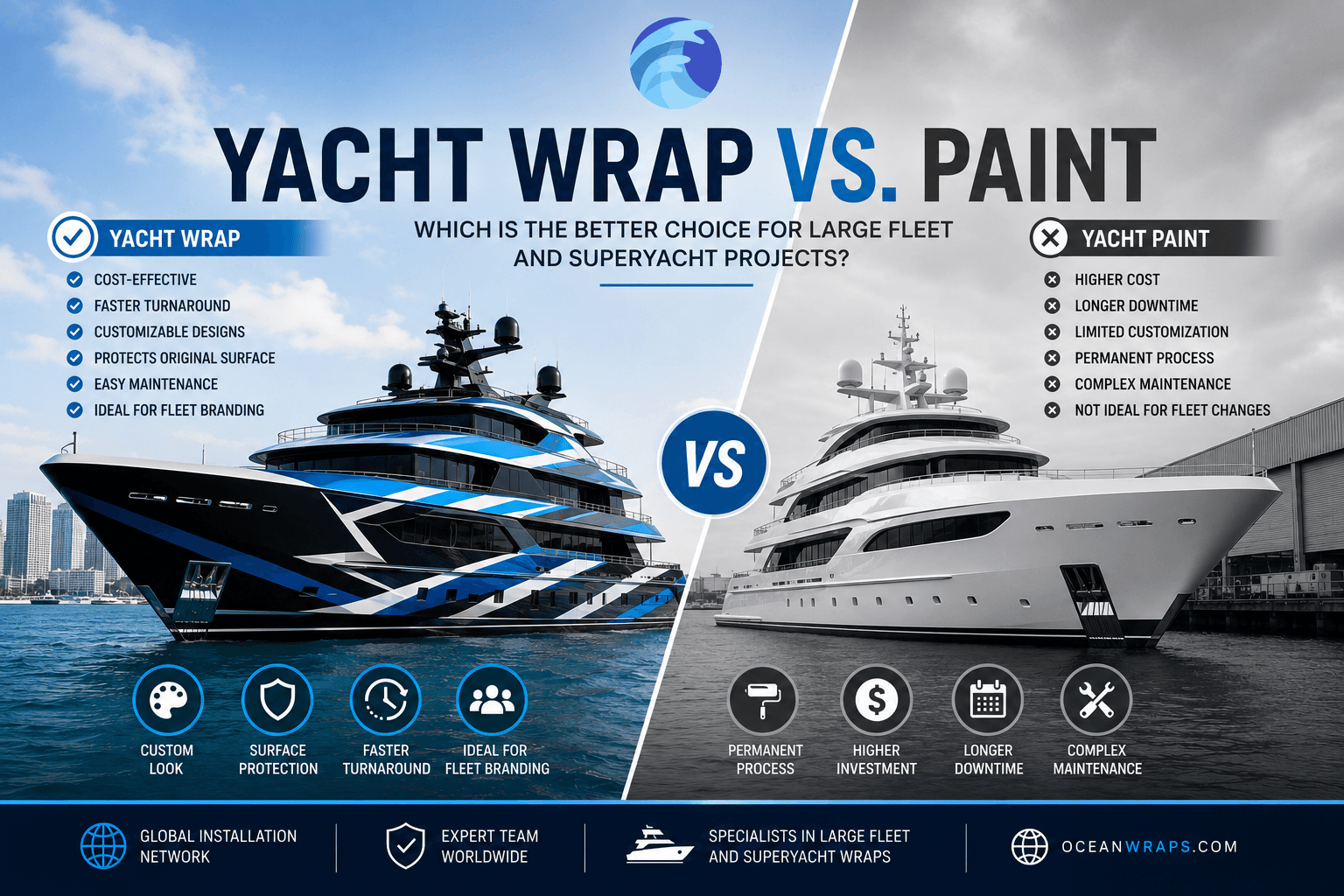
Yacht Wrap vs. Paint for Large Fleet & Superyacht Projects
Deciding between yacht wrap and paint for your fleet or superyacht? We break down real costs, downtime, durability, and which option actually makes sense at scale
How Much Does a Boat Wrap Cost? Complete Pricing Guide for 2026
Boat wrap prices vary widely depending on size, materials, and installer quality. Here's what a professional wrap actually costs in 2026 — and what to watch out for.
Luxury Yacht Wraps: The Complete Guide to Finishes, Styles, and Custom Marine Vinyl
Ocean Wraps works with luxury yacht and cruiser owners who want professional results, durable materials, and a finish that holds up on the water.
Boat Wraps Services
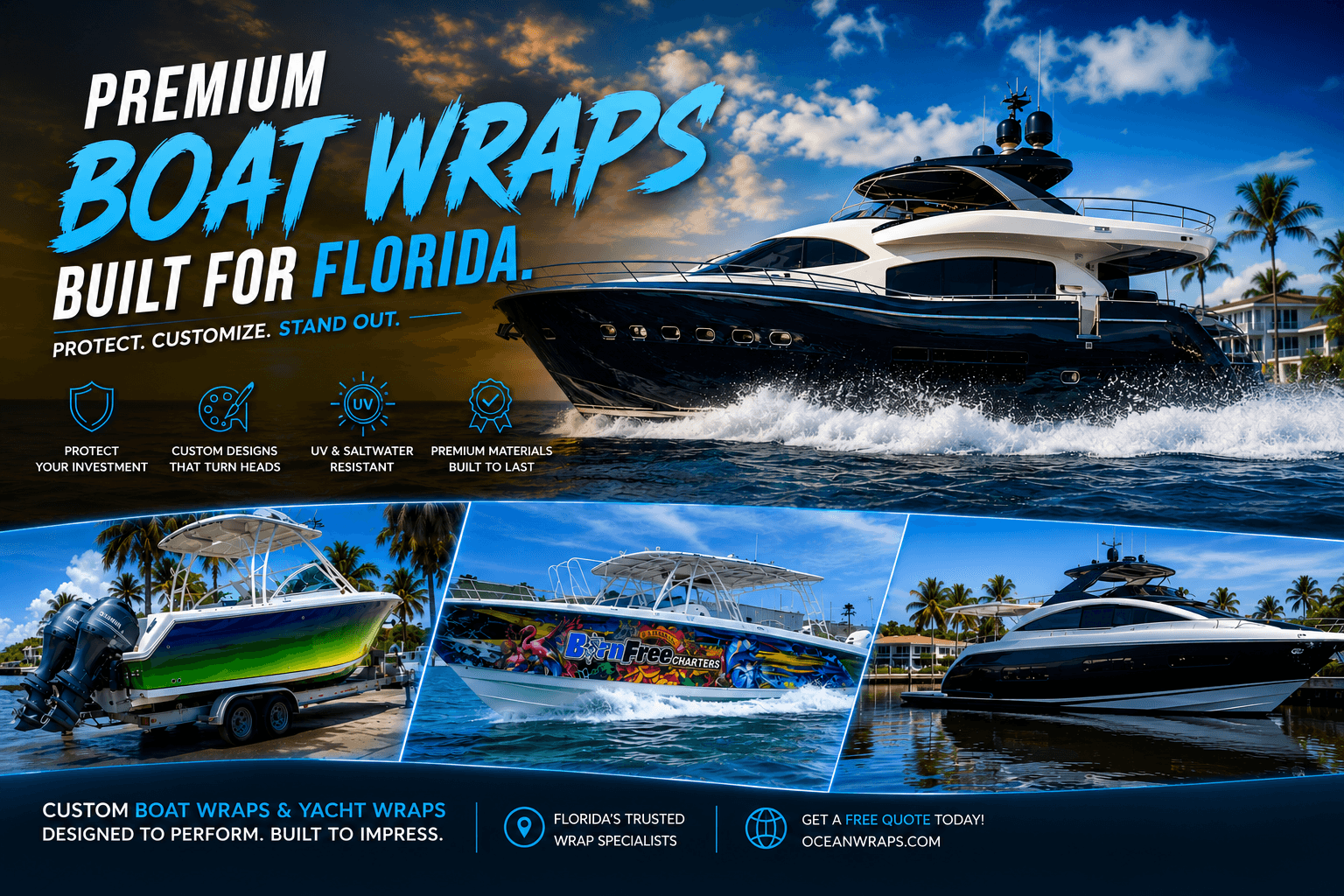
Why Florida Boat Owners Are Choosing Vinyl Boat Wraps in 2026
Discover why Florida boat owners are switching from paint to vinyl boat wraps. Learn the benefits, costs, protection, and customization options.
Guides
Boat Wraps vs Paint: 5 Reasons Why Wraps Win
Boat wraps cost less, install faster, and protect your gel coat better than traditional paint. Here's why so many boat owners are making the switch.
Guides
Yacht Wrap vs. Paint for Large Fleet & Superyacht Projects
Deciding between yacht wrap and paint for your fleet or superyacht? We break down real costs, downtime, durability, and which option actually makes sense at scale
Guides
How Much Does a Boat Wrap Cost? Complete Pricing Guide for 2026
Boat wrap prices vary widely depending on size, materials, and installer quality. Here's what a professional wrap actually costs in 2026 — and what to watch out for.