Strong sun is one of the main reasons gelcoat chalks and colors fade. In the Bahamas, with long days on bright water, UV exposure is hard to avoid. A wrap can help by covering the surface beneath, but it is important to understand what it does and what it does not do.
How a wrap helps with sun exposure#
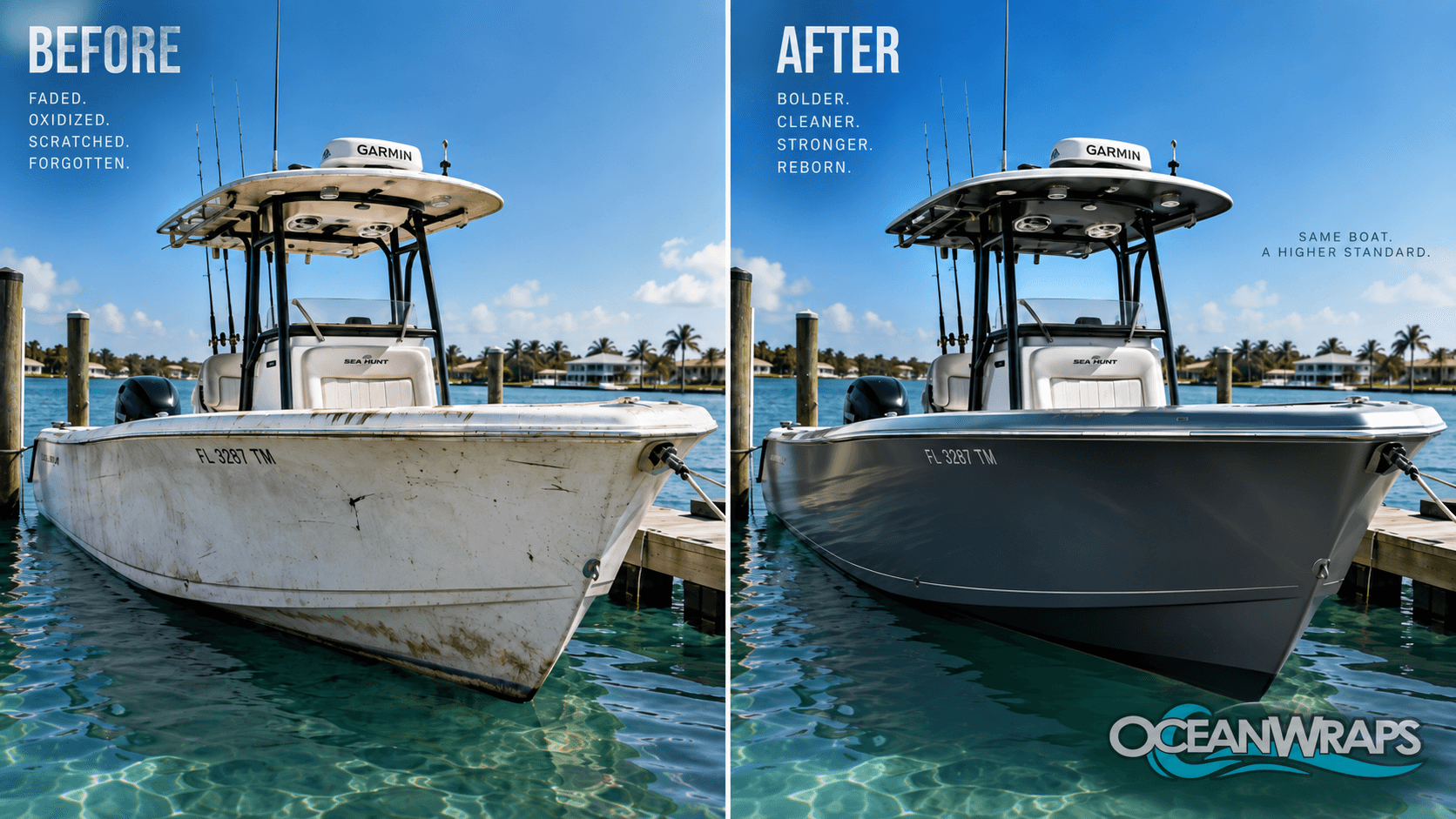
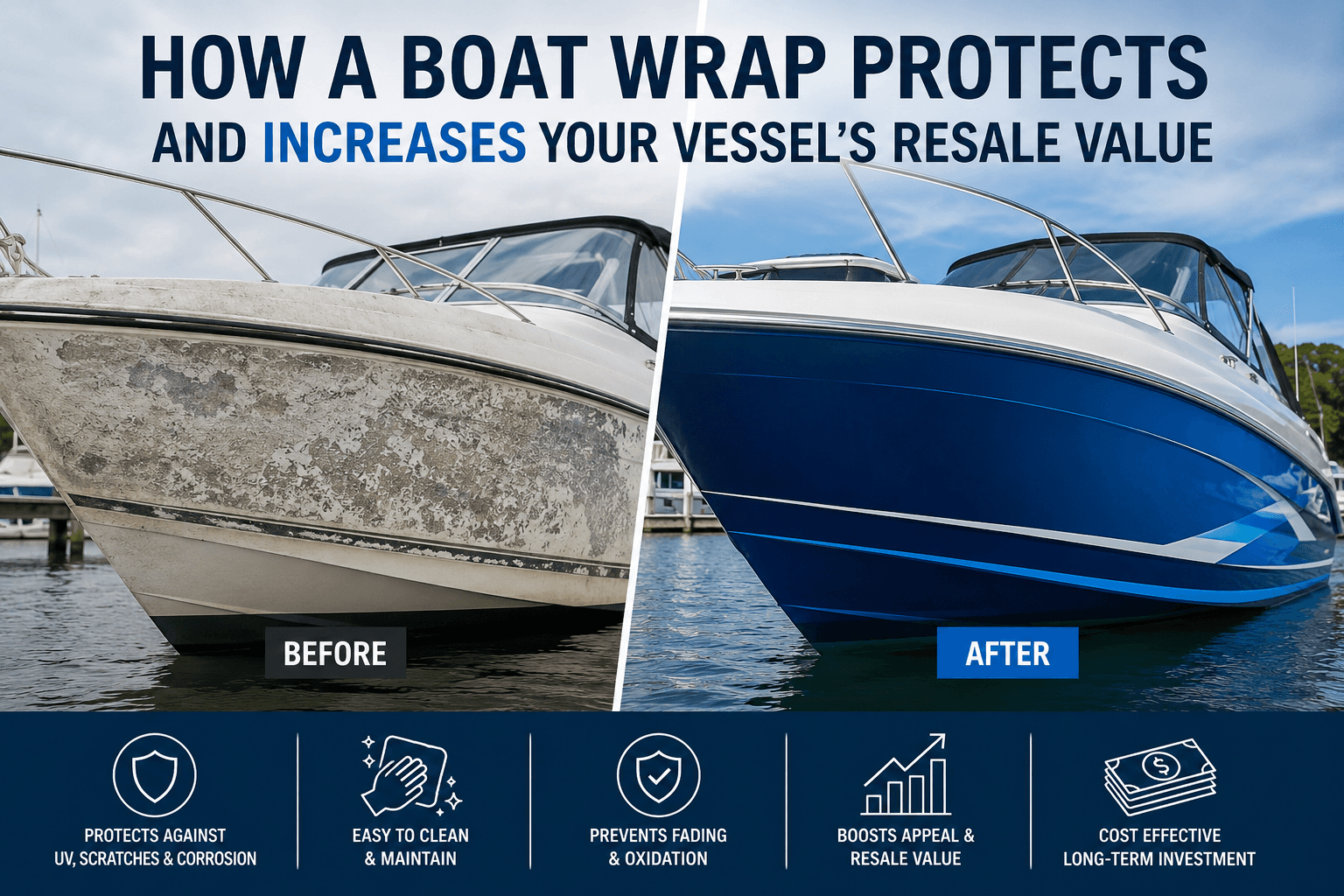
Film creates a physical layer between the sun and the surface. While it is in place, the covered gelcoat or paint receives less direct exposure, which can help slow further sun-related ageing. When the film is eventually removed, the protected surface may look different from any areas that were left uncovered. Plan your coverage accordingly, especially where a wrap ends and exposed gelcoat begins.
The film takes the sun instead#
A wrap doesn't make UV go away. The film absorbs that exposure, and it will age as a result. Over time, it may fade, lose gloss, or become less flexible. This is normal and is why wraps have a limited service life. Some colors and printed finishes tend to show ageing sooner, so ask for specific guidance when you choose a film.
Printed graphics usually need an overlaminate, which adds a protective layer over the inks. Skipping it to save money can shorten the life of a design.
The parts of a boat that see the most sun#
Not every surface ages at the same rate. Pay closest attention to:
- Horizontal surfaces such as decks, hardtops, and coach roofs
- The upper hull sides and the bow flare
- Whichever side of the boat faces the sun at your usual berth
- Areas that reflect sunlight from nearby surfaces or the water
A boat left in a fixed position for months can fade unevenly. If you can, turn it occasionally or use shade and covers.
Practical ways to reduce UV wear#
- Keep the boat covered or shaded when it is not in use
- Rinse off salt, which can dull the surface and hold grit
- Use only cleaners and protectants approved for your film
- Avoid abrasive polishes and rubbing compounds
- Inspect sun-facing panels regularly and photograph them
If you are comparing clear films, ask specifically about UV performance and intended use. For a clear layer over existing gelcoat, see our yacht protection film service.
Don't forget heat#
Sun brings heat as well as UV. Dark film can get very hot in direct sunlight, which may stress adhesive and edges and can make surfaces uncomfortable to touch. If you love a dark color, ask about suitable film options, and consider which panels could use a lighter tone.
What about existing sun damage?#
A wrap doesn't repair oxidized gelcoat. Heavily chalked surfaces should be cleaned, corrected, and assessed before installation, because film needs a sound surface. If your hull is only slightly faded, boat detailing may restore enough shine that you can postpone a wrap altogether.
Frequently asked questions#
Will a wrap stop my boat from fading?#
It can reduce direct sun on the covered gelcoat, but the film itself will age and eventually need replacing.
Which wrap colors fade the least?#
This depends on the film range, so ask for the manufacturer's data. Bright, highly saturated colors are worth checking carefully.
Can a wrap be installed in the Bahamas?#
Yes, with planning. See our Bahamas boat wraps page for how we approach island logistics.