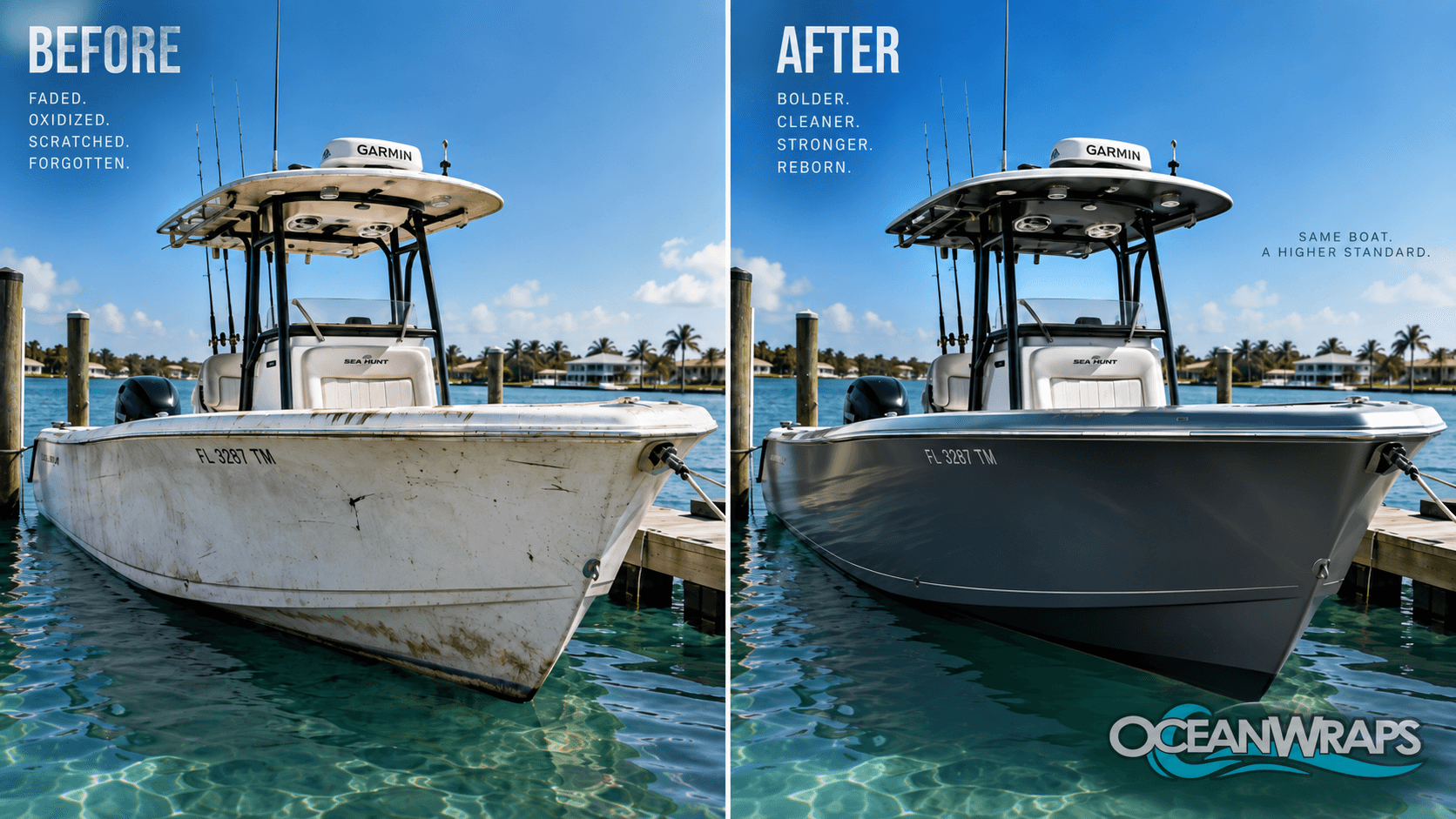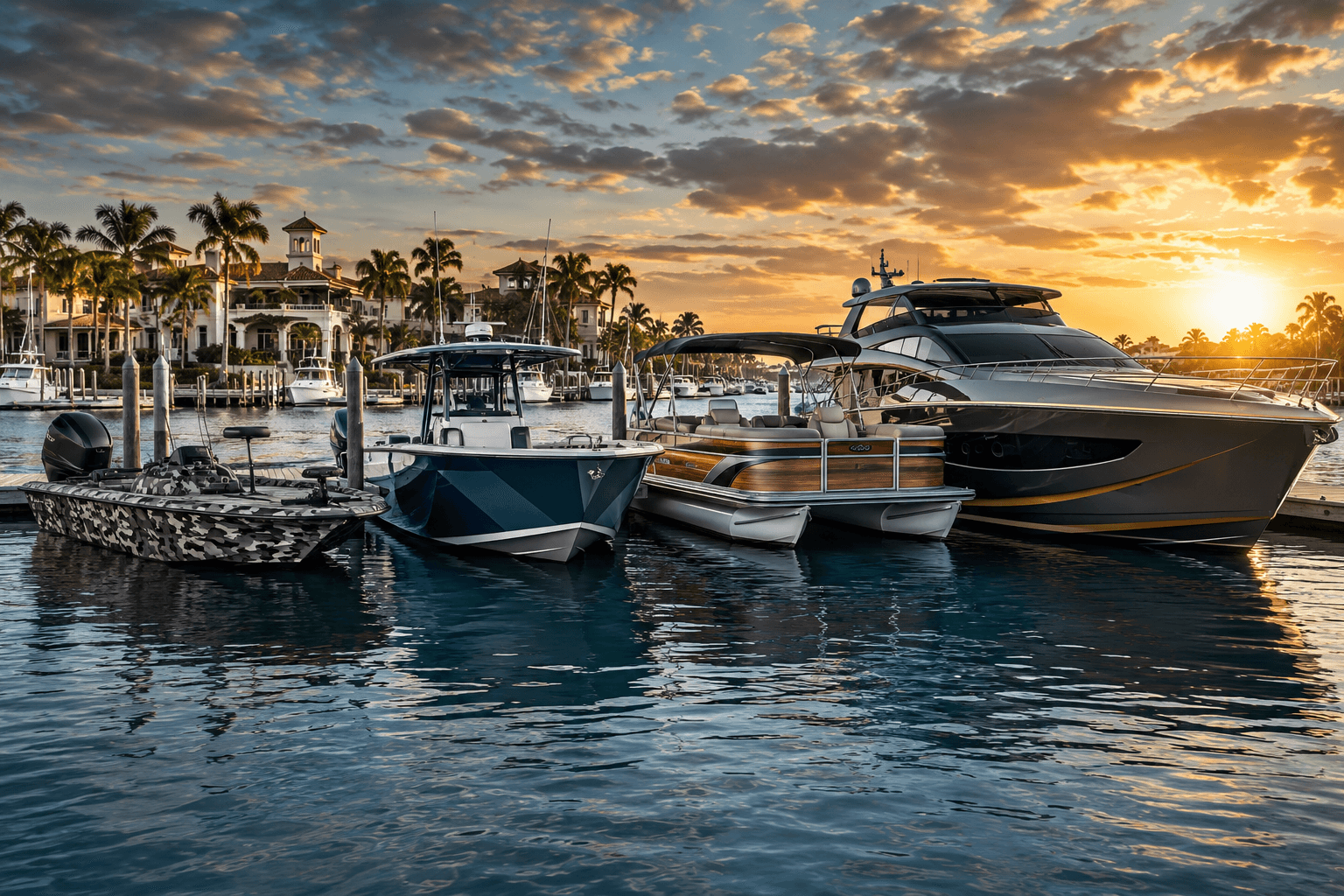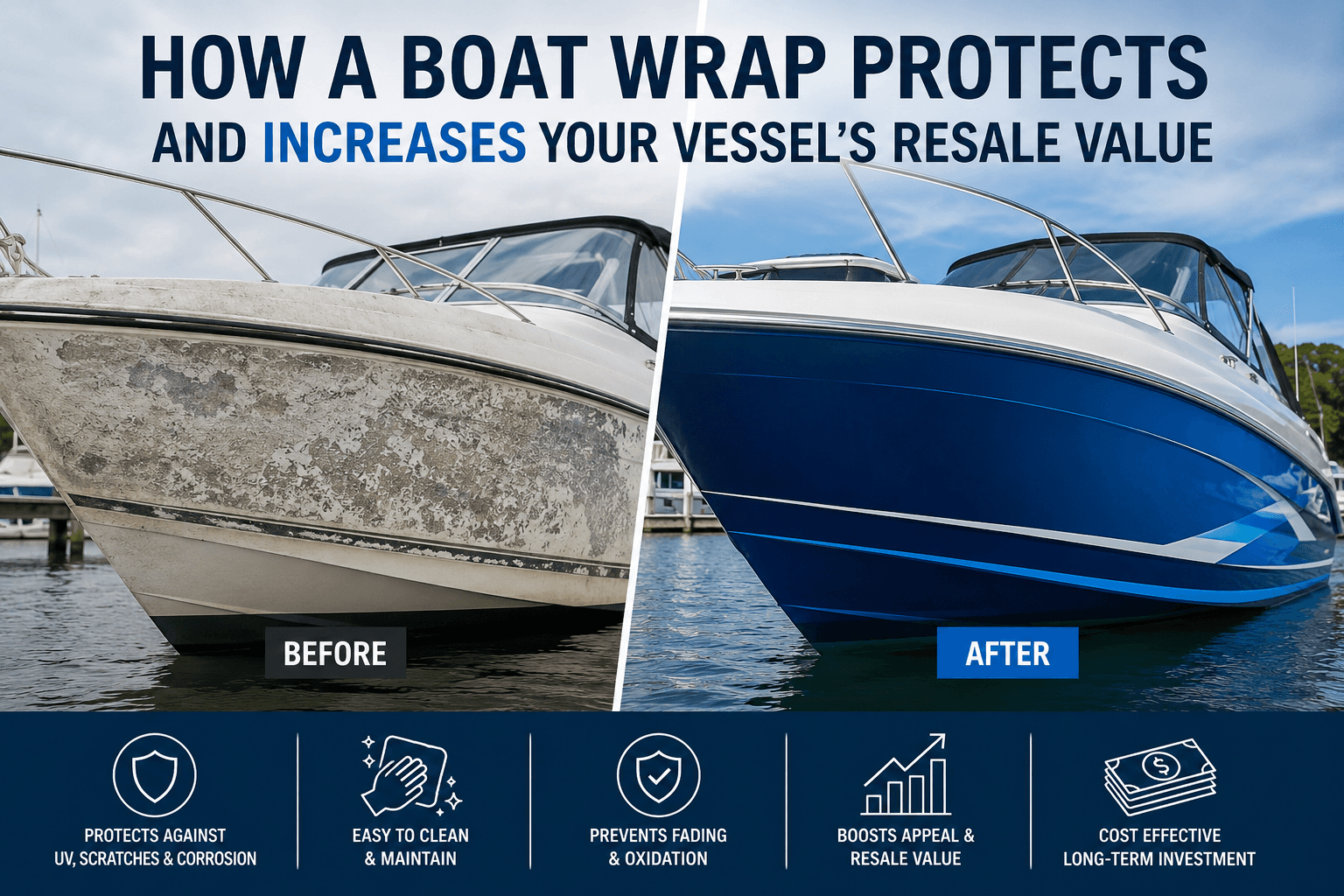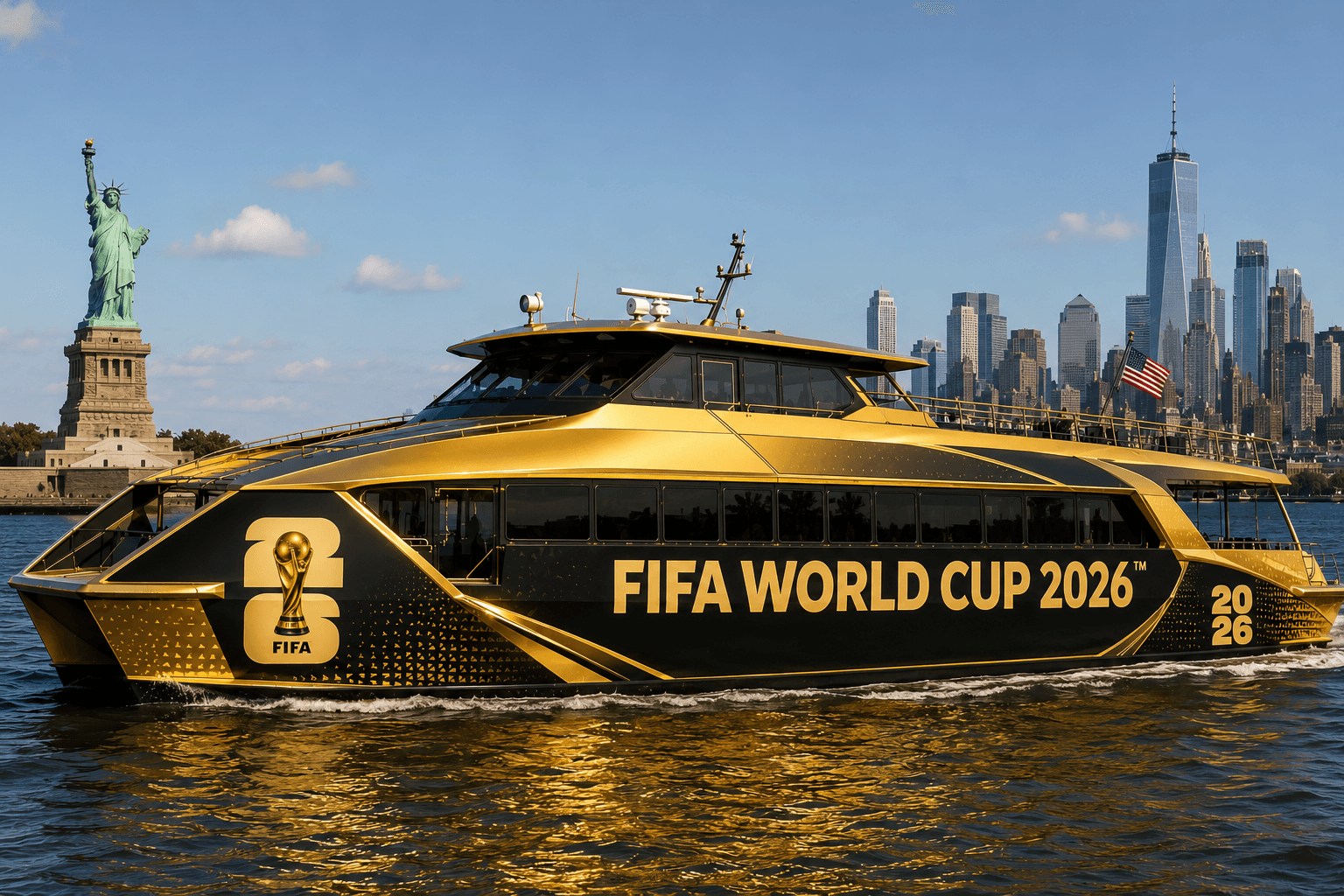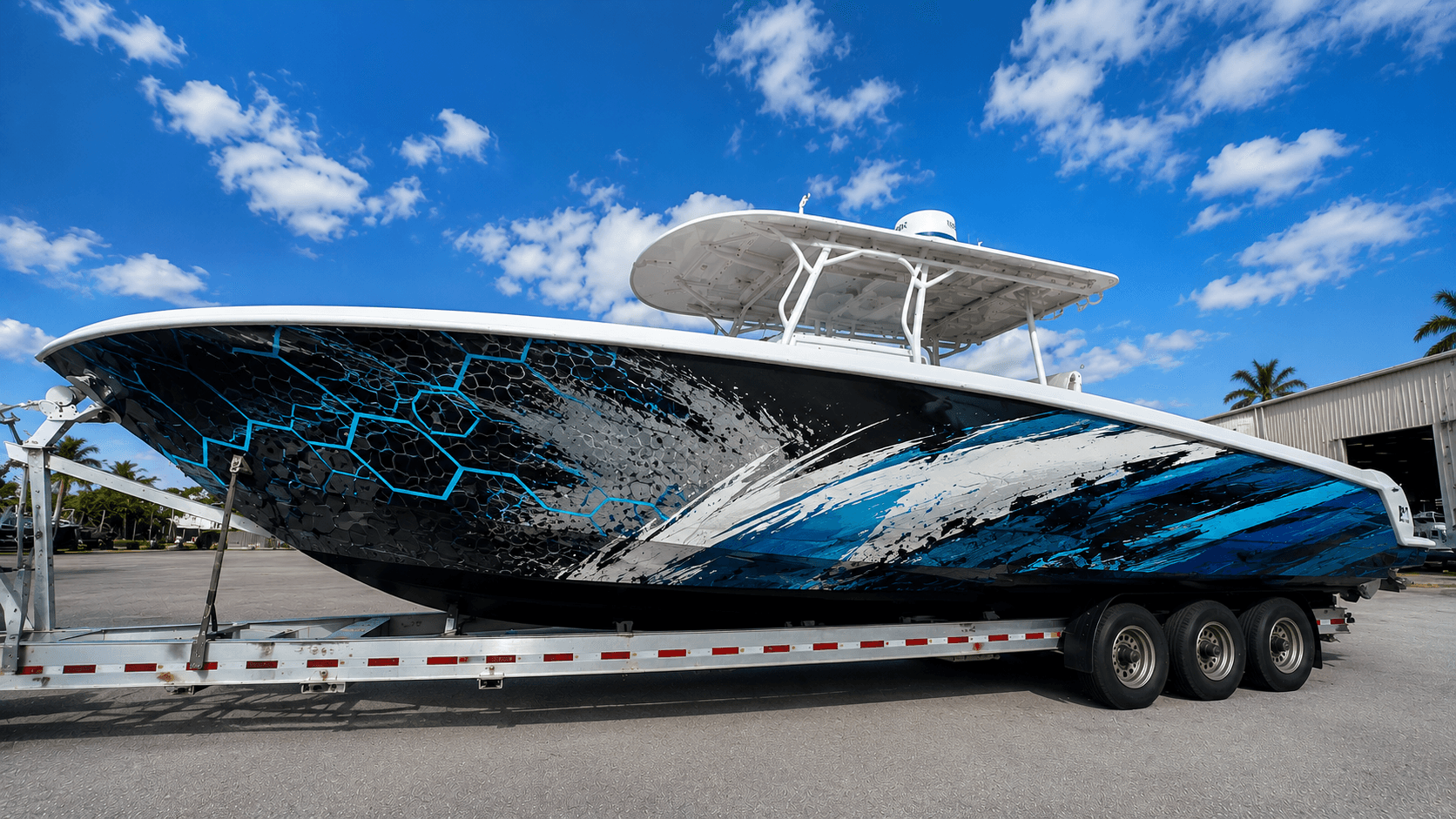
The right boat wrap material depends on more than color. For a boat on Tampa Bay or the Gulf, the film has to deal with sun, salt, humidity, and the way you actually run and store your vessel. Here is how to match materials to your boat.
Choosing the film type#
For most curved hulls, installers tend to prefer cast film, because it conforms well and tends to resist shrinkage. Calendered film can work on flatter panels or simpler graphics, though it may not be the best choice for deep curves or long-term full coverage. Our marine vinyl vs cast vinyl guide explains these terms in more detail.
Choosing a finish#
Each finish looks and behaves a little differently:
- Gloss: A classic marine look that's often the closest to gelcoat and paint. It reflects sunlight and can reveal surface flaws.
- Satin: A softer look that reduces glare and helps to hide minor surface irregularities.
- Matte: A distinctive style that can show oils and marks. Ask how it should be cleaned.
- Metallic and specialty: These can make a real statement, but the finish may need a different installation approach and can be harder to match later.
View samples outside in Tampa's sunlight before deciding. You can see a range of options on our boat wrap colors page.
Printed graphics and overlaminate#
Custom artwork is printed on a base film and usually protected by a clear overlaminate. These layers need to be compatible, and the overlaminate has a big influence on durability and finish. Ask for the exact product names and confirm that they are suited to your use.
Matching materials to your boating style#
Different boats call for different priorities:
- Trailered bay boats: Consider how the film will hold up against road grit and bunk contact.
- Boats on lifts: Upper surfaces may get constant sun, while the sling contact areas need attention.
- Wet-slip boats: Pay special attention to the waterline and edges, along with dock contact.
- Offshore fishing boats: Spray, gear, and hard use may suggest adding protection film in key spots.
- Pontoons: Flat fence panels are straightforward, while the logs and hardware need more planning. See our pontoon boat wraps page.
Decorative film vs protection film#
A color wrap is mainly about appearance. Clear paint protection film is thicker and designed to help resist scuffs. You can combine the two, using a color wrap for style and adding protection film to the bow or other vulnerable areas.
Questions to ask before you buy#
- Which exact film, finish, and overlaminate are you recommending?
- What does the manufacturer say about marine use?
- How will this finish be cleaned, and what should I avoid?
- What is the warranty, and who honors it?
- Can a damaged panel be matched later?
Frequently asked questions#
Which finish is easiest to maintain?#
Gloss is usually simple to wash. Matte and textured finishes may require specific care, so check the film maker's guidance.
Do I need an overlaminate?#
For printed film, usually yes. Solid-color film generally doesn't need one, as the color is part of the film itself.
Can you recommend a material for my Tampa boat?#
Yes. Share your boat and storage details through our Tampa boat wraps page.