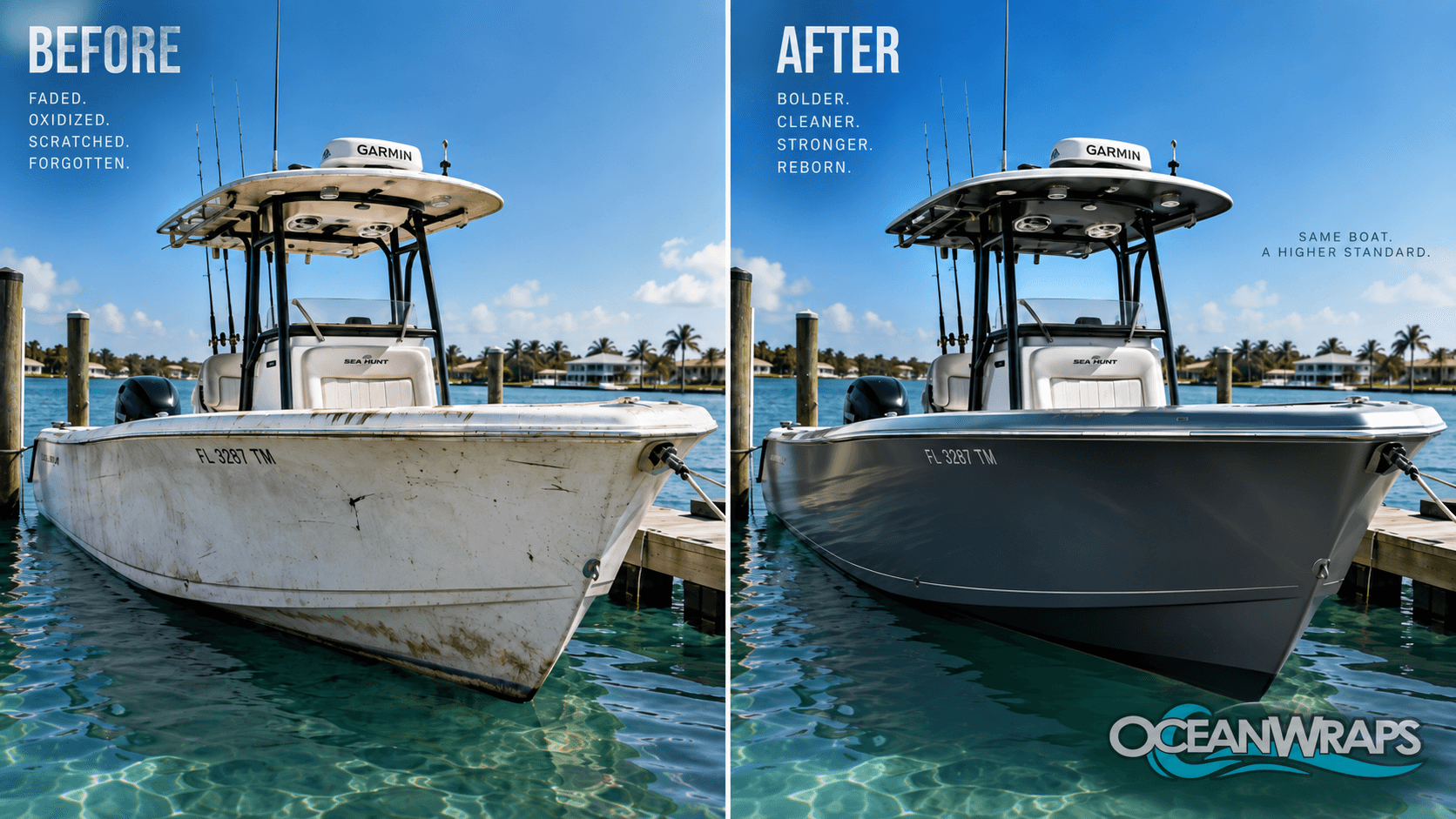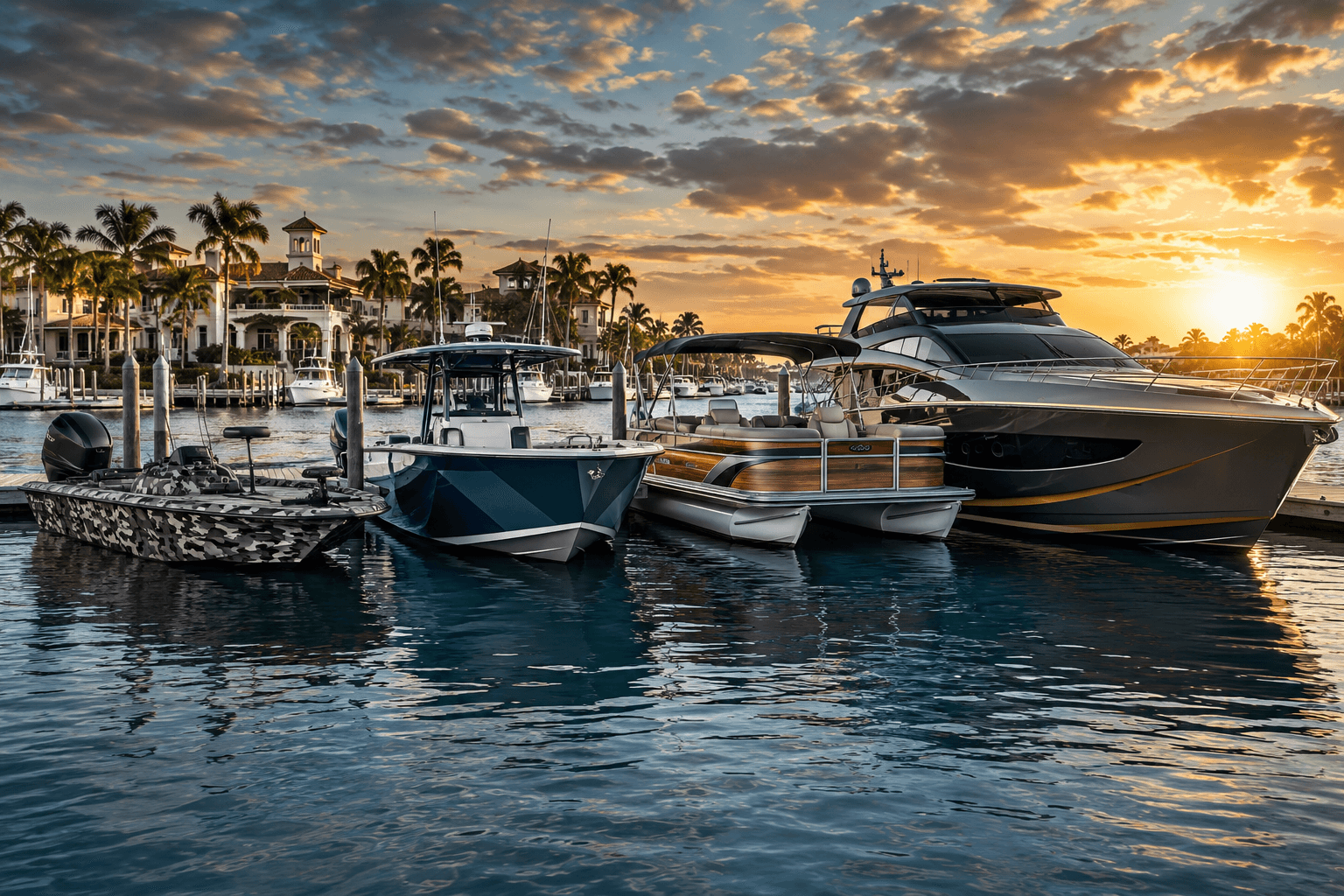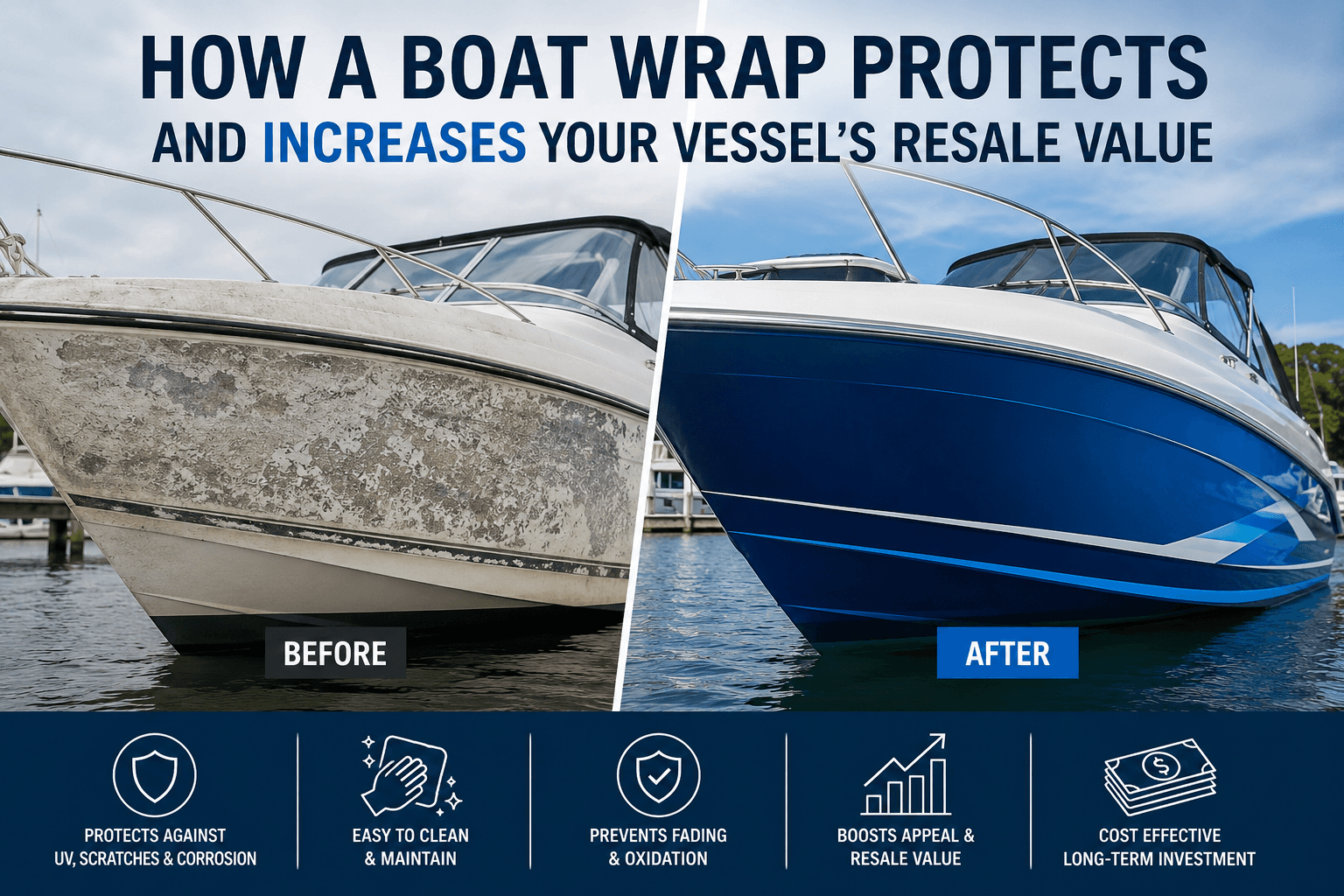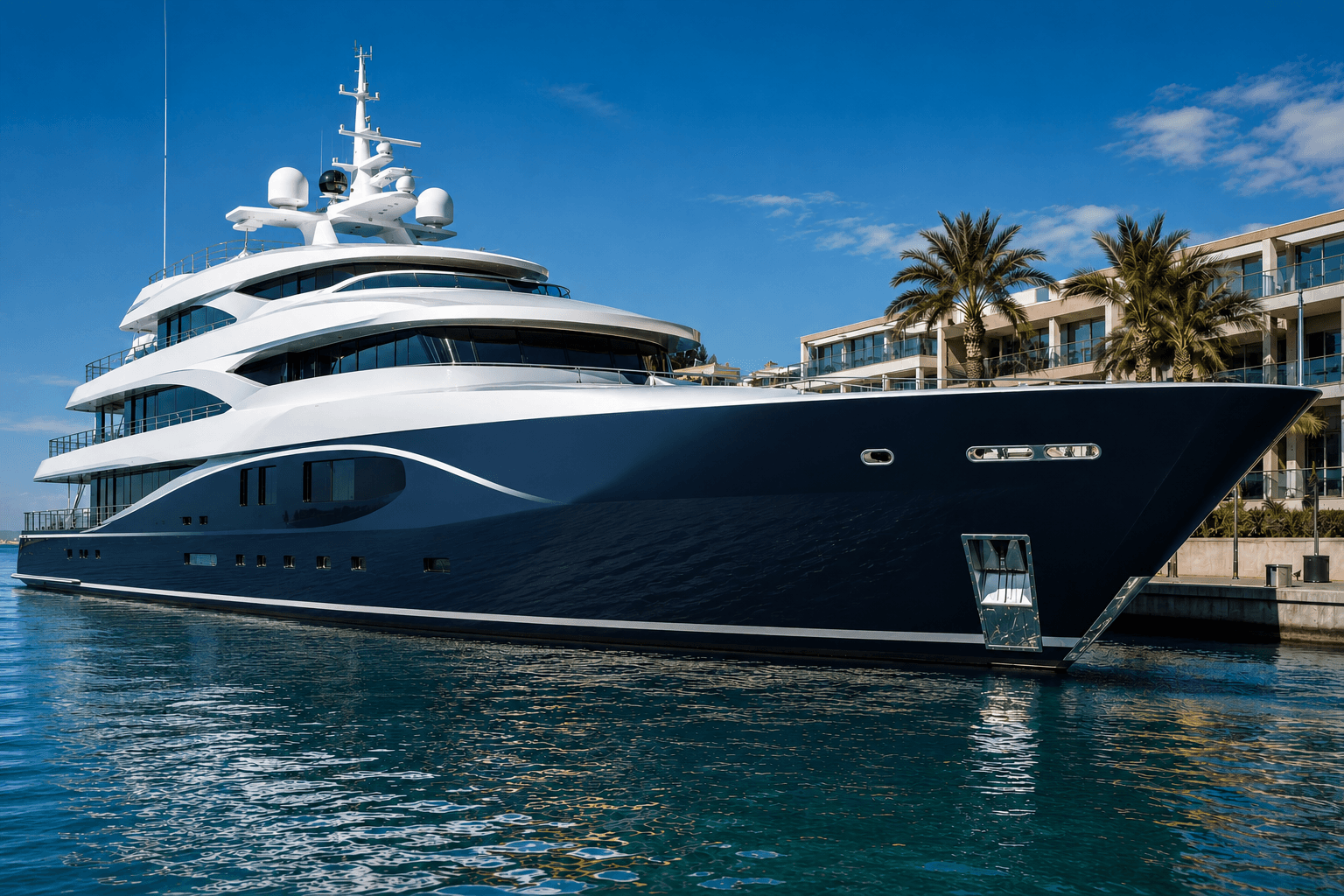
Newer film products promise self-healing surfaces, ceramic-infused topcoats, and longer life. Some of these can be useful, but they are not all worth the extra money for every boat. If you are planning a boat wrap in Texas, this guide will help you decide where to spend and where to save.
Start with how you use the boat#
The right film depends on your boat's life, not just the marketing. Consider:
- Do you run on Gulf salt water, or on inland lakes?
- Is the boat kept on a lift, a trailer, or in a slip?
- How long do you plan to own it?
- Do you want a color change or surface protection?
A bay boat on the Gulf Coast and a trailered lake boat near Dallas may need very different specifications, even if they will wear the same color.
Upgrades worth considering#
- Overlaminate for prints: Usually not optional for printed designs, as it protects the inks and adds abrasion resistance.
- Protection film: Clear film suits high-contact areas such as the bow, and it does a different job from a color wrap.
- Ceramic coating: Some coatings for vinyl and film can make washing easier. Check that the product is approved for your film first.
- Self-healing topcoats: These can help with light surface marks on some films, but they won't fix deep cuts. Ask how they respond in practice.
Be skeptical of bold claims#
Newer materials can have limited real-world track records in marine conditions. Before paying more, ask:
- What does it do, in specific terms?
- Is it approved by the manufacturer for marine use?
- How does the warranty apply on a boat?
- Can I see examples that have been in service for a few years?
- What is the price difference compared to a standard film?
If a seller can't answer these clearly, treat the claim as marketing.
Handling Texas heat#
Long, hot summers can stress any film. Dark colors absorb more heat, which can affect both the film and the people touching it. Storing the boat in the shade helps, as does using a lift canopy or a breathable cover. Installation also needs to stay within the film's temperature limits, so working early in the day or under cover can make a real difference in a Texas summer.
Calculating long-term value#
Take the total cost of each option and divide it by the number of years you are likely to get from it, while being realistic about how long you will keep the boat. Paying a premium for extra life makes little sense if you plan to sell in two years. For our planning figures, see the boat wrap cost guide and our lifespan guide.
Don't overlook the basics#
The most advanced film won't compensate for poor surface prep, rushed edges, or harsh cleaning. A standard product installed well and looked after will often beat a premium product installed badly. Spend on good installation first, then decide whether an upgrade makes sense.
Frequently asked questions#
Is the most expensive film always best?#
No. The best film is the one that suits your surfaces, exposure, and ownership plans. Costly specialty films may offer little benefit on some boats.
Can I add a ceramic coating to a wrap?#
Often, but only with a product approved for your film, and sometimes with specific timing. Check first to protect your warranty.
Do you work with Texas boats?#
Qualifying projects can be coordinated across the USA. See our boat wraps USA page.