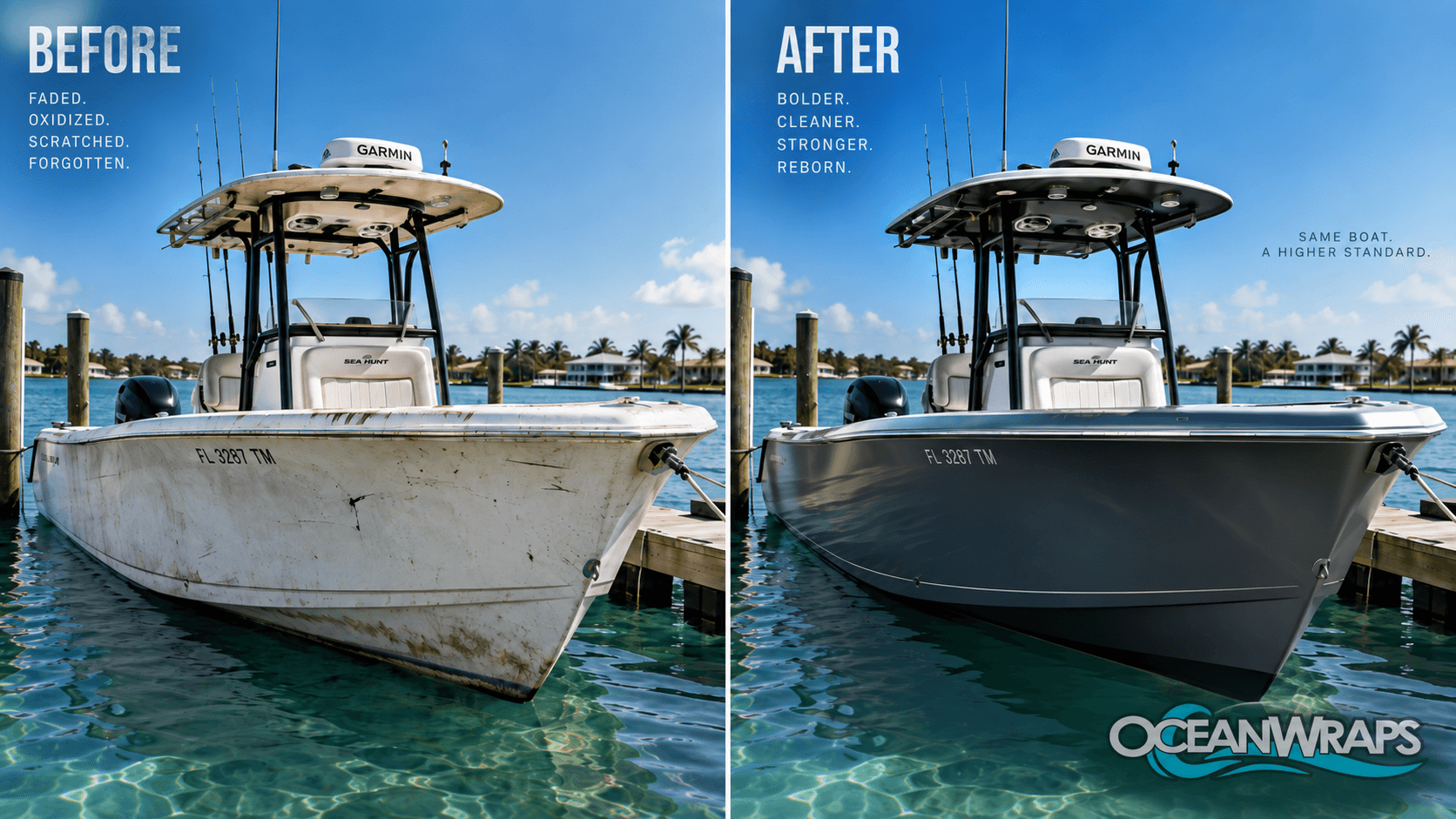
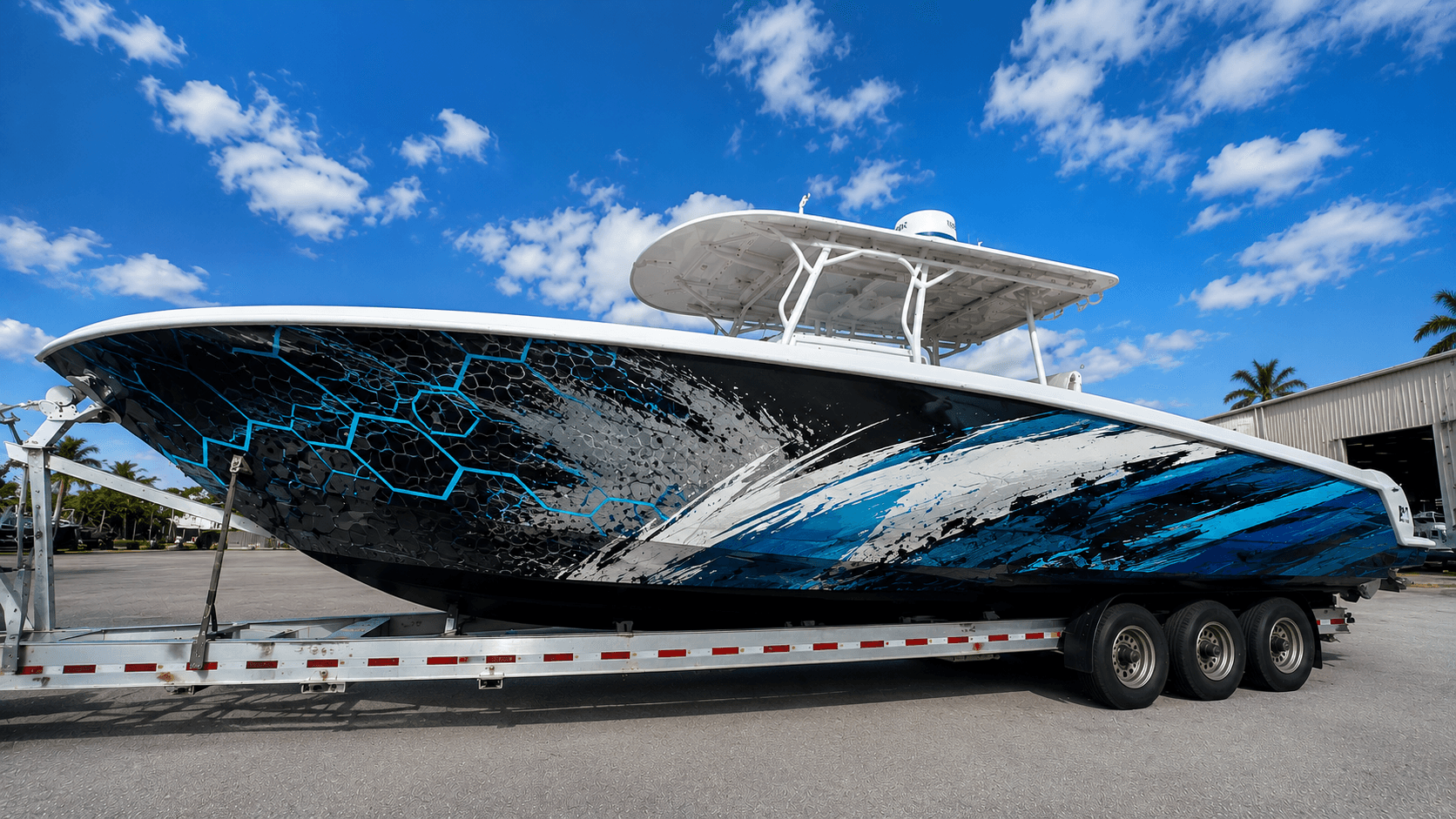
Marine vinyl wraps built for Puget Sound conditions — protect your gelcoat, refresh your boat's look, and hold up to tight slips and salt spray.
Last updated June 21, 2026
Boat Wraps for Washington Vessels: A Practical Guide#
A boat wrap is one of the more practical upgrades a Washington boat owner can make: it protects gelcoat, refreshes a vessel's look without committing to paint, and can help with resale presentation down the line. But Puget Sound conditions — cooler temps, more rain, salt spray, and tight marina slips — put different demands on a wrap than a Florida or Gulf Coast boat sees, so the prep and installation details matter more here than they might elsewhere.
Washington's climate is gentler on UV than the Southeast, but it brings its own challenges: frequent rain and humidity, algae and biofouling in cooler nutrient-rich water, and marinas where slips and fenders sit close enough that edges and seams take regular contact. A wrap built for these conditions needs to handle moisture exposure as much as sun, and it needs clean, well-sealed edges that won't lift from repeated fender rub.
Ocean Wraps approaches every project as a marine installation rather than a generic graphics job — accounting for hull curves, hardware, waterline exposure, and the realities of a tight slip, so the finished wrap looks intentional and holds up to actual marina use.
Prep. Before any panel goes on, the hull is washed, decontaminated, and inspected for oxidation, salt residue, or failing gelcoat that could interfere with adhesion. We also note any areas likely to see regular fender or dock-line contact, since those spots need extra attention during layout.
Design. We take measurements and plan panel breaks, color direction, and graphics placement around your boat's actual shape — not a generic template — and factor in marina access constraints where they affect installation.
Install. Cast marine vinyl with a protective laminate is applied with controlled heat and tension so it sits cleanly around compound curves, hardware, and trim rather than bridging or wrinkling at transitions.
Finish. We check edges and seams, review hardware transitions, and walk through washing, storage, and early-inspection habits so you know what to watch for in the first few weeks.
Cast vinyl is the standard choice for hull wraps because it conforms to curved and compound surfaces more predictably than calendered (flat-cut) film, which matters on a rounded hull or transom. A protective laminate goes over the printed graphics and is what actually does the work of resisting UV fading and surface abrasion while making the wrap easier to clean. Together, cast vinyl plus laminate is the combination that holds color and finish quality over a multi-year wrap life, rather than just looking good for the first season.
A wrap doesn't replace a vessel's mechanical condition, but a clean, well-maintained finish does shape a buyer's first impression — a boat that looks cared for is easier to evaluate and tends to show better at the dock. For commercial or charter vessels, the same wrap doubles as moving branding, putting your name in front of everyone at the marina.
Wrap planning depends on your vessel's size, surface condition, and how complex the graphics are, so it's worth starting with a consultation rather than guessing at scope. Visit our custom boat wraps page to request a quote for your boat.
How long does planning take before installation? It depends on your vessel's size, graphics complexity, and surface condition. A short consultation is usually enough to confirm measurements, material choices, and a production timeline.
Can a wrap help with resale presentation? Yes. A clean, well-maintained wrap improves first impressions and can make a boat look cared for, though it doesn't substitute for mechanical condition.
What maintenance keeps a wrap looking clean? Use wrap-safe soap, avoid harsh abrasives, rinse off salt regularly, and check edges after heavy use. Flagging any impact areas early makes them easier to address before they spread.
Why choose professional installation over a DIY kit? Professional installers bring the tools and experience needed for marine curves, seams, and hardware transitions. That precision matters more on vessels that face constant water, sun, and cleaning than it would on a flat surface.
New Boat Prices Are Skyrocketing — Here's the Smarter Move Boat Owners Are Making
New boat prices are at record highs. Here's why more owners are choosing marine vinyl wraps to refresh their boat's look and protect the hull, without the cost of buying new
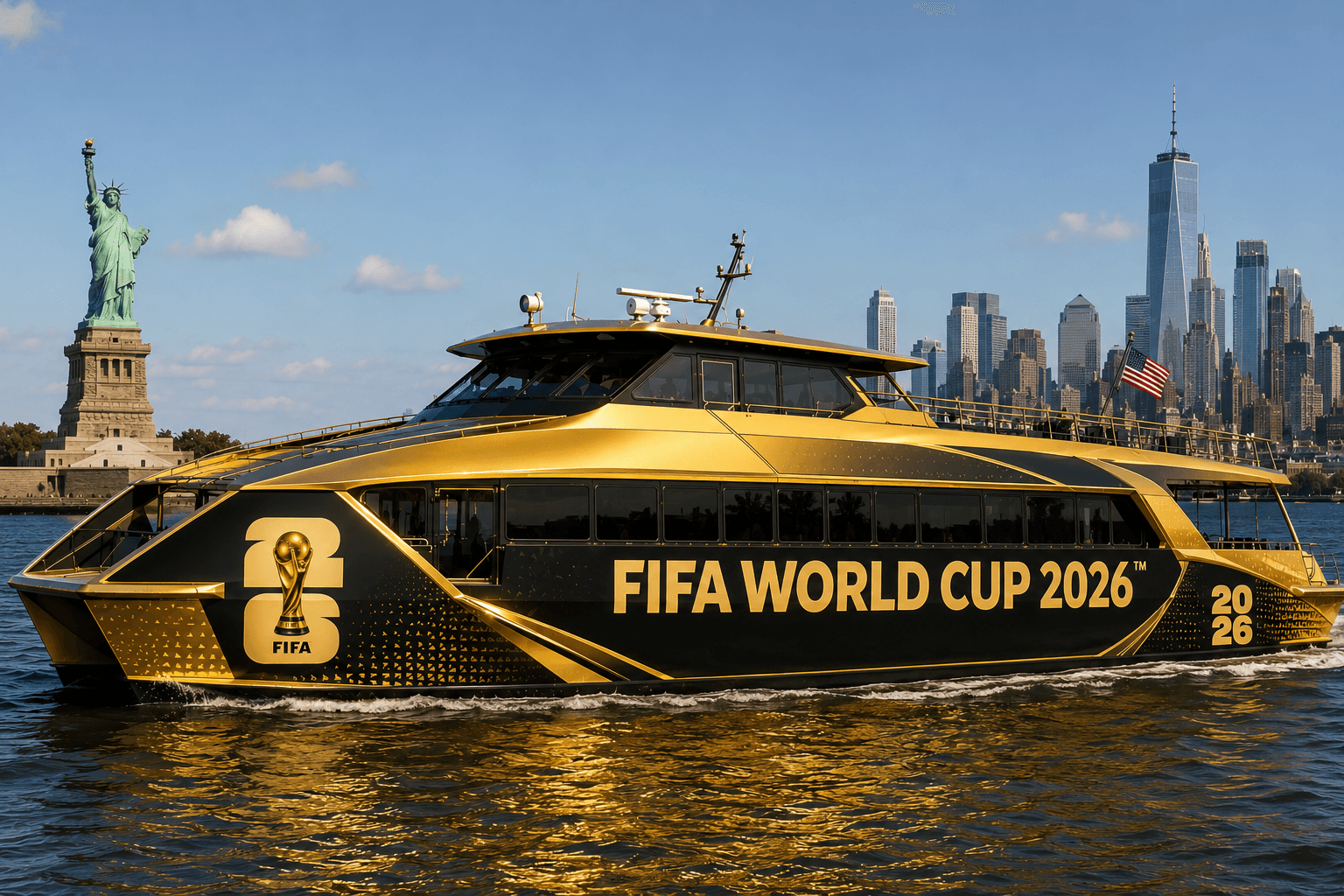
Get your boat ready for FIFA World Cup 2026 with a luxury custom wrap. Stand out on the water with premium marine graphics, gold finishes, and championship-inspired designs.
New Boat Prices Are Skyrocketing — Here's the Smarter Move Boat Owners Are Making
New boat prices are at record highs. Here's why more owners are choosing marine vinyl wraps to refresh their boat's look and protect the hull, without the cost of buying new
Boat Wraps Services
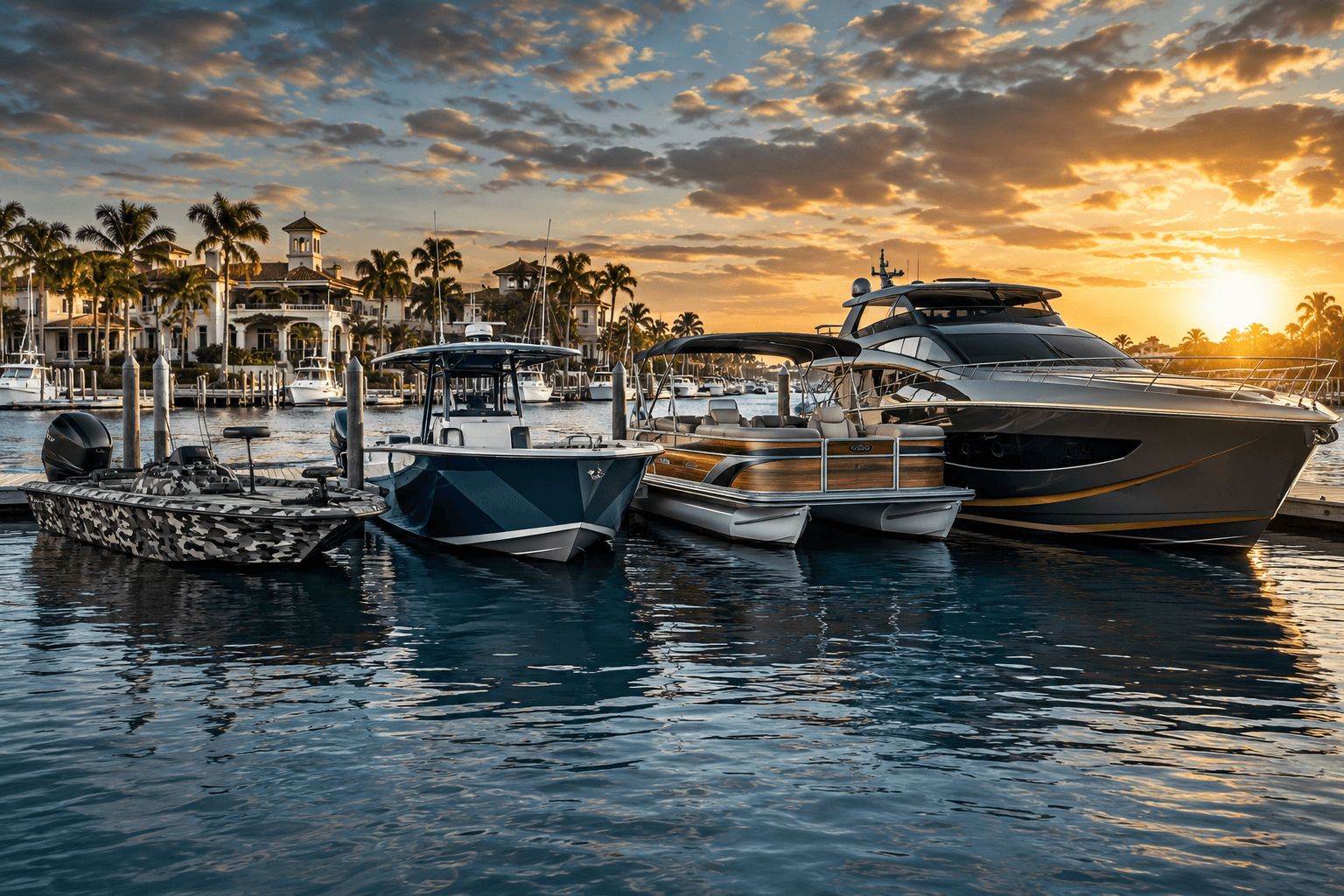
Boat Wrap Designs by Boat Type: What Actually Works on Your Vessel
A wrap that's perfect for a sportfishing boat chasing marlin offshore would look completely out of place on a family pontoon.
Boat Wraps Services
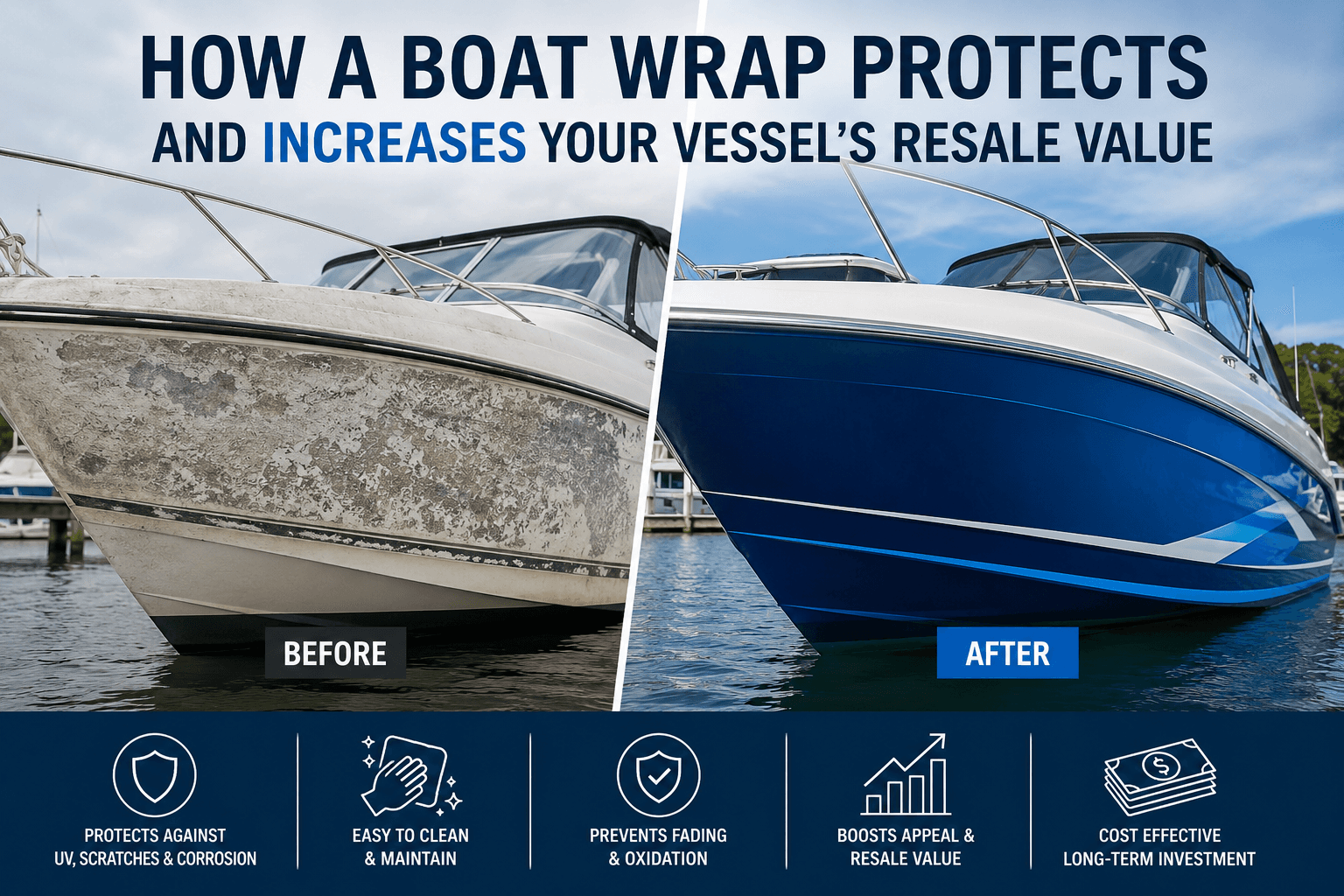
How a Boat Wrap Protects and Increases Your Vessel's Resale Value
How a Boat Wrap Can Protect and Increase Your Vessel's Resale Value
Boat Wraps Services
Top 10 FIFA World Cup Boat Wrap Ideas to Try This Season
If you already know you want your boat wrapped for World Cup season, the next question is which design actually fits your vessel.
Boat Wraps Services
Custom Boat Wraps for FIFA World Cup 2026
Get your boat ready for FIFA World Cup 2026 with a luxury custom wrap. Stand out on the water with premium marine graphics, gold finishes, and championship-inspired designs.
Boat Wraps Services
Luxury Yacht Wraps: The Complete Guide to Finishes, Styles, and Custom Marine Vinyl
Ocean Wraps works with luxury yacht and cruiser owners who want professional results, durable materials, and a finish that holds up on the water.
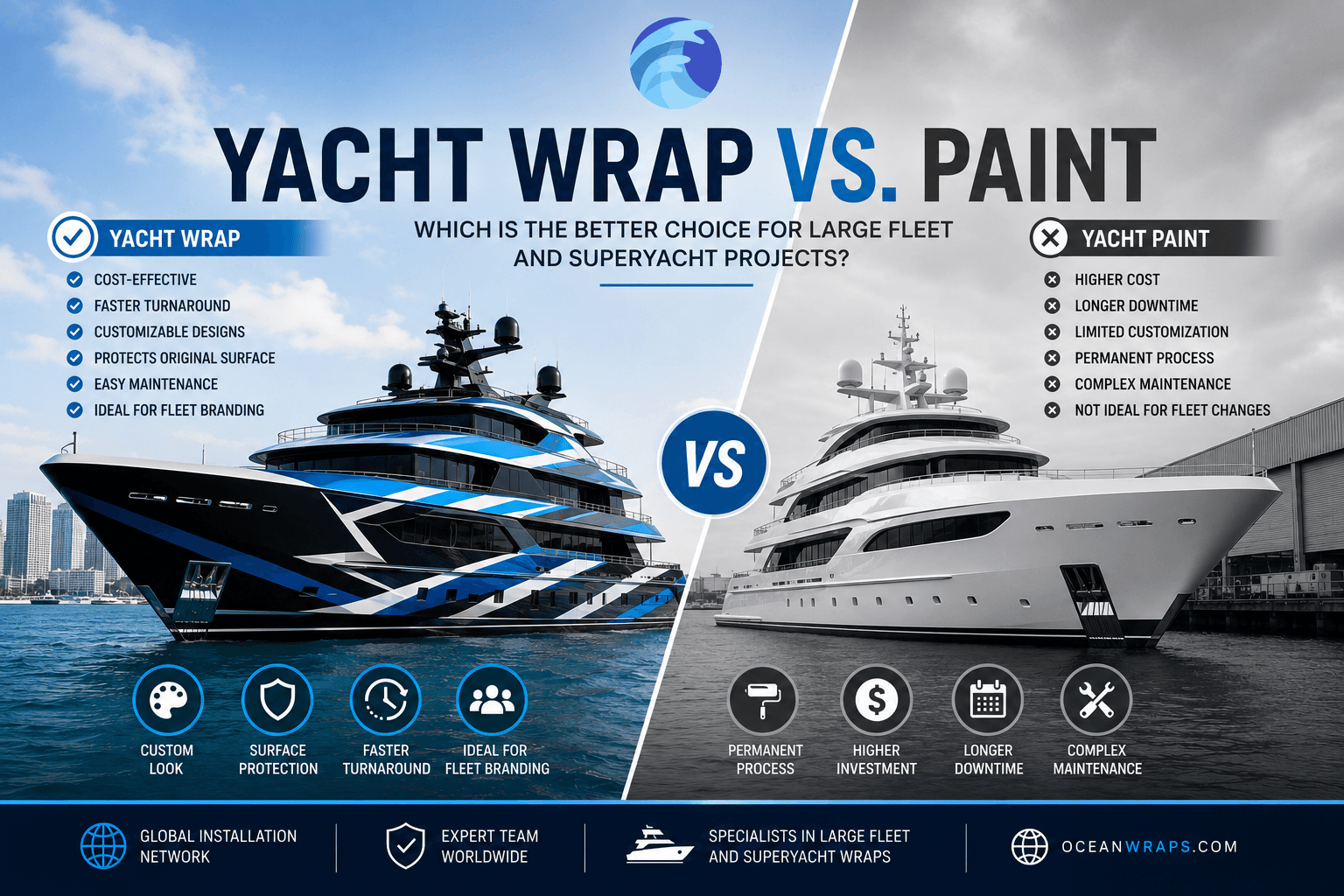
Yacht Wrap vs. Paint for Large Fleet & Superyacht Projects
Deciding between yacht wrap and paint for your fleet or superyacht? We break down real costs, downtime, durability, and which option actually makes sense at scale
How Much Does a Boat Wrap Cost? Complete Pricing Guide for 2026
Boat wrap prices vary widely depending on size, materials, and installer quality. Here's what a professional wrap actually costs in 2026 — and what to watch out for.
Luxury Yacht Wraps: The Complete Guide to Finishes, Styles, and Custom Marine Vinyl
Ocean Wraps works with luxury yacht and cruiser owners who want professional results, durable materials, and a finish that holds up on the water.
Boat Wraps Services
Why Florida Boat Owners Are Choosing Vinyl Boat Wraps in 2026
Discover why Florida boat owners are switching from paint to vinyl boat wraps. Learn the benefits, costs, protection, and customization options.
Guides
Boat Wraps vs Paint: 5 Reasons Why Wraps Win
Boat wraps cost less, install faster, and protect your gel coat better than traditional paint. Here's why so many boat owners are making the switch.
Guides
Yacht Wrap vs. Paint for Large Fleet & Superyacht Projects
Deciding between yacht wrap and paint for your fleet or superyacht? We break down real costs, downtime, durability, and which option actually makes sense at scale
Guides
How Much Does a Boat Wrap Cost? Complete Pricing Guide for 2026
Boat wrap prices vary widely depending on size, materials, and installer quality. Here's what a professional wrap actually costs in 2026 — and what to watch out for.