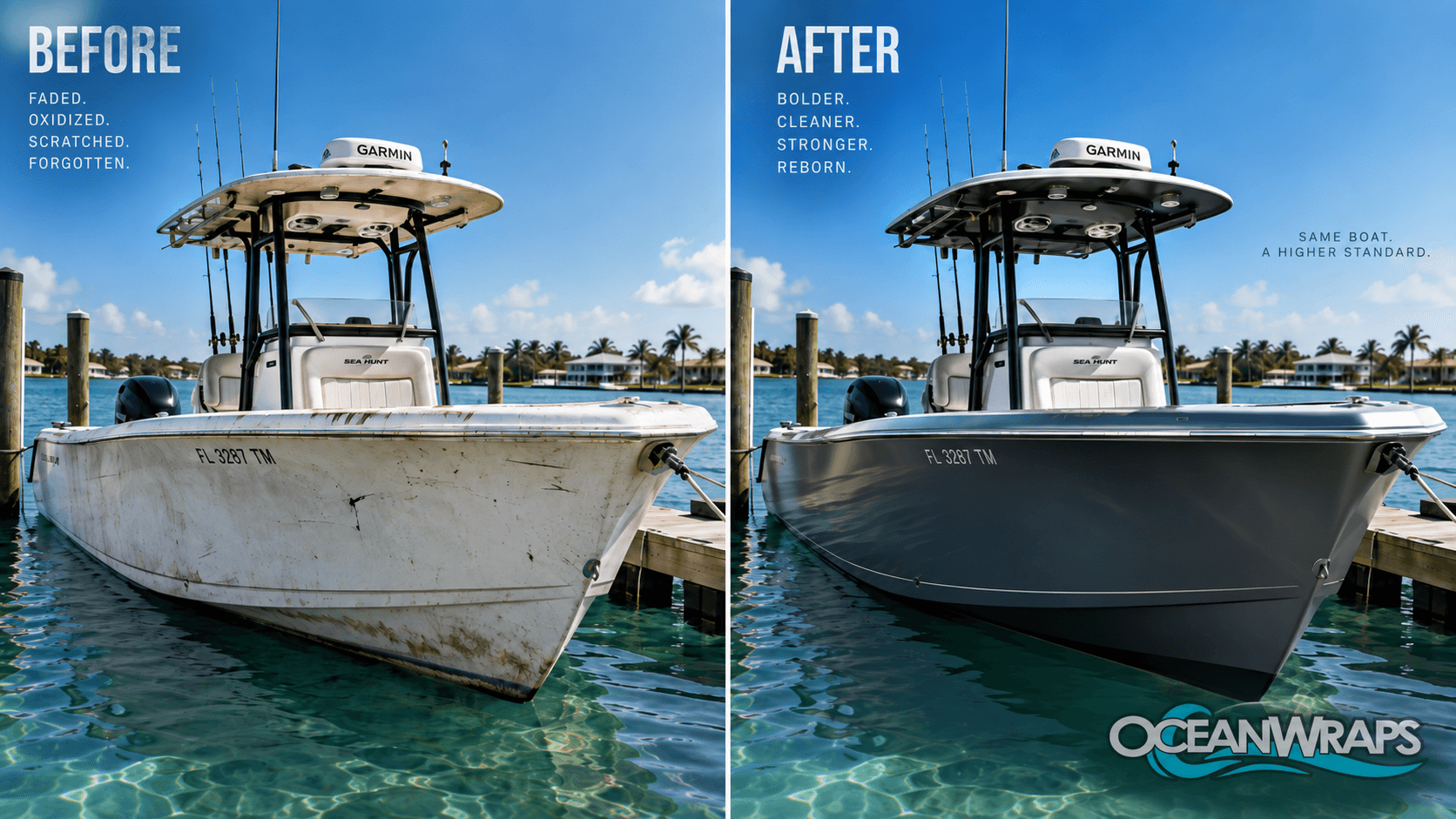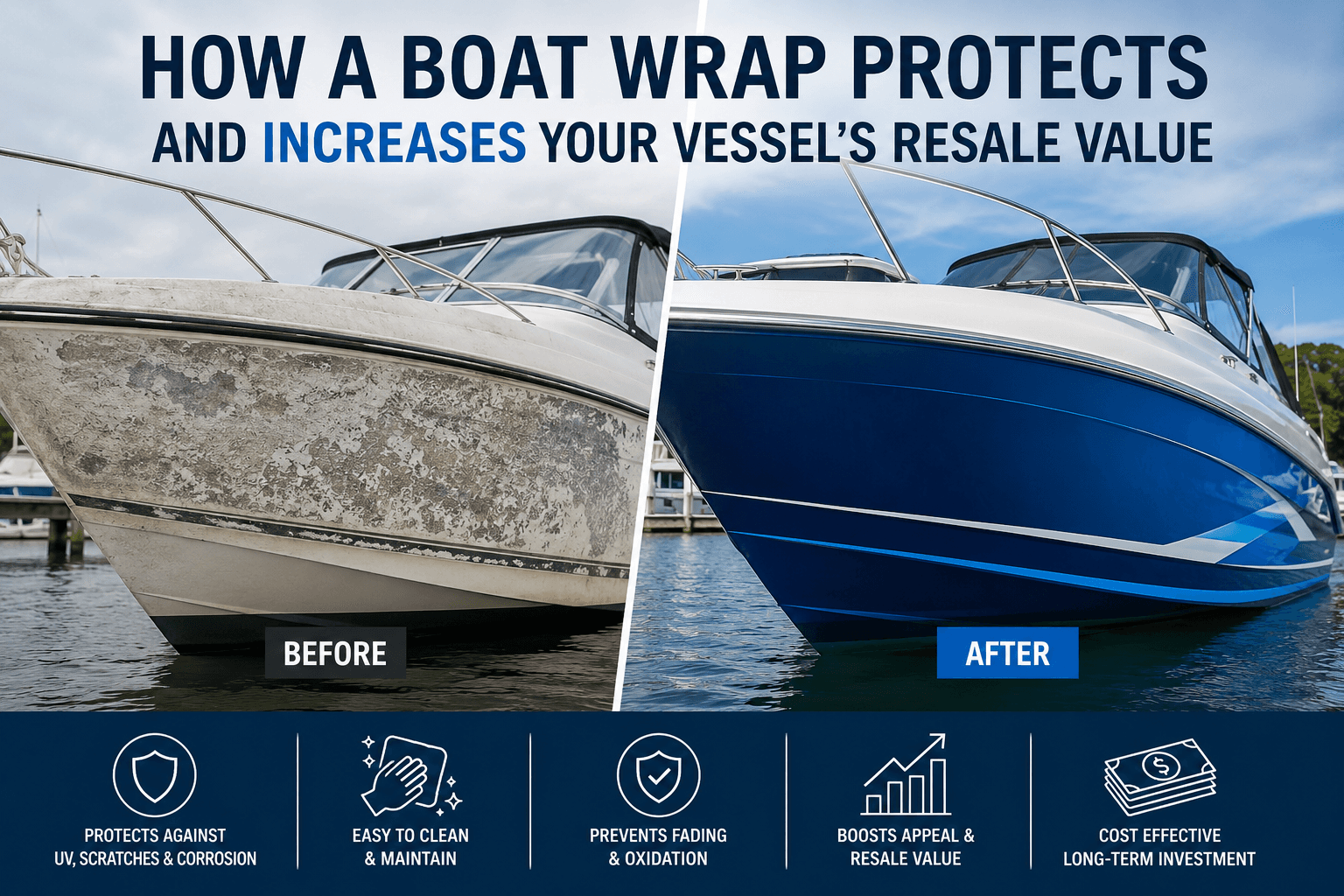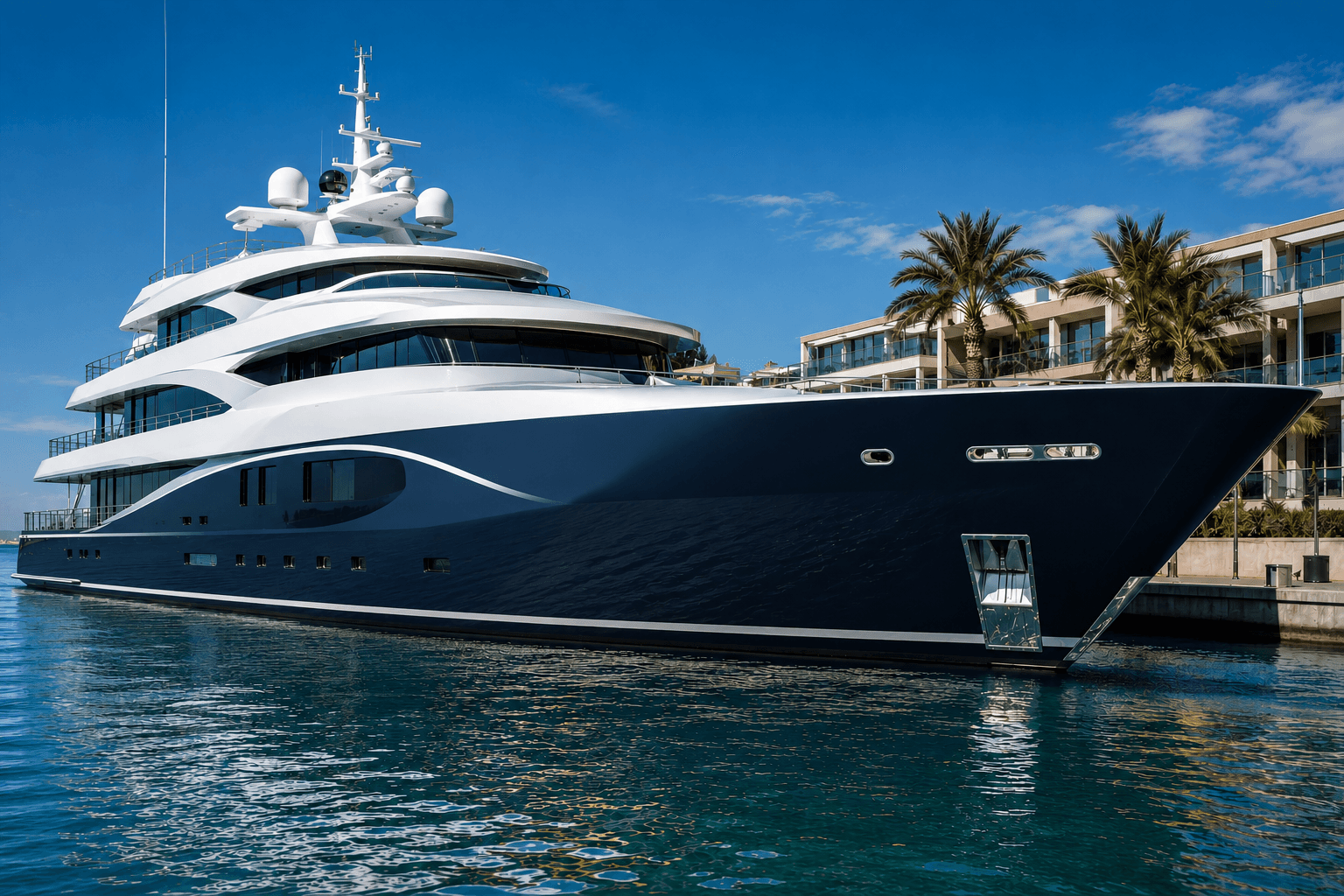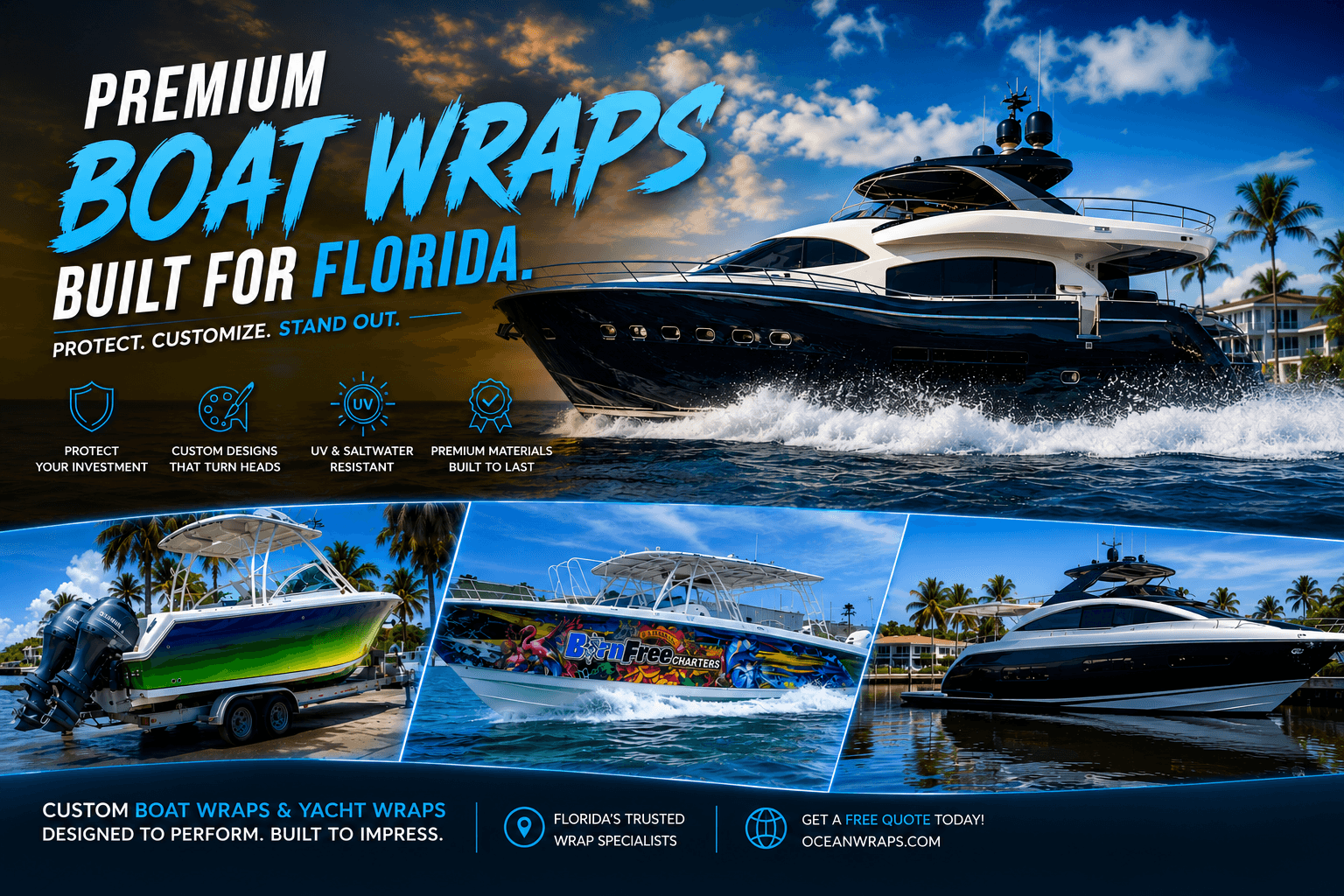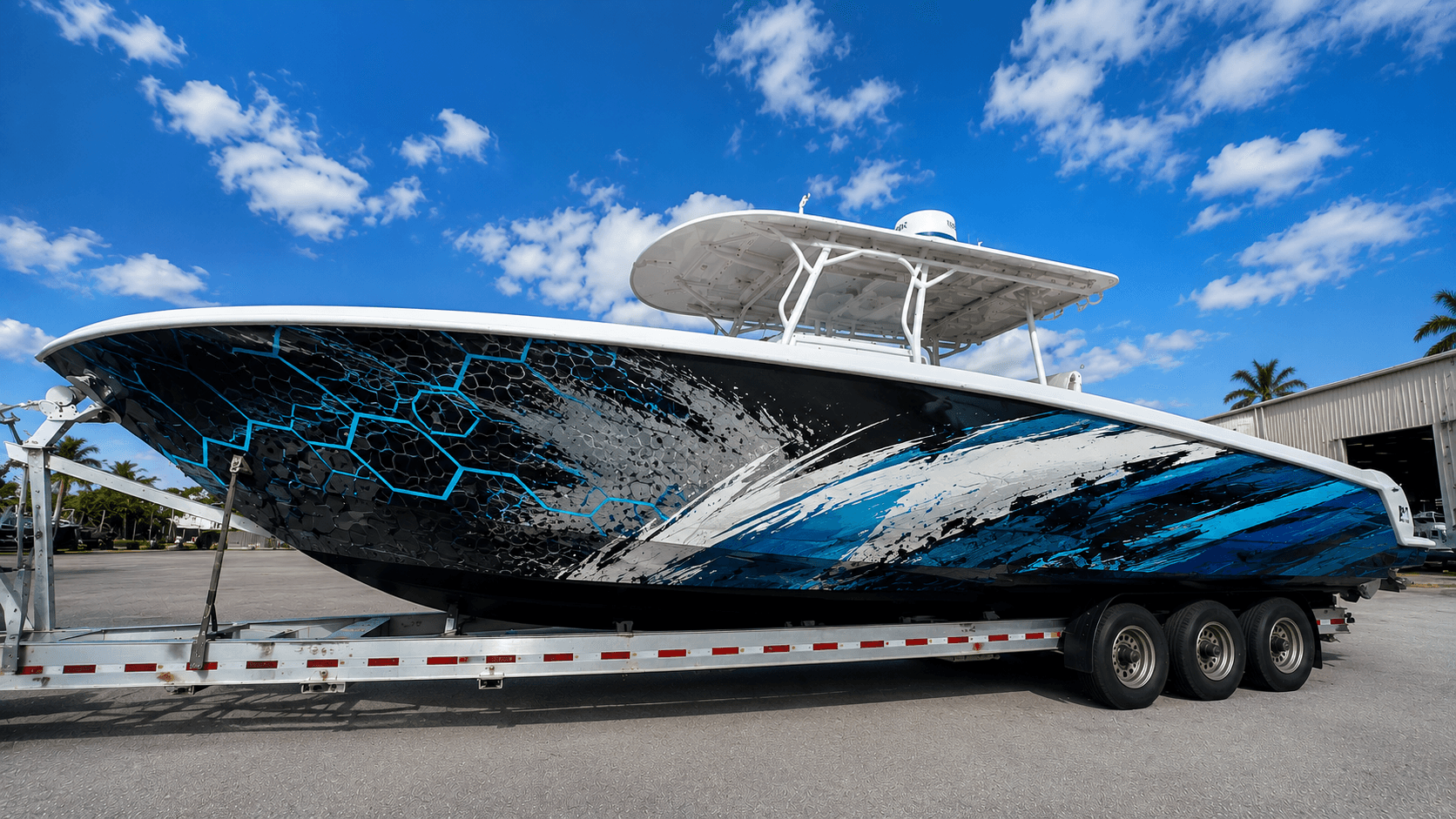

For racing and high-performance boats, professional boat wraps are a critical component that must withstand extreme environmental and operational stresses without compromising performance. These wraps are engineered to manage intense solar heat, constant hydrodynamic pressure, and the micro-movements of a composite hull at speed. This demands a level of material science and application expertise far beyond standard graphic installation.
Key Takeaways#
- Material science is critical. Only premium, air-egress cast vinyl with high-tack, temperature-stable adhesives can handle the thermal cycling and flex of a racing hull.
- Surface preparation dictates longevity. Gelcoat must be surgically clean, dewaxed, and mechanically abraded to a specific profile to ensure permanent molecular adhesion.
- Installation technique accounts for complex curvature. Certified professionals use specialized methods to prevent edge lifting and bubble formation under dynamic load.
- A protective laminate is mandatory. For racing, a premium overlaminate provides essential UV and abrasion resistance, protecting the investment.
- Thermal management is designed in. Strategic color and finish selection reduce hull temperature, preserving adhesive integrity.