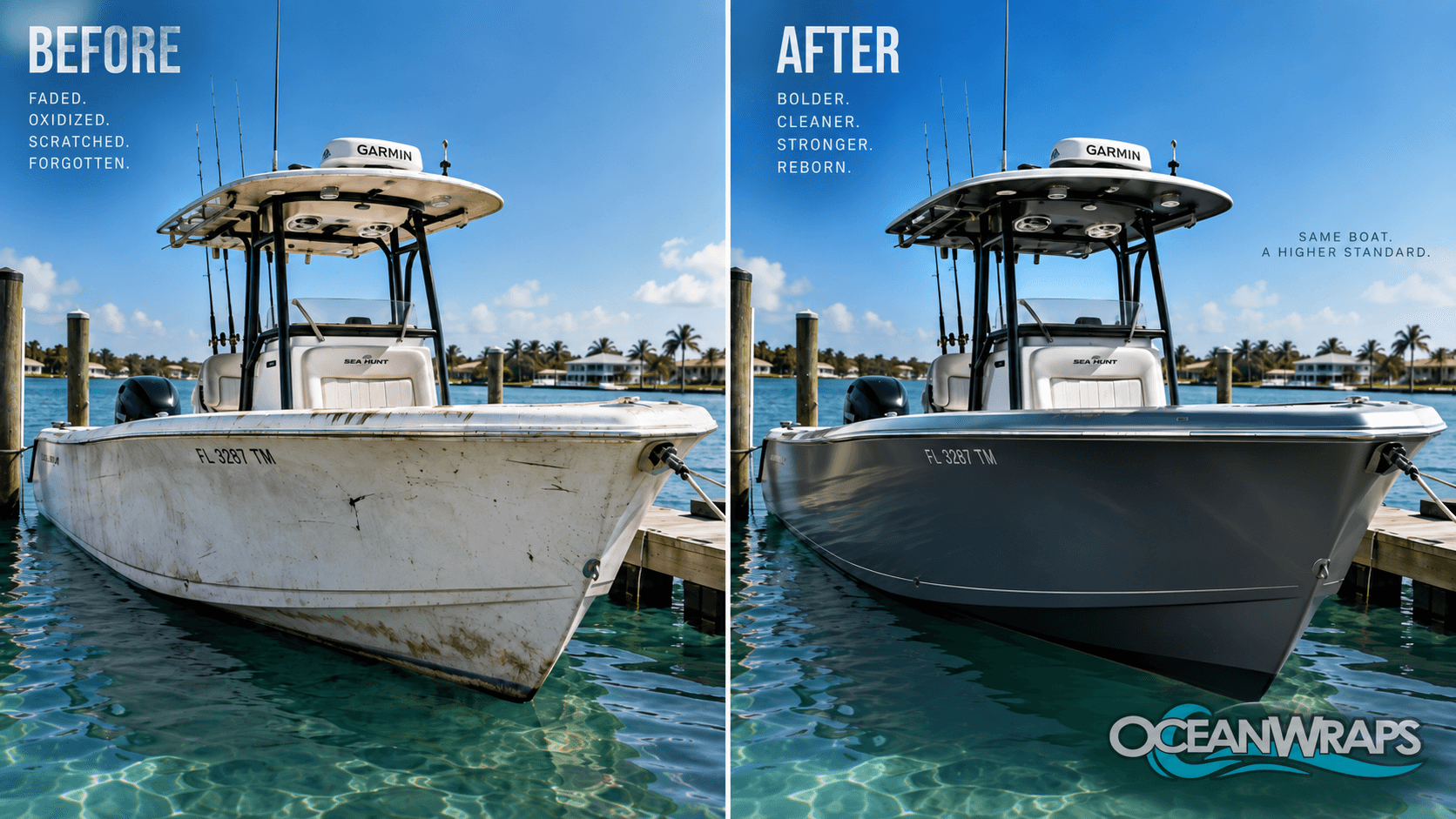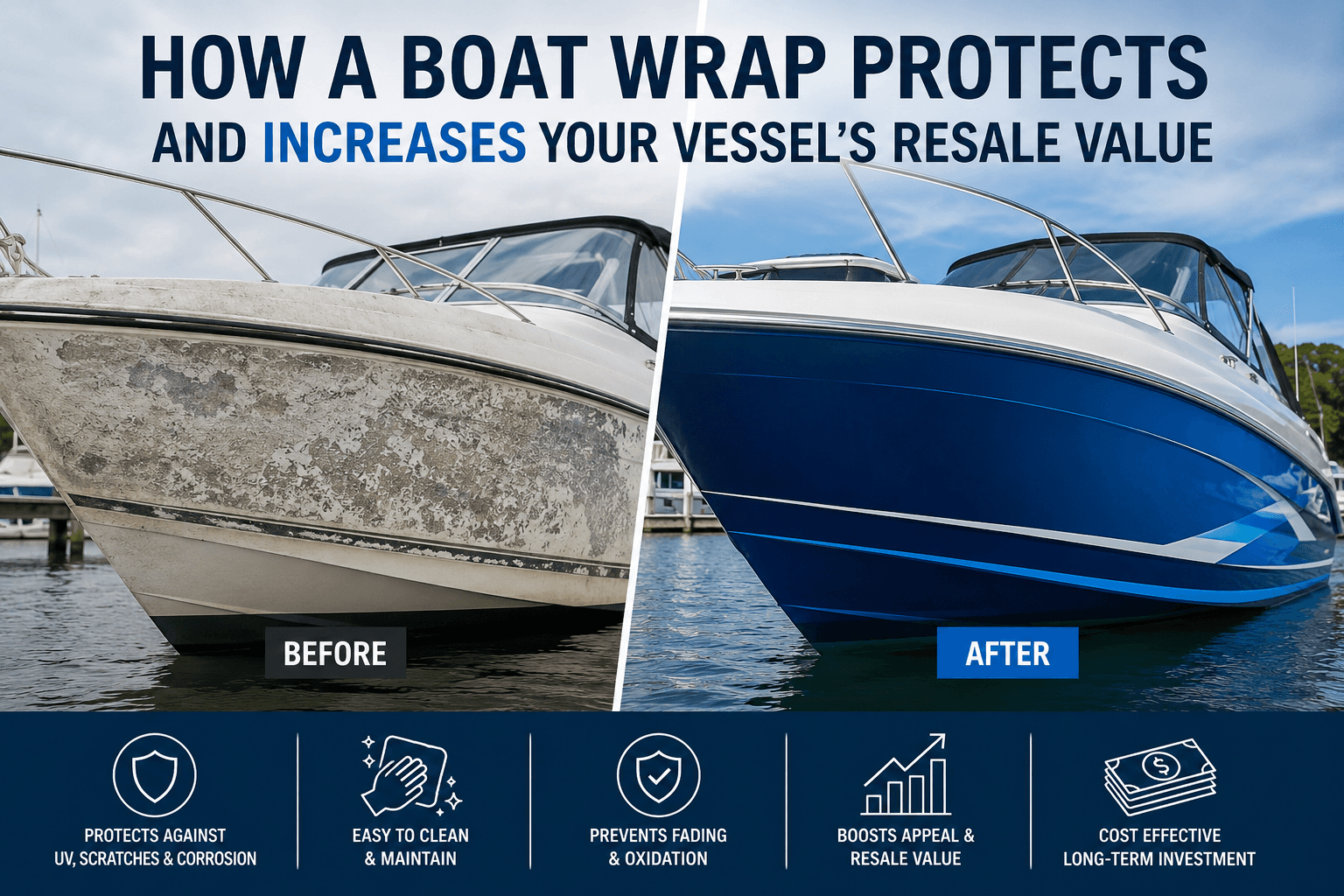
Caribbean boat owners increasingly ask whether a wrap is the greener choice. The honest answer is that it depends. Vinyl is a plastic product, so it is not a zero-impact option, but a wrap can avoid some of the mess and materials involved in repainting a hull. Here is how to weigh it fairly.
Where a wrap can have less impact than paint#
Marine painting often involves sanding, solvents, and overspray, all of which need careful containment in a yard. Applying a wrap usually involves less of that, because film is installed cold and shaped with controlled heat, not sprayed.
A wrap can also postpone a repaint on a sound hull. If you simply want a new color, changing the film may be a smaller job than stripping and refinishing the surface.
Where vinyl falls short#
Be wary of any claim that vinyl is an eco-friendly product. Keep these limits in mind:
- Most wrap films are PVC-based and are not widely recyclable
- Removed film usually ends up as waste
- Film has a finite service life and will eventually need replacing
- Shipping materials and crews to islands has its own footprint
If sustainability matters to your project, ask for the actual product data on any film you are offered, and treat vague "green" labels with caution.
How to reduce waste on a Caribbean wrap#
The most sustainable wrap is one that does not need replacing early. Practical steps include:
- Choosing film suited to tropical sun, rather than the cheapest option
- Preparing the surface properly, so panels do not fail and need redoing
- Measuring carefully and nesting panels to reduce offcuts
- Wrapping only what you need, as a partial wrap uses less material
- Washing gently and inspecting edges, which helps the film last
A wrap kept in good condition for its full 5–7 year planning life does better than one replaced after a couple of seasons. Our boat wrap lifespan guide explains what affects that range.
What about boat performance?#
A wrap adds a thin layer to the surface, and you should not expect it to change your boat's speed or handling in any noticeable way. It is also not an antifouling system. Your below-waterline coating should stay in place and follow its own maintenance schedule, in line with local rules. If someone promises a performance gain from a wrap alone, ask to see the evidence.
Removing a wrap responsibly#
When a wrap reaches the end of its life, it should be removed before it becomes brittle. Film left too long tends to break into small pieces and can leave more adhesive behind, which takes more time and more cleaning products to remove. Collect removed film and offcuts for proper disposal on land, and keep them out of the water.
Frequently asked questions#
Is a boat wrap better for the environment than paint?#
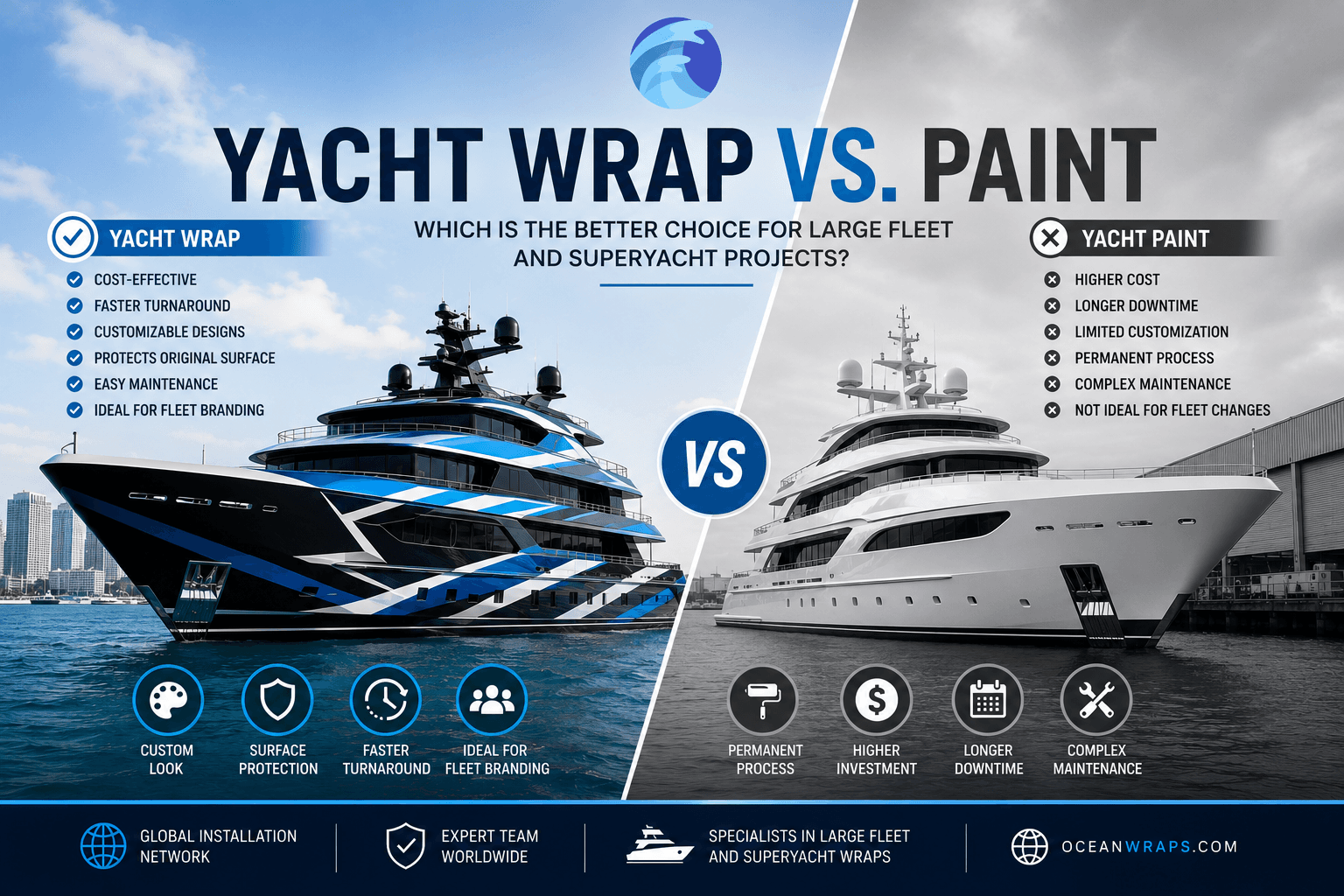
Not automatically. A wrap can reduce sanding and spraying on a given project, but it is still a plastic product with a limited life. The fairest comparison looks at your specific job.
Are recyclable wrap films available?#
Options vary and change over time, so ask about current products when you request a quote. Check how recycling would actually work in your location before relying on it.
Can I reduce impact with a partial wrap?#
Yes. Accent wraps and graphics use less film than full coverage. See our Caribbean boat wrap page to start planning your project.