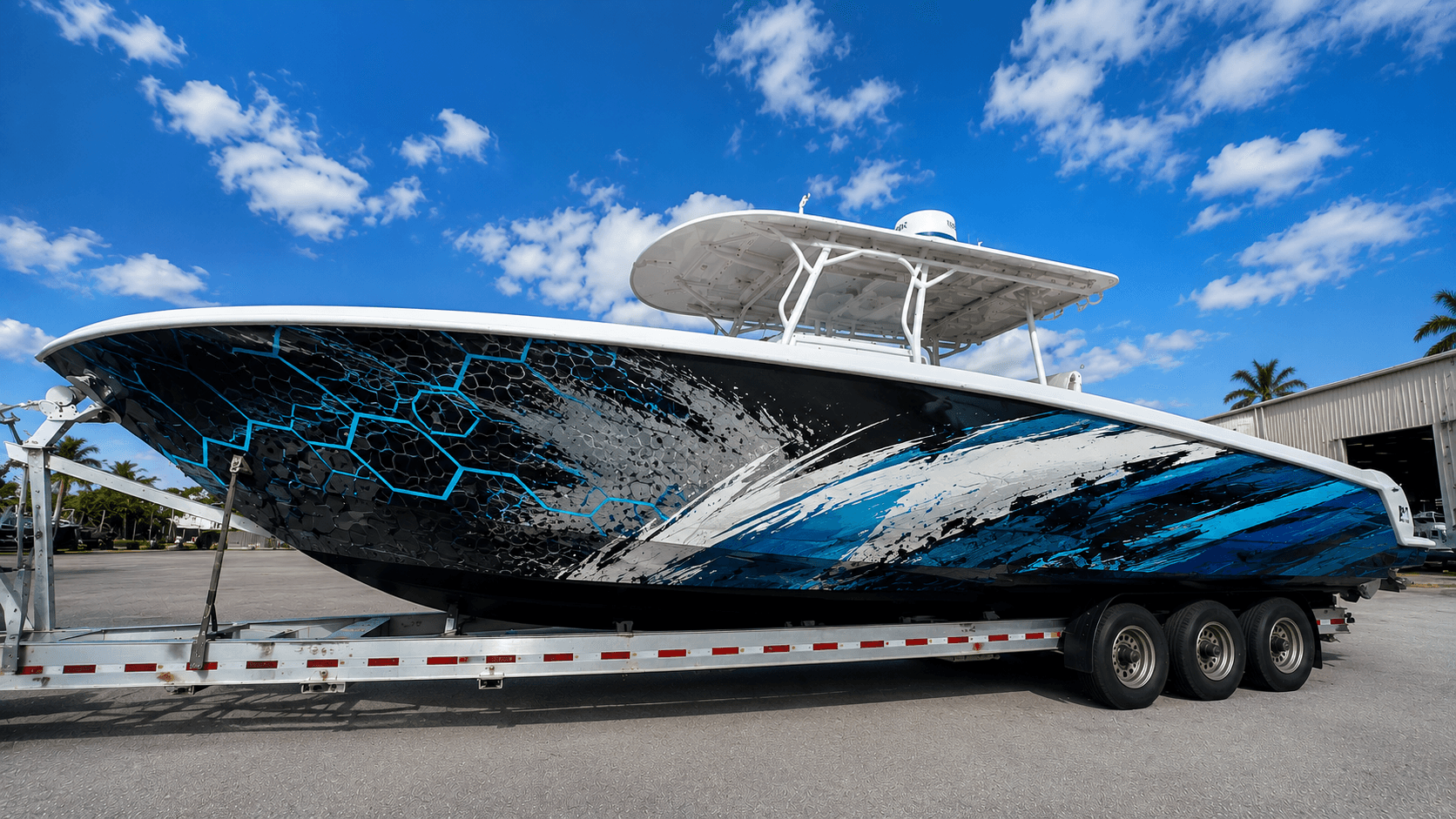
Custom Boat Wraps for High-Performance Offshore Fishing Hulls
Professional-grade custom boat wraps for offshore fishing hulls. Learn about durable marine vinyl, application process, and key considerations for high-performa
Last updated March 5, 2026
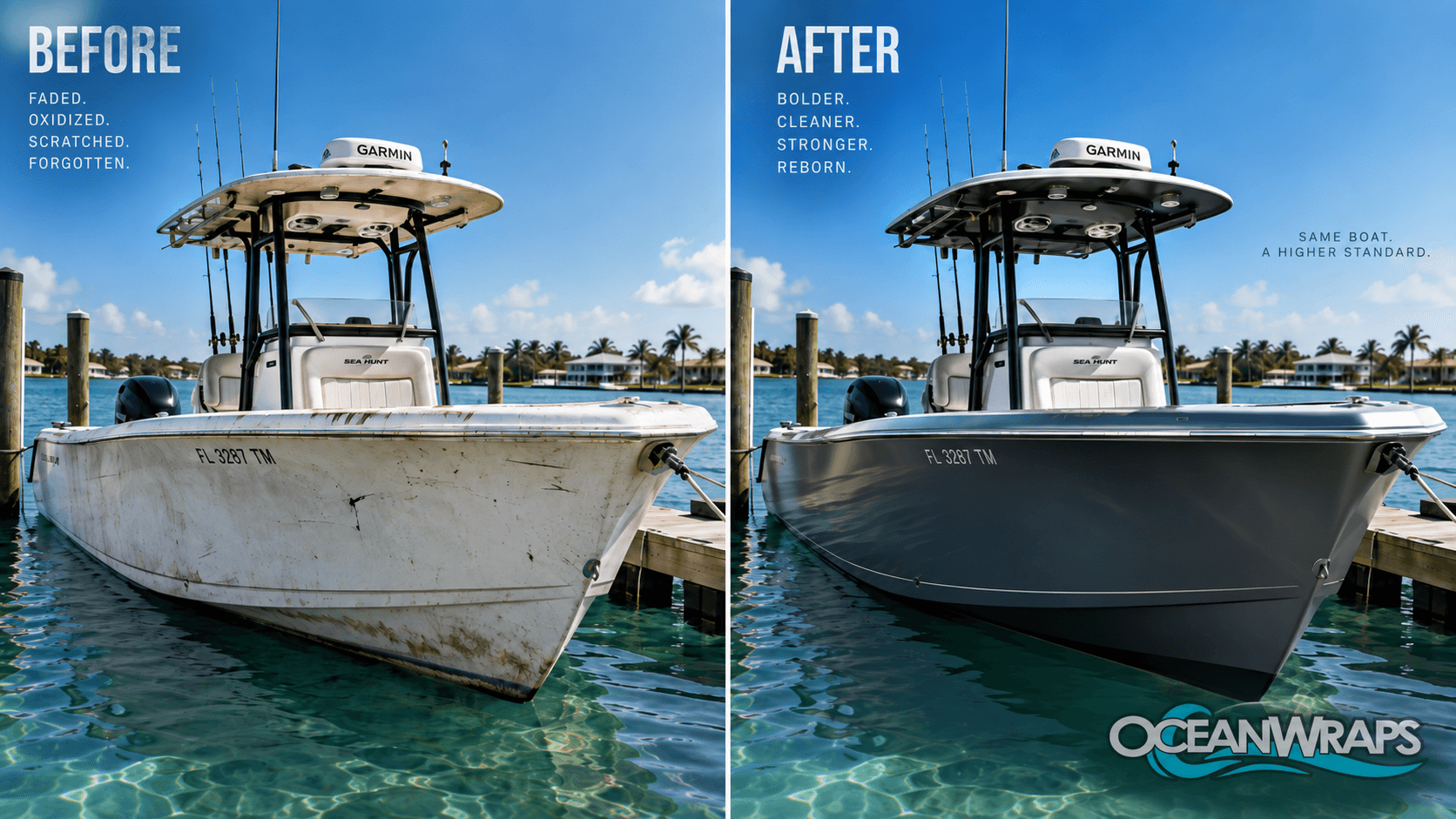
Boat wraps for owners of high-performance offshore fishing boats, a custom hull wrap is a significant technical and aesthetic upgrade. Unlike generic graphics, these wraps are engineered for the marine environment, combining aggressive visual impact with a protective layer for your gelcoat. This service page details the specialized approach required for durable, long-lasting results on vessels built for the open ocean.
Offshore hulls face unique stressors: constant saltwater immersion, hydrodynamic pressure at planing speeds, UV radiation, and impact from debris. A wrap that works on a trailerable freshwater boat may fail quickly here. The process demands materials and techniques that match the boat's performance profile, ensuring the graphics remain intact and vibrant through seasons of hard use.
Performance hulls feature pronounced chines, steps, and compound curves. Installing vinyl on these surfaces requires advanced techniques like strategic seam placement, precise paneling, and extensive post-heating to conform the material without wrinkles or bridging. This technical skill is what separates a premium wrap from a basic sticker application.
Every successful wrap starts with an immaculate substrate. The hull and topside gelcoat must be thoroughly dewaxed, decontaminated of salts and pollutants, and lightly sanded to promote maximum vinyl adhesion. Any existing damage or failing coatings must be repaired beforehand.
Using digital templates or precise measurements, your graphic design is engineered for the specific hull. This stage ensures logos, stripes, and patterns align correctly with hardware and hull features, maintaining the boat's aggressive aesthetic.
Trained installers apply the printed vinyl panels using a wet or dry method, depending on the size and complexity. They meticulously work out air and fluid, stretch and heat the material around curves, and trim precisely at edges and hardware. Critical focus is given to sealing all cut edges to prevent water ingress.
After application, the entire wrap is post-heated to activate adhesives and relieve stress, ensuring a permanent bond. A final inspection checks for bubbles, wrinkles, or imperfect seams. The wrap then needs a curing period, typically 48-72 hours, before the boat is returned to the water.
Material selection is foundational. For high-performance applications, only marine-grade vinyl is suitable. Cast vinyl films are the standard for complex hulls due to their exceptional conformability and long-term dimensional stability. They resist shrinking and stretching over time. A high-quality laminate is then applied over the printed graphics. This clear polyurethane layer provides essential UV resistance to prevent fading and adds a sacrificial shield against abrasion, fuel spills, and cleaning chemicals. The team at Ocean Wraps selects from industry-leading material systems proven in marine environments.
Marina Rules: Some marinas have regulations regarding commercial graphics or overly reflective finishes on boats. Verify this before finalizing a design.
Edge Sealing: All cut edges around through-hulls, drains, and trim tabs must be perfectly sealed to prevent saltwater from migrating under the vinyl.
Storage: While UV resistant, prolonged direct sun exposure during off-season storage can accelerate wear. Covered storage is recommended.
Wash Practices: Use mild, non-abrasive cleaners. Avoid high-pressure nozzles directed at wrap edges and avoid harsh solvents or acidic hull cleaners.
Warranty & Maintenance: Understand the care requirements and any warranty limitations related to the marine environment, as saltwater use is inherently demanding on any surface film.
With premium materials and professional installation, a hull wrap can last 5 to 7 years, even in saltwater use. Lifespan is directly influenced by exposure time, maintenance, storage conditions, and the severity of use.
Properly applied and removed, a vinyl wrap protects the gelcoat from UV fading and minor abrasion. Upon removal, any adhesive residue is cleaned with appropriate solutions, leaving the original gelcoat intact, often in better condition than unprotected areas.
Can you wrap over existing hull graphics or non-skid?#
Vinyl can be applied over existing smooth, well-adhered graphics. However, it cannot conform to textured non-skid surfaces. Wrapping non-skid requires using a specific overlaminate designed for traction, which changes the final feel and durability profile.
Lead time varies by project scale and complexity. It typically involves a design phase (1-2 weeks), material production (1 week), and a dedicated installation period of several days to a week for a large offshore boat, depending on hull size and graphic intricacy.
New Boat Prices Are Skyrocketing — Here's the Smarter Move Boat Owners Are Making
New boat prices are at record highs. Here's why more owners are choosing marine vinyl wraps to refresh their boat's look and protect the hull, without the cost of buying new
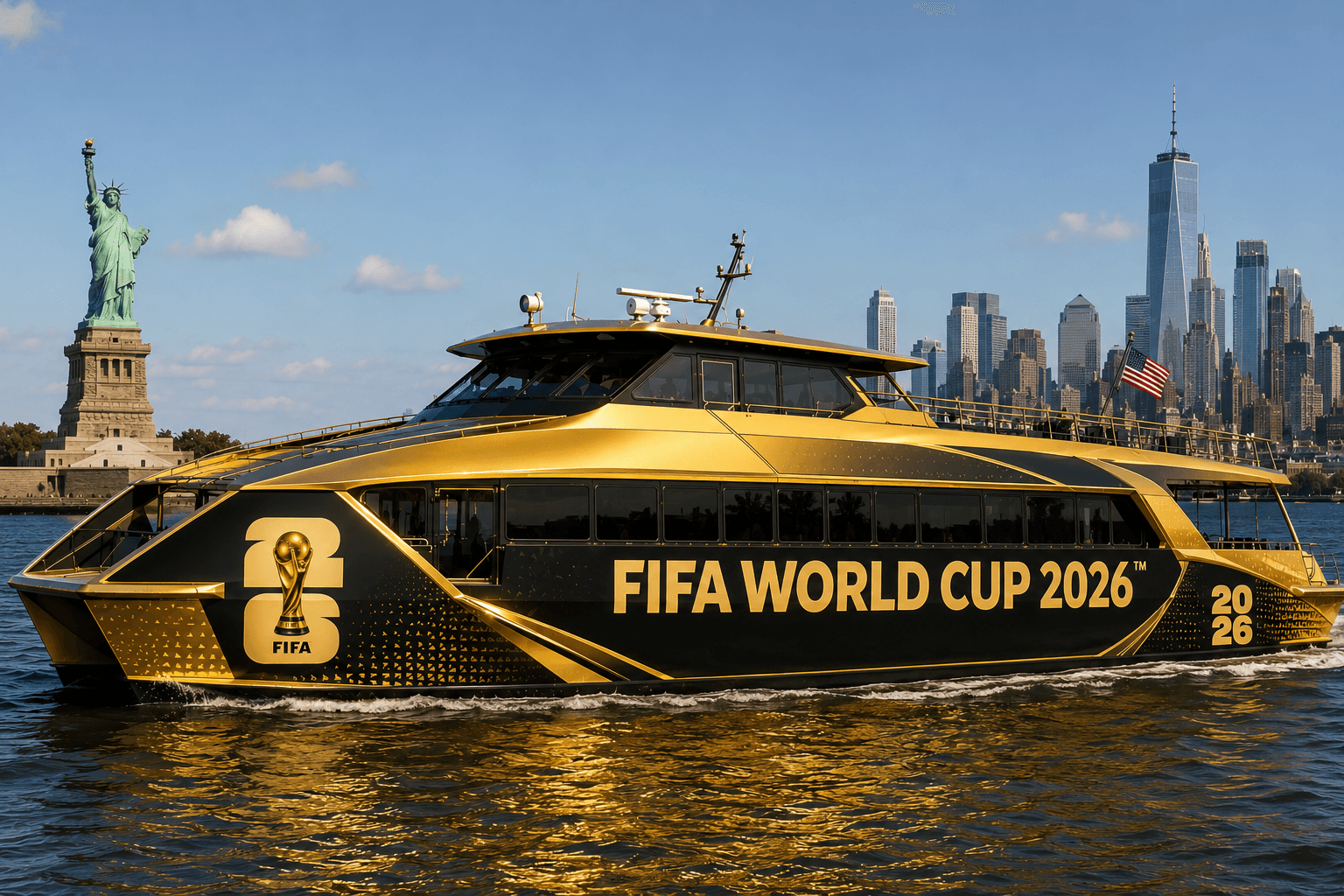
Get your boat ready for FIFA World Cup 2026 with a luxury custom wrap. Stand out on the water with premium marine graphics, gold finishes, and championship-inspired designs.
New Boat Prices Are Skyrocketing — Here's the Smarter Move Boat Owners Are Making
New boat prices are at record highs. Here's why more owners are choosing marine vinyl wraps to refresh their boat's look and protect the hull, without the cost of buying new
Boat Wraps Services
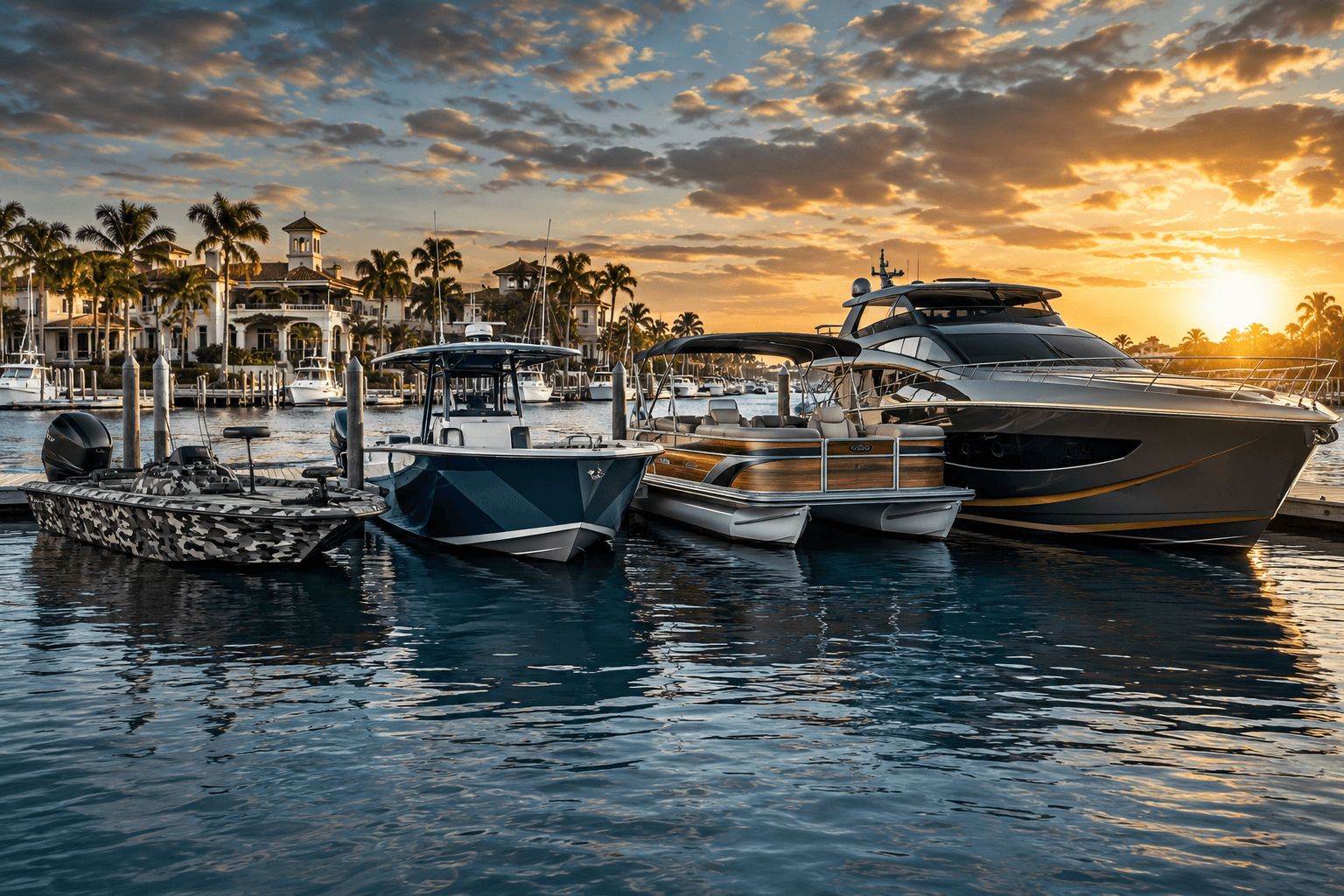
Boat Wrap Designs by Boat Type: What Actually Works on Your Vessel
A wrap that's perfect for a sportfishing boat chasing marlin offshore would look completely out of place on a family pontoon.
Boat Wraps Services
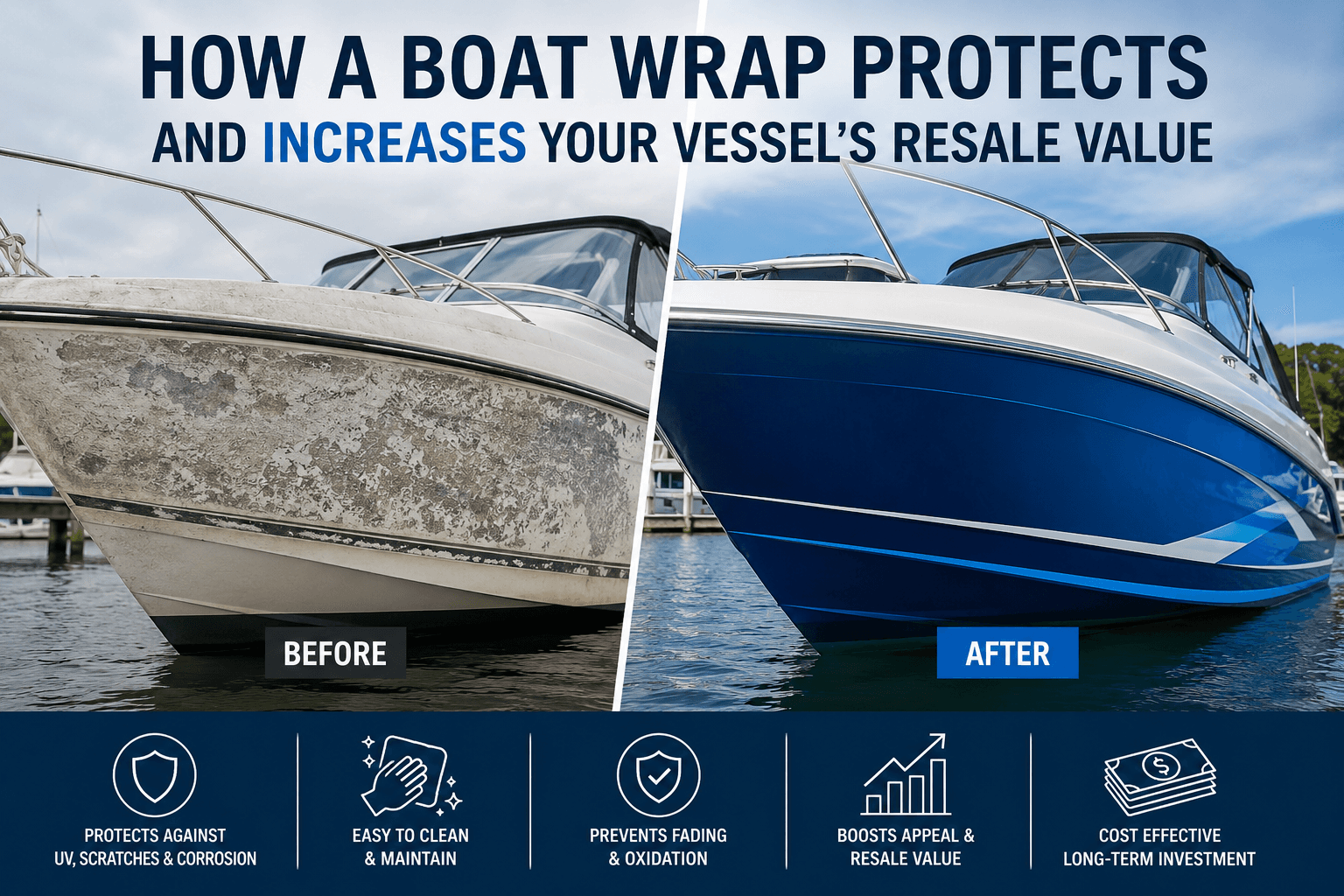
How a Boat Wrap Protects and Increases Your Vessel's Resale Value
How a Boat Wrap Can Protect and Increase Your Vessel's Resale Value
Boat Wraps Services
Top 10 FIFA World Cup Boat Wrap Ideas to Try This Season
If you already know you want your boat wrapped for World Cup season, the next question is which design actually fits your vessel.
Boat Wraps Services
Custom Boat Wraps for FIFA World Cup 2026
Get your boat ready for FIFA World Cup 2026 with a luxury custom wrap. Stand out on the water with premium marine graphics, gold finishes, and championship-inspired designs.
Boat Wraps Services
Luxury Yacht Wraps: The Complete Guide to Finishes, Styles, and Custom Marine Vinyl
Ocean Wraps works with luxury yacht and cruiser owners who want professional results, durable materials, and a finish that holds up on the water.
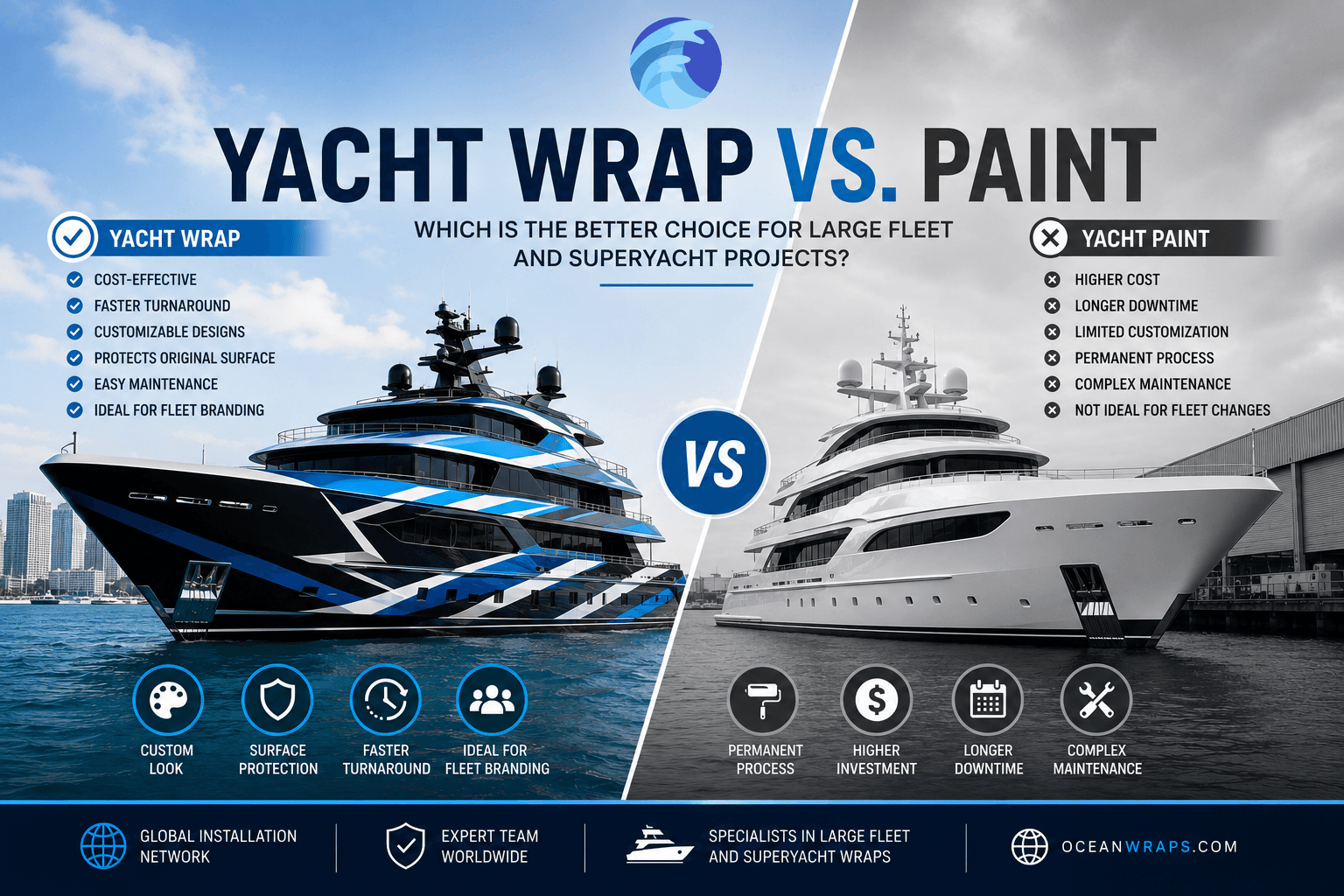
Yacht Wrap vs. Paint for Large Fleet & Superyacht Projects
Deciding between yacht wrap and paint for your fleet or superyacht? We break down real costs, downtime, durability, and which option actually makes sense at scale
How Much Does a Boat Wrap Cost? Complete Pricing Guide for 2026
Boat wrap prices vary widely depending on size, materials, and installer quality. Here's what a professional wrap actually costs in 2026 — and what to watch out for.
Luxury Yacht Wraps: The Complete Guide to Finishes, Styles, and Custom Marine Vinyl
Ocean Wraps works with luxury yacht and cruiser owners who want professional results, durable materials, and a finish that holds up on the water.
Boat Wraps Services
Why Florida Boat Owners Are Choosing Vinyl Boat Wraps in 2026
Discover why Florida boat owners are switching from paint to vinyl boat wraps. Learn the benefits, costs, protection, and customization options.
Guides
Boat Wraps vs Paint: 5 Reasons Why Wraps Win
Boat wraps cost less, install faster, and protect your gel coat better than traditional paint. Here's why so many boat owners are making the switch.
Guides
Yacht Wrap vs. Paint for Large Fleet & Superyacht Projects
Deciding between yacht wrap and paint for your fleet or superyacht? We break down real costs, downtime, durability, and which option actually makes sense at scale
Guides
How Much Does a Boat Wrap Cost? Complete Pricing Guide for 2026
Boat wrap prices vary widely depending on size, materials, and installer quality. Here's what a professional wrap actually costs in 2026 — and what to watch out for.