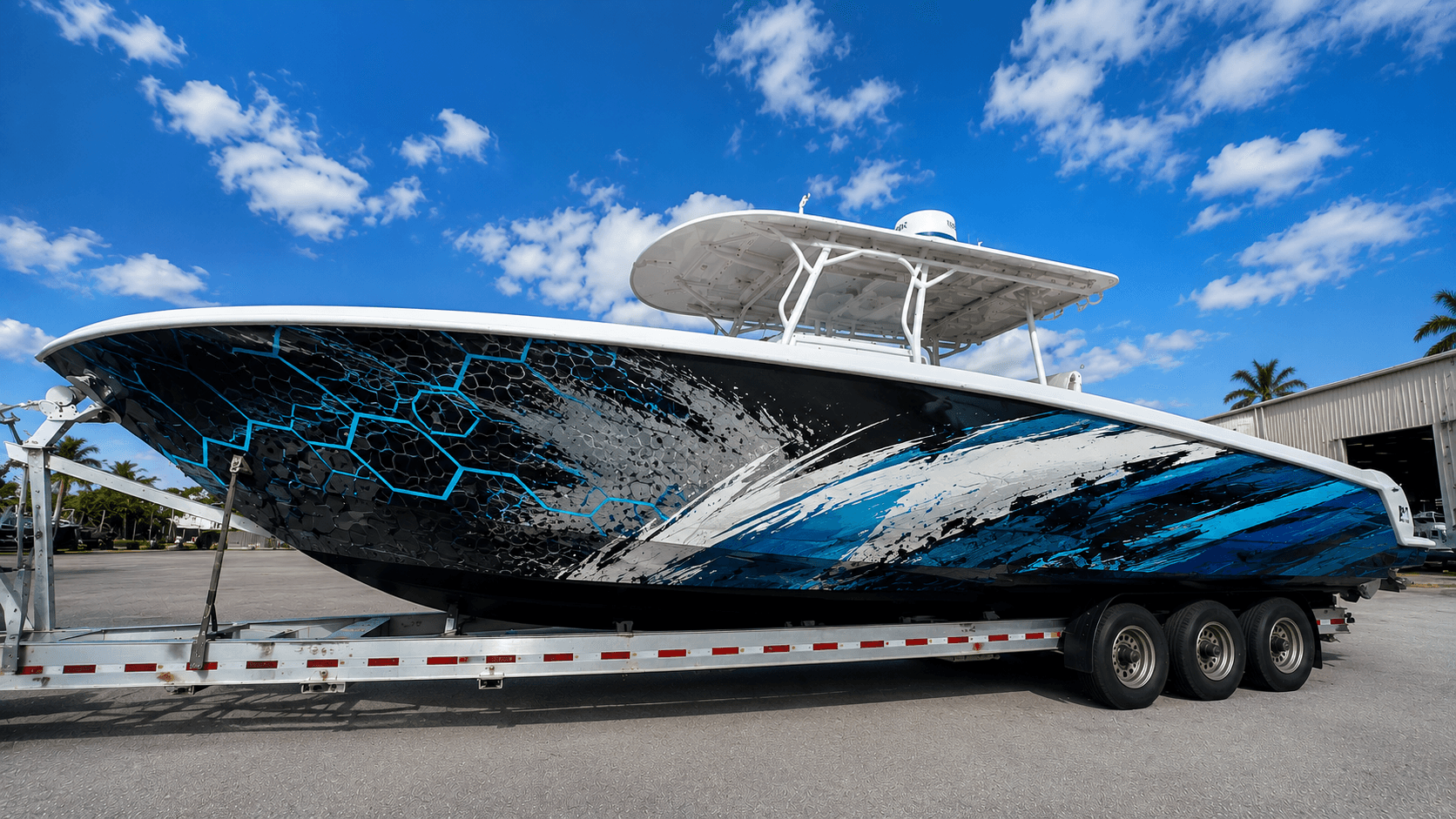
Hydrographic Film Wraps for High-Performance Racing Yachts | Boat Wraps
Advanced boat wraps for racing yachts. Learn about high-durability vinyl wraps for hulls and topsides, the installation process, and key performance considerati
Last updated March 6, 2026
Boat wraps for the competitive racing yacht, aesthetics are secondary to performance, but the two are not mutually exclusive. A hydrographic film wrap, or high-end boat wrap, represents a strategic investment beyond mere graphics. It is a functional skin engineered for the marine environment, offering a method to apply complex team livery, sponsor branding, and hydrodynamic patterns directly to the hull and topsides without the permanence or weight penalty of traditional gelcoat work. At Ocean Wraps, we focus on the technical execution required for vessels where every detail impacts speed and durability.
Boat Wraps Overview: Hydrographic Film Wraps for High-Performance Racing Yachts#
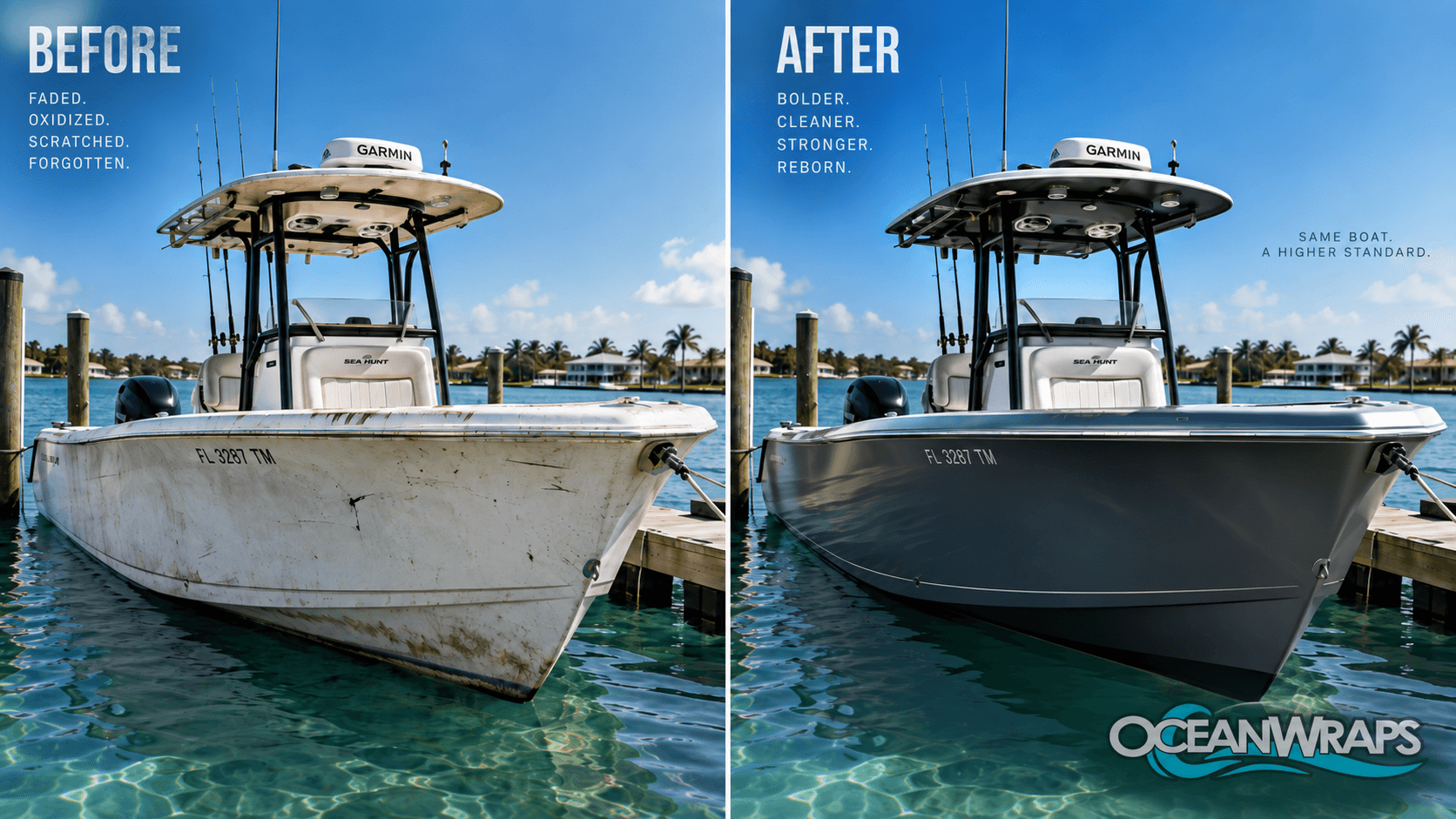
The demands on a racing yacht's exterior are severe. Constant exposure to high-speed salt spray, UV radiation, and potential for flogging sails or dock contact rules out standard graphic solutions. A professional-grade vinyl wrap system is engineered to withstand these forces. Its primary advantage over paint is non-permanence and weight; a full wrap adds negligible mass compared to multiple layers of marine paint. Furthermore, it protects the underlying gelcoat from UV degradation and minor abrasions, preserving hull integrity and resale value. The ability to execute complex, seamless graphics across compound curves enables teams to implement branding and potentially even subtle hydrodynamic visual cues with precision.
While visual impact is crucial for sponsorship, the wrap must not compromise performance. This dictates material selection and installation technique. Any imperfection in adhesion can create a ridge or bubble that disrupts laminar flow. Therefore, the process is as much about marine engineering as it is about graphic application. Every seam and edge is a potential failure point if not handled with expert methodology.
Cast vinyl is manufactured differently than cheaper calendared vinyl, allowing it to conform to extreme curves and complex shapes without shrinking or lifting over time. It has superior initial elongation and memory, which is essential for a racing yacht's hull form.
A clear, flexible laminate is applied over the printed graphics. This layer provides the primary defense against UV fading, chemical exposure, and physical abrasion from lines, fenders, and debris. The laminate's gloss level also determines the final finish, from high-gloss to matte.
The adhesive is formulated for long-term bonding to cured gelcoat and painted surfaces, even in fluctuating temperatures and a wet environment. Compatibility testing with existing hull coatings is a necessary pre-installation step.
The existing hull and topside gelcoat must be flawless. This involves a thorough inspection, degreasing, de-waxing, and mechanical scuffing of the entire surface to promote maximum adhesive bonding. Any existing damage must be repaired, as the wrap will mirror the substrate's texture.
Graphics are designed digitally, often using precise hull measurements or digital templates to ensure patterns align correctly across the vessel. For racing yachts, this stage includes planning seam placement in low-visibility, low-stress areas.
Installation is a meticulous, multi-person process. Large panels of film are positioned, wet-applied to allow for positioning, and then meticulously squeegeed to remove all fluid and air bubbles. Heat is used to stretch and form the material around tight radii and recesses.
All cut lines and panel edges are carefully sealed and post-heated to activate the adhesive fully, creating a watertight bond. Hardware and fitting removal for wrapping is standard practice to achieve a professional, edge-less result.
Surface Prep Mandate: The hull must be completely free of old wax, silicone, or grease. A professional compound and polish is often required first.
Edge Sealing is Critical: Any unsealed edge is a point for water to migrate under the film. This is non-negotiable for a boat that lives in the water.
Complex Curvature: The wrap design and panel layout must account for dramatic hull shapes, chines, and bow curves to avoid unsightly seams or excessive stretching.
Marina and Storage Rules: Some marinas have rules about reflective finishes. Consider how sun exposure in your specific slip might affect the wrap.
Maintenance Practices: Use only recommended marine-grade, non-abrasive cleaners. Avoid high-pressure washes directly on edges and avoid solvents that can degrade the laminate.
A high-quality marine wrap with laminate offers comparable durability to paint for UV resistance and color fastness. Its main advantage is impact resistance; it can absorb minor scratches and abrasions that would chip paint. However, sharp impacts can puncture the film where paint might only dent.
Can a wrap be applied over existing hull graphics or non-skid?#
Wraps can be applied over smooth, solid-color hull graphics if they are well-adhered. They cannot be applied over textured non-skid surfaces, as the film cannot conform to the texture and will not provide a safe footing. Non-skid areas are typically masked out during application.
What is the typical lifespan on a actively raced yacht?#
On a vessel subjected to regular racing and seasonal use, a professionally installed wrap using premium materials can last between 3 to 5 years. Lifespan is directly tied to installation quality, environmental exposure, and maintenance rigor.
Localized repairs are possible. The damaged panel can be carefully removed and a new piece of film can be installed, though an exact color match may be challenging if the original wrap has weathered. For critical sponsor graphics, keeping a small roll of the printed material for repairs is advised.
Implementing a hydrographic film wrap is a operational decision for a racing program. It merges team identity with a protective, lightweight layer. The process, from material science to on-water installation, requires a vendor who understands the stakes. It is about applying a tool that performs under pressure, much like the yacht itself. For teams evaluating their options for the upcoming season, the choice involves weighing long-term branding flexibility against the upfront investment in a technically executed solution.
New Boat Prices Are Skyrocketing — Here's the Smarter Move Boat Owners Are Making
New boat prices are at record highs. Here's why more owners are choosing marine vinyl wraps to refresh their boat's look and protect the hull, without the cost of buying new
Get your boat ready for FIFA World Cup 2026 with a luxury custom wrap. Stand out on the water with premium marine graphics, gold finishes, and championship-inspired designs.
New Boat Prices Are Skyrocketing — Here's the Smarter Move Boat Owners Are Making
New boat prices are at record highs. Here's why more owners are choosing marine vinyl wraps to refresh their boat's look and protect the hull, without the cost of buying new
Boat Wraps Services
Boat Wrap Designs by Boat Type: What Actually Works on Your Vessel
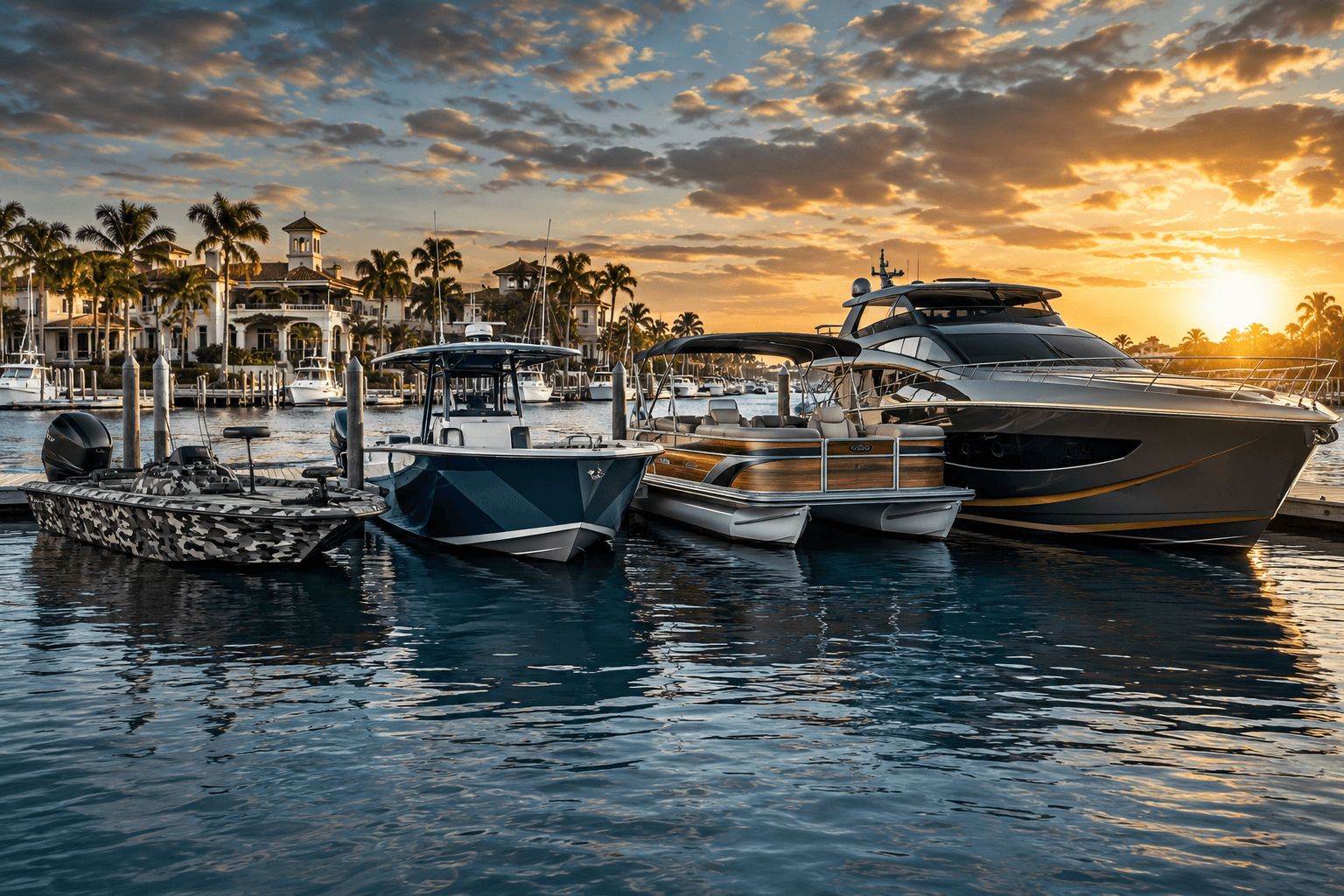
A wrap that's perfect for a sportfishing boat chasing marlin offshore would look completely out of place on a family pontoon.
Boat Wraps Services
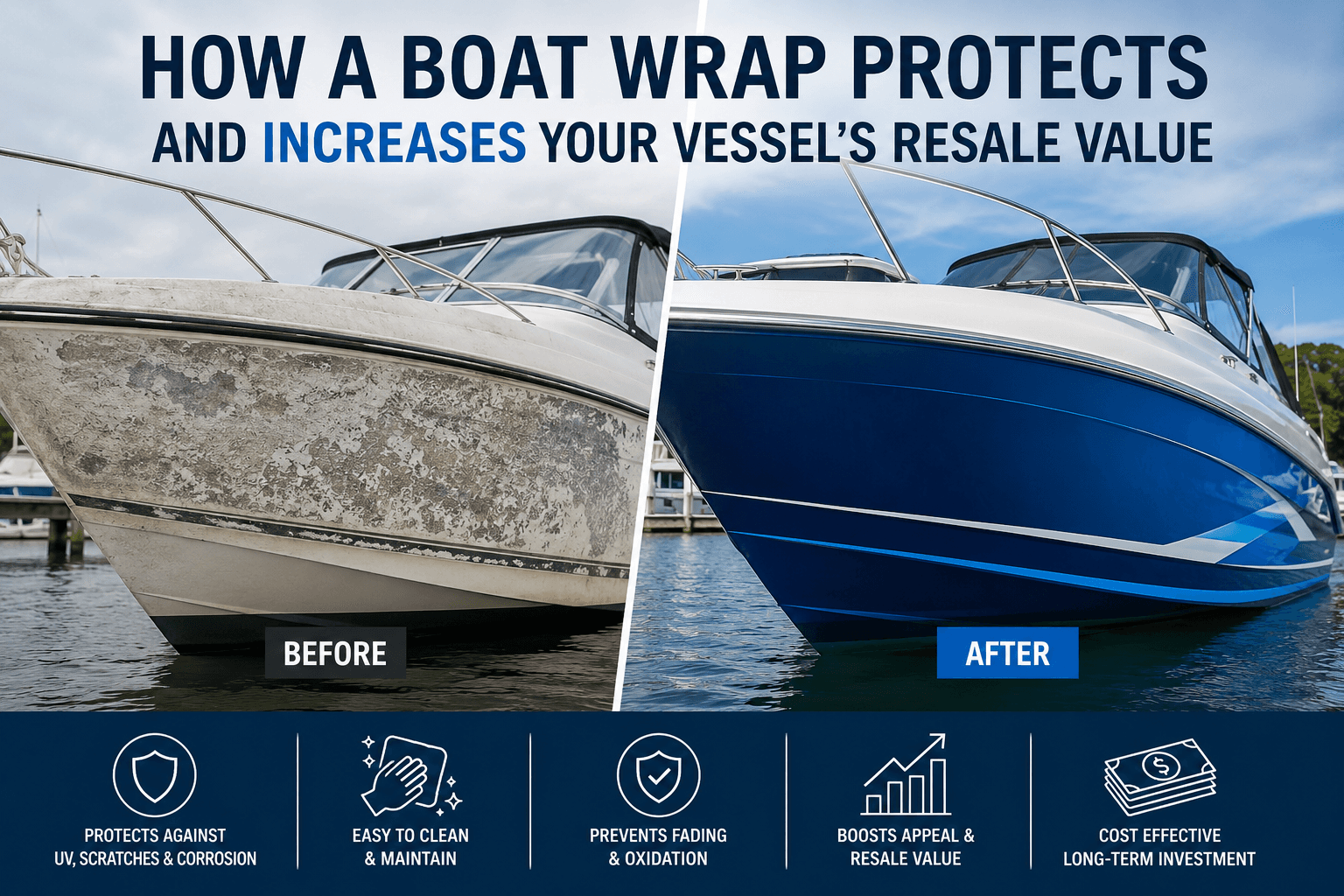
How a Boat Wrap Protects and Increases Your Vessel's Resale Value
How a Boat Wrap Can Protect and Increase Your Vessel's Resale Value
Boat Wraps Services
Top 10 FIFA World Cup Boat Wrap Ideas to Try This Season
If you already know you want your boat wrapped for World Cup season, the next question is which design actually fits your vessel.
Boat Wraps Services
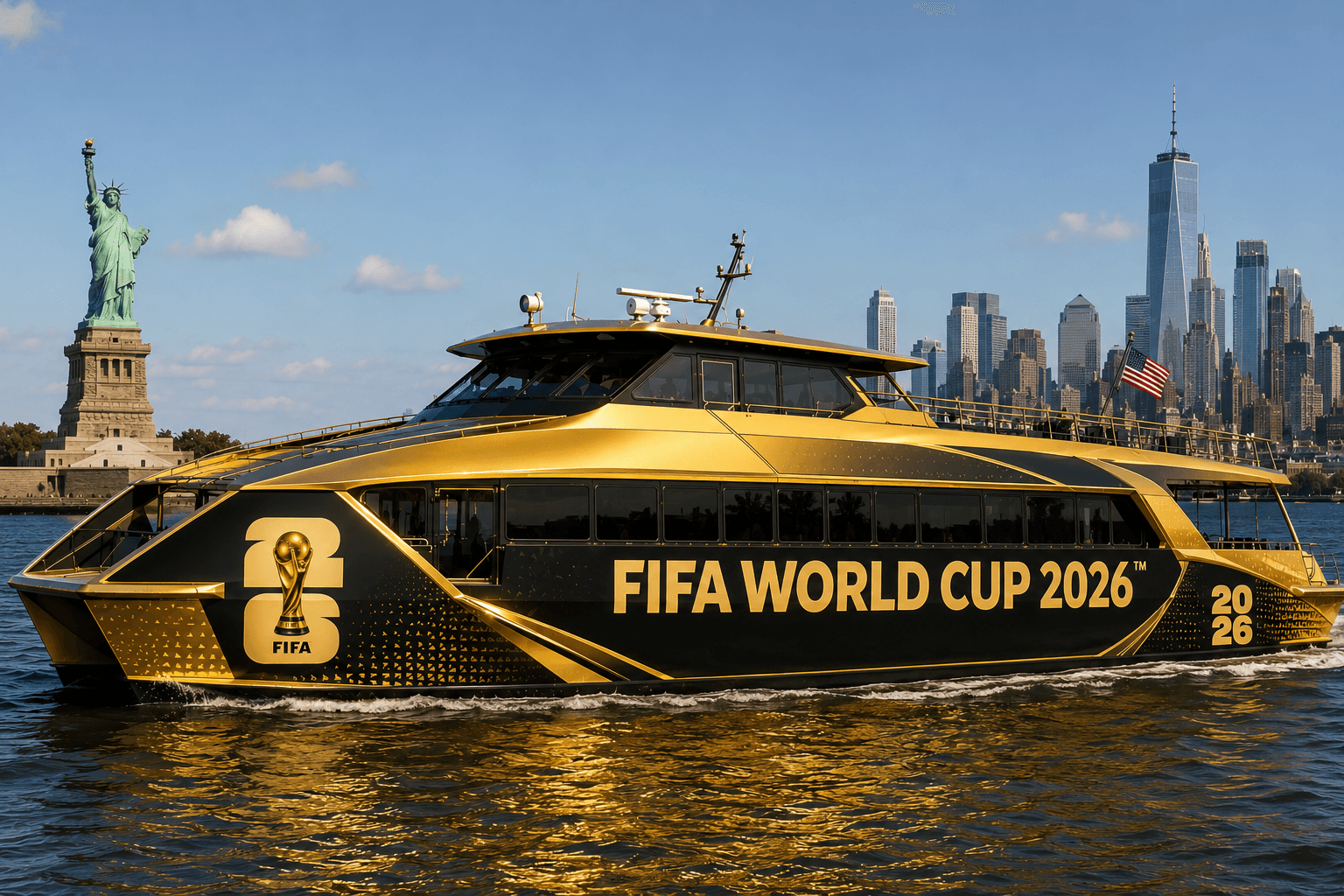
Custom Boat Wraps for FIFA World Cup 2026
Get your boat ready for FIFA World Cup 2026 with a luxury custom wrap. Stand out on the water with premium marine graphics, gold finishes, and championship-inspired designs.
Boat Wraps Services
Luxury Yacht Wraps: The Complete Guide to Finishes, Styles, and Custom Marine Vinyl
Ocean Wraps works with luxury yacht and cruiser owners who want professional results, durable materials, and a finish that holds up on the water.
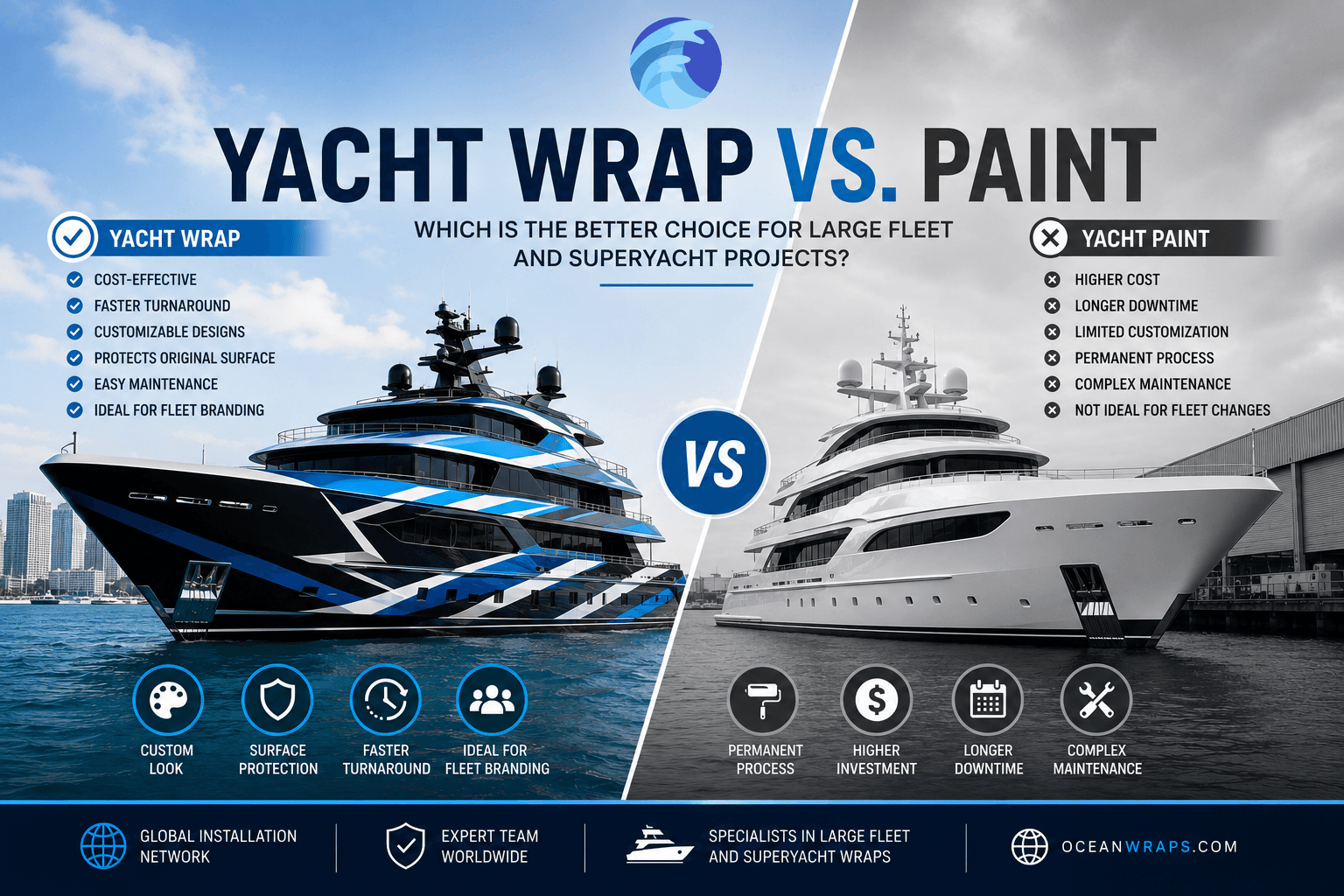
Yacht Wrap vs. Paint for Large Fleet & Superyacht Projects
Deciding between yacht wrap and paint for your fleet or superyacht? We break down real costs, downtime, durability, and which option actually makes sense at scale
How Much Does a Boat Wrap Cost? Complete Pricing Guide for 2026
Boat wrap prices vary widely depending on size, materials, and installer quality. Here's what a professional wrap actually costs in 2026 — and what to watch out for.
Luxury Yacht Wraps: The Complete Guide to Finishes, Styles, and Custom Marine Vinyl
Ocean Wraps works with luxury yacht and cruiser owners who want professional results, durable materials, and a finish that holds up on the water.
Boat Wraps Services
Why Florida Boat Owners Are Choosing Vinyl Boat Wraps in 2026
Discover why Florida boat owners are switching from paint to vinyl boat wraps. Learn the benefits, costs, protection, and customization options.
Guides
Boat Wraps vs Paint: 5 Reasons Why Wraps Win
Boat wraps cost less, install faster, and protect your gel coat better than traditional paint. Here's why so many boat owners are making the switch.
Guides
Yacht Wrap vs. Paint for Large Fleet & Superyacht Projects
Deciding between yacht wrap and paint for your fleet or superyacht? We break down real costs, downtime, durability, and which option actually makes sense at scale
Guides
How Much Does a Boat Wrap Cost? Complete Pricing Guide for 2026
Boat wrap prices vary widely depending on size, materials, and installer quality. Here's what a professional wrap actually costs in 2026 — and what to watch out for.