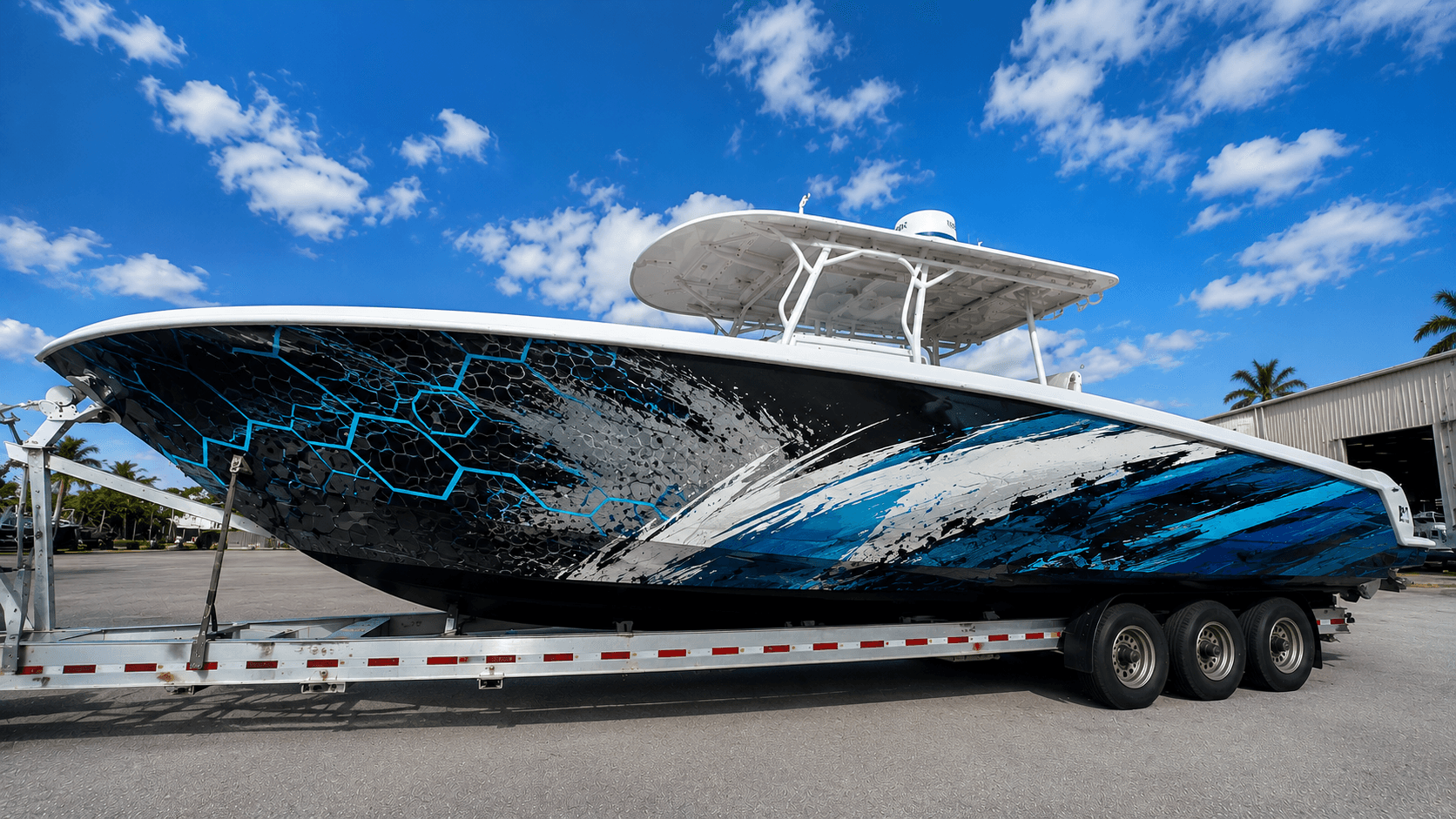
Drift boats and river boats are favorites with anglers who fish moving water. They slide over gravel bars, bump rocks, and get dragged up banks. A wrap can add color and personality, or turn a guide's boat into a recognizable brand, but it has to be planned around hard use.
Common hull types#
Drift boats are commonly aluminum, fiberglass, or wood. Each needs different preparation:
- Aluminum: Clean thoroughly, check paint condition, and watch for corrosion. Our aluminum boats guide explains prep.
- Fiberglass: Similar to other gelcoat boats, with repairs done first.
- Wood: Needs careful assessment, as wood moves with moisture and its finish must be sound. See our classic wooden boats guide.
Where wear happens#
River boats take damage in predictable places:
- The bottom and chines, which scrape rocks and gravel
- Lower sides near the waterline
- Gunwales where oars, rods, and nets rub
- The bow and stern when beached
Keep the wrap on the upper sides and away from these areas.
Design ideas#
- Classic solid colors with a contrasting stripe
- Trout, salmon, or steelhead graphics
- River or mountain scenes
- Names and logos for fishing guides
Guide boats#
Fishing guides can use their drift boat as a marketing tool, since clients photograph it constantly. Our guide boat branding guide has tips.
Trailering#
Drift boats are trailered for almost every trip. Plan around bunks and rollers. Our trailered boat guide explains trailer wear.
Cleaning between waters#
Rinse off mud and plant material after each trip. Many regions have rules about cleaning, draining, and drying boats moved between waters to stop invasive species. Follow them, and a clean hull also helps the wrap last.
Frequently asked questions#
Can I wrap a wooden drift boat?#
Possibly, but it needs careful assessment of the wood and its finish.
Will rocks damage the wrap?#
They can, so keep graphics above contact areas.
Can you wrap boats in Oregon?#
Qualifying projects can be coordinated. See our boat wraps USA page.